Death

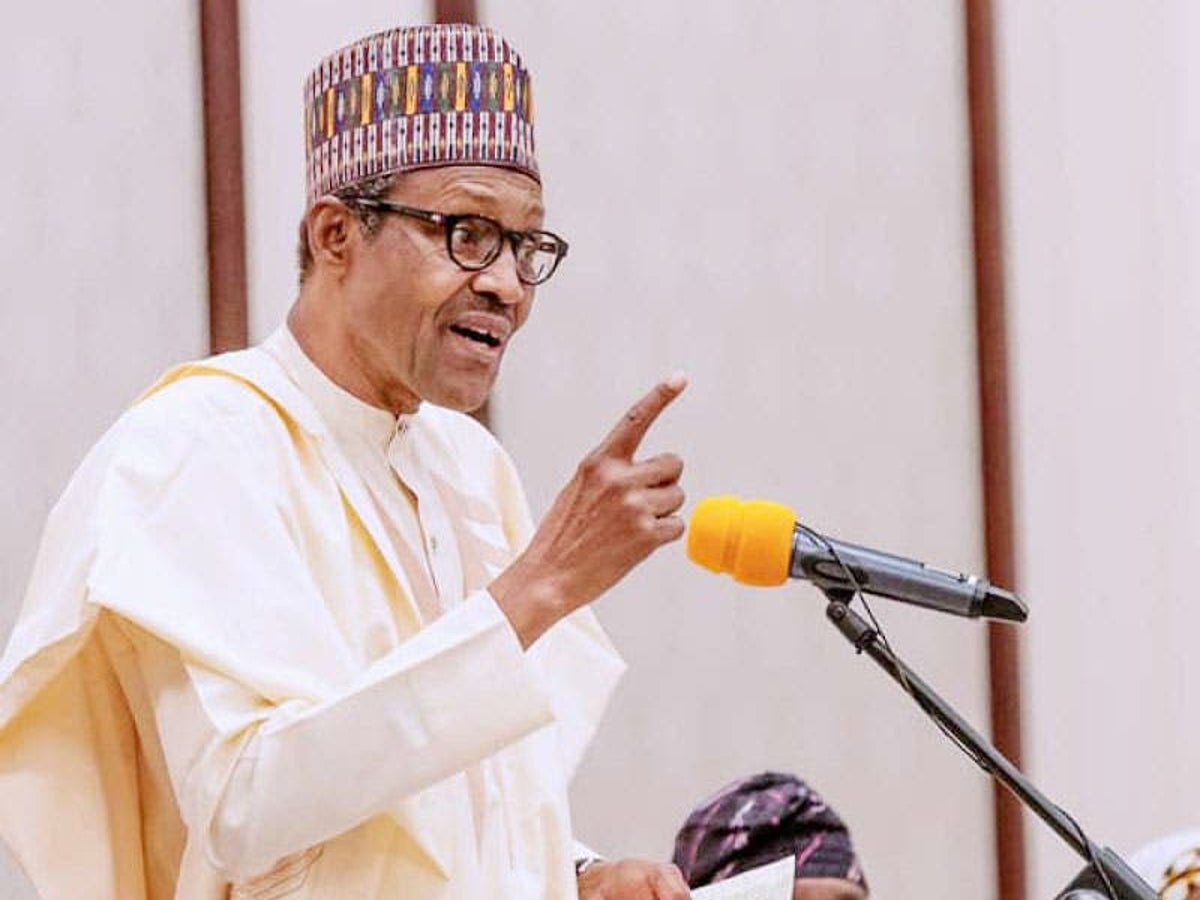
Buhari: Corruption hater, insecurity fighter, and agricultural transformer

By Sale Rusulana Yanguruza 

When a leader and loved one passes away, we often reflect on their legacy, the meaning of their life, the impact they made during their lifetime, and the significant contribution they made to society. Upon receiving the sad news about the demise of the immediate former President Muhammadu Buhari, what quickly came to mind was his honourable and distinguished efforts to end insecurity, eliminate corruption, and transform the agricultural sector in Nigeria.

His love for Nigerians prompted him to contest in three elections, and he lost the first two. The losses made him shed tears, but he still contested again. He didn’t give up and strived in 2015; he won and was declared the winner of the presidential election. On corruption, Buhari wasn’t just a fighter against corruption in Nigeria; he was a leader who despised untrustworthy individuals. A president who came to office with a unique energy aimed to end his enemy,”corruption”, and politicians who loot citizens’ property.

When Femi Adesina was granted an interview immediately after Buhari’s demise was announced, he boldly said, “Buhari was as clean as a whistle. Nobody can accuse him of anything that has the slightest affinity to corruption.” Adesina’s words imply that Buhari was incorruptible, as no one could accuse him of corruption; his life was a testament to his integrity. While Buhari saw corruption as a disease that was drastically hampering and tempering development in Nigeria, he stated, in his words during an anti-corruption speech in 2016, “If we don’t kill corruption, corruption will kill Nigeria.”

No one can doubt Buhari’s assertion that corruption must be eradicated before Nigeria can develop. However, unfortunately, during his first tenure, Buhari made significant efforts to ensure that all stolen assets by politicians were returned to Nigerians and implemented measures to prevent further occurrences. Yet, as time went on, Buhari was said to be poised, which led him to spend about three months abroad during his first tenure as the president of Nigeria. That story paved the way for a lot of rumours, which people spread, saying he had died, but with God’s grace, he was back and continued with his activities, finished his tenure, and sadly, today, he has met his maker.

Buhari has backed his commitment by putting in place some necessary measures, such as the Treasury Single Account (TSA), the Whistle-Blowing Policy, and the establishment of the Presidential Advisory Committee Against Corruption, to combat the systemic theft of public resources and, by extension, its pernicious effects on human rights and development. Yes, Buhari is known for Mai Gaskiya, which earned him votes in 2015. He was the first president who made leaders who had stolen the country’s finances fear him when he was declared president of the Federal Republic of Nigeria in 2015, beating the incumbent president, Goodluck Ebele Jonathan.

 Looked at Buhari and Boko Haram

When Buhari was elected, before his swearing-in as President of the Federal Republic of Nigeria on May 29, 2015, he met with the President of Chad, Idriss Déby, to discuss collaboration on ending insecurity, particularly from Boko Haram in Borno State. Buhari didn’t stop there; he took an official visit to Niger to discuss the issue with the president, aimed at addressing the Boko Haram problem. As Vanguard reported on June 1, 2015, the visit by the newly inaugurated Nigerian leader to Niamey was directed and aimed at decapitating the head of the group as a final solution to the insurgency that had wreaked havoc on the country’s North-East region.

Do you know that Buhari’s first trip as president of Nigeria to an outside country was about insecurity? 

Chad and Niger were Buhari’s first foreign visits outside Nigeria after he was sworn in as president, with the matter of insecurity bedevilling the region, particularly in the northeast. In his inaugural speech in 2015, Buhari said, “The most immediate challenge is Boko Haram insurgency. Progress has been made in recent weeks by our security forces, but victory cannot be achieved by basing the Command and Control Centre in Abuja. The command centre will be relocated to Maiduguri and remain until Boko Haram is completely subdued. But we cannot claim to have defeated Boko Haram without rescuing the Chibok girls and all other innocent persons held hostage by insurgents. This government will do all it can to rescue them alive.”

To support Buhari’s statement, when I attended the Town Hall Meeting organised by News Central Television in Maiduguri, Professor Babagana Umara stated that the Chibok Secondary School, where the girls were abducted, had reopened and is running actively, with Teaching and learning currently taking place in the school.

Undoubtedly, all this was part of the efforts put in by the former President of Nigeria, President Muhammadu, who gave his attention and good synergy to end it. Without a doubt, the long-standing insecurity in the region was drasticallyreduced. Though Boko Haram has carried out some recent attacks, one cannot deny the fact that the former President was at the forefront in reducing it in the region during his tenure.

Is Buhari an Agricultural Transformer? 

Buhari has always been a president who advocated for Nigerians to take agriculture very seriously. President Buhari stated this while delivering a lecture on Tuesday in Abuja at the launch of the National Young Farmers Scheme, a program designed by the National Agricultural Land Development Authority (NALDA). The program aims to spark greater interest among young people in farming.

According to the President, agriculture remains the backbone of the Nigerian economy, being the largest contributor to the nation’s Gross Domestic Product (GDP). Although the advice was intended for Nigerians, today our youth have largely accepted the President’s advice and returned to farming, which they were previously unable to do.

Legacy is not leaving something for people; it’s leaving something in people.” – Peter Strople

Rest in perfect peace, Baba.

Sale Rusulana Yanguruza wrote via salesaifullahi931@gmail.com.

Professor Abubakar Roko passes away

By Muhammad Abubakar

The academic community is mourning the passing of Professor Abubakar Roko, a respected lecturer in the Department of Computer Science, Faculty of Physical and Computing. He died after a period of illness, despite efforts made to secure advanced medical treatment abroad.

Professor Roko had been battling a critical health condition that required specialist care, prompting a crowdfunding campaign to support his medical trip to Cairo, Egypt. The campaign received overwhelming support from colleagues, students, friends, and well-wishers.

Notably, the Governor of Kano State, Engineer Abba Kabir Yusuf, contributed ₦5,000,000 to the cause, a gesture that was widely appreciated by the family and academic community.

In a message announcing his passing, the department expressed deep sorrow and extended heartfelt thanks to everyone who supported him during his time of need. “We are saddened to announce the demise of Professor Abubakar Roko… May Allah SWT reward you abundantly,” the statement read.

Prayers are being offered across the campus and beyond for the repose of his soul. “May Allah bestow His grace on him,” the department added.

Professor Roko is remembered not only for his academic excellence but also for his humility and dedication to the advancement of computer science education in Nigeria.

Kano govt declares Monday as public holiday to mourn deceased athletes

By Abdullahi Mukhtar Algasgaini

Governor Abba Kabir Yusuf has declared Monday a public holiday to sympathise with the families of the 22 Kano athletes who died in a tragic accident while on their way from Ogun State.

The governor gave the directive while still away on a pilgrimage for the 2025 Hajj.

“He directed that Monday, 2nd June 2025, be declared as a public holiday for the good people of Kano to pray and sympathise with the families of the victims.”

In a late-night statement issued by the Governor’s Spokesperson, Sanusi Bature Dawakin Tofa, the governor expressed his profound sadness over the loss and assured that all necessary support would be provided to the grieving families.

“It is with a deeply saddened heart that I received the tragic news of the unfortunate incident which claimed the lives of 22 innocent citizens and left several others injured,” the Governor was quoted as saying.

“On behalf of the government and the good people of Kano State, I extend our heartfelt condolences to the families of the deceased. We mourn with you and share in your grief,” he added

The state also called on Imams and all Muslims within and outside Kano to pray for the departed souls and for their respective families to bear the loss.

Man sentenced to death for setting mosque ablaze in Kano

By Maryam Ahmad

An Upper Shariah Court in Kano has sentenced one Shafiu Abubakar to death by hanging for setting fire to a mosque in Gadan village, Gezawa Local Government Area, leading to the death of several worshippers.

The tragic incident occurred earlier this year when Abubakar reportedly locked the mosque doors and poured petrol before setting the building ablaze during early morning prayers. The attack claimed the lives of multiple worshippers and left others with severe injuries.

Presiding over the case, the judge described Abubakar’s actions as deliberate and heinous, noting that the punishment was in line with Shariah provisions for such offences.

The sentencing has drawn mixed reactions. Some residents welcome the verdict as justice served, while others continue to mourn the devastating loss.

Authorities have urged communities to remain calm and uphold peace and coexistence.

Jonathan pays heartfelt tribute to Yar’Adua, 15 years after his passing

By Hadiza Abdulkadir

It has been fifteen years since Nigeria lost one of its most respected and selfless leaders, President Umaru Musa Yar’Adua. 

Today, Nigerians across the nation reflect on the life and legacy of a man whose brief presidency profoundly impacted the nation’s democratic and developmental journey.

Former President Goodluck Ebele Jonathan, who served as Yar’Adua’s vice president and later succeeded him, paid a heartfelt tribute to his late friend and leader. 

In his message on social media, Jonathan described Yar’Adua as a patriot and a servant leader who was driven by a commitment to unity, justice, and national progress.

“President Yar’Adua’s life was defined by service and selflessness,” Jonathan stated. “Whether as a teacher, governor, or president, his stewardship was guided by hard work, patriotism, accountability, commitment to justice and adherence to the rule of law.”

Yar’Adua’s presidency was marked by his efforts to reconcile a divided nation, foster unity among its people, and mobilise collective action towards building a just and peaceful Nigeria. Though his time in office was cut short by illness, his administration is remembered for significant reforms and a leadership style rooted in humility and inclusion.

Jonathan praised Yar’Adua for his unwavering dedication to democratic ideals and for laying a foundation of peace and accountability. “Fifteen years after his passing, he continues to stand as a reference for good leadership and a legacy of impact,” Jonathan remarked.

As the nation remembers President Yar’Adua, many Nigerians continue to honour his contributions to building a better country and celebrate the enduring example he set in public service.

Wike orders clampdown on illegal hospitals after pregnant woman’s death in Abuja

By Uzair Adam 

The Minister of the Federal Capital Territory (FCT), Nyesom Wike, has ordered a full crackdown on unregistered hospitals and quack medical personnel operating within the territory.

The minister’s media aide, Lere Olayinka, disclosed this in a statement on Saturday, following the death of a pregnant woman at a private facility in Durumi, Abuja, after undergoing a caesarean section.

According to the statement, Wike warned that anyone found operating an illegal health facility or working in an unregistered hospital would be arrested and prosecuted.

He described the incident as regrettable, especially given that vulnerable groups, including pregnant women, are eligible for free registration under the Federal Capital Territory Health Insurance Scheme (FHIS). 

He noted that despite this opportunity, many pregnant women were still patronising unlicensed and unsafe facilities.

“In the FCT, vulnerable persons, including pregnant women, enjoy free enrollment into the FHIS, granting them free access to services covered under the basic minimum health package through primary healthcare centres,” he said.

Olayinka added that, in support of the federal government’s ‘Renewed Hope Agenda’ and the FCT Administration’s zero tolerance for maternal mortality, several hospitals—including Gwarinpa, Nyanya, Abaji, and Kuje General Hospitals—have been designated as comprehensive emergency obstetric and neonatal care centres, offering free cesarean sections.

He urged pregnant women to utilise these government services instead of risking their lives by seeking care from quacks and unregistered facilities.

The statement also recalled that on Friday, 35-year-old Chekwube Chinagorom was brought dead to the Asokoro District Hospital after a caesarean section at the unregistered facility in Durumi. 

Although the baby survived and was referred for further care at the Asokoro hospital, the incident raised alarm over the activities of illegal operators.

The Private Health Establishments Registration and Monitoring Committee (PHERMC) investigated and confirmed that the hospital was unregistered. 

Only one staff member, Mr. Simon Godiya, a junior community health extension worker, was found on duty during an inspection.

Godiya informed officials that Murtala Jumma performed the surgery alongside another unidentified person. Efforts to reach Jumma have so far been unsuccessful.

The PHERMC team, accompanied by police officers from the Durumi Divisional Headquarters, subsequently handed over the case to the police for further investigation.

Pascal Dozie, founder of Diamond Bank, dies

By Anas Abbas

Pascal Gabriel Dozie, the esteemed founder of the now-defunct Diamond Bank Plc and former chairman of MTN Nigeria, passed away at the age of 85 in the early hours of Tuesday, April 8, 2025.

In a heartfelt statement released by his son, Uzoma Dozie, the family expressed their sorrow. “With deep sorrow, but with gratitude to God for a life well spent, we announce the passing of our beloved father,” Uzoma stated.

Pascal Dozie was not only a devoted husband and father but also a proud grandfather and a man of steadfast Catholic faith. His life was characterised by a commitment to serving God, his family, and his nation.

Dozie made significant contributions to Nigeria’s banking and telecommunications sectors. In 1990, he established Diamond Bank, which grew to become one of the country’s most esteemed financial institutions before merging with Access Bank. He later passed on the leadership to his son, Uzoma.

In addition to his banking achievements, Dozie played a pivotal role in the establishment of MTN Nigeria, serving as its inaugural chairman and contributing to the telecom revolution that transformed the industry. 

His leadership was distinguished by humility, integrity, and a long-term vision, earning him numerous accolades, including the prestigious national honour of Commander of the Order of the Niger.

Pascal Dozie’s legacy is marked by his unwavering dedication to Nigeria’s economic development, which has garnered him immense respect across various sectors. He is survived by his wife, Chinyere, and their five children.

Samsung Electronics executive Han Jong-hee dies at 63

By Hadiza Abdulkadir

Han Jong-hee, the joint chief executive officer of Samsung Electronics, has died of a heart attack at the age of 63, the company announced.

Han had led Samsung’s consumer electronics and mobile devices division since 2021, navigating the tech giant through an increasingly competitive market dominated by Chinese rivals.

His sudden passing leaves Jun Young Hyun, who oversees Samsung’s semiconductor business, in sole charge of the company until a successor is appointed.

Samsung, the world’s largest producer of memory chips, smartphones, and displays, is yet to announce details of Han’s funeral or succession plans.

A reflection on dimensions, death, and the eternal four: Ramadan 2025

By Ibraheem A. Waziri

MashaAllah. As the crescent moon rose to herald Ramadan this year, on this twentieth day of March 2025, a profound stillness has settled over me. The fast silences my body’s clamor, the long nights of prayer elevate my spirit toward the heavens, and my thoughts drift into the boundless expanse of the unseen. This Ramadan, I find myself wrestling with the nature of dimensions—what they signify, how they shape our fleeting lives, and how death might unlock realms beyond our earthly reach. 

The Qur’an unveils glimpses of this mystery: seven heavens layered in divine order, Jannah’s gardens of eternal serenity, Jahannam’s depths watched by stern guardians, and Allah’s timeless, infinite dominion. The number four—etched into our 4D reality and echoed in a hadith debate I explored last week—anchors my reflection, while the nineteen of Surah Al-Muddathir, mirrored in the nineteen letters of *Bismillahir Rahmanir Rahim*, stirs my soul. Could death guide us through a cosmic graveyard of stars into these dimensions, as some now ponder in awe?

Let us begin with dimensions as we experience them in this Duniya, this transient abode. We dwell within three spatial dimensions—length, width, and height. A minaret pierces the twilight sky; its shadow stretches wide across the sun-warmed earth, and its foundations sink deep into the soil. Time, the fourth dimension, flows relentlessly forward, a current bearing us from the first whispered adhan of Fajr to the tranquil hush of Isha. 

These four—three of space and one of time—form our 4D reality, a spacetime framework we navigate with every breath and every step we take. Yet science, with its insatiable curiosity, gazes beyond this familiar quartet, proposing extra dimensions—ten, eleven, or perhaps far more—coiled tightly at scales too tiny for our eyes to discern or sprawling across unseen planes our hands cannot grasp. These are not mere directions to wander but subtle layers, bending the forces of gravity, energy, or the very essence of creation in ways that stretch our comprehension.

In 2018, a Northern Nigerian Hausa broadcasting Television Station, Arewa24, in a documentary about space named black hole mutuwaren taurari (Mortuary of Stars), but I preferred mak’abartar taurari—the Graveyard of Stars—as a more evocative term. Here, death is a profound key, a passage to what lies beyond. In this 4D shell, we are tethered—our physical forms bound to the limits of space, our lives measured by the steady march of time. 

The Qur’an, however, assures us that the soul, the ruh, endures beyond this fragile vessel. When we die, might that soul break free, slipping into a fifth dimension, a sixth, or even further—realms where Jannah’s rivers ripple with mercy and Jahannam’s fires blaze with justice, domains veiled from us until Malak al-Mawt, the Angel of Death, carries us across the threshold? 

Physics offers a faint echo of this possibility: higher dimensions might surround us, omnipresent yet inaccessible, hidden behind a veil that only death can part. Some astronomers link each soul to a star wandering the cosmos; when a person dies, their star might collapse into this graveyard, bearing their ruh along. Could this black hole be a portal, a barzakh, where dimensions unfold beyond our sight?

The Qur’an sketches this vastness with strokes of majesty. “He who created seven heavens in layers,” proclaims Surah Al-Mulk (67:3), urging us to reflect on the nature of these layers. Are they celestial skies arching above our world, glowing in the twilight? Or could they be universes, dimensional planes, each distinct yet interconnected, ascending beyond our perception into a hierarchy only Allah fully comprehends? 

Our 4D reality, with its glittering stars and sprawling earth, might be the “lowest heaven,” as Surah As-Saffat (37:6) suggests, with its adorned lights, while six more heavens rise above, reachable only when death turns the lock. Time, too, bends in Allah’s presence—Surah Al-Ma’arij (70:4) likens a day with Him to fifty thousand years of our earthly counting. In these higher dimensions, time might not flow as we know it; it could stretch into an endless horizon, loop upon itself, or fold into an eternal now—a reality death alone might usher us into.

Yet it is the number four that steadies my wandering mind, a pattern I cannot unsee. Just last week, in *The Eternal Quartet: Understanding the Hadith Debate in Northern Nigeria*, I wrote of a debate stirring Northern Nigeria’s Muslim online space—Shaykh Prof. Ibrahim Saeed Ahmad Maqari and Shaykh Prof. Sani Rijiyar Lemo clashing over the degree of certainty in different categories of Hadith rather than dismissing their essence outright. 

I framed the scholars’ dispute through four lenses: reason, belief, doubt, and rejection, a quartet mirrored in Islam’s four legal schools—Hanafi, Maliki, Shafi’i, Hanbali—and four theological paths—Mu’tazila, Ash’ari, Maturidi, Athari. Maqari, with his Ash’ari and Maliki roots, demands the unshakable certainty of Mutawatir hadiths, those narrated by many, while Rijiyar Lemo, grounded in Athari and Salafi trust, upholds authentic Ahad narrations with strong chains, even if from fewer sources. Four emerged as a complete, balanced square: Maqari’s logic seeking widespread proof, Rijiyar Lemo’s faith in vetted tradition, the doubters’ hesitant questions, the rejectors’ outright dismissal. As I dwell in our 4D spacetime, I see it again—four as our foundation, the root from which higher dimensions might grow, a motif threading through faith, nature, and the human heart.

Then comes a piercing verse—Surah Al-Muddathir (74:30): “Alaiha tis‘ata ‘ashar”—“Over it are nineteen.” Nineteen angels guard Jahannam, their number stark and resonant, a mystery that stirs my soul to its core. Are these guardians confined to our 4D frame, or do they stride across dimensions, overseeing a hell that burns beyond our spacetime? This deepens when I count the letters in Bismillahir Rahmanir Rahim—ب س م ا ل ل ه ا ل ر ح م ن ا ل ر ح ي م—nineteen in all, the sacred invocation that opens every surah but one. Could this parallel—nineteen angels, nineteen letters—hint at more, perhaps 19 dimensions woven within or alongside the seven heavens? Science freely posits dimensions; string theory suggests ten or eleven, but the Qur’an’s seven and nineteen numbers carry a divine weight. From our 4D base, the seven heavens might rise as broad realms, each enfolding finer layers, totaling 19—a cosmic framework death unveils, where the nineteen serve as eternal watchmen.

Consider the black hole, this mak’abartar taurari. Could it be barzakh, a liminal space bridging dimensions? Does it cradle Jannah’s tranquility or Jahannam’s torment? Some wonder: might the Day of Judgment spring from this starry graveyard, an event science cannot yet name, where fallen stars—and souls—rise into new dimensions? We perceive only four in this Duniya, but black holes might harbor twelve, as some speculate. Add seven for Jahannam’s planes, and we reach 19—four we know, eight in Barzakh’s depths, seven in Saqar’s fire, guarded by nineteen, as Allah declares, “Alaiha tis‘ata ‘ashar”. Last century, scholars like Khalifa Rashad stirred debate with new readings of this verse—could it point to such a cosmic order?

Envision it: our 4D reality as the first heaven, rooted in four—length, width, height, and time. Six more heavens ascend, each a dimensional cluster, totaling 19 with Barzakh and Jahannam’s layers. Surah Fussilat (41:12) says each heaven has its command—unique laws across these planes, from fifth to nineteenth. His Kursi (Surah Al-Baqarah 2:255) spans them, the nineteen as sentinels in its scope. The Qur’an says the soul’s end wanders in the space between the dimensions of fire (dread) or peace (natsuwa). Death might thrust us through mak’abartar taurari into these 19, where nineteen angels stand guard.

As Taraweeh’s verses wash over me this Ramadan, I feel four and nineteen entwined. If 19 dimensions veil Jannah, Jahannam, or more, might they host others—angels, jinn, beings unseen? Science puzzles at silence; death might unveil a chorus. In sujood, fasting’s clarity sharpens this: the Qur’an bids us marvel. Whether seven heavens hold 19 dimensions via a starry graveyard, death is our key—a mercy cloaked as an end.

Breaking my fast, dates sweet with Jannah’s echo, I feel tethered to this vastness. Our 4D world—fourfold in dimensions and thought—is a breath, a shadow of Allah’s infinite craft. Ramadan 2025 is my pilgrimage—through hunger, hope, and “Alaiha tis‘ata ‘ashar”, mirrored in Bismillahir Rahmanir Rahim—toward a reality where death, from our fourfold root, opens the door to seven heavens, nineteen dimensions, and Allah’s eternal truth. Allah Shine masani.

Maternal mortality: When childbirth becomes death sentence

By Maimuna Katuka Aliyu

Maternal mortality, the death of a woman during pregnancy or childbirth, remains a cruel and devastating reality. Despite advancements in medicine, millions of women, especially in low- and middle-income countries, face preventable deaths due to systemic failures and societal neglect.

Why Mothers Die

Several factors contribute to maternal mortality, often worsened by inadequate healthcare infrastructure and socio-economic challenges:

1. Severe Bleeding: Postpartum hemorrhage is the leading cause, especially in areas without skilled birth attendants.

2. Infections: Poor hygiene and lack of proper care lead to life-threatening infections after childbirth.

3. Pre-eclampsia and Eclampsia: High blood pressure during pregnancy causes fatal complications when untreated.

4. Unsafe Abortions: A significant number of deaths stem from unregulated and unsafe abortion practices.

5. Underlying Health Issues: Chronic conditions like malaria, HIV/AIDS, and anemia exacerbate pregnancy risks.

In rural areas, the situation is even grimmer. Women often avoid hospitals due to cultural taboos, ignorance, or financial constraints. Many endure days of labor at home, resorting to harmful traditional concoctions instead of seeking professional care. Poor infrastructure and untrained healthcare providers further complicate the situation, leaving mothers vulnerable to preventable deaths.

When it comes to Post-natal care, there isn’t any attention given to the mother after birth on what she eats and how she feels. Mostly, women undergo pain and tear of different degrees and suffer in pain.

Most women suffering from Eclampsia that are brought to the hospital who don’t go for antenatal care, health officials won’t know exactly what is wrong with them, so if she’s having headache, they either prescribe bordrex or sudrex in a chemist for you to take, if its malaria, they haven’t run any tests on you too confirm, they’ll prescribe paracetamol for you to take. Before you know it, she doesn’t have any blood in her body. Lastly, she’ll be rushed to the hospital breathing heavily, and before you get donors to supply blood to her, it might be too late.

People tend to give birth without control, good health, or good food to eat, which also makes the uterus suffer a lot.

The Four Deadly Delays

Maternal mortality is worsened by four critical delays that often seal a woman’s fate:

1. Delay in Seeking Care: Cultural beliefs, ignorance, and financial struggles hinder timely decisions to seek help.2. Delay in Reaching a Facility: Poor roads, lack of transportation, and distance to hospitals mean many women never make it in time.

3. Delay in Receiving Care: Bureaucratic processes, understaffed hospitals, and unskilled personnel result in deadly delays once women reach healthcare facilities.

4. Delay in Referral: When facilities cannot handle emergencies, referral systems are often inefficient, leading to further loss of life.

Ripple Effects of Maternal Death

The death of a mother devastates families and communities. Children without mothers face a higher risk of malnutrition, poor education, and even death. Economically, families are burdened by healthcare costs and the loss of a primary caregiver.

A Call to Action

Addressing maternal mortality requires collective effort:

1. Healthcare Access: Build well-equipped facilities in rural areas and train more skilled birth attendants.

2. Education: Empower communities with knowledge about maternal health and safe childbirth practices.

3. Family Planning: Provide accessible contraception to prevent unplanned pregnancies and reduce unsafe abortions.

4. Government Intervention: Strengthen healthcare systems, remove financial barriers, and implement maternal health policies.

Last Line

Maternal mortality is more than a health statistic; it is a tragic indictment of societal failure. No woman should die giving life. Tackling the root causes, improving healthcare systems, and fostering awareness can save countless lives. The time to act is now—because every mother matters.