Why Sport is the Vehicle Hadejia Needs
By Garba Sidi
Hadejia Local Government Area is the largest of Jigawa State’s 27 local governments, with over 200,000 residents. It is a historic, peaceful, religious town known for its legendary hospitality. When Boko Haram displaced Maiduguri residents, Hadejia welcomed and sheltered hundreds, showing unity and support across all levels.
Between March 8th and 13th, 2025, five lives were lost in Hadejia. A political fight led to a young man being stabbed with scissors. A game with sticks turned deadly when a youth was injured in the head. Two friends fought, and one killed the other. A mechanic was attacked and fatally wounded with a large knife at his home. Most heartbreakingly, a newlywed bride, just five months married, was found dead with her throat slit.
These are not statistics. These are our children, our neighbours, our brothers, and our sisters. And their blood calls out for answers.
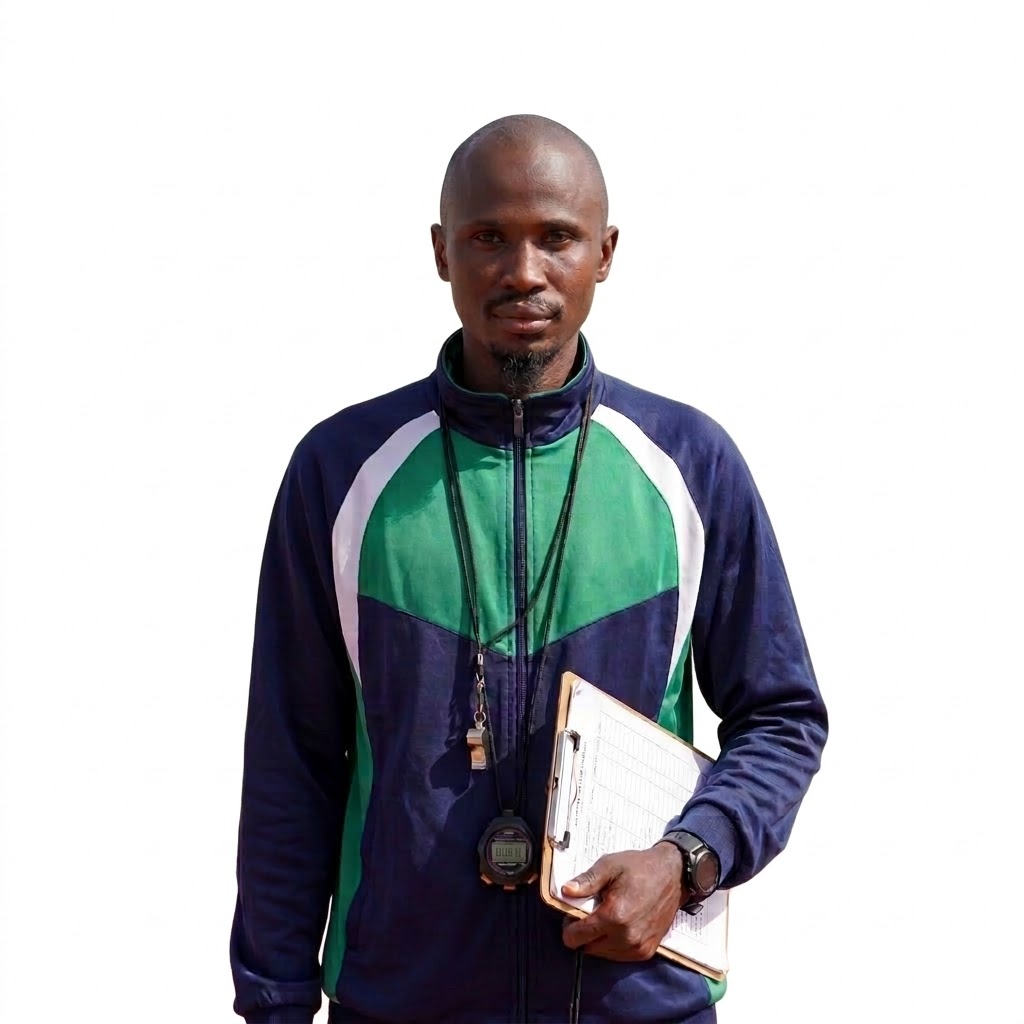
As a Sport Officer with the Jigawa State Sports Council, I have spent my career witnessing the transformative power of athletics. I have seen the discipline it instils, the hope it generates, and the community it builds. And I am convinced that while we need police, while we need laws, and while we need parental responsibility, there is one vehicle that can carry Hadejia out of this darkness: sport.
Before we can prescribe a cure, we must first diagnose the disease. The insecurity engulfing Hadejia did not emerge from a vacuum. It has grown from specific, identifiable roots.
According to December 2025 reports, Jigawa State is the third poorest in Nigeria, with 80% of children out of school. In communities with large families, parents struggle to meet basic needs, leading to despair in youth without education or job prospects, fueling crime.
Drug abuse existed before the Boko Haram refugees’ arrival, with local youths accessing substances like Wiwi, Sholisho, and Tramadol. But refugees introduced large, powerful drug dealers who settled in town, worsening the situation. Young people gained easy access to new, varied drugs, increasing abuse, especially among females and under-18s, who had been less affected before. These new dealers made drugs more accessible and affordable, even to children.
The chemicals in these illicit substances are too strong for young minds. They cause users to fight one another in their hideouts and gatherings. A minor misunderstanding that would once have ended with words now ends with knives, scissors, or sticks drawn in anger. The connection is undeniable: drugs fuel violence, and violence fuels insecurity.
The pattern of crime in Hadejia has followed a predictable and terrifying trajectory. It began with shop-breaking, which gradually became more rampant. Then some youths started blocking small roads with sticks and cutlasses, robbing passengers of their money and phones. At first, these incidents were rare.
Now, these gangs have escalated further. They attack businesspeople inside their own shops, arriving two to a motorcycle, armed with guns. The progression from petty theft to armed robbery has happened right before our eyes, and fear has filled the hearts of all Hadejia people.
Some will ask how football or athletics can solve serious problems like drugs and armed robbery. As someone experienced in sports development, I’ve seen a well-organised sports program achieve much. Troubled youths become disciplined athletes, communities unite behind local teams, and hope replaces hopelessness when young people discover their talents and worth.
Let me explain precisely how sport can serve as the vehicle to carry Hadejia back to peace.
1. Sport Occupies Idle Hands and Minds.
The Prophet Muhammad (peace be upon him) taught us that two blessings which many people take for granted are health and free time. An idle mind, unoccupied with productive pursuits, becomes a workshop for mischief. When young people have nothing to do from morning until night, when they have no place to gather except street corners, when their only entertainment comes from substances that destroy their minds, trouble becomes inevitable.
Sport provides an immediate and powerful alternative. A young person who reports for football training every evening has no time to sit around smoking weed. A teenager who is preparing for a weekend basketball tournament is focused on practice, not on planning robberies. A youth who is exhausted from athletic exertion sleeps soundly at night instead of roaming the streets looking for trouble.
I have seen this transformation with my own eyes. In communities where we have established regular sporting activities, crime rates drop. It is not complicated mathematics. It is simple: a busy youth is a peaceful youth.
2. Sport Teaches Discipline and Self-Control.
Drug abuse thrives in the absence of self-discipline. The ability to say no, to resist peer pressure, to choose long-term wellbeing over immediate gratification—these are skills that must be learned and practised.
Sport is one of the most effective teachers of discipline. Every athlete learns to follow rules, to respect coaches and officials, to control their emotions in the heat of competition, and to work hard even when no one is watching. These lessons transfer directly to life outside the field.
Consider the young men who killed their friends over minor arguments in March 2025. Would they have reacted differently if they had spent years learning emotional control through sport? If they had been taught that losing your temper leads to defeat, that self-control is strength, and that violence has no place in resolving disputes? I believe they would.
3. Sport Builds Community and Breaks Down Division.
One of the dangerous consequences of the drug trade in Hadejia has been the introduction of powerful dealers from outside. These individuals have no loyalty to our community, no investment in our peace, and no concern for our children beyond the profits they generate.
Sport creates the opposite dynamic. When you play on a team with someone, you develop bonds that transcend neighbourhood, ethnicity, or background. You learn to trust each other, to work together toward common goals, and to celebrate shared victories. These bonds strengthen the social fabric and make communities more resilient against those who would exploit division.
Imagine what would happen if we established a Hadejia Youth Football League with teams representing each quarter of the town. Young people from different backgrounds would come together regularly, not to fight but to compete by the rules and shake hands when the match ended. Suspicion would be replaced by familiarity. Hostility would be replaced by respect.
4. Sport Creates Positive Role Models and Mentors.
Every coach is a potential mentor. Every older athlete can set an example for younger ones. In a sporting environment, young people encounter adults who care about their development, who notice when they are struggling, and who can guide them away from dangerous choices.
Currently, who are the role models for many of Hadejia’s youth? In too many cases, they are the drug dealers with money and flashy lifestyles. They are the gang leaders who project power and fearlessness. Sport offers an alternative: coaches who demonstrate that hard work leads to achievement, athletes who show that discipline brings success, and community figures who prove that respect comes from contribution, not intimidation.
As a Sport Officer, I have seen coaches become fathers to boys who lack paternal guidance. I have seen athletic mentors intervene when they noticed a player showing signs of drug influence. These relationships save lives.
5. Sport Reveals Talent and Opens Pathways.
One of the most powerful weapons against hopelessness is discovering that you have value, that you are good at something, and that your life has potential. For many young people trapped in poverty and despair, sport provides this discovery.
Nigeria is filled with stories of footballers who rose from humble beginnings to achieve fame and fortune through their athletic talent. While not every young athlete will become a professional, many can earn scholarships, gain admission to higher institutions, or secure employment through sport. Even at the local level, talented players can earn income through semi-professional leagues, coaching opportunities, or equipment-related businesses.
When a young person believes their future holds possibilities, they are far less likely to risk that future on crime and drugs. Sport plants the seed of hope.
6. Sport Provides a Platform for Drug Education.
The fight against drug abuse cannot be won through arrests alone. We must also educate our youth about the dangers of these substances and equip them with the skills to resist temptation. And there is no better platform for this education than sport.
Young people trust their coaches. They listen to respected athletes. They absorb messages delivered during team meetings and training sessions. By integrating drug awareness programmes into sporting activities, we can reach the very population most at risk.
Imagine a football league where every team must complete a drug education workshop before being allowed to compete. Imagine tournaments sponsored by anti-drug campaigns, with messages printed on jerseys and banners at every match. Imagine former addicts speaking to young athletes about the destruction they witnessed. This is not fantasy. This is practical, achievable intervention.
I am not suggesting that sport alone will solve all of Hadejia’s problems. We still need effective policing, responsible parenting, economic opportunities, and strong leadership. But I am arguing that sport must be recognised as an essential component of any comprehensive strategy to restore peace.
Let me paint a picture of what Hadejia could become if we invested seriously in sport.
Picture this: Every quarter of Hadejia has a functioning football pitch where young people gather every evening for organised training. Coaches—some volunteers, some employed by the local government—provide supervision, instruction, and mentorship. Leagues operate year-round, with weekend matches drawing crowds of families and neighbours who celebrate their youth’s achievements.
Picture this: The Hadejia Township Stadium, which currently hosts only occasional events, becomes a hub of weekly activity. Basketball, volleyball, and athletics programmes complement football, ensuring that young people with different interests can find their place. Tournaments bring teams from across the local government together, fostering healthy competition and community pride.
Picture this: Every school in Hadejia has a functional sports programme. Physical education is taken seriously, not treated as an afterthought. Talented students are identified early and connected with clubs where they can develop. The 80% out-of-school rate remains a tragedy, but for those children who cannot attend school, community-based sport provides structure, supervision, and hope.
Picture this: The drug dealers who currently prey on our children find their customer base shrinking because young people are too busy, too healthy, and too hopeful to seek escape in substances. The gangs find it harder to recruit because belonging to a team provides the identity and camaraderie that gangs exploit. The armed robbers find fewer desperate youths willing to join their ranks.
This is not a dream. This is an achievable reality if we have the will to pursue it.
To the Executive Chairman of Hadejia Local Government, I say: invest in sport as seriously as you invest in security. Build pitches in every ward. Employ coaches for every quarter. Organise leagues that give young people something to look forward to each week. The budget required is small compared to the cost of insecurity.
To the Executive Governor of Jigawa State, I say: support local government initiatives with state resources. Make Hadejia a pilot project for using sport as a tool for peace. Deploy coaches and equipment from the State Sports Council. Create pathways for talented athletes to access higher-level competitions and opportunities. Show the nation that Jigawa is serious about innovative solutions to security challenges.
To the traditional rulers and community leaders of Hadejia, I say: use your influence to encourage youth participation in sport. Speak from your pulpits about the value of athletic discipline. Identify land that can be converted to playing fields. Support parents who allow their children to participate. Your blessing carries weight.
To the parents of Hadejia, I say: support your children’s involvement in sport. Attend their matches. Ask them about their training. Notice when coaches speak well of them. The same energy your child might otherwise devote to destructive activities can be channelled into athletic achievement.
To the youth of Hadejia, I say: choose the field over the street. Choose the ball over the drug. Choose the team over the gang. The path of sport is harder in some ways—it requires discipline, hard work, and patience—but it leads somewhere worthwhile. The path of drugs and crime leads only to prison or the grave.
The five lives lost between March 8th and March 13th, 2025, cannot be recovered. The newlywed bride, with her throat slit, will not return to her grieving husband. The mechanic killed in his own home will not repair another vehicle. The young men who killed their friends over arguments will carry that guilt forever.
But their deaths need not be the end of the story. They can be the beginning of a new chapter—a chapter in which Hadejia recognises the urgency of the crisis and takes bold action to address it.
I have spent my career believing in the power of sport. I have seen it transform individuals, unite communities, and create hope where none existed. I am convinced that sport can be the vehicle that carries Hadejia out of this season of insecurity and back to the peace for which this town has always been known.
The vehicle is ready. The road is before us. All we need are drivers willing to steer us toward safety.
Let us choose sport. Let us choose our children. Let us choose peace.
Garba Sidi is the Sport Officer 2, Jigawa State Sports Council, Hadejia, Jigawa State.