
By Dahiru Kasimu Adamu
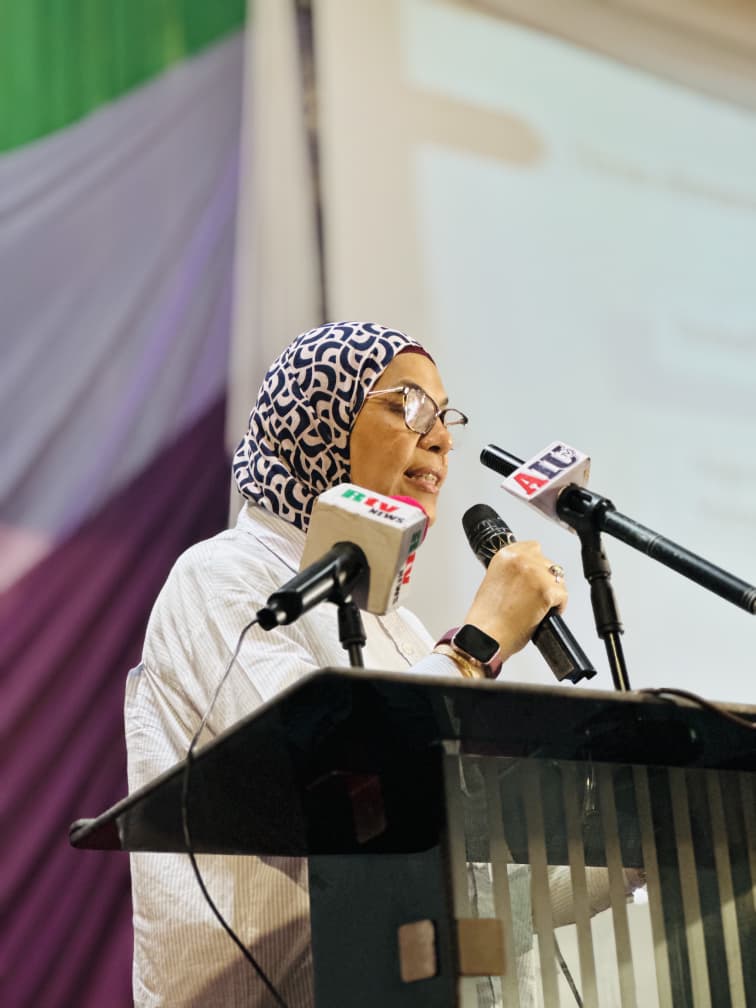
A media and journalism scholar from Cairo University, Egypt, Prof. Fatma El-Sayed, has described artificial intelligence (AI) as a transformative force capable of turning the media from a passive observer into an active engine of civic engagement and national development.
Prof. El-Sayed stated this while delivering the pre-conference lecture at the opening of the First International Conference organised by the Department of Mass Communication, Usmanu Danfodiyo University, Sokoto (UDUS). The conference, themed “Media and National Development in the Era of Artificial Intelligence,” was held on Sunday at the Emir Zayyanu Auditorium on the university’s main campus.
Speaking on the opportunities AI presents for Africa, Prof. El-Sayed described the technology as a “leapfrog engine” for development. She identified three major areas in which AI can accelerate progress: overcoming language barriers, enabling communication through voice and video for populations with low literacy levels, and facilitating low-cost, automated content production.
She argued that AI should be viewed as a critical infrastructure requirement rather than merely a technological tool, stressing the need for stable electricity, reliable internet connectivity, and data sovereignty across the continent.
According to her, the ongoing global technological shift has altered traditional development pathways, and she notes that “the old rules of development no longer apply” because AI provides a structural shortcut to economic and social advancement.
Prof. El-Sayed further emphasised the importance of African ownership of the continent’s digital future, asserting that “the future of AI in Africa should be theorised by Africans.”
She urged governments, educational institutions, and media organisations to harness AI responsibly by improving efficiency, reclaiming African narratives, strengthening data governance frameworks, investing in indigenous data resources, promoting equitable international partnerships, developing ethical AI-focused media curricula, and expanding AI literacy among citizens.
Earlier, the Head of the Department of Mass Communication, Dr Umar Jibrin Gwandu, welcomed participants and highlighted the department’s growth and achievements since its establishment.
Dr Gwandu said the conference was designed to prepare future media professionals for the rapidly evolving digital environment and the increasing integration of AI into media and communication practice.
“AI has come to stay, and we must learn to use it as a tool for development, not deception,” he said.
The event attracted media and communication scholars, industry practitioners, students, and other stakeholders from within and outside the university.
Established in 2019, the Department of Mass Communication at UDUS is committed to training professionals who can contribute meaningfully to Nigeria’s media and communication industry. The department has so far graduated two sets of students.