I have never seen a liar like the guy who said his life was under threat for renouncing his scholarship as a PG student of Ahmadu Bello University (ABU) Zaria over the killing of Deborah Samuel.
He allegedly feared what befell Deborah in Sokoto may happen to him in Zaria if care was not taken. He added that he faced the fiercest discrimination in Zaria, particularly in the Department of Political Science, where he studied comparative politics. Moreover, he was allegedly forced to dress like northerners, say Assalamu Alaikum and his rented apartment the off-campus always targeted!
The same Zaria we graduated from, oh! the same Zaria where you are likely to grasp more Igbo words than even the Hausa language? Political science where you have representatives of all tribes as lecturers and students! I have never seen a pugnacious liar like that dude.
People like this guy should be avoided at all costs. They are the triggers of the ethnic faultlines we have. They brew discord to sustain the mutual distrust. He is as toxic and barbaric as the mob that lynched Deborah in Sokoto, the mob that killed the four souls in Lekki and the so-called unknown gunmen that decapitated the lawmaker yesterday in Anambra State.
Ahmadu Bello University Zaria admission is the most sought after in Nigeria. People travel from far to study at ABU. All the departmental student heads in the social sciences faculty were Igbo, Yoruba, Idoma and all Christians during my time. You have all tribes as students. Zaria was a pilot ground and still a model of national cohesion. You have giant mosques and churches in the school with no one infringing on another person’s right.
Whoever comes to the media to paint a grotesque picture of ABU Zaria as a reflection of bigotry is nothing but a merchant of lies and fabricated mischief. People like that guy that a whole Punch newspaper is giving full page to spew his diatribe should be asked to shut up.
Stop the Islamophobia, stop your ethnocentrism and be human. There is more gain in being human than a purveyor of hate and bigotry.
Abdullahi O Haruna Haruspice wrote from Abuja. He can be reached via haruspicee@yahoo.com.
By the special grace of God, nothing shall befall the Imām of National Mosque, Professor Ibrahim Ahmad Maqari, for the calculated report published by Vanguard Newspapers. The media house submitted a report on the Sokoto incidence wherein they sandwiched truths, half-truths and micro-truths.
The Imām didn’t justify mob action anywhere in his tweets and Facebook posts. He only maintained that Muslims have redlines. Circumferential lines that shouldn’t be approached, lines that must not be crossed to disrespect their faiths. And this is both factual and non-negotiable. So, the Imām was very much on point. No amount of deliberate media intimidation can change this hard fact.
You may say the Imām was not making a personal statement. He was stating what is obtainable in the thoughts of every Muslim with some adequate knowledge of Islamic law. It is in the books of Islamic law.
Unfortunately, we are not seemingly ready to make progress on this recurrent problem. People are reiterating the measures that can be taken to avert future episodes of this issue, but no one is ready to listen. Instead, the suggestions are mischievously twisted to mean tacit justification for mob lynching. What sort of regressive society have we become? We prefer to dwell on polemical exchanges rather than orienting ourselves towards some mutual understanding. Between polemics and societal orientation, which paves the way for harmony in a plural society?
Muslims are saying blasphemy isn’t tolerated in Islam. When genuinely committed to the rights of Prophet Muhammad (Peace Be Upon Him), the provision by Islamic law is execution. And in Qur’an Chapter 6, verse 108, Muslims are categorically prohibited from blaspheming anyone’s religion – be they Christians, Jews or Traditional Worshippers. It is not allowed in Islam. The Qur’an has warned about it. This prohibition was made so that no one blasphemes Islam out of revenge. By this, Islam respects the boundaries or redlines of every religion.
Are Christians saying that their religion encourages them to blaspheme Islam? Where was that stated in the Bible? I believe nowhere! This means it is purely an act of mischief for anyone to choose to make a living from ridiculing or blaspheming a Muslim’s faith since the instruction isn’t Biblical.
These are honest discussions that will promote harmony and give us some sanity. It will also give us a civil society. This is what a national mosque Imām, Professor Ibrahīm Maqari, says. He was not justifying mob action by any implication. So do not put words into his mouth, please. Vanguard Newspapers lied as usual. Barefaced. And this is not the first time they have submitted such a mischievous report whose jeopardizing tendencies they are underestimating.
But it is understandable since yellow journalists would always take pleasure in misfortunes like this. It gives them the advantage of selling volumes of papers and gathering traffic. Woe onto he who follows unethical methods to garner influence and gain income. Woe onto him!
Ibrahiym A. El-Caleel writes from Zaria and can be reached via caleel2009@gmail.com.
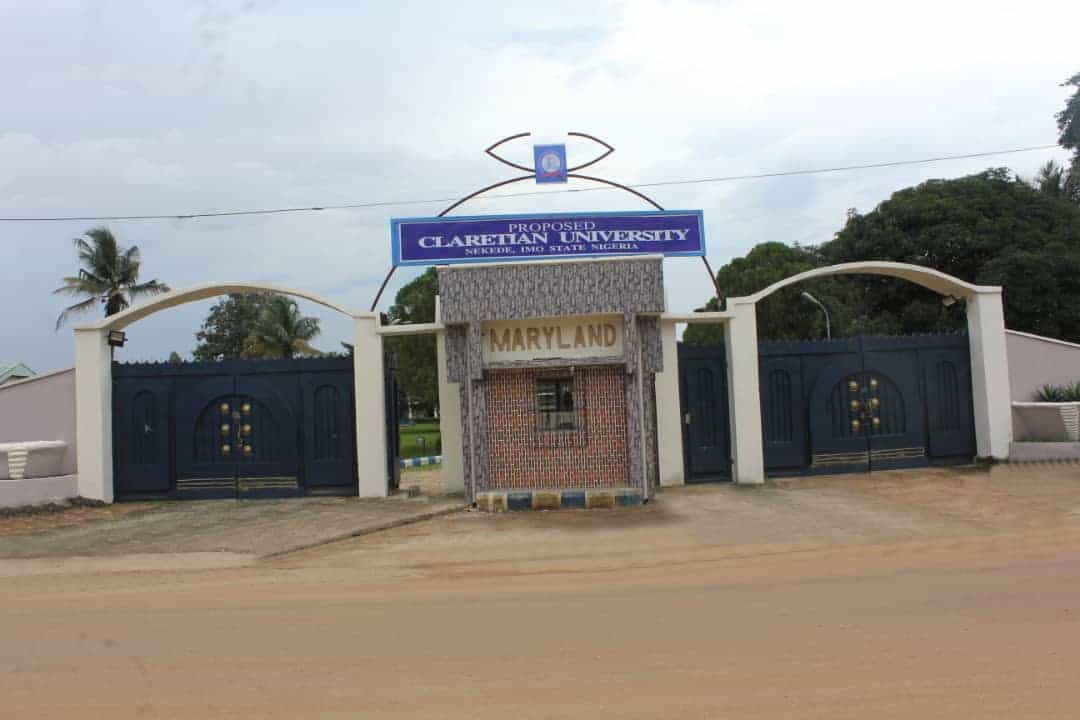
A 100 level student at the Claretian University of Nigeria, Imo State, Suel Ambrose, slumped and died while acting in a drama on campus.
The incident that took place Friday has thrown the whole school community members into confusion.
The drama was in commemoration of the death and resurrection of Jesus Christ in respect to the Easter celebration.
Ambrose, who hailed from Benue State, was dramatising the role of the biblical Peter in the Passion of Christ when the incident occurred.
According to the source, who identified himself as Mavis, the 25-year-old first-year student fell on the floor and started bleeding.
It was gathered the deceased had the dream of becoming a priest in the Catholic church before his demise.
He added, “He was playing the role of the biblical Peter in the dream and that process when Peter cut the ear of one of the soldiers and Jesus fixed the ear and asked Peter to let them do their wish. You know how passionate the play is.
“So when the soldiers chase the disciples to drive them away from Jesus, the young man fell on the floor and started bleeding. We took him to our school hospital, and the doctors did their best, but he was not responding to treatment.
“We took him to the Federal Medical Center in Owerri, where he was pronounced dead.”
The drama was in commemoration of the death and resurrection of Jesus Christ in respect to the Easter celebration.
A few days ago, while at our university campus here in Rabat, I heard shouts outside the premises resembling a public demonstration – something quite unusual and often carried out orderly in Morocco, without the slightest chance of being hijacked by hoodlums. I could not understand what people were saying because they spoke in Darija, the local, broken Arabic dialect spoken colloquially in Morocco. I tend to pick some sentences in normal circumstances, especially when spoken to me directly.
So, I asked my Moroccan friend what was going on, and he answered that people were chanting pro-Palestinian songs and shouting anti-Israeli slogans. I found that interesting given the special place of Jews in Morocco, who, according to Aomar Boum, the author of Memories of Absence: How Muslims Remember Jews in Morocco (and translated into Arabic as “Yahud al-Maghrib wa Hadith al-Dhakirah” by Khalid Saghir) used to number more than 200, 000 before the creation of Israel and up tp around 1950s, but in post-independence Morocco, their number slashed to less than 5000, as they engaged in gradual exodus to their newfound state. But I noticed that the small protest was officially unwelcome when suddenly security guards of the university closed its gates and prevented the intrusion of protesters, who were mostly, if not entirely, students of the university. I would only come to know the exact cause of the protest a few minutes later when, together with my Moroccan friend, we were encouraged and directed by some officials of the university to follow a way that led us to one beautified public lecture hall to participate in a conference, about which we were neither aware nor essentially prepared to attend.
I went straight to the front row in the hall and found a seat where I could watch and listen with much attention, while my friend preferred to sit at the back. It quickly dawned on me that the conference themed “al-Diyanat al-Samawiyah Hamilat Risalat al-Salam” (Heavenly Religions Carrying the Message of Peace) was, besides, a few delegates from a Moroccan council of Islamic knowledge, hosting the Archbishop of Rabat, Cardinal Cristobal Lopez Romero and a Jewish Rabbi, Rabbin Mardekhai Chriqui, coming all the way from Jerusalem.
I started enjoying the proceeding when the MC made her introduction in Arabic and coalesced it with the famous verse of Surat al-Hujurat upholding the spirit of humanity and emphasizing racial and ethnic diversity as a distinct human property. And I did not bother much when she switched to French, which I assumed was the translation of what she said in Arabic, though I do not understand. When I looked at my phone, as the audience awaited the Jewish speaker to take over the stage, I just clicked on my WhatsApp and saw my friend’s message, telling me that he had gone out and we might meet in the mosque. I would have also gone out, but I was lured to stay to listen to the heavily bearded Israeli Rabbi, perhaps because that was my first time to see a real, self-identifying Jew physically and, in fact, a religious authority for that matter. When the man took over the podium, he spoke briefly in Darija, which I luckily understood as he minced his words slowly as if lamenting that he had to do that before switching to French. In the Darija, the Rabbi just excused that although he spent about 40 years in Morocco, he was not good at Arabic, so he informed his audience that he would prefer to switch to French, which he then did without any ado. At this juncture, I also decided to exit, without knowing if his speech would be interpreted in Arabic or not, and without bothering if too many speakers would speak in Arabic later. (A link to the conference is https://m.youtube.com/watch?v=fY6eoZ6RObA&t=703s).
The most relevant part of this story is that there are indeed initiatives of interfaith dialogue worldwide, and this seems to have come to define interreligious relations among members of heavenly religions. But it is also a fact, as this anecdote demonstrates, that some actors in the interfaith program may be unwelcome, detested or rejected. This is precisely what reminds me to offer my humble thoughts on the current brouhaha about the interfaith issue, which has just become a topic of discussion, at least in northern Nigeria.
Perhaps a few people will disagree that the matter was dragged to the public domain by the removal of Shaykh Nuru Khalid, the chief Imam of the Friday mosque at Apo Legislators’ Quarters, less than two weeks ago. That happened over a sermon he delivered on the collapsing security situation in Nigeria. The Imam would have been hailed as a hero and a champion that deserved accolades by the entire northern Muslims, but for his flirtation with the controversial phenomenon of interfaith. After all, distinguished scholars who have become a sort of religious canons in Nigeria like the late Shaykh Ja’far Mahmud Adam, the late Shaykh Muhammad Auwal Albani Zaria and the few ones alive like Shaykh Bello Yabo, Shaykh Murtala Asada Sokoto, Shaykh Idris Abdulaziz Bauchi and a few others are known to be showing impatience toward any untoward development that affects (affected) the poor Nigerian masses. These scholars have uttered bitter homilies and persistent tirades against governments over neglect of their primary responsibilities, particularly protecting lives and properties. Their prominence and public acceptance are partly glued to their decision to maintain a frugal life, remote from the corridors of power, hence capable of speaking truth to power, no matter whose ox is gored.
Naturally, by siding with the masses, Imam Nuru Khalid, who was psychologically martyred when fired from his job, should have been catapulted to such a prestigious clerical position. But in his case, this was impeded by his affiliation to interfaith organizations, often seen with Christian groups who, it seems, trust him as one of the symbols of moderation and tolerance, which may not be entirely untrue. The attention of the Muslim public was recently attracted by his unpopular view when in the aftermath of Abduljabbar Nasiru Kabara’s blasphemy saga and the ensuing arguments, Nuru Khalid voiced views that did not go well with the majority of enthusiasts, particularly on the shortlived misunderstanding between Prof Ibrahim Maqary and Dr Abdallah Gadon Kaya, two rising scholars in northern Nigeria.
At that time, Nuru Khalid was exposed as an advocate of interfaith, which in Hausa people wrongly render as wahdatul adyan (unification of religions), thanks to the widely circulated clips of Shaykh Albani, which popularized this view and mentioned Nuru Khalid as one of its agents. Hence, when Nuru Khalid was removed from his imam position, many commentators in the North merely clung to his affiliation to the interfaith group to further endorse, celebrate or justify his removal. But the mosque did not cite that as a cause for his sack or regard it as a fundamental problem of the Imam. However, Nuru Khalid’s sudden transformation as a hero in the milieu of Nigerian Christians, some of who might not have known him before, his public revelation about some international groups proposing to finance a mosque project for him and his more open hobnobbing with Christians have further thrown him into disrepute among Muslims, who still sense that this interfaith phenomenon is nothing but attempts to eclipse the teachings of Islam and collapse all religions into one new faith.
Another figure, also seen as a vital organ in the interfaith dialogue program, coincidentally also bearing the name Shaykh Nuru Lemu. Although sounding calm and soft-spoken unlike his namesake, Nura Lemu has taken it up to himself to clear what he thought are misconceptions being circulated about the interfaith dialogue initiative. In an audio clip shared via social media, Nuru Lemu claimed that interfaith is never a new invention nor devoid of a rudimentary religious basis, tracing it to the time of Prophet Muhammad when he designed a pact of peaceful coexistence with Jews as citizens of Madinah, and when he entered into a truce with Quraysh polytheists in the famous treaty that would be known as Hudabiyyah. Nuru could have cited the pre-Islamic treaty known as Hilf al-Fudul, which the Prophet participated in, and pledged to partake in a similar one if a need for that would arise. In fact, Nuru would have cited numerous Quranic verses upholding peaceful coexistence and dialogue between Muslims and members of other faiths, as can be discerned in chapters like Surat Ali-Imran, Surat al-Ma’idah, Surat al-Mumtahanah, etc. Since the second biggest religion after Islam in Nigeria is Christianity, it is interesting to make a case with the verse that says:
“You shall certainly find the Jews and those who associate partners with Allah the most vehement of the people in enmity against those who believe, and you shall certainly find those who say, `We are Christians,’ the nearest in friendship towards those who believe. That is so because there are savants and monks amongst them and because they are not haughty ” [Surat al-Ma’idah verse 82].
Nuru Lemu, who is one of the heads of a mega religious and educational centre in Niger State, a neighbour to Abuja, where his sacked namesake is based, added that the dialogue would also concentrate on intra-Muslim relations. Thus, it will work out ways to dent and lessen the growing discords and animosities among Muslims occasioned by ideological rivalry and sectarian division.
From this viewpoint, it is not hard to convince Muslims that the interfaith issue is a healthy, innocuous mission that Muslims would warmly welcome as a process of living up to the expectation of their scripture and broader Islamic vision.
However, it must be clarified that interfaith dialogue may have a unique interpretation for Christians different from what Muslims may be ready to accept. Muslims do not appear prepared to assimilate the neo-liberal interpretation of Islam in such a way that they would compromise established Islamic values and fundamental teachings. Muslims may fail to implement specific injunctions of Islam based on human weakness, but they will hardly portray them as outmoded, irrelevant and unsuitable for the modern situation.
Christians, for instance, as evinced by the obsession of Mathew Kukah in his anti-Islam columns and public discourses, may conjure that interfaith dialogue would henceforth guarantee them an institutional legitimacy of marrying a Muslim woman, or it may make Muslims feel reluctant in missionary work while they (Christians) continue to win converts either directly by luring pockets of northern animists or through the new atheism phenomenon that trend mainly in the virtual world and cyberspace. Christians may conjecture that Muslim females, especially in Yorubaland, where the controversy keeps erupting, will relinquish their fundamental right of wearing hijab. In fact, many Christians would wrongly assume that interfaith dialogue, when successfully embraced, will encourage Muslims to keep mute on tragic instances befalling their fellows, such as the series of ethno-religious crises that broke out in places like Jos, Tafawa Balewa, Southern Kaduna, Lagos Sagamu, etc.
In retrospect, to what extent are Nigerian Christians ready to accept Prophet Muhammad as God’s apostle just as Muslims uphold Jesus as Prophet as a fundamental condition of being a Muslim, without which one will be outside the fold of Islam? Or at least, are Nigerian Christians ready to reserve some respect for Prophet Muhammad so that they will shun all utterances and actions that may be considered blasphemous, which, needless to say, fuels religious crisis and further strains relations between Muslims and Christians?
Nigerian Muslims would be very willing to uphold peace initiatives. Still, they will be very unlikely to accept any interfaith interpretation that warrants silence and reprisals in situations where their fellows are innocently attacked and persecuted anywhere on Nigerian soil. Muslims will invoke the same scripture which warns them not to ally with their enemies – whoever they might be, which enjoins them not to give in to treachery, which cautions them on prospects of being bamboozled and hoodwinked by their enemies and which reminds them to be prepared for self-defence. Therefore, the interfaith initiative appears to be a neutral concept that can be applied positively or negatively and can be abused or misinterpreted disproportionately. But, clearly, its application goes hand in hand with contexts and real-life experiences.
Professor of Journalism and Emerging Media at Kennesaw State University, Farooq Kperogi, has faulted the Redeemed Christian Church of God’s interest in partisan politics.
Kperogi expressed his disdain regarding the church decision on his verified Facebook account on February 10, 2022, in an article titled “RCCG’s Dangerous Foray into Politics for Osinbajo.”
He said he was not surprised at the church’s sudden interest in partisan politics.
“This isn’t really surprising, frankly, because Pentecostal Christians see Osinbajo as their representative in government and think he is the fulfilment of Pastor Enoch Adeboye’s oft-quoted prediction that one of them would become Nigeria’s president during his lifetime.”
Kperogi also threw a subtle jab at President Muhammadu Buhari, faulting Osinbajo’s rise to the presidency as a ploy to burn the notion that the president is a fanatical Muslim.
He also described Osinbajo as a pentecostalist whose inner circle are his fellow pastors and churchgoers.
“Osinbajo himself defines his role in government in the narrow terms that his co-pentecostalists see it: as the materialization of a Pentecostal Christian theocratic dream. That’s why his inner political circle is almost entirely made of Yoruba RCCG members,” he wrote.
Kperogi further argued that Osinbajo is not fit to be president.
“There’s no Christian in government in Nigeria’s history who has ever been as narrow-minded, as culturally clueless, and as insular as Osinbajo, which was why, a senior Yoruba Christian professor told me recently that Osinbajo would “create greater instability as president” than Buhari has because “The Sharia folks will confront [Osinbajo’s] Christian fundamentalism with more violence” which would precipitate disabling communal upheavals.”
Several people have also reacted to the development.
Aisha Yesufu, a human rights activist, in a Tweet said there is nothing wrong with the church supporting Osinbajo
“So let’s assume RCCG is doing this for Osinbajo, what is wrong with that? Why shouldn’t RCCG support a candidate? If the candidate is good, we vote. If the candidate is bad, we do not vote! Simple! RCCG have (sic) as much right to be interested in politics as anyone else.” She tweeted
Also reacting to the news on the Daily Reality Facebook page is Mallam Muktar, who condemned RCCG’s political move, said that “religious leaders participation in politics will lead to divided allegiance”.
“It will be devastating to hand over Nigeria presidency to religionists/extremists whether pastor or Imam because their first allegiance will invariably go to their faith. They are the propelling force behind the clamour for religious configuration of contesting persons and religious blackmail of our electoral process. Who knows, they might also be behind the continuous blackmail of that notable SW Muslim presidential aspirant and political benefactor of their man, who may be perceived as their major obstacle to the presidential ticket.
“Nigeria doesn’t need such leaders. Nigeria needs [a] liberal Muslim and Christian who only fear God but [is] not bound by a non-displaceable religious creed or allegiance. We should resist and shake off religious politics in 2023 by demystifying religion configuration ticket and by voting for liberal candidates with total disregard to their faith,” he concluded.
Valentine’s Day, also called Saint Valentine’s Day or the Feast of Saint Valentine, is celebrated annually on February 14. It originated as a Christian feast day honouring one of the early Christian martyrs named Saint Valentine. Later on, the tradition becomes a significant cultural, religious, and commercial celebration of romance and love in many world regions, including some Muslim communities (Mostly unaware of what they celebrate). But, Saint Valentine’s Day is an official feast day in the Anglican Communion and the Lutheran Church. In addition, many parts of the Eastern Orthodox Church also celebrate the day.
In my view, Muslims have no business celebrating this day. Moreover, a Saudi cleric, Sheikh Muhammad Al-‘Arifi, said on Valentine’s Day, “Celebrating this holiday constitutes bid’a—a forbidden innovation and deviation from religious law and custom and mimicry of the West.” Besides, Islam is all about showing love and humility every day, not only on February 14.
Numerous early Christian martyrs were named Valentine. The Valentine honoured on February 14 is Valentine of Rome (Valentinus Presb. Mart). He was a priest in Rome and martyred in 269. That was added to the calendar of saints by Pope Gelasius I in 496 and was buried on the Via Flaminia. The relics of Saint Valentine were kept in the Church and Catacombs of San Valentino in Rome and later in Santa Prassede, which remained an important pilgrim site for Christians.
In The Dictionary of Christianity, J.C. Cooper writes that Saint Valentine was “a priest of Rome who was imprisoned for succouring persecuted Christians.” It states that Saint Valentine was persecuted as a Christian and interrogated by the Roman Emperor Claudius II in person. Claudius was impressed by Valentine and had a discussion with him, attempting to get him to convert to Roman paganism to save his life. Valentine refused and tried to convert Claudius to Christianity instead. Consequently, he was executed.
However, before his execution, he is reported to have performed a miracle by healing Julia, the blind daughter of Emperor Asterius. As a result, the Emperor’s daughter and his forty-six member household (family members and servants) came to believe in Jesus and were baptized. That upset the Emperor even more.
So, on the evening before Valentine was to be executed, he is supposed to have written the first “valentine” card himself, addressed to the daughter of his jailer, Asterius, who was no longer blind, and signing it as “Your Valentine.” The expression, “from your Valentine”, was later adopted by modern Valentine’s letters.
With the concatenations mentioned above, it is not rocket science to understand that Valentine’s Day is strictly a Christian affair.
Adamu Bello Mai-Bodi wrote from NPA Quarters,Apapa, Lagos.
“The most dangerous untruths are truths moderately distorted”. – George Lichtenberg
It is not uncommon that some public commentators and analysts could be mischievously deceptive in their narratives and analyses of history to accomplish an end. They could quote historical facts, mix them with fiction, and frame narratives to promote a single story. In some cases, they deliberately relegate and ignore some significant events or points to suit the writer’s bias. Recent writings on the origin and rise of Boko Haram demonstrate how some writers distort facts to frame narrative and promote bigotry.
For instance, if one can closely study the framing of Boko Haram and how it is brazenly becoming one-sided, then one can say that the whole history is rewritten to massage and satisfy the ego of some group’s bigotry. It is not farfetched to say that some of these bigots will soon claim that the generality of the Muslim North endorsed and supported Boko Haram and Nigerian Christians were the only targets and victims of the group’s deadly attacks. Why would I make such a sweeping projection with every sense of finality? To respond to this question, let’s go back to 2013.
While speaking at the 14th meeting of the Honorary International Investor Council (HIIC) held at the Banquet Hall of the Presidential Villa on June 22, 2013, former Nigeria’s President, Goodluck Jonathan, a Christian, disclosed that the Boko Haram sect had killed more Muslims than Christians in Nigeria. This is not just hearsay but a verifiable fact that is naked in vision to people that are not be-clothed with hatred, ethnic and religious jingoism.
However, the Christian Association of Nigeria (CAN) couldn’t swallow this fact and, therefore, issued a statement to disagree with him vehemently. In a press statement credited to the Northern chapter spokesperson, Elder Sunday Oibe, CAN said that Jonathan’s assertion was “misleading and unacceptable”. They further stated that,
“We want to believe that the president was misquoted; we don’t want to believe that with the security apparatus and report from security intelligence network at his disposal, he made this assertion. If it is true that Mr President actually made this assertion, then, we are highly disappointed and sad at this veiled attempt to distort the fact as it concerns the activities of the Boko Haram sect. The purported statement by the President is highly disappointing considering the facts that Christians, churches and their businesses have been the major targets of Boko Haram” (Sahara Reporters, June 23, 2013. http://saharareporters.com/2013/06/23/northern-can-disagrees-jonathan-says-boko-haram-has-killed-more-christians-muslims)
For CAN, the Boko Haram crisis was/is “religious by nature” – the familiar we-versus-them religious clashes and conflicts in Nigeria, although in different outlooks and techniques; it is a plot by some Muslims to reduce the populations of Christians in Nigeria and crackdown their businesses. Since then, CAN sympathisers subsequently frame their narrative of Boko Haram from this angle. An article titled “Cornflakes for Jihad: The Boko Haram Origin Story” by David Hundeyin, widely shared on social media in the last few days, aimed to promote this kind of narrative. Unfortunately, the author skillfully filled the article with half-truths and a mixture of facts and fiction to push the CAN’s sentiment. Hundeyin is practically siding with his former religion.
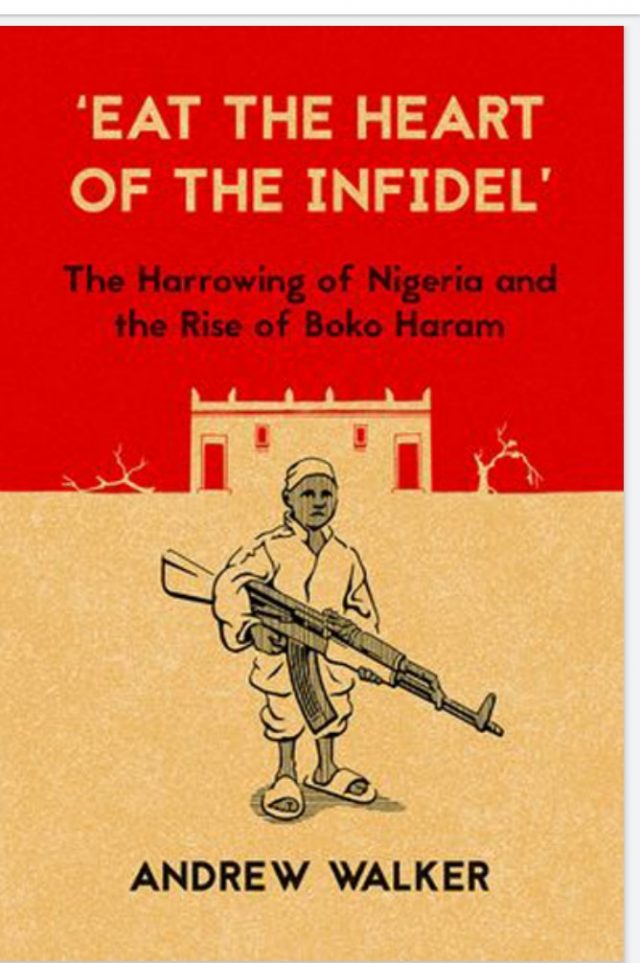
Firstly, Hundeyin makes an effort to link Sheikh Abubakar Mahmoud Gumi with the origin of Boko Haram. Many people think that Hundeyin’s “Cornflakes for Jihad” is the first futile effort by an “investigative” journalist, analyst, historian or whatever to make this manipulative effort. However, Andrew Walker’s thesis, “Eat the Heart of the Infidels: The Harrowing of Nigeria and the Rise of Boko Haram” (Oxford University Press, 2016), preceded it in that exercise. Therefore, it is not likely to be a false accusation if it is argued that Hundeyin copied the idea of featuring Gumi in discussing Boko Haram, almost verbatim, from Walker. From the arguments of Sheikh Gumi’s “influence” in the “political” realm of Nigeria to his “friendship with Ahmadu Bello”, to pioneering the “propagation of Wahabism” in post-independent Nigeria, to his contribution in the creation of Izala and his “Saudi connection” are equally and loudly echoed in Walker’s thesis.
For both Walker and Hundeyin, Sheikh Abubakar Mahmoud Gumi championed the Sunni/Salafi/Izala movement in Nigeria. Therefore, any account of the origin and rise of Boko Haram – a so-called Sunni/Salafi-fundamentalist terrorist group – must be traced back to him. Albeit impliedly, their submissions suggest that there would be no Boko Haram if Gumi did not “disrupt” the Sufi order and influence of Qadiriyya and Tijjaniya in Northern Nigeria. They claim that Gumi’s campaign of a corrupt-free practice of Islam inevitably gave birth to the radical movements in Northern Nigeria. This is to say, although without explicitly stating it in their works, every Sunni/Salafi-based movement in Nigeria, whether moderate or violent, must have had their inspirational source from Gumi. On the link between Boko Haram founder, Muhammed Yusuf, and Sheikh Gumi, Walker writes: “The title of Yusuf’s book deliberately echoes the titles of similar treatises by Sunni preachers, like Sheikh Gumi’s “The Right Faith According to the Sharia”, perhaps in order to lend his ideas credence…the two clerics share a revulsion for secularism..” (Walker, 2016:144).
This line of argument is even less faulty in logic and spirit of “balanced story” than what Hundeyin further orchestrated in his article. According to Hundeyin, Sheikh Gumi admonished Muslims, particularly his Sunni/Salafi followers, to reject a non-Muslim as a leader and advocated “for insurrection against a Christian Nigerian President” and, of course, his Christian followers. In the successive paragraphs that supported this claim, Hundeyin apprises his readers on the “consequence” of Gumi’s propagation; he states that after Gumi’s death, a Sunni/Salafi-indoctrinated group, which bears the name “Boko Haram”, toed to the path of his admonishment to carry weapons against Nigerian Christians, killing and bombing them in their churches. He wittingly makes reference to the bomb blast at “St. Theresa Catholic Church”, Madalla that “killed 37 people”, and other subsequent “killings of Christians” in Jos and Damaturu.
The implication of this narrative on an outsider, who does not know the context of Boko Haram terrorism in Nigeria, is that s/he would begin to see Sheikh Gumi as “problematic” and a source of Boko Haram’s inspiration and violent extremism. Secondly, a non-pragmatic reader may also assume that the group only targets Nigerian Christians in their series of attacks in the country. Hundeyin’s article aims to peddle that twisted narrative for no reason other than the writer’s hatred for the Muslim North (Arewa) and their Islamic culture. In one of his previous tweets, he heedlessly says that: “The world will be a significantly better place when Arewa culture completely dies off and is replaced with something fit for human civilisation” (David Hundeyin/Twitter, November 29, 2020).
In the spirit of fair analysis, it is expected that an impartial analyst would compare the socio-religious ideas Gumi propagated in his lifetime and the ideologies of Boko Haram. But this would not sell out Hundeyin’s bigotry, and so he ignored that vital aspect. The core centre of Boko Haram dogmatic tenets is a war against “western-styled” education, democracy and civil service. On the other hand, Sheikh Gumi was both a product and proponent of western-styled education; he worked with the government as a civil servant and received salaries from the state resources. As he proudly opined in his autobiography, “among [his] children were army officers, civil servants, medical doctors, an engineer…lawyers, teachers and workers in finance houses and private businesses. There was hardly any profession in which [he] did not have representation from [his] family” (Gumi with Tsiga, 1991:202).
Gumi was also pro-democrat, as evidence from his recorded preaching suggested so. He is famously quoted to have said, “siyasa tafi sallah”, which could loosely mean “politics is more significant than prayers”. This was the extent Gumi had gone to support democracy in Nigeria, and believe me, Shekau would not hesitate to call him “taghut” – an idolatrous tyrant. He had also worked closely with the Christian Head of States. They had a cordial relationship and respect for each other: Ironsi invited him to lead a delegation to North Africa and the Middle East to carry goodwill messages of his new regime; Gowon appointed him Chairman of the Nigerian Pilgrims Board and gave him “all the necessary support, although he himself was a Christian”; with Obasanjo, he could “freely talk” and express his mind on relevant socio-political issues (Gumi with Tsiga, 1991:203). However, Hundeyin willfully refuses to draw this analogy to give a sense of what Achebe called “a balanced story”. Instead, he purposely portrays Sheikh Gumi on the wrong page in the book of terrorist origin in Nigeria.
Contrary to the insinuation of Hundeyin moreover, the truth of the story is that Boko Haram did/do not target Christians only. In fact. Nigerian Muslims suffer(ed) more causalities than Christians in the Boko Haram conflict. Hundeyin refuses to mention the main enclaves of Boko Haram activities and the population ratio of Muslims and Christians there. Stating this factual data will indeed not favour his intended, warped story. The reality is that Muslims have the predominant population in Borno, Yobe and Adamawa States. Arguably, the cumulative of all Boko Haram killings of innocent people would show nothing less than 70% of Muslim casualties.
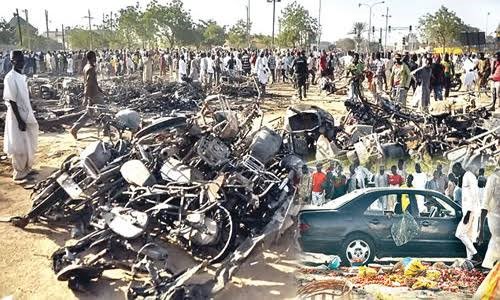
On a specific, direct attack on religions, Hundeyin only mentions the bomb blast at St. Theresa Catholic Church, ignoring similar incidents on August 11, 2013, at a mosque in Konduga where 44 people were killed and on November 28, 2014, at the central mosque in Kano where 120 people were killed (BBC Hausa, 2013, 2014). It is understandable if Hundeyin re-echoes the bomb blast at St. Theresa Catholic Church in his article; it is a show of solidarity to his ex-religion. However, what is faulty and even worrisome is the selective exemplification of the direct attacks on religions by the Boko Haram insurgents. A reader who is unacquainted with the details of Boko Haram attacks on places of public worship would feel that churches and Christians were the only victims.
Scenes from Kano Central Mosque Bomb Blast. Source: The Eagle Online
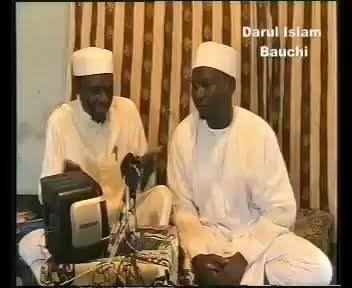
To further promote this half-truth, Hundeyin moves on to tell us how a Salafi/Sunni preacher was directly linked with the funding of Boko Haram. I will neither attempt to exonerate Sheikh Yakubu Musa nor believe those serious allegations in toto without reading or hearing the Sheikh’s version of the story. However, my problem here is with Hundeyin’s failure, which is intentional, to mention the Salafi/Sunni preachers that fought Boko Haram vehemently and even paid the ultimate price with their lives. It is on record that at the early stage of the Boko Haram crusade, Salafi scholars debated Mohammed Yusuf. In Bauchi, for instance, Ustaz Idris Abdulaziz Dutsen-Tanshi, a Salafist to the core, invited and challenged Muhammed Yusuf at his mosque and in the presence of his followers; so also a young Isa Ali Pantami – the then Imam of ATBU Juma’at mosque.
Imam Idris Abdulaziz debating Muhammed Yusuf
Imam Isa Ali Pantami Debating Muhammed Yusuf
These Salafists continued to be critical of Muhammed Yusuf and his sect. They consistently delivered lectures to denounce his fatwa. Sheikh Ja’afar Mahmoud Adam, an unapologetic Salafist, was particularly vocal in his public censure and condemnation of Boko Haram. Unlike Hundeyin, Walker states this fact in his book:
“In 2007, Yusuf ’s former teacher, Sheikh Ja’afar Mahmud Adam, himself an ardent Salafist, had gone on record to denounce the group and warn that these ideologues were heading for a violent confrontation with the state” (Walker, 2016:148).
For many, Sheikh Ja’afar was the spiritual successor of Sheikh Abubakar Mahmoud Gumi. Some influential people requested and later attempted to transfer his annual Ramadan Tafseer to Gumi’s preaching base, Sultan Bello Mosque, Kaduna. He conducted his annual Ramadan Tafseer in Maiduguri, the early and central territory of Boko Haram terrorism. During his Tafseer sessions, Sheikh Ja’afar was not reluctant to criticise Yusuf and his new sect. On April 13, 2007, a day to general elections in Nigeria, and barely 48 hours after delivering a talk in Bauchi on Islamic views on thuggery, violence and widespread killing of innocent souls, Sheikh Ja’afar was murdered in Kano while observing Subh prayer and “it is thought to be members of Yusuf’s sect” (Walker, 2016:148).
Another prominent voice among Salafists in the fight against Boko Haram was Sheikh Muhammad Auwal Albani, Zaria. But, unfortunately, he was also killed in cold blood. In a video released to the public, Muhammed Yusuf successor, Abubakar Shekau, took responsibility for the assassination (Sahara Reporters, February 20, 2014, http://saharareporters.com/2014/02/20/bo-haram-leader-claims-responsibity-killing-kaduna-cleric-sheikh-albani-threatens).
Hundeyin has ignored all these facts about Salafi preachers in Northern Nigeria but brought a single dubious claim to frame a narrative that would deceive an uncritical, vulnerable audience. His motive is clear: he wants to rebrand the entire population of Salaaf and the Muslim North as pro-terrorist, supporting the killings of Christians in Nigeria. It is rather unfortunate that this is where the discussion is heading, and it is a wake-up call to those of us that witnessed and had a first-hand experience of the Boko Haram crisis to begin to write our counter-narrative. If we don’t write it, others will write for us. And before we retrieve our consciousness, we will be afloat in a sea of half-truths and stereotypes on Boko Haram, Islam and the North.
Aminu Nuru wrote from Bauchi. He can be contacted via aminuahmednuru@gmail.com.
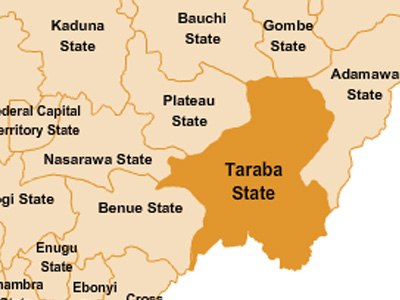
On a day like this, three decades ago, Taraba State was created from the defunct Gongola State. Unarguably, one of the most promising states at the time of creation. Being the third-largest state in Nigeria in terms of landmass, most of it being overly fertile. There is hardly a crop that grows in Nigeria that does not grow well in Taraba. In fact, many thrive best here.
While I cannot call myself an Agriculturist, I certainly know one or two things about farming being someone who is very proud of this profession and has had experiences that will forever remain green in my mind because of Agriculture. I am extremely passionate about Agriculture. I know the potentials that we have in Taraba. Unfortunately, states with far fewer potentials than Taraba have harnessed theirs and not Taraba for one reason or the other.
Taraba state has tourist potentials that are unmatched in this country. It is aptly described as “Nature’s gift to the Nation”. As a result, we have some of the most beautiful places anyone can contemplate or dream of visiting in Nigeria. Travelling from: Sardauna to Zing, Ibi to Karim Lamido, Ussa to Yorro, Kurmi to Gassol. In fact, across the length and breadth of Taraba, all one sees is one of the most breathtaking scenery you can find in Nigeria.
The lush green countryside, amazing mountains, wonderful waterfalls, and sonorous birds give sounds that you may not be wrong to call music. Since my elementary music teacher taught me that music is the arrangement of sounds that are pleasant to the ears. On a serious note, you have to fall in love with nature once in Taraba State; of course, I have done that. One has to. Taraba is that special: you can’t escape it.
Sadly, this has not translated to much development. I weep whenever I visit towns, villages, and hamlets in Taraba. I weep not only for the abundant natural resources being exploited but that should and would have been utilised for the benefit of all and the growing distrust and polarised nature of my dear state. Here are people who have refused to unite to defeat their common enemies: poverty, violence, unemployment, underdevelopment, drug abuse, kidnapping, etc. This shouldn’t be our reality.
Whoever fans the embers of disunity is not a good human being, to begin with, let alone being a good and responsible Taraban whether one is: a traditionalist, a Muslim, or a Christian. For God’s sake, we have all suffered for our failure to rise above prejudice, hate and do the needful for our dear state. We disappointedly all continue to play blame-games, while everything is ruined before our very eyes. Tarabans have to think and rethink whatever approach we have been using over the years have left a lot to be desired.
The truth is that we are all in this together. I know this for a fact because I get to mingle with Tarabans from all walks of life. My friend Jerry in Jalingo is no less a victim than my friend Ado in Yelwa, Sardauna local government. The old man I met in Dakka, Bali, local government struggling even at old age to feed his family is not different from the ones I meet in my hometown or any place I visit in Taraba.
The public primary schools in Jalingo, the state capital, don’t look much different from the ones in Borno Kurukuru, in Bali local government; the ones in Pantisawa In Yorro LGA and the ones in Kufai, Gassol local government, or anywhere in Taraba state. The difference is that some of our teachers do extraordinary things to nurture children that can become responsible citizens against all odds. So today, I pay tribute to our teachers and all those who defy all odds to develop our state. Thank you so much for your sacrifice and service to our dear State.
The plain truth is that we are all victims in one or the other. Whether we agree or not, whatever faith we profess or the party we support. A selected few benefit in any state that constituted authorities have failed to live up to their responsibilities, and most of the time, even those that benefit the pleasure are ephemeral.
We still have the opportunity to stem the tide and chart a new course for the only State we have and one that some of us love unconditionally. To change things for the better. But, we cannot do it alone. We must do it together: Christians, Muslims, and traditionalists. Until we unite, leaders or rulers will continue to exploit us and set us against one another. It is high time we commenced the building of a Taraba where merit matters and all Tarabans matter. A Taraba where things work and all that work hard within the ambit of the law can prosper without hindrance. A Taraba where the glass ceiling will be completely shattered.
Happy 30th anniversary to my dear State, Taraba. You will be great despite all the apparent obstacles to stop that from coming to fruition no matter what happens. We will keep on trying until we get it right.
We today live in a state far more divided than ever. But I find solace that we still have good men and women from all parts of the state and of all religious beliefs who are sincerely ready to see a complete revamping of our dear State. These Tarabans give me hope. For just like me, most of them do not have a bean and have no political goals to pursue rather a whole state, and indeed, nation to build.
I see hope boldly written on the face of my friend Jerry, a barber whose dream is to one day be a big employer of labour despite his financial constraints today. I find strength in the words of my friend Abdulhamid who supports his family with the little that he has while working relentlessly with little dependence on the government.
I know God willing things can and will change when Caleb, an ex-drug addict who has turned over a new leaf, advocates for peace and works towards our unity. Likewise, I believe we can change for the better when Zakiru freely works to better society and seeks success against all odds. Yes, Zakiru with even some hilarious jokes to it.
I have no reason to believe things will continue the manner they are today, forever because of the realities of the moment. I know we can change. Although, the time is entirely dependent on how ready we are for that to happen as Tarabans.
Today, I urge us all to mull over our challenges as a state. I plead with you all to reflect sincerely and see how we can all join hands to build the state that should be the envy of every state in the country because of our resources, which I know, once we get it right, Taraba will be the perfect example of how to move Nigeria forward being a state that can correctly be described as a mini Nigeria, with all that is inherent therein Nigeria. We must not fail our dear state as Tarabans; we have to stop failing this beautiful State now.
Happy 30th anniversary Taraba State. God bless Taraba State, and God bless the Federal Republic of Nigeria.
Abdulrazak Iliyasu Sansani wrote from Turaki B, Jalingo, Taraba State.
The ungovernability, which is crystal clear, toward the act of showing contempt and lack of reverence to sacred religious deity/deities is imminent and very alarming. If not seriously challenged and tackled by the constituted authorities, especially at the federal level, that may, unfortunately, aggravate severe tension even to the dogmatical secular democratic doctrine, believed to be a workable formula that has an answer to all national issues.
It holds true, you like it or not, the fact that religion matters in Nigeria. Most people are firmly bound to one of the two major faiths, Islam or Christianity, and thus, it is a duty call for any person in power to uphold, respect, and support people’s various beliefs. The people have the right to practice their religion. Blasphemy is unacceptable and is punishable even according to national laws in the criminal codes as enshrined by both customary and Shariah laws. You can’t shift secularism to this place – at least, it is not yet the time.
Observing closely how cascades of blasphemous thoughtlessness and rashness have been unravelling in recent times, you can sense new dimensions and order of hidden treacherous agenda, purportedly insinuated by servile demonic elements. It is not by mere serendipity but a carefully thought out and planned memorandum.
In the North, there are more than four blasphemy suits filed in courts. The two trending cases include Yahaya Shariff Aminu, 22, a musician, and Umar Faruk, 16, both in Kano. The latter has been overturned and acquitted, and the former has been sent for a retrial by the Court of Appeal.
Another classic take-away example was the just concluded dialogue that features the controversial Shiite scholar, Abdul-Jabbar Nasiru Kabara, following his deliberate inciteful utterances and wrong interpretation and exegesis of Sunnatic traditions (Hadith), and after his request to the Kano State government to do justice and convene a physical dialogue with other Kano Islamic Clerics from the Salaf, Tijjaniya and Qadiriyya Sects. The aftermath of the conversation proved the bitter truth that was heavy and unfavourable to the eccentric Shiite cleric.
I heard of a similar ordeal from Sokoto. A man allegedly made similar blasphemous utterances against the Prophet Muhammad (PBUH). However, we were supposed to be brainwashed by the excuse that he was suffering from temporal madness. Meanwhile, dementia was his alibi.
Taking a close look at these, one may ruminate over some questions and conclude that all these are not coincidental but planned.
Insecurity is a current social issue at hand. It has perturbed the entire nation. A lot of societal menaces are happening. This trending problem of blasphemy coupled with insecurity will produce a severe stale. If it finds a place to stay, it will add salt to an injury, and the pain will be intolerably excruciating.
There should be no room for apology for a deliberate blasphemous act. Anyone found guilty must be seriously punished and his actions thoroughly condemned. The same thing goes for all media outfits. Through that only, peace can prevail.
Some personalities and deities are insurmountable, untouchable in major religions that should be demarcated by the power authorities and declared as a “no-go” zone. In strong terms, it should be stipulated that anything the Christians, Muslims, or any other religion recognised by the authority; within the Nigerian Province, which is considered alien or goes against the standard teachings – especially blasphemous utterances must be punishable. The government should get a grip on these with a strong and clenched fist.
The government should seize the day while it’s still dawn and make hay while the sun shines before things turned out of hand.
Abdul-Hamid Abubakar Zubair Federal University Gashua, Nigeria. E-mail: ibntaimiyya@fugashua.edu.ng Phone no.: +2348138171001