Christianity

Upending Unanswered Prayers, Unlike Ye

By Ugochukwu Ugwuanyi

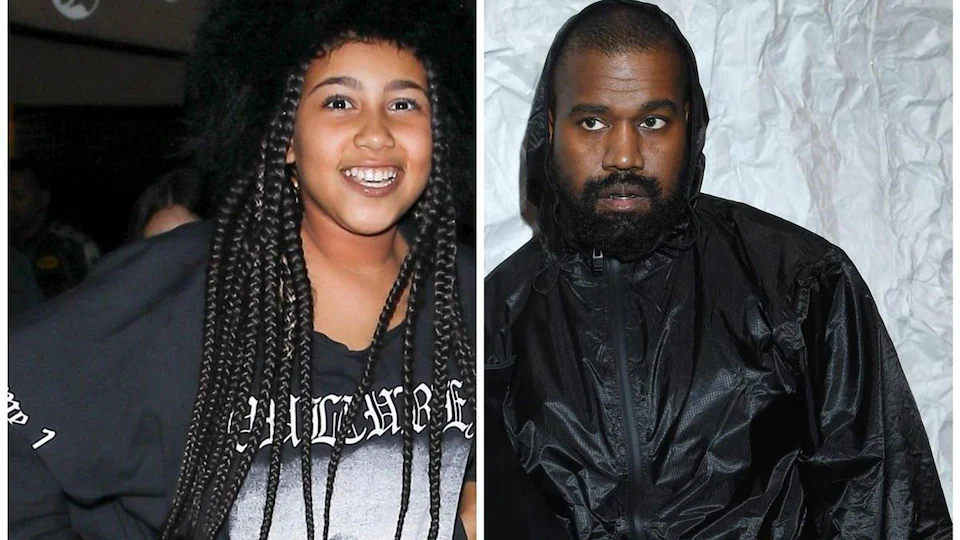
Kanye West, better known as Ye, is an American songwriter and rapper with 24 Grammy Awards under his belt. Some comments he made several months ago have resurfaced on social media when his daughter disclosed her ambition to be a pastor. The convenient coincidence seemed more like a ploy by dark forces to dampen the impact of the piercing message delivered by Northwest, the child of Kanye and Kim Kardashian. 

Joined by her mother in an interview with Entreview Magazine last week, North said it is her passion to learn more about God and sharing the Gospel to help others. The teenager expressed her resolve to “tell people about God, and how problems get solved if they follow His word and His ways”. Indeed, North’s words are didactic enough to strengthen the backsliding believer. It even goes to the heart of her dad’s exasperation when he said the following: “I am a Christian, but I have my issues with Jesus. There’s a lot of stuff I went through, and I prayed but I didn’t see Jesus show up… We’re so into the belief that prayer is all we need to solve our problems. But we ain’t praying our way out of prison. These prayers ain’t working. We have to apply actual physical work.” 

If that were the way to go, Luke 18:1 wouldn’t have demanded that “Men ought always to pray and not faint.” With North asserting that people’s problems get solved when they follow God’s word and His ways, isn’t it wondrous how God has used the daughter to correct her father? From God’s Word, you will know His ways, the application of which is the solution to our problems. Let’s hope that Ye has repented of his issues with Jesus. If only he had sought to know God better, as his daughter recommended, he would have realised that nothing is as effective as prayer. That’s what the Word of God says. Let God be true and every man a liar. 

Now, many a Christian must have at one point, or another found themselves in Kanye’s quandary, thinking that this faith thing isn’t working. They must have cried their hearts out to God for intervention without answers, as if it isn’t the same God about whom Matthew 7:11 testified: “If you then, being evil, know how to give good gifts to your children, how much more will your Father who is in heaven give good things to those who ask Him!” 

Whenever there is no proof of prayer, the supplicant should, before giving up on God, check how they went about praying. With Jesus declaring in Matthew 6:7 that “when you pray, do not use vain repetitions as the heathen do,” how then do you expect God to answer prayers made as animists would to their god? If He does, won’t those gods take the glory? 

The concluding part of the scripture pointedly says, “For they think that they will be heard for their many words.” To be clear, repetition of a prayer request isn’t what is being condemned here. After all, Jesus, in the Garden of Gethsemane, prayed three times, “O My Father, if it is possible, let this cup pass from Me; nevertheless, not as I will, but as You will” (Matthew 26:39). The unacceptable “vain repetitions” in reference is rendered in other translations as “babble,” “empty phrases,” “ramble”. The Contemporary English Version defines it as: “talk on and on as people do who don’t know God.” In other words, the phrase means saying many things of nothing! 

The point must be made that too much talking isn’t necessary for effective praying. Christians only betray ignorance of their identity in Christ and shallow confidence in God when they babble at the prayer altar. When they pray as if they need to convince God, it’s because they don’t see Him as their Father. This makes them beat about the bush (pardon the cliche) when they should go straight to the point. Duration doesn’t determine the potency of prayers because much of that time is usually spent blabbing.

Why use too many words to convey your plight to the God who Matthew 6:8 says already knows what’s in our hearts before we ask Him?  We shouldn’t be praying to inform God since He is more informed about our predicament and needs than we will ever know. We can barely present our causes to Him because our language of expression is deficient, hence our need for the Holy Spirit to intercede on our behalf (Romans 8:26). 

The saints’ approach to prayers must show their conviction that they are asking of the Lord with the capacity to meet all their needs according to the riches of His glory in Christ Jesus (Philippians 4:19). We don’t have to pray to convince God because He is liberal and gives liberally. James 1:5 says, “God gives generously to all without finding fault.” He is therefore kind enough to give without us asking, as has been the case with our basic needs. 

Here is something else that seems rather simplistic yet is a proven route to receiving answers to prayers: the lifting up of holy hands while praying. The same way that the stretching of arms skyward exercises the body, especially while standing, that is how it exercises your faith when done in the place of prayer, praise and worship of the Lord. Lifting holy hands isn’t merely a gesture but a spiritual signal of triumph. Since faith requires a corresponding action to deliver, outstretched arms can be the catalyst for victory.

This calls to mind what happened during Israel’s battle with Amalek as documented in Exodus 17. Israel prevailed as long as Moses’s hands were lifted, but when his hands grew weary and came down; their opponents dominated the war front. The hands of Moses were so instrumental that Aaron and Hur cleverly devised a means for Moses’s hands to be perpetually lifted. That way, the Israelites carried the day. What a winning strategy the stretching of hands towards Heaven is! 

It is the Eagle that stretches its wings that gets to soar above stormy clouds. There is a sense in Apostle Paul recommending the lifting of hands while praying (1 Timothy 2:8). The psalmist even likened the posture to evening sacrifice, which is very pleasing to the Lord (Psalm 141:2). So, before concluding like Ye that prayers don’t work, also try lifting holy hands every so often and behold the turnaround that follows! Suffice to add that this throwing up of hands also symbolises total surrender unto the Lord Almighty as admittance that one has hit their wits’ end. It is at such a point of desperation and humility that God usually steps in to save the day.

VIS Ugochukwu is a Sage, Narrative Architect and Branding Strategist who responds to feedback via X @sylvesugwuanyi.

Carlson Weighs In on Trump’s AI Jesus Image Row, Says Muslims Love Jesus

By Muhammad Abubakar

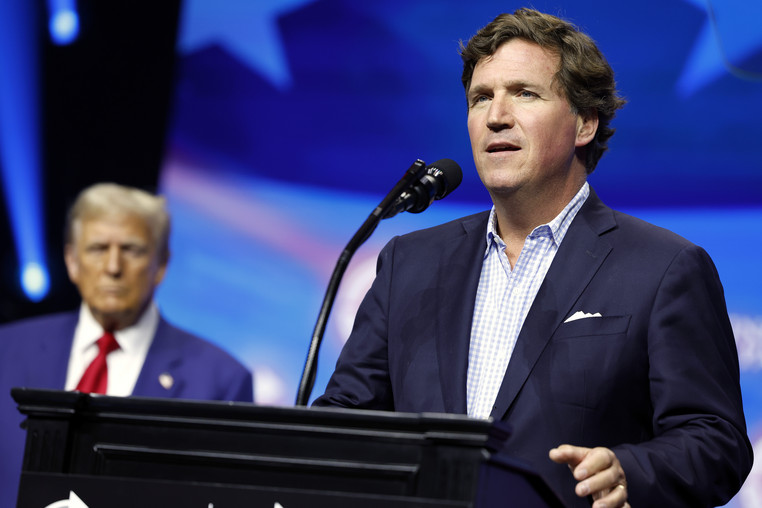
Renowned American commentator and podcaster Tucker Carlson has ignited debate after saying, “the people in charge don’t want you to know this, but Muslims love Jesus,” amid tensions involving Donald Trump and Pope Leo XIV.

The remark followed controversy over an AI-generated image shared by Trump on Truth Social, showing him in attire associated with Jesus Christ.

Carlson’s comment drew mixed reactions online, with some noting that Islam indeed reveres Jesus as a prophet, while others questioned the timing and context of his statement.

Recall that President Trump called Carlson low IQ, among other abuses, as the two former allies fall apart, especially because of the US-Israel war on Iran and US foreign policy towards Iran.

As of the time of this report, Trump has yet to respond to Carlson’s recent post on Jesus and Muslims.

UK Church Revival Momentum Vis-à-vis Nigeria

By Ugochukwu Ugwuanyi

It’s a striking oxymoron that while churches in Nigeria are acquiring old warehouses and event centres, revamping them into worship centres, Church buildings in the United Kingdom are being converted to flats, offices, restaurants, and bars. Hallelujah, the tide is about to turn in resemblance to what obtains in Nigeria. Here’s a case in point: In January this year, the Port Harcourt branch of a prominent Pentecostal church reportedly acquired Atrium Event Centre in a multi-billion-naira deal. They went ahead and invested a billion naira in renovating the facility within three months.

This has quietly been happening in major Nigerian cities as churches buy up disused properties without care for the cost. They don’t just lease the sprawling spaces but purchase them outright. When told in July 2025 that “some areas marked as industrial estates in some large cities in the country have been taken over by churches,” President of the Pentecostal Fellowship of Nigeria, Bishop Wale Oke, responded by saying: “It is a mark of a great revival in our nation. God has opened the heavens upon us graciously and has poured the Holy Spirit upon us, poured His word upon us, and many are turning to the Lord, and the Church is growing.”

If this is the case, it means a similar revival is brewing in the United Kingdom, with citizens and denizens not realising it yet. Apparently, some persons with a burden for that clime must have been mourning for a spiritual awakening. They have now got the attention of the Ruler of the Universe, who has stirred a property tycoon and millionaire by the name of Samuel Leeds, to act in a way that will ripen the revival. Words of faith and prophecy will always require a corresponding action to come to pass. This catalytic action doesn’t necessarily have to come from the prophet or the supplicant who proclaims the faith.

In 2 Kings 7, the effrontery of the four men with leprosy in storming the camp of the Aramean soldiers was all God needed to actualise the prophecy by Elisha that spells an end to the harrowing famine in Samaria of those days. Such requisite action is now being reenacted in the United Kingdom with the resolve of Samuel Leeds to buy up church buildings that are on the verge of packing up — in order to retain them as places of Christian worship.

With thousands of churches closing across Britain in recent years, Leeds says protecting them now could help prepare for what he sees as an impending revival of Christianity in the UK. In his words, “I believe we are seeing the beginning of a revival in this country. We need to keep our churches open and ready for when that happens.” Disclosing that property agents frequently offer him churches to redevelop, the real estate mogul would rather that church buildings dedicated to Christ be preserved to serve that purpose. After making an offer for Darlaston Methodist Church in Wednesbury – worth an estimated £250,000, Leeds wrote on Facebook, “To those asking how they can donate to the cause, I don’t want any money. I want you to attend Church on Sunday and donate to your local Church.”

Despite this consciousness of the need for congregations, netizens have continued to dwell on that point. Some mockingly challenge Leeds to go beyond buying up church buildings to attracting people who would worship there afterwards. For some others, a more appropriate use of the chapels and cathedrals would be to convert them into public pools and community centres. You can imagine the duplicity of commenters who lost their voices when the Church buildings were being turned into flats and business premises, to now recommend: “Make them sanctuary places for the homeless and ex-military, then let charities feed them.” For all their tantrums, the naysayers fail to see what Leeds is seeing – a revival that would cause Britons to enthusiastically return to Church without needing any persuasion to worship the Almighty in the Sanctuary.

Apart from making places of worship available, there are other tell-tale signs that affirm this inevitability. Recent polling by YouGov indicates an increase in belief in God among young adults, with faith among 18 to 24-year-olds rising significantly in recent years [Editor’s Note: While initial reports indicated a surge in faith among young adults, YouGov has since withdrawn the specific survey data due to methodology errors.]. The data firm NielsenIQ BookData reported last week that the number of Britons buying Bibles jumped by 19 per cent last year, taking the total to its highest level since 1998. This was corroborated by Christian publisher SPCK Group, which disclosed that Bible sales reached £6.3million in Britain last year – more than doubling since 2019. There is also the Make Great Britain Christian Again Conference coming up later in the year, which organisers say will be “Two full days of worship, preaching, teaching, music and prayer to revive the nation!”

Meanwhile, there is concern that this spiritual awakening in the UK may eclipse Nigeria’s season in the sun as the world’s Pentecostalism headquarters. Since the days of the late Archbishop Benson Idahosa, Nigerian clerics have taken the Gospel of Christ to various parts of the world, complete with healings and other signs and wonders. There is no Christian cleric of international acclaim who has not featured in programmes in this country or collaborated with leading Nigerian pastors in doing the Lord’s work. It is a testament to Nigeria’s global prominence in Christendom that the Head Church and the founders of local evangelical missions are designated as the Global Headquarters and Global Lead Pastor. Some others attach “Worldwide,” “… of All Nations,” “Global or International” to their brand name, not entirely for vainglory but out of mandate. If still not convinced, be mindful that Nigeria is home to the world’s most widely distributed daily devotional, published in over 7,000 languages and circulating billions of copies across 242 countries and territories.

But just like the sun radiates the brightness of day wherever it faces, causing dusk on its flipside, revival is usually asynchronous (Acts 2, Psalm 102:13, Ecclesiastes 9:11, Acts 1:8). The faithful in Nigeria must therefore make hay while the sun shines – if you don’t mind the cliche. There remain a lot more grounds to cover. Nigerian Fathers of Faith, with massive global reach and influence, must introspect to see whether God’s reason for shining His light from Nigeria has been realised, or whether He is shifting attention elsewhere as a result of our people’s dereliction or compromise. It will be a Woe if we as a nation do not recognise or miss our time of visitation (Luke 19:44).

Nigerian Christians must not be complacent on the basis of the 1986 prophecy by Pa S. G. Elton that: “Nigeria and Nigerians will be known all over the world for corruption. Your name, Nigeria, will stink for corruption, but after a while, a new phase will come, a phase of righteousness. Many shall take hold of him, that is a Nigerian saying; we will go with you, for we have heard that God is with you.” This prophecy may have run its course or remained perpetually hanging because the country hasn’t produced a Samuel Leeds who would take the corresponding action that would bring it to pass! For what it’s worth, the UK is deserving of the impending Glory as a country that, for over 1,500 years, was built on Christian values. These have shaped the British laws, morals, calendar, institutions, charities, and national character — from Magna Carta to modern human rights practices.

In the final analysis, the threat to Nigeria’s epicentre status in the Move of God should concern every Nigerian. As Bishop Oke told The Punch newspaper in the interview referenced above: “The spiritual controls everything; If our people are spiritually sound and healthy, they will impact this nation very positively. Nigeria would have been a hell but for the presence of Christians who are praying, living righteously, and living godly. And I tell people that all we need to do for Nigeria to collapse is for the saints of God to stop praying. If the Christians in this nation stop praying, the nation will collapse.” Need I say more?

VIS Ugochukwu is a Sage, Narrative Architect and Brand Strategist who can be reached @sylvesugwuanyi on X.

Inclusive leadership, not religious dominance, will save Nigeria

By Malam Aminu Wase

A presidential Muslim-Muslim ticket is not merely a political strategy. It is a catalyst for national instability. In a country like Nigeria, which is still grappling with deep-seated mutual distrust, such a move sends the wrong signal. 

For Nigeria to truly progress, its leadership must reflect the nation’s rich diversity. Only through inclusive governance can we assure every citizen, regardless of faith, ethnicity, or region, that they have a rightful place in the nation’s power structure.

Malam Nasir Ahmed El-Rufai played a pivotal role in promoting the idea of a Muslim-Muslim presidential ticket. While this strategy may have been politically calculated, it encouraged religious and ethnic groups to compete for power, rather than unite under a shared national vision that addresses the hardships facing all Nigerians.

Ironically, many of the architects of the Muslim-Muslim ticket are not reaping the benefits of their efforts. The lofty expectations they once championed of inclusion and representation have been dashed. Some have even defected to other political parties, disillusioned by the very system they helped establish.

Nigerians must open their eyes. The struggle among the political elite is not about improving the lives of the masses; it is a scramble for personal gain, to secure privileges for their children, families, and close associates. We must rise above the politics of religion and region and demand leadership representing all Nigerians.

I urge fellow citizens to reject the idea of a Muslim-Muslim ticket in the upcoming election. Let us vote for candidates committed to unifying Nigeria, easing economic hardship, and introducing policies that genuinely impact the lives of ordinary people.

Malam Aminu Wase, Write from Kaduna State. He can be reached via aminusaniusman3@gmail.com.

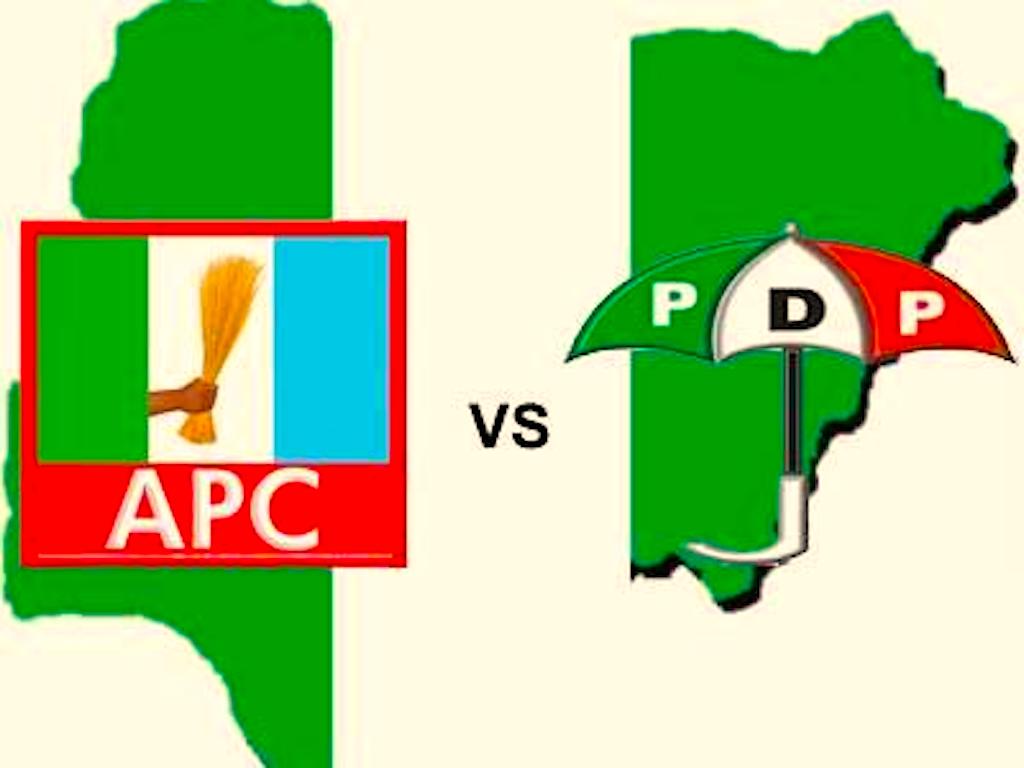
PDP vs. APC so-called political elders and the Gospel of Barnabas

By Nura Jibo

Whenever I see sure PDP political power losers and their APC bedfellows making historical myths and inaccuracies about their pseudo performance of national economic growth and development, it reminds one of the gospel according to Barnabas.

As a Muslim, I actually believe in the Gospel of Barnabas as a myth rather than a reality. Though his assertions are very true and apt, they are considered among Christians as a non-canonical, pseudodepigraphical gospel attributed to him. They somehow believed Barnabas was a disciple of Jesus who lived in the 14th or 15th century.

These historical myths and inaccuracies are what the so-called PDP and APC elders would wish to present to ordinary Nigerians. Indeed, their misrepresentation of facts is contrary to a detailed account of Barnabas, who, according to his Torgado Siburian theological belief, explained Jesus’ life. This account includes elements that align with Islamic reality and beliefs, such as the denial of Jesus’ crucifixion and a focus on Jesus as a prophet rather than the Son of God. 

Indeed, the PDP/APC elders’ gospel on Nigeria’s political leadership/claim on its progress is nothing but something to be considered a fabrication, as it contradicts the canonical gospels and includes historical conundrums that even the so-called generals in politics that resort to this falsehood amidst public glare cannot provide an answer to!

The PDP presidency under Obasanjo and Jonathan is nothing but a political disaster.

These two presidents presided over Nigeria with impunity and first-class corruption that drained Nigerians and stripped them bare of their dignity in the comity of nations.

Obasanjo shamelessly accused his National Assembly of being a “den of corruption by a gang of unarmed robbers”.

Indeed, Evan Enwerem’s emergence as Obasanjo’s Senate president against Chuba Okadigbo confirmed his corrupt tendencies as a political but not military leader to Nigerians. This remains fresh in our psyches and memories.

The Siemens and KBR bribery scandals, which the FBI investigated, indicted President Obasanjo’s government internationally.

On the other hand, President Jonathan allowed a corrupt Diezani oil ministerial hubris of over N100 billion, alleged to have been collected by Diezani as undue enrichment.

This is not to rule out the role of his wife, Patience, in the $8.4 million and N7.4 billion linked to her by the EFCC under a file suit dubbed FHC/L/CS/620/18.

What the likes of Governors Sule Lamido, Amaechi, Nasiru El-Rufai, Peter Obi, and even VP Atiku Abubakar want to tell Nigerians after being frustrated and pushed to the periphery of power and out of national and global relevance, one hasn’t the vaguest idea.

Please note:

There is no point in alluding to the APC’s leadership under Buhari and Tinubu. Because doing so will not allow us to see the light of day, it is better not to mention the terrible economic harakiri, democratic suicide, and perturbed insecurity that the APC and, by extension, its PDP rivalries have thrown into Nigeria. Recounting APC ordeals is a déjà vu that this writer is not ready to waste more energy delving into.

Happy Eid celebration!

Nura wrote from Shahrazad Homes, 21 Zerifa Aliyev Street, Baku, Azerbaijan.

Pope Leo XIV calls for peace in Ukraine and Gaza in his first Sunday message

By Hadiza Abdulkadir

In his first Sunday message as Pope, Leo XIV made a powerful plea for peace, urging an immediate end to the conflicts in Ukraine and Gaza. 

Addressing the faithful gathered in St. Peter’s Square, the pontiff called for “an authentic and lasting peace” in Ukraine, emphasising the devastating human cost of the ongoing war. 

He further implored for a ceasefire in Gaza, demanding the release of all Israeli hostages held captive.

“The world yearns for peace,” Pope Leo XIV stated, his voice resonating across the square. “We must strive for dialogue and understanding, putting an end to the violence that inflicts immeasurable suffering. In Ukraine, let the weapons fall silent, and in Gaza, let the hostages be released.”

His message underscored the Vatican’s continued commitment to promoting peace and reconciliation in conflict-plagued regions. 

The Pope’s appeal resonated with many, who hope his words may inspire concrete action toward achieving a lasting resolution.

Robert Francis Prevost becomes first American Pope

By Muhammad Abubakar

In a historic development, the Catholic Church has elected Robert Francis Prevost as the new pope, marking the first time an American has ascended to the papacy. The decision was announced from the balcony of St. Peter’s Basilica following the traditional white smoke signal from the Sistine Chapel on Thursday.

Pope Robert I, as he will now be known, hails from Chicago, Illinois, and previously served as the Prefect of the Dicastery for Bishops. Known for his pastoral sensitivity and administrative skill, the 69-year-old cleric has long been regarded as a bridge between tradition and reform within the Church.

Thousands of pilgrims gathered in St. Peter’s Square to witness the historic moment, many expressing surprise and hope over the unprecedented choice.

The new pontiff addressed the faithful in multiple languages, asking for prayers and unity in a world “deeply in need of peace, compassion, and truth.”

Analysts see his election as a signal of the Church’s growing global inclusivity and a recognition of the American Church’s rising influence.

More details about his vision and forthcoming priorities are expected in the coming days as he officially begins his pontificate.

Trump posts portrait of himself as Pope on social media 

By Muhammad Abubakar 

President Donald Trump has stirred controversy once again after publishing a digitally altered portrait of himself dressed as the Pope on his social media platform, Truth Social. The image, which depicts Trump in papal robes and regalia, quickly drew widespread attention and sparked debate online.

This unusual post follows Trump’s previous tongue-in-cheek remark in which he joked about becoming the next head of the Roman Catholic Church after Pope Francis. While many of his supporters saw the post as humorous and bold, critics accused the former president of disrespecting religious traditions.

The Vatican has not officially commented on the image or Trump’s earlier remarks.

Trump, known for his provocative and unconventional use of social media, continues to dominate headlines since his return to the White House for the second time.

Easter wellness tips: eat light, move more, stress less

By Maimuna Aliyu Katuka

Easter is a season of joy, reflection, and renewal. While it is often associated with festive meals, it is also an opportunity to embrace healthier habits without taking away from the fun and spirit of the celebration.

As the world becomes increasingly health-conscious, we can find creative ways to enjoy Easter while taking care of our physical and mental well-being.

By making thoughtful choices, we can turn this season into a meaningful and health-positive experience for ourselves, our families, and our communities.

Easter, which marks the resurrection of Jesus Christ, according to the Christians, is one of the most significant holidays in Christianity. For many, it symbolizes the triumph of life over death—a powerful reminder of hope, rebirth, and new beginnings.

Even non-Christians often take advantage of the holiday to travel or spend time with loved ones, making it a perfect occasion to reflect on personal wellness and communal values.

Whether you are planning a large family gathering or a quiet weekend retreat, here are some practical tips to help you celebrate Easter in a healthy and fulfilling way:

Healthy Eating and Drinking Habits

1. Balance indulgence with healthy choices:
Enjoy traditional Easter treats in moderation. Complement your meals with fruits, vegetables, and whole grains to maintain a balanced diet.

2. Stay hydrated:
Drink plenty of water throughout the day, especially if you are consuming rich or salty foods.

3. Choose healthier alternatives:
Opt for baked or grilled meats instead of fried ones. Dark chocolate or fruit-based desserts can also be tasty and nutritious options.

Staying Physically Active

1. Take a walk or hike:
Incorporate light physical activities like walking, hiking, or biking into your day to stay energized and connected with nature.

2. Plan outdoor games:
Organize family games or community sports that encourage movement and bonding while having fun.

Supporting Mental Well-being

1. Practice mindfulness:
Take time to relax, meditate, or simply enjoy the presence of family and friends. Mindfulness can help ease stress and promote gratitude.

2. Set boundaries:
Prioritize self-care by setting healthy limits on social and work commitments. Maintain a balance that supports your mental peace.

Additional Smart Tips

1. Plan meals ahead:
Prepare healthy dishes and snacks in advance to reduce the temptation of unhealthy choices.

2. Be mindful of portion sizes:
Enjoy your favorite dishes without overindulging by keeping portions in check.

3. Educate the next generation:
Teach children the importance of healthy living. Turn Easter traditions into learning moments about good nutrition and staying active.

Last Line:
As we prepare to celebrate Easter, let us take this opportunity to embrace a lifestyle that reflects the true spirit of the season—renewal, joy, and wellness.

By making simple, conscious changes, we can foster healthier habits that last beyond the holiday.

So, gather your loved ones, get creative with your traditions, and make this Easter not just memorable—but meaningfully healthy.

Navigating interfaith marriages: Some points for consideration for Muslim men

By Ibrahyim A. El-Caleel

Muslim men who have an interest in interfaith marriages (marriage to non-Muslim wives) seem to be looking at the matter only at the surface. They do not look deeply into the injunctions around the whole marriage. 

Yes, Islam permits a Muslim man to marry a non-Muslim wife, but the reverse case is prohibited. Some of the few things you must think deeply about and seek explanations from scholars over are:

1.It is not permissible for the Muslim husband to force his non-Muslim wife to accept Islam. This is not permissible in Islam. 

2. To what degree can you ensure that your children from the wife remain upon the fitrah – remain as Muslims? A large number of children from this form of marriage end up as non-Muslims. Some of them leave the fold of Islam after their Muslim fathers die. Some of the fathers don’t even care. They actually make it a “democracy” sort of thing. “You boys and girls can just choose what you think you are okay with- my religion or your mother’s”. 

3. How do you reconcile specific differences between the injunctions in your religion and hers? An example here is that a Muslim wife must take her janabah bath after menstruating. Equally, there is no intercourse during that period. Are you aware of what is the provision for a non-Muslim wife? From where do you start, especially since there is even a niyyah (intention) component in the janabah bath? Have you thought about this before?

4. You must allow her to practice her religion if she is genuinely committed to it. If, for example, she must hang a symbol of her religion, let’s say ✝️, in her living room, would you be okay with it? Okay, let’s assume you have no problem with that. Have you asked what the Islamic injunction on praying is for any of your five compulsory prayers in a room with such a symbol inside it? 

Both Muslim men and non-Muslim women must seek clarification on some of these things before getting married. They should not just look at the permissibility at the surface. What are the other injunctions within such a marriage? Islam is full of injunctions as a religion based on knowledge of the Qur’an and Hadith. 

There are many injunctions even in a marriage between a Muslim man and a Muslim woman. Therefore, intending couples in interfaith marriages must better know what they are getting into. It is not always about getting a flight ticket and a visa to Rome. You must think ahead—what happens after you land in Rome?