Canada

12 Countries To Restrict Trade With Israeli Settlements in West Bank

By Sabiu Abdullahi

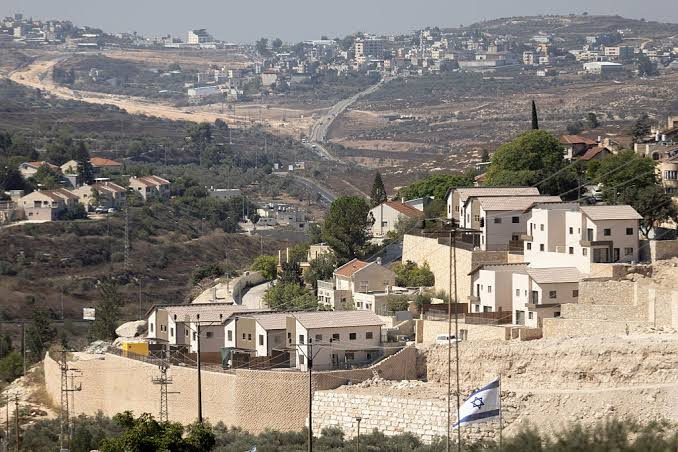
Twelve countries, including the United Kingdom, Canada and France, have announced plans to restrict trade in goods from Israeli settlements in the occupied West Bank amid growing settler violence against Palestinian communities.

The countries disclosed their position in a joint statement issued by their foreign ministers on Tuesday. Denmark, Finland, Iceland, Ireland, Norway, Poland, Portugal, Spain and Sweden were also signatories.

The ministers warned that Israel’s continued settlement expansion and increasing violence in the West Bank were undermining prospects for a two-state solution.

“The government of Israel’s actions in the West Bank are undermining the possibility of a two-state solution,” the ministers said.

They also called on Israel to immediately halt settlement expansion and the transfer of civilian administrative powers, while demanding accountability for settler violence and investigations into allegations involving Israeli forces.

The British Foreign Secretary, Ed Miliband, accused the Israeli government of turning a “blind eye” to what he described as the “ethnic cleansing” of Palestinians by settlers in parts of the West Bank.

Miliband told parliament that the UK would introduce an import ban on goods from Israeli settlements in the occupied territories as part of the coordinated action.

“The British government agrees that there is ethnic cleansing of Palestinians in areas of the West Bank, perpetrated by settler terrorists,” he said.


He further accused some members of the Israeli government of supporting actions that could result in the forced displacement of Palestinians.

More than 500,000 Israelis live in settlements in the West Bank, alongside an estimated three million Palestinians.

According to an AFP tally based on Palestinian health ministry data, at least 1,105 Palestinians have been killed by Israeli forces or settlers in the territory since the outbreak of the Gaza war.

Israel’s President Isaac Herzog criticised the planned measures, saying the sanctions would “fall on the wrong side of history”.

In response to the British government’s position, Israel ordered the closure of the British consulate in East Jerusalem and barred 12 Britons, including Labour Party lawmakers, from entering the country.

Meanwhile, US Secretary of State Marco Rubio said the United States would not join the new sanctions.

Israeli Prime Minister Benjamin Netanyahu has continued to defend the expansion of settlements in the West Bank.
Nigerian-Born Professor to Head Law College at Canadian University

By Sabiu Abdullahi

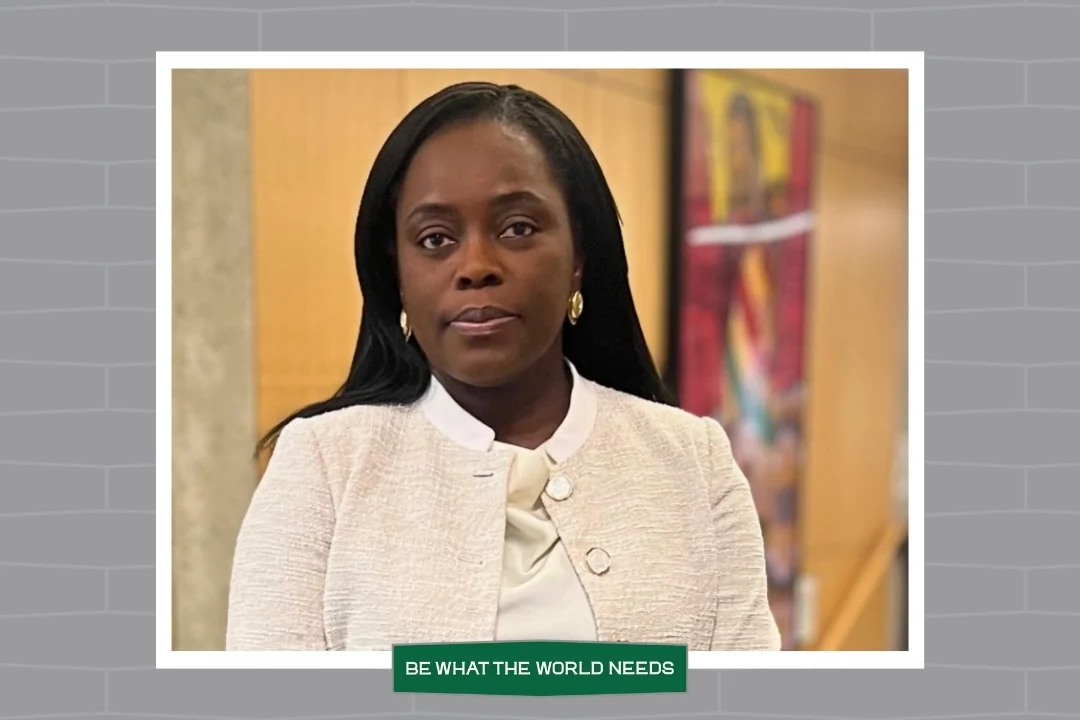
Nigerian-born legal scholar, Dr. Ibironke Odumosu-Ayanu, has been appointed dean of the College of Law at the University of Saskatchewan in Canada.

She will serve a five-year term that begins on October 1, 2026.

Odumosu-Ayanu currently serves as the college’s associate dean of research and graduate studies. She joined the University of Saskatchewan’s College of Law in 2008.

The university announced her appointment on September 1 in a statement issued by Patti McDougall, interim provost and vice-president, academic, who also chaired the search committee for the new dean.

McDougall praised Odumosu-Ayanu’s academic record and leadership qualities.

“Dr. Odumosu-Ayanu’s appointment as dean reflects a distinguished record of academic excellence, collaborative leadership, and dedication to advancing research and graduate education,” McDougall stated.

“Her work as dean will continue to build on the College of Law’s strong reputation for excellence in legal education and research, while strengthening its leadership in Indigenous legal scholarship and engagement with local and global communities.”

Odumosu-Ayanu will take over from Martin Phillipson, who served two five-year terms as dean before proceeding on administrative leave on July 1.

FROM LAGOS TO CANADA

Odumosu-Ayanu was raised in Lagos, where she developed an interest in reading and writing from an early age.

She initially considered a career in communications. However, encouragement from her teachers and support from her parents influenced her decision to study law.

She subsequently enrolled at the University of Lagos, where she obtained her Bachelor of Laws degree.

Her academic career later took her to Canada, where she pursued a master’s degree at the University of Calgary. Her choice was influenced by the university’s research strengths in natural resources, energy and environmental law.

“Since I started law school, I always knew that I wanted to do a master’s and to do one abroad. But I always thought I would go to England.”

Odumosu-Ayanu initially intended to return to Nigeria after completing her master’s degree and practise as a lawyer. However, she continued her education with a PhD programme at the University of British Columbia.

She said a doctorate was not part of her original plan.

After obtaining her PhD, she began to consider a career in academia and applied for academic positions.

Her academic journey eventually took her to Saskatchewan in 2008, where she joined the University of Saskatchewan’s College of Law.

Before her move, a mentor at the University of British Columbia, who was raised in Saskatoon, had advised her to prepare for the harsh Canadian winter.

Trump Renames Lake Ontario ‘Lake America’ Amid Tensions With Canada

By Sabiu Abdullahi

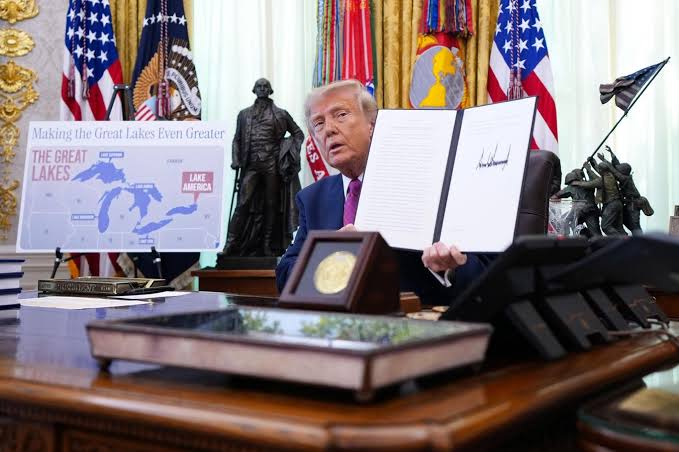
US President Donald Trump has signed an executive order changing the name of Lake Ontario to “Lake America”, in a move that has added a new dimension to the growing tensions between the United States and Canada.

Trump announced the change on Thursday after signing the order at the Oval Office.

“This is official, effective immediately,” Trump said.

The president also said he had completed the required procedures for the renaming.

Trump said he had “filed all the necessary papers, documents, everything else” for the name change and “notified all of the various people that we have to notify”.

Lake Ontario is one of North America’s five Great Lakes. It lies along the Canada-US border, with the Canadian province of Ontario located to its north and New York State in the United States to its south.

The other Great Lakes are Huron, Michigan, Erie and Superior. Together, the five freshwater bodies contain about one-fifth of the world’s surface freshwater.

The lake has been known as Lake Ontario for centuries. Its first known appearance under that name on a map dates to 1656, although historians believe the name was already in local use before then.

Trump’s executive order justified the new name on the grounds that most of the lake’s volume lies within US territory.

The order stated that “the deepest parts of the Lake’s waters lying within United States territory, the United States claims most of the Lake’s volume” and that the lake has “long been an integral asset to American exploration, settlement, commerce, and defense”.

However, it remains unclear whether the name change will be recognised outside the United States because geographical names are not governed by a single international authority.

Canada Rejects New Name

Canada has already indicated that it will continue to use the traditional name.

Earlier in the week, before Trump signed the order, Canadian Industry Minister Mélanie Joly said: “We’ll always call it Lake Ontario”.

Lake Ontario was formed after the last Ice Age from the earlier Lake Iroquois about 11,400 years ago.

By the mid-18th century, before the American Revolution and the eventual establishment of Canada and the United States, Lake Ontario had become the established name.

The name “Ontario” is believed to have Iroquoian origins. The Canadian Encyclopaedia says it may mean “beautiful lake” or “sparkling water”, while some historians interpret it as “vast body of water”.

French missionary records from around 1641 also referred to the body of water as Lake Ontario. The Canadian province of Ontario later adopted the name when it was created at Confederation in 1867.

Trump Links Move To Previous Renaming

The decision follows Trump’s earlier attempt to rename the Gulf of Mexico as the “Gulf of America”.

Trump referred to the two renaming decisions while speaking about Lake Ontario.

“We have a gulf and we have a lake. Now all we need is an ocean so maybe we’ll have to change the name of the Atlantic and/or the Pacific,” Trump said, referring to the bodies of water on either side of the US coastline.

The latest move comes amid renewed tensions between Washington and Ottawa after trade negotiations between the two countries broke down late Friday.

The United States subsequently imposed 50 percent tariffs on billions of dollars’ worth of Canadian exports, further straining relations between the neighbouring countries.

Canada to Impose Retaliatory Tariffs on US Goods From September 8

By Sabiu Abdullahi

Canada has announced plans to impose fresh tariffs on selected goods from the United States after Washington introduced a 50 per cent levy on about $20 billion worth of Canadian products.

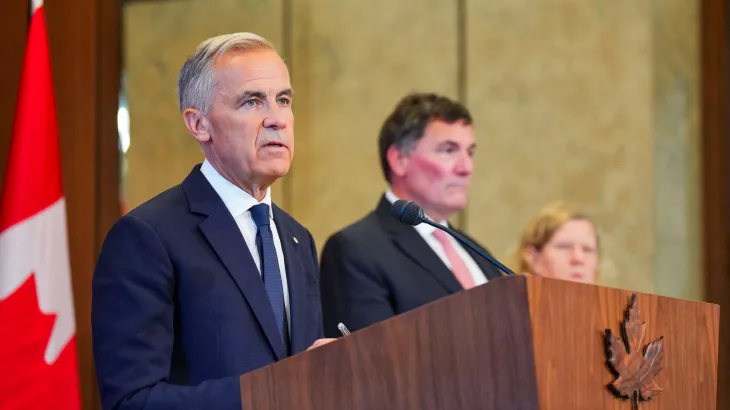
Canadian Prime Minister Mark Carney announced the decision in Ottawa on Saturday, saying the new measures would affect US steel, dairy products, appliances, agricultural equipment, pulp and paper, electronics and other goods.

The tariffs are expected to take effect on September 8.

“Canada will match Washington’s new tariffs dollar for dollar in order to protect Canadian workers, farmers, families, and businesses,” Carney told reporters.

The decision followed the collapse of trade negotiations between the two countries after several days of discussions. Carney said the United States had presented conditions that Canada could not accept.

“In recent days, the United States proposed new terms that were uneconomic, unfair and undermined the net benefits for Canada, and called into question the reliability of any deal,” Carney said, adding these demands included curtailing Canada’s ability to forge new trade deals.

“We cannot accept what they’ve offered, and we will not give what they’ve asked.”

Carney also accused US negotiators of making unacceptable “threats” concerning the French language and “Quebec culture”.

The latest US tariffs affect several Canadian exports, including wine, furniture, dairy products, cement, clothing, fishing rods and hockey equipment. The affected goods represent about 5.5 per cent of Canada’s exports to the US.

Reacting to Carney’s announcement, US President Donald Trump wrote on Truth Social, “Canada wants the benefits of being a State, without being one!!!”

Trump also claimed that Canada had imposed “massive amounts” of tariffs on US farmers for years and added, “No more!!!”

Carney said Canada would also introduce support measures for industries affected by the new US duties. He said the government would provide more details on the retaliatory measures in the coming days.

The trade dispute is expected to put additional pressure on the Canadian economy. Al Jazeera correspondent David Mercer said the tariffs could lead to higher costs, increased prices and rising unemployment.

“Costs are going to go up, prices are going to go up, unemployment is going to go up as well,” Mercer said. “And it’s been warned that business owners – small [and] medium-sized businesses – some of those will have to declare bankruptcy.”

Mercer said Carney was also using the dispute as an opportunity to expand Canada’s economic links with countries outside the United States.

“He’s been around the world, he’s been talking to countries in Asia, in Europe, shoring up new trade relationships, wanting to diversify Canada’s economy and Canada’s trade relationships with other countries around the world just to get away from that dependency that Canada has traditionally had on the United States,” he said.

Ontario Premier Doug Ford supported the Canadian government’s decision to retaliate against the US tariffs.

“I’m glad he didn’t sign that deal because it was a bad deal. It was a bad deal for Ontario. It was a bad deal for the auto sector, the steel sector, and manufacturing sector,” Ford told reporters on Saturday.

Some Canadians have expressed concern about the possible impact of the trade dispute on household expenses.

“I think probably the gas will go up even more, and all products, from food to, I don’t know, wood, everything else,” said Pamela Coulis, a resident of Fort Erie.

Another resident, Stuart Edwards of Port Colborne, said the trade dispute would “hurt everybody” and described the situation as “just sad”.

“We have a bully in Washington, and he’s just hitting us all with the big stick all the time,” he said. “And we’re not going to put up with it; Canada isn’t. We’ll fight back.”

Diamond Isinger, a former special adviser to ex-Canadian Prime Minister Justin Trudeau, said both countries would face economic difficulties as the dispute continues.

“It’s going to cause pain and challenge for Canadians and Americans alike – in terms of the actions that, unfortunately, the US has taken as well as Canada’s retaliation. But ultimately this was the way forward; this was the only realistic next step,” she said.

“Because the US administration responds best, of all the responses that they could have, to all the actions that a government like Canada could take, to strength,” Isinger added.

“So, we could not simply accept 50 percent tariffs going forward. We had to move forward with our own retaliatory package.”

US Trade Representative Jamieson Greer said no fresh negotiations had been scheduled with Canada.

“We’re moving forward with measures that respond to Canadian retaliation,” Greer said. “They’ve always had the best deal, and they still would have an even better deal, but they didn’t want that.”

The escalating dispute has also drawn criticism from some US Democratic lawmakers and governors, who accused Trump of increasing economic pressure on American businesses and families.

“Needlessly picking fights with our allies and raising prices here at home. That’s Trump’s economic policy in a nutshell,” New York Governor Kathy Hochul posted on X.

The Business Roundtable, which represents about 200 chief executives of major US companies, also warned that the new tariffs “risk raising costs for American businesses and families” and called on Canada and the United States to return to negotiations.

Mass shooting at Canadian high school claims 10 lives

By Sabiu Abdullahi

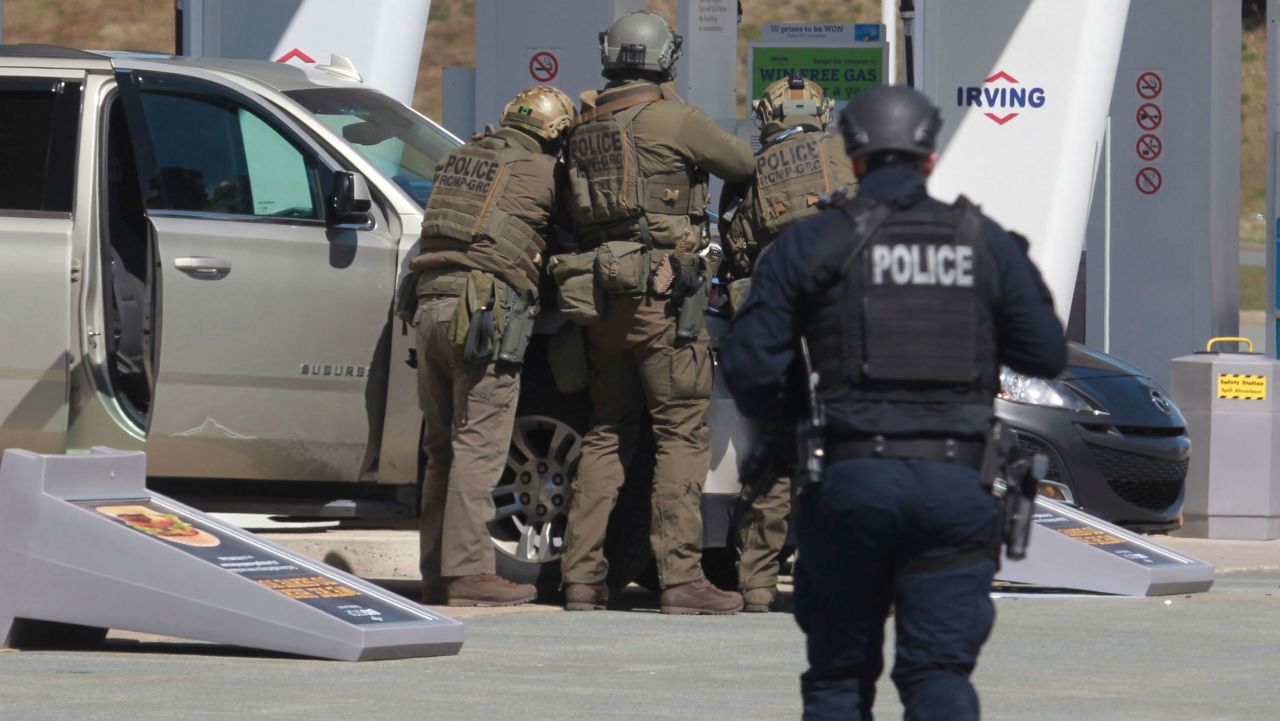
Ten people, including a female gunman, were killed in a shocking attack at Tumbler Ridge Secondary School in British Columbia on Tuesday, in what authorities have described as one of the deadliest mass casualty incidents in recent Canadian history.

The Royal Canadian Mounted Police (RCMP) reported that the suspect, identified as female, opened fire inside the school before being found dead from what appears to be a self-inflicted injury. Authorities confirmed there are no additional suspects and no ongoing threat to the public.

The tragedy struck the remote town of Tumbler Ridge, a tight-knit community of around 2,400 residents located in the foothills of the Rocky Mountains, leaving the population in deep shock.

According to the RCMP, six victims were discovered inside the high school, while two more were found at a nearby residence believed to be linked to the incident. Another person died while being transported to the hospital. At least two individuals remain hospitalized with life-threatening injuries, and approximately 25 others received treatment for non-critical wounds.

Authorities have offered limited details about the shooter, beyond confirming the suspect was female — a rare occurrence in North American mass shootings, which are predominantly committed by men. An earlier police alert described the suspect as “female in a dress with brown hair.” Police Superintendent Ken Floyd later confirmed that this was the same person found dead at the school. Officials have not revealed a motive or the ages of all victims, some of whom may have been minors.

The attack has left the community struggling to process the scale of the tragedy. British Columbia Premier David Eby expressed his grief, saying, “It’s hard to know what to say on a night like tonight. It’s the kind of thing that feels like it happens in other places and not close to home.”

Images from Tumbler Ridge show a snow-covered town surrounded by pine forests, highlighting the isolation of the northern British Columbia community, roughly 1,155 kilometres northeast of Vancouver.

The school, which serves about 160 students in grades seven through 12, will remain closed for the rest of the week. Officials said counseling services will be available to both students and staff as the community begins the process of mourning and recovery.

US warns Canada will regret allowing Chinese electric vehicles into its market

By Sabiu Abdullahi

Senior officials in the administration of United States President Donald Trump have cautioned that Canada will come to regret its decision to permit imports of Chinese electric vehicles, while stressing that such vehicles will not gain access to the US market.

The warning followed an announcement by Canadian Prime Minister Mark Carney that Ottawa had reached a trade arrangement with Beijing to allow up to 49,000 Chinese-made electric vehicles into Canada at a reduced tariff rate.

Speaking on Friday at a Ford manufacturing plant in Ohio, US Transportation Secretary Sean Duffy criticised the move and suggested it would have long-term consequences for Canada.

“I think they’ll look back at this decision and surely regret it to bring Chinese cars into their market,” Duffy said during the event, which was attended by other senior officials and focused on lowering vehicle costs for consumers.

Canada imposed a 100 percent tariff on Chinese electric vehicles in 2024, following similar measures taken by Washington.

However, under the new agreement announced in Beijing, Canada will permit a limited number of Chinese EVs to enter the country at a tariff of 6.1 percent under most-favoured-nation terms.

The shift has raised concerns in the United States, where officials fear the policy could strengthen China’s presence in the North American auto market at a time when Washington is tightening its stance on Canadian vehicles and auto parts.

US Trade Representative Jamieson Greer sought to downplay the immediate commercial impact on American manufacturers, noting that the arrangement would not disrupt US exports to Canada.

“I don’t expect that to disrupt American supply into Canada,” he said. “Those cars are going to Canada – they’re not coming here.”

The Canadian Embassy in Washington did not provide an immediate response to requests for comment.In a separate interview with CNBC, Greer described Canada’s decision as “problematic” and linked US opposition to Chinese vehicles to existing trade protections.

“There’s a reason why we don’t sell a lot of Chinese cars in the United States. It’s because we have tariffs to protect American auto workers and Americans from those vehicles,” he said.

As part of the broader trade discussions in Beijing, Prime Minister Carney said China was expected to reduce tariffs on Canadian canola seed by March 1, bringing the combined rate down to about 15 percent from 85 percent.

Greer questioned the long-term value of that agreement, saying, “I think in the long run, they’re not going to like having made that deal.”

Greer also pointed to US regulations on vehicle cybersecurity as a major barrier for Chinese automakers. He said rules introduced in January 2025 for internet-connected vehicles and navigation systems posed serious compliance challenges.

Canada, Australia and UK formally recognise Palestinian state

By Muhammad Abubakar

In a historic diplomatic shift, the governments of Canada, Australia, and the United Kingdom have formally recognised the State of Palestine. The announcement, made in a joint statement on Sunday, marks a significant moment in international support for Palestinian statehood.

Leaders of the three countries said the recognition was aimed at advancing a just and lasting peace in the Middle East, reaffirming their commitment to a two-state solution. They urged both Israel and Palestine to return to negotiations and called for an immediate halt to violence in the region.

The move has been welcomed by Palestinian officials, who described it as a “courageous step towards justice and self-determination.” However, Israel has expressed strong opposition, warning that such recognition could undermine peace efforts.

The decision by three of the world’s most influential Western nations is expected to increase pressure on other countries to follow suit, potentially reshaping the dynamics of the Israeli-Palestinian conflict on the global stage.

APC denies claim Canadian court labeled it “terrorist group”

By Abdullahi Mukhtar Algasgaini

The All Progressives Congress (APC) has dismissed media reports claiming that a Canadian court declared the party a terrorist organization, describing the reports as “patently erroneous and misleading.”

In a press statement signed by its National Publicity Secretary, Felix Morka, the APC clarified that the ruling in question involved a case between Douglas Egharevba and Canada’s Minister of Public Safety and Emergency Preparedness, which centered on Egharevba’s immigration status.

The court had dismissed Egharevba’s application for judicial review, citing his membership in Nigeria’s Peoples Democratic Party (PDP) and its alleged involvement in subversive acts during elections.

The APC noted that the only mention of the party in the 16-page judgment was in reference to Egharevba’s false claim of being an APC member as far back as 2007—years before the party was officially formed in 2013.

Morka noted that the court explicitly avoided ruling on terrorism, stating: “Having found that the IAD’s analysis on subversion was reasonable, this is sufficient to dismiss the application for review. I will therefore refrain from analyzing the IAD’s findings on terrorism.”

The APC urged its members and the public to disregard the misleading reports, stressing that the court made no such declaration against the party.

“Such a decision would have been an unjustifiable overreach and a breach of due process, as the APC was not a party to the proceedings,” Morka added.

UK, France, and Canada condemn Israeli military escalation in Gaza, threaten sanctions

By Muhammad Abubakar

The leaders of the United Kingdom, France, and Canada issued a joint statement today strongly condemning the Israeli government’s continued military operations in Gaza and its denial of humanitarian aid to the besieged population.

In the statement, the three nations called the humanitarian situation in Gaza “intolerable” and labelled Israel’s limited allowance of food into the territory as grossly inadequate. They urged the Israeli government to halt its military offensive immediately and allow unimpeded delivery of humanitarian aid, in cooperation with the United Nations.

The leaders also called on Hamas to release the remaining hostages held since the October 7, 2023, attack on Israel, while affirming Israel’s right to self-defence. However, they described the ongoing Israeli response as “wholly disproportionate.”

The statement strongly criticised the Israeli government’s use of inflammatory rhetoric and warned that permanent forced displacement of Gaza’s population would constitute a breach of international humanitarian law.

The three countries also voiced strong opposition to the expansion of illegal Israeli settlements in the West Bank, stating such actions undermine prospects for a viable Palestinian state and threaten regional security. They pledged to take further actions, including potential targeted sanctions, if the situation does not improve.

The joint statement expressed support for current ceasefire efforts led by the United States, Qatar, and Egypt, and emphasised the need for a long-term political solution. The leaders stressed their commitment to a two-state solution. They highlighted the upcoming June 18 international conference in New York, co-chaired by Saudi Arabia and France, as a key moment for advancing peace.

“We are committed to recognising a Palestinian state as a contribution to achieving a two-state solution,” the statement concluded, reaffirming their readiness to work with international partners to bring stability to the region.

Customs hand over 21 stolen cars worth N8.1bn to Canadian government

By Anwar Usman 

The Comptroller General of Customs (CGC), Wale Adeniyi, has handed over 21 exotic cars worth over N8.1 billion to the Canadian government. 

The exotic vehicles include Rolls Royce, Labomgini Horicane, Mercedes-AMG and Range Rover. 

The comptroller explained that members of the syndicate stole vehicles from foreign countries and subsequently imported them into Nigeria using forged documents, adding that with the aid of the recently established Operations Hot Wheel, officers had recovered about 21 exotic cars from the criminal gang. 

Operation Hot Wheel comprises officers from the Nigeria Customs Service, the Economic and Financial Crimes Commission (EFCC), and the Canadian government. 

Adeniyi revealed that all 21 vehicles were recovered with the aid of the Canadian government as well as the EFCC.Speaking at the official handing over of the stolen vehicles, the CGC stated the Nigeria Customs Service had doubled its operations against vehicle trafficking syndicates operating within the country’s borders. 

The CGC added that, “according to INTERPOL reports, West Africa has emerged as a renown destination hub in the global stolen vehicle trade network, which extends from Europe and North America to as far as South America and Australia.

This challenge is particularly acute in Nigeria”. Adeniyi also highlighted that available data according to National Bureau of Statistics (NBS) reveals that between 2013-2015, only 54 per cent of stolen vehicles were recovered, noting that it shows the scale and sophistication of this criminal enterprise. 

“Recent intelligence from international law enforcement agencies further confirms that our region has become a preferred destination for internationally stolen vehicles, a trend that not only denigrate Nigeria’s international world view but also impacts our economy through substantial revenue losses and increased security spending” Adeniyi stated. 

“In order to combat these challenges, the Nigeria Customs Service came up with Operation Hot Wheels, a targeted enforcement initiative aimed at disrupting the flow of stolen vehicles into Nigeria through our ports and borders. Launched as a collaborative effort between the Nigeria Customs Service, the Economic and Financial Crimes Commission (EFCC), and Canadian authorities, the operation focused on intelligence sharing, coordinated surveillance, and strategic interdiction. 

“The operation’s primary objectives included identifying and intercepting stolen vehicles, dismantling trafficking networks, and strengthening international cooperation in tackling transnational vehicle theft. This multi agency approach was designed to leverage the unique capabilities and jurisdictional advantages of each participating organization,” Adenyi stated. 

According to him, criminals are now using various tactics, including false declarations and the use of containerised shipments, attempting to circumvent customs detection systems. 

He said the operation exposed how stolen vehicles were being smuggled through the nation’s ports using legitimate cargo as cover.