Brazil

COP30 and Niger’s turn to shine on climate action

By Abdulsalam Mahmud

Across the world today, governments are recalibrating their economies to fit a green and sustainable future. From Brazil’s vast reforestation drive in the Amazon to Morocco’s solar revolution in Ouarzazate, nations are realising that the path to prosperity now runs through the low-carbon economy. 

The green transition has become more than an environmental necessity; it is the new global economy in the making — one that rewards innovation, resilience and foresight. For Africa, this transition is both an urgent challenge and a rare opportunity. 

As the continent most vulnerable to climate change, Africa stands to lose the most from inaction. Yet, it also possesses immense natural capital — sunlight, land, biodiversity and youthful human potential — that can power a sustainable transformation. Countries that act early and boldly will not only build resilience but also attract the finance, partnerships and technologies shaping the next century.

In this global context, Niger State, under the visionary leadership of His Excellency, Farmer Governor Mohammed Umaru Bago, has chosen to define its future differently. Over the last two years, the state has pursued one of the most ambitious subnational green economy transformations in Nigeria’s history. 

By linking local realities to global climate ambitions, Niger is steadily positioning itself as a hub for climate-smart agriculture, clean energy, and green industrial development. Governor Bago’s administration began by recognising an undeniable truth: climate change is not just an environmental issue but an economic one. 

Desertification, flooding and deforestation have long undermined livelihoods across the state. To confront these threats, Niger launched its “Green Economy Blueprint”, an integrated strategy designed to build resilience while creating green jobs and sustainable prosperity. From that moment, the state’s engagement with the world deepened. 

At COP28 in Dubai, Niger presented its blueprint before international partners, and by COP29 in Baku, it had become a recognisable name in subnational climate leadership. These appearances were not symbolic. They yielded partnerships that have since defined the core of Niger’s transition agenda.

One of the most transformative was the Memorandum of Understanding with Blue Carbon, a UAE-based company committed to developing sustainable climate solutions. The agreement to plant one billion economic trees across one million hectares in Niger State is among the largest private–public reforestation programmes on the African continent. 

Beyond ecological restoration, the initiative promises rural employment, carbon credit generation and long-term economic dividends from timber, fruit and non-timber forest products. Equally significant was the partnership with FutureCamp Germany, a globally renowned firm in carbon markets. This collaboration aims to unlock over ₦1 trillion in climate investments and build the technical framework for Niger’s carbon market activation.

For a subnational entity, this is pioneering work — one that could see Niger emerge as the first Nigerian state to fully participate in voluntary carbon trading, attracting new revenue streams while promoting transparency in climate finance. The MoU with the NNPC Limited extends Niger’s climate action to the energy frontier. 

It covers a suite of renewable and low-carbon projects, including a Greenfield hydroelectric power plant, mega solar parks for institutions and home solar systems targeting 250,000 households. The agreement also envisions an ethanol plant capable of producing 500 million litres annually, powered by crops cultivated across 100,000 hectares — a project that will create value chains, empower farmers and reduce dependence on fossil fuels.

Meanwhile, the collaboration with ECOWAS Bank for Development and the Environment for an $11 million Madalla Green Economic Market promises to turn commerce itself into a model of sustainability—blending trade, recycling, and renewable energy into a single modern ecosystem. Similarly, Niger’s partnership with the Turkish firm Direkci Camp is reshaping agribusiness through smart agriculture, irrigated soya cultivation and export-oriented value chains.

These developments are not isolated. They are coordinated through the Niger State Agency for Green Initiatives (NG-SAGI), the institutional anchor established two years ago and now led by Dr Habila Daniel Galadima. Beyond a doubt, NG-SAGI is more than a bureaucracy; it is a policy engine designed to harmonise the state’s environmental, agricultural, and energy programmes into a coherent climate-resilience framework.

Under this framework, Niger hosted Nigeria’s first-ever subnational Green Economy Summit in 2023, attracting investors and development partners from across the globe. The summit’s outcomes validated the Governor’s approach: local action can be globally relevant if guided by a clear vision and credible governance. The pledges and partnerships secured there continue to serve as foundations for current projects — from afforestation to renewable energy and sustainable agriculture.

Another milestone was the creation of the Niger State Agriculture Development Fund, with ₦3.5 billion in startup capital from the state and local governments. The fund is enabling 1,000 young farmers to access ₦1 million in grants, along with hectares of land for nurseries across all 25 local governments. This initiative has quietly triggered an agricultural mechanisation revolution, empowering a new generation to view farming as a business —and sustainability as a strategy.

Partnerships with the United Nations Industrial Development Organisation (UNIDO), the Energy Commission of Nigeria, and the Global World Energy Council are driving new frontiers in wind energy and industrial decarbonization. Niger’s growing alignment with UNIDO is already yielding plans for circular-economy models within the agro-processing free trade zone, blending job creation with environmental responsibility.

And while some of these projects are at different stages of implementation, the direction is unmistakable: Niger State is building a green identity anchored on innovation, inclusion and international collaboration. Even modest steps, like installing solar-powered streetlights across Minna, tell a larger story — one of a government deliberately moving toward a future powered by clean energy and driven by public safety and climate consciousness.

As the world prepares for COP30 in Brazil next month, Niger State’s delegation is expected to present these achievements not as isolated efforts, but as part of a coherent subnational climate narrative. It will highlight how a state, once challenged by deforestation and poverty, is now leading a structured march toward carbon neutrality and green prosperity. 

The focus this time will be on climate-smart agriculture, renewable energy expansion, youth inclusion, and green finance innovation—key pillars aligned with the global call for just and equitable transitions. At COP30, Niger’s voice will also speak for Nigeria’s broader subnational climate movement — demonstrating how state-level leadership can accelerate the nation’s commitments under the Paris Agreement. 

The lessons from Niger are clear: climate action must be localised, data-driven and economically beneficial. Beyond the conference halls of Brazil, Niger’s agenda carries deep human meaning. Every hectare reforested, every solar panel installed, every youth trained in sustainable agriculture is a statement of faith in a livable future. 

Climate action here is not an abstract ambition; it is a lived policy that transforms communities, restores hope and redefines governance as stewardship. If properly amplified, Niger’s story could inspire other states to view climate change not as a threat but as an opportunity—a chance to create industries, attract green finance, and protect generations unborn. 

That is the broader promise Governor Bago’s vision now represents: that sustainability is not an aspiration for rich nations alone, but a shared moral and developmental duty for all. As COP30 draws near, Niger’s turn to shine on climate action is not just about showcasing progress; it is about reinforcing possibility. 

For a state once defined by its rivers and farmlands, the journey toward a green economy may well become its most enduring legacy — one that proves that in Africa’s heartland, the seeds of a sustainable future are already being sown

Mahmud, Deputy Editor of PRNigeria and a rapporteur at the maiden Niger State Green Economy Summit, writes via  babasalam1989@gmail.com.

Nigeria backs BRICS vision for global restructuring, youth inclusion — Tinubu

By Muhammad Abubakar

President Bola Ahmed Tinubu has reaffirmed Nigeria’s commitment to the ideals of the BRICS bloc, emphasising the need for financial restructuring and a reimagined global order that reflects the aspirations of emerging economies.

Speaking at the ongoing BRICS summit in Rio, Tinubu stated that the group must evolve beyond its economic identity to become a “beacon for emerging solutions” based on solidarity, self-reliance, sustainability, and shared prosperity.

Talking about Nigeria’s youth-driven demographic, the President emphasised the importance of shaping global policies that address the specific concerns of young people, who comprise 70% of Nigeria’s population.

“Nigeria is not a passive participant in global affairs,” Tinubu declared. “We are taking bold, homegrown steps to accelerate renewable energy, mainstream climate action, strengthen urban resilience, and expand healthcare access.”

He concluded with a strong message of determination: “The world is changing. Nigeria will not be left behind. We will help lead the way.”

Endrick’s love story: A chance meeting that led to romance

By Maryam Ahmad

Brazilian and Real Madrid football sensation Endrick has captured the hearts of fans worldwide with his exceptional talent on the pitch, but his love story with Gabriely is just as captivating. In a heartfelt revelation, Gabriely shared how she fell in love with the young star without knowing he was a rising footballer.

Recalling their first encounter, Gabriely described the moment she first saw Endrick at a shopping mall. “When I first saw Endrick, I didn’t know he was a football player. He was sitting on his own,” she said. “I looked at him and thought, ‘What a wonderful man! He has a seductive look and character.’”

It was a moment of instant connection for Gabriely, who felt something special before she even knew of Endrick’s football career. “I saw that he was the man of my life, of my future… I fell in love at first sight, then discovered he was a Palmeiras player,” she added.

The teenage football prodigy, who has already signed with Real Madrid and is set to join the club in 2024, has been making headlines for his performances with Palmeiras. However, his love story with Gabriely adds a personal touch to his journey, proving that true connections can happen in the most unexpected ways.

Brazil bans phones in schools, joining global trend

By Abdullahi Ibrahim

To enhance concentration and minimize disruptions in Brazilian classrooms, the use of mobile phones by elementary and secondary school students has been officially prohibited during school hours.

The new policy aims to enhance academic performance and encourage healthier social interactions among students.

Brazil joins a growing list of countries, including the Netherlands, France, and Italy, which have implemented similar measures to address concerns about the negative impact of mobile phone use on education.

Proponents of the ban argue that limiting phone use fosters a more engaging learning environment, while critics highlight potential challenges in enforcing the policy and addressing emergencies.

Education officials in Brazil have expressed optimism about the initiative, emphasizing its role in creating a more focused and collaborative atmosphere in classrooms.

The global trend reflects a broader debate on balancing technology’s benefits with its potential drawbacks in education.

Tinubu travels to Brazil for G20 summit

By Anwar Usman

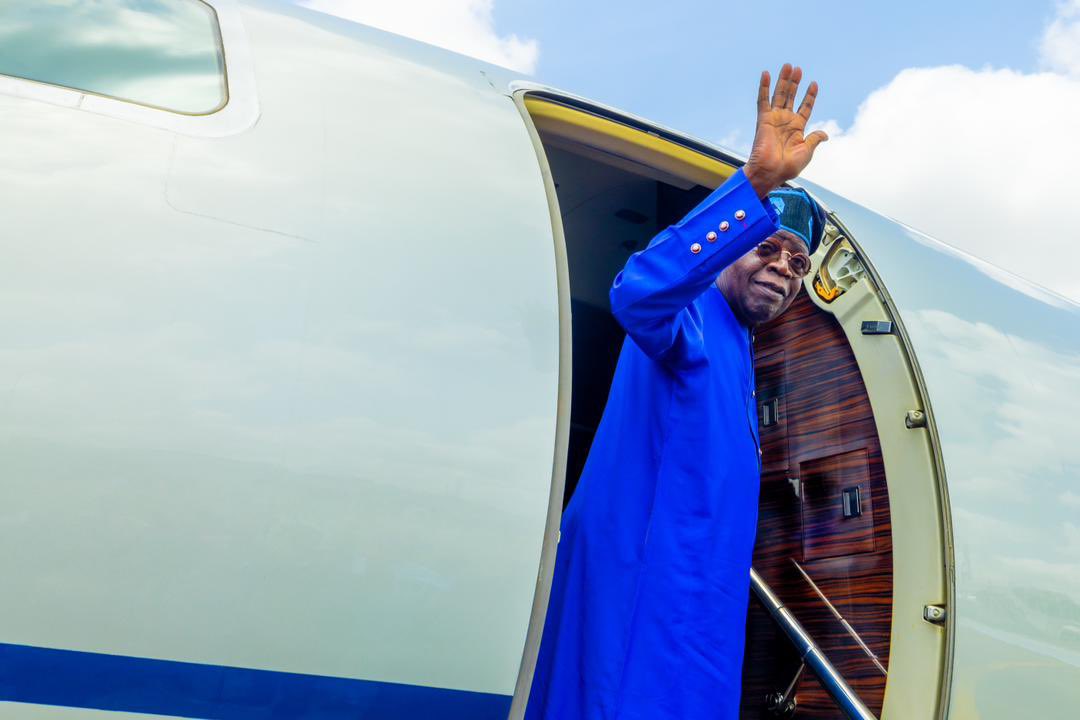
President Bola Tinubu has landed in Rio de Janeiro, Brazil, to attend the 19th Heads of State and Government Summit of the Group of 20 (G20).

The President, who arrived on Sunday at 11.03 p.m. local time (Monday 3. 03 a.m. Nigerian time), was received by Amb. Breno Costa in the Ministry of External Relations of Brazil.

The president was joined by Yusuf Tuggar, the Minister of Foreign Affairs; Idi Mukhtar Maiha, the Minister of Livestock Development; and Hannatu Musawa, the Minister of Art, Tourism, Culture, and Creativity.

Others are the Minister of State for Agriculture and Food Security, Dr Aliyu Sabi Abdullahi, and the Director General of the National Intelligence Agency, Amb. Mohammed Mohammed.

The president is also expected to hold bilateral meetings on the sidelines of the summit on advancing Nigeria’s socio-economic reforms.

Brazil’s president, Lula da Silva, is hosting the 2024 G20 summit. He has held the group’s rotating presidency since December 21, 2023, and his tenure ends on November 30.

The summit, themed: “Building a Just World and a Sustainable Planet,” will focus on three areas of sustainable development – economic, social, and environmental – and the reform of global governance.

It will also highlight the rising global temperatures and the principles of the digital economy, among other themes.

The Brazilian presidency will also discuss, as a priority, the Israel–Hamas war and the rising bloc confrontation between the United States and China.

NAN reports that the conclusion of the work carried out by the country holding the G20 rotating presidency is usually presented at the annual summit.

It is when heads of state and government approve the agreements negotiated throughout the year and point out ways of dealing with global challenges.

Regarding the summit theme, Da Silva declared a three-point agenda of combating hunger, poverty, and inequality at the summit, scheduled for November 18 to November 19.

Tinubu is attending the 2024 G20 summit, to which the organisers invited representatives of the African Union and the European Union.

The Brazilian Ambassador to Nigeria, Carlos Areias, invited Da Silva to Tinubu to attend the 2024 G20 summit on Aug. 29, when he presented his Letter of Credence to him.

Areias had said Da Silva was looking forward to welcoming Tinubu to the G20 Leaders’ Summit, saying that food security was the main proposal of the Brazilian presidency at the G20 to eliminate extreme poverty by 2030.

X (Twitter) shuts down office in Brazil amid censorship dispute

By Sabiu Abdullahi

X, the social media platform formerly known as Twitter, has closed its Brazilian office due to a dispute with Supreme Court Judge Alexandre de Moraes over censorship.

According to X, Judge de Moraes threatened to arrest its legal representative in Brazil unless the company complied with his directives to censor certain content. 

Despite the office closure, X confirmed that its platform remains accessible to users in Brazil.

The dispute began when Judge de Moraes ordered X to block accounts accused of spreading misinformation, primarily supporters of former President Jair Bolsonaro. 

X owner Elon Musk criticised the judge, leading to daily fines of $19,774 and potential legal consequences for X’s Brazilian representatives.

Musk is now under investigation for alleged obstruction of justice and other charges. 

X stated, “As a result, to protect the safety of our staff, we have made the decision to close our operation in Brazil, effective immediately.

The responsibility lies solely with Alexandre de Moraes. His actions are incompatible with democratic government.” 

Musk posted on X, “There was no question that Moraes needs to leave. If we had agreed to (Mr. Moraes) @alexandre’s (illegal) secret censorship and private information handover demands, there was no way we could explain our actions without being ashamed.”

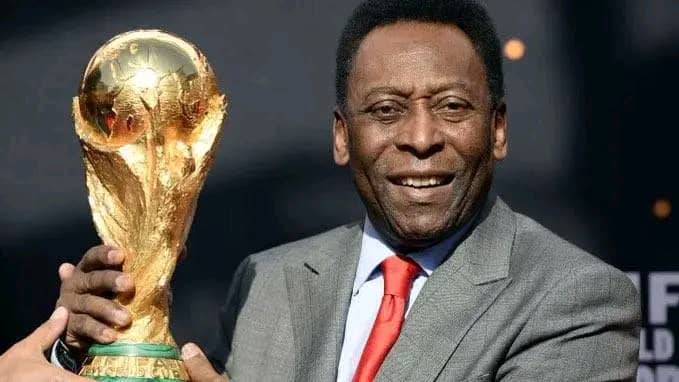
Breaking: World football legend, Pele, dies at 82

By Muhammadu Sabiu

Pele, probably the greatest player in football history, passed away at the age of 82, the BBC has reported.

He set a global record by scoring 1,281 goals.

Over the course of a 21-year career, he made 1,363 appearances.

Pele was selected as Fifa’s Player of the Century in 2000. He was the only player to have won the World Cup three times, taking home the trophy in 1958, 1962, and 1970.

In recent years, he has experienced kidney and prostate issues.

We’ll not condone racial attack against our player—Real Madrid

By Muhammadu Sabiu

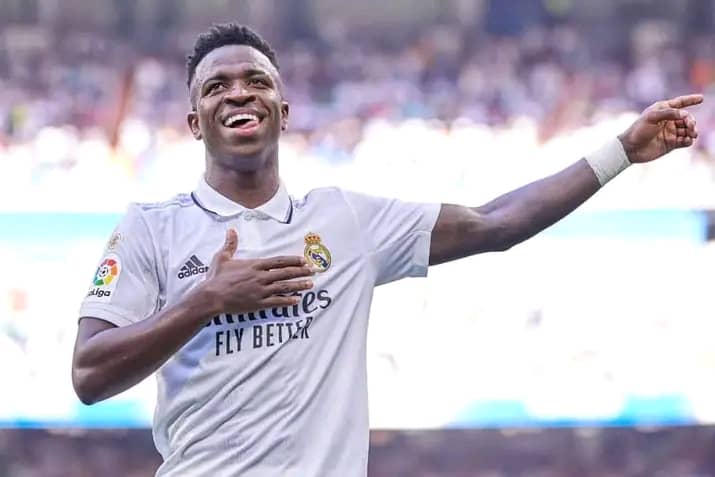
Real Madrid have condemned the “racist and xenophobic” attack on their Brazilian player Vinicius Jr. 

Real Madrid said, in a statement released via its website on Friday, that the club has instructed its legal staff to pursue legal action against anyone using racist remarks toward its players before this weekend’s LaLiga clash against Atletico Madrid.

“Real Madrid CF rejects all kinds of racist and xenophobic expressions and behaviours in the field of football, sport, and life in general, such as the regrettable and unfortunate comments made in recent hours against our player Vinicius Junior.

“Real Madrid wants to show all its love and support for Vinicius Junior, a player who understands football as an attitude towards life-based on joy, respect and sportsmanship.

“Football, which is the most global sport that exists, must be an example of values and coexistence.

“The club has instructed its legal services to take legal action against anyone who uses racist expressions towards our players,” Real Madrid said in the statement

Remember that for his dancing celebration, Vinicius was the target of a racial comment made by Pedro Bravo.

The Brazilian international is well-known for dancing at the corner flag in front of fans, whether they are in the home or away end of the stadium, to celebrate the majority of his goals.

Pedro Bravo, the head of Spanish football agents, did make a statement on Vinicius’ celebration while appearing on El Chiringuito.

Bravo said, “You have to respect your opponents. When you score a goal, if you want to dance Samba, you should go to sambodromo in Brazil. You have to respect your mates and stop playing the monkey.”

Tokyo 2020 Olympics: 5 lessons from the Men’s Football Tournament

By Aliyu Yakubu Yusuf


The curtains have fallen following yet another gripping edition of Olympic football games. Brazil has successfully defended the crown they won at home four years previously. The vanquished Spanish team fought back valiantly in the second half after going behind in the first. But with the game teetering towards a dreaded penalty shootout, Brazil’s substitute, Malcolm, delivered the decisive knockout blow that put paid to Spain’s quest for the gold medal. Here are the five things I learned from the tournament:

  • Brazil are worthy winners

Ever since the first ball was kicked about two weeks or so ago, it was apparent that barring any surprises that are characteristics of football games, the team that’s going all the way is either Brazil or anyone that overcomes them. Unlike most of the other big guns, Brazil takes this tournament seriously. After a disappointing ending at the Copa America, Brazil was keen to win this tournament to restore some sort of pride as the undisputed biggest footballing superpower. Brazil was, at times, irresistible in the group stages. Their triumphs over Germany and Saudi Arabia, which were sandwiched by a scoreless draw with plucky Ivory Coast, saw them play some scintillating football, with Everton striker Richarlison scoring five goals. Although the goals somewhat dried up in the knockout stages, the Selecao were never really troubled by any of their opponents en route to clinching the trophy.

  • The evergreen Daniel Alves still has it

It would be a crying shame to talk about Brazil without talking about the mercurial Dani Alves. Alves is the best right-back I have ever seen. And that’s a massive compliment because even Brazil alone had had the likes of Cafu and Maicon. The sight of Alves terrorising hapless opponents alongside Lionel Messi at Barcelona was a joy to behold for most football aficionados. So I wasn’t surprised at all when Brazil named him as one of their three overaged players. After all, this is a man who can do whatever it takes—fair or not—to win. Little wonder he’s the most decorated footballer in the whole history of football. This trophy is just another feather to his impressive cap. Even at the ripe age of 38, Alves is still one of the best players in his position. Brazil’s captain fantastic still has it.

  • Traditional heavyweights failed at the first hurdle

While Brazil sailed through the tournament, other traditional big countries badly underperformed. Argentina, Germany and France all failed to get past the group stages. For Argentina, it was just business as usual. For a country that won this very tournament consecutively at both 2004 and 2008 editions, it was a colossal failure not to have qualified for the knockouts for the second Olympics tournament running. The fact that they couldn’t qualify from a pool that contains Spain, Egypt and Australia tells you all you need to know about how bad this team had been. Like Argentina, France and Germany also failed to give a good account of themselves. Ever since a diabolical first half that saw them went 3-0 down in the first game against Brazil—and eventually lost the game 4-0—Germany never recovered. Although they defeated Saudi Arabia 3-2 in the next match, they huffed and puffed in their final group game but failed to see off the sturdy Ivory Coast. And that was their tournament done. As for France, the little said about them, the better.

  • The host country has so much to cheer about

Japan performed quite admirably in this tournament. Despite being drawn in a scary-looking group including France, Mexico, and South Africa, Japan qualified with maximum points. They scraped past New Zealand via penalty shootout in the quarter-finals before succumbing to Spain and Marco Asensio in the second half of the extra time in the semis. Although they went out in a cruel fashion, Japan can take courage from their outstanding performance. Despite being the host country, no one expected them to be the fourth-best team before the kick-off. However, in Takefuso Kubo, who is already at Real Madrid, Japan has a gem for whom they can dare to dream.

  • African countries flatter to deceive… again

For African countries, it was a case of one step forward, two steps backwards. Apart from South Africa that conspired to lose all their group games, Africa’s other two representatives began the tournament on positive notes. Egypt’s defeat is somewhat understandable as they went out to the eventual winners Brazil by the narrowest of margins. That’s after qualifying from a pool featuring both Spain and Argentina. The ouster of Ivory Coast, however, is pretty much frustrating for any fan of African football. After qualifying from the group that contains both Brazil and Germany, they were within a hair’s breadth of knocking out Spain before they inexplicably bottled it. They scored what looked like a winning goal in the 91st minute of the quarter-finals only to manage somehow to give up an equaliser in the 93rd minute before shipping three further goals in the extra time. That was some way of going out of a tournament. For Africa, Nigeria’s 1996 and Cameroon’s 2000 victories are but fading memories.

Aliyu Yakubu Yusuf is a lecturer at the Department of English and Literary Studies, Bayero University, Kano. He can be reached via aliyuyy@gmail.com.

2020 Tokyo Olympic: Brazil wins men’s soccer

By Muhammad Adamu

Brazil have the Olympic men’s soccer gold medal after a 2-1 victory over Spain in extra time. Brazil’s medal comes on the same pitch that it won the 2002 World Cup.

Brazil are now the second nation after Argentina to have won back-to-back Olympic gold medals after building on their 2016 success at these Tokyo Games.

Mikel Oyarzabal cancelled out Matheus Cunha’s opener after Richarlison missed a penalty, but Malcom ensured Brazil took home the gold medal with his goal in the 108th minute.