
By Abubakar Muhammad
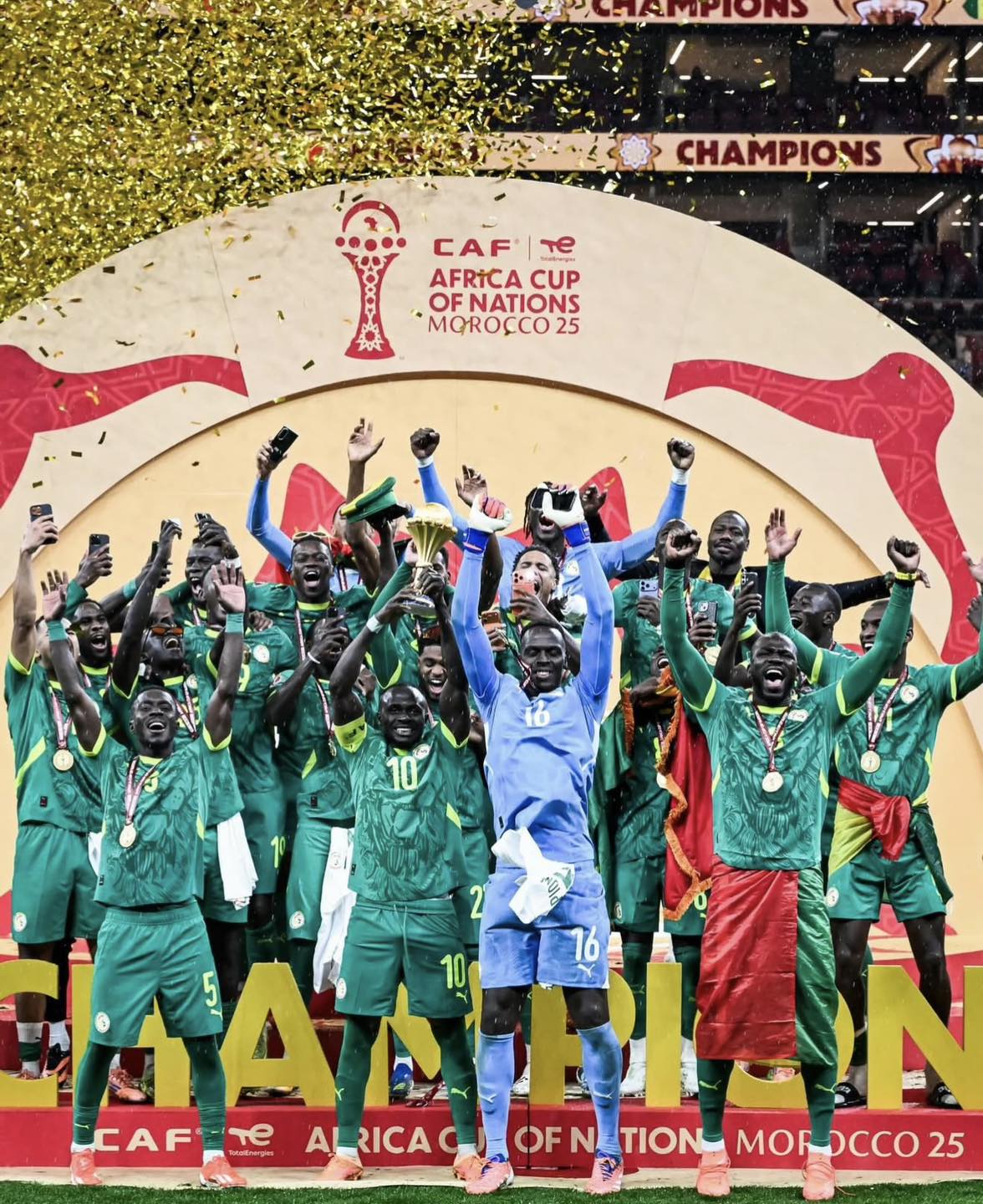
AFCON has just concluded. Senegal won the trophy, but many football enthusiasts know that the actual play of the game is only half of the big spectacle. There are many things going on backstage that take time to materialise. When you look at the countries, roll the camera, and see them doing well, you will see patterns lock into place. There might be visible investment and development of physical infrastructure, but there is also something more to it.
As a sideline to every soccer tournament, one of the things I pay attention to is the grassroots, street-level infrastructure that feeds talent to the national team. In these tournaments, you would not only pay attention to the official game or what happens in the big arenas, but also to the images that come out from foreign visitors depicting themselves playing outside the formal venues. The soccer crowd, wherever they are, tend to find where to play. To host a tournament, you really need a solid infrastructure for both formal and informal arenas. But more so, this tells us stories about the status of the game, leisure and where citizens play.
As usual, it seems Nigeria is left behind when it comes to grassroots soccer infrastructure. Senegal, Algeria, Angola, etc, have a thriving street soccer infrastructure. This infrastructure is not formal, but it seems to enjoy greater consensus that cuts across the formal-informal divide between citizens and governments.
In Latin America, there are spaces in favelas and barrios where local kids can play the game. The spaces may not be the same, may use different nomenclature, may straddle the line between the formal and the informal, but they retain the same purpose and spirit.
In Senegal, they are in the form of navétanes, a semi-formal regional tournament played in local spaces. These spaces are not owned by the government or private individuals, unlike, say, primary school premises or other government buildings. They are simply communal spaces where the navétanes games are played. These spaces are respected by everyone; no encroachment or erection of structures, public or privately owned. Kids start their careers in their neighbourhoods and progress to regional teams, then to the professional league, the national team, and onward to international careers. You find similar spaces in Brazil as developing ground for talents that would later go on to dazzle a global audience.
In North Africa, they have a thriving culture of street football played in what we can call in Nigeria a 7-aside stadium. The difference is that these spaces in North Africa are free and open to everyone. They sit in open spaces in the middle of neighbourhoods. The key idea here is access and openness. The use of open space for soccer must not require any payment and must remove any other impediments that can exclude people. A truly public space is one that lets you in without charging a fee or asking for proof of innocence.
In Nigeria, empty lots and vacant spaces are constantly being developed. There is no respect for spaces where kids can play. The idea is that in places where formal sporting infrastructure is not in place, small-scale community members use these spaces for leisure and sporting activities. Kids will have a chance to play the game from a very young age until they dribble their way to the national team. The grassroots in many parts of the world are where players are developed and imbued with the spirit of the nation before they enter the academy for the refinement of their talents.
African soccer, like its South American counterpart, is largely dependent on informal infrastructure, with local people coming together to build their own. People-as-infrastructure is a concept in which citizens enter into a series of temporary, makeshift arrangements with one another to provide services that authorities are unable to deliver.
By killing these spaces, Nigeria is killing her young talents. It makes it difficult for the local kids to develop an interest, let alone play the game and nurture their talents. Angola, not really a footballing nation, has a thriving street football culture. I noticed from the videos I watched that street lots exist, and they are everywhere. They don’t seem to be developed or encroached so rampant as we see in Nigeria. It seems these spaces are protected by consensus, just like they are protected in Brazilian favelas and Argentina’s barrios.
Football is the game of the poor. Commercialise football, and you create a barrier where only the rich can afford to play. Commercial football delivers more money to the pockets of a few individuals without bringing much-needed collective glory to the national team. The English Premier League is the wealthiest league in the world, but the country has fallen far behind other footballing nations. Germany has an academy system in place, but their overall sporting culture is anchored around a process that resembles socialist democratic football more than an individualistic, capitalist model that Nigeria tends to lean towards.
One of the biggest problems that Nigeria’s football faces as an institution is the seeming, increasing reliance on the academy for its national talents. Academies are simply there for money. Another thing is the seeming sole reliance on foreign-based players. This is understandable for the refined talents abroad, but there seems to be a problem with that in Nigeria.
There is nothing wrong with foreign-based players populating the national team. Countries tap into their talents abroad, sharpened by cutting-edge training models and infrastructure. One of the biggest problems with this, in the case of Nigeria, is that players know exactly why they’re called up to the national team. They understand why, and there is no confusion about the nature of the transaction. There is nothing that dilutes or softens the nature of the transaction. The country only sees them when it needs them. The country is not there when they need her, and so, in their bloom and glory, they may not give their all. They will not play with their blood and heart.
Secondly, tapping into foreign players in Nigeria is not grounded in any philosophical sporting policy. For instance, what does it mean for a player to play for the national team? What does the national team mean to them? What is that one thing that all players can understand as a common language and shared values? Something like a unique national culture common among the youth? You can only find this in street football played across the country. Pick that ideology and craft it into the national sports policy. What we see instead is total indifference at best, if not outright obstacles thrown in the way of the nation’s youth by the government and private interest groups.
By eliminating informal spaces, we have destroyed the conviviality and socio-spatial relations that emerge from street games. Street soccer gives the manager of the national team a foundation, something to start with. The street is where every player understands what it means to play for the national team. From the ground up, the Nigerian player can develop a sense of Nigerianness, just as French players are instilled with French values and what it means to play for the national team. But since we don’t have the formal structures and arrangements of the French, Germans, or English, where players are developed through various academies under the guidelines of the national football federations, the street is where our players should build their character. The Senegalese have taken the navétanes and use it as a national sports policy. It is an informal, grassroots football that develops independently of the government. The coach and players speak the same football language that came from the streets.
By erecting structures on every available space in Nigeria, you tighten the rope for the children in local communities and make it hard for ordinary folks to make their way to the national team. So many talents would slip through the cracks before rising to the top and reaching their full potential. We are already importing a dangerous trend from abroad, where only kids from wealthy backgrounds can play the game and reach the professional level.
And since we don’t have meaningful ways in which citizens feel indebted to their governments and their countries beyond familial ties, the very few that already found their way to the highest level of the game know why they’re playing. They’re simply playing commercial football. They have already paid the price on the way to Europe without the aid of any national structure. When you call them up to the national team after this, they will not play with their heart and their blood.
Abubakar Muhammad is from Kano, Nigeria.