Benjamin Netanyahu

Rarara vs Pantami: Criticism Is Not an Attack on a Faith

By Muhammad Abubakar

Since I came to France for work, I have been extremely cautious about criticising Israel or Benjamin Netanyahu. Often, though wrongly, people conflate criticism of an entity or a person with criticism of an idea or of an entire ethnic or religious group.

Soon after Hamas’s attack on Israel on October 7, I felt driven to write about the unresolved conflict. It was difficult to ignore the subject. Yet I was also concerned that expressing my views might affect my employment or even my residency status in France. To be certain, I reached out to our Human Resources department for guidance.

We essentially agreed on an important distinction. Israel and Benjamin Netanyahu are not the same as the Jewish people or Judaism. One can criticise the policies of the Israeli government or the actions of its prime minister without expressing hostility towards Jews or the Jewish faith. The same principle applies elsewhere. A person may criticise Saudi Arabia or Crown Prince Mohammed bin Salman without being an Islamophobe or an enemy of Islam.

This distinction is fundamental in any society that values free expression and intellectual honesty. Democracies depend on the ability of citizens to question governments, leaders and public figures. If every criticism of a political leader is interpreted as an attack on an entire religion or ethnic group, meaningful public debate becomes impossible.

I was reminded of this principle after listening to new songs released yesterday by the Nigerian political singer, Dauda Kahutu, popularly known as Rarara. The songs appear to criticise an opposition politician in Gombe State, Sheikh Ali Isa Ibrahim Pantami, who is also a respected Islamic scholar.

Unfortunately, I have seen some people make the same mistake that often appears in discussions about international politics. They have framed criticism of Pantami as though it were criticism of Islam itself.

Pantami does not represent Islam. He is a Muslim and an influential public figure, but he remains an individual whose political choices, public statements and actions are open to public scrutiny, just like those of any other politician. Defending him is entirely legitimate, but such a defence should be based on facts, evidence and reason rather than on the assumption that any criticism directed at him is an attack on the religion he professes.

By any definition, both the singer and the governorship candidate he appears to criticise in his songs are Muslims. Neither of them represents Islam. Their political disagreements should therefore remain political disagreements. Turning them into religious disputes serves neither truth nor the public interest.

This tendency to wrap political figures in the cloak of religion is dangerous. It discourages accountability and deepens unnecessary divisions within society. Once religion becomes a shield against legitimate criticism, it becomes difficult to separate public responsibility from personal belief.

Nigeria’s diversity demands greater care in the language we use. Political competition should not be transformed into religious confrontation. Citizens should be able to disagree with politicians, governors, ministers or scholars without being accused of attacking an entire faith.

The lesson is simple. We must distinguish between people and the principles they claim to represent, between governments and the nations they govern, and between political leaders and the religions they practise. Failing to make these distinctions only fuels misunderstanding and polarisation.

Criticise ideas. Debate policies. Defend people if you wish. But let us avoid presenting political disagreements as battles for religion. In the long run, both politics and religion are better served when we keep that distinction clear.

Nearly Half of Americans Support Arrest of Netanyahu on U.S. Soil, Poll Finds

By Muhammad Abubakar

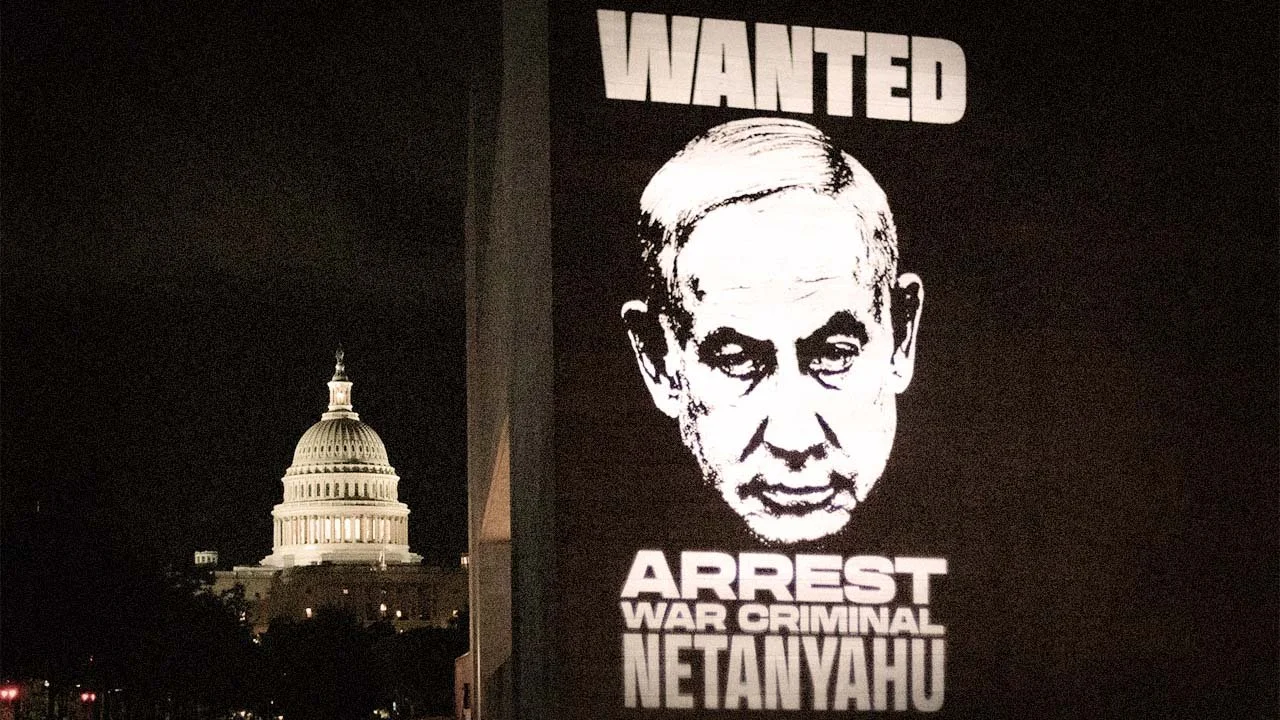
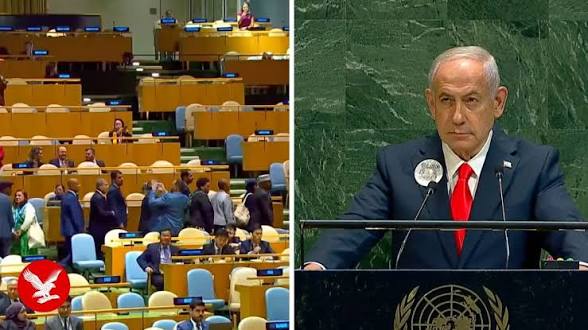
Nearly half of Americans believe the United States should arrest Israeli Prime Minister Benjamin Netanyahu if he enters the country, according to a new Economist/YouGov poll.

The survey found that 49 per cent of respondents support enforcing the International Criminal Court (ICC) arrest warrant against Netanyahu, while 27 per cent oppose such action and 23 per cent remain undecided.

The ICC issued arrest warrants for Netanyahu in November 2024 over alleged war crimes and crimes against humanity linked to Israel’s military campaign in Gaza. Netanyahu and the Israeli government reject the allegations, describing them as politically motivated.

The poll reflects growing public criticism of Netanyahu in the United States. Recent surveys have also shown declining support for his leadership and increasing concern among Americans over U.S. policy toward Israel, particularly among Democratic voters and younger Americans.

Despite the poll results, legal experts note that the United States is not a member of the ICC, making the enforcement of the court’s arrest warrant highly unlikely under current U.S. law.

Massie: Halt U.S. Aid to Israel for One Month and ‘There’ll Be Instant Peace’

By Muhammad Abubakar

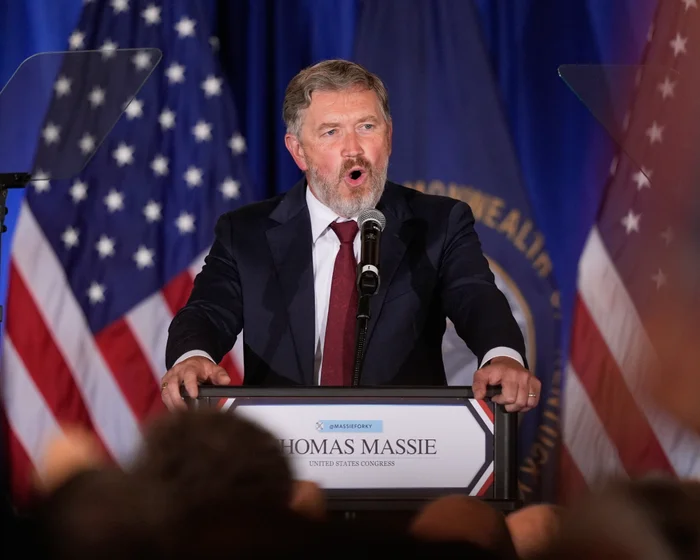
U.S. Representative Thomas Massie has called for a temporary suspension of American aid to Israel, arguing that such a move would quickly reduce tensions in the Middle East and lower energy prices.

Massie’s remarks came in response to reports that President Donald Trump angrily confronted Israeli Prime Minister Benjamin Netanyahu over Israel’s military actions in Lebanon. According to Axios, Trump warned Netanyahu that Israel’s operations were undermining U.S. diplomatic efforts in the region and risked escalating the conflict.

Reacting to the report on social media, Massie wrote that Washington should “just withhold foreign aid to Israel for a month,” claiming the move would prompt Israel to halt military operations against its neighbours, help reopen the Strait of Hormuz, and reduce U.S. gasoline prices. He also described Israel as “the biggest welfare recipient from American taxpayers.”

Massie’s comments add to ongoing debates in Washington over U.S. military and financial support for Israel amid heightened regional tensions and concerns about the broader economic impact of instability in the Middle East.

‘Everybody Hates You Now’: Trump Unleashes Fury on Netanyahu in Explosive Phone Call

By Muhammad Abubakar

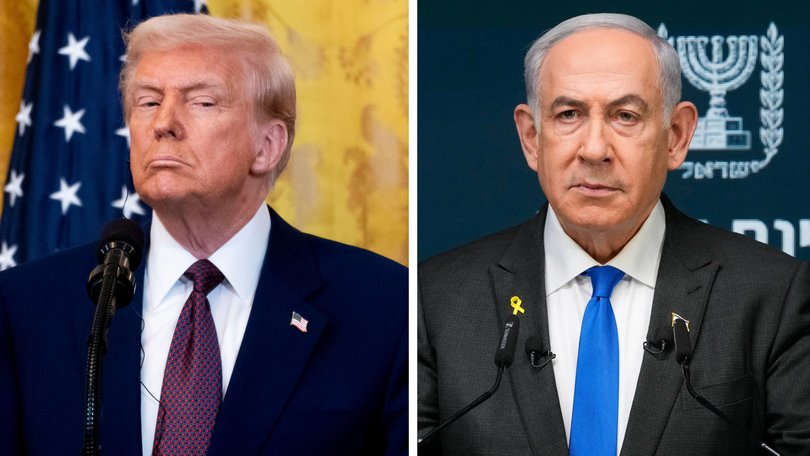
U.S. President Donald Trump reportedly launched into a profanity-laden tirade against Israeli Prime Minister Benjamin Netanyahu during their latest phone conversation, according to a report by Axios.

Citing unnamed sources familiar with the exchange, Axios reported that Trump told Netanyahu: “You’re fucking crazy. You’d be in prison if it weren’t for me. I’m saving your ass. Everybody hates you now. Everybody hates Israel because of this.”

The reported remarks reflect growing tensions over Israel’s handling of the ongoing conflict in Gaza and increasing international criticism of the Israeli government. Neither Trump nor Netanyahu had publicly commented on the report at the time of publication.

If confirmed, the exchange would mark one of the sharpest known criticisms of Netanyahu by Trump, despite the close relationship the two leaders maintained during Trump’s presidency.

Ulama Forum rejects Nigeria-Israel security pact

By Muhammad Sulaiman

The Ulama Forum in Nigeria has condemned the reported Memorandum of Understanding (MoU) between the Federal Government and the State of Israel on security cooperation, describing it as “a dangerous and insensitive diplomatic move.”

In a statement signed by its Convener, Aminu Inuwa Muhammad, and Secretary, Engr. Basheer Adamu Aliyu, the Forum accused the Minister of State for Foreign Affairs, Mrs. Bianca Ojukwu, of unilaterally engaging Israel despite global outrage over its alleged genocide against Palestinians.

“At a time when the world of conscience is against Israel, Nigeria should be at the forefront of supporting South Africa’s genocide case at the International Court of Justice, not courting a state increasingly isolated for human rights violations,” the statement read.

The Forum warned that involving Israel in Nigeria’s internal security would erode national sovereignty, risk human rights abuses, and entrench dependence on foreign powers. It argued that “internal security issues require homegrown solutions that prioritise community engagement, social cohesion, and inclusive governance.”

Instead of seeking external assistance, the group urged the government to strengthen security institutions, address poverty and corruption, and ensure justice for offenders. It further called on President Bola Ahmed Tinubu to “call the erring minister to order” in the interest of national unity and public sensitivity.

The Forum reaffirmed its confidence in Nigeria’s security personnel and pledged continued prayers for “Allah’s guidance and support to our gallant forces.”

Nigeria condemns Israeli strike on Iran, urges immediate ceasefire

By Hadiza Abdulkadir

The Federal Government of Nigeria has strongly condemned Israel’s recent unprovoked strikes on Iran, which have triggered a fresh wave of hostilities between the two Middle Eastern powers. In a statement issued on Friday, the Nigerian government described the escalating conflict as a grave threat to regional and global peace.

The Ministry of Foreign Affairs, through its spokesperson, Kimiebi Imomotimi Ebienfa, expressed deep concern over the sustained missile and aerial exchanges between the Islamic Republic of Iran and the State of Israel, calling for an “immediate cessation of hostilities” and restraint from both parties.

“The continued cycle of retaliation not only endangers civilian lives but threatens to plunge the broader Middle East into further instability, with implications for international security and economic development,” the statement read.

Nigeria, which has long championed non-aggression and multilateral diplomacy principles, urged Iran and Israel to return to dialogue and constructive engagement. The government also called on the United Nations Security Council and the broader international community to intensify de-escalation efforts and provide diplomatic platforms for resolution.

Reaffirming its stance against military confrontation, the statement noted that “military action is not a substitute for negotiation” and that lasting peace must be built on diplomacy, mutual respect, and adherence to international law.

“Nigeria stands ready to support all genuine efforts aimed at de-escalating tensions and promoting peace in the region,” the Ministry added.

The statement comes amid growing international alarm over the potential fallout of the conflict, which many fear could destabilise the already volatile Middle East and disrupt global economic and political systems.

Sanders condemns Netanyahu’s attack on Iran, warns against U.S. involvement

By Muhammad Sulaiman

U.S. Senator Bernie Sanders (I-Vt.) issued a strongly worded statement condemning Israeli Prime Minister Benjamin Netanyahu’s unilateral military strike on Iran, calling it a reckless escalation that defies international law and endangers global stability.

Sanders accused Netanyahu of previously violating the Geneva Conventions through the starvation of children in Gaza and now pursuing an illegal attack on Iran, risking a full-scale regional war. He stated that the strikes ignored the diplomatic efforts of the United States to resolve tensions over Iran’s nuclear program and undermined planned negotiations.

“The world is more dangerous and unstable as a result of the extremist Netanyahu’s government ongoing defiance of international law,” Sanders said.

The senator urged the U.S. and international community to resist being drawn into another conflict, and instead push for de-escalation and renewed diplomacy.

“We should do everything possible to prevent an escalation of this conflict and bring the warring parties to the negotiating table,” he emphasized.

Trump proposes U.S. Gaza takeover, sparks outrage

By Muhsin Ibrahim

In a recent press conference, U.S. President Donald Trump unveiled a controversial plan for the United States to assume control over the Gaza Strip.

The proposal includes relocating Gaza’s roughly two million Palestinian residents to neighbouring countries such as Egypt and Jordan to transform the territory into a thriving economic hub, potentially named the “Riviera of the Middle East.”

Trump emphasised the economic potential of the initiative, arguing that U.S. oversight would bring stability and prosperity to the region. He also suggested the possible deployment of American forces to maintain order during the transition.

The plan has been widely condemned. Middle Eastern nations, including Saudi Arabia, have rejected it, warning of its implications for international law and regional security. 

Human rights organisations have also strongly criticised the initiative, calling it a form of ethnic cleansing that could worsen Gaza’s humanitarian crisis.

Israeli Prime Minister Benjamin Netanyahu, who was present at the press conference, expressed support for the plan, saying it aligns with Israel’s security interests. However, international opposition and legal challenges may hinder the proposal’s feasibility.

As the debate over Trump’s plan intensifies, world leaders and analysts continue to scrutinise its potential consequences for regional stability and the rights of the Palestinian people.