Banditry

Bandits kill policemen in Zamfara

By Muhammadu Sabiu

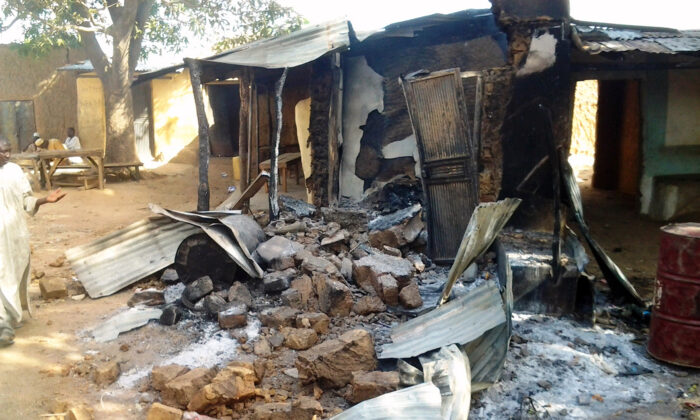
Armed bandits on the Gusau-Sokoto route in Zamfara’s Bungudu Local Government area are reported to have slain four police officers.

According to a local who identified himself as Haruna Musa, the bandits ambushed and shot the police officers who were on duty on the road on Monday.

He stated that the bandits opened fire on the police officers who were stationed at a roadblock they had set up not far from Bungudu town, killing four of them.

Musa was quoted as saying, “The police officers were on duty and mounted a roadblock not knowing that the bandits were hiding in a bush near the roadblock.

“The bandits suddenly came out of their hiding place and opened fire on the police officers, killing four of them.”

The Daily Reality (TDR) understands that the police public relations officer in the state police, SP Yazid Abubakar, confirmed the attack.

However, he noted that he was not aware of whether or not a police officer was killed during the attack.

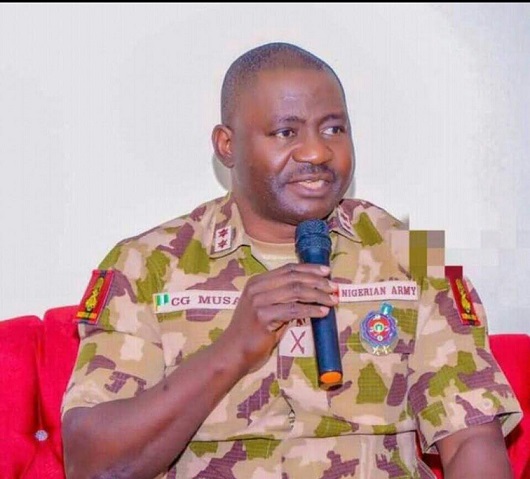
The task before the new CDS, General Christopher Musa

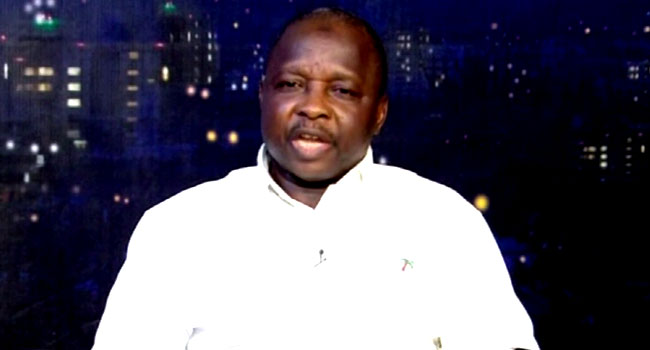
By Prof. Abdussamad Umar Jibia

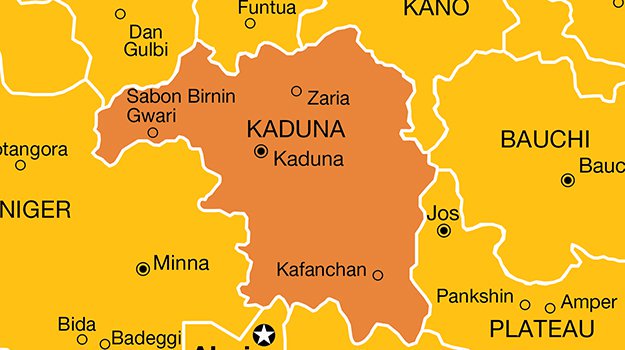
Southern Kaduna (popularly known as Southern Zaria because of its history of being part of the Zaria emirate) is a place I feel connected to whenever it is mentioned. At the age of 12, when I went to a boarding secondary school, a large percentage of those who became my classmates were from that area. Although GSS Musawa was located in the heart of what is now Katsina state, one can say without any fear of contradiction that nearly half of its students were from Southern Kaduna. 

With this background, I can accurately claim to have grown up with people from Southern Kaduna, many of whom remain my friends. Religious and communal crises that set us against one another are unfortunate. With those many crises, it would be a lie to claim that there is no mutual suspicion between the people of that area, who are mainly Christians and the Northern part of Kaduna state made of mostly Muslims and the greater old Kaduna/North-central state to which I belong. 

Of course, like any other people, there are good and bad people in Southern Kaduna. To verify to which category a particular person belongs, you find out. Since the announcement of Major-General Christopher Musa as the new Chief of Defence Staff (CDS), I set out to investigate the kind of person he is. After contacting my sources, I was left thankful to President Bola Tinubu for choosing such a detribalised professional soldier to head our military, especially when professionalism is required to deal with the many security challenges across the country.

The choice of Christopher Musa is timely not just because he is a thoroughbred General but also because he is a victim of the banditry scourge that has bedevilled the Northwestern part of Nigeria. To be a Nigerian, one must first belong to one of the 774 local governments in one of the 36 states or FCT. Like the case with many other places in the North West, the state and local government area of General Musa have been attacked.

But, contrary to what the Southern press would want us to believe, although Southern Kaduna has its share of banditry, it is not the worst hit. Killing, kidnapping and other heinous crimes committed by bandits are daily occurrences in Zamfara, parts of Sokoto, Katsina, Kebbi and Niger, in addition to both Northern and Southern Kaduna state.

To succeed in his task, General Musa has to dispel the incorrect notion that bandits are coming from outside Nigeria. I believe the security reports are at his disposal, but there are things that we, the victims, expect from him that his predecessors failed to achieve.

Most of the operations hitherto carried out involve bandits at the bottom of the bandits’ hierarchy. The most dreadful bandits’ leaders are lurking safely in the North West. Only recently, one of them released the last batch of students of FGC Yauri whom he kidnapped and kept on Nigerian soil for more than two years, during which he extorted their parents through the nose. He is still living unscathed despite the billions of Naira the Government spends on security. 

He is not alone. In a widely condemned show of irresponsibility, another criminal who killed more than 100 villagers in Katsina state and was declared wanted by the Nigerian Police was given a traditional title in Zamfara state last year. He lives peacefully while the orphans and widows his crime generated are left on their own.

Another criminal who burned a passenger bus with 30 people in it days after opening fire on a village market that claimed 60 lives is also enjoying himself in Zamfara state. He is said to be moving around like a king in his locality.

Yet, another criminal who publicly claimed to have killed many Nigerian and Nigerian soldiers and abducted 40 Nigerian children days after he killed 53 farmers in Zamfara state is living there like a king. He also moves around unscathed. 

A bandits’ kingpin who ambushed Nigerian soldiers and killed many of them in 2020 is now enslaving villagers in Katsina state. Villagers under his jurisdiction work on his farm whenever he invites them to do so.

These are some of the most well-known bandits’ Generals with bases in the North West. The list is not exhaustive. That they were accessed by international and local media to which they gave video interviews leaves our security forces with no room to claim that the criminals are at large.

Of course, arresting/killing the above-mentioned bandits’ ring leaders and others in their category is not as easy as mentioned. In addition to sophisticated weapons and trained fighters, they have powerful sympathisers. We cannot rule out mischievous claims of genocide when the military goes all out to deal with them. Ordinary people like me expect that General Musa and Mr President should ignore any noise resulting from securing the North West and  North Central geopolitical regions of Nigeria.  May Allah help them, amin.

The question begging for an answer is whether General Musa and his team are willing to take up the challenge and uproot banditry by attacking its leadership, or they will just scratch the surface, make their money and go into partisan politics like we saw some of their colleagues did.

Prof Abdussamad Umar Jibia wrote from Kano, Nigeria. He can be reached via aujibia@gmail.com.

40 worshippers reportedly abducted in Kaduna

By Muhammadu Sabiu 
 
At least 40 worshipers were on Sunday reportedly abducted by bandits while on congression at Bege Baptist Church, Madala, Chikun Local Government Area of Kaduna State.
 
The incident was reported on Monday by Rev. John Hayab, leader of the Christian Association of Nigeria’s Kaduna State branch.
 
According to Hayab, the incident took place at 9:30 a.m., during the worship time.
 
He was quoted as saying, “The worshippers were in the Sunday service in the Church when around 9:30 am they heard gunshots very close to the Church. The gunmen attacked the Church and went away with 40 worshippers.”
 
However, he added that 15 of the kidnapped worshippers managed to escape, leaving 25 others in the kidnappers’ hideout.

Open Letter to President-Elect Bola Tinubu: A Golden Ticket to Presidency Success

By Group Captain Sadeeq Garba Shehu (rtd.)

When new executives with a change mandate take over an organisation, they typically invest time in reshaping its strategy and determining the kind of culture needed to succeed. Those choices guide other decisions, including who their senior managers will be and how the leaders will allocate their time. Sadly many neglect the key factor that will help determine their effectiveness: the administrative system that guides day-to-day operations in their offices. This system ensures that leaders make the most of their limited time, that information arrives at the right point in their decision-making process, and that follow-up happens without their having to check. Many new executives default to the system they’ve inherited. Often there’s a better way to handle the information flow necessary for a President to succeed—and very often, a chief of staff (CoS) can play an essential role.

The CoS to the President is a political appointee of the president who does not require Senate confirmation and who serves at the pleasure of the President. While not a legally required role, Since President Obasanjo, all Nigerian civilian presidents have appointed a chief of staff. President Obasanjo had Gen Abdullahi Mohammed, while President Umaru Musa Yar’Adua had Gbolade Osinowo. The position was temporarily absent between 18 September 2008 – 17 May 2010 when President Yaradua sacked Osinowo and never appointed a replacement. President Goodluck Jonathan had Mike Oghiadomhe and Jones Arogbofa. President Muhammadu Buhari had the late Abba Kyari, and after his demise, the current CoS Prof Ibrahim Gambari. The position of CoS to the President is widely recognised as one of great power and influence, owing to daily contact with the President and control of the Office of the President. Almost all, if not all, governors in Nigeria now have a Chief of Staff, and many ministers have them.    

The CoS role originated in the military and dated back centuries. Cicero, the Roman politician and orator, used a slave named Tiro, who, according to Cicero’s biographer Zach Bankston, served as a secretary, a financial overseer, and a political strategist. Andrew Roberts’s Napoleon: A Life describes the vital role that Louis-Alexandre Berthier played in assisting Napoleon at the height of his powers. The historians Ron Chernow and Joseph Ellis have described the CoS–like a role that Alexander Hamilton played for George Washington. These people aren’t to be confused with the personal secretaries or aides-de-camp that each leader also had. Rather, they were close advisers who handled the most-delicate strategic matters and became trusted confidants. While the Chief of staff is a role that started in the military, and now, we can see it in most industries and sectors.

WHAT DOES A CHIEF OF STAFF FOR THE PRESIDENT DO? 

While there is no one-size-fits-all when it comes to describing the duties of a CoS in Nigeria, and each incumbent had wielded / not wielded power according to his personality and the relationship he has with his principal, the President, or the style of the President, their primary duties are making time, information, and decision-making for Mr President more effective. In other words, a CoS to Presidents helps Presidents become the best version of themselves.

The role of the chief of staff is not about dealing with administrative tasks only as he is not a PA. A CoS does not manage the President’s day-to-day schedule. The chief of staff is a leader. He/she makes high-level decisions, strategizes processes, and sets policies by devising meaningful plans and generating useful ideas, anticipating problems, and coming up with new solutions.

Paraphrasing Patrick Aylward, who breaks down the job of any CoS into five categories, I would say the job of the CoS to the President can be summed up as:

1. An air traffic controller for the President and his cabinet controlling the flow of people into the President’s office. 

2. An integrator connecting MDAs’ work streams that would otherwise remain siloed, breeding inter-ministerial/inter-agency squabbles, duplication, overlap and fragmentation.

3. A communicator linking the Presidency team and the broader FG apparatus. 

4. An honest broker and truth-teller when the President needs a wide-ranging view without turf/mandate considerations.

5. A confidant without an organisational or personal agenda-His agenda being only that of Mr President.

An effective and successful CoS to the President should be able to translate the above five categories can be translated into tasks and duties.

REQUIREMENTS OF AN EFFECTIVE AND SUCCESSFUL CoS: SKILLS AND PERSONAL QUALITIES 

The main responsibility of CoS is to help the President stay organised, which will allow him to give time to more important A items. This requires a good understanding of the business of government, effective communication skills, and the ability to manage projects and relationships. It also requires the skill to anticipate and avoid problems, add value to the President’s vision, and be intelligent on the organisational and political levels. The CoS must be excellent in the management of important projects. The ability to simplify complicated tasks, strategic thinking and problem analysis is one of their strongest suits, and they should know how to see things through, from idea to execution, even when the President himself forgets.

The best skill one would have for any position is being effective in getting the right things done. In his book The Effective Executive, Peter Drucker argues that effectiveness derives from a set of five practices anyone can learn: managing time; focusing on results (what to contribute to an organisation); building on strengths; concentrating on top priorities; and making effective decisions. Experts are agreed that the above five skills or practices are extremely useful when it comes to the chief of staff position.

Managing time: When it comes to time, presidents find it challenging to have enough of their time at their disposal and available for important matters, which do make a difference. They can get easily distracted, and leaving little time to focus on strategy is usually the outcome. A good chief of staff helps presidents record, manage, and consolidate time and reallocating time through doing, delegating, and deferring non-urgent tasks and cuts unproductive demands on time. CoS helps diagnose time wastage (e.g., excess of meetings) and communicates where the President’s time should be spent to key stakeholders.

Focusing on results: Most executives focus on efforts rather than results.. An excellent CoS redirects the President’s attention towards contribution by focusing on direct results, building values, and developing people.

Building on strengths: Presidents might not be fully aware of all the available strength points (the strengths of associates, the strengths of individual ministers and cabinet members, and even the President’s own strengths). Excellent CoS helps the President conduct strength assessments to fully comprehend the team’s strengths and how to manage them best. CoS can help redesign jobs to attract and scout the right people and talents, recognise those with weak performances, especially managers, and initiate action plans.  

Concentrating on top priorities: The need to prioritise and focus on major opportunities is the very core of a President’s job. This is what delivers results. Successful Presidents need to eliminate anything that is not worth doing and concentrate on the tasks that, if done perfectly, will make a difference. A successful CoS prepares and facilitates strategic planning processes and encourages the President to drop processes before they begin to decline. CoS leads or co-leads strategic initiatives and aims for what makes a difference rather than what is easy and safe to do.

Reaching effective decisions: With the chief of staff handling a considerable number of tasks, the President will have more time to think through big decisions, with the CoS serving as a reliable sounding board by testing opinions against facts. Without the help of a quality CoS, the President may make rash decisions, will not study the consequences of a decision before making one, and may be indecisive most of the time. An effective CoS gathers different teams’ perspectives to help Mr President understand the implications and helps direct the President to make decisions only when there is a disagreement, test opinions against facts, and compare the effort done and the risk of not taking action versus taking action.

Managing Meetings: Holding meetings is an integral part of the chief of staff’s responsibilities. Meetings represent a great demand on the President’s time, and the role of the chief of staff is to help the President never allow meetings to become the main demand on his time. To effectively manage meetings is a crucial part of the role of a chief of staff, as this chief of staff must not only manage the meeting but the people, agenda, objective, goal, strategies, and measures. To do this, the CoS must ensure all relevant MDA representatives are in the room, at the table, and participating while ensuring that meetings are designed to move the business forward with timed actions against goals. So, effectively managing team meetings is an important job requirement for the role. 

The most sophisticated chiefs of staff also assist the President in thinking through and setting policies—and making sure they are implemented. They anticipate problems and are especially sensitive to issues that require diplomacy. They function as extra eyes and ears by pointing out political potholes their bosses may not recognise (especially if the bosses are new to the company). Importantly, a CoS acts with the implicit imprimatur of the President—something that calls for humility, maturity, and situational sensitivity.

Regardless of specific responsibilities, a CoS can help a leader achieve sharp gains in productivity and impact. The CEO to the President helps the leader become better organised, with more time for A items; Manages important projects well; Helps President and his Cabinet navigate through uncertainty and risk. Required capabilities include: Can do project management, Can manage relationships, Communicating well, Organising the President’s office, Can simplify complexity, Does strategic thinking and problem analysis, Can manage the process of idea to execution, Can anticipate and avert problems, Can grasp and adding value to the president’s vision, Has organisational and political intelligence, ability to research on a full range of topics. A good CoS knows which relationships are most important to the leader’s agenda. Being organised and disciplined, showing attention to detail, and following up doggedly to ensure the right results. Ability to see what pressures the leader faces in pushing for changes and to find ways to lessen them. Finally, communication skills are crucial because the CoS must help refine the leader’s message and ensure that it is understood by the right audiences. 

WHAT KIND OF CoS SHOULD THE PRESIDENT-ELECT LOOK FOR? 

So far in the CoS role , we have seen Gen Abdullahi Mohammed (OBJ), Gbolade Osinowo (Yaradua) Mike Oghiadomhe and Jones Arogbofa (GEJ) , Abba Kyari and Prof Ibrahim Gambari (PMB) , each with his different style , the powers he wielded , and based on the style of his Principal . With respect, the most enduring name, for good or bad (depending on who you ask) is that of late Abba Kyari. Many agree there were fewer inter-ministerial squabbles and less confusion in the Presidency when Kyari was around. He left a legacy and a reputation of a rigid gate-keeper for PMB, qualities that several analysts believe are required of a CoS to the President. During the last days of his presidency, Barack Obama observed: ‘One of the things I’ve learned is that the big breakthroughs are typically the result of a lot of grunt work—just a whole lot of blocking and tackling.’ Grunt work is what chiefs of staff do.” Richard Nixon’s first chief of staff, H. R. Haldeman, garnered a reputation in Washington for the iron hand he wielded in the position—famously referring to himself as “the president’s son-of-a-bitch”, he was a rigid gatekeeper who would frequently meet with administration officials in place of the president, and then report himself to Nixon on the officials’ talking points.

Everyone requires help to achieve his or her highest potential and to sustain the effort it takes to lead a complex organisation. The right chief of staff can be an important source of assistance to leaders who are pushing their organisations and themselves to ever better performance. President-elect Bola Ahmed Tinubu, in looking for a CoS, should look for all the qualities enumerated here but in addition, look for that person that also has the capacity and personality to be a rigid gatekeeper and, like Nixon’s CoS Haldeman and PMB’s CoS late Abba Kyari be “the president’s son-of-a-bitch”. But to be an effective CoS, the President must also empower the CoS. Both Nixon’s Haldeman and PMB’s Kyari have empowered CoS.

Group Captain Sadeeq Garba Shehu (rtd.) is a Private Security Consultant and member APC PCC Security Committee.
Zamfara: Police storm bandits’ hideout, free 14 captives

By Muhammadu Sabiu 

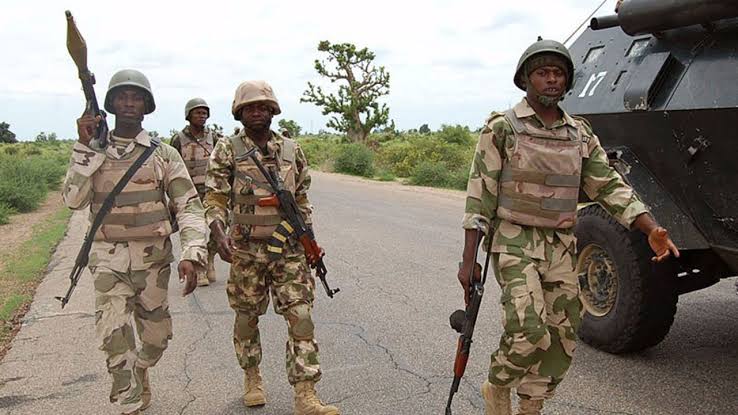
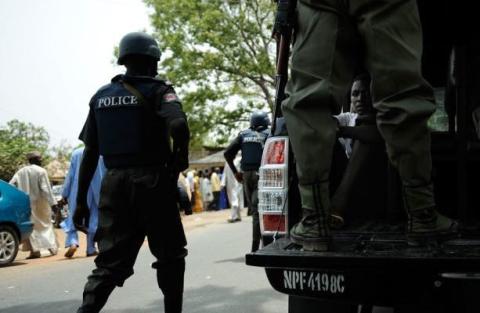
The Zamfara State Police Command dislodged a bandits’ camp and freed 14 abducted people after spending 68 days in captivity.

The State Police Public Relations Officer (PPRO), S. P. Mohammed Shehu, disclosed this in a statement in Gusau, the state’s capital.

The statement reads, “On March 10, 2023, Police Tactical Operatives in Conjunction with the vigilante while on Mop Up Operation near Munhaye forest successfully dislodged bandits camp belonging to one recalcitrant bandits’ Kingpin AKA Dogo Sule.

“As a result of the operation, fourteen hostages comprising two male adults, seven females and five children below the age of 2 were rescued.

“The victims who were in sympathetic condition have been taken to the police clinic in Gusau for medical treatment and thereafter reunited with their families and relations.”

Mr Kolo Yusuf, the Commissioner of Police, expressed his pleasure over the victims’ regaining of freedom. He also reassured the continued commitment of the police to protect the lives and property of the citizens.

Journalist’s role in tackling Nigeria’s security and humanitarian challenges

By Ibrahim Nura Aliyu

Nigeria is one of the most populous countries in Africa, with over 200 million people. It is also one of the most diverse countries. Its rich and varied cultural landscape comprises various languages, religions, and ethnic groups. Nigeria is also an essential global player in commerce and industry. In addition, the country’s abundant natural resources and strategic location make it an important economic hub in West Africa.

However, its recent history has been challenging. The country has faced several security challenges, including the Boko Haram insurgency, cross-border terrorist attacks, and regional rebellions. In 2017, the country faced a major humanitarian crisis due to extreme weather conditions.

Nigeria has many problems with security and helping people, and journalism has played a big part in solving these problems. The media plays a significant role in informing the public and raising awareness of these issues. They also play a crucial role in reporting the government’s response to these challenges. This has assisted in ensuring that the public has a better understanding of the challenges faced by the country and the measures taken to address them.

Journalists have done more than just report on what the government is doing. They have also worked to bring attention to the humanitarian crisis. This has helped get more people behind the efforts to deal with the problem. It has also ensured that the humanitarian situation is given adequate attention.

Journalism has been critical in tackling Nigeria’s security and humanitarian challenges. It has helped ensure that the public has a better understanding of the challenges faced by the country and the measures being taken to address them. Nigeria’s security and humanitarian challenges are among the many issues that urgently need attention from the Nigerian government and the international community.

Also, because the old naira notes can no longer be used, there is a need for cash and food in the country. This has led to widespread hunger and illness and placed the lives of many Nigerians at risk.

Another urgent humanitarian problem is that there aren’t enough naira notes to go around, hurting the economy.

Most of Nigeria’s population is poor, relying on cash transactions for necessary household goods and services. This has caused great hardship for the family budget and has pushed millions into poverty. The recent ban on using naira notes has made it harder for millions of Nigerians to buy food and has led to widespread malnutrition.

Nigeria’s struggling economy has only the naira note as a form of currency inefficiency, which worsens the situation.

The challenges faced by Nigeria’s humanitarian crisis are several. This includes the lack of quality education, healthcare, food, water supply, and access to basic sanitation. Journalism has been one of the key players in helping to require accountability and prevent the spread of terror.

Journalists have been able to get the latest information and give essential perspectives on the conflict by doing their jobs. They have also been able to shed light on many issues that are causing the humanitarian crisis.

Ibrahim Nura Aliyu can be contacted via khalilnuradeen@gmail.com.

Nigeria’s security, humanitarian challenges and the role of journalism in tackling them

By Uzair Adam Imam

Nigeria as a nation has been battling with security challenges over the years. The issue has disrupted many activities in the country and, sadly, as the 2023 general elections approaches, there is no safe corridor in the country.

Nigeria, it is a bitter truth the citizens have to swallow, has relinquished its sovereignty in many parts of the country to terrorists.In the North East, there is the 12-year-old Boko Haram war that has displaced thousands, claimed hundreds of thousands lives and destroyed property worth billions of naira.

In the North West and some parts of North Central the activities of bandits is the new normal. Zamfara, Sokoto, Katsina, Kaduna and Niger states are the epicenters of this new wave of terrorism. In some parts of the above mentioned states bandits slum huge taxes on locals before they allow them to farm.

In the South West cultists and kidnappers have a field day. They machete people to death on a daily basis. The media are awash with the news of people being burnt alive.

In the South East the Indigenous Peoples of Biafra (IPOB) terrorists maimed their victims in broad daylight; and have extended this carnage to security formations in the region. One of the attributes of a failed state is insecurity, when the government is not in charge.

This drives away many foreign investors. This is the reality of Nigeria today.Humanitarian crisis in Nigeria comes in many hues. While some are caused by natural disasters, insecurity has worsened the situation.

Many states in various political zones in the country, internally displaced persons camps have opened up. Drug abuse, abortion, sexual exploitation, extortion, among other social vices, are rampant now.

In different parts of the country locals have no access to potable drinking water. Many of them drink from the same stream their cows drink, and they wash their clothes there, too. This has exposed them to different kinds of diseases like cholera and other life-threatening diseases.

The condition of our hospitals, especially in rural areas, is bad. Many of these facilities are understaffed and lack working materials. There are not enough beds and sometimes patients have to lay down on the floor for treatment.

As a student-journalist I believe journalism has an important role to play in tackling these lingering issues bedeviling Nigeria over the time. This includes but is not limited to public enlightenment, responsible reporting, countering fake news and balanced reporting (social responsibility of journalists involved here).

For example experts and analysts believe that many bandits are into banditry because of their ignorance. Balanced and factual reporting can help end terrorism in some ways.

This can only be achieved with adequate training of journalists on terrorism reporting.Recent documentaries by BBC and Daily Trust have laid credence to the argument above of how ignorance, unbalanced reportage and fake news contribute to insurgency or terrorism in Nigeria.

In conclusion, while insecurity is weighing down Nigeria as it worsens to humanitarian crises, journalists can tackle it by fighting fake news, balancing their report and enlightening the public of the danger ahead.

Nigerians and mass migration: Addressing the Japa syndrome

By Umar Yahaya Dan’inu

Mass migration is a complex and multifaceted phenomenon that affects individuals, communities, and entire countries. It is driven by factors such as economic opportunity, political instability and natural disasters as people seek to improve their lives.

In Nigerians, many people are driven to migrate for better lives, education and healthcare, and job prospects. Political instability, such as conflict, insurgency and human rights abuses, also contributes to a mass migration of Nigerians.

The term “Japa” refers to the migration of Nigerians to foreign countries, especially Western ones, in search of a better life. A lack of quality leadership in the country at all levels often causes this phenomenon. Several reports and writing has shown that despite their love for their home country, many Nigerians have lost trust in their leaders and feel compelled to leave in search of a better future. Moreover, the decay in leadership has caused division within the polity; every tribe or region is suspicious of one another, and there is fear of domination and marginalisation.

In the 60’s and late ’70s, Nigeria was a country that commanded respect in the global arena. Our passport is a thing of pride at any entries and departure level. The Nigerian currency and economy were in good shape. However, the challenges facing Nigeria, such as insecurity, kidnapping, banditry, corruption and political violence, have led to the decline of the country’s economy and international standing. This decline has driven many young people, skilled and unskilled, to leave in search of a better life.

In Northern Nigeria, where Islam dominates the culture, people prefer to migrate to Middle Eastern countries, such as Saudi Arabia and recently Dubai and Qatar, where they share the same religion and beliefs. In contrast, Southern Nigeria is the centre of migrants, as people seek to escape bad governance and poor leadership. Despite the differences between the North and South in terms of access to education, quality of life, job prospects and economic opportunities, many young people still feel compelled to leave.  

However, the skilled and unskilled knows what they can do to navigate their way to leaving Nigeria. In Benin, the state of Edo, people are trafficked in the name of migration to get a better life, and they mostly end up enslaved and sold to work without regard for the dignity and respect they left in their country.  

Furthermore, some skilled migrants bring positive changes to Nigeria; they are doing wonders in their new countries, such as setting up companies that employ Nigerians, impacting the economy positively. In addition, statistics have shown that Nigerians are highly skilled people in the UK and the US, contributing to the economies of the host countries.

The migrations of these groups affected Nigeria negatively because Nigeria is among the world countries with the highest numbers of out-of-school children and increased maternal mortality rates. Nigerian-trained Doctors, Engineers, Scientists, Musicians and filmmakers are all over the world doing great work. Nigerian government needed their services and contribution to help in reducing the numbers of maternal mortality and to help in actualising effective education take place at all levels.     

To address the Japa syndrome, a multi-faceted approach is needed that addresses the root causes of migration and its challenges. These involved improving economic opportunities, promoting stability and security, and increasing access to education, healthcare, and employment opportunities can help reduce migration. In addition, strengthening the democratic process, improving wages and salaries, and enhancing the country’s security architecture are also important steps that need to be taken.

Nigeria is ours, and our responsibility is to ensure a bright future for our nation and youth. We must take action to address the Japa syndrome and create a future that is worth staying for.

Umar Yahaya Dan’inu wrote from Hausari Ward, Nguru, Yobe State. He can be contacted via umarnguru2015@gmail.com.

Gunmen attack Bauchi community, kill 4, abduct 1

By Uzair Adam Imam

Reports from Bauchi State indicate that at least four people were murdered when gunmen attacked a community in Tafawa Balewa Local Government Area of the state.

It was gathered that, during the attack Sunday, the gunmen abducted one person and left another person critically injured.

The Bauchi State Police Public Relations Officer, Ahmed Wakili, confirmed the attack in a statement he issued to journalists.

He stated, “On receiving the report, detectives of the command were drafted to the scene led by the DPO Tafawa Balewa Divisional Police Headquarters evacuated the victims to the Tafawa Balewa General Hospital for medical treatment.

“Unfortunately, four victims were certified dead by the medical doctor, while one person sustained various degrees of injury during the attack,” he stated.

Wakili added that the Commissioner of Police, Aminu Alhassan, has directed a discreet investigation to arrest the perpetrators of the act and bring them to justice.

Banditry: Katsina community laments rising insecurity

By Uzair Adam Imam

People in Tumburkai, a community in Katsina state, have decried the rising level of insecurity ravaging the community in recent times.

Several attacks by bandits on the community have displaced many people and widowed an unidentified number of women.

The community members expressed worries on Thursday when a Kaduna-based Non-Governmental Organisation (NGO), Victims of Banditry Support Initiative, visited the area.

The Daily Reality gathered that, during the visit, the NGO distributed bags of rice, foodstuff and cash to women in the community and the neighbouring villages.

Speaking at the event, the National Coordinator of Victims of Banditry Support Initiative, Malam. Abdullahi Usman said there is a need for society to support the needy, especially widows.

He was quoted as saying, “Although we don’t have much, we are not happy seeing those affected by bandit activities cannot feed. So out of the little God has given us, we intend to ensure the needy are also fed.”

He added that the NGO would continue to supply food items and cash to the widows.

“The NGO intends to continue giving food items and cash to the widows and others for the foreseeable future, and we are calling on the state and federal governments and wealthy individuals to pool their resources together in helping the widows,” he added.