Banditry

Tragedy of losing a mentor and father: Tribute to Prof. Yusuf Saidu

By Jamilu M. Magaji

In the weaving of life, exceptional individuals leave a lasting impression on the hearts and minds of those they meet. Today, I grieve the loss of a truly extraordinary person who exemplified greatness through his steadfast dedication to his beliefs, compassion for humanity, and inspiring leadership that influenced many lives.

I was tidying up titbits for the June issue of FUBK Chronicle Magazine when I received a call from my former senior colleague, Mal. Abubakar Adamu recently retired from Federal University Birnin Kebbi (FUBK). He delivered the shocking news that prevented me from continuing my work until the following day. Social media was flooded with continuous updates on the tragic event. I hurried to pick up my children from school and return home, filled with sorrow and dismay.

When I joined the services of FUBK in 2014, I questioned the future of my career progression in the newly established institution. I pondered the obstacles of starting a new department, particularly as a founding staff member. My encounter with Prof. Yusuf Saidu proved to be fruitful. I worked closely with him for nearly seven years, serving as Chairman and Secretary of various committees. He was crucial in establishing the Federal University Birnin Kebbi Seminar Series as the founding Chairman in 2015.

Prof. Yusuf Saidu exemplified integrity and exceptional qualities. His extensive administrative and professional expertise positively influenced my professional development and the institution we both served. I believed he was destined for greater achievements. His diligent work ethic and inspiring nature served as a beacon of motivation for many. His leadership approach was exceptional, earning trust in carrying out demanding tasks assigned to him.

Yusuf Saidu is a Professor of Nutritional Biochemistry at the Usmanu Danfodiyo University, Sokoto (UDUS), Nigeria. He graduated in 1990 with a B.Sc. degree in Biochemistry from UDUS, winning the Northco Holdings prize for the best-graduating student in Biochemistry. He obtained an M.Sc. in Biochemistry from the University of Jos in 1994 with distinction and had his PhD in Biochemistry from the UDUS in 2005. 

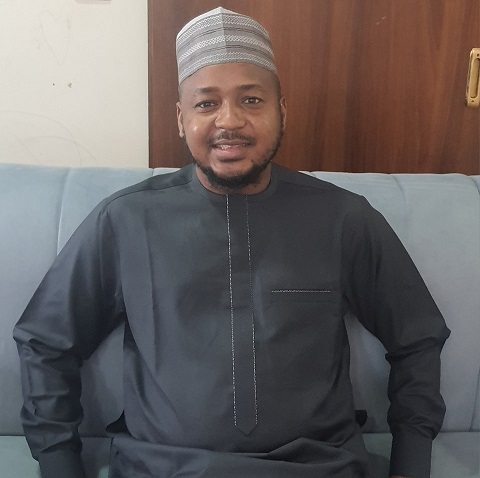
Bandits killed Prof. Yusuf Saidu on June 24, 2024, en route to Kaduna for an official engagement. Until his sudden death, Prof. Saidu was the Deputy Vice-Chancellor, Research, Innovation and Development of UDUS. He was the Director Research, Innovation and Development, UDUS and the University Governing Council member representing Convocation. He served as a member of the TETFUND Standing Committee on Research and Development and a member of the National Research Fund Screening and Monitoring Committee. He was equally a member of the Education and Training Committee of the International Union of Biochemistry and Molecular Biology. Prof. Saidu was the Head, Department of Biochemistry, UDUS (2018-2020) and the pioneer Head of the Department of Biochemistry and Molecular Biology, Federal University Birnin Kebbi. He also led many other ad-hoc and standing committees at UDUS and FUBK.

Prof. Saidu, a Fellow of the Nigerian Society of Biochemistry and Molecular Biology (FNSBMB), was widely published with over 100 papers and three (3) patents to his credit. He attracted research grants from the Education Trust Fund (now Tertiary Education Trust Fund), Abuja, Nigeria; the International Foundation for Science (IFS), Sweden; Raw Materials Research and Development Council (RMRDC) and Science and Technology Education Post Basic (STEP-B). His research interests are in oxidative stress and pathogenesis of diabetes mellitus/hypertension, as well as the elucidation of the mechanism of action of medicinal plants used to manage diabetes mellitus and infant and preschool children.

As a visionary leader, Prof. Yusuf Saidu motivated others to achieve their full potential and strive for excellence in all their endeavours. He set a remarkable example, guiding them with wisdom, patience, and unwavering support. His ability to lead with integrity and humility earned him the respect and admiration of all his colleagues, leaving behind a legacy of empowerment and growth that continues to influence those he mentored.

In 2021, I paid tribute to his appointment as the pioneer Deputy Vice Chancellor of Research, Innovation, and Development at UDUS. I recalled a citation from Prof. Sahabi Danladi Mahuta during Prof. Yusuf Saidu’s inaugural lecture in 2017, where he boasted of having a great friend in Prof. Saidu. I, too, celebrated and acknowledged him as a remarkable mentor. Today, with a sense of longing, I mourn the loss of my esteemed mentor.

Prof. Saidu was a leader, mentor and guiding light in a world often clouded by darkness. His remarkable attributes, profound religious dedication, compassionate qualities, and forward-thinking leadership have had a lasting impact on all who know him. As we say goodbye to a cherished mentor and father, let us carry on his legacy of love, empathy, and leadership, ensuring that his memory remains alive in those he influenced and guided.

I express my sincere condolences to the immediate family of the deceased. I also sympathise with all his extended family members in the academic community at UDUS, UNIJOS, FUBK and the entire country.

May his spirit continue to inspire us, his light keep shining brightly, and his legacy of exceptionalism always be cherished in our hearts. May Allah (SWT) grant him eternal bliss in Aljannah. Ameen

Malam Jamilu Magaji, Head of Information and Public Relations at Federal University Birnin Kebbi, wrote via mjmagaji@gmail.com.

Benue mourns victims of bandits attack, calls for govt action

By Uzair Adam Imam

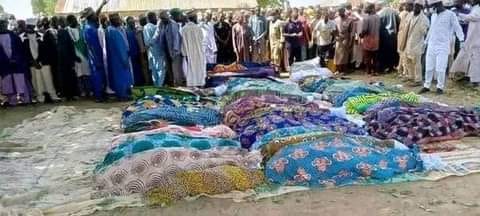
The Benue State government solemnly laid to rest 17 victims of a recent brutal attack by armed bandits on Mbakyor community in Mbalom Council Ward, Gwer East Local Government Area.

The harrowing incident, which occurred on the night of March 7, 2024, claimed the lives of 19 individuals, including a retired Army Officer and a young boy.

With two victims already interred due to rapid decomposition from the heinous acts, the remaining 17 were honored in a mass burial ceremony.

Governor Hyacinth Alia, represented by Deputy Governor Dr. Sam Ode, delivered a poignant funeral oration, condemning the tragic spectacle and emphasizing the urgent need for community vigilance.

He advocated for the formation of vigilante groups, stressing that security is a collective responsibility.

Expressing profound sadness, Governor Alia pledged relentless efforts by the government to address the security challenges plaguing the state and urged unity in combating insecurity.

In the wake of the attack, lawmaker Elias Audu criticized the perceived inefficiency of security agencies, questioning their response despite the availability of attack helicopters during the three-hour onslaught.

He commended Governor Alia’s swift actions, including the distribution of Easter aid to the bereaved families.

Prof. Vitalis Tarhule, President of the Masev Development Association, underscored the government’s duty to safeguard lives and property.

He highlighted previous attacks in 2014 and 2018, totaling 40 lives lost, and urged the establishment of a security post in Mbakyor to deter future violence by armed herdsmen.

As Benue mourned its fallen, calls echoed for proactive measures, community vigilance, and decisive government action to prevent further bloodshed and ensure the safety of its citizens.

Armed bandits rob travellers, set bus ablaze in Ogun

By Uzair Adam Imam

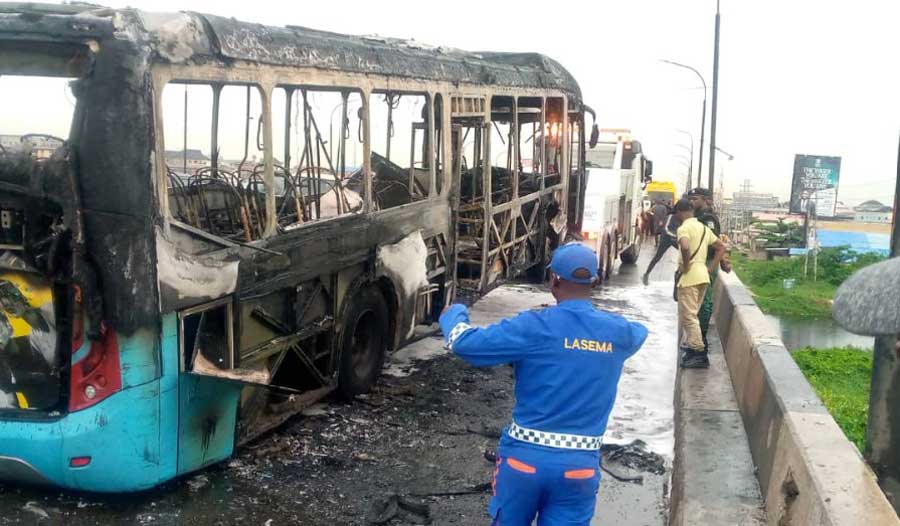
Armed bandits struck terror into the hearts of travellers on their way to the southeast for Easter celebrations, intercepting an Abakaliki-bound luxury bus along the Ijebu Ode-Ore-Benin expressway in Ogun State.

The harrowing incident occurred at the Oke Ado junction at Ijebu Mushin.

Confirming the distressing event, SP Omolola Odutola, the spokesperson of the Ogun State Police Command, revealed that the criminals, armed with cutlasses, stopped the luxury Mercedes-Benz bus that originated from Maza Maza.

They proceeded to rob all 59 passengers on board, leaving them stripped of their belongings. Without hesitation, they locked the passengers inside the bus and set it ablaze.

However, by sheer willpower and determination, the passengers managed to break the glass windows and escape from the inferno before it engulfed the entire bus.

The survivors recounted the terrifying ordeal, expressing gratitude that no lives were lost despite the loss of their possessions.

The management of Ifesinachi Transport Nig. Ltd. confirmed that the attacked bus belonged to their company, expressing shock and dismay over the tragic turn of events.

In a distressing video shared on social media, survivors recounted the brutality of the bandits, who subjected them to physical assault and robbed them of everything they possessed.

Despite the trauma inflicted upon them, they expressed gratitude for their survival.

As investigations continue into this appalling incident, it serves as a stark reminder of the ongoing security challenges facing travellers on Nigerian highways.

The authorities are urged to take swift and decisive action to apprehend the perpetrators and ensure the safety of all citizens.

Nigeria’s Insecurity: Do state police have the magic wand?

By Kabir Ali Fagge

In Nigeria, security has long been a topic of paramount concern. The efficacy of law enforcement agencies, particularly the Nigeria Police Force (NPF), has often been scrutinized in the face of escalating crime rates and challenges to public safety.

One proposed solution that has garnered significant attention is the establishment of state police forces. The history of policing in Nigeria is marked by a series of reforms and challenges. Since Nigeria’s transition to democratic rule in 1999, the Nigerian police have undergone various reforms in an attempt to address issues within the force.

These reforms have been a response to the need for more effective law enforcement mechanisms to combat rising crime rates and insecurity in the country.

We all know that the Nigerian police force has a long history of facing criticism for unprofessional conduct, corruption, and the use of excessive force.

Nigeria inherited a centralized police structure modelled after the British system. The Nigeria Police Force (NPF) operated under federal jurisdiction and was tasked with maintaining law and order throughout the nation.

State Police, on the other hand, entails the decentralization of law enforcement authority, granting individual states within a federal system the power to establish and manage their own police forces.

Under this model, states would have the autonomy to address security issues specific to their regions, tailoring law enforcement strategies to local needs and priorities.

Proponents argue that state police can foster greater community engagement, enhance responsiveness to local concerns, and improve overall security outcomes.

The existing centralized police system has faced criticism for its inability to effectively address the security concerns of the diverse Nigerian population.

The call for state police stems from the need for a more localized approach to law enforcement that can better cater to the specific security needs of different regions within Nigeria.

Establishing state police in Nigeria is a significant step that requires a thorough understanding of global policing practices. While the centralized police system is predominant in many countries, there are instances of decentralized policing models.

For example, Municipal Police in France, Municipal Law Enforcement Officers in the Netherlands, and Police Community Support Officers in England and Wales represent non-police uniformed state officers in a decentralized system.

Comparative analyses of policing in countries that have undergone political or social transitions, such as Russia, Brazil, and China, highlight the importance of understanding the contextual factors that shape policing practices. Confidence in the police varies across different countries, with Taiwan ranking among the top one-third globally, indicating variations in public perceptions of law enforcement; therefore, those who argue that the establishment of state police is not out of place.

Community policing, actively conducted in countries like South Africa, Northern Ireland, and Sierra Leone, emphasizes the importance of engaging communities in maintaining public safety. However, the effectiveness of community policing initiatives can vary based on each country’s socio-political context.

While some countries prioritize individualism and minimal government intrusion in policing, others focus on collective well-being through law and order.

I think what Nigerians want to know is how is state policing going to be any better than the current system of policing in Nigeria.

According to pundits, the establishment of state police in Nigeria promises to bolster security at the grassroots level. State police forces, attuned to the unique security dynamics of their regions, can enact targeted measures for more efficient crime prevention and control.

This localized approach fosters stronger community engagement and enables proactive responses to emerging threats, ultimately ensuring safer environments for all. Such reforms hold the potential to significantly enhance law enforcement’s effectiveness and responsiveness across the nation.

State police deployment within local communities will supposedly ensure swift emergency responses, curtailing intervention time in critical situations. By having officers stationed close to the areas they serve, the state police can swiftly address emergencies, thereby enhancing public safety.

This proximity allows for immediate action, minimizing the potential impact of crises on communities. Such rapid responses underscore the effectiveness of localized law enforcement in ensuring timely assistance during emergencies.

State-level oversight of law enforcement ensures accountability and transparency, as state governments are directly answerable to their constituents. This close supervision fosters trust between law enforcement agencies and the communities they serve, enhancing transparency in operations.

By holding state authorities accountable, citizens can have greater confidence in the integrity of policing practices, ultimately strengthening democratic principles. Such measures reflect a commitment to upholding transparency and accountability within Nigeria’s law enforcement framework.

State police possess the flexibility to tailor strategies and allocate resources according to local needs, enhancing their ability to address emerging threats and crime trends. This adaptability ensures a dynamic response to evolving security challenges, bolstering effectiveness in crime prevention and control.

We must also look at some disadvantages posed by the governors to establish the State Police. Firstly, Critics warn of the potential for abuse of power with decentralized policing, citing concerns about corruption, political interference, and violations of human rights at the state level. This apprehension underscores the importance of establishing robust oversight mechanisms to safeguard against misuse of authority and uphold the rule of law.

Addressing these challenges is crucial to ensure that decentralization efforts in policing prioritize accountability and respect for human rights, thereby fostering trust and confidence in law enforcement institutions. Such vigilance is essential to maintain the integrity and effectiveness of state police forces in Nigeria.

Fragmentation of law enforcement across states presents coordination challenges in tackling transnational crimes and upholding national security. This underscores the need for seamless collaboration and information-sharing mechanisms among state police forces.

Effective coordination ensures a unified approach to combating cross-border criminal activities, safeguarding Nigeria’s territorial integrity and public safety. Addressing these challenges is paramount to fostering synergy and maximizing the effectiveness of law enforcement efforts nationwide.

Unequal resource allocation among states may hinder smaller or economically disadvantaged regions from adequately funding and equipping their police forces, leading to discrepancies in law enforcement capabilities.

The establishment of state police carries constitutional and legal implications, necessitating amendments and legislative frameworks to define the powers, jurisdiction, and duties of state and federal law enforcement entities.

This underscores the importance of comprehensive legal reforms to ensure clarity and coherence in the division of responsibilities between different levels of law enforcement.

The debate surrounding the establishment of state police in Nigeria is multifaceted, reflecting the complex interplay of security, governance, and constitutional considerations.

While proponents argue that decentralization can lead to more responsive and accountable law enforcement, sceptics raise concerns about the potential for abuse of power and operational challenges.

Ultimately, any decision to implement state police must be carefully weighed against its potential benefits and drawbacks, with a keen focus on enhancing security while upholding the principles of justice and democracy.

Kabir Fagge Ali is a youth corps member with PRNigeria Centre and wrote via faggekabir29@gmail.com.

15 students abducted in Sokoto despite Tinubu’s vow to crush insecurity in north

By Uzair Adam Imam

Bandits have reportedly abducted 15 tsangaya students in a fresh attack Saturday at Gada local government area of Sokoto state.

The Daily Reality learned that several other students are currently missing.

The students were said to have been abducted from their school around 1:am on Saturday.

The attack was coming after President Bola Tinubu on Thursday vowed to crush insecurity in the northern part of the country.

The President was said to have directed the security agents to fish out the perpetrators of these abductions.

The proprietor of the school, Liman Abubakar, told journalists that 15 students were unaccounted for so far after the early morning attack.

Abubakar narrated how the bandits invaded the town around 1 am, shot one person and abducted a woman.

“As they were leaving the town, they sighted our students rushing into their rooms and they kidnapped many of them.

“We have so far counted 15 who are missing and we are still searching for more,” he said

He added that this was not the first time the village was attacked by bandits.

Speaking with the journalists, the member, representing Gada-East Constituency at the state House of Assembly, Kabiru Dauda while has confirming the attack.

He stated that he received a call from the village around 2 am that it was invaded by bandits.

“I reached out to the local government authorities and security agencies and I am sure they are doing something about it,” he said.

However, the Sokoto State Police Command has denied awareness of the attack.

Investigate, compensate killing of 120 villagers in Kaduna- MURIC

By Muhammad Abdurrahman

One hundred and twenty (120) villagers were reportedly struck dead at Tudun-Biri, Igabi Local Government of Kaduna State, by the Nigerian Army on Sunday night, 3rd December, 2023, as they celebrated the Maulud an-Nabiyy. The Nigerian Army has accepted responsibility for the attack.

Meanwhile, the Muslim Rights Concern (MURIC) has condemned the attack. In a statement issued by its Executive Director, Professor Ishaq Akintola on Tuesday, 5th December 2023, the group described the incident as sad and unprofessional. MURIC also demanded proper investigation and compensation for the victims. 

The full statement reads:

“Army drones killed 120 innocent villagers at Tudun-Biri, Igabi Local Government Area of Kaduna State on Sunday, 3rd December, 2023.  The victims were celebrating the birthday of Prophet Muhammad (SAW) when the ugly incident occurred. 

“Although the Nigerian Army has accepted responsibility for the attack. We strongly condemn the killing of unarmed and innocent villagers. The incident reflects carelessness and a lack of professionalism.

“MURIC demands full investigation into the circumstances surrounding this disaster. Those found responsible for the callous murder of these innocent Muslim villagers must be made to face the full wrath of the law. 

“We also demand full compensation for lives lost and properties destroyed in this thoughtless attack. Live is sacred and soldiers should not turn innocent civilians to lawful targets of their killing machines.”

Prioritizing security in Zamfara State

By Dr Musab Isah Mafara

The security situation in Zamfara State demands immediate and resolute action from the state and the federal government of Nigeria. Security, undoubtedly, should be the topmost priority of any government, as it lays the foundation for meaningful development and progress. Regrettably, recent events and the ongoing spate of attacks across the state indicate that more substantial efforts are required to ensure the safety and well-being of the people.

The recent official recognition and recruitment of ‘Yan-Banga by the state government is a step in the right direction. This move acknowledges the need for additional security personnel to combat the rising wave of criminal activities. Furthermore, the swift response and the rescue of some of the kidnapped students of FUG two days ago is a testament to how the reaction time of the security apparatus in the state has improved. However, one may argue that a similar response has not been seen where the helpless victims were not students. And since we are yet to know the actual number of students kidnapped, it is not far-fetched to assume that some students may still be in captivity in addition to hundreds of Nigerians in the kidnappers’ dens in Zamfara state and beyond.

While we acknowledge that the government may be undertaking efforts behind the scenes, the prevailing situation demands a more visible and concerted response. The spate of attacks that continue to plague the state is a clear indication that there are still gaps in the security apparatus. It is imperative that the government takes swift and decisive action to bridge these gaps.

In his book, Wujubul Hijrah, Shehu Usmanu Danfodiyo discussed the need for a leader to prioritize security even if it means spending all the state resources to ensure the safety of his people. Shehu wrote:
وسيرة ائمة العدل في الفيء والخمس ان يبدا بالسد المخاوف والثغور واستعداد الات الحرب واعطاء المقاتلة فان فضل شيء فللقضاة والعمال وبنيان المساجد والقناطر ثم يفرق على الفقراء فان فضل شيء فالامام مخير بين تفرقته على الاغنياء وخبسه لنوائب الاسلام

(Words in square brackets [ ] are mine to further explain the points made)
“The history of just leaders as regards to [the wealth generated by the state through] fai’ and khumsi [two of the many means of generating income to the treasury of the state] is that the leader should start with fortifying the state [walling the cities, building garrisons, etc], procurement of armament, and paying the salaries/allowances of soldiers. If something remains [in the treasury after that] then the leader should pay the judges and civil servants, and build mosques and bridges [and by extension roads]. And then he distributes the wealth to the poor [this could mean direct cash transfer but also providing social amenities such as schools and hospitals]. If there is still money [in the treasury after all these expenses] then the leader is given the choice of distributing it to the rich or keeping it for a rainy day.”

The quoted text clearly shows the need to give absolute priority to security above all else in the running of a state. Financial investment in the security sector should be a priority, as it is an indispensable component of effective security measures. There is also a need for our security strategy to move from being reactive to attacks to being proactive and preventing attacks. So many villages have been attacked, so many students have been kidnapped that the next attack is a question of when not if. The security measures must also be sustained for the foreseeable future. What tends to happen is that every time a school is attacked, the security agencies become active in some flash points for some days only to let their guards down after a while, until we are taken by ‘surprise’ again by the bandits.

The time for decisive action is now. The people of Zamfara State deserve to live in an environment where their safety and security are guaranteed. The government must intensify efforts, allocate adequate resources, and collaborate with relevant stakeholders, especially the two ministers of defence, to fortify security across the state. Only by doing so can Zamfara State flourish, with meaningful development and progress becoming attainable goals.

Policing: Safeguarding communities from internal threats

By Ammar Yakubu Sani

The role of police officers in maintaining law and order in a society cannot be overstated. They serve as essential guardians, working selflessly to protect citizens and ensure their safety. Recently, the police officers in Katagum Zone and its environs have displayed exemplary dedication and resourcefulness in tackling various internal security challenges, with commendable successes for their efforts.

One of the significant security concerns in the area has been the menace of motorcycle snatchers. These criminals, often operating with impunity, create fear and unrest within communities. However, the diligent work of the police has resulted in a significant reduction in motorcycle snatching incidents. Through strategic patrols, investigations, and targeted interventions, police officers have demonstrated their unwavering commitment to eradicating this criminal activity, giving residents a renewed sense of safety and security.

House robbery and murder strike the hearts of individuals and families. The police have been instrumental in curbing such incidents by implementing proactive measures and enhancing community engagement. Their rigorous investigative work and swift response to distress calls have brought perpetrators to justice and deterred potential criminals. The tireless dedication of police officers has undoubtedly contributed to a decrease in the occurrence of such alarming crimes.

Under the leadership of a newly posted Commissioner of Police, Auwal Musa Muhammad, a remarkable operation was undertaken against a notorious gang of kidnappers in the Ningi Local Government Area. This operation was a resounding success, resulting in apprehending the criminals and dismantling their hideouts. The Commissioner’s astute guidance, accompanied by the unwavering commitment and bravery of the police officers, demonstrated the effectiveness of well-coordinated efforts in combating heinous crimes and preserving the peace.

Equally notable is the recent elimination of kidnappers around Jama’are and Itas Gadau Local Government Areas of Katagum Zone. Through meticulous intelligence gathering, strategic planning, and relentless pursuit, the police managed to root out this criminal network. Their determined efforts have provided a glimmer of hope and relief to the residents of the area, reinforcing their faith in law enforcement and the potential for a safer environment.

These successes affirm the assertions made by Dr. Babangida Ruma regarding the restoration and maintenance of internal security under the authority of the police force. The achievements of the police officers in Bauchi State and its environs demonstrate their capability to tackle security challenges when provided with the necessary support and empowerment. The dedication, discipline, and professionalism displayed by these officers serve as an inspiration and testament to law enforcement’s critical role in safeguarding communities.

Efforts must be made to sustain this momentum by further empowering the police force. Adequate resources, modern technology, and regular training must be provided to effectively enhance their capacity to combat evolving threats. Moreover, fostering a strong partnership between the police and local communities is crucial to creating an environment where citizens actively collaborate with law enforcement agencies, resulting in more timely and accurate information sharing.

Citizens, community leaders, and policymakers need to recognise the remarkable achievements of the police force and support their endeavours to maintain law and order. By doing so, we can work collectively towards a society that thrives on security, justice, and harmony. The progress made by the police officers in Bauchi and the wider area serves as a beacon of hope, inspiring us to invest in strengthening our internal security mechanisms and forging an even safer nation.

Ammar Yakubu Sani wrote from Wambai Salihu Street, Dabar Makaho Azare, Bauchi State. He can be contacted via ammaryakubusani@gmail.com

Gunmen attack church in Kaduna

By Muhammadu Sabiu 

Gunmen believed to be bandits launched a devastating attack on Saint Raphael’s Catholic Church in the Zangon Kataf Local Government Area of Kaduna State. The assailants set fire to the parish house, resulting in the tragic death of a seminarian. 

The police authorities and the Catholic Church in Kaduna State have yet to issue official statements regarding the incident.

However, an eyewitness account provided to Channels Television shed light on the horrifying attack. 

The bandits, numbering in large groups, descended upon the Saint Raphael parish, located in Fadan Kamantan, Kafanchan Diocese, under the cover of darkness on Thursday night.

In a cruel act, they set the parish house ablaze, incinerating the building and a vehicle parked within its premises. Tragically, Seminarian Stephen Danlami lost his life during the attack. Reports suggest that he succumbed to smoke inhalation while attempting to escape from the inferno.

Fortunately, other priests who were inside the parish house at the time managed to escape the onslaught. The incident has sent shockwaves through the community, leaving many in grief and disbelief.

As the authorities and the church grapple with the aftermath, there is an urgent need for comprehensive investigations into this heinous act and the apprehension of the perpetrators to ensure justice prevails. 

The motive behind this attack remains unclear, but it serves as a stark reminder of the security challenges faced by various communities in Kaduna State and the need for concerted efforts to address them.

The Catholic Church, along with government authorities, must work together to protect places of worship and the lives of the faithful. As the nation mourns the loss of Seminarian Stephen Danlami and grapples with the brazen act of violence, the people of Kaduna State, as well as Nigeria as a whole, are calling for swift action to bring those responsible to justice and to prevent such tragic incidents from happening in the future.

Nigerian military rescue nine kidnap victims in Zamfara

By Muhammadu Sabiu

Operation Hadarin Daji troops on Friday freed nine abducted victims in Zamfara State’s Bukuyyum Local Government Area.

It was learned that the military responded to a distress call on armed bandits in Mailere village in the Bukuyyum region while conducting normal patrols and protecting farmers in their farmlands.

According to a senior military source who asked to remain anonymous and spoke to journalists, the forces deployed quickly to the location of the event and made contact with the armed bandits at the community’s gate.

However, the troops’ superior firepower forced the armed bandits to retreat and leave the nine kidnapped people when they engaged them in combat.

The Daily Reality understands that the freed victims were afterwards reunited with their families.

Zamfara State has been on the list of Nigerian provinces terrorised by the activities of armed bandits who attack, abduct, and abduct travellers and residents of communities in the state.