Banditry

Curtailing the spread of banditry in Nigeria 

By Habibu Bawa 

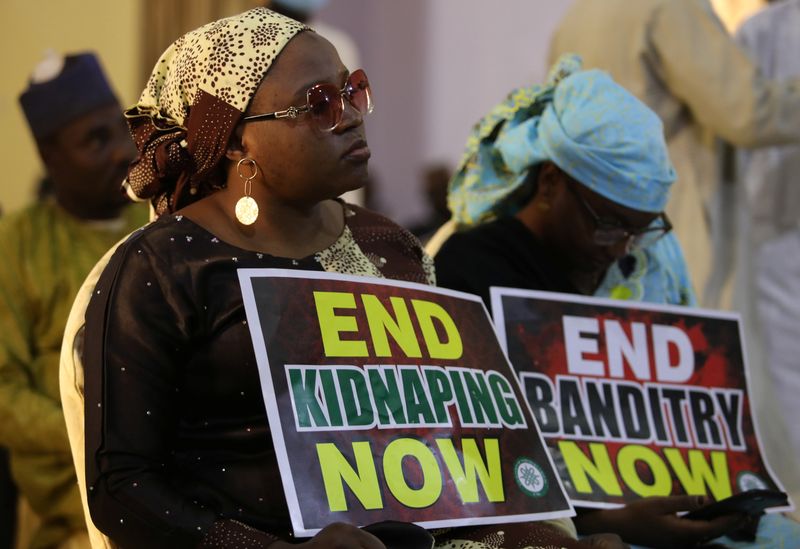
Banditry is fast becoming a household name in Nigeria. The  Northwest and parts of north-central Nigeria have been the worst hit since 2012.

Fast forward, bandits have attacked numerous communities across Nigeria, destroying a lot of homes, farms, and markets, killing and kidnapping in schools and highways, which made life unbearable for rural and semi-urban communities. 

According to Ibrahim Dosara, former Commissioner of Information in Zamfara State, between 2011 and 2019, bandits killed at least 2,619 people, kidnapped 1,190, and maimed and displaced hundreds of thousands in Zamfara State alone.

Many describe these attacks as an escalation of farmer-herder conflicts, ethno-religious crises, or a result of population pressure and climate change, which made former President Muhammadu Buhari propose 10,000 hectares per state for rural grazing areas, although unsuccessful, and President Tinubu’s Ministry for Livestock Development.

While past and current governments have made efforts to address banditry, little has been done to support the victims or tackle the root causes of the issue. For successful disease control, the pathogens, vectors, and symptoms have to be addressed while measures are taken to boost the immune system.

For example, the government often mobilises troops, which is usually announced and broadcasted after media reports of bandit attacks. Meanwhile, victims are left to languish in IDP camps. This situation is akin to guarding stables after the horses have escaped.

After each attack, the once agrarian victims battle scanty food, inadequate water supply, and diseases, while some state governments grant amnesty to bandits, leaving victims with only empty promises to rebuild their lives.

Nigeria has helped several other African countries in peacebuilding and peacekeeping, which proves Nigeria’s ability to curtail whatever crisis may arise internally. Thus, banditry is not beyond its control, but success requires sincerity of purpose and decisive actions.

First, the government should use every available means to block arms and ransoms from bandits, as ransom fuels banditry while firearms drive it. A 2019 research by Beacon Consults found over 6 million firearms in circulation in Nigeria, with only one-tenth in the hands of federal security agents. Communities should be educated on the effects of ransom, and severe punishments should be imposed on those who pay ransom.

Secondly, victims should be allowed to exercise their natural right to self-defence, and any funds earmarked for negotiating with bandits should be redirected toward rebuilding the lives and communities of the victims.

Lastly, the government should identify and eliminate bandit sponsors, sympathisers, negotiators, informants, trainers, and advisers. This will hinder the bandits’ ability to recruit, escape, re-strategize, or ethnicise their atrocities.

To end banditry, bandits must be treated as terrorists. Banditry is the greatest threat to Nigeria’s sovereignty today. The military should be well-equipped and deployed to take decisive action. A repentant bandit is one who has joined his ancestors.

Habibu Bawa is a fellow of the PR Nigeria Young Communication Fellowship.

Turji’s Accusations: Shocking truth or false claims? 

By Usman Abdullahi Koli, ANIPR 

In a dramatic move, Bello Turji, the notorious kidnapper and the most wanted bandit who has claimed responsibility for most prominent terrorist attacks in Northwest Nigeria, released a video clip where his deadly gang surrounded him and passed a vote of confidence in the Chief of Defense Staff (CDS), General Christopher Musa.

The terrorists described General Musa as their ‘leader’ “Shugaban mu mai albarka”, and suggested that he should grant Musa Asada (an Islamic scholar) a military or paramilitary appointment. Turji’s expression of loyalty to the military boss suggested an unofficial relationship between him and military insiders.

That aside, for now, Turji’s trending video clip is evidence of system failure, intelligence weakness, and political will to nail the enemies of the state. The military might be challenged, and a terrorist rubbished the ‘technological know-how’ of the giant.

His outlandish accusations sparked widespread debate and concern, with some on social media misinterpreting Turji’s words and using them to question the integrity of the Nigerian military, especially General Christopher Musa’s role in combating insecurity.

As a staunch advocate of good governance, I have long been calling on the government to take more decisive action against banditry, terrorism, and kidnapping. For the past five to six years, I have consistently raised awareness about the threats posed by these criminal elements to the safety and prosperity of Nigeria, particularly in the North. Unfortunately, much of this advocacy seems to have fallen on deaf ears as banditry continues to ravage communities. Nonetheless, I feel compelled to discuss the issue, especially to analyse the confusion and misinformation that Turji’s statements have caused.

Let it be clear that Turji’s claims are false, and the military has the responsibility of taming him. No evidence supportsthe insinuation that General Christopher Musa is associated with Turji or any criminal network. General Musa has been instrumental in Nigeria’s ongoing efforts to combat insecurity, including taking decisive action against high-profile criminals like Turji.

Since being appointed CDS, General Christopher Musa has demonstrated endless commitment to restoring peace and order in Nigeria. He has led several strategic military operations aimed at dismantling the networks of bandits, terrorists, and kidnappers that have terrorised communities across the country, especially in the Northwest. One of the most significant achievements under his leadership was the recent elimination of Halilu Sububu, a key figure in the banditry networks terrorising Zamfara and surrounding areas. Sububu’s death dealt a major blow to these criminal gangs, sending shockwaves through their ranks.

It is no coincidence that Turji, now cornered by relentless military pressure, has resorted to making baseless accusations against the institution that has been dismantling his operations. His statement is nothing more than a desperate attempt to divert attention from the military’s successes in combating his criminal activities. Turji, like other criminals of his kind, understands the power of propaganda and is trying to manipulate public perception by targeting prominent figures like General Musa.

Furthermore, Turji’s threats against notable voices such as Bulama Bukarti, Musa Asada, and Bello Yabo, three fearless advocates who have stood against his reign of terror, reflect his growing desperation. These individuals, alongside many others, have been instrumental in raising awareness about the accurate scale of banditry and advocating for more decisive government action to protect communities. Turji’s frustrations with these figures only further reveal the pressure he is under from public opinion and military action.

Despite these military gains, it is essential to recognise that Nigeria’s security challenges, particularly in the North, require more than just military action. The complexity of the insecurity crisis demands a comprehensive approach that includes social, economic, and political dimensions. The government must continue to invest in addressing the root causes of banditry, which include poverty, lack of education, and underdevelopment in many rural areas.

For the people of the Northwest, the situation has become unbearable. Many can no longer farm their lands, as bandits have taken control of vast territories, instilling fear in local communities. Despite having fertile land, farmers cannot plant crops because of the constant threat of violence. The government must prioritise providing immediate relief to these communities, ensuring they are protected and given the necessary resources to rebuild their lives.

In addition, efforts must be made to strengthen local intelligence networks, improve border security, and ensure that arms do not flow freely into the hands of bandits. Collaboration with neighbouring countries, particularly Niger and Chad, is crucial to stop the transnational flow of weapons and fighters. The government should also foster stronger partnerships with local vigilante groups, civil society organisations, and community leaders who have an intimate understanding of the terrain and the dynamics of banditry.

Nigerians must approach security issues with a balanced and informed perspective. We must avoid being swayed by the propaganda of criminals like Bello Turji, whose only objective is to sow discord and confusion. Rather than focusing on baseless accusations, we should channel our energy into supporting efforts to restore peace and security in affected regions.

General Christopher Musa and the entire military deserve our support as they continue to risk their lives to protect our nation. Their task is enormous, and while there may be challenges along the way, there is no doubt that significant progress is being made. The military’s recent successes, such as the killing of Halilu Sububu, prove that with the right strategy, it is possible to turn the tide against insecurity.

Bello Turji’s recent comments are nothing more than the desperate outbursts of a criminal whose days are numbered. His attempts to drag General Christopher Musa and other figures into his web of lies should be seen as a distraction. Under General Musa’s leadership, the Nigerian military has made notable strides in combating banditry and terrorism, and we must continue to support their efforts.

At the same time, we must recognise the urgency of the situation in the Northwest and other affected regions. A holistic approach that addresses both the security and developmental needs of these communities is essential for lasting peace. Only through a combination of military action, community engagement, and sustained government investment can we finally put an end to the scourge of banditry, terrorism, and kidnapping in Nigeria.

Usman Abdullahi Koli wrote via mernoukoli@gmail.com.

FG probes allegations of banditry sponsorship in North-West

By Uzair Adam

The Defence Headquarters (DHQ) has confirmed that investigations are actively ongoing into claims of banditry sponsorship in the North-West region of Nigeria.

This was disclosed by the DHQ’s Director of Media Operations, Maj. Gen. Edward Buba, during a press briefing in Abuja on Thursday, assuring that relevant agencies are thoroughly examining the matter.

These investigations follow accusations and counter-accusations between the Minister of State for Defence, Bello Matawalle, and his successor as Zamfara State governor, Dauda Lawal, concerning the alleged funding of banditry in the region.

Earlier this week, Matawalle challenged Lawal to swear by the Holy Qur’an, denying any involvement in the sponsorship of bandits.

Lawal responded by stating he had evidence implicating Matawalle, and that he had reported the case to the National Security Adviser and President Bola Tinubu.

When asked about the military’s involvement in the situation, Maj. Gen. Buba reiterated that the appropriate agencies were handling the investigation and that updates would soon follow.

“Our focus remains on defeating the bandits and undermining their will to continue fighting. Once we destroy their will to fight, the war is over,” Buba stated, noting the military’s achievements between July and September 2024, including the neutralization of 1,937 terrorists, among whom were 65 key insurgent leaders.

Insecurity: Defence chief, military leaders relocate to Sokoto

By Uzair Adam

The Federal Government has directed the Chief of Defence Staff and other military heads to relocate to Sokoto, which serves as the headquarters for the General Officer Commanding (GOC) overseeing Sokoto, Zamfara, Katsina, and Kebbi states.

The Daily Reality learned that the move is part of a concentrated effort to eliminate the threats of banditry, kidnapping, and terrorism in the North West region.

In a statement, the Minister of State for Defence, Dr. Bello Muhammed Matawalle, expressed his deep concern over the ongoing activities of terrorists and bandits in Sokoto, Zamfara, Katsina, and Kebbi states and their surrounding areas.

He announced that a significant military operation would soon be launched in Sokoto, targeting banditry across the region.

“The Honourable Minister of State for Defence, H.E. Dr. Bello Muhammed Matawalle MON, has expressed his sadness over the activities of terrorists and bandits terrorizing Sokoto, Zamfara, Katsina, and Kebbi states and its environs.

“Consequently, the Honourable Minister of State has directed the Chief of Defence Staff and other military chiefs to move to Sokoto, the Headquarters of the GOC Sokoto,” the statement read.

Bandits abduct over 150, rustle 1,000 cattle in Gobir days after emir’s death

By Uzair Adam

Bandits have reportedly abducted over 150 individuals and stolen more than 1,000 cattle from villages in Gobir Emirate, Sokoto State.

The Emir, Alhaji Isa Muhammad Bawa, also the District Head of Gatawa, was kidnapped on July 29 along with his son and six others on the Sokoto-Sabon Birni Road.

A distressing video showed the Emir pleading for ransom payment before his death, a situation that led to local protests and a curfew in Sabon Birni.

Our reporters gathered that the bandits’ recent activities have reignited concerns about their operations in the region.

In an interview with Daily Trust, Professor Bello Bada from Usmanu Danfodio University expressed frustration over the bandits’ apparent familiarity with local networks, questioning the effectiveness of local security measures.

He emphasized the need for a comprehensive solution to prevent further attacks.

Aminu Boza, a member of the Sokoto State House of Assembly, reported that between Tsamaye and Sabon Birni, 192 people have been abducted, with over 20,000 hectares of land lost due to banditry.

He criticized the lack of security in affected areas and revealed ongoing efforts to increase military presence in the region.

The Sokoto State Police Public Relations Officer, SP Ahmad Rufa’i, stated that no formal report had been received but would investigate the matter further.

Prof. Yusuf Sa’idu: Mourning the tragic demise of an icon

By Yahaya T. Baba, PhD

Allah (SWT) is indeed the ultimate source of human life; to Him, we shall all return at His appointed time. It is a promise from the supreme being that every life must taste death. All human beings, regardless of their belief system, recognise death’s sanctity. Life without death makes no meaning. However, the meaningfulness of death to mankind fits only a few logically justifiable circumstances. These circumstances may include but are not limited to old age, terminal illness and death sentence for capital offences. Other than these and similar circumstances of the transitional nature of human life, human beings are fond of describing death as tragic, sudden, untimely, devastating and destructive. 

The nature of ill-feeling about death makes mourning habitual to mankind. Across cultural divides, therefore, the dead are mourned regardless of the natural or unnatural circumstances surrounding their death.  People who are in their prime times and full of life are usually heavily and severely mourned after their death. This is because their death is considered sudden, premature, and even truncated to their path of personal growth and development and their contributions to the growth and development of other people, communities, and humanity. This explains why mourners always refer to these kinds of deaths as tragic and devastating, comparable to even disasters of monumental scales. 

Someone’s death could mean the creation of a vacuum that is challenging and sometimes impossible to fill. This feeling after death is more familiar to teachers and scholars, particularly in sane societies. The death of scholars and intellectuals truly creates a vacuum that is difficult to fill. This is why rational societies pay great attention to their teachers’ and scholars’ livelihood, safety and security for long life in anticipation of prolonged and continuous service to humanity. 

In Nigeria, however, this category of people is among the least catered for. A good number of them in Nigeria, out of sheer neglect, die in mysterious circumstances, which is unacceptable in modern societies. Some had succumbed to death from common, avoidable, curable and manageable ailments. Others are victims of epidemics, pandemics, traffic accidents, plane crashes or violent crimes such as armed robbery, terrorism, insurgency, communal clashes and armed banditry. 

The Usmanu Danfodiyo University, Sokoto, has, in recent times, lost a number of its top and seasoned academics to some of these unnatural causes of death. The long list of deceased Professors at the University in recent times includes, among others, Prof. Usman Argungu of the Biological Sciences, Prof. Aminu Isiyaka Yandaki of the History Department, Prof. Y.Y. Ibrahim, Islamic Studies Department, Lawal Abubakar, Nasiru Muhammad and A.I. Yakubu all of whom were Professors in the Faculty of Agriculture. Others include Prof. Bello Agaie of the Faculty of Veterinary Medicine, Prof. Majeed of Biological Sciences and Professors Nasir Mukhtar Gatawa and Shehu DanHassan, both of the Department of Economics, as well as Prof. Mamman Audu Wasagu of the Faculty of Education, who died in a ghastly traffic accident. The last but one in this count was Prof. Muhammad Sani Sagir of the Physics Department in the Faculty of Physical and Computing Sciences. 

These seasoned and veteran scholars passed on in the last five or six years. In all of these episodes of recurring deaths, the University community was thrown into mourning and bewildered by the seeming value deficits of academics in Nigeria, mainly because of the circumstances of their death. Some died from a protracted illness, while the death of others has been termed as sudden and devastating. Some of these veterans succumbed to the COVID-19 pandemic, while others died as a result of the complications of their health condition during the ASUU prolonged industrial actions of 2020 and 2022.  

These professors died at a point in their academic career that was considered evolving, prime, or even the most productive in their professional cycle. They all left behind indelible marks in their respective teaching, research, mentorship and community service disciplines. Since the year 2020, year after year and sometimes within intervals of a few months, the academic community at the Usmanu Dnfodiyo University has been grieved and saddened by the deaths of not just its members but some of the finest and academically most productive elements among them. 

Since this tragic cycle of recurring deaths of scholars from this university, I have dedicated a little time in the past. I paid tributes through short but glowing testimonials of the deceased to show respect to people who served the knowledge industry with enthusiasm and dedication. However, instead of this sad moment being irregular, it is almost becoming recurring. At a point, my pen dried up, and the appetite to bid our veterans farewell diminished due to one death too many. 

However, this short break of tributes ended with the shocking news abruptly of the tragic death of Prof. Yusuf Sa’idu, who was, until his death, the Deputy Vice-Chancellor of Research, Innovation and Development of the Usmanu Danfodiyo University, Sokoto. From the time the news of his death was broken to the confirmation of the news up to the period of his funeral and the third-day Fiidda’u (prayer) in his remembrance, I have been engulfed in sober moments of reflections on his life, career and relationship with the people. 

My encounters with him at different times over the years and the testimonies of various people about his life influenced my decision to bid him farewell with a tribute befitting of his personality and life. The caption of this tribute truly reflects my understanding of Prof. Yusuf Sai’idu and the people’s testimonies about him. He was indeed an icon of scholarship and an embodiment of humility that has been tragically and suddenly lost to annihilators, breaded by structural injustice, aided by insensitive and incompetent rulers and officials at all levels of politics and governance in Nigeria.

The dying moments of the afternoon of Monday, the 24th day of June 2024, were intense grief for the family, colleagues, relatives, friends, students and well-wishers of the late iconic scholar and humble personality. For those who got the news earlier, their hearts melted with shock and bewilderment. The news thus spread quickly like wildfire. It eventually became a Black Monday in the Usmanu Danfodiyo University, Sokoto and the academic community in Nigeria. There were calls everywhere probing the sources and spuriousness of the news. All callers were anxiously hoping that the news could be fake or a mistaken identity but to no avail. It eventually dawned on us that the devastating news was real and the worst had happened. How I got the message was immensely grieving and tormenting. 

It was some minutes after the Hour of 3 pm, and I had a hard knock and a bash on my door at the same time while I was busy with my laptop. I furiously looked up to see who was, without courtesy, gatecrashing into my office. It was my Deputy Dean, Prof. Jimoh Amzat (the Great JAO), as we fondly call him. He asked frantically,  wearing grief and shocks on his face. Is it true that bandits killed the DVC Research, Innovation and Development? At a stretch, I couldn’t even figure out what he was asking or what sort of strange enquiry he was making. He repeated himself furiously with a sad voice and weak gestures. Only then did my senses reconnect, and I said how, why, where and by who. He responded that Prof. Aminu Bayawa had posted it on the RI&D WhatsApp platform. Again, the shocks in me increased, as Prof. Bayawa was a close friend of the deceased and worked directly under his office as the Director of Research, Innovation and Development. However, I quickly checked the ASUU WhatsApp platform to fact-check the story, but there was no such post then. Moments later, I saw the information posted by Prof. Sahabi Mahuta, another close friend and colleague of the deceased in the Department of Biochemistry and Molecular Biology. That was enough confirmation of the tragic loss of a complete gentleman. 

After the confirmation, Prof. Jimoh lamented over and over again, “This is not how to die, Prof.” But the worst had already happened, and the reflections of the life and times of the humble Professor continued between us before we were joined by Prof. Ibrahim Dankani who came to fact-check the news. All of us were profoundly mourning and stressing the good character of our colleague. We all agreed on two of the most apparent traits of Prof. Yusuf Sa’idu: scholarship and humility. If these are not the trademarks of intellectuals, our understanding of these two qualities of his deserves special mention and acknowledgement because he embodied these virtuous attributes. 

If there is anyone in my assessment to whom I should attribute the trait of humility as his personality, I will hardly skip Prof. Saidu. This attribute has become an ascription that made his personality. The testimonials of this claim are justifiably overwhelming from different categories of people familiar with our deceased colleague. As teachers and scholars expected to symbolise humility as a guiding principle of knowledge production and advancement, Prof. Saidu has thrown us a huge challenge. He did his utmost best and lived up to the expectations of an iconic scholar, symbolising humility as an indelible trademark of a scholar. This is because knowledge and humility are inseparable. Thus, to be a scholar, one must also be humble. This is a global cultural heritage of scholarship and the teaching profession.

 It is often said that knowledge and humility are intertwined. Humility is the path to acquiring useful and quality knowledge. Most scholars are humble because humility increases the craving for new knowledge. Many scholars imbibe humility only as an inevitable virtue of knowledge-seeking individuals. Thus, in advancing scholarship, students and scholars are guided by the principle of humility. However, there is a difference between humility in pursuing knowledge and humility as a way of life. This is where Prof. Yusuf Sai’idu was exceptional and noteworthy.  

He stood out conspicuously tall among his colleagues. He wore the trademark of humility naturally in his disposition and in relations with people around him and with other people he met, even at first instances. This is a quality attested to by everyone who knew and interacted with Prof. Sa’idu.  Unlike other categories of scholars who are only humble in their path to seeking knowledge, Prof. Sa’idu carried with him the trait of humility in all ramifications of his relations with the people.   

At every contact with him, regardless of your status, low or high, he welcomes you with smiles and accommodation; he maintains such smiling postures and accommodation throughout the conversations and bids you farewell with such smiling, grinning and cheerful facial expressions. Everyone that meets him wantsto meet him again. This is regardless of the issues at stake in the conversations. This humble nature of Prof. Sa’idu didn’t compromise his steadfastness in upholding truth, rules, regulations and guiding principles in formal and informal engagements and activities. He was not economical with the truth but very diplomatic in telling the truth and insisting on the truth. If he had studied Political Science and/or Diplomacy, we could have had an excellent diplomat who could solve complex gridlocks and stalemates. Many facts about his life proved the naturality and originality of his humility.

From the brief biography of the late revered professor of biochemistry, he graduated from the top of his class in 1990, earning him the Northco Holdings Prize for being the best-graduating student in biochemistry. However, in one of my direct conversations with him, he told me how he took up an appointment as a teacher in secondary school because of his passion for the knowledge industry. He didn’t at that time push for an appointment with the University or any Higher Institution of learning but humbly pursued a career as a teacher in secondary school. He told me that he was posted to Kontagora as a teacher and gradually began to build a career there. To prove his greater thirst for knowledge and humility, he enrolled in an M.Sc programme at the University of Jos and completed it with outstanding results. In 1994, he taught at secondary school. He waited until 1998 when the opportunity presented itself for an appointment at the Usmanu Danfodiyo University, Sokoto 1998. 

This adventure was the countdown to a glorious academic career that came to an abrupt end on Monday,  the 24th day of June 2024, through a mysterious incident that all of us have the government of this country to blame for being insensitive, ineptitude and incompetent in the management of the affairs of the people for whom they govern on their behalf. I had interacted with him officially and unofficially for different purposes. As a member of the University Fellowship Committee, which he coordinated, as a member of the University Journals Committee and on matters of Tetfund National Research Fund  (NRF)and Institutional Based Research (IBR) as well as on different other official and unofficial matters. 

In all of my interactions with him, I saw in him a near-perfect gentleman. His humility drives smoothly every aspect of the work he led. It is, therefore, not a surprise that he became the scholar he was until his death. He is widely published and won numerous research grants, which he successfully coordinated and executed. All of us know how difficult it is to work with colleagues, particularly on research grants, but it wasn’t an issue of much concern for him. He was among the young professors at the Usmanu Danfodiyo University, Sokoto, who presented their inaugural lectures. As a Nutritional Biochemist, Diabetics Not a Death Sentence was his topic. It attracted huge scholarly attention and instigated a series of other inaugural lectures from young Professors in the university.    This trademark is thus a great stride to emulate for academic excellence.

The humble nature of our late colleague is noticeable not only in the scholarship business. Even beyond the university, Prof. Sa’idu’s marker and identifier was humility. The congregation that attended his funeral attested mainly to this fact. Although members of the University community populated the congregation, it was nearly divided between people in town and the people in town. The community in which he lived outside the university appeared to even mourn him severely and dearly compared to his colleagues. Their testimonies about him, his humility, and his generosity were outpouring among them, as they claimed to have lost one of them who had no equal. The choice of his residence is a clear testimony of the claim made mainly by the community members. He built his house in a deep local community, reminiscent of a slum. The location of his house is even more profound than the community inhabitants. His idea was to melt in the community and contribute to the livelihood of the people of the community. He did just that. 

At his residence, he built a mosque and an Islamic school where community members attend and their children are educated. He also supported the education of many children in the community whose parents were reluctant to educate their children because of poverty. At the funeral, I met one local person who lamented bitterly about the loss of Prof Sa’idu. He argued that he is a living beneficiary of Prof’s humble gestures. He said he supported him in establishing his company, volunteered as a director of the company,and was always supportive of the growth and development of the company. They built excellent relations so much that he trusted him with many dealings. This is humility beyond scholarship. Many similar conversations and testimonies were countless to the credit of this great person who left us in his prime time and when he was full of healthy life.

This tribute is indeed from one who barely knows him. I have not been close to him, but I have only had opportunities to interact with him on a few official and unofficial occasions. Even then, I learned a lot from him, and his death taught me good lessons in my academic and human career. Let me, therefore, use this opportunity to offer additional condolences to Prof. Sa’idu’s family. He left behind three wives and twenty-one children. 

The grief of his loss is weighty in your hearts. He was indeed a good and caring husband and father. You all have to take solace in the fact Prof Sa’idu lived a humble, generous, productive and exemplary life. All of you should be proud of him. The good he has done in life will come back to you indirectly. But you should follow in his footsteps and continue to fly the flag he raised of humility and hard work. Your obligation to him now is to pray for Jannatul Firdaus to be his final abode. The pains are enormous for his parents, but returning all matters to almighty Allah will comfort you. Yours is continuous prayers for his gentle soul to earn the highest place in Jannatul Firdaus. 

For the Vice Chancellor, Prof. Lawal Suleiman Bilbis, no one except his immediate family is equal to you in terms of the pains of the departure of your mentee. You typically raised him as an academic son, from his undergraduate days to his maturity as a sterling scholar and at various academic and professional development levels. You provided all the necessary support for him growing up, and he has supported you in many of your academic, professional and administrative endeavours. This colossal loss is for you but shared with many within and beyond the university community. Sir, your efforts, investments and sacrifices for Prof. Yusuf Sa’idu are not in vain. You built someone that built communities. 

You should be proud of what you did and of your product. To the entire university community and, indeed, the Academic Staff Union of Universities (ASUU), to which the deceased had been a loyal and committed member, the grief and sorrow is for us to endure and be energised to continue in the struggle for decent and improved conditions of service as well as a favourable and serene environment for academic excellence.

May the Almighty Allah grant the soul of Prof. Yusuf Sa’idu eternal rest, may Jannatul Firdausi be his final abode, and may the family he left behind be protected, guided and provided for by the grace and mercies of Allah Subhanahu Wata’ala, amin Ya Rabbi.

Adieu, rest in peace, our dear brother, friend, and colleague.

Yahaya T. Baba, PhD, wrote from the Department of Political Science, Usmanu Danfodiyo University, Sokoto. . He can be reached at yahaya.baba@udusok.edu.ng or tkbabayaha@yahoo.com.
Bandits kidnap two Kaduna journalists, wives, others

By Abdullahi Mukhtar Algasgaini

Bandits invaded Dahjonu community in Millennium City, Chikun Local Government Area of Kaduna State, on Saturday night and abducted two journalists—The Nation’s Abdulgafar Alabelewe and Blueprint newspaper’s AbdulRaheem Abdu—as well as their wives and children.

Alabelewe is also the current chairman of the Correspondents’ Chapel of the Nigeria Union of Journalists, Kaduna State Council.

One of the victims’ family members, Taofeeq Olayemi, who confirmed the incident, said the bandits invaded the area around 10:30 p.m. and shot indiscriminately before carrying out their act.

Olayemi said the bandits kidnapped Alabelewe, his wife, and two of his children, while Aodu and his wife, who was also sick, were kidnapped, leaving their sick daughter behind.

He said, “Initially, they picked Abdulgafar, his wife, and three of his children and a girl staying with them before asking the girl to return with one of the children and left with Abdulgafar, his wife, and two children.

“They shattered their doors and windows and removed their burglary after scaling the fence.”

Olayemi, who is also a neighbour to the victims, added, “They came around 10:30 pm on Saturday and started shooting indiscriminately.

“They first forced Aodu’s door open and picked him and his wife and left their sick daughter behind.

“Then, they entered Abdulgafar’s house through the fence and jumped into his house.

“They went straight into his bedroom and picked him, his wife, and two of their kids and left immediately, after which the vigilantes arrived and started shooting into the air.”

As of the time of filing this report, the state Police Public Relations Officer, Mansir Hassan, could not be reached for comment as his telephone line was not connecting.

Katsina: Bandits kill lecturer, abduct his children

By Uzair Adam Imam 

Tragedy struck in Katsina State as bandits killed Dr. Tiri Gyan David, a lecturer at the Federal University Dutsinma (FUDMA), and abducted his two children. 

The attack occurred at the lecturer’s residence in Yarima Quarters, Low-Cost Estate, Dutsinma Local Government Area, around 1:30 am on Tuesday.

The bandits, armed with sophisticated weapons, shot sporadically to scare residents. 

An eyewitness reported that the hoodlums invaded the community, causing chaos and fear.

Dr. David was the Head of the Department of Agricultural Economics, Extension, and Rural Development at FUDMA. 

His killing is the latest in a series of bandit attacks in the state, despite efforts to restore peace.

The Katsina Police Command confirmed the incident, promising a detailed statement soon. 

The command’s spokesman, Abubakar Sadiq, acknowledged the attack but did not provide further details.

Dutsinma is one of the ten security frontline local government areas grappling with frequent bandit attacks almost daily, despite efforts by both the state government and security agencies to restore peace in the state.

The incident has sparked outrage and concern among residents, with many calling for increased security measures to protect lives and properties.

Tragedy of losing a mentor and father: Tribute to Prof. Yusuf Saidu

By Jamilu M. Magaji

In the weaving of life, exceptional individuals leave a lasting impression on the hearts and minds of those they meet. Today, I grieve the loss of a truly extraordinary person who exemplified greatness through his steadfast dedication to his beliefs, compassion for humanity, and inspiring leadership that influenced many lives.

I was tidying up titbits for the June issue of FUBK Chronicle Magazine when I received a call from my former senior colleague, Mal. Abubakar Adamu recently retired from Federal University Birnin Kebbi (FUBK). He delivered the shocking news that prevented me from continuing my work until the following day. Social media was flooded with continuous updates on the tragic event. I hurried to pick up my children from school and return home, filled with sorrow and dismay.

When I joined the services of FUBK in 2014, I questioned the future of my career progression in the newly established institution. I pondered the obstacles of starting a new department, particularly as a founding staff member. My encounter with Prof. Yusuf Saidu proved to be fruitful. I worked closely with him for nearly seven years, serving as Chairman and Secretary of various committees. He was crucial in establishing the Federal University Birnin Kebbi Seminar Series as the founding Chairman in 2015.

Prof. Yusuf Saidu exemplified integrity and exceptional qualities. His extensive administrative and professional expertise positively influenced my professional development and the institution we both served. I believed he was destined for greater achievements. His diligent work ethic and inspiring nature served as a beacon of motivation for many. His leadership approach was exceptional, earning trust in carrying out demanding tasks assigned to him.

Yusuf Saidu is a Professor of Nutritional Biochemistry at the Usmanu Danfodiyo University, Sokoto (UDUS), Nigeria. He graduated in 1990 with a B.Sc. degree in Biochemistry from UDUS, winning the Northco Holdings prize for the best-graduating student in Biochemistry. He obtained an M.Sc. in Biochemistry from the University of Jos in 1994 with distinction and had his PhD in Biochemistry from the UDUS in 2005. 

Bandits killed Prof. Yusuf Saidu on June 24, 2024, en route to Kaduna for an official engagement. Until his sudden death, Prof. Saidu was the Deputy Vice-Chancellor, Research, Innovation and Development of UDUS. He was the Director Research, Innovation and Development, UDUS and the University Governing Council member representing Convocation. He served as a member of the TETFUND Standing Committee on Research and Development and a member of the National Research Fund Screening and Monitoring Committee. He was equally a member of the Education and Training Committee of the International Union of Biochemistry and Molecular Biology. Prof. Saidu was the Head, Department of Biochemistry, UDUS (2018-2020) and the pioneer Head of the Department of Biochemistry and Molecular Biology, Federal University Birnin Kebbi. He also led many other ad-hoc and standing committees at UDUS and FUBK.

Prof. Saidu, a Fellow of the Nigerian Society of Biochemistry and Molecular Biology (FNSBMB), was widely published with over 100 papers and three (3) patents to his credit. He attracted research grants from the Education Trust Fund (now Tertiary Education Trust Fund), Abuja, Nigeria; the International Foundation for Science (IFS), Sweden; Raw Materials Research and Development Council (RMRDC) and Science and Technology Education Post Basic (STEP-B). His research interests are in oxidative stress and pathogenesis of diabetes mellitus/hypertension, as well as the elucidation of the mechanism of action of medicinal plants used to manage diabetes mellitus and infant and preschool children.

As a visionary leader, Prof. Yusuf Saidu motivated others to achieve their full potential and strive for excellence in all their endeavours. He set a remarkable example, guiding them with wisdom, patience, and unwavering support. His ability to lead with integrity and humility earned him the respect and admiration of all his colleagues, leaving behind a legacy of empowerment and growth that continues to influence those he mentored.

In 2021, I paid tribute to his appointment as the pioneer Deputy Vice Chancellor of Research, Innovation, and Development at UDUS. I recalled a citation from Prof. Sahabi Danladi Mahuta during Prof. Yusuf Saidu’s inaugural lecture in 2017, where he boasted of having a great friend in Prof. Saidu. I, too, celebrated and acknowledged him as a remarkable mentor. Today, with a sense of longing, I mourn the loss of my esteemed mentor.

Prof. Saidu was a leader, mentor and guiding light in a world often clouded by darkness. His remarkable attributes, profound religious dedication, compassionate qualities, and forward-thinking leadership have had a lasting impact on all who know him. As we say goodbye to a cherished mentor and father, let us carry on his legacy of love, empathy, and leadership, ensuring that his memory remains alive in those he influenced and guided.

I express my sincere condolences to the immediate family of the deceased. I also sympathise with all his extended family members in the academic community at UDUS, UNIJOS, FUBK and the entire country.

May his spirit continue to inspire us, his light keep shining brightly, and his legacy of exceptionalism always be cherished in our hearts. May Allah (SWT) grant him eternal bliss in Aljannah. Ameen

Malam Jamilu Magaji, Head of Information and Public Relations at Federal University Birnin Kebbi, wrote via mjmagaji@gmail.com.

Benue mourns victims of bandits attack, calls for govt action

By Uzair Adam Imam

The Benue State government solemnly laid to rest 17 victims of a recent brutal attack by armed bandits on Mbakyor community in Mbalom Council Ward, Gwer East Local Government Area.

The harrowing incident, which occurred on the night of March 7, 2024, claimed the lives of 19 individuals, including a retired Army Officer and a young boy.

With two victims already interred due to rapid decomposition from the heinous acts, the remaining 17 were honored in a mass burial ceremony.

Governor Hyacinth Alia, represented by Deputy Governor Dr. Sam Ode, delivered a poignant funeral oration, condemning the tragic spectacle and emphasizing the urgent need for community vigilance.

He advocated for the formation of vigilante groups, stressing that security is a collective responsibility.

Expressing profound sadness, Governor Alia pledged relentless efforts by the government to address the security challenges plaguing the state and urged unity in combating insecurity.

In the wake of the attack, lawmaker Elias Audu criticized the perceived inefficiency of security agencies, questioning their response despite the availability of attack helicopters during the three-hour onslaught.

He commended Governor Alia’s swift actions, including the distribution of Easter aid to the bereaved families.

Prof. Vitalis Tarhule, President of the Masev Development Association, underscored the government’s duty to safeguard lives and property.

He highlighted previous attacks in 2014 and 2018, totaling 40 lives lost, and urged the establishment of a security post in Mbakyor to deter future violence by armed herdsmen.

As Benue mourned its fallen, calls echoed for proactive measures, community vigilance, and decisive government action to prevent further bloodshed and ensure the safety of its citizens.