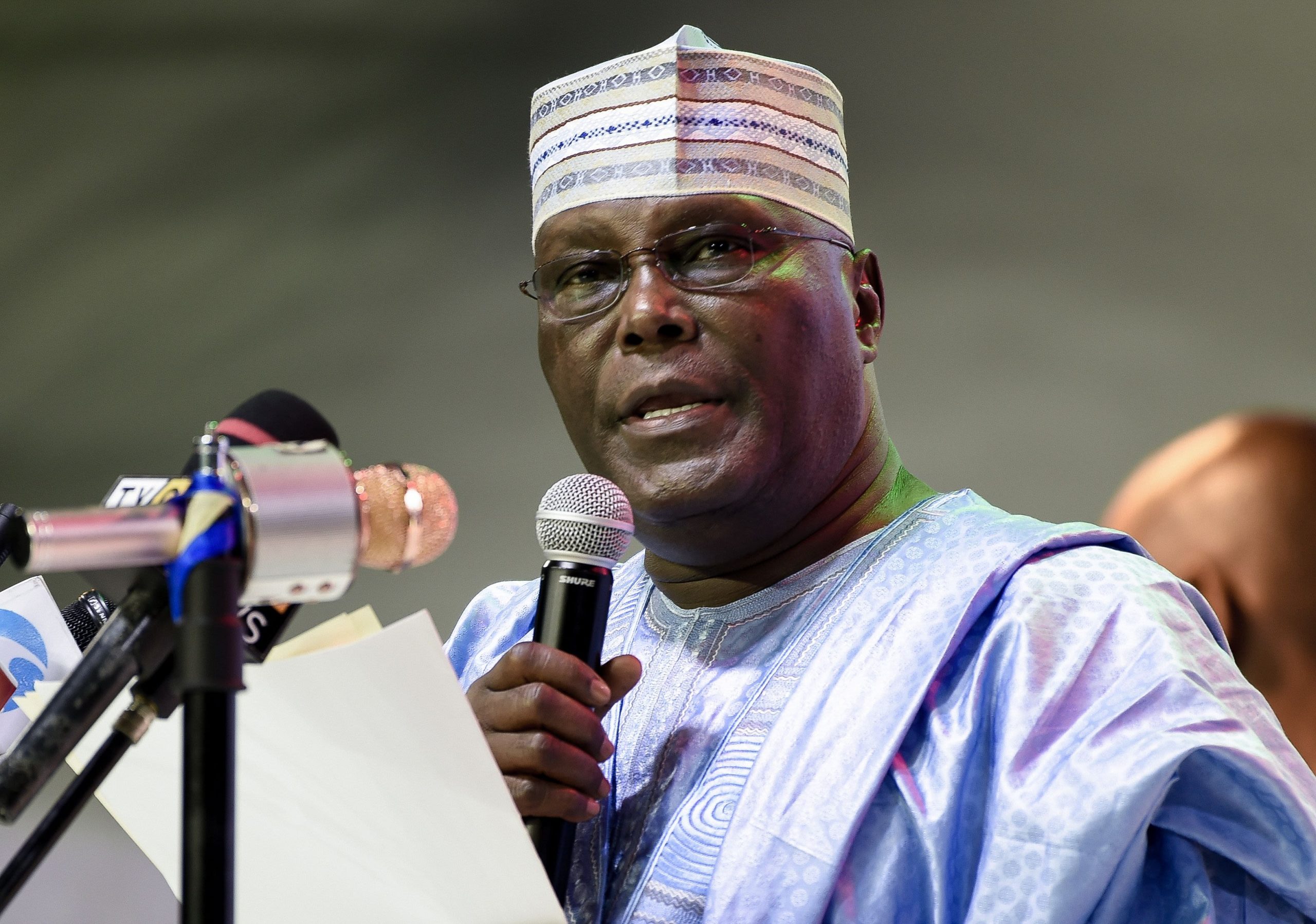
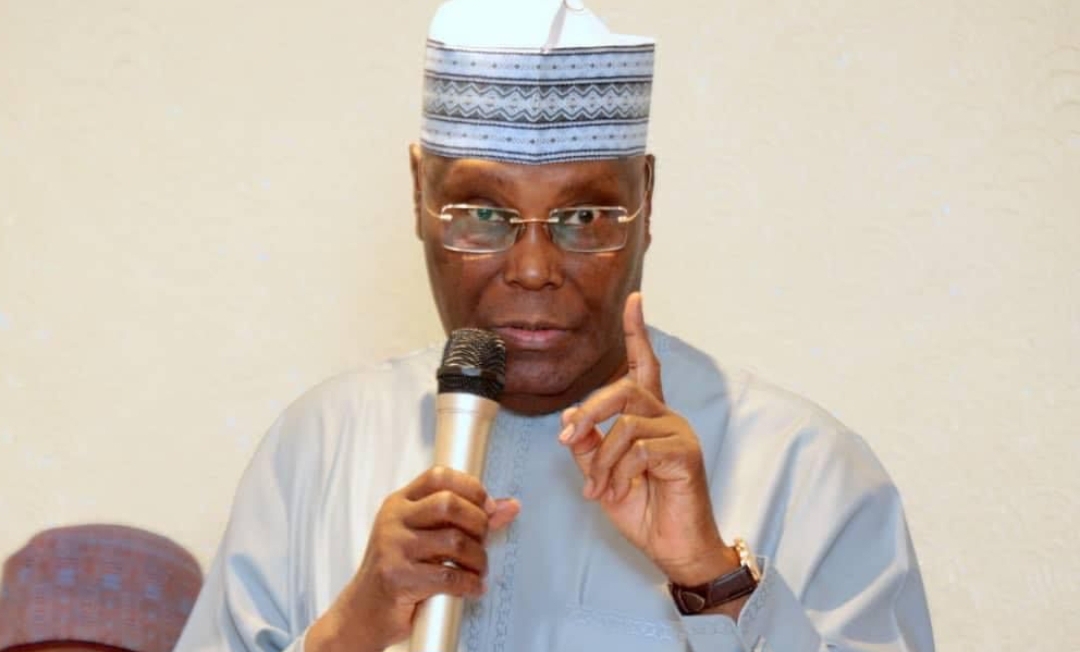
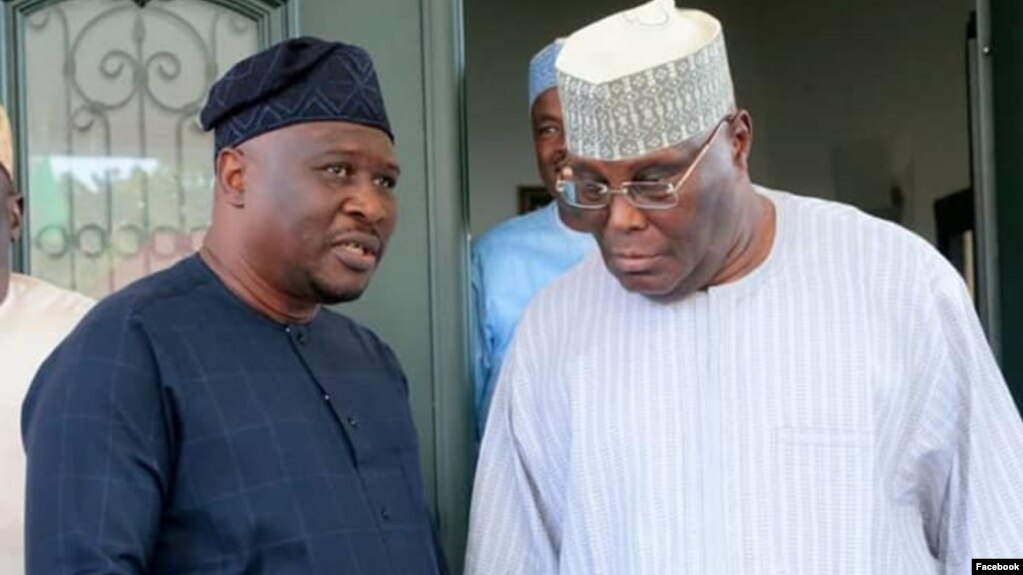
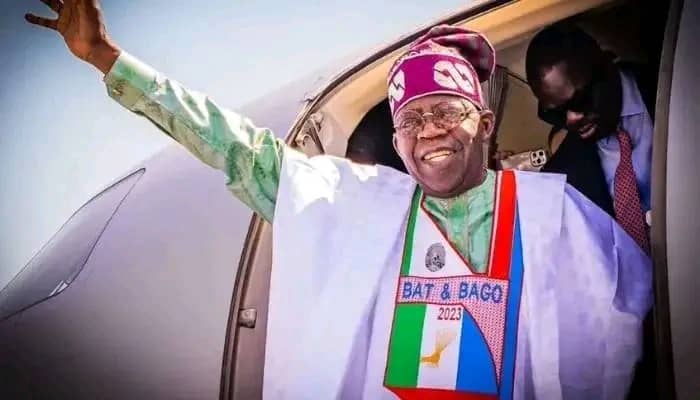
Atiku Abubakar

Why ‘The Atiku Plan’ is better for youth empowerment and job creation

By Abdulhaleem Ishaq Ringim

As rightly identified by policy documents of both Atiku Abubakar and Bola Ahmed Tinubu, young people remain the country’s most valuable assets. However, this tremendous resource base is severely underutilized, as evidenced by unemployment and underemployment numbers. This makes job creation and youth empowerment significant points of policy focus and concern for both candidates. 

Tinubu, to start with, in the 3-paged “Youth Empowerment and Entrepreneurship” section of his policy document titled “Renewed Hope 2023”, outlined a number of strategies his administration would implement if elected into office to ensure enhanced job creation, youth entrepreneurship development and empowerment. 

Identifying the lack of access to credit at the fore of the challenges impeding youth entrepreneurial development, Tinubu plans to ensure easy access to low-cost credit for youth-led enterprises and simplification of loan application processes. He plans to leverage the instrumentality of the CBN to develop suitable incentives for commercial banks in this regard and mandate federally owned and affiliated financial institutions to develop similar schemes. 

He also plans to bolster intergenerational business mentoring and cooperation with 2 million volunteer entrepreneurs and professionals across the nation committed to working with youth to find employment, hone job skills and create businesses. Per the plan, a Youth Advisory Council would be inaugurated to the Employment Action Plan the administration would develop if elected. 

In his bid to reform the National Youth Service Corps(NYSC), Tinubu intends to develop and strengthen a job-matching programme for graduates to enable more corps members to enter the private sector during their service years. Employers would also be incentivized to retain corps members at the end of their service.

Additionally, he intends to expand business incubation centres to support youth innovators to acquire and protect through patent and trademark registration, intellectual property and other proprietary rights over inventions and innovations. 

As far as governance and political appointments are concerned, his administration intends to preserve at least 3 cabinet positions for persons under 40, 6 more positions for persons under 50 and 20 per cent of political appointments to MDAs to persons under 40. A Presidential Fellowship Scheme would also be established to train future leaders. 

On the other hand, Atiku dedicated 10 pages to discussing his plans on “Job Creation”, where he outlined four pathways(to jobs ) his administration would create if elected President come 2023. 

The first pathway is the Informal Sector Pathway to Jobs. It starts with relaunching the National Open Apprenticeship Programme(NOAP). The programme would recruit 100,000 Master Crafts Persons(MCPs) annually who would, in turn, train 1,000,000 apprentices(especially those who have lost the opportunity to attend or complete basic education) on various trades and skills. 

The MCPS and apprentices(upon graduation) would be beneficiaries of 21st-century standard business advisory services, and their training clusters would serve as robust ecosystems that would guarantee ease of access to finance and other ancillary services. 

National Board for Technical Education(NBTE) would be mandated to create a credible, recognized and verified skills/competencies certification system for the beneficiaries of the programme. The certificates would serve as credentials for employment purposes in the “new-collar” or informal skills-based sector. The Programme, of course, would be operationalized in close collaboration with the private sector and relevant trade associations. 

The second pathway is the Entrepreneurship Pathway. It starts with working towards the speedy passage of the National Research and Innovation Fund(NRIF) Bill. When passed, the Fund would receive funding from the CBN’s MSME Fund, Development Bank of Nigeria, Bank of Industry and other private sector institutions and donor agencies. It is expected that at least 100,000 budding entrepreneurs will be added annually. 

Support from the NRIF will be in the form of grants, loans or equity investments in small enterprises. It shall be provided either as start-up capital or to scale up innovations that have already demonstrated a strong track record of impact and effectiveness. 

Atiku also seeks to introduce and actively promote a Graduate Trainee Internship Programme (GTI), which would target National Youth Corps members. The GTI will transfer useful employability skills to Corps members to increase their chances of finding sustainable employment. While they undergo entrepreneurship training, the NYSC will be matched with potential employers for internship/traineeship in the private sector. 

The technical and financial capacity of the Industrial Training Fund (ITF) would be grossly improved to operate its internship and apprenticeship programmes at a much higher scale to cover a minimum of 2 million workers per year.

The Schools to Jobs Pathway is the third pathway identified by Atiku. Here, a formal Technical and Vocational Education and Training (TVET) system will be supported and technical colleges and vocational skills acquisition centres will be re-positioned to produce skills and competencies for innovation and the creation of new ideas and products inside enterprises from where future jobs and future prosperity will derive. 

This would be followed by training of a low-level workforce, such as operatives, artisans, craftsmen and master craftsmen for commerce, industry, agriculture, and ancillary services. The absorptive capacity of the formal post-basic TVET and Vocational Centres will be increased from the current total enrolment and completion of fewer than 200,000 students to 500,000 in 2025 and 1,000,000 by 2030. 

Additionally, selected vocational training institutions would be remodelled into a one-stop shop to provide vocational training, entrepreneurship (accounting, management training expertise), life-skills programmes, etc. 

Enterprise start-up training programmes to be delivered by SMEDAN would be provided to the graduates of technical and vocational training centres who opt for self-employment. Upon completion of the training, participants will submit business plans to Micro Finance Banks and apply for loans from the Bank of Industry, which will be supported by a start-up grant from the National Innovation Fund. 

Graduates of the technical colleges will receive loans and Business Development Service coaching and support from SMEDAN/ Business Development Service Providers. On successful repayment of loans, graduates will receive a final grant (matched to the value of the original loan value) to boost their businesses.

The fourth and final pathway, as outlined by Atiku, is the MSME /ICT Special Entrepreneurship Pathway. This shall start with the facilitation of the establishment of the SME Venture Capital Fund by the private sector to provide longer-term capital for targeted small firms. The administration shall aim to attract a minimum of $250 million in private-sector funding for Nigerian small businesses. 

The administration would create a platform for de-risking SME lending, increase the MSMEs funding window from N200 billion to N500 billion, and set aside the same for the new platform. Awareness of the National Collateral Registry of Nigeria will be rigorously promoted, and the collateral registration process will be further simplified, especially for places without internet access. Enhanced registration access will help unlock much-needed finance for MSMEs. 

The administration would also establish the Financial Innovation Fund((FIF) to incentivize commercial and Microfinance banks to develop innovative solutions for providing credit facilities to the MSMEs sector. The Small-scale Industries and Graduate Loan Guarantee and the Small -Scale Industrial Credit Scheme shall be reformed and reintroduced. 

Special focus on the ICT sector will be provided by Atiku’s administration, and Nigeria shall be aggressively marketed as an outsourcing destination. With a robust IT infrastructure in place and more than 150 million mobile phones, opportunities abound in Business Process Outsourcing with the potential to create 2 million direct and indirect jobs. Nollywood, a great labour employer, would be actively promoted to make it the 3rd largest film industry in the world. 

And on political appointments, 40 per cent of the cabinet would be reserved for youth and women. 

On comparison, one would notice certain points of convergence from the above excerpts as directly culled from both policy documents. For example, both documents identified a lack of access to credit and finance as a major impediment to youth entrepreneurial development. 

However, while the Tinubu plan heavily stresses easing access to commercial loans and simplification of loan application processes, Atiku’s planned interventions seem more specific, overarching and diverse (with adequate involvement of the private sector). They also seem more sustainable as most of them would be backed by legislations and institutional pillars like the NRIF, SME Venture Capital Fund, Financial Innovation Fund etc. 

Another point of convergence is the identification of the imperative of intergenerational business mentorship as a veritable avenue for job creation, youth empowerment, and entrepreneurial development. However, with ease of access to funding interventions, the Atiku plan seems more practical considering specific policy prescriptions like the establishment of the NOAP under the Informal Sector Pathway to Jobs. It also seems more sustainable as it seeks to create a new labour market and standard for employment to be legitimized by the new NBTE skills/competency certification system. 

Additionally, while Tinubu’s NYSC reform focuses heavily on ensuring more corps members join the private sector mainly by simply incentivizing employers to retain them, the Atiku plan approaches the problem more prudently as it seeks to equip corps members with high-value employability and entrepreneurial skills through the Graduate Trainee Internship(GTI) programme before matching them with potential employers. No incentive matches the availability of employees with enhanced employability and entrepreneurial skills for private sector employers as it means enhanced productivity. 

The same goes for other interventions that both policy documents commit to pursuing. One intervention, however, that is important but seems missing in the Atiku plan is the Presidential Fellowship Scheme proposed by Tinubu to serve as a platform that gives young people the opportunity to experience and participate in public service and governance as with Kaduna State’s Kashim Ibrahim Fellowship and Lagos State’s Lateef Jakande Leadership Academy. 

Notwithstanding, the Atiku plan clearly provides more specificity and seems more practical and sustainable(backed by legislation and institutions). It is also more diverse in scope and solutions pathways for identified impediments towards enhanced job creation and youth entrepreneurial development. The Atiku plan is better for job creation and sustainable youth empowerment.

Abdulhaleem Ishaq Ringim is a political/public affairs analyst. He writes from Zaria and can be reached via haleemabdul1999@gmail.com and @pragmatist_AIR on Twitter.

Atiku as ‘an honest flattering man’

Sule Abubakar Lucky Mark

What aphorism could have more aptly encapsulated Atiku’s socially divisive, searing and bigoted mannerism better than the saying in William Shakespeare’s play – ‘Much Ado About Nothing’ – which goes thus: ‘Would rather be a plain-dealing villain than an honest flattering man.’? By being a ‘plain-dealing villain’, Shakespeare means to be strict and yet upright so that people could even swear that despite your ever-growing strictness, your uprightness is still intact. So, in summary, it means to be a sharp model of rectitude.

And, being ‘an honest flattering man’, on the other hand, means, in a nutshell, to be tactically implicit in your wording so that no one’s ox would ever be gored, i.e., to be politically correct!

And so, I’ve always wondered why Atiku Abubakar, who intends to rule a multi-ethnic and multi-religious country like Nigeria, would be trapped in a circle of ‘honest flattery’ in his political voyage, and the most surprising thing is the fact that he does this without remorse. If you want to rule people, you should instead be a ‘plain-dealing villain’ than an ‘honest flatterer’, for it is in your ‘plain-dealing villainy’ they will know whether you would express deep concern about their collective plight or not in case you eventually become their leader.

On 16 October 2022, in an interactive session, Atiku reportedly told the Northern Elders Forum in Kaduna, ‘…I think what the northerners need is someone who is from the north and also understands the other parts of Nigeria, who has built bridges across the country. This is what a northerner needs. He doesn’t need a Yoruba candidate or an Igbo candidate.’ – Punch newspaper.

Atiku’s geo-ethnic bigotry and supremacism can be likened to what Shakespeare described in the play above as ‘mortifying mischief.’ And this ‘mortifying mischief’ of Atiku, if he is not adequately cautioned for it, could fan the flames of deep cleavage among Nigerians.

A presidential candidate who is said to be a ‘unifier’ should not carelessly shout an ethnic slur on/against other regions. He is expected to strengthen the dwindling bond of our existence and not weaken the already ailing breath of the fatherland. A patriotic ‘unifier’ should not play the ethnic card in the north and play ‘the unifier card’ in other regions. That’s sheer hypocrisy!

In his usual ethnocentric delusion, Atiku has always played ostrich when it comes to pressing national issues. On 12 May 2022, when some homicidal youths took the life of Deborah Samuel at Shehu Shagari College of Education, Atiku quickly posted on his verified Facebook account and condemned the illegal act. Still, after some people threatened that they would not vote for him, Atiku shamelessly removed the condemnatory post he had made earlier. That act alone has a subtle undertone: Atiku is in thrall, and he has no guts to pilot the affairs of this country!

And who knows if William Shakespeare also had Atiku Abubakar in mind when he described one of his characters in that same play: ‘Thou wast ever an obstinate heretic in the despite of beauty.’ In Atiku’s case now, despite his undeniable beauty, seemingly athletic figure, etc., he is still a rash reprobate. And if you are still inwardly an ‘obstinate heretic’, as a man, despite your beauty, especially in contemporary Nigerian society, you cannot be a reliable leader. Your government will be fraught with fabulous fraud and a glittering facade!

At this critical stage of national politics, people must be careful as they make their choices because they are in the hands of manipulative political musketeers who masquerade like angels with their honeyed rhetoric and empty promises. And if Nigerians are not careful, they will later have to find an answer to Birago Diop’s rhetorical question in his poem, which goes thus:‘If we cry roughly of our torments, what hearts will listen to our clamouring’?

Sule Abubakar Lucky Mark sent this article via suleabubakarmark2020@gmail.com.

‘ASUU’s requests meet deaf ears’ – Atiku Abubakar

By Uzair Adam Imam

The presidential candidate of the Peoples’ Democratic Party (PDP), Alhaji Atiku Abubakar, consoles with the Academic Staff Union of Universities (ASUU), saying their genuine requests had met with deaf ears in Nigeria.

Atiku Abubakar stated this in a statement he issued and signed on Wednesday in celebration of the United Nations’ World Teacher’s Day.

Abubakar’s impassioned statement decried about the incessant strike which has been eight months now since lecturers shut down public universities to press their demands home.

He stated, “I wish to observe this all-important day by identifying with Nigerian teachers. I wish to identify with them in their moment of grief occasioned by poor working conditions over the years.

“Specifically, I use this medium to console Nigerian university lecturers whose genuine requests have met with deaf ears, and who have now stayed for over seven months without salary.

“Teachers are the backbone of a nation. They are the bedrock on which national development rests. Indeed, many educators have opined that, no nation can rise higher than the quality of its education system, and no education system can rise higher than the quality of its teachers.

“This means that no nation can make any meaningful progress in any sector without having well-trained, experienced, happy and well-remunerated teachers. A situation where some states are owing teachers’ salaries of up to five months, or even more, is unacceptable,” he stated.

Peace Accord: Waste of a good action?

By Mohammed Aliyu

The National Peace Committee, headed by the former Head of State, General Abdulsalam Abubakar (retd.) and other elder statesmen would have been more respected and crucial had they played the committee with the grandeur it deserves. Established in 2014, the committee has not achieved anything following its record. As such, its function is nothing but a jamboree, where aspirants meet and share some private moments, thereby deceiving the gullible who trusted them by their words.

The vulnerability of the committee was so evident in 2019 when one of its members was seen dancing with another aspirant and denouncing the other candidate rather than playing neutral by preaching the peace he claimed to be advocating. Such an immodest attitude alone can create chaos, put doubt in the minds of other aspirants, and ridicule the entire process. Again, no need to mention names but a committee like this ought to have credible individuals that are all respected, who are also mindful of their utterances, actions and even public image – by extension, be less controversial.

To revisit the past, in 2015, President Goodluck Jonathan accepted defeat on his own without any influence from any quarter, as he stated in his book Transitional Hours. In 2019, electorates massively voted for President Buhari, yet no crisis was recorded. Still, the committee’s capacity has not been proven, although they claimed to have calmed Atiku Abubakar, who insistently went to court on his own but failed there.

The 2023 election that brought religion into politics is perhaps dosed with fear of violence, and this is the moment that the peace committee may save the country, but will they? The National Peace Committee is the initiation of some individuals that called themselves ‘Elder Statement’, and members were selected without merit. The peace committee is concerned with only the aftermath of election violence and not other forms of insecurity, let alone proffer solutions to lingering critical issues that the country is bedevilled with now and then. Like the present ASUU strike, agitations, persistent farmer/herder clashes, communal clashes, religious intolerance, and other vital issues that threaten national peace and security that may even not allow any election to hold.

To send a message that the peace committee is not credible, in 2019, PDP presidential aspirant Atiku Abubakar failed to attend the accord signing for reasons known to him. Instead, he went after the public ceremony. Bola Tinubu, another aspirant of APC, again failed to attend the September 2022 Peace Accord. Instead, he sent his running mate, Kashim Shettima. All this weakens the credibility and popularity of the committee. The priority given to candidates rather than parties is a clear sign that the peace agreement has lapses that must be corrected if they want to be relevant in the future. Electorates choose a party, not a candidate, even though they are by extension. Candidates are identified by their parties because, without the platform, they are idle. The peace committee must look inward and prioritise party chairpersons during such occasions. That way, they are dealing with an organisation, not an individual.

In my opinion, the National Peace Committee should be changed to the National Council of Elders, and their mandate should be transformed so that it will have a national look and have representatives from all sections of the country. The members should be credible people who are respected. They should advise the government on solutions to bring lasting peace before, during and after the election circle.

However, the interest of the National Peace Committee is not for peace to reign, nor for good governance but for the personal interest of what they may get in the new government. As such, expect nothing but flaws in their shoddy policies. While they are signing the accord in Abuja, I wish my fellow compatriots would do the same locally since we are the anticipated thugs that will cause violence.

Mohammed Aliyu wrote via aliyu.wasilu@gmail.com.

Can Atiku crack the Wike’s puzzle? (II)

By Tordue Simon Targema

Secondly, there is the notion of power shift to the South which is shared even among Southern politicians that are not positively disposed to Wike. Indeed, all political stakeholders in the party are unanimous in their conviction that power should shift to the South, as President Muhammadu Buhari is completing a second term, an uninterrupted eight-years Northern presidency come 2023.

This conviction has earned what many in the South would have ordinarily termed ‘Wike’s unnecessary self-centred nagging and ranting’ some form of legitimacy, giving him strong strength to bargain on the negotiation table. Worthy of note is the fact that even though Atiku dreads this negotiation table like a house infested with leprosy, he has no option than to face it, and fillers from the discussions so far indicate that the standard bearer is not finding it funny yielding to the demands of his ego-centric demigod of a rival.

What are the Issues on the Negotiation Table By-the-Way? Fillers from the negotiation table indicate that Wike clearly wants to show Atiku that he is not a force to relegate in the opposition party that he strive hard to sustain from 2015 to date when most party big-wigs including Atiku deserted it for the APC and other political formations. From what is in the public domain so far, few things stand out from Wike’s litany demands.

First and foremost, Atiku must do just one term and return the presidency to the South by the next election season, i.e. 2027. Secondly, Ayu must resign as the National Chairman of the PDP and a new chairperson for the party should emerge from the South West to balance the power structure in the party. Thirdly, Wike will install key ministers in Atiku’s cabinet, etc.

Of course, these are not by any means, too difficult conditions to meet if the standard bearer is determined to unite his house and put forth a formidable campaign team to challenge the ruling APC and other emerging opposition parties. After all, politics is all about concessions.

Already, His Excellency Atiku Abubakar has made his intention to run for just a single term known to the general public, even as such promises hardly hold water in politics if previous experiences in the country’s political landscape are worthy to go by. This is the more reason why Wike requires a concrete commitment to that effect, not just a promissory note that would likely bounce in the bank of equity when the time to cash it is due.

The third condition too is not too difficult to meet, considering that Wike is considered a big name in the party in his zone and likely to pull substantial votes for Atiku in the South. Lest we forget that the ‘Obi-dient’ movement and Tinubu’s effect are critical factors that would collapse whatever structure Atiku has in the South but for the support of strong party pillars in the region like Wike.

Indeed, Atiku needs a formidable team in the South, and no amount of concessions in terms of political appointments will be too big to woo the right people on board, his campaign train. Perhaps, the biggest hurdle right at the moment is for Ayu to accept to resign. As at the last minute, the third-republican political juggernaut is still holding unto his mandate, solidly. In fact, with an air of confidence like one who is firmly in charge, he describes those calling for his resignation from the party’s top seat as ‘small children’ who should not be taken seriously.

Indeed, this boast followed a vote of confidence passed on him by members of the party’s National Working Committee in Abuja, recently which Wike simply dismissed as the same path that Ayu’s predecessor, Prince Uche Secondus followed in his inglorious exit from the party’s top seat. Indeed, all indications point to Ayu’s eventual resignation in no distant time. It is in line with this expectation which seems the only sure path for a likely truce that the Board of Trustees Chairman of the party, Senator Walid Jibrin resigned his position in Abuja recently as a move towards uniting the party.

At the moment, calls for Ayu’s exit have reached advanced stage as all is set for formal commencement of campaigns later in the month. In a South-West stakeholders meeting of the party at Ibadan, Governor Seyi Makinde, one of the key members of the Wike’s camp reiterated their position that Ayu must go.

Makinde described the need to reshuffle leadership positions in the party as the party’s demonstration of commitment towards restructuring which has been its mantra since 2019; although Atiku dismissed this premise and maintained that even if Ayu resigns, a northerner is constitutionally most likely to take over as the party’s henchman given the provision of the party’s constitution.

A power shift in the party, Atiku explained, is only possible in the event of a constitutional review of the party’s constitution which is not likely in the current circumstances. In the meantime, Ayu jets off to Europe on vacation.

Meanwhile, several questions bug the curious mind as follows: is this trip a tactical move to pave the way for peaceful transition in absentia? Is Ayu working on his transition notes to hand over to a new party chairman upon return from vacation in line with the demands of Wike’s camp?

Is His Excellency Atiku Abubakar willing to sacrifice Ayu and broker a truce with Wike, or he is ready to call off Wike’s bluff and dare the consequences? By-the-way, does he has adequate time right at the moment to fully contemplate his options before formal commencement of campaigns later in the month?

The composition of the campaign team with Wike’s camp relegated to the background is a pointer to this line of thought. But if previous experience is anything to go by, then His Excellency Atiku Abubakar is threading on a treacherous ground.

Recall the revolution in the PDP that led to the emergence of the new-PDP which eventually joined forces with the APC in 2014, thereby forming a formidable opposition party that sent the PDP to the debris in 2015 general elections. Apparently, this history is about to repeat itself with the Wike’s puzzle. Coincidently, Just like2015, the current travail of the party starts from Rivers State.

One is, thus, curious to pose: is history repeating itself in the PDP camp? Can the Wike factor cost Atiku the price that former President Goodluck Jonathan paid in 2015 for ignoring Governor Chibuike Rotimi Amaechi? Wike’s puzzle is certainly a hard one for Atiku to crack, and until he is able to crack it successfully, it remains a clog in the wheel of what seems his final shot at Nigeria’s top job.

How best he cracks this puzzle and steers the party to victory remains to be seen, as other political movements are restlessly cashing into the crack in the party to consolidate their holds on the South-South zone which, hitherto, was PDP’s stronghold.

Tordue Simon Targema writes from the Department of Journalism and Media Studies, Taraba State University, Jalingo. Email: torduesimon@gmail.com

Can Atiku crack the Wike’s puzzle? (I)

By Tordue Simon Targema

The Rivers State Governor, Ezenwo Nyesom Wike’s puzzle is proving extremely difficult to crack by the presidential flag bearer of the People’s Democratic Party (PDP), His Excellency Alhaji Atiku Abubakar.

Like the proverbial lizard on the edge of the water jar, Wike has proven to be Atiku’s biggest dilemma in his current presidential bid. The options before him are weighty: to ignore Wike and put up with the consequences given the latter’s influence in the leading opposition party and seaming control over the party’s structure especially in the South-South geopolitical zone; or give in to his weighty concessions as an act of either compromise or cowardice and subjugation to the whims and ego of an emerging emperor in the party’s fold.

These are certainly weighty options, serious enough to cost an ambitious aspirant- desirous of occupying Nigeria’s topmost seat as a crowning moment of his age-long political career- his precious sleep.

As events in the aftermath of the party’s presidential primaries continue to unfold, Wike has emerged the most sought-after political bride in Nigeria. Just last month, he was entangled in a series of meetings in London with the three topmost aspirants- Bola Ahmad Tinubu of the All Progressives Congress (APC), Peter Obi of the Labour Party (LP) and his arch political rival, Atiku Abubakar of the PDP who is at the centre of the whole palaver.

The meetings were graced by household names in Nigeria’s political arena such as former President Olusegun Obasanjo, incumbent governors and several other political stakeholders. Prior to these marathon meetings in London, his Port-Harcourt residence had suddenly turned to a venue of political pilgrimage by Nigerian presidential hopefuls and their emissaries.

Apparently, Wike’s grudge seem like one massaging his personal ego after suffering a resounding defeat in a keenly contested jostle for the main opposition party’s flag. This explains why he has not hidden his rift with the party’s National Chairman, Senator Iorchia Ayu.

A day after the primary election, when Wike was busy nursing the agonizing wounds of the defeat, Ayu was caught on camera- flanked by His Excellency Atiku Abubakar- showering praises on Governor Aminu Waziri Tambuwal of Sokoto State as the “hero of the convention”. Of course, Tambuwal’s abrupt withdrawal at the last minute in support of Atiku was, no doubt, influential to the latter’s victory; a move that Wike interpreted as a well-orchestrated conspiracy, laced with ethno-regional bigotry to edge him out of the race and scuttle his ambition of occupying the country’s top seat.

From that moment, he made his instant decision- and publicly so- that Ayu must go as the preeminent condition for peace to reign in the party. However, subsequent developments have further deepened the crisis in the party and made it messier for the party in general, and Atiku Abubakar in particular, to handle.

For instance, having lost the flag, one would have expected that as the first runner up, Atiku would compensate Wike with the vice presidential slot to run a joint ticket, or at least, give him the benefit to nominate a protégée to run as a move towards reconciliation.

Incidentally, having won the ticket from the North, the vice presidential slot automatically was expected to come from the South, and as the leading figure of the party in the region, all eyes were on Wike for the vice presidential slot. Atiku’s snubbing of Wike for the Delta State Governor, Ifeanyi Okowa is clearly understood by many political analysts.

Everyone would prefer a calm, cooperative and more introverted vice to a lousy, boisterous, loquacious, egoistic and power-drunk demigod who is so full of himself and intoxicated with self-invested powers and a sense of relevance that defies all principles of logic. Yes, this is my personal opinion about the person of Governor Wike, but I am sure many would share the same opinion about him, and it is likely the foremost reason why His Excellency, Atiku Abubakar snubbed him without a second thought to the damning consequences to his campaign.

Yes, Wike would have been a difficult candidate to sell especially in the Northern region where his controversial position on states control of the Value Added Tax (VAT) that Rivers State has the lion share, restructuring and other controversial national issues lurking the Nigerian federation leave him with more enemies than friends.

Yet, others dislike him for being excessively assertive and domineering, dictatorial in his approach to handling complicated political situations and crude in his dealings with delicate political matters without minding hurting sensitivities and stepping on toes. All these understandably culminated into Atiku’s eventual preference of Okowa, who is more subtle- if one is careful of using diplomatic- in his political approach as a co-flag bearer.

But having made his choice- barring all consequences, the effects are right here with him, and have, at the moment, overwhelmed the leading opposition party. How best His Excellency Atiku Abubakar and his party navigate the challenges confronting it and form a formidable all-inclusive campaign team remains to be seen, as efforts to woo Wike and his allies back to the fold have always hit brick walls.

Already, the presidential campaign team is set with Governor Emmanuel Udom of Akwa Ibom State- Wike’s neighbour- as the Chairman and Governor Tambuwal of Sokoto State as the Director General. Key members of the Wike’s camp such as governors Seyi Makinde of Oyo State, Samuel Ortom of Benue State, Okezie Ikpeazu of Abia State and Wike himself are sandwiched in the list as members, with the exception of Makinde who is named the Vice Chairman (South).

The big question to ask at this point is: will these governors throw their weight behind the campaign as they should, given the prevailing state of affairs? Perhaps, some historical illusions would be in order to put things into perspective. One is tempted to infer that the complications that confront the PDP at the moment are capable of repeating the ugly 2015 nightmare.

Yes, Wike is a force to reckon with. It is to his credit that he sustained the PDP in states where it was nose-diving to oblivion. His macho in odd-hour elections such as Edo, Osun and Anambra among a host of other states confer on him, the prestige in the party that is second to none among his fellow governors. It is no wonder that they rally around him in his moment of great travails.

To be continued

Tordue Simon Targema writes from the Department of Journalism and Media Studies, Taraba State University, Jalingo. Email: torduesimon@gmail.com

Atiku donates N50m to Kwari market flood victims

By Muhammad Aminu

The presidential candidate of the People’s Democratic Party (PDP), Atiku Abubakar, has donated N50 million to Kantin Kwari textile market in Kano following a flood that affected the market.

The Star earlier reported that Kano has been witnessing torrential rainfall in the last few days that has led to floods in many parts of the metropolis, including the Kwari textile market.

The presidential candidate announced the donation Monday while welcoming former Kano State Governor Ibrahim Shekarau to the PDP.

He sympathized with the businessmen and women who were already suffering from an unfriendly business environment with economic hardship.

According to him, Shekarau’s defection is a win for the people of Kano State, the PDP and the country.

The former Kano State governor argued that Atiku was the most qualified candidate to get Nigeria working again come 2023.

Atiku was in Kano since Sunday alongside his running mate Governor Ifeanyi Okowa, Governor Aminu Waziri Tambuwal of Sokoto State, former Governor of Jigawa State, Sule Lamido, former Minister of Transportation, Senator Abdullahi Umar Idris, among other party chieftains.

2023: Shekaru, associates dump NNPP, join PDP in Kano

By Muhammadu Sabiu

Malam Ibrahim Shekarau, a former governor of Kano State, has formally rejoined the Peoples Democratic Party (PDP).

Shekarau joined the PDP on Monday in Kano after leaving the New Nigeria Peoples Party (NNPP).

The PDP’s presidential candidate, Atiku Abubakar, Iyorchia Ayu, the party’s national chairman, and other PDP members met with the former governor.

Shekarau joined the NNPP from the All Progressives Congress (APC) and left it two months later.

Shekarau, a senator for Kano Central, previously served as Kano’s governor for two terms and as Nigeria’s minister of education.

He also contested for president of Nigeria in the 2011 general elections.

NBA Vice President faults Tinubu’s absence at conference

By Ahmad Deedat Zakari

John Aikpokpo-Martins, the Vice President 1 of the Nigerian Bar Association (NBA), has faulted the absence of the All Progressives Congress (APC) presidential candidate, Bola Ahmad Tinubu, at the NBA 2022 Conference. 

In a post made on Facebook on Monday, the senior lawyer said, “The failure of Tinubu to be at the NBA conversation is a bold statement.” 

Senator Kashim Shettima, the vice-presidential candidate of APC, represented Tinubu at the NBA 2022 Conference themed “Bold Transition”.

In attendance at the conference were leading presidential candidates for the 2023 election. These include former Nigeria’s vice president and presidential candidate of the Peoples Democratic Party, Alhaji Atiku Abubakar and presidential candidate of the Labour Party, Mr Peter Obi and other dignitaries.

2023: Beyond unrealistic optimism

By Hassan Ahmad Usman

To begin, I would like my readers to understand that, unlike games, there is no “cheat code” for good governance. Governance is practical, with little room for derailing if the desired outcome must be achieved. If there is anything that President Buhari-led’s administration taught us, it is to shun unrealistic optimism.  There is nothing wrong with setting standards for our leaders or being optimistic about the prospects of their leadership.  

At the inauguration of Buhari in 2015, one would believe by now that he is rounding off his eight years stay, our four refineries would be functional, the epileptic power supply would be a thing of the past, security tackled, and so many things accomplished. 

Notwithstanding, people overlook many landmark achievements by his administration. Why? Unrealistic optimism. They are not the standards we set for him from the on set. In a year, we’ll have a new president, new administration and new policy makers. In between, we’ll have an election that will bring a new government.

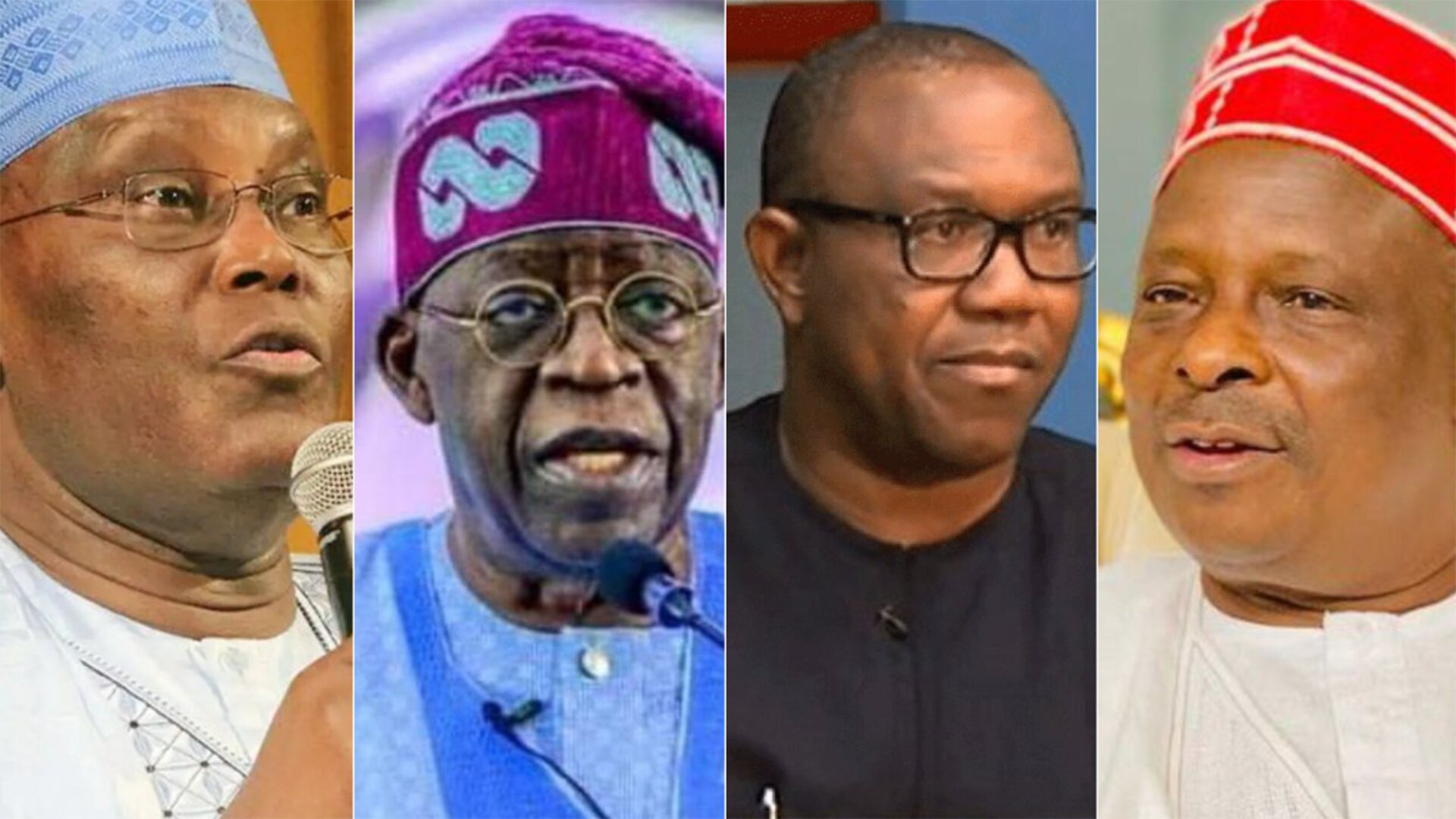
The leading candidates so far are former vice president Atiku Abukar of the People’s Democratic Party (PDP),  former Lagos state governor Bola Tinubu of All progressives Congress (APC) and former Anambra state governor Peter Obi of the Labour party (LP). These candidates are enjoying a large support base. 

My candid advice to the “Batists”, “Atikulateds”, and the “OBIdients” is to learn from the travails the Buharists went through in his defence. They marketed Buhari to the extent that we thought only miracles would better his performance in office, and failure was an impossibility in our imaginations.  We again gave him another chance despite his dissatisfaction with his first term because the Saraki/Dogara-led National Assembly was a block to his reform agendas. They also told us that the 2016 economic recession was a catastrophe due to the then-ever-falling oil prices. With these excuses, whether acceptable or not, we should understand that there won’t be a smooth ride for any president in a developing economy like ours.

So, I remind those supporters to moderate their optimism and understand and study what development is all about in modern civilization. It is not as easy as we thought. It would be best if you weren’t in defence of your candidate throughout his stay in office.  

Nigeria had her chance to turn things around when the oil price was at its highest. Unfortunately, indecisions and a lack of foresight from the leaders made it impossible. We are now living to bear the brunts of the indecisions of our past leaders. 

To Nigerians, we should understand that good governance that translates into sustainable growth and development cannot be achieved through “quick-fix” solutions. It’ll take longer than expected time for it to manifest. We’ve read and heard of the turnaround of countries like China and the United Arab Emirates but never paid attention to the processes they passed through before making it to the big stage. If development is what we all crave, we must all make sacrifices that come with it and know that we may not be the immediate beneficiaries of our own strides. 

Hassan Ahmad Usman writes from Lafia, Nasarawa State, Nigeria.  He can be reached via basree177@gmail.com.