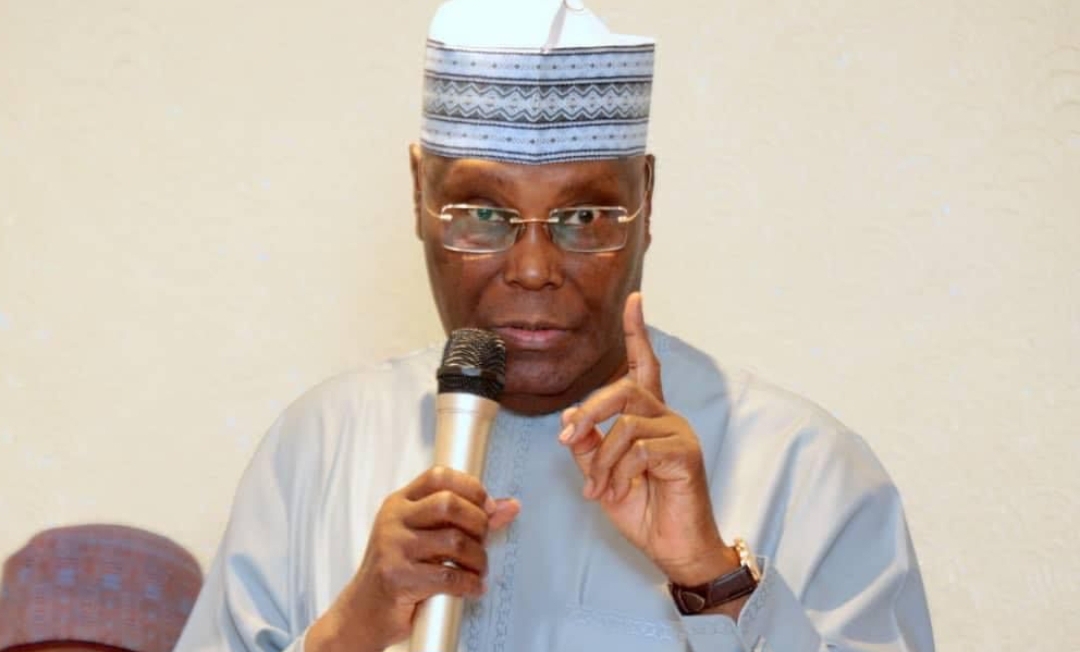
Atiku Abubakar

2023: Beyond unrealistic optimism

By Hassan Ahmad Usman

To begin, I would like my readers to understand that, unlike games, there is no “cheat code” for good governance. Governance is practical, with little room for derailing if the desired outcome must be achieved. If there is anything that President Buhari-led’s administration taught us, it is to shun unrealistic optimism.  There is nothing wrong with setting standards for our leaders or being optimistic about the prospects of their leadership.  

At the inauguration of Buhari in 2015, one would believe by now that he is rounding off his eight years stay, our four refineries would be functional, the epileptic power supply would be a thing of the past, security tackled, and so many things accomplished. 

Notwithstanding, people overlook many landmark achievements by his administration. Why? Unrealistic optimism. They are not the standards we set for him from the on set. In a year, we’ll have a new president, new administration and new policy makers. In between, we’ll have an election that will bring a new government.

The leading candidates so far are former vice president Atiku Abukar of the People’s Democratic Party (PDP),  former Lagos state governor Bola Tinubu of All progressives Congress (APC) and former Anambra state governor Peter Obi of the Labour party (LP). These candidates are enjoying a large support base. 

My candid advice to the “Batists”, “Atikulateds”, and the “OBIdients” is to learn from the travails the Buharists went through in his defence. They marketed Buhari to the extent that we thought only miracles would better his performance in office, and failure was an impossibility in our imaginations.  We again gave him another chance despite his dissatisfaction with his first term because the Saraki/Dogara-led National Assembly was a block to his reform agendas. They also told us that the 2016 economic recession was a catastrophe due to the then-ever-falling oil prices. With these excuses, whether acceptable or not, we should understand that there won’t be a smooth ride for any president in a developing economy like ours.

So, I remind those supporters to moderate their optimism and understand and study what development is all about in modern civilization. It is not as easy as we thought. It would be best if you weren’t in defence of your candidate throughout his stay in office.  

Nigeria had her chance to turn things around when the oil price was at its highest. Unfortunately, indecisions and a lack of foresight from the leaders made it impossible. We are now living to bear the brunts of the indecisions of our past leaders. 

To Nigerians, we should understand that good governance that translates into sustainable growth and development cannot be achieved through “quick-fix” solutions. It’ll take longer than expected time for it to manifest. We’ve read and heard of the turnaround of countries like China and the United Arab Emirates but never paid attention to the processes they passed through before making it to the big stage. If development is what we all crave, we must all make sacrifices that come with it and know that we may not be the immediate beneficiaries of our own strides. 

Hassan Ahmad Usman writes from Lafia, Nasarawa State, Nigeria.  He can be reached via basree177@gmail.com.

Choosing Atiku as a running mate was a mistake – Obasanjo

By Ahmad Deedat Zakari

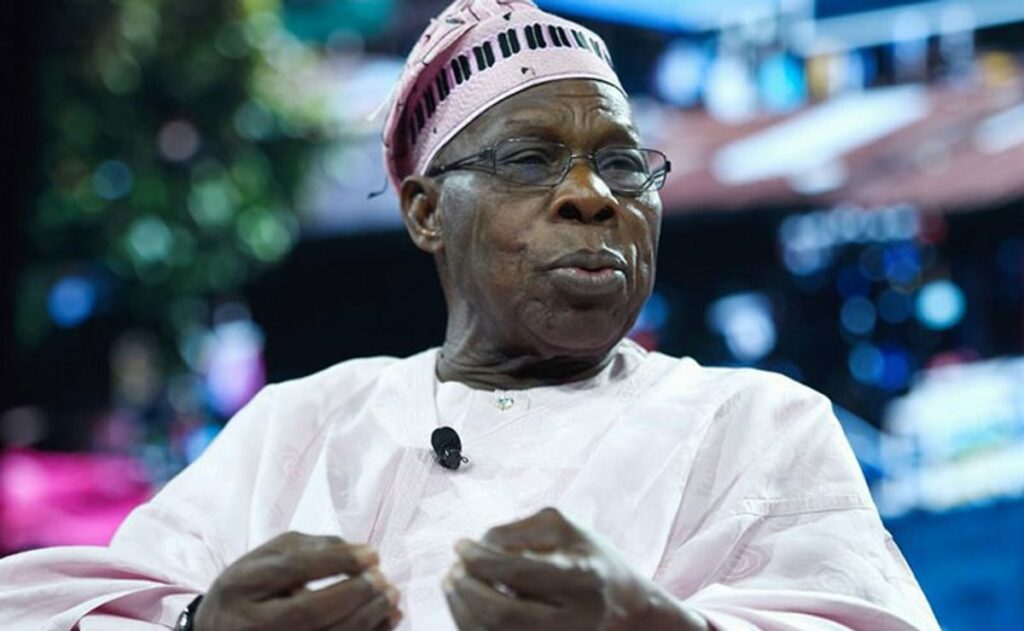
Nigeria’s former President, Olusegun Obasanjo, said his choice of Atiku as a running mate during the 1999 general election was a mistake. 

Obasanjo disclosed this on Saturday, June 25, while addressing students in Abeokuta at a leadership and entrepreneurship mentoring session. 

The former president admitted to having made many mistakes in his life. He also disclosed that one of such mistakes was his choice of running mate in the 1999 presidential election.

“I don’t say I don’t make mistakes – I made many of them,” Obasanjo said.

“But one thing that has happened to me is that God has never disappointed me. And that is very important.

“For instance, one of the mistakes I made was picking a number two when I was going to become President.

“But because it is a genuine mistake, God saved me out of it.”

The presidential candidate of the People’s Democratic Party, Atiku Abubakar, contested alongside Obasanjo in the said election.

Tinubu’s Emergence: A demonstration of political mentorship and lesson to Northern leaders

By Adamu Abubakar Kumo

Mentorship has been the way through which a more experienced, more skilled and usually more elderly person passes his experience, expertise, knowledge etc. to the younger ones. From education to politics, business to occupation, mentorship is instrumental to the continuance of the flow of wisdom from one generation to another.

The history of Nigeria’s founding fathers is undoubtedly that of heroes and legends who wrote their names in gold in the books of history. But, looking at today’s Nigeria, one would be right to say that the wisdom of those great men has not been successfully passed down to today’s generation.

Among the six geo-political regions of the country, South-West has distinguished itself. The region seems to uphold the principles of mentorship. From Sir Herbert Macaulay, Chief Obafemi Awolowo, Chief Samuel Akintola, Aare M.K.O. Abiola and now Asiwaju Bola Tinubu, Yoruba leaders have been producing leaders who subsequently would take over from them. They deliberately ‘build’ people; they sow the seeds and look after them until they grow into large formidable and strong iroko trees that can hardly be trampled or tempered with by just lilliputians if I were to borrow Shattima’s word.

The successful emergence of Asiwaju Ahmed Bola Tinubu is a testimony of the presence of mentors and the continuance of political mentorship in Yoruba land.

Asiwaju, for the past two decades, has been working, influencing the appointment of some of his mentees in strategic government positions, politically supporting his allies and subordinates to attain power and building political bridges and structures across the country. The man waited patiently until when it is time, the time for the Jagaban to reap the fruits of his labour, the time when Amaechi has support from within; the time when Lawan seems to have the blessings of some party juggernauts, the time when some northerners feel that only a Northerner can defeat the opposition’s candidate. At this precious time, Bola Ahmed ‘summoned’ his mentees across the length and breadth of the country and alas, they answered! They come in their thousands with all the vigour and support the Jagaban needs.

Despite the eloquence of Prof. Yemi Osinbajo, the grammar of Ayade, the bluntness of Yahaya Bello, the doggedness of Rotimi Amaechi and the ‘appeal for sympathy’ of the aspirants from the South East, Bola emerged victorious, defeating them hands down.

This ‘political war’ fought and won by the  Southwesterner may compel one to ask, where are the Asiwajus of other regions? Can somebody from North-East, North-West or North-Central brag about having the capacity to do something similar to what this septuagenarian did?

The likes of Sirs Sardauna and Balewa don’t exist anymore in the North. Moreover, nobody is following the footsteps of Hassan Usman Katsina, Sir Kasim Ibrahim, Malam Aminu Kano and many other patriots – the mentorship thread is broken. Though North has been boasting of having great and influential leaders, the problem remains that none is willing to ‘nurture’ his successor.

While Alhaji Atiku Abubakar was busy contesting to become the president right from 2007, Kwankwaso was busy fighting Ganduje and so on. On his part, Bola Tinubu was busy, making sure his candidates become governors in Ogun, Oyo, Lagos, etc. He was influencing ministerial nominations, making sure he appointed Vice President. He was equally working to bring Dimeji Bankole, Ahmed Lawan, Femi Gbajabiamila etc. In other words, Tinubu was busy ‘building’ people. Because he believes even if some choose to betray him, many others will not.

The lesson Asiwaju taught most of our leaders, especially from the North, is that, if you have a plan of twenty years, start mentoring people who will help you achieve it right from today. More importantly, look beyond your family and kinsmen when choosing your proteges.

Another point of note is that you will mentor a person who may rise to a position that you have never attained. This is normal. Don’t get upset when the person tried to rub shoulders with you. Instead, be focused, determined and strategic in your dealings.

Dear Northern leaders, make sure you mentor another person who may likely take over from you. Succession is natural, if you did not breed anybody, someone may grow on his own and come to fight and overtake you one day. Mentor your proteges today to have loyal mentees that will always be proud of you tomorrow.

Adamu Abubakar Kumo wrote via akumo89@gmail.com.

More clarifications ahead of 2023

By Amir Abdulazeez

When President Obasanjo carelessly picked Goodluck Jonathan to serve as Umaru ‘Yaradua’s potential Vice President in 2007, little did we know that the politics of choosing running mates would later become complex and problematic. The death of Umaru, the ascension of Jonathan, the surprising emergence of Namadi Sambo and Patrick Yakowa becoming the first Christian Civilian Governor of Kaduna State would all combine to later add more relevance to the politics of running mate selection. In 2014, APC had more headaches picking a presidential running mate than the presidential candidate himself. It took them so much time and effort that one thought they would organize a new convention for that purpose.

Today, the Muslim-Muslim ticket debacle is the bane of Nigerian political discourse. While clamouring for fairness and balance, which are needed for a fragile system like Nigeria’s, we should also remember that from 1999 to date, no religion can claim any net gain from this Nigerian version of democracy. Ordinary followers of all faiths have been victims of bad governance, even pagans. We have suffered so much that if a pagan/pagan ticket will eradicate insecurity, fix the economy and bring development while being fair to all interests and affiliations, we should allow it. Therefore, the choice is between searching for solutions and satisfying sentiments; we seem to favour the latter.

A section of public commentators and spectators are already suggesting a walkover for Atiku Abubakar in the 2023 polls. That is the biggest complacency I have ever seen in contemporary Nigerian politics. How can you be facing a ruling party with almost 65% of political stakeholdership in the country and be expecting to have a walkover? Atiku is an institution, but his successes in the last two PDP primaries are more financial supremacy than political dominance. That aside, barring a Buhari-like scenario, Atiku will make a good president. He is perhaps the only fully independent candidate with a clear and accessible blueprint since 2007. In 2011, he had a better manifesto and approach than President Goodluck Jonathan; he only lost the PDP primaries to the power of incumbency. By the way, what happened to the Jonathan 2023 candidacy?

From 1992, this is Atiku’s 7th attempt at the Presidency, with 2019 being his closest to success. Many believe 2023 is his year, and so many apparent factors call for optimism in his camp. However, two fundamental things may haunt Waziri; (in)consistency and (un)popularity. Buhari and Tinubu are successfully reaping the harvests of consistency and perseverance; they stuck to opposition politics all their lives. Atiku should’ve remained in opposition when he decamped to Action Congress in 2007 or should’ve stayed in the ruling PDP when he decamped back in 2011. Ambition had kept him running from one place to another, making him neither establishment nor anti-establishment. The second question is whether there is a single state in Nigeria in which Atiku can secure one million votes or more in 2023? I hope we all remember Dr Rabi’u Kwankwaso’s 3-K States theory?

Tinubu’s boast in Ogun State over his role in the emergence of Buhari as President needs some revisiting and clarification. To avoid doubt, Muhammadu Buhari did not lose the 2003 presidential elections; it was brutally rigged to return Obasanjo for a second term. 2003 will easily enter the list of the worst elections in modern world history. In 2007, the results of the presidential election were simply written, so we can’t even call that election not to talk of who won or lost. I have never relied on 2003 and 2007 election figures for research or serious analysis because they are primarily fabricated. The 2011 elections were relatively fair, but at least 40% of the vote was rigged, written, or inflated, especially in the South-South and South-East.

In the circumstances like these, we cannot comfortably declare Buhari a loser of all the previous elections he contested and only became a winner when he met Tinubu. Although 2015 was indeed the weakest version of political Buhari, it was confirmed that he had lost hope and that the APC merger spearheaded by Tinubu was what brought him back to life. But it is also true that so many other factors other than Tinubu contributed crucially to Buhari’s victory. One major one was the abysmal performance of Goodluck Jonathan. One, however, is that, without Tinubu’s support, it would’ve been near impossible for Buhari to emerge APC flagbearer against the financial powerhouses in Kwankwaso and Atiku.

This brings us to the argument that access to public funds is why some candidates (not aspirants) are stronger than others. Supporters of a particular presidential candidate even claimed that if their man had equal access to public funds, he would be better than certain candidates. This is laughable; a debate like this will take us nowhere. Just campaign for your candidate and persuade people to vote for him. If we are talking about the abuse of people’s trust and the utilization of our commonwealth for personal political development, none of the prominent politicians in Nigeria will come out clean. So, let us not deceive ourselves and others.

Where are our smaller political parties who had spent most of their last four years fighting INEC over deregistration? This is a reasonable amount of time they would’ve spent coming together to form a strong bloc. In case we don’t know, 74 of them were deregistered for failing to meet the requirements to continue to exist as political parties. About 10 to 15 of the currently existing will be due for deregistration by this time next year. Instead of them to consider merging to form a decent alternative, they’ll rather hang on only to be fighting a legal survival battle with INEC next year. As the strongest and largest intellectual organization in West Africa, I don’t even know why ASUU is yet to form a political party or adopt any of the smaller parties to set up a path towards satisfying their own demands all by themselves instead of waiting and hoping for a hopeless Federal Government.

Why is nobody talking about the enormous task ahead of the next president, whom credible international reports suggest will have to use 100% of his revenue in servicing (not repaying) debts by 2024? To execute projects or even pay salaries, the next government may have to borrow further. Nigeria is in trouble. We are drowning in the ocean of foreign debts. Meanwhile, we are concerned over a presidential candidate’s religion more than his ability to bring us out of this mess. Buhari has failed because Jonathan had built a solid foundation for that failure. Now he has built a worse foundation for his successor. The possibility and danger of the next president, irrespective of his affiliation and preparedness to economically be worse than Buhari, is imminent. May God help us.

All of the political dynamics of today are closely related to 1999, some a bit earlier. Suppose you have not directly experienced Nigerian political development from 1999 with a mix of some pre-1999 historical knowledge. In that case, you will find it difficult, if not impossible, to connect specific dots that you see today. Extensive and intensive reading may help, but politely interacting with veterans will do better. Unfortunately, social media, where most of the political debates occur, is dominated by youths who knew little or nothing pre-2011 and don’t invest significant time in reading but trying to engage or even confront the same veterans that would’ve been their best opportunity at understanding the genesis of the current situation.

There are some visible changes in Nigeria’s socio-political spaces, although not new but have taken a different twist from the previous. The renewed order is the attempt to criminalize certain political choices against others. Between 2014 to 2018, discourses were dominated by hate, campaigns of calumny, fabrications and outright abuse. Today, political promoters are trying hard to make it appear that only their candidates are good enough, and any other choice is treason. This is extremism. Let’s be careful, everything is a matter of opinion, and everyone is entitled to his.

Twitter: @AmirAbdulazeez

Some clarifications ahead of 2023

By Amir Abdulazeez

The primary elections of the two leading political parties, APC and PDP, had come and gone. However, the dust raised by the exercises across various states of the federation is yet to settle. As things are going, it is unlikely that both parties’ primary election appeal committees will adequately or significantly settle the dust to the extent of amounting to a major change of the status quo. After all, everything was clear; the contests were majorly a measure of financial power.

As usual, our attempts to digest the intrigues and expectations of the upcoming grand 2023 event have once again resulted in endless debates that often lead to more confusion than clarifications. Certain political dynamics cannot be adequately explained by simple analysis or even complex ones. This is truer for cases like Nigeria, where deep insight is considered old-fashioned, authentic information is always scarce, and genuine narratives are always twisted.

Ahead of the just concluded APC Primaries, many accused Yemi Osinbajo of being a traitor and betrayer by contesting against his benefactor Tinubu. However, few people will understand that only one out of a million people will go so close to the presidency as Osinbajo did without succumbing to the temptation of taking a shot at it. The cabal theory notwithstanding, he is perhaps the Nigerian Vice President who was closest to the full privileges of the presidency in recent history. At a time, the Professor himself appeared like the next President in waiting. In sincere terms, Osinbajo may feel that running for the Presidency is more of an attempt to fulfil a destiny than betraying a godfather whose help he may not need any longer.

Maybe, many have forgotten that the Vice President had at a time been an Acting President with virtually full Presidential powers. He is aware of people’s confidence in his competence and knows that many factors are against Tinubu’s candidacy. With the Southwest as the default region where APC will likely have its next candidate, it is only natural he (the second default candidate) tries his luck in case Tinubu (the default candidate) does not get the nod. How can he cash in on a Tinubu collapse if he doesn’t contest? If he hadn’t competed, his promoters would never have forgiven him. Now that he had competed, he knows the extents and limits of his political strengths, which might have been hitherto exaggerated.

Some analysts have accused Tinubu of trying to become President at all costs despite being sick and unstable. We have forgotten that he had, since 1998, invested almost 25 years of his life (and health) trying to reach this point, and we all know he will need an ultimate reward at the end of it all. Now that the prize is within reach, only one out of a million people will back off over health challenges that are yet to prevent him from managing a public appearance. When he made all those sacrifices and concessions, many of us did not bother to understand the larger picture of where he was heading. If not for democracy, one will suggest that the APC ticket should’ve been handed over to him unopposed.

Therefore, Tinubu has fought for long. He has been in the opposition all his life. He has helped build a new political order in Nigeria. Without him, power will still likely be with the PDP and maybe forever. It’s not his making that his health appears to be failing him at this moment of near fulfilment, but as a human, he will continue believing his condition is good enough to manage him to the finish line. The late President Ƴaradua’s situation in 2010 should teach us some lessons, that of Buhari in 2017 too. Tinubu is undoubtedly not the best APC had on offer capacity-wise, but he is the most formidable. His political structure is out of this world. Win or lose, at least they have repaid a significant part of the debt they owe him.

In the build-up to the primaries, we all thought everyone was an enemy of the Southeast since the rest of Nigeria had refused to zone the presidency to the region exclusively. In his speech at the APC convention, Ogbonnaya Onu emotionally shouted for justice against the Igbo marginalization. If not for the APC and PDP Southeast delegates who proved the Igbos’ unpreparedness by refusing to vote for any of their kinsmen, everyone would simply be emotionally blackmailed. Besides, we have all seen how disorganized the Southeast aspirants were across both parties.

From 2003 to 2010, the Southeast was considered a formidable political bloc, but they wasted opportunity after opportunity to consolidate. Instead, they focused on ethnic and religious politics. Conceding the Presidency to the Southwest in 1999 was basically a military arrangement executed against democratic principles. The Southeast demanding the same in a maturing democracy is quite tricky. In this era, no one will gift you the Presidency; you have to earn it.

Another aspirant is NNPP’s Rabi’u Kwankwaso. His critics accuse him of being a local champion. However, his supporters insist on rating him higher than Atiku and Tinubu based on a tangible track record. However, the debate is not as simple as it seems. The same scale cannot be used to measure Tinubu, Kwankwaso and especially Atiku, as their political career paths are distinctively different. The truth is that Kwankwaso is a national figure who has invested too much energy in local politics, which was why he achieved what he has achieved. However, this has come with a price because he has dominated and taken away all the local relevance he could’ve easily allowed his subordinates to coordinate, a feat that would’ve given him a Tinubu-like aura. In the end, he ends up fighting for crumbs with local people, making him unavoidably local.

What of Peter Obi? He appears to have more packaging than substance, but he is yet another litmus test for the Southeast. They feel denied, marginalized and short-changed. Their response should be a massive vote for him. Even if he may not win, they will succeed in sending a strong message ahead of 2027. However, there is a wiser option. They can use Petr Obi as a bargaining tool with someone like Kwankwaso for example; form an alliance, challenge the red-cap man to deliver the Northwest zone while offering Southeast and see whether something will come out of it.

The bottom line is that we don’t need to be too upset or over-obsessed with anybody’s ambition, any region’s miscalculations or any party’s misdirection. There are so many choices in the political landscape that our myopia hinders us from utilizing. For example, if you genuinely want an Igbo president, the Labour Party has fielded Peter Obi. If you want somebody whose hands are not shaking, NNPP has fielded Kwankwaso, etc. So quietly do the needful and urge others to do the same. Give it a try. The strong parties and candidates are only front liners because you and I made them so.

Nigerian public discourse often makes complex political analysis look simple and simple political analysis look complex. And finally, we end up achieving no political analysis at all.

Twitter: @AmirAbdulazeez.

Tinibu Victory: Atiku, PDP govs in closed door meeting

By Uzair Adam Imam

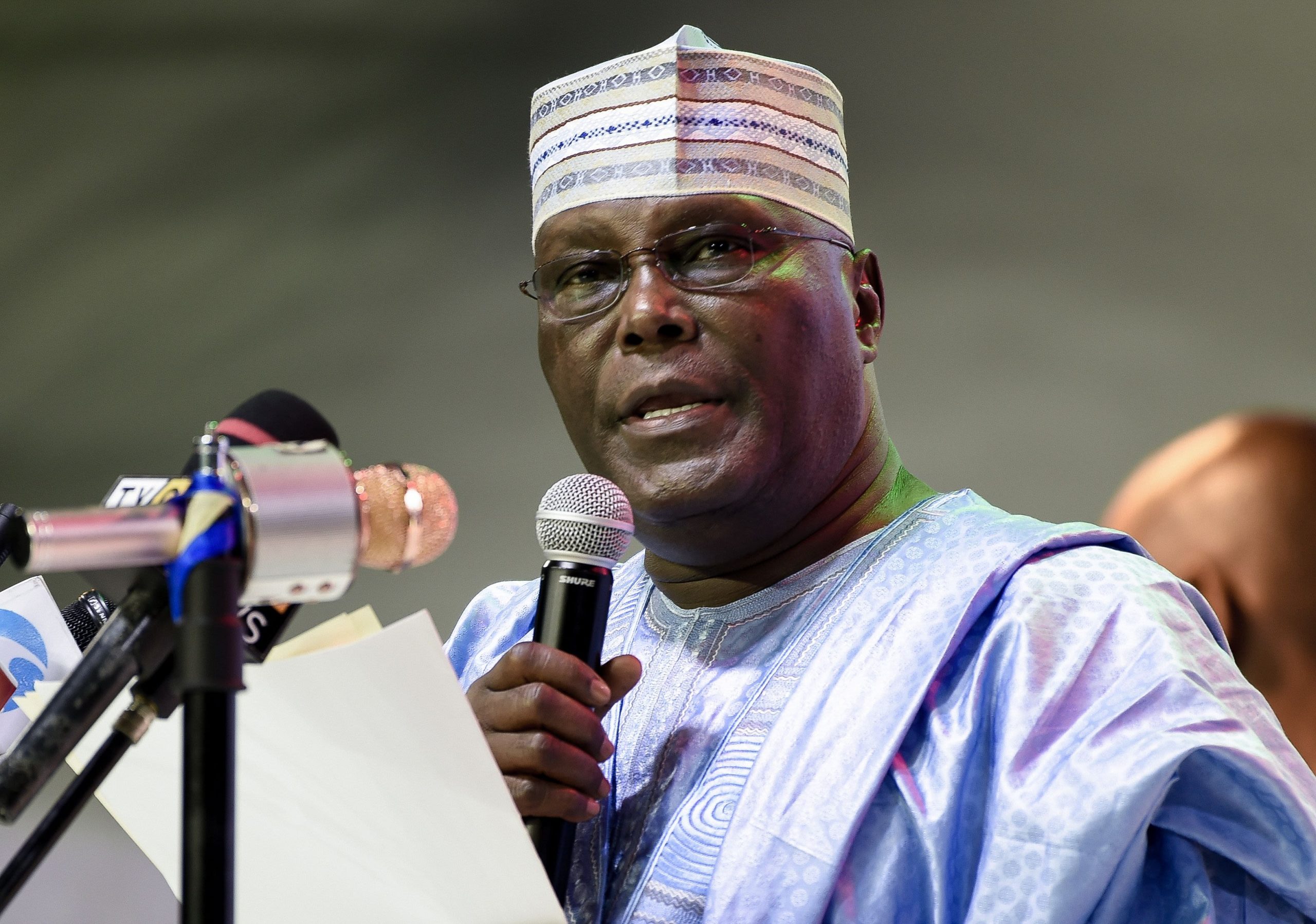
The presidential candidate of the Peoples Democratic Party (PDP), Atiku Abubakar, is reportedly holding a closed door meeting with the governors of the party in Abuja.

This is however coming not long after the former Lagos state governor, Asiwaju Bola Ahmed Tinubu, was announced winner as presidential candidate in the ruling All Progressive Congress (APC) primaries took place last night.

It was gathered the isses to be discussed include strategies of the presidential campaign with the view to uproot the APC from power in the 2023 general election.

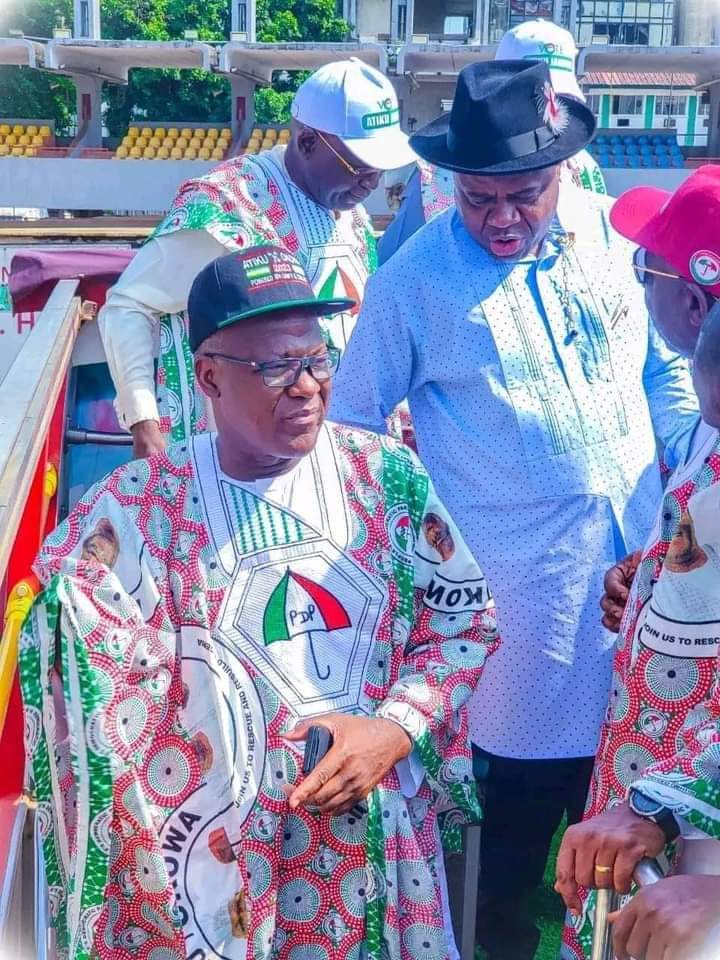
The Daily Reality learnt that some of the governors at the meeting were Samuel Ortom, Sokoto state Governor Aminu Tambuwal and his Oyo state counterpart Seyi Makinde.

Others were said to have been Bayelsa Governor, Douyi Diri, Bauchi Governor, Bala Muhammed, Rivers Nyesom Wike, and that of Benue.

All these are coming as preparations towards the 2023 general election, with all the candidates from different parties trying to emerge winners as the time is due.

Tinubu wins APC presidential primary election

By Ahmad Deedat Zakari

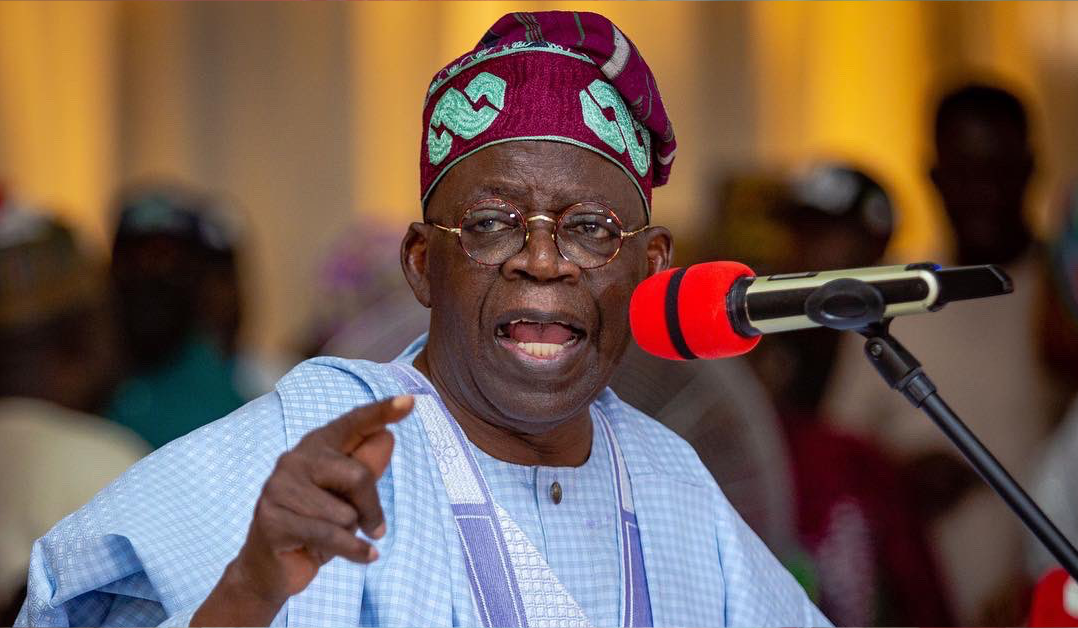
Former Governor of Lagos State, Asiwaju Bola Ahmad Tinubu, has been declared the winner of the All Progressives Congress, APC, presidential primary election. 

APC held a special convention between 6 to 8 of June 2022 to elect the ruling party’s presidential candidate.

Tinubu emerged as the APC candidate at the end of the presidential primary after polling about 60% of the 2300 votes. 

He defeated his closest rivals, Nigeria’s Vice President, Professor Yemi Osinbajo and former Minister of Transportation, Rotimi Chibueke Amaechi, to clinch the ruling party’s ticket.

Tinubu is expected to face the candidate of the country’s major opposition party, Atiku Abubakar, and others in the 2023 general election.

PDP will not win 2023 elections

By Aliyu Nuhu

When I analyze this election, you see some people shouting bias, especially when the prediction did not suit them. I said Atiku would clinch the ticket. I only stated the obvious fact based on my own calculations. It didn’t mean I liked Atiku or disliked Wike. Just that I knew Atiku mastered the art of political brinkmanship and he has experience and wider network and followers above all the contenders. He can’t be a vice president for eight years and run for president the sixth times for nothing.

Now I said Tinubu will take the APC ticket. The wait won’t be long but facts on ground support his candidacy. If it is about winning this election, APC can’t make the mistake of destroying the regional alignment that gave it power in 2015. North and Southwest can work together and cruise home to victory.

PDP will not win this election whether Buhari is popular or not. Whether his government failed to deliver on its promises and rubbished Nigeria’s economy and allowed insecurity to exacerbate people’s suffering is also immaterial. Performance is a good requirement but winning Nigeria’s election is not that straightforward because of the kind of voters we have who are largely poor and ignorant.

Democracy flourishes where there is prosperity and enlightenment among the voters. Stomach infrastructure plays a bigger role in Nigeria’s election. I am saying this to underscore the importance of having governors during presidential election. No party with a sitting governor will fail to get at least 25% of the votes of his state.

In this election APC has all the states where the numbers are concentrated and will surely deliver their states to the party. PDP has only four states in the North.

Having federal government is another big booster to APC. Security agencies always work for the government in power. There is also federal resources from CBN and NNPC and what the ministers will bring on the table from their ministries. Even INEC is working hands in gloves with federal government. APC has a big advantage there over PDP.

Some people will argue why PDP lost election in 2015 when it was in power. It was because the PDP broke to pieces before the election with all the important governors leaving the party. Jonathan was stoned in states where PDP had governors. If you don’t have governors that will work for you, forget presidential election. It is impossible to win Nigeria’s election without controlling states.

The danger of PDP relying on South East votes is that there are few voters there despite the region being notorious for voter apathy. Actions of IPOB will also stop people from voting, this is the reason why I say the region is not important in winning election. This a fact not a support for APC.

Atiku has tenaciously been in the race for Nigeria’s president and with his fierce independece and good health he will outperform other candidates. But this is a moment of truth. He is in the losing party and may have to wait for Tinubu to finish his eight year terms, besides the fact that the North cannot rule Nigeria forever. Power has to go to the South this time, and Southwest for that matter.

Last year I wrote on the biological retirement of older northern Nigerians and after 2023 if you add with years to their ages, most of them will either be in their graves or in their late seventies and eighties struggling with health issues.

Sheikh Nuru Khalid: The way they and I see it

By Bilyamin Abdulmumin

The nation has woken up with yet another round of controversial news, as the committee to the National Assembly mosque, Apo legislative quarters Abuja, deemed it fit to suspend the renowned Islamic cleric Sheikh Nuru Khalil before sacking him later. The committee cited incitement and lack of showing remorse as reasons for the suspension and the final sacking, respectively.

Last week’s Friday prayer sermon the Sheikh delivered was the action that earned him the sack. In the sermon, reeling from the Abuja-Kaduna train attack tragedy, the Sheikh supported a boycott of the upcoming 2023 general election should the government fail to protect the lives of Nigerians. This message immediately went viral to generate a heated debate among the public on social media.

Those who support the message have some reasons. Because it was just history that repeated itself; before the 2015 general election, Nigeria, especially the North, was literally on fire. Amidst the chaos majority of the northern Islamic clerics openly criticized the government of the day – PDP, while drumming support for the opposition – APC.

Fast forward, seven years later, the table has turned. The APC is in charge, and similar to the eve period of the 2015 general election, the insecurity is threatening the country again. So, for this category of view, what is good for the goose should also be good for the gender.

Some try to strike a balance. According to these people, the Sheikh’s sermon was right, but they argue that leadership comes with responsibility. So, a leader with a large audience has both privilege and responsibility. Some of these responsibilities are eschewing opinion, unlike any ordinary person who doesn’t mince words. In other words, the Sheik should have a tread with caution. 

Some categories look at it from the extremism tendency. According to them, some extremists, such as Muhammad Yusuf, the Boko haram leader, started as a spokesperson to the masses. First, he became a fierce critic of the government, but later, when his antics escalated to insurgency, those masses clapping for him became the most victims in the end.

Some sought to politicize the controversy. According to them, the Sheikh has pitched a tent around the opposition – PDP, so they claim he has been a critic of the Buhari government for the last seven years. These critics sealed their arguments with the allegations that the Sheikh was appointed an Imam at a mosque built by Atiku Abubakar, a new Jumu’at Mosque behind the Central Bank Nigeria (CBN) Quarters, Abuja.

The peculiarity of any argument is that if anyone is allowed to explain his view, one will somehow see a reason for their claim. The above four viewpoints on the same thing are good examples.

By and large, if there is anything this raging debate achieved, it is one thing: it made Nigerians forget the series of other pressing issues like the ASUU strike, fuel scarcity, the naira to dollar depreciation, VP Osinbajo, Minister Pantami, and Farooq debates, even the plight of the actual victims of the attack (may theirs be a speedy release, harmless). One Nigerian coined this scenario: “one rising issue after another makes Nigerians forget their suffering; Nigerians live for the moment.”

Bilyamin Abdulmumin is a PhD candidate in Chemical Engineering at ABU Zaria. He is also an activist for a better, informed society.

PDP and consensus presidential candidate

By Zayyad I. Muhammad

The 2023 presidential elections will present to the Peoples Democratic Party (PDP) a golden opportunity to wrestle power from the ruling All Progressive Congress (APC). However, the greatest challenge facing the PDP is how to utilize this opportunity seamlessly by presenting a candidate that can secure for the party sufficient votes throughout the country.  

Today, all indices indicate that the APC’s presidential candidate may come from the southwest. Since 2015, APC’s trump cards have been the north and the southwest. However, the north may be APC’s biggest dilemma in 2023- the party has to appease the north while striking a balance on Nigeria’s complexities- this is where the PDP can take advantage if it plays its own cards very well.

Former Senate President Bukola Saraki, Governor Aminu Tambuwal, and Governor Bala Mohammed, all presidential aspirants on the PDP platform, have kick-started a move for the PDP to present a consensus candidate for the 2023 presidential elections. Saraki said the reason they were pushing for a consensus candidate was to reduce the likely rancour in the process of choosing the party’s flag bearer. Apart from having a rancour-free process, a consensus candidate will give the PDP an opportunity to pull resources together for a common goal. Furthermore, the party will have ample time to campaign for the general elections, as it has eliminated the long and tedious campaign for the primaries.

The big question is, who is PDP’s ideal consensus candidate among all the aspirants? The person should be someone who is well-known, have a network and connection, and is sellable across the country.

As a matter of real politics, the PDP may consider a one bloc vote. That is the Buhari cult-like followers, who, as of now, have undecided votes. The PDP can win the vote of that bloc vote and combine it with its own traditional votes by presenting someone different from Buhari but acceptable to Buhari’s cult-like followers. In addition, a consensus candidate should be someone who knows the Nigerian political terrain –and is acceptable to the common people- someone who Nigerians see as capable of tackling the current problems in the country.

If the PDP agrees to go for a consensus candidate- the party should do this based on certain logic. Firstly, the PDP should analyze the North and Southwest- two parts of the country with the highest number of voters- to define which of them will give the party some cutting-edge advantage. The party should then present a candidate that can bring the votes from that region.

Secondly, as the APC is looking southwest, the PDP should analyze the entire south and do its arithmetic with an open heart on just how to win the election.

Thirdly, PDP’s ideal consensus candidate should be chosen relative to the APC’s likely presidential candidate. It should be someone from the PDP ranks who has the clout, the political structure, the war chest, and the human resources to face any candidate from the APC.

An open discussion among the PDP presidential aspirants can produce good results for the consensus candidate. Though some of the aspirants will fizzle out from the race if the party does not use a zoning formula because their aspirations are based on permutations that the ticket is zoned to a particular section of the country.

Consensus is good for an opposition political party with an opportunity to get power. But some observers are of the view that a primary election will eliminate any hassle for the good candidate- as he may be tied down with many demands from other aspirants and interests.

If the call for a PDP consensus presidential candidate by Bukola Saraki, Governor Tambuwal, and Governor Bala is without any ulterior motive, it will be a welcome and excellent idea for the PDP. Former Vice President Atiku Abubakar said, all the presidential aspirants don’t have issues with each other, once they sit down in a room, they will select the best candidate among themselves. Most political observers said Atiku made the statement because he is fully aware that, as of today, all the odds are in his favour – either consensus or primary election.

 Zayyad I. Muhammad writes Abuja via zaymohd@yahoo.com.