ASUU: FG impoverishes us, no going back on strike
By Abdelghaffar Abdelmalik Amoka
We woke up Monday morning to meet the bold Newspapers’ headlines of ASUU’s 3 weeks ultimatum to FG after the NEC meeting. In response, FG through Ngige promised to disburse the withheld 2019/2020 EAA on Wednesday. Another promise and Wednesday is gone. Of all the none implemented agreements, it’s EAA that came to their mind. Is the 3 weeks ultimatum all about EAA or they feel that another promise of a meager allowance called EAA will calm the nerves of those “poor lecturers”? I guess they are thinking they have impoverished us to that level that we jump on a promise of little “change”.
In December 2020 and a few days before the suspension of the 2020 edition of the ASUU Strikes, an agreement was reached, and with a clause that the failure of the government to fulfill the signed 2020 MoU with the agreed timeline, the strike will resume without any notice. It’s almost 11 months when the strike was suspended and some of us can’t really figure out the part of the agreement that has been implemented.
After 11 months, UTAS is on voicemail and ASUU members have been tactically dragged into IPPIS using their BVN. 11 months and still counting, no information on the renegotiation of the 2009 agreement that involves salary review. While no information on the accumulated EAA till 2019, the 2019-2020 EAA that is part of the 2021 budget is hanging and the year 2021 will end in about 6 weeks.
This reminds me of the last meeting for the strike suspension referendum at the branches. A senior colleague stood up during the meeting to pour out his mind that with his experience from the ASUU and FG negotiations, suspending the strike based on the usual promises and signing of MoUs will be a regret. The opinion of the colleague and other factors may have possibly made the ABU Branch of ASUU to vote against the suspension of the 2020 strike.
After the strike was suspended, I had an encounter with Dr. Salihu Lukman, the DG of Progressive Governors’ Forum on the ASUU strike. He made a comment that is still in my head since December 2020. That statement featured in the conclusion of my book titled: Nigeria’s university industrial unrest and poverty of sincerity. Dr. Lukman said, “We should not deceive ourselves to imagine that simply because there is an agreement, leaders will voluntarily implement it”. Hate him or like him for that statement, the statement has been true and is still true.
It is 11 months after the strike and ASUU members are on IPPIS, directly or indirectly. I doubt if there are any visiting professors in any federal universities, UTAS has been under test for the past 11 months with all the delaying tactics. The highest-paid Professor in 2009 received a net salary of about N450,000, including all the allowances. The salary remained that till January 2020. From February 2020 till date, and despite the minimum wage implementation, the net salary of the highest-paid Professor with all the allowances dropped to N416,000. With the inflation since 2009, the salary of academics was static till January 2020 after which it start to decrease.
And to attain the level of highest-paid Professor with that net salary, you must have been employed as an Assistant Lecturer with a Masters degree on a salary of N115,000 per month (all allowances included), worked for a minimum of 15 years to be promoted to the rank Professor and be on that rank for 9 years. So, to earn N416,000 as a Professor in any Nigerian university, you must have worked for a minimum of 24 years.
In the book that was recently published, I described the 2020 strike suspension as just like a temporary “ceasefire” and that FG will have to be forced to implement the signed agreements with another strike as usual. That is exactly where we are today with another ultimatum that may very likely lead to another strike.
But most colleagues are actually tired of strikes. Despite the 9 months of torture during the strike without salary, nothing seems to have changed and we are struggling more than ever to get home with our take-home pay. Are we ready to go for another round of months without a salary? Will the coming strike be focused on the revitalisation as number one on the list of demands? Or be silent on revitalisation for now and focus on 2009 renegotiation and pursue the review of salaries and welfare of lecturers to a logical conclusion?
The question coming from younger Academics is this: Why the continued fight for the system by academics while most others are fighting for themselves? They are saying that it is time for ASUU to focus on the welfare and conditions of service of their members. They said they feel more comfortable for their salaries to be withheld for a demand for improved salaries and welfare than for the fight to uphold university autonomy and funding which parents and students don’t even think is necessary.
A graduate of physics working in a bank visited the department last week and we got talking and the issue of salaries popped up. I told him our salaries which include all the allowances from Graduate Assistant to Professor and he was like that is unbelievable. He opened his mouth in disbelief. He thought my salary was like N700,000 and a Professor earned something close to a million naira. I could not stop laughing at his thoughts. I told him that those figures only exists in his head and that the reality was the figure I just rolled out. He felt that way because he is about 2 years in the bank and his salary is higher than the salary of a senior lecturer in the University. It made no sense to him. He can’t believe he earned more than a senior lecturer, a PhD holder, that has spent a minimum of 9 years in the University.
Dear ASUU President and ASUU NEC, convincing some ASUU members, especially the younger ones to vote in favour of another strike that will not prioritize their salaries and welfare may be a hard nut to crack. We have suffered enough and still suffering. We are meant to be solution developers but we are definitely not in the right frame of mind to develop solutions. How do you expect an academic to think when his brain is filled with the thought of how to get home with his salary? We need to set our priorities right. This is 2021 and we are living on a salary that is lower than the 2009 salary table. That is not sustainable.
Dear Federal Government of Nigeria, university lecturers don’t need that EAA that they are not sure when it will come but an academic living wage to live a life. Having refused to fully implement the 2020 MoU as Dr. Lukman postulated and some of us expected, ASUU members will be more than willing to embark on another strike to get that academic living wage from the conclusion and implementation of the 2009 renegotiation.
Abdelghaffar Abdelmalik Amoka writes from ABU, Zaria.
By Khadija Muhammad
The national president of the Academic Staff Union of Universities (ASUU), Professor Emmanuel Osodeke, expressed concern over how the Federal Government of Nigeria is handling the demands of the universities unseriously. Together with other union leaders, he expressed their dismay at a press conference in Abuja on November 15, 2021.
The Academic Staff Union of Universities (ASUU) issued a three-week ultimatum to the Federal Government to address all issues as agreed in the December 2020 Agreement.
ASUU President, Professor Emmanuel Osodeke, stated this on Monday while addressing reporters in Abuja.
The president warned that the union might be compelled to embark on another nationwide strike should the government fail to implement the Memorandum of Action signed with ASUU before suspending the last industrial action.
According to the ASUU President, all the issues, including unpaid academic earned allowances and the universities revitalisation fund, have not been addressed almost one year after an agreement was reached.
The ultimatum is part of the resolutions reached at the National Executive Council (NEC) meeting of ASUU held in the nation’s capital.
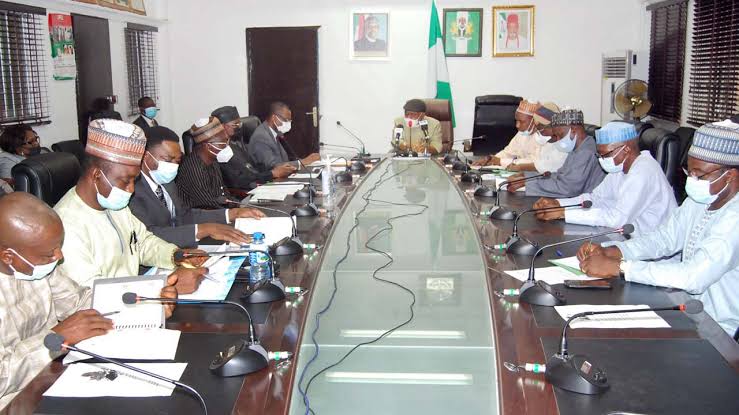
It can be recalled that ASUU embarked on a nationwide strike in March 2020 following its disagreement with the government over the funding of the universities and the Integrated Payroll and Personnel Information System (IPPIS), among other issues. Accordingly, it had proposed the University Transparency and Accountability Solution (UTAS) to replace IPPIS. But in a bid to get the lecturers back to class, the Minister of Labour and Employment, Chris Ngige, convened a series of meetings with leaders of the union and relevant government officials.
Amid the strike that lasted several months and negotiations that ended in a deadlock, the government and ASUU later signed a Memorandum of Action in December 2020. This led to the suspension of the protracted industrial action that lasted nine months. However, not after the government offered a cumulative N65 billion to the lecturers to address earned academic allowances and revitalisation of universities.
On the IPPIS tussle, both parties agreed on the UTAS, while the government would pay the university lecturers’ salary arrears on a different platform.
ASUU had on several occasions warned that it would indeed go on strike if the federal government continued to break the promises and throw away all the agreements reached.
By Zayyad I. Muhammad
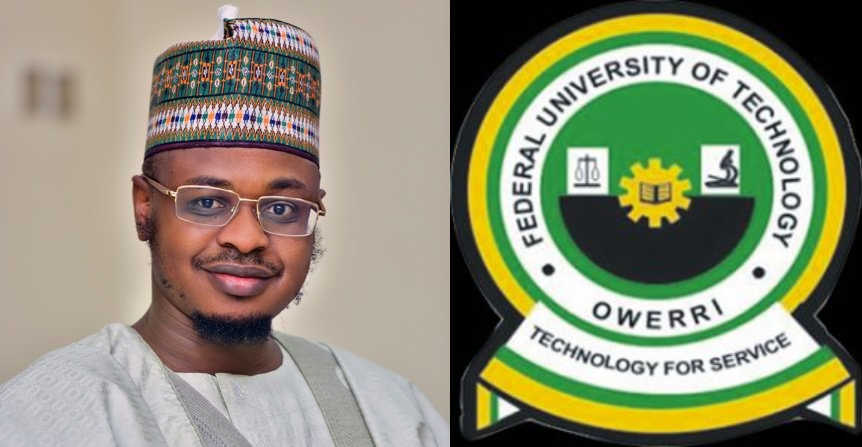
The Federal University of Technology, Owerri chapter of the Academic Staff Union of Universities (ASUU) inaugurated a five-person probe panel on September 22, 2021, to assess the procedures used to appoint the Minister of Communication and Digital Economy, Dr Isa Ali Pantami, as a Professor of Cybersecurity. The panel said due process was followed by the governing council and the management of the university in the appointment. The report by the panel is an interesting one considering the heated public debates generated by the appointment.
Most of the people who criticized the appointment were academics. As expected, the majority of those who supported the critics were Pantami’s political adversaries. Pantami’s appointment supporters were either some academics, his political supporters, and those who sat on the fence.
The verdict by the five-person probe panel certainly gives Pantami and FUTO some respite. His political supporters will be delighted, while opponents of the appointment will fire more because the majority of them are academics. Tenacious criticism on issues that concern knowledge is an attitude of academics.
During the first debate, Pantami’s ‘friend’ Professor Farooq Kperogi said: “There are basically three legitimate ways to become a professor: by climbing the professional ladder in a university; by being appointed to the position from outside academia in recognition of vast and varied industry experience or artistic wizardly in a field; and through a courtesy appointment. Isa Ali Ibrahim Pantami’s record does not qualify him for any”.
However, Prof. Tukur Sa’ad, a former Vice-Chancellor, said, countering Kperogi, “A University can decide to appoint an individual to a position either through promotion or straight appointment based on the criteria they set up independent of the National University Commission (NUC).”
Pantami’s political allies and supporters are delighted with the report of the ASUU panel because they see Pantami as a potential vice presidential candidate with many advantages. To all Pantami’s supporters, his professorship is a big addition to his credentials which his potential rivals don’t have. They believe that Patnami is young, highly educated with a PhD. from the United Kingdom (UK) at Robert Gordon University, Aberdeen.
These supporters add that politically, Pantami is a good ‘material’ to balance a presidential ticket. He is from North-East Nigeria; he fits into the agitation for the northeast to present the vice-presidential candidate in 2023. Moreover, he is a household name in the North-west. They will feel at home with him – he is their cousin.
Additionally, he is an Islamic scholar with vast cult-like followership nationwide. Pantami is Buhari’s strong confidant and ally. The general belief among Pantami’s promoters is; Pantami from the northeast as vice-presidential candidate with any presidential candidate from the south, especially the southwest, will balance a presidential ticket and serve as a strategy for the APC to retain the presidency in 2023.
Nevertheless, academics and oppositions against Pantami’s professorship will continue to hit hard while his political rivals will clap for them. So Pantami and his supporters should be well-prepared for the game.
Zayyad I. Muhammad writes from Abuja. He can be contacted via zaymohd@yahoo.com.
By Hussaina Sufyan Ahmad
The Tertiary Education Trust Fund (TETFund) has announced its target to raise the annual allocation to the National Research Fund (NRF) from N8.5 billion in 2021 to N10 billion in 2022, during a virtual meeting on the marking of the International Open Access Week October which holds October 25th – 31st, Nairobi, Kenya.
TETFund executive secretary, Professor Suleiman Bogoro, stated this for the theme “Democratisation of Higher Education in Nigeria through Open Access.” A meeting co-hosted by the Fund and the Training Centre in Communication, Nairobi.
According to the TETFund boss, following the agency’s proposal, the Board of Trustees’ had in 2019 graciously approved N5 billion for NRF, which was raised to N7.5 billion in 2020 and N8.5 billion in 2021.
“Over the last two and half years now, we have raised funds available for research. There are two categories; institution-based and National Research Fund.
“The institution based has a ceiling of N3,600 US dollars and it is mainly for basic research while the higher ceiling grant of about 92 – 93,000 US dollars is the National Research Fund aimed at promoting applied research. To this extent, in 2019 I made it a case to the Board of Trustees of TETFund to increase the threshold.”
“It used to be a kind of seed money. Seed money of N4 billion for eight years but from the year 2019 to last year and this year, 2021, we have increased it to N5 billion annually. Last year we increased it from N5 billion to N7.5 billion and this year it is N8.5 billion; and we are hoping in 2022 it will move to N 10 billion.”
By A. A. Bukar
Let me preface this with the caveat and confession that part of the reason I recently slow down hobnobbing with professors is my increasing abhorrence of this culture of excessive bootlicking and kowtowing that is creeping into academia and eroding the ideals of independent thought, spirit of free inquiry and detachment that hitherto characterise intellectual discourse. The radical critique of issues and events for the betterment of humanity and irradiating the society is slowly taking a wing, supplanted with overt politicisation of minor issues (and even non-issues). Today, young academics, like myself, are becoming increasingly afraid to express even simple admiration of who they consider as the IDEAL TYPE among their teachers and mentors in academia because of “interpretations”. For this, you can even be reported to the enemy of such a scholar to possibly victimise you “sabida ai yaron wane ne! Ku kyale shi, ai zai zo defence, ai za’ a kawo papers dinsa for assessment”. And on and on. Such pettiness and vendetta. Hence, many – out there – see Nigerian academics as the worst enemies of themselves and are happy with how FG is dealing with them.
Little wonder whether this culture is obtainable in other parts of the world. Departments are compartmentalised into cliques and camps a la political parties in the larger society. Professors are becoming like emirs fortified by sycophants, making them unnecessarily snobbish and covetous of flattery. PhDs are deliberately delayed or tactically killed because a candidate does not BELONG. A blind eye is turned to obvious wrongs, mediocrity, and crass injustice because “our oga” is INVOLVED. Entitlements and privileges (especially of the younger ones) are stampeded to settle SCORES.
A friend sent me a Jumaat goodwill message, a quotation from Rumi which reads: “Listen to silence; it has so much to say”. How many PhD/MSc candidates do you know writhing in silent pain of frustration? Prof sirs and mas: listen to our silences and that shy smile that says “ba komai sir”. When I was an undergrad, I once overheard my teacher, Dr Gausu, talking about one of his colleagues in Economics, Business or Accounting (I can’t remember exactly) who’d become agoraphobic and almost schizophrenic because of PhD manhandling from a senior colleague. Of course, then I was too inexperienced to understand the heck that was about. They sarcastically even refer to the initials as “Pull Him Down”.
Whether this augurs well for generation, production and dissemination of ideas and knowledge typical of the Ivory Tower, I leave it to your imagination.
For these and more, many ideal intellectuals are on the lookout for escape windows from the suffocating atmosphere of poverty and frustrations taking over academia like a thick cloud on the horizon. Many are “diversifying”, hence diverting their attention from the absolute commitment ideal scholarship demands. Others are increasingly becoming nonchalant – that I-don’t-care attitude of: “if the department or unit fuels the generator set, fine, otherwise I teach the SPSS or Word Processing on the whiteboard”. Elsewhere blackboard. So Nigerian hospitals are not alone; medical practitioners are just a cohort.
Despite all odds, I love being at the University. It is a place where I feel I naturally belong. And our campuses are still dotted with the IDEAL TYPE (just as there are IDLE TYPES who do not “profess” any knowledge) that constantly bring back to one’s memory my favourite: Edward Said. Critically engaging. Highly unassuming – like Mazrui. Passionate about nourishing the mind; concerned with the public good and Humanity as a whole. People who will unconsciously make you feel you are far from arriving without making you feel embarrassed. I have recently met and enormously admire one such intellectual is Professor Abubakar Mu’azu of the Mass Communication department, UNIMAID.
Interpret this one too the way you like. Report me anywhere. Land me into trouble. I no longer care. But Allah knows whether this is coming from the bottom of my heart or elsewhere. Such as an attempt to curry favour.
After all, what use is admiring people if you cannot tell them or others you do? Or should we hold on till they are no more? Wouldn’t that serve as a token of encouragement to maintain the course and tempo against all odds?
I have earmarked a few other similar intellectuals I will write about in due course on this space. I will unburden my heart about people I feel positively towards. Yes, I will specify those who fit my definition of the ideal intellectual. Part of this is, of course, honesty. Wallahi, no matter how engaging you are, you are out of the equation once it comes to the light you are dubious and too self-centred. If you’re extorting money or sex from your vulnerable students, you cannot be my model. But again, I am not looking out for an angel.
Back to the subject, I have met with Prof Muazu only a few times. One was when he came as an external examiner to my thesis in April 2018 and some months earlier as an accreditation team member for the college I taught in Yobe state. The last, some weeks back. Each, he left me with nothing but admiration and deep respect.
When I phoned my referee and supervisor at undergrad, late Prof Maikaba, to congratulate him on his last promotion, he typically enquired about the progress of my thesis. I told him then, “I was done with viva yesterday and effecting corrections now”. Curiously, he returned with a finder about the examiner. When I replied that it was Mu’azu, he said: “kace an sha aiki”. Toh Bukar. PhD beckons. You can’t wait, especially for one in this business. He admonished me as usual; I giggled, thanked and said my goodbye.
I don’t know whether it’s appropriate to reveal this too. Some hours before the viva voce, my supervisor, Dr Binta Kasim Mohammed, called alerting me “to prepare very well. Because the external examiner brought is extremely thorough and critical”. Sir, you are appreciated and held in high esteem not only by nonentities like us but also by your colleagues. But my assessment of you from afar is that: these things matter little to you (if at all) – out of humility.
From both you and the late Maikaba, I graduated with distinction. But each time we met, you left me feeling inadequate, making me wonder ‘when will I arrive?’. Parts of this are the books you recommend, which I never read, or know not exist. But somewhere in WHERE I STAND, Sheikh Gumi has opined along this line that knowledge is such enigmatic that the more you learn, the more you realise that you know very little. I wonder whether you feel something similar sometimes. Yes, despite the accomplishments. In just your last visit, you recommended, as the situation warranted, many texts. Among these are Peter Winch’s THE IDEA OF A SOCIAL SCIENCE AND ITS RELATION WITH PHILOSOPHY. Then the POSITIVIST DISPUTE IN GERMAN SOCIOLOGY. The latter is such a rare collection – in fact, my first time to meet Adorno, Habermas and Karl Popper in one place. Both books remind me of similar stuff I read from the staple of Claude Ake and Yusuf Bala Usman of blessed memory.
In this vein of characteristic modesty, you specifically asked me to read Ben Bagdikian’s MEDIA MONOPOLY after the viva voce in order to steel my argument on the influence of profit drive in media content production. A copy of my thesis still carries your adorable handwriting suggesting the title and other points. But little wonder you never drew my attention to the fact that you have written extensively on media in peacebuilding until my curiosity took me to the internet and a bookshop where I stumbled CONFLICT MANAGEMENT AND THE MEDIA IN NIGERIA – a book coedited by you and Gani Yoroms. This was despite your awareness that my thesis is squarely about this matter of controversy. Quite recessive indeed.
With the crisis engulfing Nigerian Universities (the worst I have ever seen) and academics running helter-skelter for greener pasture, I equally wonder what becomes of the academia after the few of you that remain out of passion pass on to something else or the inevitable great beyond. And especially if this maddening ill-treatment continues from the federal government. Allah Ya kiyaye, amin.
Bukar teaches Mass Communication & Journalism at Ahmadu Bello University, Zaria.
By Uzair Adam Imam
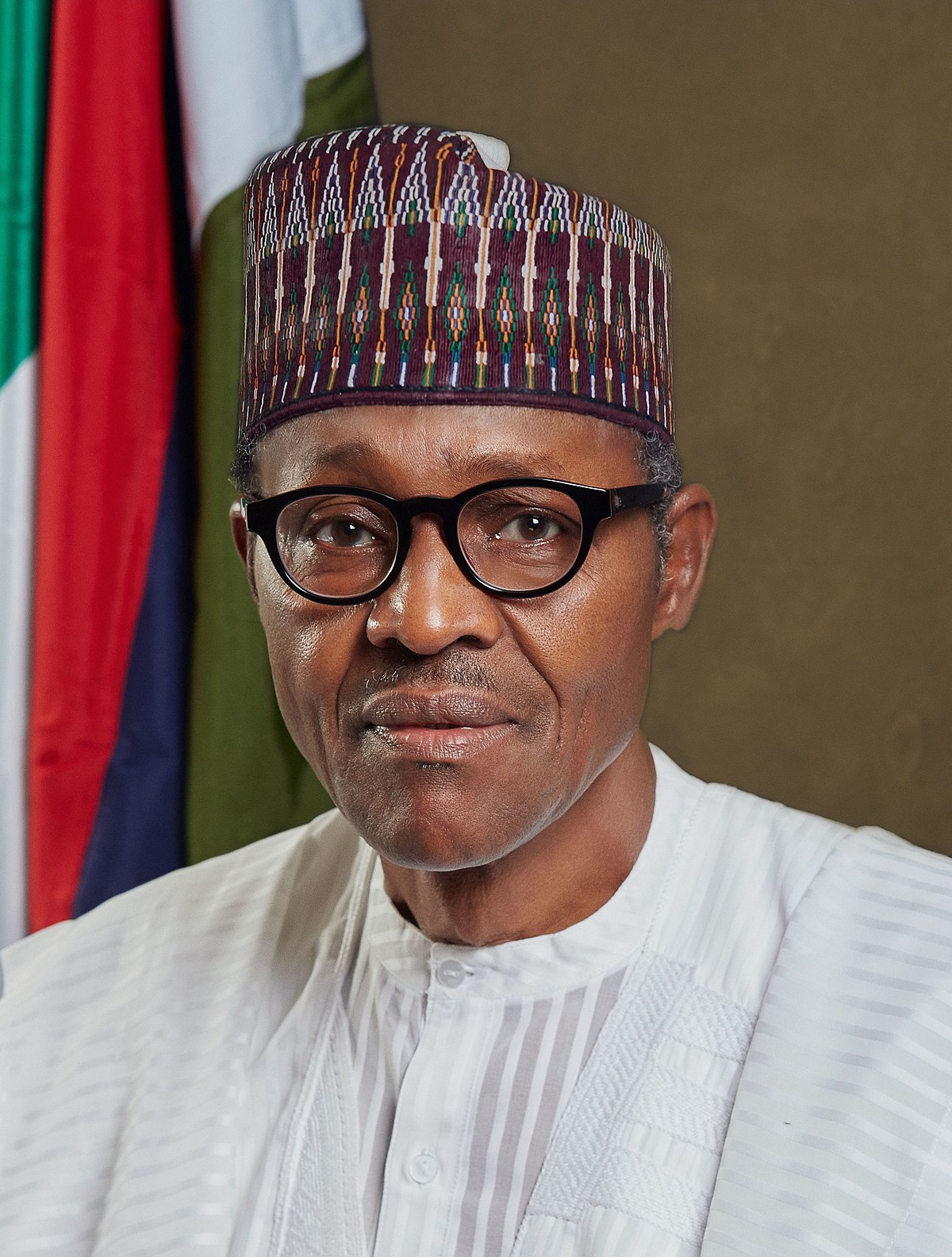
President Muhammadu Buhari has appealed to the leadership of the Academic Staff Union of Universities (ASUU) to embrace peace, stating that Nigerian universities have had enough strikes.
Buhari, who was representated by Professor Ingnatuis Onimawo, made the plea on Saturday, 23-10-2021 as he was delivering a speech at a convocation ceremony in the University of Ilorin.
The president also stated that the dialogue is always better than the conflict as no any gain ever driven from crisis.
However, he added that a lot of time had been wasted as a result of Corona virus pandemic, thereby saying the university system cannot afford to withstand any crisis now.
“The university system cannot withstand any crisis now considering the time it had lost to Coronavirus pandemic,” he said.
Speaking on the issue of Corona virus, the president said: “I expect our universities to conduct researches targeted at discovering an antidote to it. Universities are expected to focus their research on challenges facing our societies and find practical solutions within the context of national development.”
“I therefore challenge the Universities to give their best in the fight against this common and unrelenting enemy of humanity. I enjoin our researchers to collaborate among themselves and look forward to bringing an effective solution to this medical challenge.”
“The nation expects University of Ilorin to play a leading role in the research efforts to develop Covid 19 in Nigeria.
“The nation expects nothing less from the Nigerian University system”, he added.
By Abdelghaffar Abdelmalik Amoka
The presence of ETF and later TETFund became more visible after the suspension of the 2009 ASUU strike in October 2009, thanks to the ASUU strike. You enter the campus of some universities, especially the state government-owned universities and it appears as if TETFund is the only funder of the infrastructures in the universities. No wonder Professor Mahmood Yakubu’s NEEDS Assessment committee referred to them as “TETFund universities”.
The intervention from TETFund did not end on infrastructures and other physical projects but also on training. Quite a number of University academic staff obtained their PhD abroad, thanks to the TETFund Academic Staff Training and Development Intervention and ASUU. That ASUU’s achievement has increased the number of quality PhDs across the departments in our universities. About 6 colleagues in my department are beneficiaries of the TETFund PhD grant.
It did not stop at that. TETFund has also established research grants. The TETFund Institutional Based Research (IBR) grant for basic research and the TETFund National Research Fund for developmental research.
When TETFund announced the call for the 2016 National Research Fund (NRF) grant proposal submission, I got it forwarded to me by several people that knew I was passionately looking for research grants to set up my lab since my return from Europe to ABU in September 2015. I was excited with the call for proposals and I prepared my proposal and submitted it with others. It was well coordinated by the university, thanks to the efforts of Prof. Husseina Makun and the Directorate of Academic Planning and Monitoring of my university.
Not long after then, there was a change in the leadership of the agency and I never get to hear anything about that submission to date. My guess was that the usual Nigerian factor may have played a role and you possibly need to know somebody that knows another body that knows someone that can help facilitate it.
The call for the submission of a “concept note” for the 2019 NRF grant after your return did not excite me. I was informed by several people but I ignored it. I was like this is a repeat of what I called the “2016 call for grant proposal scam”. But few days to the expiration of the call, I decided to make a submission, after all the application doesn’t cost anything. It will only cost my time and effort. I was actually not expecting a response like it happened in 2016, but a few weeks later, you “shocked” me as I received an email requesting to submit the full proposal. I did, and a few weeks later I got an invitation to Abuja to defend the proposal. In January 2020, the grant award letter was issued.
That was the first very transparent exercise I have participated in in Nigeria in recent times. No personal contact. All correspondence was through email and you don’t have to wet anybody’s palm. Unbelievable! That exercise gave me a renewed hope that with responsible leadership, we can make every unit work as it should and the sum will make Nigeria work. Sir, you renewed my hope that Nigeria is going to work and we can regain the lost glory in academia.
TETFund is making a lot of impact in public universities even though some universities may not get the true value of the allocated funds due to several reasons including the possible manipulation of the procurement process. TETFund is also doing a lot to build research capacity in our universities and over the last 10 years, the number of quality PhDs has increased. But my worry is that these researchers may end up being more frustrated if they get back without the necessary research facilities and incentives to give back to the system.
The TETFund PhD training scheme is a train-the-trainers program but there seems to be no preparation to utilize the knowledge acquired by these scholars on their return. We seem to be just training without any provision for their return. The scholars were sent for training as researchers but returned to meet little or no improvement on research facilities. So, how do we intend to utilize these well-trained scholars that have returned?
Their research work seems not to be well coordinated, unlike the NRF grants. They are mostly not towards the critical needs of the country. Some of the scholars who have got no idea of what to work on may sometimes end up using our fund to implement the supervisor’s idea. The idea may not be something that is of very importance to our country. Going abroad for quality research in that state-of-the-art laboratory but on research that does not tend towards our national need and without adequate provision for their return will make them more frustrated on their return.
Quite a number of PhDs in our universities, colleges of education, and polytechnics trained over the last 10 years are TETFund Scholars. Thanks to the overseas training scheme. The question then is; What is the strategic plan for the scheme? How long is the scheme meant to last? When is it going to end? What are the exit plans?
A lesson from other countries.
During my PhD, I met a number of Malaysians doing PhD at the University of Southampton. One of those Malaysians was on 3 months research visit to the lab I did my PhD. They were all on a Malaysian government scholarship. They have all returned to their respective universities in Malaysia with well-established laboratories and access to funds for research. Most of the funds for PhD training are in Malaysian universities.
Malaysia now earn foreign exchange from international students, especially Nigeria students. These my colleagues and contemporaries in the UK universities are among the researchers/Lecturers training my Nigerian university colleagues that have gone to Malaysia to study. What is the difference between us and them? They return to a functional lab but we returned to an empty space and we are struggling to build a lab. Our situations are different because their training and return were well planned out. What are the plans for our trained colleagues?
It is possibly time to re-channel the funds for overseas scholarships to funded PhDs in our universities.
South Africa has National Research Foundation (NRF) that gives grants for research PhD training in South African universities. NRF is so well established that they are collaborating with DAAD in Germany for a funded PhD in South Africa. There is also the TWAS-NRF funded PhD but in South African university. We can take a lesson from that
The Research Council of Norway usually contributes 50% of research project funds while the other 50% is from industrial partners, but the condition on the government 50% is to train a PhD or postdoc in Norwegian university. Norwegian universities are tuition-free like Nigerian universities. The grant covers living costs, travel, conference attendance anywhere in the world, etc.
There is the UK Research and Innovation (UKRI), Engineering and Physical Sciences Research Council (EPSRC), that provides UK universities with grants – awarded through a competitive process – to cover the fees and living costs of postgraduate students. Each place a university offers as a result of this funding is called a studentship. Application for the studentship is done through the university you want to study.
These countries would not have being able to comfortably execute research and training without capacity building. We surely need capacity building scheme and TETFund and PTDF have done great in that respect. But the scheme should have a well-defined timeline. At the expiration of the timeline, the overseas scholarship should be converted to full national scholarships for the trained scholars to train PhDs in funded laboratories in our universities. Forex is already becoming a big challenge. The funds are then domicile here rather than shipping the fund out.
TETFund may need to produce a database of their scholars in the various tertiary institutions in Nigeria and even the ones that have refused to return to the country. There should also be a database for successfully completed TETFund NRF projects and their Principal Investigators. The TETFund Academic staff training and development intervention can then be converted to Nigeria’s university-based training. Scholars are only sent abroad for subjects that we lack expertise in Nigeria.
So what do we do?
We can adopt the German model. To get a DAAD-funded PhD training in Germany, you must first get a supervisor in a German university that is willing to work with you. With the consent of the supervisor, you can then apply and the application is endorsed by the supervisor.
In our case, the prospective TETFund PhD scholar will first get a supervisor from TETFund recognized researchers/Professors. Application is then made through the university and endorsed by the prospective supervisor. If the scholarship grant is like 20 million naira, for example, up to 10 million naira can be mandated for laboratory equipment, the rest will be used for living expenses for the scholar, International conference participation, purchase of consumables, etc.
You can imagine the value Dr. Mansurah Abdulazeez will add to the existing facilities for Cancer research in their Biotech lab in BUK if they are awarded the 20 million naira by TETFund to train 1 TETFund scholar each year for the next 10 years. That will be another investment of about 200 million naira in our university that would have being taking out.
Just a little effort and we got the Materials Physics Research lab. Imagine getting 10 TETfund scholars to train over the next 10 years in high voltage materials engineering and 50% (about 100 million naira) of the PhD grant is approved for research facilities. Unlike the PhD done abroad, the facilities procured during the PhD will remain in the Nigerian university for others to use after the PhD. Just imagine how the lab will be in the next few years.
I was at the Biotech lab at IAR, ABU Zaria last year, I saw the IAEA-funded research facilities, and I was like wow! Just imagine the steady growth of the lab, research output, and visibility if Prof Husseina Makun for example, gets the funded PhD scholars to work with instead of taking the money to universities abroad. We have quite a number of serious-minded researchers among senior colleagues across our university and a large number of bright and exposed early career researchers.
We have trained enough PhDs abroad over the last 15 years through PTDF, TETFund, NITDA, etc that are back and capable. Some of them are not doing badly even with all the challenges as they have been able to publish quality papers in indexed journals. I want to believe that we can give quality training to PhD scholars in Nigeria.
We have several challenges in Nigeria that the universities can develop solutions for. But personally funded PhDs cannot give that quality PhD research to achieve that. I advertised 2 research topics on my Facebook page recently and I got responses from prospective research students. But the question they were asking was; is it funded? Some of the people that responded are students that received their MSc abroad.
A timeline should be rolled out on when to end the overseas scholarships and focus on using the fund meant for that to further develop the research capacity of our universities to make them attractive to foreign students. It is time to keep the money at home to develop our research and development capacity and use PhD programs to find solutions to our numerous problems.
Abdelghaffar Abdelmalik Amoka