ASUU

Pantami’s ministry and NITDA responsible for prolonged strike, says ASUU

By Ahmad Deedat Zakari

The Academic Staff Union of Universities (ASUU) has asked Nigerians to hold the Ministry of Communication and Nigerian Information Technology Development Agency (NITDA) responsible for the lingering impasse between ASUU and the Federal Government.

ASUU Zonal Coordinator, Buchi Zone, Professor Lawan Abubakar, briefed reporters on Monday, March 4, 2022, in Jos, where he alleged NITDA is misleading Nigerians on the credibility and acceptability of UTAS which he said has passed the integrity test. 

“Ironically, NITDA, in conjunction with its parent Ministry (The Ministry of Communications where Pantami is minister), is seriously sabotaging the government at resolving the impasse. This is obviously capable of prolonging the current strike, thereby bringing untold hardship on Nigerian University students and the University System.” Prof. Abubakar stated

He further explained that NITDA, who scored UTAS high in the past, can not suddenly say UTAS failed integrity test. 

“After scoring UTAS this high, NITDA went further to contradict itself by making a fallacious statement that UTAS has failed integrity tests. The union wonders how a score of 97.4% will amount to failure.

“The Union still agreed to another Test by NITDA on March 8, 2022, in the presence of observers front the Federal Ministry of Education/National Universities Commission (NUC), Federal Ministry of Finance/OAGF, Federal Ministry of Labour and Employment and the National Salaries, Income and Wages Commission.

“This most recent test still scored UTAS 99.3% in all the Tests metrics. ASUU is Therefore surprised that NITDA, having scored UTAS this high on two different occasions, unpatriotically went to the press to deliberately mislead the public into believing that UTAS has failed Integrity tests again.” Prof Abubakar clearly explained.

Therefore, he called on Nigerians and the Federal Government to call the Ministry of Communications and NITDA to order to resolve the labour crisis.

Automatic employment to first-class graduates will worsen Nigeria’s dwindling education system

By Ambali Abdulkabeer

During a plenary on Wednesday a couple of weeks ago, a member of the House of Representatives, Emeka Chinedu Martins, moved a motion titled Need to Grant Automatic Employment to First Class Graduates. It means that all first-class graduates in Nigeria should be given automatic employment. He stressed that the move would minimize the rate at which intelligent graduates troop out of the country on a daily basis in search of better opportunities abroad.

He also argued that Nigerians would be discouraged from seeking admission into universities abroad in the hope of getting well-paying jobs upon their graduation. But, much as fabulous as this motion appears on the surface, it will lead to a total collapse of Nigeria’s already battered university education. Here is why.

It is a simple fact that university education in Nigeria has changed from being a source of automatic access to decent jobs. In the past, people with university degrees were begged to take up well-paying jobs right from school time. Upon graduation, opportunities surfaced in numbers because there were already places in government and private institutions in need of their priceless knowledge and skills. In Nigeria today, given the terribly saturated labour market due to the government’s continued irresponsibility, graduates, including those with first-class, roam the streets in search of good jobs that are not available.

This reality is worsened by the culture of ‘job sale’ which affords well-to-do individuals and politicians the illicit opportunity to buy jobs for their children and their mistresses, usually at the expense of brilliant but poor graduates. As this continues to drive employment philosophy in Nigeria’s public and private institutions, graduates seek opportunities elsewhere because they no longer believe in the system.

Should the motion transmogrify into law, the entire university system will completely pass as where everything goes only for students to graduate with any class of their choice. In other words, one of the dangers of the thoughtless move is that the university certificates will become ruthlessly commodified. Students that know their way will graduate from settling lecturers for good grades to going to any length to secure a class they don’t deserve, thereby rendering university education more irrelevant than it has been.

Consequently, recruiting empty-headed first-class graduates into severally sensitive government institutions means that the country will be in more disaster. After all, it’s no longer news that Nigeria is notorious for the culture of placing the wrong hands in the right places or vice versa. That’s why both federal and state civil service systems are rife with people that constitute a threat to the country’s progress.

Automatic employment to first-class graduates, needless to say, isn’t a bad idea at all, but that is in a country with a serious, trustworthy and top-class university education system. But unfortunately, Nigeria’s university system is grounded in systemic crises ranging from corruption, lack of human and material resources and others. This is manifest in the ongoing closure of universities due to the ASUU strike emanating from the government’s poverty of sincerity in public education and lack of interest in the welfare of lecturers.

In lieu of giving automatic employment to first-class graduates, the government should be advised to start fixing our dwindling education system first. They should begin to place a premium on genuine education as the foundation for the prosperity the country urgently demands. The fixing should start with a cosmopolitan review of the university curriculum to align our system with the 21st century.

Moreover, it won’t be a bad idea for the government to learn from the education systems of developed countries of the world while working tirelessly and sincerely to strike an innocuous balance between our reality and what our education system deserves to be globally competitive. If truth be told, a university education that graduates cannot leverage to live a decently meaningful life is an embarrassment.

Government must cease being wasteful and corrupt. A considerable amount of money diverted to fund irrelevant projects such as elections should instead be used to rejig our deteriorating education system. Nothing is as depressing as the fact that most Nigerians don’t have a smidgen of belief in the ability of the county to make their dreams a reality. That is why they prefer staying in countries other than Nigeria.

On a final note, what kind of illogical plan deems a crop more critical than the soil that produces it? This question analogically says a lot about the thoughtlessly greedy perspectives of our leaders who are supposed to lead us in the match to make our education system enviable and standard.

Ambali Abdulkabeer is a writer and critic of contemporary writing. He can be reached via abdulkabeerambali@gmail.com.

ASUU NEC members to meet tomorrow amidst one–month warning strike

By Muhammad Sabiu

The Academic Staff Union of Universities (ASUU) will meet on Sunday for its National Executive Council (NEC) to assess the ongoing strike and determine the appropriate action to take next.

The union’s president, Emmanuel Osodeke, a soil science professor, stated this on Saturday but did not provide details about the scheduled meeting.

A member of the NEC who did not want to be named to avoid sanctions, however, indicated that the meeting would be held in Abuja.

Recall that about a month ago, the union declared a one-month warning strike to mount pressure on the Federal Government to have its promises fulfilled.

Therefore, tomorrow’s meeting is the determinant as to whether the strike will continue or not.

ASUU strikes: Many students may opt to “yahoo-yahoo” and other crimes

By Ahmad Deedat Zakari

It is the grass that suffers when two elephants fight. This is the sad situation of students in Nigeria’s public universities. Students find themselves suffering anytime ASUU goes on strike.

The innocent Nigerian students bear the brunt of the impasse of the duo – the Academic Staff Union of Universities (ASUU) and the federal government. At the end of every fight for a better condition of service by ASUU, their remuneration is paid, but the students are left to compensate themselves for the time they lost and the emotional trauma caused by the strike.

As legitimate as ASUU’s demands may be, keeping students at home to pursue these demands does not appear logical to me. As for the government, their attitude reminds me of Gbemisola Adeoti’s poem, “Ambush” where the literary genius described the land using many metaphors to demonstrate how dreams are murdered.

Students dreams are unceremoniously halted whenever ASUU embarks on strike. Some lose interest in education altogether, and others continue with less enthusiasm. Clichés like ‘school na scam’ seems to then make sense and many students embrace crimes like cyber fraud popularly known with the sobriquet ‘yahoo yahoo’ as an alternative to education. This is among the many problems usually caused by strikes.

Adeoti was right in his poem when he said, “The land is a giant whale that swallows the sinker, with hook line and bait aborting dreams of good catch fishers turn home at dusk blue peter on empty ships” Many students often try to escape this land that consumes dreams, they seek education in small neighbouring countries like Togo, Niger and Ghana etc. Some stay back to attend private universities they can afford while politicians and wealthy people send their children to Europe to get education. ASUU’s strike is not only demarketing our public universities in Nigeria. This attitude slowly kills the dreams and the universities, as anyone with a choice will not consider the option of attending one.

ASUU’s strike put students at a disadvantage in the pursuit of their progress, happiness and other life aspirations. It causes them unnecessary delays. They watched their peers in private universities graduate and take on the next steps in their lives while they are consoled with the saying that God’s time is the best. The Nigerian student is often stared in the face with the reality of George Orwell’s saying that “All animals are equal but some are more equal than others. A country that is seemingly careless about the education of its people is breeding the ground for poverty and crimes.

Quality education is no doubt the key to the greatness of any nation. But, sadly, it is not on the priority list of our leaders. While the government takes the most considerable blame for why universities are always on strike; we cannot wholly excuse ASUU for their complicity in killing the university education in Nigeria by going on regular strikes which often leave students stranded and confused.

Please ASUU change your strategy, we suffer every time.

Ahmad Deedat Zakari can be reached via ahmadzakari111@gmail.com.

ASUU vs FG: A solution to the university revitalization fight

By Professor Abdelmalik Abdelghaffar Amoka

ASUU in 2008, provided pictorial documentation on the state of infrastructural decay in public universities to the Federal Government (FG). After several struggles and strikes, FG put together a Committee on the NEEDS assessment of the public universities, headed by Prof. Mahmood Yakubu, the then TETFund Boss. Prof Mahmood Yakubu’s committee after a thorough work recommended that 1.3 trillion naira is required to revitalize all the public universities (Federal and State universities) to make them suitable learning environments for the normal human being.

Just like the 2021 visitation panel report and the 2021 report of the renegotiated 2009 agreement, the NEEDS Assessment report was dumped somewhere till ASUU declared another strike in 2013 for the report to get attention. An agreement was then reached between ASUU and FG after the 2013 strike that the fund will be spread from 2013 to 2018. GEJ’s government released 200 billion naira for 2013 before he was voted out and Buhari’s government took over in 2015. As of 2013, Gen Muhammadu Buhari, Mal. Adamu Adamu, Mal Nasiru El-Rufai, Alh Lai Muhammed, and APC as a party believe that the government of Jonathan was “irresponsible” for their failure to implement the agreement reached with ASUU on public universities. They gave all sorts of convincing supporting reasons why FG can meet the demands of ASUU. El-Rufai was in OBJ’s government and he knows how government works. So, hypocrisy did not come to people’s mind, they didn’t see any point in doubting his position and his 2013 post on the ASUU strike went viral.

The general public is always on the fence during these fights for university revitalization. Some choose who to support based on where their loyalty lies at that moment. That is the reason why those who were against the FG on the ASUU strike in 2013 and now supporting FG on ASUU strike on the same issues. Since 2015, the APC government has refused to release the funds for public universities. After about 4 ASUU strike actions for the last 7 years of the government of President Buhari, they have not been able to release up to 100 billion naira for universities revitalization. Meanwhile, they are adding more universities.

There is this class of public school beneficiaries that believe that FG does not have 1 trillion naira to fix our universities to make them attractive to any student except through the introduction of tuition fees. But some of us think that the people, including civil servants, are too poor to afford tuition for University education, else it will become an elitist institution. Public schools produce us and some of us are super-rich. So, if we believe that FG is actually broke to fund education, then we can intervene to revitalize the public universities in the interest of national development and for the love of the country.

Nigerians are cheerful givers. Our business moguls, media celebrities are fond of gifting their friends. Not sure if it’s for show-off. For example, Nightlife boss, Obinna Iyiegbu, popularly known as Obi Cubana got cash and other gifts worth over 250 million naira for his mother’s burial in July 2021. David Adeleke, popularly known as Davido in November 2021 raised 200 million naira within hours that he donated to the orphanage. I recently saw an unconfirmed impressive list of donations for the Attah of Igala coronation from my brothers. There are several of such donations. This is evidence that Nigerians are cheerful givers.

Nigeria’s generous donation of one million dollars to the Humanitarian Trust Fund for Afghanistan shows that even the government is generous. Only a cheerful giver will use 100 billion naira to rehabilitate non-functional refineries that are still not functioning. Only a cheerful giver will pay 69 billion naira as salaries to refinery workers that generated zero revenue and only go to work to warm their office chairs.

The public primary school system is dead, the public school system is dead, and the public university system has nearly collapsed. But why don’t we extend this generosity and cheerful giving to the education of the ordinary Nigerian? why can’t the elites donate a fraction of the money they sent abroad to educate their kids?

The agreement in 2013 was for FG to release N210 billion naira every year for 5 years. 9 years later, not up to 23% of the fund was released to the universities after 9 years. Maybe FG is actually broke even though they are establishing more universities and the key players are getting richer. A poor and broken man doesn’t add to his responsibilities.

Let’s apply the principle of our supposed generosity and cheerful giving to solving our education problem. Let’s open a public schools revitalization endowment fund. Let’s get 100 thousand cheerful givers from politicians, businessmen, captains of industries, Bank CEOs, celebrities, and the noisy “Abroadians” to donate 200 thousand naira every month for a year. That will give us 240 billion naira revitalization fund annually. Do that for 5 years and we’ll have 1.2 trillion naira to revitalize public universities.

Put up Board of Trustee and Fund management team from the donors to ensure that the fund is shielded from mismanagement. Nobody wants to see his money misused. Then, ASUU won’t have to go on strike for revitalization and will limit ASUU’s demands to welfare. The government won’t be looking for tuition fee that is not there or students’ loan that is not sustainable, students won’t have to stay at home for months due to strike. The university will be good enough for our big men that ship our money abroad. The industries will get a quality workforce. The universities will be attractive to international students and we’ll start earning forex from education.

But unfortunately, our cheerful giving in Nigeria does not extend to public education. Public education made us and we are either part of those destroying it or watching it destroyed without any slight resistance. It’s like a case of climbing to the top through the public education ladder and destroying the ladder after getting to the top. And unfortunately, the supposed middle class, a class that is nearly wiped out, that needs the ladder is afraid of the oppressors but blames ASUU.

Amoka is a social analyst, prolific writer and a Professor of Physics, Ahmadu Bello University, Zaria, Nigeria.
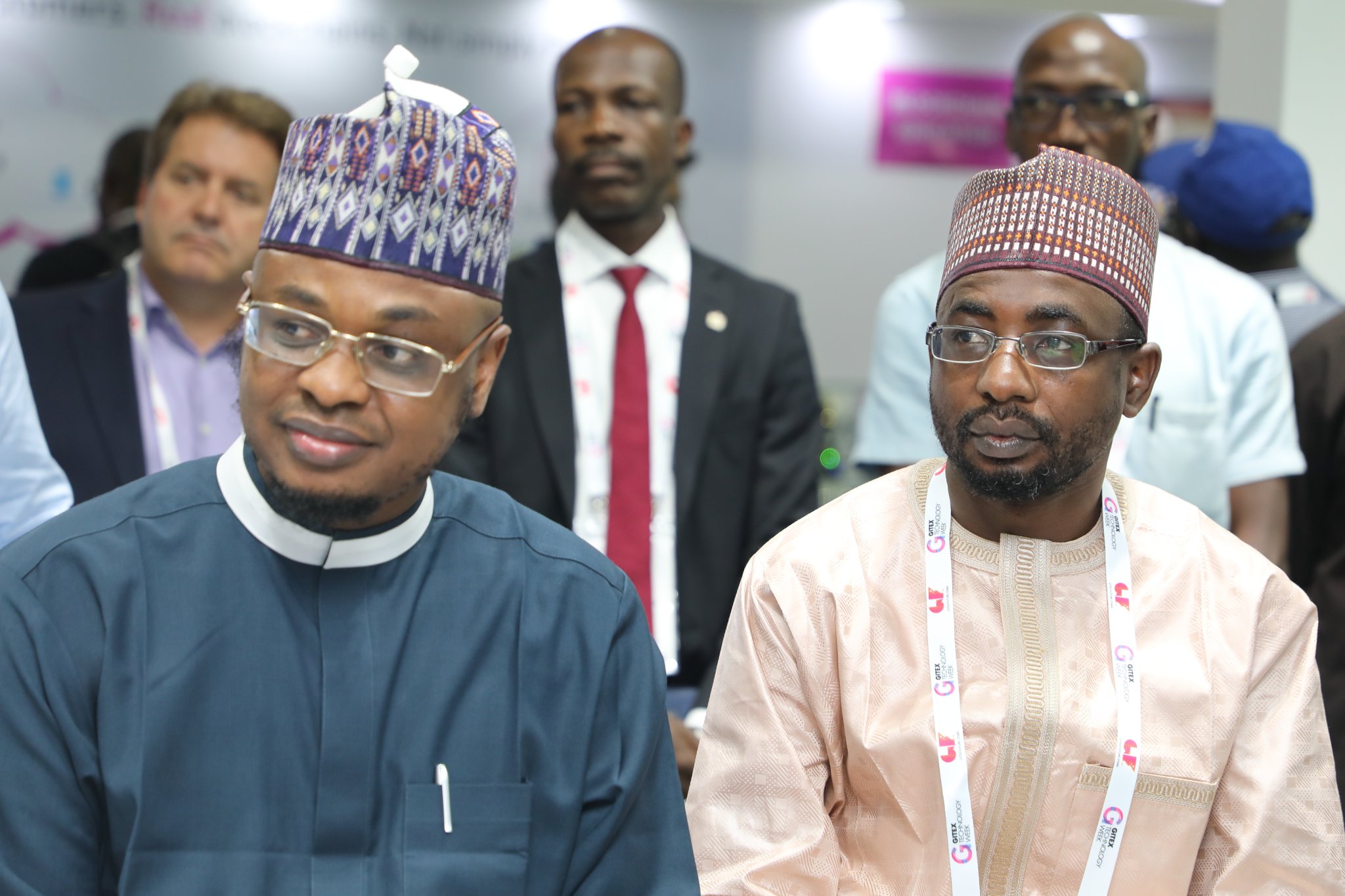
Adamu Adamu, public service, critics and the rest of us

By Abubakar Suleiman

“Why waste your money to study your family tree? Just go into politics, and your opponents will do it for you free.” – Mark Twain

The Minister of Education, Adamu Adamu, has become the subject of public scrutiny lately, after members of the Academic Staff Union of Universities (ASUU) deserted university classrooms for a one-month warning strike to drive home their demands.

To compound Mallam Adamu Adamu’s ordeal, the National Association of Nigerian Students (NANS) President, Asefon Sunday Dayo, threw decency, good English grammar and coherence to the dogs and confronted him for the way forward on these incessant strikes. The Minister, within his rights, could not stomach zingers from the NANS President; hence, he peacefully walked out.

What the Nigerian academics and critics need to crucify Adamu any day is to comb his past articles on the sorry state of education in the country and the possible solutions he highlighted in addressing the anomaly, notwithstanding the practicability or sustainability of the solutions. Blessed with astonishing writing prowess, Adamu doesn’t pull punches whenever he decides to take the government of the day to the cleaners on education.

Mallam Adamu is not alone in the blowback of past written or spoken words. Isa Ali Pantami, Reno Omokri and Reuben Abati are good examples of how venturing into public service can force critics to chew some of their words or elegant analyses raw. They get to see, first hand, the depth of the rot in the system they seek to reform. Moreover, thanks to their fantastic writings, their readers or fans expect them to do wonders, including unrealistic expectations actions.

History is replete with critics who ended up being the worst versions of the people or policies they obsessively criticised. So also, the grave is filled up with critics whose know-it-all dispositions and elegant solutions never get tested.

Criticism is sweet and romantic. However, it is undeniably required to hold elected or appointed leaders accountable as humanly possible. It helps improve a system and checks leaders’ excesses, thereby insulating them from being despots or demagogues.

However, criticism should be accompanied by good knowledge or grasp of the subject matter, moderation, realistic approaches, and viable solutions. The quick urge or attitude of some critics pontificating on, or criticising, everything under the sun without critical thinking is among the reasons many critics presumed as messiahs ended up as disasters.

Nothing humbles most critics like public service. So, they either choose sheer populism or face the realities or challenges that come with purposeful leadership amidst competing demands, meagre resources, criticism and tough decisions, which are often unpopular. With the latter, they get more kicks than halfpence.

As it is true with an onlooker who sees most of the game, their opinions are birthed from the outside on the premise of poor exposure and little information, which invariably make them see complex and daunting challenges as straightforward.

Interestingly, opinions could change due to contexts or circumstances. People learn from exposure, old age or new knowledge. We may find ourselves opposing some views we hold so dear today in the future when we are eventually called to serve the people. Therefore, if you are called to serve the people, don’t hesitate to oblige. However, be ready to get your fair share of kicks and past opinions unearthed.

Abubakar Suleiman writes from Kaduna and can be reached via abusuleiman06@yahoo.com.

Can we tell the truth to ourselves?

By Isma’il Alkasim

Education is the passport to the future, for tomorrow belongs to those who prepare for it today— Malcolm X

Unequivocally, the educational sector requires critical and colossal funding from various stakeholders, whether civil society or a particular individual, not only the government. The intervention programs, which are basically designed to address the critical challenges bedevilling the sector, contribute a greater percentage to the educational sector’s wellbeing. 

The United Nations Educational, Scientific and Cultural Organization has recommended that 20—25% of the country’s budget be allocated to the educational sector to ensure the sector’s effectiveness. 

Notwithstanding, Benjamin Franklin, asserted that an investment in education pays the best interest. This has been a rejoinder to the elites who had no clue what would guide them through, thereby emanating a cohesive plan towards the educational reform.

A concert series of strikes, declared by the Academic Staff Union of the Universities (ASUU), leave a deep scar in the memory of the students whose interest and ambitions were solely dependent upon their studies. And this is a serious threat to the nation where insecurity and poverty threaten the lives of its citizens. The ASUU and the government should understand the gravity of the tension this strike may accelerate.

Furthermore, the last industrial action in 2020 through 2021, which ASUU has spent almost a year striking, led to a gigantic imbroglio to university education. Meanwhile, nearly every university could not fulfil its academic calendar in a duly prescribed time. This strike, all despite a whole year spent due to the outbreak of the Covid—19 pandemic, but both parties, the government and ASUU, had failed to get rid of the strike before the lift of lockdown. This indicates how lackadaisical the government is to prevent the ASUU from continuing an indefinite, elongated, and pervasive strike.

Are we really serious?

Probably, not; we are not serious at all. If the government and ASUU can’t sit and share the same cup of tea to find the lasting solution to this horrendously, repulsive and awful strike, as citizens of conscience can’t hold both parties accountable? Why can’t to come out en mass and protest against the lackadaisical of both parties? It worked in an EndSARS protest, so we need to borrow and use the same language as a last resort.

The worst part of this ASUU—FG drama is that those at the centre of the controversy do not value the Nigerias’ education system. Perhaps, their sons and daughters aren’t the victims of the elongated strikes since they spent or are spending their educational journey abroad; the great countries that have done everything possible to redefine and standardise their educational sectors.

The United Kingdom, for example, had spent at least 900 solid years revitalising and meliorating their educational sector before it came to fruition and privatised the industry. This indicated that the suggestions and recommendations made to the government of Lugards’ amalgamation in 1914 to take a bold step towards commercialising the sector would not yield any positive result. Instead, it’s a giant stride to uplift, breed and enhance corruption in the educational sector. More so, privatising the sector is unbecoming. The reason is that the educational sector is a system that is a babysitter that has weaned and breastfed every individual in the Nigerias’ domain.

How should it be?

On a lighter note, we should embrace ourselves collectively. As a whole entity, we shouldn’t lie to ourselves; there’s a limit to what government can achieve within its capacity about the economic status. This deserves no clarification to any discerning individual, but that shouldn’t be an excuse to circumvent and leave our educational sector (not only universities) in the stage of mediocre. We must value the system to make progress.

The education we are supposed to give our utmost priority is the basic education as the foundation ground and necessary stage for all citizens. But, until we resolve the odds vexing the UBE, the thirst to get rid of our universities’ problems can’t be quenched. So, at this juncture, the clamour to refine and redefine the universities system in Nigeria by ASUU is graceless and unbecoming.

May Nigeria prosper.

Isma’il Alkasim writes from Garki, Jigawa State. He can be reached via kogasgarki@gmail.com.

ASUU seeks withdrawal of El-Rufa’i ABU degree

By Ahmad Deedat Zakari

The Academic Staff Union of Universities (ASUU) Ahmadu Bello University branch has advised the institution to withdraw the degree it awarded Kaduna State Governor, Malam Nasir Ahmad El-Rufai.

This was contained in a statement jointly signed by the Chairman and Secretary of ABU-ASUU, Haruna M. Jibril and Hussain A. Abdullahi, released to the public on Wednesday, March 2, 2022.

The statement is an aftermath of a congress meeting held by the union at the Abdullahi Smith Lecture Theatre in ABU.

The union said it discussed the attempt of Elrufai to illegally and forcefully take over lands belonging to ABU despite a court order restraining him from doing so.

According to the Union, El-Rufai’s actions are in contravention of the requirement of character by the institution before awarding a degree. Therefore it becomes necessary to ask for his degree certificate to be withdrawn.

The statement partly reads: “The ASUU- ABU branch at its congress meeting of March 2, 2022, deliberated on the matter of the attempt by Nasiru El-Rufai, the Executive Governor of Kaduna State, to illegally and forcefully in utter disregard of an order by a competent court of law, take over lands belonging to the Ahmadu Bello University, an institution of the Federal Republic of Nigeria and a historic and premier University.”

According to the Union, as contained in the statement, the Congress, therefore, resolved to seek the withdrawal of the El-Rufai degree certificate.

Are you wasting time or wasting data – or both?

By Engr. Mustapha Habu Ringim

There is a significant thing for university students doing nothing at home, in their neighbourhoods, or going from one town to another town. Still, some of these students just waste their precious time on social media, which can be described as a “waste of data.” Thanks to the students’ lack of the mindset to learn a skill or handwork.

Learning skills will benefit them even after graduating from university. Therefore, the fruitful result is that they will become employed or employers, instead of moving up and down looking for an even non-existent job, just like everyone following events in Nigeria knows today.

Engausa Global Tech. Hub hereby welcomes all enlightened students who have realised that we are now in the age of “Digital Technology”. Thus, because we know of such challenges and joblessness, we established EngausaHub.com, whose main aim is “Breaking Barriers and Bridging Gaps.”

Before suspending the ongoing ASUU strike, students can gain a lot. And even afterwards, what they must have learnt will benefit them, in and outside the university. In fact, it’s ridiculously unwise for a young person not to have where he acquires a modern skill or handwork. Otherwise, he would just be going to the university with an empty pocket, with nothing to buy anything they desire.

The universities themselves should have skills acquisition centres because it has become pervasive for graduates—sometimes, including master’s and PhD holders—to finish school and never get a job. They would just “enmesh” themselves in the so-called “Labour Market” without any fruitful result in the end.

Hence, I advise the ASUU, federal and state governments to establish vocational training centres in our universities and other tertiary institutions. Most of these sustainably developed countries also adopted this same method of getting exceptionally good young people. The Vice-chancellor of Skyline University, an Indian, confirmed this assertion to me when he recently paid us a familiarisation visit at ENGAUSA HUB. 

We seek Allah’s guidance.

Engr. Mustapha Habu Ringim is the Founder/CEO Engausa Global Tech. Hub, Kano. He can be reached via ringims@gmail.com or 070383224643. Their websites are www.engausahub.com and www.chosenglobalech.com.

ASUU Strike: Students protest in Kano, other cities

By Uzair Adam Imam

The National Association of Nigerian Students (NANS) has stormed Kano State roads to protest against the ongoing nationwide strike by the Academic Staff Union of Universities (ASUU).

The association that has frowned upon the incessant strike in the country is protesting to tell the world the situation they are facing in the country regarding their education.

The students who converged on the Kofar Nassarawa bridge in Kano City decried over delays in academics.

Singing solidarity songs against ASUU’s action with their hands clinking placards, the students said the menacing issue of the strike should by now be put to an end.

They also called on the federal government to intervene and call off the strike.

Recall that the Vice President of the Union, Comrade Yazid Tanko Muhammad, disclosed their intention to protest on Monday.

Comrade Yazid added, “So, it is a protest which, if we start, will not stop until the issues are resolved, and the lecturers resume work.