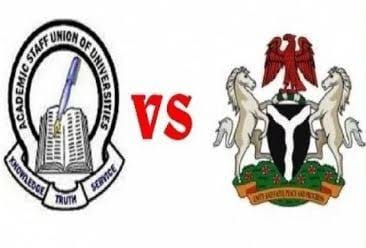
ASUU

TETfund unveils 10 books authored by Nigerian academics

By Muhammad Aminu

The Tertiary Education Trust Fund (TETFund) has unveiled ten textbooks authored by Nigerian scholars.

The books, which were TETFund-sponsored, were aimed at reducing over dominance of foreign publications in the nation’s higher education institutions.

Speaking at the event in Abuja, Minister of Education Adamu Adamu said the dependence on foreign academic publications portends great danger to the nation’s education sector, adding that boosting indigenous authorship would address the problem.

The minister, who was represented by the State minister of education, Goodluck Nana Opiah, said: “The paucity of indigenously authored and produced tertiary level textbooks and related academic publications in the nation’s tertiary education institutions is a known fact over time. Nigeria’s tertiary education institutions became dependent on books published outside the country with the attendant consequences of the pressure on the demand for foreign exchange.

“It is equally worrisome that the quality of most academic publications in our country leaves much to be desired. It is therefore expected that nurturing the culture of quality authorship and the production of indigenous books will not only ensure the availability of relevant books in the diverse subject areas that take cognisance of our local environment and sensitivities but will also safeguard national pride and reduce the demand for foreign exchange,” he said.

He commended TETFund for establishing the Higher Education Book Development project to tackle the scarcity of tertiary level textbooks which has before now reached a crisis proportion.

Adamu hailed the Fund for putting in place the Technical Advisory Group (TAG), whose mandate includes collaboratively working with the agency to ensure Nigerian authors churn out quality books.

“TETFund Book Development Fund intervenes in the three key areas of publication of academic books and the conversion of high-quality theses into books, support for Professional Association Journals, and the establishment and sustainability of Academic Publishing Centres (APCs).

“It is worthy of note that so far, seventy-seven manuscripts have passed through rigorous review processes by distinguished scholars and are ready for publication as books. I want to assure this gathering that an additional thirty books will be presented before the end of this year under the TETFund sponsorship programme.

“It will be of interest to note that over 60 per cent of these books are to be published by the Academic Publishing Centres (APCs) established by TETFund,” the minister said.

Executive Secretary of TETFund, Arc. Sonny Echono, who expressed delight over the quality of the ten books, said additional 30 books sponsored by the Fund would be unveiled before the end of the year.

He noted that the agency would sponsor the production of 50 textbooks in 2023.

“We have over 66 manuscripts; what we are unveiling today were published by only one publisher (one printing press) ….., by the time we unveil the remaining 30 in December, you are going to see all the authors cut across the three layers of our tertiary education institutions,” Echono said.

The TETFund boss also revealed that the Fund had provided support to ensure all the Academic Publishing Centres in the country become fully operational.

“There are seven of them across the country. When we came in March, only the University of Lagos academic publishing centre was fully functional and running, a few of them had little issues, some equipment, and other contractual issues, we have resolved all of them now.

“Four have been completed since the last few months, and the remaining we hope to finish by the end of September. The issue of operationalising them, making them self-sustaining is the debate we are having currently because we want them to run as a business enterprise and trying to create balance by focusing on academic publishing and being able to sustain themselves,” he said.

On his part, Chairman of TETFund TAG, Professor Charles Aworh, said 20 TETFund-sponsored textbooks were published in 2014 on different fields with wide acceptance from within and outside the country, adding that three of the ten new books unveiled today were from PhD theses.

He, however, called for more empowerment of the nation’s publishing centres.

“We are on course to publish 40 books before the end of the year, but the only challenge is the capacity of our universities to publish. Authors are ready to publish, manuscripts are ready,” Aworh said.

The high point of the event, which also attracted authors, academic staff unions and heads of education agencies, among others, was the public presentation of the TETFund-sponsored books, which include;1.Principles of Veterinary Surgery: A Concise Text for Veterinary Students 2. Fundamental of Chemistry 3. Fundamental of Public Finance 4.Java for Beginners and Web Design and 5. Programming for Beginners.

Others are 6. The Comparative Method and Civil-Military Relations 7. Fluid Mechanics and Hydraulics for Engineers 8. A Guide to Teacher Competence Evaluation 9. Financial Deepening and Economic Growth in Nigeria and 10. Motivational Factors and Teachers Efficiency in Secondary Schools.

Federal Government fails to salvage education sector

By Yusuf Salisu Muhammad

It’s a very sad incident to Nigerians that the Academic Staff Union of Universities’ (ASUU) strike has been persistent for decades. It firstly started in the 70s during Obasanjo’s regime. ASUU went on firmly with its struggles and opted for strike as a major weapon to fight for its rights and those of Nigerian students. For many years, strikes have been  reoccurring like celebrated festivals; it’s hardly to end an academic session without ASUU embarking on a single strike. If the history of the ASUU strike will be unbundled, it will be clearly seen that it has been consistent since the military regimes and thus; one may not be unjust to say, the needed actions were not taken even in the past, had they heeded to ASUUs agitations and calls, we wouldn’t have been experiencing what we are experiencing now. 

Today, under Buhari’s administration, which even a layman thought would enjoy when it grabbed power; students have been suffering from the repercussions of the conflicts between the FG and ASUU. On Monday 14th February 2022, the union declared its first one month warning strike, and then added two months, after which they extended the strike by three months. If I may ask a question which may not have an answer, I would say, even in Africa, if not in Nigeria, where can universities be shut down for almost more than six months, and the government seems not to care? But if answer is to be given, it might be: no serious administration will “take no notice of” its country’s education sector sliding into anarchy and confusion like this. However, no thanks to the I don’t care attitude of the government, it is surely making history. 

The main ASUU’s demands now, as declared by the union, are: ensuring the acceptance of the University Transparency and Accountability Solution (UTAS) and also to fulfill the ASUU/FG’s signed agreement of 2009, which can all be implemented if the FG’s effort is genuine in getting rid of the “cog in the wheel” of the future of the Nigerian Youths. Therefore, the FG’s refusal to implement the aforesaid ASUU’s demands is simply “adding salt to the wound” of the Nigerian students and the education sector in general.

On the other hand, the demanded money and facilities by ASUU for revitalizing the sector can be disbursed as far as the FG treats the issue seriously considering what it spent on other sectors, which compared to education, they are definitely less important. Some menies spent are even irrelevant to the welfare of the masses or misplacement of priorities.

For instance; on  24th November 2021, the Punch Newspaper disclosed that “the minister of State for Budget and National Planning, Prince Clem Agba said that, the FG spent more than 2.3 trillion as a stimulus for covid19.” If the FG can spend more than 2 trillion on Covid-19, why can’t it at least spend 1 trillion on the education sector for ensuring its activation and ending the ASUU strike that has been in existence for more than twenty years? The same union strike which the current president and his minster of education were criticizing the last administration on?

In addition, Vanguard Newspaper reported on May 15, 2022 that the “Socio Economic Right and Accountability Project (SERAP) sues Buhari for spending  N1.48 trillion on maintaining refineries with no crude oil”. If more than 1 trillion can be unfruitfully spent on reviving the useless refineries why can’t 500 billion be disbursed to ASUU for revitalizing the education sector?

Additionally, the Punch reporterd on 22 February 2022 that: “FG to spend 3.53 trillion on infrastructure and human capital development in 2022”. This was amidst the ASUU strike, which is yet to be called off. If 2.53 trillion would be spent mostly on invisible infrastructure, why can’t 1 trillion be allocated to the education sector for its rescue or is there any infrastructure that can be enjoyed without qualitative education? I believe commoners would rather love to have education than any other infrastructure. Also, providing sound knowledge is the best way to development, not only for humans but for the whole country and what it contains.

Based on Daily Post analysis on October 15, 2021,” about 12 trillion has been allocated to the security sector in the past 7 budgets under president Buhari”. Based on this analysis the increment of the spending for the sector in the administration is whooping 15 percent of the country’s budget. If this can be done in an attempt to tackle the insecurity we still suffer from, despite the relevance of security in any country, why can’t the same attempt be done for the education sector even for once? These are few examples. One may argue that all the aforementioned spendings were already budgeted and also the education sector has its own budget, but is he aware that the sector’s budget is just a paltry sum?

Premium Times Nigeria, on October 27, 2021 stated that “since taking office, president Buhari’s highest allocation to the education sector is 7.9 percent of the total budget”. Meanwhile, the United Nations Educational, Scientific and Cultural Organization (UNESCO) recommended 15-20percent of any developing country’s budget for the sector. 

The FG should be alerted that this persistent strike is affecting not only students, their parents, and lectures but also the economy of the country as many small scale and medium enterprises depend on the campuses, howbeit, It’s indeed condemnable that ASUU’s demands have not been attended to. 

Moreover, it will shock any Nigerian of good will to hear the claim that the president was unaware about the ASUU strike till when he was notified during his Sallah visit to his home town! Kudos to Nigeria, my fatherland, where universities could be shutdown and academic staffs’ salaries stopped for months and yet the president doesn’t even know what is happening! The university lecturers’ strike for months with stoppage of their salaries, but the president was unaware? This alone, can prove the FG’s failure in salvaging the education sector in Nigeria. They don’t seem to care and I don’t think they will care at all. Their beloved children are elsewhere, outside the country, enjoying good education, while the poor peoples’ children grow in ignorance.

In addition to the points raised above, Nigeria, with 10.5 million out of school children, topped the list in the world, as declared by the United Nations Children Funds (UNICEF), Daily Trust on Monday, 24th January reported. Furthermore, the FG’s budget allocation to the sector is yet to reach the UNESCO’s recommendation, while looting allegations on government officials are not unknown, but still ASUU’s demands are neglected. 

In conclusion, I urge the government to move with rapid efforts in overcoming the hindrances in the education sector, others the government and all Nigerians should await more troubles, confusions and skirmishes.

Yusuf Salisu Muhammad writes from Katsina State, Nigeria.

Our struggle is bigger than you – ASUU-KASU replies El-Rufa’i

By Muhammad Sulaiman

The ongoing academic dispute between the Academic Staff Union of Universities (ASUU) members, and the Federal Government of Nigeria, has taken a new dimension in Kaduna State. The governor of Kaduna State, Malam Nasiru El-Rufa’i, has threatened to sack the Union members if they fail to resume their normal academic activities at Kaduna State University. However, the ASUU branch at the Kaduna State University (KASU) responded, saying that they are far above his usual tactics. They added that they would not, in any way, stoop to his intimidation and threats.

Excerpts of the ASUU Zonal press release, signed by its coordinator, Comrade Abdulkadir Muhammad, read:

“The Kano Zone of ASUU comprising Ahmadu Bello University, Zaria (ABU), Bayero University Kano (BUK), Federal University, Dutse (FUD), Kano University of Science and Technology, Wudil (KUST), Kaduna State University (KASU), Sule Lamido University, Kafin Hausa (SLU) and Yusuf Mataima Sule University, Kano (YUMSU) met on 7th August 2022 and deliberated on the intimidation meted on the ASUU members at KASU by the Government of Nasir Ahmed El-Rufai due to the ongoing nationwide strike action embarked upon as directed by the ASUU National. The Governor had threatened to sack all academic staff that have been on strike in the branch as he usually does on similar matters. ASUU as a Union had experienced similar threats in the past, and that had never deterred it from the patriotic struggles to salvage our public universities from imminent collapse.

As you are fully aware, our roll-over strike action has now entered its sixth month. The goal of the strike is to get government to timely and substantially address ASUU’s demands, namely: revitalization funds for public universities, Earned Academic Allowance (EAA), conclusion of the renegotiation of the 2009 Agreement, Visitation Panels to universities, and stoppage of the proliferation of state universities and governance issues in them, and deployment of UTAS as a payment system in Federal Universities. These demands were agreed upon, with timelines, by the Federal Government in the MoU and MoA it signed willingly with ASUU in February, 2019 and December, 2020 respectively.

The rhetorical question as to why ASUU is always embarking on strike action has been asked time and again by the concerned citizens and stakeholders. The straightforward answer is that ASUU is strongly convinced that if academics fail to fight the cause of university education, the fate that befell public primary and secondary schools would soon become the lot of the public university system in Nigeria. It is also worthy of note that ASUU as a Union does not derive pleasure in the disruption of academic calendar and hindering students from graduating in good time. Strike action always comes as the Union’s last resort after exhausting all other options and consultative avenues.

KASU has benefited immensely from the TETFund interventions, revitalization fund, staff development and provision of research grants, which are dividends of ASUU strikes. In fact, KASU is one of the universities that could rightly be described as “TETFund University” since virtually all buildings in the University were constructed through TETFund interventions. At this juncture, we challenge the Visitor of KASU to show a single structure he constructed on KASU campuses during his two-term tenure as Governor of Kaduna State. It is therefore illogical for the Government of Nasir El-Rufai to bluff that members of ASUU-KASU should either break away from the National strike or be sacked. Since the issuance of this threat, our members have constantly been intimidated and coerced by the University Council and Management through opening of registers, conduct of a comic exercise called examinations, selective stoppage of staff salaries, among others.

These theatrical exercises that the University Management confused and referred to as examinations that are currently going on in KASU are characterized by non-coverage of course outlines, incomplete lecture contact hours, non-participation of lecturers who taught the courses in the setting of the examination questions and supervisions, involvement of students in invigilation and non-moderation of question papers, which are clear violations of the laid down rules and regulations governing the conduct of examinations.

The Union would not fold its arms while the University evaluation system is being bastardized and abused by the Management of KASU. Therefore, ASUU demands that all the so-called examinations so far conducted be discarded in order to maintain and respect the sacred system of evaluation in the university system. The examinations must be re-conducted after following the due process and suspension of the ongoing strike action, otherwise, the Union will be left with no option but to write a petition to the National Universities Commission (NUC) and the Independent Corrupt Practices Commission (ICPC) against the Management of KASU.

The ASUU-Kano Zone commends the commitment and resilience of ASUU-KASU members for not succumbing to the antics of Kaduna State Government and its agents. The Union calls on its members in KASU to remain resolute and prosecute the strike action to its logical conclusion. Finally, the Union thanks the good people of Kaduna State for their patience, understanding, support and cooperation.”

ASUU’s undying struggle

By Auwal Mustapha Imam, PhD

Nigerian politics should copy ASUU politics. There’s no union, party, association, society or any group in Nigeria that has the structures as firm as that of ASUU. None has united, tolerant and harmonized structures as ASUU. ASUU is mindless of the religion, region, ethnicity or tribe of who becomes its leader, the only thing ASUU members are after is, someone that has the capacity to face and challenge any inappropriation, misconduct, injustice or insincerity from the powers that be.

The leadership has been like that since its inception. No one cares wether or not the leader is a Muslim/Christian or any tribe. If the leader is a Christian from the South, he challenges the powers and addresses the problems of every Muslim lecturer from the North, devoid of consideration of his faith. This goes vice versa.

When my teacher and mentor Dr. Nasir Isa Fagge, a Muslim from Bayero University, Kano was the President of ASUU, he faced and challenged the then President Goodluck Ebele Jonathan, a Christian from the South. None of either ASUU members or Nigerians complained that he was harsh because the President was a Southern Christian. All they were after was the result and the struggle.

Now that President Buhari, a Muslim from the North is the President, the two consecutive ASUU leaders Professor Biodun Ogunyemi (immediate past) and Professor Emmanuel Osodoke (the present) are fiercely challenging the Buhari’s government for the betterment of education in Nigeria, where both Muslims and Christians from all angles of the country can benefit. None of either ASUU members or Nigerians are complaining that the strike lingers because a Northerner is the President. All we are after is the result and the struggle.

Whereas, in Nigerian politics, one’s religion, region and ethnicity are scrutinized and looked at first before even his intellectual capacity. This has thrown us into a deep mess that led us to underdevelopment and public service abuses. Every organization recruits not based on merit, but connection, relationship and nepotism. This can never allow us to establish a structure that will ensure transparency and good governance.

ASUU’s structure, opinions and decisions are both descending and ascending. All deliberations from the local chapters ascend to the zone, then to the national. Likewise, all communications and decisions descend from the national to the zones and to the local chapters. Every member of ASUU is a stakeholder and all opinions are listened to and respected. This is why it is difficult for government to break the structure and penetrate with any inducement to corner the loyalty of some members to the agreement of government’s policies against ASUU.

ASUU’s structure enables unity and enforces loyalty to decisions. If your voice is heard and respected, you have no reason to go against the decision you took part in. This is why every member is loyal.

My master, Professor Mutari Hajara Ali of Physics Department BUK, once told me how he used his Vespa then for commercial “achaba” to survive the harsh policies of the then government of no-work-no-pay against them. I know many lecturers who are currently into commercial transportation services with their vehicles to survive the policy and endure the strike.

To all ASUU members, struggles and sacrifices are part of the job. Hence, nor starvation can force ASUU to retreat, unless its demands are met. Many of us are into hardships, but to us, the struggle needs to reach a logical conclusion rather than back down because of hunger.

Aluta Continua!

ASUU strike: presidency denies giving ultimatum to reach agreement

By Muhammad Aminu

The Federal Government has denied giving any ultimatum to the Minister of Education, Malam Adamu Adamu, to bring an end to the lingering industrial action in public universities.

Senior Special Adviser to President Buhari on Media and Publicity, Malam Garba Shehu, said in a statement on Wednesday that there was no ultimatum given to the education minister to end the strike.

He accused the media of being deceived by their sources by giving definite time, saying the minister only suggested two or three weeks or even less.

The statement noted: “Neither during nor after the meeting was any ultimatum given to the Minister of Education.

“During the meeting, the Minister of Education requested that the Minister of Labour hands off the negotiation to allow him lead and conclude what he had earlier on started with the Academic Staff Union of Universities (ASUU). And he promised that he could get an agreement within the shortest possible time, possibly two to three weeks.”

“It is a pity that almost all media houses allowed themselves to be deceived by interested sources that are not the authorized spokesmen of the government.

According to Shehu, the Minister will carry all the necessary stakeholders who can realistically work to end the strike as the government doors are open.

“In carrying out this assignment, the Minister will carry along all relevant ministries and agencies with statutory functions and duties relating to the issues involved.

“The Presidency is optimistic that agreements can be reached in even a shorter period if all parties/stakeholders are not unrealistically obstinate. We appeal to the parties to work together to end the strikes.

“On the part of the administration, all doors remain open for dialogue and the resolution of the issues.”

The statement called on the media to desist from spreading misinformation on the matter.

“We appeal to the media not try to spread misinformation. The orchestrated media narratives seeking to present an entirely different picture, attributed to sources, in the last 24 hours are not helpful at all.

“The outcome of the meeting held by President Muhammadu Buhari on Tuesday with relevant Ministries, Departments and Agencies (MDAs) to end the agitations by university unions ought to be beyond spin-doctoring and conjectures, it added.

NANS backs NLC protest over ASUU strike

By Muhammad Aminu

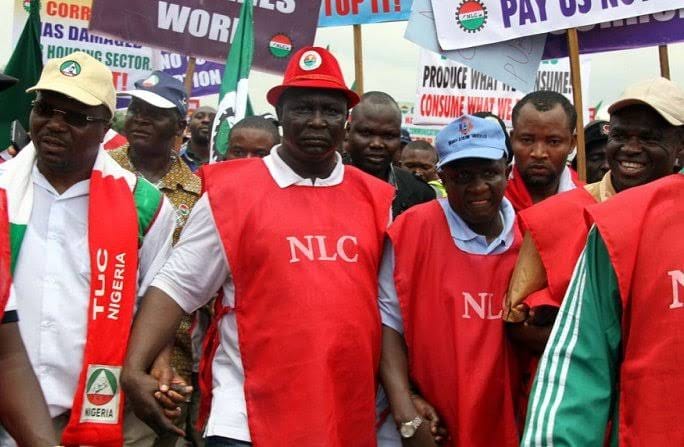
The National Association of Nigerian Students (NANS), South-West Zone, has said it would join the Nigeria Labour Congress (NLC) in protest to pressurise the federal government to end the Academic Staff Union of Universities (ASUU) strike.

In a statement issued by NANS Coordinator and Public Relations Officer Adegboye Olatunji and Awoyinfa Opeoluwa, which was made available to newsmen on Tuesday.

The NLC had earlier vowed to embark on a nationwide protest on July 26 and 27 in solidarity with the trade unions in the Nigerian public universities and others.

The NLC President, Ayuba Wabba, who made the disclosure in a circular jointly signed by Mr Emmanuel Ugboaja, General Secretary of the Congress, on Sunday, said the protest was in line with the decisions of the National Executive Council (NEC) meeting of the NLC on June 30.

ASUU and other trade unions in the education sector have been on strike for over five months over the alleged failure of the Federal Government to keep to the agreement entered with the unions.

The demands of the striking workers include issues bordering on funding of universities, salaries, and earned allowances of lecturers.

However, the NANS leadership in the South-West zone called on students across the country to join the NLC in the nationwide protest in solidarity with ASUU.

NANS added that it would “not keep silent and watch our future being ruined by the prolonged ASUU strike.”

It stated: “It is timely and urgent to issue this statement today with a view to putting an end to the lingering strike action by ASUU. We want a total reformation of the educational sector.

“The Leadership of NANS, Zone D, has taken it upon herself to categorically stand against the dilapidated state of the educational sector in Nigeria.

“We are at a time when Nigerian students have lost hope and do not know what’s next on the radar. ASUU strike has been on for over five months without any hope of resumption.

“We have also waited for so long to see if the Federal Government will dance to the music of Nigerian students who have been clamouring for an end to the ASUU strike, but the reverse is the case.

“We’ve had several press conferences, granted several interviews, held several meetings to plead with both ASUU and the Federal Government, and held several peaceful protests across the Federation.

“According to the commandment of solidarity, we’re on the last ‘Cs of Aluta,’ which is confrontation. This is the time to call on all Nigerian students across all zones to join the NLC in solidarity to end the ASUU strike on Tuesday, July 26, 2022, and Wednesday, July 27, 2022. Nigerian students are tired of the long overdue strike action.

“Consequently, all NANS cadres and stakeholders, zonal leadership, Campus Committee Chairmen, Student Union Government presidents, Nigerian students, and the general public are hereby put on high notice to mobilise, organise and get prepared to be part of the movement,” NANS said

ASUU strike: Buhari intervenes, gives minister two weeks ultimatum 

By Ahmad Deedat Zakari

President Muhammadu Buhari has reportedly intervened in the ongoing impasse between the  Academic Staff Union of Universities, ASUU, and the Federal Government. 

Presidential Spokesperson Femi Adesina posted on Facebook on Tuesday, July 19, 2022, that the president was in consultation with ministers and government officials over the lingering ASUU strike.

“President Buhari in consultation with Ministers and other Government Officials over [the] lingering ASUU Strike in [the] State House on 19th July 2022”, Mr Adesina posted. 

In attendance in the meeting with the president were the Minister of Education, Adamu Adamu; the Minister of Finance, Budget and National Planning, Zainab Ahmed; the Minister of Labour and Employment, Chris Ngige, Minister of Communications and Digital Economy, Isa Pantami; the Head of Service of the Federation, Folashade Yemi-Esan; the Chairman of National Salaries Income and Wages Commission, Ekpo Nta, and the Director-General Budget Office, Ben Akabueze.

Sources in the presidency confirmed that the president had directed the Minister of Education to resolve the industrial crisis within two weeks.

It can be recalled that ASUU embarked on strike on February 14, 2022, which has crippled the academic and commercial activities in all the Nigerian universities.

ASUU Strike: NLC threatens nationwide protest on July 26

By Uzair Adam Imam

The National Labour Congress (NLC) has threatened to embark on a nationwide protest 26/7 of July in solidarity with the strike by the Academic Staff Union of Universities (ASUU).

The union has been on a strike since February 14th, 2022, over the government failure to meet their demands.

The Daily Reality recalls that the issues are bordering on funding universities, as well as on salaries and allowances of lecturers.

The NLC president, Comrade Ayuba Wabba, in a statement jointly signed with his secretary, Emmanuel Ugboaja, disclosed that the protest aimed at getting the university students back to school.

The statement read, “we bring you fraternal greetings from the national secretariat of the Nigeria Labour Congress (NLC),” the letter read.

“In line with the decisions of the National Executive Council (NEC) meeting of the Nigeria Labour Congress held on the 30th of June 2022, we have scheduled as follows the National Days of Protest to get our children back to school and support our unions in Nigeria’s public universities fighting for quality education.

“Dates: Tuesday, 26th July 2022 and Wednesday, 27th July 2022.

“Venue: All the State Capitals of the Federation and Abuja the Federal Capital Territory. Take off Point: NLC State Secretariats and the Labour House, Abuja

“You are requested to immediately convene the meetings of your SAC to disseminate this information and to fully mobilize workers in the states for this very important protest for good governance,” the statement added.

ASUU Strike: Negotiations end, ASUU awaits FG’s position

By Uzair Adam Imam

Reports from different sources have indicated that negotiations between the federal government of Nigeria and the Academic Staff Union of Universities (ASUU) have been completed.

Meanwhile, ASUU awaits reports from the federal government to decide the fate of many promising students in the country.

However, demands of the union were made through a committee set up by the government to negotiate with it. The committee was reportedly headed by Prof. Nimi Briggs.

Speaking, the ASUU President, Prof. Emmanuel Osodeke, stated that the union had done its best in the circumstance.

He added, “we have made our presentations to the committee, and there is nothing more to add.”

Three pieces of advice to my dear ASUU members

By Muhammad Sulaiman Abdullahi, PhD

Hello, my dear comrade friends! How are you and your families? I hope we are forging and managing well. I know we are well, but not very well. This is because I know that there are so many challenges in and out there. I know most of us are currently swimming and still smiling in heavy debts, ranging from debts of Maggi, Omo, Bread, Garri, etc. Even the ‘Yan garuwa (water vendors) owe many among us a considerable amount of money due to the brutal nature of our looters. This is not to talk about heavy loans accrued due to a lack of salaries for about four months.

The Maikantis (petty traders) selling raw rice, beans and other groceries no longer want to see us by their doors. Some of us have already forgotten toothpaste and have opted for chewing sticks now to remain clean. Our children have been sent out of school due to non-payment of school fees. Landlords have knocked and banged on the doors of many; we pacified them, and some of them reason with us.

Some of us now live without water and light due to heavy bills accrued. You keep counting the ordeals. I remember how during the whole of Ramadan, with the scorching sun and harsh temperature, lecturers languished with dry pockets and no salaries. Many lecturers didn’t have a chance to sew new Sallah (Eid) dresses for their kids, not even for themselves. Yet, another Sallah is approaching without any remorse or sense from this lousy government and its handlers.

Before I talk about my three solid pieces of advice to ASUU, let me digress and talk a little about and to those who don’t understand ASUU’s struggle. I don’t in any way exonerate ASUU of all blames and problems. No way! We have our defects. Only the Almighty Allah is perfect.

However, in ASUU’s struggle, ASUU is 80 per cent right. If you talk about the decay within the ranks of the university administration and duties, ASUU also fights that. And it is the sole responsibility of the government to put eyes on the universities and punish anyone found wanting and guilty of any offence. Sex for marks, not attending lectures on time, lack of coordination, dedication and supervision, extorting students, etc., to punish and stop all these and more lie in the hands of sensible governments. I know that it is said that these bad attitudes happen in Nigerian universities, but sometimes they are overblown out of proportion.

I have been in the university community for nearly 20 years, engaging with my teachers and, later, my students. Still, I don’t know a single lecturer in my university involved in such indecent acts and is also known without getting punished. In other words, universities don’t condone such wrongdoings. Also, this is not ASUU’s direct responsibility, but rather, it lies in the hands of the university management and the government.

Our government doesn’t punish anyone, which is why bad people do as they wish everywhere, in the military, the police, lawyers, carpenters, bandits and all. So lack of commitment and corruption in whichever cadre is not ASUU’s fault, but rather, the government. Our governments rarely punish, and when it does, it looks selective and sometimes biased.

The government is so powerful that, if it is sincere, ASUU or anyone cannot shut down a single university, just like that – not even to talk of all universities – for one week without the government taking drastic action and winning over anyone! But due to the government’s insincerity, this is ASUU. So here is the whole country’s population – the lecturers, their wives, children and friends, the students, their parents, children and families, Nigerians and all their well-wishers – all in trouble, but the government doesn’t care.

With all the troubles and disputes in their recent party primary elections, North/South and whatever, they managed, brainstormed, came together, and brought a solution in 2 days. But, of course, this is for their selfish agenda,  huh? So anyway, below are my three candid and sincere pieces of advice for ASUU and all.

First, ASUU members are suffering, but ASUU should NOT call off its strike until it reaches a coherent, logical conclusion. Yes! We are suffering, and we need the strike to the end. But we don’t want a situation where a strike can be called off today, and it comes back in 7 months to come, or even less. Let’s push things to the end. I will even advise the government to agree that no strike can be implemented in the next ten years if anything goes as practically implemented. I don’t support any agreement again.

I never heard of NNPC, CBN or the House of Representatives going on strike! This is because all their entitlements, salaries, allowances and more are paid on time. And they receive more than all Nigerian universities receive, with a quarter of what universities do. A kind of monkey dey work, but baboons chop the money. So they have money more than they need. So, ASUU should not call off the strike until everything is settled.

Second, ASUU should change its style concerning research works. Many civilians out there don’t know that apart from class teachings, university lecturers engage in what is called research. Hence, some people feel we are not entitled to our salaries during strikes. And in reality, the impact of our collective research output is very minimal. Some people don’t even know that we do research, and some of us don’t even do any research at all.

To sustain our research line, let us allow the research activities to continue at full capacity. Here I mean, students writing their research (Undergrads, Masters and PhDs) should be allowed to consult their lecturers online or via any other medium possible. Someone may ask about data and other internet facilities. My answer to such a ridiculous question is; how do you read this write-up? Don’t you have a WhatsApp, Facebook or go online? This is all to maintain and sustain our research inputs and keep going. We shouldn’t allow our brains to rust completely. This chance should be conditional, situational and only if a lecturer has a chance to.

Third and finally, ASUU should continue the strike until things are resolved.

Thank you

Muhammad Sulaiman Abdullahi

Bayero University, Kano, Nigeria.