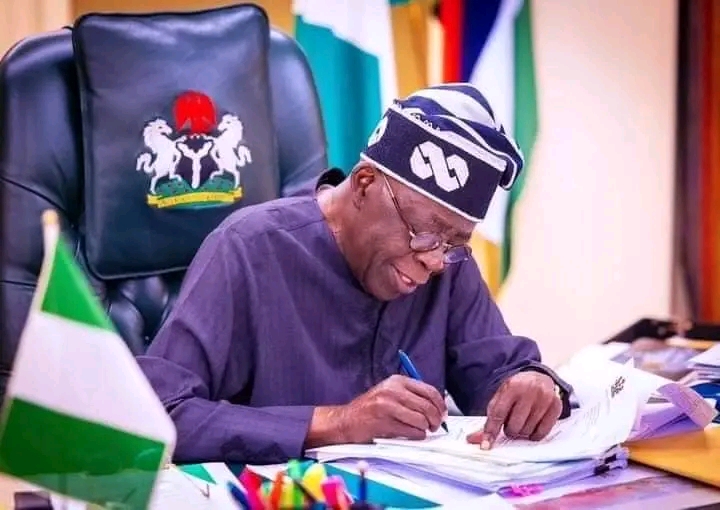
Asiwaju Bola Ahmed Tinubu

June 12 and the lopsided narrative: How Yoruba elites hijacked a national struggle

By Salisu Uba Kofarwambai

The annulment of the June 12, 1993, presidential election by General Ibrahim Babangida stands as one of the most consequential events in Nigeria’s political history. What began as a tragedy for democracy soon became a powerful weapon of political repositioning for the Yoruba elite, who skillfully leveraged national sympathy to strengthen their grip on Nigeria’s democratic evolution.

This singular incident opened the doors for the Yoruba to produce three heads of state—an achievement that might never have occurred under normal political circumstances. Ironically, this is the same political milestone that the late Chief Obafemi Awolowo, the revered father of Yoruba nationalism, spent his entire life trying to attain but could not.

Sadly, many who ultimately benefited from the June 12 crisis were not even supporters of Chief M.K.O. Abiola during the election. Instead, they emerged later as political opportunists—vultures who hijacked the struggle, turned it into a sectional movement, and weaponized it for political dominance.

It is important to recall that the North overwhelmingly voted for Abiola over its own son, Alhaji Bashir Tofa. But following the annulment, the Yoruba intelligentsia cleverly shifted the blame from the military, a national institution, to the North, creating a narrative that painted the region as the villain of democracy. This deflection became a foundation for the Yoruba to assert political superiority, while the North unknowingly fell for the narrative.

In the aftermath, Chief Ernest Shonekan—a Yoruba technocrat—was installed as head of the Interim National Government. Later, in 1999, the North once again conceded power to the South-West, with Chief Olusegun Obasanjo returning as a civilian president. However, Obasanjo’s tenure is remembered by many in the North for economic policies that led to the decline of the region’s industrial capacity. Many northerners believe these policies were deliberate, politically motivated, and economically harmful to the North.

Today, with President Bola Ahmed Tinubu at the helm, the North’s frustration appears to be deepening. Recently, a ₦16 trillion infrastructure project was allocated to the South, while liberal economic policies continue to disproportionately impact northern states, compounding existing inequalities.

This growing sentiment of marginalization was reinforced by President Tinubu’s Democracy Day national address. During the broadcast, a list of recipients of national awards was unveiled to honour those who fought for democracy. Yet, the list revealed a clear bias. While individuals like Professor Wole Soyinka—who went into exile during the military era—were honoured, many who stood their ground and bore the brunt of military repression were ignored.

Where are the names of Abubakar Rimi, Abdulkarim Dayyabu, Sule Lamido, Gani Fawehinmi, and M.D. Yusuf—figures who paid a heavy price for resisting military rule? Most of them were imprisoned under General Abacha and only released after his death. Yet, these sacrifices appear forgotten, excluded from a national recognition that should be inclusive.

Even the institutionalization of June 12 as Nigeria’s Democracy Day under the Buhari administration has continued to project the day as a Yoruba affair—further entrenching the idea that the Yoruba were the sole victims of the annulled election. This skewed narrative continues to sideline other critical voices and regions, especially the North, which was deeply invested in the democratic struggle of the 1990s.

As we mark June 12, the North must soberly reflect on how much has been lost—from the annulment of 1993 to the current political dispensation. The region must also begin to ask tough questions about its place in the national project and how to reclaim a fair share in Nigeria’s democratic future.

June 12 was a national tragedy and should be a national symbol of resilience—not a sectional emblem of victimhood. Until this is fully acknowledged, the spirit of June 12 remains only partially honoured.

Governor Uba Sani awarded CON national honour by president Tinubu

By Abdullahi Mukhtar Algasgaini

President Bola Ahmed Tinubu has honoured Kaduna State Governor, Senator Uba Sani, with the national title of Commander of the Order of the Niger (CON) in recognition of his contributions to democracy and national development.

Governor Sani, a prominent figure in Nigeria’s democratic struggle, faced multiple detentions during the fight for democratic governance. His long-standing commitment to justice and civil rights has earned him widespread respect.

Notably, he is the only serving governor named in this year’s national honors list, as announced by President Tinubu during a joint session of the National Assembly.

Congratulatory messages have poured in for Governor Uba Sani on the recognition.

APC cautions Ndume over prediction of Tinubu’s 2027 defeat

By Uzair Adam 

The All Progressives Congress (APC) has issued a strong warning to Senator Ali Ndume following his recent remarks suggesting that President Bola Tinubu could face the same electoral fate as former President Goodluck Jonathan in 2027 if urgent reforms are not implemented.

Senator Ndume, who represents Borno South Senatorial District, made the statement during his appearance on Channels Television’s Politics Today on Sunday.

Responding to his remarks, the APC Director of Publicity, Bala Ibrahim, on Tuesday acknowledged Ndume’s longstanding role within the party but stressed that discipline within the party is of utmost importance.

“Senator Ndume is a senior and respected member of the APC. This is not the first time he has aired his views publicly about how the country is being governed by his party, sometimes expressing dissent or contrary opinions,” Ibrahim said.

He continued, “However, the APC is a party of liberal-minded people. We do not reject diverse ideas, provided they do not violate the party’s constitution.”

Ibrahim reiterated that while the APC upholds internal democracy and freedom of expression, members are expected to operate within the party’s defined limits.

Inclusive leadership, not religious dominance, will save Nigeria

By Malam Aminu Wase

A presidential Muslim-Muslim ticket is not merely a political strategy. It is a catalyst for national instability. In a country like Nigeria, which is still grappling with deep-seated mutual distrust, such a move sends the wrong signal. 

For Nigeria to truly progress, its leadership must reflect the nation’s rich diversity. Only through inclusive governance can we assure every citizen, regardless of faith, ethnicity, or region, that they have a rightful place in the nation’s power structure.

Malam Nasir Ahmed El-Rufai played a pivotal role in promoting the idea of a Muslim-Muslim presidential ticket. While this strategy may have been politically calculated, it encouraged religious and ethnic groups to compete for power, rather than unite under a shared national vision that addresses the hardships facing all Nigerians.

Ironically, many of the architects of the Muslim-Muslim ticket are not reaping the benefits of their efforts. The lofty expectations they once championed of inclusion and representation have been dashed. Some have even defected to other political parties, disillusioned by the very system they helped establish.

Nigerians must open their eyes. The struggle among the political elite is not about improving the lives of the masses; it is a scramble for personal gain, to secure privileges for their children, families, and close associates. We must rise above the politics of religion and region and demand leadership representing all Nigerians.

I urge fellow citizens to reject the idea of a Muslim-Muslim ticket in the upcoming election. Let us vote for candidates committed to unifying Nigeria, easing economic hardship, and introducing policies that genuinely impact the lives of ordinary people.

Malam Aminu Wase, Write from Kaduna State. He can be reached via aminusaniusman3@gmail.com.

NIPSS, PRNigeria and the alarming breach of digital ethics

By Usman Muhammad Salihu

I never truly grasped the danger of exposing personal information in the digital space until Mr. Yushau Shuaib, my boss and mentor, handed me a book—Born Digital: Understanding the First Generation of Digital Natives by John Palfrey and Urs Gasser. 

It was an eye-opener, full of prescient warnings about the hidden costs of living in a world where our lives are increasingly mediated by technology. Ironically, neither of us imagined that the warnings in that book would soon play out so personally, and so dramatically.

Mr. Shuaib, a respected public relations expert and founder of PRNigeria, participated in Senior Executive Course 47 at the National Institute for Policy and Strategic Studies (NIPSS). On May 2, 2025, he was abruptly suspended from the course. 

His offence? Publishing articles highlighting and supporting President Bola Tinubu’s Digital and Blue Economy reforms. One article, “Understanding the ‘Blue’ in the Blue Economy,” praised the government’s innovative strides in marine resource development. 

Another, “NIPSS Goes Digital,” celebrated the institute’s transition to a paperless administrative system—part of Nigeria’s broader digital transformation agenda. While he did not write or edit the latter, it appeared on his media platform.

In response to his suspension, Mr. Shuaib petitioned the President, citing harassment, cyberbullying, and professional ostracism. He argued that the action was punitive and lacked due process. 

NIPSS, however, insisted he breached institutional policy by publishing materials related to the institute without clearance—a rule they claim he had previously been warned about.

But a chilling twist escalated the matter beyond internal disciplinary lines: PRNigeria’s editorial email account was allegedly compromised. Confidential communications between journalists and their sources, private story drafts, and editorial exchanges were reportedly accessed without consent. 

The intrusion, attributed to officials of the same institute that suspended Mr. Shuaib, raised serious ethical and legal concerns. This was no ordinary data breach. It directly violated professional boundaries, journalistic independence, and Nigeria’s own Cybercrime Act. 

It represented something more insidious than a lapse in judgment—it was, in many ways, a digital form of trespass. The incident sent ripples through the media and security circles. 

If an elite policy institute tasked with grooming Nigeria’s future strategic leaders could be implicated in such an act, what message does that send about our national commitment to digital ethics and the rule of law?

It is precisely the kind of scenario “Born Digital” warns about—a world where our private digital footprints are vulnerable not just to hackers or corporations but also to institutions that should be protecting those rights.

In one haunting passage, the authors write: “Young people who are living their lives mediated by digital technologies will pay a higher price, sometimes down the road, for the way privacy is handled in this converged, hybrid environment… 

“Most young people are extremely likely to leave something behind in cyberspace that will become a lot like a tattoo, something connected to them that they cannot get rid of later in life.”

That line has stayed with me because it is no longer just about young people; it is about all of us. Our identities, habits, preferences, locations, communications, and relationships are all being recorded, stored, and sometimes exploited through what are now known as digital dossiers.

These dossiers are detailed archives of our lives compiled by apps, platforms, websites, and even institutions. They are often created without our consent or awareness. While they promise convenience and personalised experiences, they also have profound risks.

Privacy has become a currency we are forced to spend for access. And increasingly, it is a luxury only a few can afford. The NIPSS breach is a wake-up call. It reveals the fragile boundaries between transparency and intrusion, policy enforcement and personal violation. 

It is a reminder that digital transformation must be matched by ethical responsibility and legal accountability. As a journalist, I have often lived under the illusion of digital safety. 

But as a parent, I now worry for my young daughter and the millions like her growing up in a world where data is your shadow—and sometimes, your shackle. We must do more. We must demand stronger data protection laws, foster a culture of privacy awareness, and hold institutions accountable, no matter how revered. 

Our digital world should not come at the cost of our humanity, dignity, or freedom. The threats are real, the consequences are near, and the time to act is now.

2027: A gale of defections, eroding opposition and quest for power

By Emeka Blaise Okpara

As the 2027 general elections draw closer, the gale of defections that has rocked the People’s Democratic Party in recent times has thrown those in the current ruling All Progressives Congress (APC) into wild ecstasy. Once the largest political party in Africa, the PDP ran out of luck in 2015 when it lost the presidency to the APC. Before then, the party held power for sixteen years. 

In fact, at the peak of the party’s stronghold in power, the national chairman, Chief Vincent Ogbulafor, boasted in 2008 that the PDP would rule Nigeria for another sixty years. Perhaps lost in the effervescent aplomb of public office, he forgot that the future cannot always be assured. His boisterous vituperation was perceived as the height of braggadocio, a trait synonymous with most Nigerian political elites. 

Many were not surprised when, a few years after this declaration was made, the party started witnessing some implosion within its ranks. The fall of the PDP was masterminded by members of the party who formed an alliance with the opposition, which eventually led to its calamitous loss in the 2015 general elections.

Sadly, the party that once reigned monstrously in Africa’s most populous black nation has become a shadow of itself. Unfortunately for the PDP, since they found themselves out of power, they have not been able to play the role of the opposition because it is not in their DNA to do so, unlike the APC, which was birthed through opposition. 

In fact, it would not be out of place to say that the APC has so mastered the art of opposition that it has even devised means of creating its own opposition within and outside the party to keep any real opposition party at bay through controlled opposition.

With the open declaration of support for Tinubu’s presidency from governors of supposed opposition parties, and the defection of notable figures like the current Governor of Delta State, Mr. Sheriff Oborevwori, and Senator Ifeanyi Okowa, the immediate past governor of Delta State and running mate to Alhaji Atiku Abubakar in the 2023 presidential elections, many in the President’s camp have picked up a trumpet to sound it to whoever cares to listen that President Tinubu is a master political strategist.

As far as those in the President’s camp are concerned, the 2027 presidential election is already in the bag, awaiting to be transported home. In their assessment and assertiveness, nobody can defeat the chief political strategist of our time in the forthcoming elections.

It would be simplistic for anybody to assume that the mere fact that opposition members are trooping into the President’s camp is enough reason to believe that he will have an easy ride into his second term – far from it! If anything, Nigerians should be worried, as such actions only indicate state capture.

Nigerians are well aware of the politics their political office holders play. With the nature of politics played in Nigeria,where stomach infrastructure and personal interest supersede national interest, this junketing shouldn’t be a surprise.  What do you expect from politicians in a land where political parties lack ideologies apart from grabbing power? 

Interestingly, these massive defections should teach Nigerians that there is obviously no difference between the APC and the PDP. These political elites only care about themselves and not the welfare of Nigerians! At a time when Nigerians’ living standards are at an all-time low due to ill-thought-out policies by the Tinubu-led administration, politicians are falling over themselves to dance owambe in the APC. 

To keen observers of the Nigerian political landscape, these mass defections to the APC are nothing short of a defense mechanism employed by the party to give the impression that it is in total control, and for the defectors – whose priority should be governing and serving the people – to have a haven when the chips are down.  Unless on paper, there is no clear evidence that this administration has performed well enough to warrant admiration from the supposed opposition,who now join them in troops.

Moreover, the only reason political elites are decamping is that Nigeria has a flawed electoral process where the votes of the electorate do not count. If the so-called independent electoral umpire, INEC, were living up to its mandate, political office holders would learn to be disciplined and understand that only performance can guarantee their election or re-election.

While those who believe that the President is a political strategist continue to bask in his political mastery, one is compelled to ask why he has not been able to apply his strategy effectively in governance. Politics, according to Plato, should be for the common good. Nigerians would love to see and benefit from President Tinubu’s acclaimed strategy. 

Political strategy should not begin and end with seizing power. Where is his strategy for overhauling the economy since he assumed the presidency? Are Nigerians better off today than they were three years ago? Why hasn’t he employed his renowned strategy to tackle the nation’s insecurity? Or has the security of lives and property ceased to be the government’s primary responsibility? Where is his plan for reliable power, and why must Nigerians pay excessively for unstable electricity? Don’t we need his strategy for quality healthcare facilities? These vital sectors urgently require his strategic attention!

It would be ludicrous for anyone to believe that the future of Nigeria is solely in the hands of the political officeholders. Whether or not anyone wants to believe it, 2027 is still a long time off. Though Nigerian politicians are always thinking of the next elections, and not how to better the lives of their citizens, they must realise that the political dynamics can change anytime. 

General Sani Abacha was almost certain of becoming a civilian president in 1996. He had convinced all the key political actors of the time to endorse his presidency, and everything was working for his good, but fate had other plans. 

The only thing that will guarantee any political office holder a re-election in a constitutional democracy like ours is performance! A second term in office is like a referendum on an individual’s first term. The power to elect still rests with the people and not with politicians, except that we are no longer a democracy. 

If President Bola Ahmed Tinubu is keen on his second term, he should up his game. If he is unaware, someone should inform the President that Nigerians are not having it easy. Instead of focusing on the 2027 reelection in 2025, he should take advantage of the remaining two years of his first term in office to show his work. PR without performance is pure propaganda!  

A working Nigeria benefits all, irrespective of religion or tribe. Nigerians are groaning under his knee-jerk policies, which have plunged a vast majority of citizens into penury. More than ever, this is when Nigerians expect to feel the impact of his much-trumpeted strategy. Nigerians want to see evidence beyond the rhetoric.

Blaise Emeka Okpara, a student at the International Institute of Journalism, writes from Abuja and can be contacted at: emyokparaoo1@gmail.com

Crashing food prices the wrong way

By Zayyad I. Muhammad

In 2024, President Bola Ahmed Tinubu granted duty waivers for the importation of key food items such as rice, maize, wheat, sorghum, and others. This decision was intended to tackle soaring food prices and has indeed led to a significant drop in the prices of food commodities.

Yesterday, Friday May 15th 2025, the Chairman of BUA Group, Abdul Samad Rabiu, announced that his company is intensifying efforts to further reduce the prices of rice and other essential commodities. While this gesture may appear patriotic and commendable, it raises critical questions: Is Abdul Samad a farmer? Shouldn’t such statements about food pricing and availability come from actual farmers and those directly involved in food production?

To be fair, the massive and often irrational hoarding of food items by middlemen has created artificial scarcity and price hikes, which may have prompted  the  government intervention and Abdul Samad’s statement . However, these  efforts, though well-intentioned, highlight a deeper, systemic problem that cannot be solved by importation alone. 

The government’s current approach, focused on crashing food prices through imports, is hurting local farmers and ultimately unsustainable.

While reducing food prices is essential for national food security and the wellbeing of ordinary Nigerians, the pathway to achieving this goal must be rooted in empowering local producers. Farmers are the real drivers of food affordability. Without supporting them, any temporary relief brought by food imports will ‘collapse’ the local economy under the weight of neglected domestic agriculture.

President Tinubu should prioritize policies that strengthen local agricultural capacity. This includes granting duty waivers not just for imported food, but more importantly for farm inputs, such as seeds, fertilizers, equipment, and agrochemicals. Supporting local agrochemical manufacturers and agromerchant firms will boost productivity and reduce dependence on foreign inputs.

Moreover, providing farmers with easy access to affordable loans is critical. Many smallholder farmers lack the capital to invest in modern tools or expand their operations. Through targeted financing and robust extension services, the government can unleash the full potential of Nigeria’s agricultural sector. Though many farmers and officials have abused several well-intentioned government incentives for agribusinesses. 

If current policies continue to favor food importation over local production, the consequences could be dire. The economy may suffer, and Nigeria’s food security will become dangerously dependent on foreign nations. This dependency not only undermines national sovereignty but also exposes the country to global agricultural market shocks.

Agriculture remains an important sector of Nigeria’s economy. Farmers contribute roughly 25% to the nation’s GDP. It is also the largest employer of labor, with over 25 million people, about 30.1% of the total workforce engaged in the sector. According to the Food and Agriculture Organization (FAO), more than 70% of Nigerians participate in agriculture in some form. 

Clearly, supporting local farming is not just about food, it is about livelihoods, national development, and economic stability.

Cheaper food prices are indeed crucial for Nigeria’s survival, but they must be achieved the right way, through robust, self-reliant, and locally-driven food production. Supporting and scaling small, medium large-scale farming across the country will naturally lead to lower prices, eliminate hoarding, increase food exports, and align with the Tinubu administration’s stated “Nigeria First” policy.

Food imports is a short-term fixes, now is the time to shift from to long-term solutions,

by putting farmers at the center of President Tinubu’s government food policies and programs 

Zayyad I. Muhammad writes from Abuja via zaymohd@yahoo.com.

The growth Nigerians can’t taste: Behind the numbers lies hardship

By Nasiru Ibrahim

If the economy grows by 4% in Q1 2025, people expect to feel it through affordable food, reasonable wages, more job opportunities, an improvement in the standard of living, and quality education. I agreed with Dr. Usman Isyaku’s recent claim that “Economics is the new rocket science in Nigeria,” because economists are busy presenting abstract models, charts, graphs, GDP growth, and the economic policy debate is centred only on economic jargon and indicators that appear technical and confusing to the layman. The economic policy debate is supposed to be centred on what people earn, what they buy, how the cost of living rises, and what happens to inequality and poverty.

People often ask: if the economy is growing, why is our life getting harder? The answer to all this is the Nigerian economy’s economic growth and inflation paradox, which refers to the presence of economic growth and high inflation at the expense of people’s purchasing power and standard of living. Inflation erodes people’s purchasing power and repeatedly makes them poorer as prices rise.

The economic growth and inflation paradox is the reality of the Nigerian economy, considering that the economy experienced its fastest growth in about a decade in 2024, as pointed out by the World Bank’s lead economist for Nigeria, Sir Alex Sienant, yesterday in Abuja. He said the Nigerian economy grew by 4.6% year-on-year in Q4 2024. This means that in the last three months of 2024, the Nigerian economy produced 4.6% more goods and services than in the same period in 2023. However, even though the country produces more, many people don’t feel any benefit because prices are still rising, and daily life is becoming harder.

Growth figures like GDP are averages and do not address poverty, high inequality, a poor standard of living, or food affordability.

What caused this paradox?  President Tinubu’s economic reforms — removing fuel subsidies, electricity subsidies, and naira devaluation cuts —resulted in fiscal improvement. Government revenue grew by 4.5% of GDP in 2024, the fiscal deficit decreased, and external debt declined. On paper, these achievements are impressive, but they feel different to the common man on the street, as the prices of food, transport, and rent continue to rise.

The immediate cause is the lack of inclusive growth, with a few sectors like oil and banking dominating the GDP. Secondly, weak institutions refer to government agencies and public bodies that are supposed to ensure fairness, transparency, and accountability but fail to do so. When institutions are weak, they allow corruption, inefficiency, and poor management of public funds. This means money meant for roads, healthcare, education, or farming support gets wasted or stolen, and policies that should help everyone only benefit a few elites. This worsens inequality and keeps essential services underdeveloped.

Thirdly, agriculture and supply chain disruptions caused inefficiency in the sector. Insecurity and poor infrastructure, plus the issue of import waivers, contributed to cheap food imports, making it hard for local farmers to compete and causing them to incur losses.

I do not view economics as rocket science dominated by charts, models, and jargon. I see economics in everyday life—prices, wages, job opportunities, choices, affordable food for all, happiness, and a better life for all and sundry.

Economists should explain how policies affect people’s daily lives — not just in GDP numbers, but in real terms like food prices, wages, and employment opportunities. Economists need to engage with the public more directly, explaining key concepts like inflation or interest rates in simple terms. In 2022, the Nigerian government reported economic growth in the oil sector. Yet, unemployment was at a 20% high, and poverty was increasing, with more than 40% of Nigerians living below the poverty line.

Economists and policymakers often discuss GDP growth, real income, or inflation rates—terms that many Nigerians don’t fully understand. Most people are focused on practical issues like food prices, rent, and transportation costs, not abstract economic concepts.

Governments often use economic data to justify their policies, sometimes highlighting growth figures that don’t fully reflect the real situation. In Nigeria, governments usually focus on growth rates in sectors like oil and telecoms, which don’t directly impact most people’s daily lives, while ignoring issues like rising poverty and growing inequality.

What Should Be Done? 

Firstly, fuel subsidy reform must be done to protect ordinary Nigerians. The sudden removal of fuel subsidy in 2023 made life harder—transport became expensive, food prices shot up, and suffering increased. Even big economies like the U.S. still subsidise farmers, energy, and housing. But in Nigeria, our subsidy system was full of corruption and waste. Instead of removing it overnight, the government should have planned a gradual withdrawal and used the savings to support school feeding, health insurance, and public transport. State governors, like those in Lagos and Borno, should use their share of subsidy savings to support poor families. Local government chairmen can help by identifying struggling households and ensuring the help gets to them.

Secondly, we must secure our farms and support agriculture to fight food inflation. Insecurity in places like Benue, Zamfara, and Niger has chased farmers off their land. No farming means no food, and no food means higher prices. The government should send security teams to protect farmers and work with local vigilantes. State governors must invest in irrigation, storage facilities, and feeder roads, like Ebonyi’s rice project or Cross River’s cocoa plan. Local governments should help distribute seeds and fertilisers, and organise markets in villages so that food can move easily and become cheaper.

Thirdly, Nigeria must stop mismanaging foreign exchange and support local production. The constant rise and fall of the naira, unfair access to cheap dollars, and heavy import dependence have worsened things. The CBN must be open and fair in its forex policy and prioritise local manufacturers. State governments should build industrial hubs and support processing industries, as Ogun State is doing. Local governments can help small producers in things like leather, cassava, and shea butter—so we can reduce imports, create jobs, and lower prices.

Fourthly, state governors and LG chairmen must stop blaming the federal government for everything. Many things affecting people—bad roads, dirty water, expensive local markets—are within their power. Governors should form regional plans, invest in infrastructure, and support small businesses. Local governments should fix boreholes, maintain primary health centres, and organise rural markets. These small actions reduce the daily cost of living and improve lives.

Fifthly, we need proper social protection, not random handouts. Inflation is eating deep into people’s pockets. The government should use verified data (linked to NIN and BVN) to send digital cash transfers to the poor. Local governments must identify real households that need support. States should create public works programs—like road maintenance, tree planting, or waste collection—so people earn a living while helping their communities. That’s how India’s rural job scheme helped millions.

Lastly, no reform will work without fighting corruption and fixing our broken institutions. We can’t keep discussing change while money disappears, budgets are padded, and governors pocket LG funds. The government must pass audit laws, publish how money is spent, and punish corruption. State and local governments should meet transparency targets before receiving federal funds. We must also return full independence to local governments so they can serve people directly. Without these changes, even the best economic plans will fail.

Security, youth empowerment, and innovation take centre stage in my first two years in office – Tinubu 

By Maryam Ahmad

President Bola Tinubu has outlined significant gains in national security, youth empowerment, and innovation as his administration clocks two years in office, asserting that the groundwork is being laid for a more secure and prosperous Nigeria.

In a comprehensive national address, President Tinubu said his administration had improved collaboration among security agencies and made substantial gains in previously volatile regions. “In some areas of the northwest, hitherto under the control of bandits, our gallant armed forces have restored order,” he said.

The President emphasised the role of young Nigerians in national development, citing innovative programmes at the National Agency for Science and Engineering Infrastructure (NASENI), such as electric vehicle assembly, drone engineering training for women, and local manufacturing of rapid diagnostic kits.

“These initiatives are creating jobs, restoring dignity to work, and opening up a future of possibilities for our youth,” Tinubu stated.

Under the Renewed Hope Agenda, the federal government has also embarked on large-scale infrastructure projects, including major highway reconstructions, rural electrification through solar initiatives, and enhanced support for farmers to boost food security.

In a nod to cultural diplomacy, the President announced plans for the Motherland Festival—a global event that will showcase Nigeria’s cultural heritage, creativity, and tourism potential.

Tinubu also acknowledged the contributions of the Nigerian diaspora and introduced new policies, including a diaspora bond and non-resident BVN, to encourage greater engagement.

“Our direction is clear, and so is our resolve,” the President said in closing. “The real impact of our governance objectives is beginning to take hold. The future is bright.”

Tinubu: Reforms are working, Nigeria is on path to stability and growth

By Hadiza Abdulkadir

President Bola Ahmed Tinubu marked the second anniversary of his administration on Wednesday with an optimistic national address highlighting the government’s achievements and reaffirming commitment to economic reform, national security, and human capital development.

Speaking from the Aso Rock Presidential Villa, President Tinubu declared that his administration had made “undeniable progress” despite the sacrifices demanded of citizens, especially following the removal of fuel subsidies and the unification of foreign exchange rates.

“We are halfway through the journey that began 24 months ago. Today, I proudly affirm that our economic reforms are working,” he said, citing improvements such as easing inflation, increased foreign reserves, and higher state revenues.

According to the President, the federal government recorded over ₦6 trillion in revenue in Q1 2025 and successfully reduced the fiscal deficit from 5.4% of GDP in 2023 to 3.0% in 2024. Additionally, the country’s net external reserves rose sharply to over $23 billion by the end of 2024, a fivefold increase from the previous year.

In the energy sector, Tinubu noted a 400% increase in oil rig activity since 2021 and over $8 billion in new investments. “We have stabilised our economy and are now better positioned for growth and global shocks,” he added.

The President also highlighted reforms in taxation, infrastructure development, and the health sector. He announced the expansion of primary healthcare centres, the establishment of new cancer treatment centres, and a tax policy overhaul aimed at supporting low-income households and small businesses.

“Together, we are creating a system where prosperity is shared, and no one is left behind,” he said.