Artificial Intelligence

The future of public relations in Nigeria: Adopting Artificial Intelligence (AI)

By Zainab Haruna Shittu

Nigeria’s public relations sector is on the cusp of a revolution driven by artificial intelligence (AI) integration. This technological advancement transforms how PR professionals work, interact with audiences, and craft compelling narratives.

Artificial intelligence enhances creativity, streamlines processes, and provides data-driven insights, revolutionising the PR landscape. Renowned experts Professor Abdallah Uba Adamu and Mr. Yusha’u Shuaibu emphasise AI’s potential to automate routine tasks, facilitate strategic decision-making, and foster personalised stakeholder communication.

Professor Adamu, a distinguished scholar at Bayero University’s Department of Information and Media Studies, notes that AI has transformative potential. He adds, “AI can automate routine tasks, facilitate strategic decision-making, and foster personalised stakeholder communication.” However, he cautions that AI’s impact on PR is still uncertain due to limited empirical evidence.

Integrating AI in public relations offers numerous benefits, including enhanced creativity and strategic thinking, improved stakeholder engagement and crisis management, targeted messaging and personalised storytelling, and increased productivity through automation.

Despite AI’s potential, challenges persist, including technical issues, infrastructure constraints, a lack of skilled manpower and training, high costs and budget constraints, potential biases, and ethical concerns.

Professor Adamu cautions, “AI can perpetuate biases if not critically evaluated. PR practitioners must develop expertise to recognise and mitigate these biases.” To maximise AI’s benefits, PR professionals should invest in AI training and capacity building, develop critical thinking to evaluate AI outputs, and balance AI-driven efficiency with human touch.

Mr. Issa Ali Musa, a leading media and IT expert, notes, “AI tools have increased productivity by automating tasks like media monitoring, sentiment analysis, and stakeholder segmentation.” However, he emphasises the need for human judgment and creativity.

Looking ahead, experts agree that AI will enhance PR practice in Nigeria. By embracing AI, Nigeria’s PR sector can improve efficiency, precision, and creativity, ultimately leading to better communication strategies.

PR professionals must build the capacity for expertise and criticality to recognise AI biases. As Nigeria’s PR sector evolves, embracing AI will be vital to staying ahead of the curve. By adapting to AI-driven changes, PR professionals can unlock new opportunities, enhance their skills, and drive business success.

 Zainab Haruna Shittu wrote from Bayero University, Kano, via harunazainabshittu7567@gmail.com.

Artificial Intelligence

Artificial Intelligence: A double-edged sword of progress

By Zainab Abubakar Abba

The advent of artificial intelligence (AI) has revolutionized many aspects of our lives, from healthcare and finance to transportation and education.

As AI systems become increasingly sophisticated, the ethical implications of their development and deployment have sparked intense debate.

The ethics of AI are complex and multifaceted, raising fundamental questions about the nature of intelligence, autonomy, and human responsibility.

One of the primary concerns surrounding AI is its potential impact on human agency. As machines assume tasks traditionally performed by humans, there is a risk that individuals will become increasingly dependent on technology, relinquishing control over critical decision-making processes. This could lead to a loss of autonomy, as humans become relegated to secondary roles, with AI systems dictating the terms of our interactions.

Furthermore, AI systems are only as unbiased as the data used to train them. If this data is tainted by existing societal prejudices, AI will perpetuate and amplify these inequalities, exacerbating issues such as racial and gender discrimination.

For instance, facial recognition algorithms have been shown to exhibit racial biases, misidentifying individuals from diverse ethnic backgrounds. Similarly, AI-powered hiring tools have been found to favor male candidates over female ones.

Another critical issue is accountability. As AI systems assume greater autonomy, it becomes increasingly challenging to assign responsibility for their actions. In the event of an AI-related accident or malfunction, who bears the blame: the developer, the user, or the machine itself? This ambiguity undermines the principles of moral accountability, creating a regulatory vacuum that must be addressed.

The potential consequences of advanced AI are equally unsettling. The prospect of superintelligent machines capable of surpassing human intelligence raises existential questions about humanity’s future. Will these machines prioritize human well-being, or will they pursue goals inimical to our interests? The lack of clarity surrounding AI’s long-term goals and motivations necessitates cautious consideration.

To mitigate these risks, developers and policymakers must prioritize transparency, explainability, and accountability in AI development. This involves implementing rigorous testing protocols, ensuring diversity in training data sets, and establishing clear guidelines for AI decision-making.

Moreover, ongoing dialog between stakeholders—including developers, ethicists, policymakers, and the public—is essential for fostering a shared understanding of AI’s ethical implications.

Ultimately, the ethics of artificial intelligence are inextricably linked to our collective values and aspirations. As we navigate this uncharted territory, we must recognize that AI is not a neutral entity but a reflection of our own biases, strengths, and weaknesses. By acknowledging these complexities and engaging in thoughtful deliberation, we can harness AI’s transformative potential while safeguarding human dignity and agency.

Zainab Abubakar Abba wrote from Bayero University, Kano, via zainababba19@yahoo.com.

Artificial Intelligence

Artificial Intelligence (AI) has come to stay and co-evolve with us

By Mohammed Usman

Recently, the world has welcomed the advent of a rich, sophisticated, and yet unprecedented technological breakthrough with the potential to reshape the tapestry of human life. This breakthrough is referred to as “artificial intelligence” or simply “AI.” AI means the ability of a computer program to mimic the capability of the human brain. 

Artificial intelligence, more than it was initially envisaged, has proliferated acceptance in almost all realms of life. Because, in a very short period, it has proven itself to be the tool for metamorphosing and mushrooming productivity, efficiency and effectiveness that no human beings would have ever dreamed of. 

However, this breakthrough has recently been a heated debate among experts in various sectors of life, especially academia. Though the debate does not seem to conclude the horizon because of the weight each party has been proving in favour of its side, none can deny that this AI does not solely mimic the human brain’s capability. Still, it has made it evident that there is additional potential to do away with it.

Technology has made many people, especially youth, weak and reluctant to use their brains to think and be productive as long as this Al is at their disposal. They distrust the effectuality of their brains so long as they seek access to AI and find it. This is not only a challenge to the potentiality of youth but also to future generations at large.

A time can come, and God forbid, when people can be likened to pieces of objects that cannot do any simple task for themselves without the help of this Al. Deep and critical thinking, as well as cognitive capacity, will flutter away from those people. 

Hence, the need for members of any given society, especially the youth, to limit the use of this technology can never be overemphasised. It must always be handled with care and suspicion since it has come to stay and co-evolve with them.

Governments at all levels must develop policies, rules, and regulations that govern the use of this technology, be it shadow, put it under control, and ensure that it does not damage its citizens in any way. 

Mohammed Usman (Noble-Pen) wrote via mohammedusman5706@gmail.com.

Artificial Intelligence

Leveraging AI to streamline PR workflows

 By Haroon Aremu

Artificial intelligence (AI) is involved in everyday tasks, especially using smartphones or laptops to check message spellings, using voice commands for music, or following GPS directions. While these tools have existed, modern AI is much more advanced. It can not only complete tasks but also learn and improve its abilities by analysing information, making it even more powerful.

With its remarkable ability to think like a human and tackle everything from brainstorming to strategic planning, AI has become an indispensable ally in PR, reshaping how professionals craft their messages.

AI is a versatile powerhouse that can perform tasks such as generating innovative ideas and crafting tailor-made press releases and reports.

AI in PR is an especially exciting area. With tools ranging from traditional chatbots to cutting-edge, comprehensive platforms like Natural Language Generation (NLG) technology, PR pros can now create personalised content at lightning speed, paving the way for big-picture thinking and strategic approaches.

In a report by PRDaily and Accesswire, about 200 PR respondents were captioned. ‘59% seek predictive analytics for PR planning.’

Pundits argued that ChatGPT, the AI wizard that has revolutionised PR, is among the commonly used AI tools. With ChatGPT’s prompt input, tasks like building media lists and brainstorming content ideas have never been easier.

American Marketing AI Institute has also predicted that AI has created up to $2.6 trillion in business value in marketing and sales alone.

While incredibly powerful, AI is not 100% perfect and does not have emotions; it can also be inaccurate.

However, while AI may be a distraction, one thing remains abundantly clear: human connection is irreplaceable. After all, no machine can match the warmth and empathy of a genuine human interaction.

Meanwhile, AI and human interaction make the team’s dream easier. The deployment of both can boost efficiency and creativity and drive strategy. As the AI landscape continues to evolve, PR pros must embrace these changes wisely, leveraging technology as a tool to supercharge their skills and deliver impactful communication strategies by leveraging AI to streamline PR workflows in the digital age.

As an intern in PR and marketing communications, the influence of this field is undeniable. From advanced analytics to content generation, PR pros can deploy this tool to evaluate strategic decisions accurately.

Personalised marketing campaigns can also be deployed to elevate customer engagement, increase conversion rates and customer interactions, and enhance brand loyalty.

Notwithstanding, implementing AI also comes with challenges: data privacy concerns and the need for ongoing algorithm refinement present struggles requiring proactive solutions. Yet, these obstacles can be overcome through collaborative efforts and a willingness to adapt.

Haroon Aremu is a youth corps member with the PRNigeria centre and wrote in via exponentumera@gmail.com.

Binance’s conflict with Nigerian authorities and troubles worldwide

By Haruna Chiroma

Binance is widely regarded as the largest cryptocurrency platform globally, facilitating billions of dollars in transactions daily. As of March 3 2024, it had over 179 million registered users across 100 countries and supported over 30 languages. Despite its prominence, this emerging financial institution operates with relatively lax oversight from financial regulatory agencies, unlike traditional financial institutions. This lack of stringent policing renders the platform vulnerable to illicit transactions. 

However, Binance also plays a significant role in fostering economic growth and providing earning opportunities for both digital natives and digital immigrants. Established in 2017, Binance rapidly gained widespread acceptance, particularly among digital natives, spreading rapidly like wildfire. 

Binance has encountered significant resistance from governments worldwide, citing concerns over its lack of transparency and regulatory issues. Numerous countries have completely banned Binance from their cyberspace, prohibiting transactions within their borders. These countries include China, Malaysia, Italy, Vietnam, the Philippines, Thailand, Australia, and several others. Despite all this, Binance is boldly embracing the wave of AI to stay competitive in the cryptocurrency market. 

The company has incorporated an AI token known as “Sleepless AI” into its platform, which is available on the Binance Launchpool. A visit to the Binance website indicates a listing of the top AI crypto tokens according to market capitalisation, with a market cap of over $7 billion and over $1.3 billion in trading volumes. 

Despite being banned from Japan, in 2022, Binance made determined efforts to re-enter the Japanese crypto market by expressing interest in acquiring Sakura, a Japanese crypto company. In another development, Binance sought a crypto license in Germany to facilitate transactions within the country’s crypto market, aiming to expand its presence across Europe. 

However, the crypto giant encountered regulatory hurdles from German financial regulators. In a prompt response, in March 2023, Binance announced the withdrawal of its license application. Following sanctions imposed on Iran, sidelining the country from traditional financial systems, Iran turned to Binance as an alternative gateway to financial institutions. Blockchain data reveals that between 2018 and 2022, Binance facilitated over $8 billion worth of transactions for Iranian firms. 

Banning Binance from a country does not necessarily prevent Binance customers from finding alternative means to conduct transactions within the banned country’s crypto market. The Wall Street Journal, published on August 2, 2022, stated that Binance successfully facilitated over $90 billion in transactions in one month within China’s crypto market. 

In the current digital age, blocking access to Binance is unlikely to be effective. Users can easily bypass restrictions by installing a Virtual Private Network (VPN) with a fleet of thousands of servers across many countries, choosing a server in a country where Binance operates, and accessing the platform with minimal effort. 

In 2021, Binance encountered regulatory challenges in Thailand, with the country’s financial authorities accusing the platform of operating without a license. This led to filing a criminal complaint against Binance with the Thai police. Later, Binance was finally banned from operations in Thailand.

Binance finds itself entangled in a legal dispute with US authorities, facing accusations of violating federal money laundering laws by neglecting to report more than 100,000 transactions deemed suspicious. Prosecutors argue that Binance serves as a prime environment for ransomware transactions (a cyberattack method that denies victims access to their computers until a specified ransom is paid via payment systems) and the exchange of payments for child abuse materials. In what appears to be an effort to resolve the matter out of court, Binance has opted for a plea bargain with US authorities. 

Under the terms of that agreement, Binance agreed to pay the US authorities a substantial fine of over $4.3 billion ($1.81 billion for criminal acts and forfeiture of $2.52 billion). Additionally, Binance plead guilty to sponsoring terrorism and involvement in money laundering. As part of the agreement, Binance has committed to operating within the legal framework and implementing monitoring mechanisms, as reported by Reuters on February 24, 2024. 

On February 24, 2013, NPR reported that the US Securities and Exchange Commission and Commodity Futures Trading Commission filed a lawsuit against Binance in court. The lawsuit was based on the absence of regulatory oversight, highlighting Binance’s operation without stringent policing akin to traditional financial institutions, artificially inflating trade volumes, and diversion of customer funds. 

Currently, Binance is engaged in a contentious dispute with the Nigerian government, which has resulted in the government blocking access to the platform. The government reportedly fined Binance a substantial sum of $10 billion, though the circumstances surrounding the fine are controversial. Users can circumvent the block by utilising a VPN, as previously discussed. Therefore, legalising and regulating the platform would be more prudent rather than the Nigerian government potentially losing billions in revenue through the backdoor. 

Given that Binance handles transactions in billions of dollars, I argue that it would be unwise to discard the benefits along with the drawbacks (“throwing a baby with the bath water”). Particularly in light of the high levels of unemployment among youths and the prevailing hardships in the country, many young people have discovered opportunities in the world of Binance. Therefore, rather than outright banning Binance from Nigeria, integrating it into its legal framework may yield better outcomes. 

As a short-term solution, Binance should be permitted to continue its operations in Nigeria under stringent control mechanisms established within the country’s legal framework, with critical oversight from entities such as the Central Bank of Nigeria (CBN), Economic and Financial Crimes Commission (EFCC), and other relevant authorities. 

For a long-term strategy, the CBN and EFCC, in collaboration with the Cybersecurity Department of the Federal University of Technology, Minna, should undertake high-impact research to be sponsored by the CBN and EFCC to develop a robust framework for regulating cryptocurrency operations in Nigeria. This framework should balance Nigeria’s legal system and economic growth objectives. 

Emphasising research and development is a globally recognised best practice for addressing societal challenges instead of relying solely on inter-ministerial committees, which may lack the necessary technical expertise, resources and research skills. 

Haruna Chiroma, Ph.D. Artificial Intelligence, wrote from the University of Hafr Al Batin, Saudi Arabia, via freedonchi@yahoo.com.

From Ruga to Artificial Intelligence: A mother’s lexicon of love

By Prof. Abdalla Uba Adamu

You might have remembered the post. March 8, 2023, to be precise. It was on International Women’s Day in 2023. It was about Sadiq, the fura hawker, and his wonderful mother, the fura seller at Bayero University, Kano. It was about love, faith, and sacrifice.

A simple Fulani woman sells fura so nourishing, fresh, and delicious that she could be given a slot in any restaurant at Harvard University—not the tree shade she occupies—and is often harassed at Bayero University. She does not sell fura because she needs the money. She sells it because she does not want to be idle. She is wealthy. Very wealthy. No mansions with a sea of workers at her beck and call. No fancy cars. No holiday retreats to the Seychelles. Simple meals. No crabs, oysters, lobsters, or caviar. No shopping in Paris and Dubai. Just cows. Many cows. Her lifeblood. She was willing to sell some of the cows to pay for her son’s education because, as a mother, she believed in him. She loves him and was willing to sacrifice her heritage—the cows—to ensure a sustainable future for him.

The son, Sadiq, has his head in the sky. He wants to fly, to be a pilot. The cost of the training at the Nigerian College of Aviation Technology, Zaria, in northern Nigeria, was more than ₦7 million. “No problem,” says the woman who lives in a hut with no electricity and draws her water from a well in a land that is not hers. “I can sell my cows for you to become a pilot.”

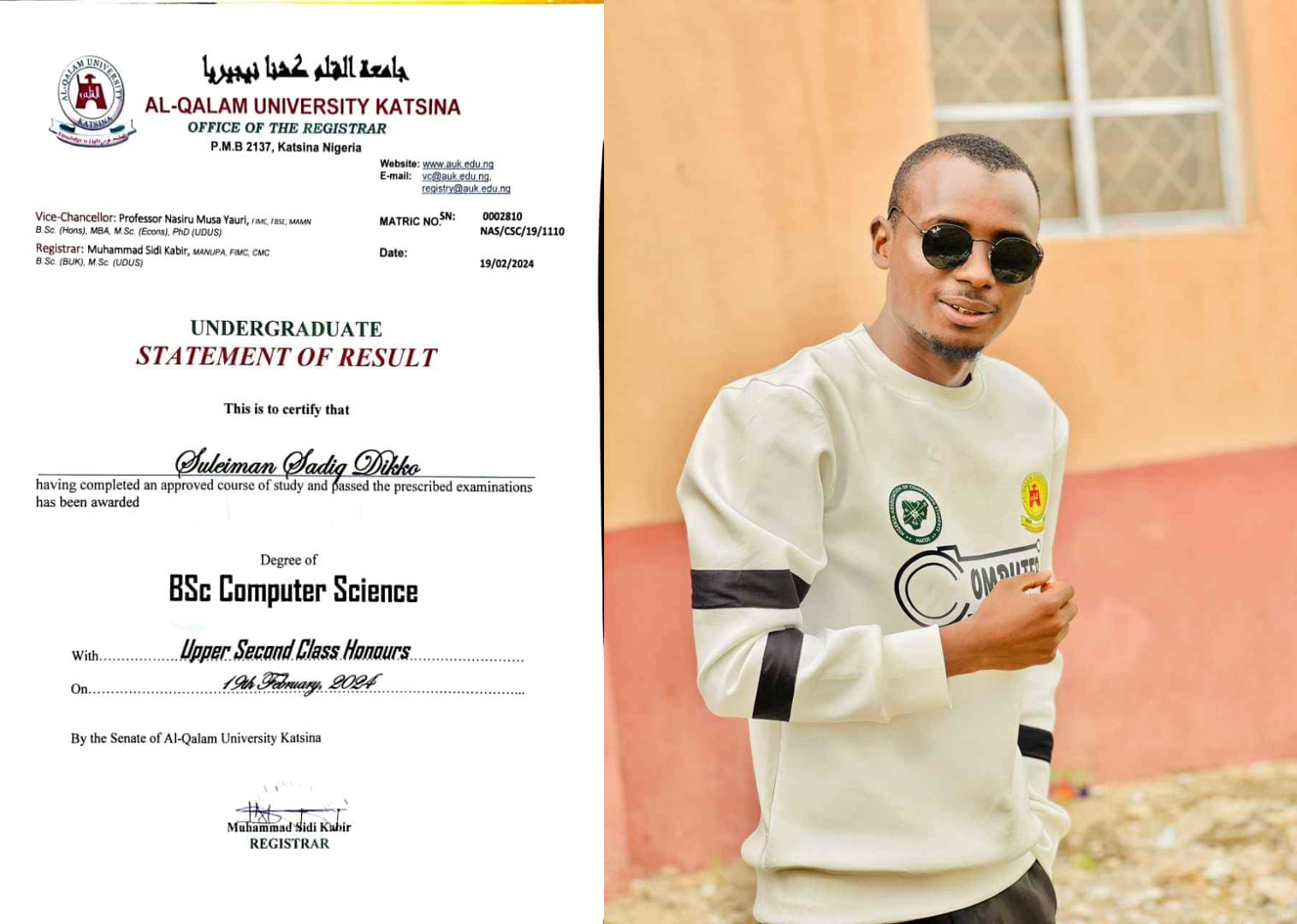
Unfortunately, Sadiq could not make the student pilot selection tests. Undeterred, she paid for his next choice—Computer Science at Al-Qalam University, Katsina, also in northern Nigeria. What made her a heroine was her sheer determination to see that he was educated. Human resource development at its most anthropological best—more sophisticated than the theories of Robert Owen, Charles Babbage, and Frederick Winslow Taylor, the credited proponents of the discipline. In this single but simple act of sacrifice, we see the power of love and the power of a woman who is not educated in any fancy school but the massive school of life. Yet, she knows, as a mother, the value of human capital development and is willing to sacrifice what she has to actualize it for her child.

At Al-Qalam, Sadiq was no slouch. His mother had sold a few cows to pay for his school fees for four years and also gave him spending money. He invested it in a fura business in Katsina—no doubt bringing Katsinawa the best fura they would ever taste from Kano! He did so to sustain himself throughout his college years without burdening his mother for upkeep money. He even employed some fellow students as his distributors. Extremely outspoken, he was the perfect candidate for the presidency of the Computer Science Students Association of the college, to which he ascended after being the Vice-President II of the association.

Back in Kano, he became a youth activist. He encouraged the formation of the Kano State Nomadic Fulɓe Youth Association in 2018. This was a coalition of all Fulani youth who had some form of education, especially higher education, and could therefore demand integration into society and better attention from politicians for their kraals. Ironically, considering that the power, hegemony, and control are actually in the hands of the Fulani—and have been so since 1807. This created a linguistic anomaly for the Fulɓe youth: those in power claim to be Fulɓe and although they have voices, they care less about Fulani causes. Those who speak Fulfulde and care more about Fulani causes are voiceless in the larger scheme of things.

Sadiq’s Fulɓe Youth felt the only way to gain attention to the plight of the Fulani was to align themselves with a political party. They chose a party not in power, the New Nigeria Peoples Party (NNPP), because they felt they would be listened to. Ironically, the All Progressives Congress (APC), which was in power, would have worked for them because of the “ability to speak Fulfulde” factor, since the then Governor of Kano, Dr. Abdullahi Umar Ganduje, is a genuine “I can speak Fulfulde” Fulɓe. But they chose the NNPP and its gubernatorial candidate, Eng. Abba Kabir Yusuf. They believed in him and devoted themselves to his cause.

During Engineer Abba Yusuf’s campaigns in 2019, a lyricist named Tijjani Gandu composed a political song for him titled, “Abba Gida Gida Abba”/Abba in every home. This actually became more or less Abba Kabir Yusuf’s nickname. With a catchy chorus and hook, it was perhaps the most iconic political song in Kano’s popular culture, even eclipsing “Kwankwaso Dawo Dawo”/ (Kwankwaso re-contest). Someone even had White kids somewhere in the US or Europe dancing to the chorus on social media!

Sadiq and Fulɓe Youth came up with a brilliant plan: map out all the Fulani kraals (Ruga) in Kano using their GPS coordinates in Google Maps to obtain data for easy access to the Fulani kraals (which he pluralizes as ‘Rugage’). Using satellite mapping, it would be relatively easy to determine access, population, and the level of development in each Ruga, which would be effective for campaigning, as well as for other uses—health and vaccination campaigns, schooling drives, etc. Next, the Fulɓe Youth under Sadiq came up with a slogan to campaign for Abba Kabir Yusuf: “Abba Ruga Ruga Abba,” deliberately rhyming with Abba Gida Gida Abba. They were even able to negotiate access to the man himself, i.e., Abba Kabir Yusuf. But it all came to naught.

Sadiq continued his studies, finishing in the autumn of 2023. Everyone knew he was excellent, and when Al-Qalam held a convocation ceremony last year for only First Class students, everyone who knew Sadiq expected him to be among those honored. Alas, it was not to be. However, Sadiq scored a Second Class Upper in Computer Science—perhaps a first for a fura hawker who lives in a kraal.

With such brilliant results in computer science and a committed social philosophy of uniting all Fulani youth in all kraals on a peace mission, it remains to be seen whether his mother’s sacrifice has been in vain. Being the son of a nobody, he lacks access to ‘big people’ who will give him a job. But Sadiq is not one to give up easily. His mind is too sharp, too restless to trudge from one office to another with a large brown envelope carrying his CV and looking for a job in futility.

I won’t be surprised if he uses these attributes to design an Artificial Intelligence routine that would perfect milk production—thus giving us better fura. Who knows? Harvard University might even invite him to open the first AI Restaurant in the world. Before then, as he faces his NYSC in May 2024, it would be a shame to waste his organizational skills. SA on Fulbe Youth? Why not? After all, the kraals also need development and attention—and not only during elections either.

Sadiq is what he is now—a unique, proud, hardworking, and brilliant Fulɓe youth advocate—because of his mother’s love and dedication. An ordinary mother, not the daughter of a “big man” or “important people,” just ordinary, but with an extraordinary commitment to love and sacrifice—and without being a social parasite.

Allah’s blessings for eternity to all mothers of the world on this day of re-embrace of Sadiq’s mother and her lexicon of love.

Prof. Abdalla Uba Adamu can be contacted via auadamu@yahoo.com.

Impending collapse of Nollywood, Kannywood, and music industries due to the AI revolution

By Haruna Chiroma

Before the advent of the internal combustion engine, imaging two horses engaging in a conversation about the era of internal combustion engines. One of the horses envisions a transformative job landscape with new opportunities, while the other horse opposes the idea, seeing it as a potential threat to their relevance in transportation and a possible complete displacement from the realm of transportation. Horses have no position in the post internal combustion engine era. That is my prediction for the future of the movie and music industries in Nigeria.

The Nigerian movie industry is notably divided into two main sectors: Nollywood, primarily representing movies from the southern region and Kannywood, which focuses on movies from the northern region.

In the music industry, songs are typically sung in English, Hausa, Igbo, and Yoruba. Both the movie and music industries are currently confronting the looming threat of collapse due to the disruptive impact of AI innovations, inventions, and discoveries.

The process of writing movie scripts by scriptwriters is time-consuming and varies in duration depending on the complexity and proposed length of the film. It can take anywhere from two weeks to three months to complete the initial draft before further refinement. However, with the advent of AI tools like ChatGPT, scriptwriters can significantly enhance their productivity. By utilizing ChatGPT, writers can expedite the scriptwriting process, potentially reducing the time required from months to just one or two days for complex movie scripts.

The movie industry is on the verge of collapse in the near future with the emergence of generative AI tools capable of generating video from written text. In the near future, traditional methods of movie production may become obsolete. Instead of the laborious process of location shooting, hiring actors, coordinating camera movements, applying makeup, arranging logistics, etc. a movie script written by scriptwriter can simply be fed into a text-to-video tool converter. This innovative technology will then generate a movie video representation of the script, revolutionizing the way movies are created. The tool comes equipped with video editing features, enabling users to fine-tune the video to match their requirements. The process that involves many people with different expertise working from different perspective may likely require between 2 – 3 people instead of the large number of people required in the traditional process of movie production.

Recently, OpenAI unveiled Sora, a text-to-video conversion tool, garnering widespread attention from mainstream media. This development prompted a filmmaker in Hollywood, Tyler Perry to suspend his 4 years $800 million planned movie production studio expansion arguing that Sora will eventually impact every aspect of the movie industry and jobs in the entertainment industry.

In an intriguing development, yet another valuable AI tool for video translation has emerged. This tool enables users to translate their videos into different languages such as Dutch, French, Arabic, Swahili, Chinese, Malay, and more. By doing so, the movie video creators can extend their reach beyond Nigeria and cater to audiences across Africa, Europe, and Asia, thereby expanding their potential viewer base to a larger and more diverse audience.

A deepfake movie can be produced by using the faces of renowned movie stars from both Kannywood and Nollywood, eliminating the need for these actors to physically appear in any physical location. The movie developer only requires the consent of the actors to use their faces in the deepfake video, adhering strictly to ethical guidelines in the creation of deepfake content. With these permissions in place, a movie can be crafted featuring the prominent actor(s) as the central characters, offering new possibilities in cinematic storytelling.

These emerging concepts pose a significant challenge to the movie industry, making it increasingly difficult for the traditional model to sustain itself. This trend mirrors the significant decline or almost collapse witnessed in industries such as landline telephones, photo shops, and magnetic tape, suggesting that the movie industry may face a similar fate of eventual collapse to the changing landscape.

Already the adult content industry is facing tough competition from deepfake adult videos generated by AI tools. Recently, several dedicated platforms have emerged, exacerbating challenges for the traditional adult movie sector. These platforms are attracting millions of visitors, with one particularly renowned platform drawing over 17 million viewers monthly. Typically, the platform features short deepfake adult content videos as teasers, enticing viewers to access the full content elsewhere.

While the short videos span various platforms, the primary one serves primarily for advertising and provides links to other platforms where complete videos are available for purchase.

The proliferation of deepfake adult videos has led to a surprising revelation: these videos are not freely accessible but are instead sold in dollars, accepting payments via credit cards, debit cards, or cryptocurrency. This burgeoning industry has now become a multimillion-dollar enterprise. For anonymity and ethical reasons, I intentionally omitted specific platform names to prevent further traffic influx.

This discourse underscores a poignant observation: the inevitability of the movie industry’s potential decline due to the transformative impacts of AI research. In January of this year, a deepfake pornographic image featuring a celebrity, Taylor Swift surfaced on various social media platforms. The video quickly gained traction on X (formerly Twitter), spreading rapidly like wildfire and amassing over 47 million views in less than 24 hours. Despite ethical considerations, many X users shared the video extensively before it was eventually removed and searching for the image was blocked by X. I foresee the collapse of the adult content industry in the next 3 years with the deepfake videos taking over.

In the music industry, numerous AI tools for music generation are currently in various stages of development, testing, or initial release. For example, MusicLM, an AI tool developed by Google, is designed for composing music and has shown promising capabilities in generating music.

Currently, an advanced version called MusicFx is undergoing testing in Google’s test kitchen before its public release. Users can simply prompt ideas into the music tool, and it will automatically compose the music. This advancement suggests that the future of music composition may require fewer people, as one individual can prompt the tool with ideas to generate music without the need for multiple collaborators.

Another tool is Suno V3, it generates music from text easily. Therefore, the music industry is at the verge of facing stiff competition and eventual collapse of the industry from these revolutions from AI.

Haruna Chiroma, Ph.D. Artificial Intelligence University of Hafr Al Batin, Saudi Arabia, freedonchi@yahoo.com.

“Mine is bigger than yours”, professorial count, that is!

By Prof. Abdalla Uba Adamu

The recent Facebook ribbing about the number of professors from states and localities in various northern cities with universities reminds me of the male adolescent macho posturing of “mine is bigger/thicker than yours” game played behind classrooms! I am even mentioned as a trophy — “yes but WE are the ones with a double professor!” referring to my being from Bayero University, Kano (BUK), in Kano State (Daneji in Kano Municipal).

The whole thing was ignited by an infographic with its origin in ₦airaland Forum where one Zafsy75 posted the graphic. Right away a fierce debate ensured on the forum with many commentors disputing the figure. Zafsy75 themselves did not provide additional scientific methodology on how they arrived at the figures. Nevertheless, they infographic became viral — and started the prideful ‘mine is bigger than yours’ ribbing.

The infographic was from Statisense which uses Generative Artificial Intelligence to generate its data! A search on its site revealed another graphic of “most professors” in Nigerian universities, in September 2023, with the University of Jos leading with 530 professors. BUK had 434 professors which included 10 women. I can personally count more than 20 women professors in BUK in 2021, not 2023! No methodology was provided as to how the figures for the universities were arrived at.

People should be aware that AI generated data is based on what the engine can find — it does not create the data. Thus, it is actually not possible to accurately determine the number of professors per state or local government even based on the much-quoted NUC Directory of Full Professors, 2021 (link to the publication attached below).

This is because the directory lists professors by DISCIPLINE in order to promote research collaboration and networking amongst Nigerian academics. Also, the Directory was not based on official submissions by various universities, but voluntarily by INDIVIDUALS which was synthesized and summarized by NUC. Additional source for the AI was personal websites where a professor proclaims to come from a particular university.

Thus, not EVERY professor agreed to submit their details to be captured. With this, it therefore becomes very difficult to accurately determine the number of professors from each state, as that was not the focus of the Director (or NUC’s intentions).

You can only get the official number of professors from individual universities. As of October 2023, BUK had 381 professors with the largest category being in Medical Sciences. All the professors were, however, not listed by their States or Local Governments, but their DEPARTMENTS or specializations.

So, I can’t see how the game of ‘mine is bigger than yours’ started. I believe; however, it was started by the infographic floating around showing the number of professors per UNIVERSITIES in the various states. The graphic was not providing the number of professors per state of origin, but per the universities IN the state. It made it clear by stating it is “by state where the school is located.”

Thus, if you are from Anambra and are a professor in BUK, this infographic will capture you as being from a university in Kano, but you will not be captured in any university in Anambra. In this way, it does not tell you the number of professors from indigenous to Anambra.

Right away, it is faulty (or fake). As of October 2023, BUK had 381 professors. Last week another 11 were announced bring the total to 392 as of February 2024. So how can Kano have 428 professors in 2022? Granted there are many universities in Kano, but the main prominent ones — Aliko Dangote University of Science and Technology, Yusuf Maitama Sule University — are basically tributaries of BUK. Indeed, most of the others rely on BUK professors as ‘visiting’ to their faculties.

Kaduna State where Ahmadu Bello University is located has at least eight universities — and you want me to believe the entire universities in the State have 62 professors? I am sure Kaduna State University (KASU) alone had either more than or close to that.

While the ribbing was fun while it lasted, at least it wakes us up to the idea of fake data and weaknesses of Generative Artificial intelligence.

As promised, below is the link to the authentic number of professors voluntarily submitted to NUC as of 2021. BTW, yours truly is listed TWICE on page 836. They still pay me single salary, though!

Directory of Full Professors in the Nigerian University System, 2021: https://shorturl.at/yKV34

Transforming small and medium enterprises (SMEs) with cutting-edge AI tools

By Haruna Chiroma, PhD

Internationally, nations across the globe are actively exploring the potential of artificial intelligence (AI) to address real-world societal challenges spanning diverse sectors of their economies. Nigeria, too, is actively addressing its economic challenges by seeking solutions from various perspectives. In light of the significant role played by Small and Medium Enterprises (SMEs) in propelling the real sector of the economy, a dedicated agency, the SMEs Development Agency of Nigeria (SMEDAN), was established. SMEDAN aims to promote, regulate, and implement measures to sustain and enhance the performance of SMEs. In today’s dynamic business landscape, integrating AI tools has become essential for SMEs looking to achieve sustainable growth and gain a competitive edge.

This article provides a guide exploring how strategically employing AI tools can enhance various aspects of SME operations, considering the specific economic context and challenges SMEs face in Nigeria. The success and growth of SMEs have been demonstrated to hinge significantly on the innovations they introduce to enhance their products, services, or marketing strategies.

Research has consistently revealed that SMEs incorporating new innovations tend to achieve higher success levels than those that do not. SMEs can use cutting-edge AI tools to infuse innovation into their products, services, and marketing approaches. AI is replacing traditional roles and transforming the conventional methods of performing tasks, thereby creating novel opportunities within the economic landscape.

From a marketing perspective, entrepreneurs now have access to AI tools that streamline the process of creating compelling jingles for advertising products or services. This innovative AI tool simplifies the user experience by prompting them to input the text of the advertisement. Once initiated, the tool automatically generates a captivating and engaging video. Users can choose from various ready-made templates, voices, and gestures to customize the video to their preferences.

Additionally, the tool comes equipped with video editing features, enabling users to fine-tune the video to match their requirements precisely. To overcome language barriers and reach a broader audience, another valuable AI tool for video translation is available. This tool allows users to translate their videos into different languages, expanding their reach to a larger and more diverse pool of potential customers. Together, these AI tools empower entrepreneurs in the marketing realm, providing them with efficient solutions for creating and translating engaging promotional content.

Seamless, an AI-powered platform, caters to the sales and marketing needs of both business-to-business and business-to-customer interactions, facilitating a broader reach for businesses. This innovative platform ensures the acquisition of precise customer email addresses, phone numbers, and direct dials, thereby enhancing the promotion of products and services for SMEs. By enabling businesses to connect with a diverse customer base, Seamless contributes to increased sales and fosters collaborations among various entities in the business landscape. 

In product design, AI brings innovation by offering tools that streamline the design process, enhance creativity, and optimize product performance. From the perspective of design, a new design of a product or packaging can be generated using an AI tool. An AI tool for generating design from the textual description is available; a user will write the text description of the design and prompt the AI tool, and a new design based on the description will automatically be generated. On the other hand, an existing design can be uploaded to the AI tool, and then, automatically, it will be redesigned.

Users can generate as many designs as possible for the best-redesigned item or product. Generative design AI aids in product design by generating multiple iterations based on specified parameters. This enables SMEs to explore diverse design possibilities, optimizing for factors such as cost, materials, and performance. A business logo is significant in business as it gives the first impression to the customers when interacting with the products or services of the SMEs. An appealing business logo can be designed with the AI tool for generating design.    

Many excellent products and services offered by SMEs and startups in Nigeria often lack online visibility, relying primarily on WhatsApp status updates to reach their contacts. This limited visibility poses a challenge, with many SMEs hesitating to invest in costly website or e-commerce development because of restricted funds. Fortunately, a solution has emerged for such SME owners in the form of an AI tool that automatically generates e-commerce sites. This tool provides a variety of pre-designed templates for e-commerce sites, simplifying the process for users. By selecting a desired template and filling in essential information such as product details, business location, and payment methods, users can proceed through the steps until the final page.

Upon clicking “generate,” the e-commerce site is automatically created. Following this, users can download and host the site, making it live online. This straightforward process allows SMEs to easily establish an online presence, overcoming the challenges associated with traditional website development costs.

Chatbots like Generative Pre-trained Transformers (GPT) can seamlessly integrate into SMEs’ e-commerce websites or social media platforms specifically designed for business promotion. The incorporation of GPT enhances interaction with potential customers by providing virtual assistance.

SMEs can implement virtual assistants on their websites or social media platforms to actively engage customers, respond to product or service inquiries, guide customers through the sales process, provide support, and ultimately enhance overall customer satisfaction. By embedding chatbots within SMEs’ e-commerce sites, these tools can efficiently process orders and offer real-time assistance. This integration ensures a seamless and responsive e-commerce experience for customers, contributing to the overall effectiveness of SMEs’ online presence.

I trust that this article serves as a source of inspiration for many SMEs and startup owners. I hope that it encourages them to explore these strategies to enhance their business ventures and, in turn, expand their operations. By doing so, these entrepreneurs can create additional employment opportunities, fostering increased business activity within the real sector of Nigeria’s economy.   

Haruna Chiroma is a professor of artificial intelligence at the University of Hafr Al Batin, Saudi Arabia. He can be reached via freedonchi@yahoo.com.

Understanding ChatGPT and addressing issues of concern

By Ismail Ismail Tijjani

Large Language model (LLM) is a subset of Generative AI that focuses on generating human-like text based on the input it receives. Evidence shows how good it is in generating creative text formats, like poems, code, scripts, musical pieces, emails, letters, etc. Chatgpt plays a significant role in bringing LLMs to wider public attention, though it wasn’t the first one. I will use Chatgpt throughout this article because of its popularity, though there are other popular ones like Gemini, Bard.AI, LaMDA and much more.

Let me provide a very simple description of how ChatGPT works. Just imagine you enter a library and ask the librarian a question. The librarian will first try to understand your question and then scan the shelves, looking for books they think might contain your specific answer. Using their records and expertise, they connect related stories from different books and give you the best possible answer. This is what ChatGPT does in a few seconds.

ChatGPT underwent training using an extensive and diverse internet dataset, which covered a wide spectrum of content ranging from different subjects, styles, and perspectives. Its core skill lies in tranformer architecture, a neural network which is primarily designed for language processing to encode an input text, analyze its structure and meaning, and decode it to produce an output by predicting the most likely next word in a sequence.

Certainly, the introduction of new technologies often sparks heated debates. Critics often strive to oppose and even reverse these advancements. However, their efforts typically falter in the end. Some critics may genuinely misunderstand the technology, while others, perhaps a majority, are driven by the pursuit of publicity rather than accurate assessment.

ChatGPT wasn’t an exception. When it was launched in October 2022, some people argued that it would make students lazy, lead to job loss for editors, result in high plagiarism, breach copyrights, steal people’s data, exhibit sentiment, intentional bias, spread disinformation, create deep fakes, and much more. We will discuss some of these concerns below. Some of the allegations are true and have already been addressed, while others are false.

ChatGPT lacks the ability to discern whether information is biased, disinformation or false. It operates based on its programmed structure and produces results accordingly. OpenAI, the creator of ChatGPT, has taken measures to enhance the model. Although the technical details haven’t been disclosed, it likely involves implementing guardrails and filtering mechanisms to address accusations of misinformation, bias, falsehood and more.

For students and researchers, ChatGPT will serve just like an advanced internet search engine that will generate output after going into multiple webpages, saving time and stress hopping between sites. It will in no way make students lazy, However, some concerns related to students’ use will be discussed in a later article.

Its ability to remember previous prompts, though impressive, doesn’t imply sentience. It’s merely a clever technique within its architecture. This raises separate questions about the path to achieving true artificial general intelligence (AGI), discussed in my previous article. It is only a technique in tranformer that makes it capture it.

The impact of ChatGPT on jobs is a complex and nuanced issue with both potential downsides and upsides. While some job losses are inevitable, they will likely be offset by the creation of new ones. Adapting to this changing landscape through education, reskilling and responsible policymaking is key to ensuring a future where AI benefits everyone.

Despite the evident improvements seen since ChatGPT’s initial release, OpenAI must continue to dedicate significant resources to refining its model. This is crucial not only to mitigate legal risks but also to enhance its accuracy and reliability for responsible public use. While striving for absolute perfection is unrealistic, reaching a consistently high level of trustworthiness should be a priority. Additionally, users must be mindful of the model’s limitations and exercise critical judgment, fact-checking, and verification before relying on its output.

AI is here for good. Innovation often sparks a variety of perspectives, and AI is not an exception. Some people believe that AI has the potential to solve some of the world’s most pressing problems, such as poverty, hunger, climate change, corruption and disease. Others are concerned about the potential for misuse, such as the development of autonomous weapons systems or the use of AI to manipulate people.

AI is not like any other innovation we have seen before in the history of humankind. It is among the most powerful of all, and it is likely to be among the last innovation that we ever need.

AI is already making significant positive impacts in various industries, such as healthcare, finance, retail, manufacturing and many others. Of course, like any industry, there may be individuals with malicious intent in the AI sector who are willing to exploit it for negative purposes. For example, I recently came across a women-uncovering app with high precision that raised concerns. However, the actions of these individuals should not lead to the shutdown of the entire industry.

We don’t shut down the arms and weapons industry because of terrorists, the financial industry because of fraud, the biotechnology industry because of bioweapons or social media because of misinformation and hate speech. Instead, we regulate them by establishing governing bodies to oversee their operations and foster collaboration between top companies, stakeholders, researchers and the government to develop effective solutions. This approach will also be applied to AI.

Our primary focus should be on humanity. It is crucial for everyone to actively participate and collaborate in order to develop effective solutions that will propel us and the industry forward as a unified whole.

Path to Artificial General Intelligence (AGI) 1: the year 2023 stood out as an exceptional period in the AI industry, marking a significant moment when the masses truly connect with the essence of AI.

AI has been around for years, primarily utilized in backend functions like relevance ranking, personalization, spam detection, and more. ChatGPT was the remarkable innovation that astonished the world, revealing the true potential of AI. While it may not have surprised researchers who had already witnessed AI capabilities in the lab, its impact on a broader audience is undeniable to the extent that many non technical individuals use the words AI and ChatGPT interchangeably, thinking its same thing.

Other notable innovations in 2023 include Hugging Face, Google Bard, Capcutand many others, all these are great innovations we have seen in 2023.

Are these innovations clearing a path to Artificial General Intelligence (AGI), which informally means machines reaching human-level intelligence? This question remains unclear to researchers, as there are two camps with differing opinions on the matter. Some believe AGI is imminent, while others hold a more skeptical view.

Yann LeCun the chief AI scientist in Meta is among those with skeptical perspective, he believes that Language models like ChatGPT that people are using as an evidence that AGI is imminent are not as smart as a cat which is the truth and believes it will happen in decades or even a century — a point of view that I share.

For machines to achieve true intelligence, they must possess both cognitive and metacognitive abilities. While significant advancements have been made in cognitive AI, bridging the gap to metacognitive intelligence remains the key barrier. Researchers are diligently seeking solutions to overcome this challenge. For machines to be metacognitive intelligent, which necessitates the ability to sense the environment and effectively process and interpret sensory signals. Our discussion was focused on the process of it being intelligent alone, not as intelligent as a human being, which is the AGI. This clearly shows that we are nowhere near AGI.

The timeline of AGI is not only a matter of time but rather depends on the speedy research and innovation advancement. Improvement in advanced neural networks, symbolic reasoning, embodied cognition, unsupervised, and reinforcement learning will make a great impact in clearing the path to AGI.

The path to AGI is not a solitary trek for AI researchers. It demands a symphony of minds, where scientists, physiologists, engineers and other researchers from diverse fields join hands in a grand collaborative effort. Only through their combined expertise and tireless dedication can we hope to unlock the secrets of true machine intelligence.