APM

Bauchi Governor Bala Mohammed Picks APM Senate Nomination Form After Defecting From PDP

By Sabiu Abdullahi


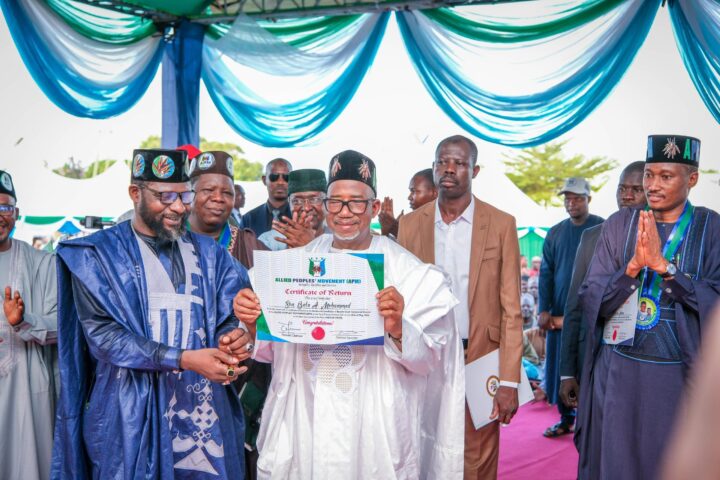
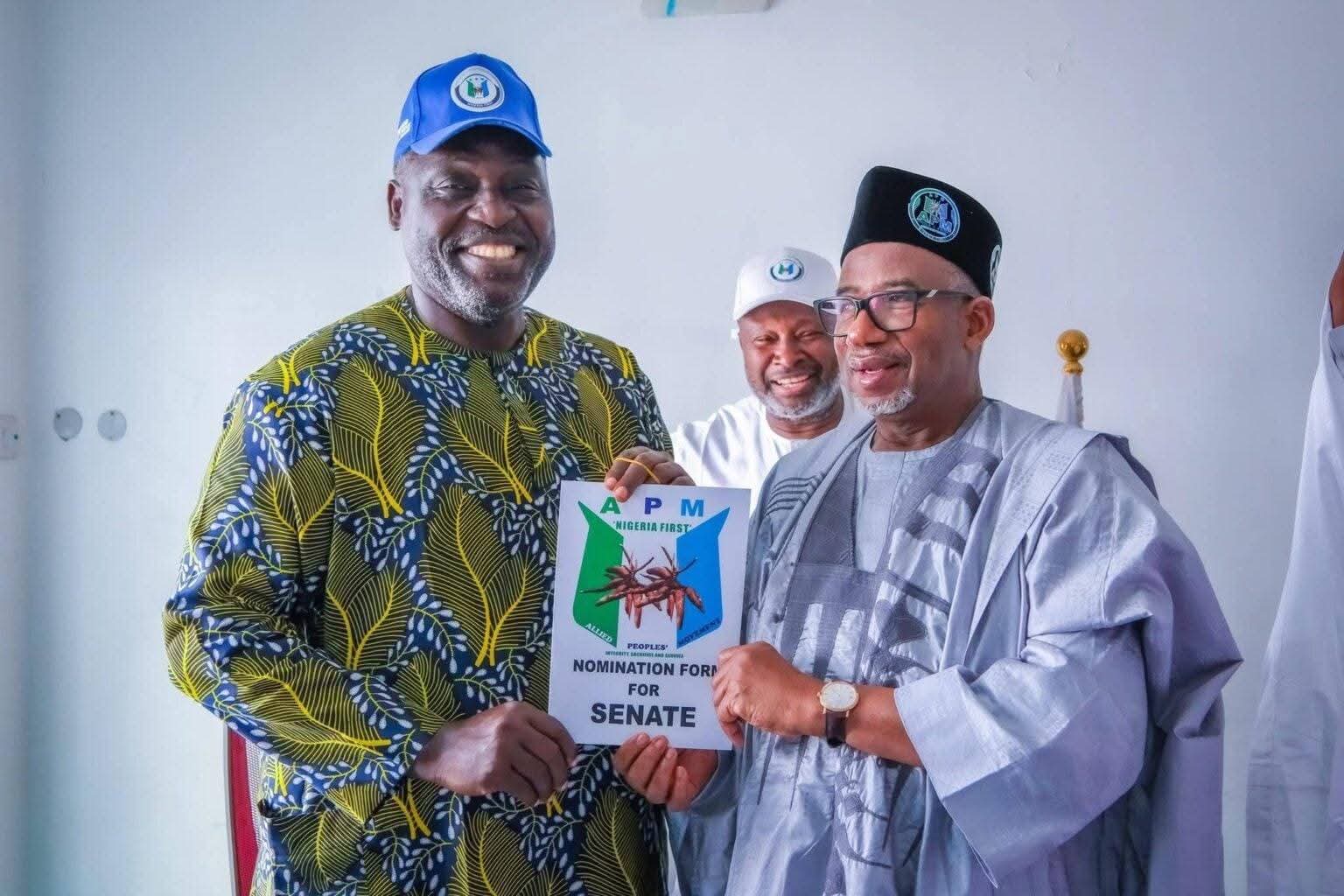
Bauchi State Governor, Bala Mohammed, has picked the senate nomination form of the Allied Peoples Movement (APM) five days after formally joining the party.

Mohammed resigned from the Peoples Democratic Party (PDP) on May 2 and moved to the APM, citing prolonged court cases and internal disputes within the PDP as reasons for his departure.

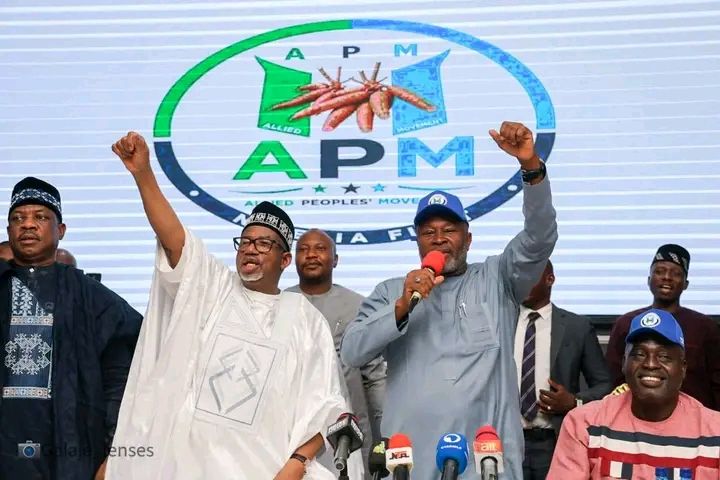
In his statement issued on Thursday, the governor confirmed that he picked the nomination form during the APM National Executive Committee (NEC) meeting held at the party’s national headquarters.

“During the meeting, I officially picked up my nomination form to contest for the senate seat representing Bauchi south senatorial district under the platform of the APM ahead of the forthcoming elections,” he said.

The NEC meeting was presided over by Yusuf Mamman Dantalle, the party’s national chairman, and focused on key national and internal party issues. The session also provided an opportunity for Mohammed to formally engage with the party’s leadership structure.

He noted that Nigeria’s political environment has become increasingly difficult due to “undemocratic practices and political intimidation”, which he said have limited genuine participation for progressive leaders and movements.

Following consultations with political associates, stakeholders, and supporters across the country, Mohammed said the APM emerged as the most suitable platform for his political direction.

He explained that the party aligns with his political values, especially in the areas of good governance, internal democracy, justice, inclusiveness, and respect for the rule of law.

“I further emphasised that our decision to join the party was driven by conviction and the desire to contribute meaningfully to building a stronger democratic culture in Nigeria,” he said.

Mohammed also disclosed that several political office holders and stakeholders who were previously aligned with the PDP structure in Bauchi have followed him into the APM.

These include members of the National Assembly, the Bauchi State House of Assembly, local government chairmen, commissioners, ward executives, party officials, and other supporters at the grassroots level.

The governor assured the party leadership of his commitment to contribute resources, experience, and political support toward strengthening the APM ahead of future elections.

Gov. Kaura’s Defection to APM: A Political Suicide or a Stitch in Time?

By Usman Muhammad Salihu

In politics, timing is everything; at the same time, timing alone is never enough.

The defection of Governor Bala Abdulkadir Mohammed (Kauran Bauchi) to the Allied Peoples Movement (APM) has continued to generate debate. With key loyalists reportedly moving with him, what initially appeared as a risky political leap is now being interpreted by some as a calculated repositioning.

But beneath the surface of strategy lies a more complex electoral reality, one that could ultimately decide whether this move succeeds or collapses. At the heart of the argument is the voter.

While Bauchi State has seen moments when lesser-known parties gained traction, particularly at the legislative level, where individuals have won seats in the State House of Assembly outside dominant party structures, statewide or nationwide politics operate on a far wider and more demanding scale.

The dynamics are different. The visibility is broader. The stakes are higher. And most importantly, party identity still carries significant weight.

At the level of electoral reality, however, the risks cannot be dismissed. Nigerian elections—especially at the governorship level—are still heavily influenced by party identity. Voters, particularly in rural strongholds, often associate credibility with established platforms rather than emerging ones.

In that sense, defecting to a less dominant structure, such as the Allied Peoples Movement, introduces an immediate disadvantage: the loss of automatic party loyalty.

Campaigning under such conditions creates a double burden. It is no longer just about selling a candidate—it is about introducing and legitimising a political platform simultaneously. That dual responsibility can stretch time, resources, and political influence thin, especially in a competitive race involving the All Progressives Congress (APC) and the emerging coalition around the African Democratic Congress (ADC).

From this view, the move carries a real risk of political isolation if voter perception does not align quickly enough with elite-level strategy.

Yet, it would be premature to interpret the move purely as risk. Nigerian political history also rewards early structural repositioning. Movements that eventually became influential often began as unpopular or misunderstood alignments.

In that context, Gov. Kaura’s move may be less about immediate electoral gain and more about long-term political architecture—building a platform where loyalty is personal, structure is controlled, and direction is defined internally rather than inherited from party hierarchies.

There is also a strategic possibility that this move is an attempt to build or shape a movement similar in political culture, if not in scale, to the Kwankwasiyya associated with Rabiu Musa Kwankwaso, a structure rooted in identity, loyalty, and grassroots emotional connection rather than party stability alone.

If sustained, such a model can evolve into a political identity strong enough to survive beyond a single election cycle. But like all movements, it requires time, consistency, and deep voter penetration.

If the electorate does not understand or accept the new platform in time, the strategy weakens. If the structure grows slowly but steadily, the strategy strengthens. Either outcome is possible.

Because while elite political calculations move fast, voter acceptance does not. And in elections, voters, not strategy rooms, ultimately decide outcomes. So, is Gov. Kaura’s defection a political suicide or a stitch in time?

From one angle, it introduces clear electoral risks that cannot be ignored. From another, it suggests a longer-term ambition to build something more controlled and identity-driven. Both interpretations hold weight.

So whether this move is a masterstroke or a misstep remains uncertain. The calculations may be clear. The intentions may be bold. But in politics, certainty is a luxury.

For now, all eyes remain on the unfolding reality… because, in the end, time will tell.

Usman Muhammad Salihu writes from Jos, Nigeria, via muhammadu5363@gmail.com.

BREAKING: Bauchi Governor Bala Mohammed Dumps PDP, Joins APM

By Sabiu Abdullahi

Bauchi State Governor, Bala Abdulkadir Mohammed, has officially left the Peoples Democratic Party (PDP) and joined the Allied Peoples Movement (APM) after weeks of consultations.

He made the announcement on Saturday at the Government House. His decision comes after prolonged uncertainty about his political direction. The uncertainty followed the internal crisis within the PDP.

The governor had earlier described the party as “headless”. He also showed readiness to consider other political platforms. Observers believe his exit could weaken the PDP and affect its grassroots strength.

Speaking on the recent Supreme Court ruling on the PDP leadership dispute, Mohammed said the judgement stopped any group from taking total control of the party. He explained that neither his faction, led by Kabiru Tanimu Turaki (SAN), nor the group loyal to the Minister of the Federal Capital Territory, Nyesom Wike, achieved full victory.

“We have succeeded in ensuring that no single individual hijacks the party,” he said.

In an interview with BBC Hausa Service, the governor stated, “As democrats who respect the rule of law, we accept the judgement. But it is not a victory for anyone.”

He added that the party’s Board of Trustees would manage its affairs for now. He said this arrangement would remain until a caretaker committee is formed in line with the party’s constitution.

Mohammed also accused Wike of acting against the interests of the PDP. He alleged that the FCT minister and his allies maintain links with the ruling All Progressives Congress (APC).

The governor said his defection aims to provide a stable political platform for his supporters ahead of the 2027 general elections.

“Our hearts remain with the PDP, but politically we must move forward,” he said.

He also confirmed plans to contest the Bauchi South Senatorial seat in 2027. He noted that his move to the APM followed consultations with other political parties.