
![[OPINION]: The Confidence to Stand, By Maji Bappa Maina](https://dailyrealityng.com/wp-content/uploads/2026/08/IMG-20260827-WA0000-160x160.jpg)

Sacred Sound Emission: Untangling human corruption from divine injunction
By Binyamin Lawal
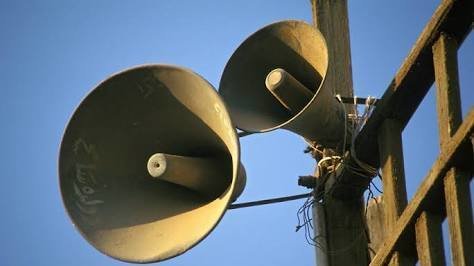
Researchers often point to the dominance of virtual culture and modes of visual perception that organise everyday life. However, in a place like Nigeria, “public sound is a far greater presence and comes to constitute the ambient environment” (Larkin 2014: 992). Out of these multiple sounds, those disbursed with a glaring presence are those emanating from the sacred spaces. As a focal space for the generation of piety, one wonders whether such disbursement of sounds ‘piety’ is indeed achieved. This is one of the questions we should reflect on as we step into the month of Ramadan.
Ramadan is the ninth month of the Islamic calendar in which fasting (Arabic: saum) is prescribed for Muslims so as to attain the status of Al-Muttaqūn (the pious: those who fear Allah and abstain from sins and evil deeds) (see Q 2: 183). Due to the special position of the month, Muslims live a substantial part of the year attached to it. They either pray to witness the month or pray that Allah accepts their acts of worship during the month.
Now, as the month of Ramadan begins, we need not only to reflect on improving our piety but cultivating attitudes of not inflicting harm to people as well. In other words, while we encourage people to come closer to Allah through good conduct, we should refrain from other actions capable of eating up our good deeds.
While Ramadan is the season where Muslims come closer to Allah and increase their piety – as stated above, activities that cause inconvenience to others must be avoided since avoiding the infliction of harm to humans is in itself an act of worship (Ibadah). Against this backdrop, the usage of loudspeakers, especially at night, needs to be regulated during the month and particularly the last ten days. In this regard, I would like to recount – from my memory – what I heard from a Kano-based Islamic scholar who responded to a question on the emission of sounds far beyond the sacred space.
In his response, he pointed out that doing that causes a lot of inconvenience to people around. As such, it is ‘unlawful’. He explained that some might want to pray in their houses, and the sound of the recitation dominating the public space will not allow them to have the needed silent atmosphere. Others may just want to sleep. Both are denied the silence and decorum they genuinely deserve.
In this regard, we should also be mindful of those willing to engage in prayers the whole night but cannot due to the kind of work/business they do during the day. After all, in their case, doing the work during the day to keep up their responsibilities is wajib (compulsory), while the prayers are recommended.
The night, as we know, is a special time to seek closeness to Allah, at the same time, a period of rest; “And We have made your sleep as a thing for rest, and We have made the night as a covering (through its darkness)” (Q 78: 9-10). Sleep, which is meant to be a rest, as stated in verse 9, is complemented by the covering provided by the darkness of the night to give us respite from the exertions of the day. That must be respected as we engage in our Qiyāmul-lail.
Furthermore, the Sheikh emphasised that our public spaces are shared between Muslims and Christians who don’t partake in Ramadan activities, so why incommodes them? In addition, one could also think of the sick persons whose sleep may be interrupted. Observing the act closely, one fears the salient intent of presence-making or show-off, an act that is seriously frowned at. “Say: “Will you inform Allah of your religion while Allah knows all that is in the heavens and all that is in the earth, and Allah is All-Knowing of everything” (Q 49:16).
Binyamin Lawan is a PhD student in Islamic Studies and wrote via abinyaminlawal@gmail.com.
Train blast is not a problem of Kaduna alone
By Aliyu Nuhu
When we criticize this government, some people deride us as Buhari bashers. They complain that we lack patriotism because we run down our country. But look at Nigeria today and say if it is the kind of country you want to live in or it is the kind of country you want your children and grandchildren to inhabit.
What is the fault of the government in matters that concern our security? It is because of the way it neglected police affairs. Banditry and terrorism are, among others, products of poor community policing. Humans are products of communities, good or bad. The police decide the kind of communities we have as far as crimes are concerned. Before they kidnap anyone, criminals emerge from the community and when they kidnap they return to the communities. Good police will ensure that they don’t emerge and if they do, they can’t return to the community. But today’s Nigerian police are going on strike because of poor salaries and delays in payment of even the poor salaries. Police lack all working tools from the basics such as lie detectors, electricity, and computers; to the complex ones such as data banks for fingerprints and DNA.
Whenever there is a bomb blast you see the president holding emergency meetings with service chiefs. That is missing the point. What have navy, airforce and army got to do with attacks on the train? The president should hold his emergency meeting with police high commands, NSCDC and DSS. That is where the missing links lie.
The military ordinarily has no business safeguarding railways, doing the work of police, DSS and NSCDC. They have no budget to safeguard the railway. The military can be called to give additional firepower to the police when there is a need but they have no solution to the problem and cannot prevent future attacks.
The railway is a product of technology and there is technology to protect it. Only Nigeria will invest so much in railway and refuse to deploy the technology to protect it. There are real-time intelligent railway protection systems of various types to deploy. The minister for transportation had made such a request after the first attack which was denied (though the request was later accused of being through a seemingly corrupt process). The second attack has made the president see the reasons and approved of the technology. I hope that with the new measures, future attacks on railways will be prevented.
Who were the attackers?
According to the Daily Trust, a Kaduna security source, who did not want his name in print, said the attack was carried out by Boko Haram elements in collaboration with bandits.
“Two sources; a local with knowledge of bandits’ activities and a senior intelligence officer in Abuja confirmed that a Kaduna-based bandits leader, Boderi, was involved in hatching the attack.
Boderi is notorious for masterminding a number of atrocious attacks in Giwa, Chikun, Igabi and Zaria Local Governments in Kaduna State, including the abduction of students of the Federal College of Forestry Mechanisation, Afaka, in March last year and kidnapping of the Emir of Bungudu, Alhaji Hassan Attahiru in October of the same year.”
Also, victims said they were not the regular Fulani kidnappers that carry out their raids on the highways. They said they were very young boys between the ages of 18 to 25 years and spoke good English. Some of them were pronouncing “Allahu Akbar”. It pointed to either Boko Haram or ISWAP. Deployment of IED technology is Boko and ISWAP franchise. The attackers used buses, unlike the Fulani kidnappers that use motorcycles, an indication that they came from a long distance. How about 200 terrorists came in buses and carried people and disappeared into thin air beat all minds. There was no single casualty on the side of the attackers and no one was captured. We have a long way to go in security matters.

Breaking: Ramadan crescent sighted in Saudi Arabia
By Muhammadu Sabiu
The crescent, which signifies the beginning of the month of Ramadan, has been sighted in Saudi Arabia, Haramain Sharifain confirmed in a statement on its verified Facebook page today.
“Crescent was SEEN in Saudi Arabia today. Subsequently, the month of Sha’ban completes 29 days today and tomorrow, i.e. Saturday, 2nd April 2022, will be the first day of Ramadan 1443,” the statement read.
This marks the beginning of the Muslims’ act of fasting for 29 or 30 days, not only in Saudi Arabia but across the world.
It can be recalled that even in Nigeria, the Sultan of Sokoto, Alhaji Abubakar Sa’ad III, has urged the Muslim faithful to come out today in search of the Ramadan crescent.
Airspace and aviation security in Nigeria: Matters arising
By Mukhtar Ya’u Madobi
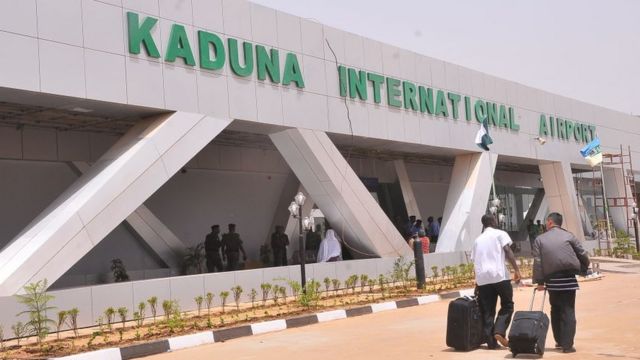
Another national embarrassment almost happened over the weekend. But alas, it wasn’t fated. Reports indicated that a group of bandit-terrorists, about 200 swarmed the Kaduna International Airport located in Igabi Local Government Area of the State.
The incident temporarily led to the disruption of activities, including the grounding of an Azman Air Lagos-bound aircraft. In addition, a security officer attached to the Nigerian Airspace Management Agency (NAMA) also lost his life.
It was learnt that the terrorists were on a revenge mission after some Nigerian military troops neutralized scores of them and equally retrieved some rustled cattle in their possession.
However, this unfortunate development is coming after another security breach had occurred last year, when the same category of criminal elements–bandits–invaded the country’s highest defence and security training hub, the Nigerian Defence Academy, NDA, in Kaduna.
Aside from killing some soldiers, reports claimed that the bandits abducted a senior military officer.
Nevertheless, the level at which these non-state actors are resurging and unleashing violence at will is something that needs to be treated with the adequate attention it deserves. Government and security agencies should live up to their expectations to surmount these lingering security challenges that disturb our nation’s peace.
It has been noted that an efficient transport system is part and parcel of national security as it entails the movement of people and goods from one place to another across the length and breadth of a particular geographical location. But in today’s Nigeria, it is disheartening to learn that people no longer travel comfortably with peace of mind due to uncertainties associated with our entire transport system.
For example, looking at the land transport system, the roads are in bad shape caused by numerous potholes that can easily plunge a motorist into an accident. Apart from that, the roads are also not safe as bandits, kidnappers and armed robbers are always having a field day launching attacks on commuters, robbing them of their hard-earned properties, abducting or even killing them.
Even the trains are no longer safe as terrorists have since devised a means of exploding rail tracks, thereby forcefully bringing them to a halt to pave the way for them to carry out their nefarious activities on passengers.
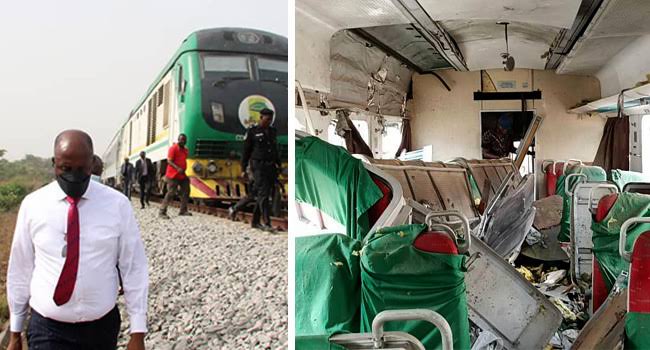
The recent bombing of the Kaduna-Abuja rail track by bandits is one of the worst attacks on the Nigerian transport system. Several passengers were killed, others got injured, while scores were equally abducted and yet to be accounted for.
Similarly, Nigeria’s waterways are also dangerous because they are swarmed by pirates who rob ships and sometimes abduct the entire crew only to release them upon payment of ransom. With the recent attack on the airport, it is right to deduct that the entire Nigerian transport system is compromised and has lost its calibre to serve the functions it is known to deliver.
The time is long overdue for Nigeria to rise to the challenge of safeguarding airspace and other transport sectors from the menace of criminal elements.
The importance of airspace and aviation security has been captured effectively in Nigeria’s National Security Strategy (NNSS 2019), a document published by the Office of the National Security Adviser (ONSA), Babagana Monguno, a retired Major General.
According to the document, “Efforts to secure the Nigerian airspace will be led by the Nigerian Air Force (NAF) in collaboration with other relevant agencies. Considering the vulnerability of the airspace, the NAF will employ preventive and protective measures to guard against airspace violations through [the] enforcement of international and national air laws.
“In addition, the NAF will deploy its resources to ensure the integrity of Nigerian airspace is maintained at all times. This will include [the] conduct of aerial surveys and delineation of security zones and liaison with appropriate agencies towards the completion of the Total Radar Coverage of Nigeria (TRACON) project to ensure effective monitoring and airspace security.
The primary stakeholders principally concerned with safety and security in the aviation sector include the Nigerian Civil Aviation Authority (NCAA), Nigerian Airspace Management Agency (NAMA), the Federal Airports Authority of Nigeria (FAAN) and the Nigerian Air Force (NAF), among others.
The role of these agencies is expected to be coordinated and enhanced in line with extant legislation and policy on Nigerian Aviation Security.
Nevertheless, another evolving phenomenon in airspace security is the preponderance of drones which constitutes safety challenges such as air misses and mid-air collisions with manned aircraft and security challenges such as air space violation, penetration of prohibited airspaces, a threat to VIP security, terrorism and espionage. Others are law enforcement challenges such as drug trafficking and proliferation, all inimical to national security.
To properly secure airspace and the aviation industry, the government must ensure the continuous provision of modern and up-to-date equipment and the promotion of adequate training and professionalism of various agencies handling different aspects of aviation security.
Additionally, Standard Operation Procedures must be developed to streamline the roles and responsibilities of the various agencies to optimize their performance and enhance the cohesion of their personnel.
Furthermore, it is imperative to ensure the development of standard safety protocols and resilience to protect critical aviation information infrastructure against cyber-attacks to enhance aviation security.
Mukhtar wrote from Kano via ymukhtar944@gmail.com.

The burning train of a burning country
By Khadijah Tijjani
It has been a while since I wrote about issues of national interest. I have decided to steer clear of such conversations because I doubt if it is really worth it. I used to pride myself in being a patriotic Nigerian until about a decade ago when the post-graduation shock shook me to the marrow.
Fresh out of medical school, I was determined to serve my country “with love and strength and faith”, using my knowledge and skills. But I was greeted with a cold welcome into a moribund system – a system that had almost nothing to offer but was ready to suck your sweat and blood and abandon your remains when you’re done with your heroism.
This is not about me and how I lost hope in the fatherland. If I’m still alive, I’ll tell you the whole story some other time. My grouse for today is stimulated by the recent terrorist attacks on the Kaduna-Abuja train. I’m sorry to bore you with this rant; I hope it makes me feel better. I’m just here to let it out and stop pretending to be oblivious.
I despise horror and tragic movies because of some traumatic scenes I watched as a kid. One of such movies is THE BURNING TRAIN, a Bollywood blockbuster that made waves in the early 80s. Vinod, a railway engineer, launched the Super Express, a dream project that was India’s fastest passenger train. Unfortunately, the train went out of control on its maiden journey due to a bomb planted by a rival. Directed by Ravi Chopra, the movie was known to have moved millions of people to tears.
Every time I replay that movie in the part of my brain that stores it for over two decades, I struggle to hold back the tears.
I never imagined something strikingly similar happening in real life, claiming several lives so close to home. The terrorists, having succeeded in stopping the Kaduna-bound train, reportedly shot sporadically and held the stranded passengers hostage for over an hour.
One of the victims was a promising young colleague – Dr Chinelo. This was a brilliant doctor who could have discovered the next best treatment for cancer, HIV or another disease yet unknown. But instead, she was wasted a few days after obtaining her GMC licence to practise in the UK.
Could she have survived if we had quick and effective disaster response teams? Only God knows.
She was lucid enough to tweet a distress call and probably breathed for a couple of hours before kicking the bucket. But what sort of treatment did she get? Welcome to Nigerian hospitals!
The train attack happened less than 24 hours after a similar incident along the same route. This mishap rekindled my memory of that catastrophic movie, The Burning Train. I’ve been trying not to talk or write about it, but my heart can no longer contain the pain.
I am a woman of faith and believe in the power of prayers. However, we’re on a burning train in this country, and faith is not enough to quench the fire.
This train is burning, and the political leaders are going about their rallies, spending millions of naira on branded clothes and live bands.
This inferno is consuming the best amongst us, but the worst amongst us are winning and dining.
This country is burning like wildfire, but there’s no fire truck anywhere.
They say there is light at the end of the tunnel. But the end of this burning tunnel is obscured by thick smoke that can kill faster than the fire itself.
We seek your aid, yaa Allaah!
Khadijah Tijani is a medical doctor. She writes from Ibadan and can be reached through askodoctorkt@gmail.com or @AskDoctorKT.

Is prayer genuinely worthless?
By Usama Abdullahi
I came across a post from a supposedly intelligent person in which he foolishly stated that prayer is worthless and doesn’t count. What surprises me more is that he’s a practising Sufi Muslim. It’s hard to believe that Sufism teaches people to utter things or act contrary to the teachings of Islam. Even though I’m neither a pro-Sufism nor share similar ideologies with any of them, I still don’t think Sufism teaches people to behave and write irrationally as that self-deluded person.
He believes that being realistic or pragmatic is the only solution to the everyday security challenges troubling this country. While I agree with him that being practical is one of the surest ways that could help bring such age-long challenges into a state of discontinuity, yet, on the other hand, I disagree with him that our prayers are usually obsolete and worthless. Perhaps unknown to him, prayer is but a spiritual tool that fends, heals and grants the guided people some peace of mind.
Prayer is a beautiful and easiest way of expressing our deeply felt gratitude to God for his mercies upon our dear lives. It describes how thankful, devoted and religious we are towards our creator. The problem with that person is that he’s shifted his focus on God and thinks that his so-called realistic mind provides him with the answers to all the lingering security threats we are experiencing in this country. Well, that’s the biggest blunder one could ever make.
When we stray or rather deviate from the right course, our minds often tell us things differently. Our minds would make us feel liberal and lure us into acting in the wrong way. Sometimes it makes us view things narrowly, which is not how they seem in reality. It simply corrupts and deceives us. The manner we reason speaks volumes about how we often tend to foresee the future.
As humans, we are capable of being wrong at any time. But it is funnily unrealistic to believe that your ideology is always appropriate and should be followed. Over the years, I have come to terms with the belief that one with higher academic qualifications doesn’t mean they are the most knowledgeable among people. I respect people’s opinions, but only when they appear rational. Abusive and persuasive views are sure to be avoided because they can instigate hostile disagreement among people like this.
I don’t see prayer as a worthless thing. Even if I feel it doesn’t count, I will keep on praying. Indeed, I believe in the miracle of prayers. I know God answers prayer. He has told us in the Holy book that we should supplicate and call on him whenever we get into trouble or need something. My or your prayers might be delayed but not rejected. When this happens, the Holy book always reminds us to be patient because patience pays.
And prayer is also an act of worship. Moreover, it shows the level of one’s faith in God. I know we cannot pray all of our problems away without being pragmatic in confronting and dealing with them. Yet that shouldn’t give us the green light to decidedly underestimate the power of prayer, for it’s a natural remedy on its own.
Prayer saved Prophet Isa (Jesus) from the brink of crucifixion. Prayer protected Prophet Muhammad (S.A.W) and his companions against their ruthless foes. Prayer saved Prophet Abraham when thrown into the fire by his people and prayer attracted God’s sympathy and mercy over Prophet Yunusa (Jonah) when he got drown and swallowed by a whale. Despite going through hell, Yunusa still prayed to God and was happily rescued afterwards. So, how would you expect me to buy into your notion that prayer is worthless?
Usama Abdullahi wrote from Abuja, Nigeria. He can be reached via usamagayyi@gmail.com.

Is Gov Bala marginalising Bauchi North?
By Mallam Musbahu Magayaki
It’s no longer news that the uncontrollable fire outbreak on Monday, March 21, 2022, in Azare central motor park consumed millions of Naira properties, and others were left casualties.
However, if you can vividly remember, on Friday, April 02, 2021, Katagum Local Government Area’s firefighting truck had a tragedy on its way to an emergency salvage. The occupants of the zone have been lamenting, on top of their voices, over the provision of an out-of-order firefighting truck. Sadly, their tears have not yet been wiped out by the governor.
Since our firefighting truck had an accident that resulted in its damage, the executive Governor of Bauchi State, Senator Bala Mohammed Abdulkadir, has been playing possum with incessant fire outbreaks.
Since the firefighting system was damaged nearly a year ago, many lives, particularly those of children and women, have been lost due to uncontrolled violent fire outbreaks on properties worth millions of naira.
The people of Katagum LGA and the entire constituents of Bauchi North are completely taken aback by the enigmatic silence of the government. They voted for the governor, expecting him to keep his mind on serving them from the bottom of his heart, regardless of region, tribe, or ethnicity.
We expect our governor to be that good listener leader. But, Governor Bala’s mysterious silence and the way he turns a blind ear to the constant fire outbreaks consuming the lives of innocent people of our LGA signal as if he is not an empathetic leader.
In conclusion, we, the people of Katagum LGA and the entire constituents of Bauchi North, are begging Allah (SWT), weeping and pleading with Him to make our governor empathise with us and wipe off our tears by providing a new firefighting truck for us, amin.
Mallam Musbahu Magayaki wrote from Sabon Fegi, Azare, Bauchi State. He can be reached via musbahumuhammad258@gmail.com

Automatic employment to first-class graduates will worsen Nigeria’s dwindling education system
By Ambali Abdulkabeer
During a plenary on Wednesday a couple of weeks ago, a member of the House of Representatives, Emeka Chinedu Martins, moved a motion titled Need to Grant Automatic Employment to First Class Graduates. It means that all first-class graduates in Nigeria should be given automatic employment. He stressed that the move would minimize the rate at which intelligent graduates troop out of the country on a daily basis in search of better opportunities abroad.
He also argued that Nigerians would be discouraged from seeking admission into universities abroad in the hope of getting well-paying jobs upon their graduation. But, much as fabulous as this motion appears on the surface, it will lead to a total collapse of Nigeria’s already battered university education. Here is why.
It is a simple fact that university education in Nigeria has changed from being a source of automatic access to decent jobs. In the past, people with university degrees were begged to take up well-paying jobs right from school time. Upon graduation, opportunities surfaced in numbers because there were already places in government and private institutions in need of their priceless knowledge and skills. In Nigeria today, given the terribly saturated labour market due to the government’s continued irresponsibility, graduates, including those with first-class, roam the streets in search of good jobs that are not available.
This reality is worsened by the culture of ‘job sale’ which affords well-to-do individuals and politicians the illicit opportunity to buy jobs for their children and their mistresses, usually at the expense of brilliant but poor graduates. As this continues to drive employment philosophy in Nigeria’s public and private institutions, graduates seek opportunities elsewhere because they no longer believe in the system.
Should the motion transmogrify into law, the entire university system will completely pass as where everything goes only for students to graduate with any class of their choice. In other words, one of the dangers of the thoughtless move is that the university certificates will become ruthlessly commodified. Students that know their way will graduate from settling lecturers for good grades to going to any length to secure a class they don’t deserve, thereby rendering university education more irrelevant than it has been.
Consequently, recruiting empty-headed first-class graduates into severally sensitive government institutions means that the country will be in more disaster. After all, it’s no longer news that Nigeria is notorious for the culture of placing the wrong hands in the right places or vice versa. That’s why both federal and state civil service systems are rife with people that constitute a threat to the country’s progress.
Automatic employment to first-class graduates, needless to say, isn’t a bad idea at all, but that is in a country with a serious, trustworthy and top-class university education system. But unfortunately, Nigeria’s university system is grounded in systemic crises ranging from corruption, lack of human and material resources and others. This is manifest in the ongoing closure of universities due to the ASUU strike emanating from the government’s poverty of sincerity in public education and lack of interest in the welfare of lecturers.
In lieu of giving automatic employment to first-class graduates, the government should be advised to start fixing our dwindling education system first. They should begin to place a premium on genuine education as the foundation for the prosperity the country urgently demands. The fixing should start with a cosmopolitan review of the university curriculum to align our system with the 21st century.
Moreover, it won’t be a bad idea for the government to learn from the education systems of developed countries of the world while working tirelessly and sincerely to strike an innocuous balance between our reality and what our education system deserves to be globally competitive. If truth be told, a university education that graduates cannot leverage to live a decently meaningful life is an embarrassment.
Government must cease being wasteful and corrupt. A considerable amount of money diverted to fund irrelevant projects such as elections should instead be used to rejig our deteriorating education system. Nothing is as depressing as the fact that most Nigerians don’t have a smidgen of belief in the ability of the county to make their dreams a reality. That is why they prefer staying in countries other than Nigeria.
On a final note, what kind of illogical plan deems a crop more critical than the soil that produces it? This question analogically says a lot about the thoughtlessly greedy perspectives of our leaders who are supposed to lead us in the match to make our education system enviable and standard.
Ambali Abdulkabeer is a writer and critic of contemporary writing. He can be reached via abdulkabeerambali@gmail.com.
El-Rufa’i: A politician without political ambition?
By Safiyanu Ladan
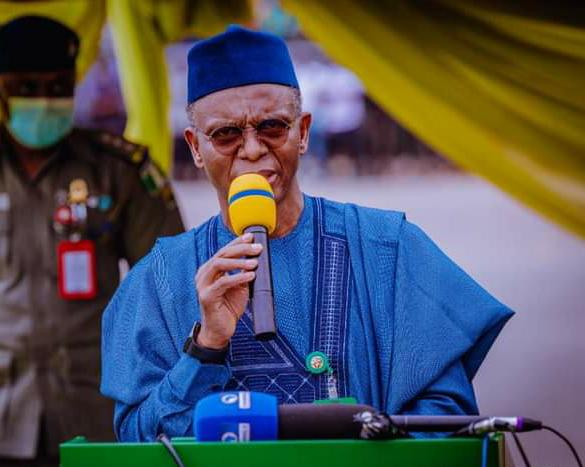
While speaking on Channels TV program Politics Today, the governor of Kaduna state, Malam Nasiru Ahmad El-Rufa’i, said he’s currently not vying for any office come 2023. The governor, whose tenure is elapsing in the next fourteen months, insisted that he’s not interested in any political position.
“I have said it over and over, but I guess the trust in politicians is very low. Nobody believes me. I have said over and over that, I’m not a contestant for any office. I’m not an aspirant for anything,” he said.
“Rotimi Amaechi is interested in running for president. He has the right to do so, but I’m not running for anything. I’m not going to be on his ticket.”
He gave an impression that he had never wanted to run for the office of the governor of Kaduna state in 2015, but President Buhari prevailed over him. Because he has so much respect for the President, he reluctantly accepted to run.
The essence of being in politics is to have political ambition, which includes aspiring for a higher political position. Political ambition dictates the activities of every politician and can go to any extent in fulfilling their aspirations.
Yet, Mr El-Rufa’i remains the only politician in the history of this country without any political ambition that came out on national TV endorsing the removal of the National Chairman of the APC caretaker committee. Therefore, one can’t help but ask what the governor’s motive is?
It’s high time for this politician to stop deceiving us. We already know that the ambition of every politician is fixed and well defined. It’s nothing other than being in a political position.
Safiyanu Ladan wrote from Kaduna. He can be reached via uncledoctor24@gmail.com.

Narrating our story from the inside
By Abdul Muttalib Muktar
Growing up in a community like our own does not avail one’s face with the chance to glow with smiles. On the contrary, due to a series of nightmares, one often thinks we live in an entirely different world.
It is not our personal choice to become drug addicts at a tender age. Despite knowing that we are a nuisance, we feel sad when referred to using derogatory terms. But what people sadly fail to understand is that we are a creation of our community. Should we be conceived and be given birth again in an entirely different society with an established family institution, where the quality of children is prioritised, we would not grow up to be a nuisance as we are today.
Some of us have already gone mad because of excessive drug abuse; many of us are in prisons awaiting trials for many offences, a lot of us are scattered across different markets and parks. We pickpocket, steal and cause trouble; some of these troubles even escalate into ethnic and religious crises. The number of us caught in the act are wounded, others lynched. We terrorise our community today by the commission of robbery, burglary, housebreaking, thuggery and phone-snatching while stabbing our victims with sharp objects.
We grew up under no umbrella of a family. Right from our toddling days, the family becomes broken. Our fathers get married again and again to new wives–these wives are scattered into different rented places. Our mothers also get married, move to new houses where they begin a new life, give birth to a new generation of children, and abandon the old generation.
We begin to fend for ourselves from the age of nine or ten. One could see us inside, smelling gutters, dirty rivers, dusty dumping grounds and abandoned buildings, scavenging for iron, copper, aluminium, brass, etc. In the course of our search for these materials, we steal properties.
Fundamentally, we do all this to buy food and clothes for ourselves. Our younger ones are seen today in the streets following suit. It is not like we have no conscience, but the substance we have been taking and the realities that define our growth, harden our psychology. So don’t be surprised that we behave with no shred of humanity today.
We could not go to school. Some of us that started have eventually dropped out and returned to the streets because our parents prefer multiplying us rather than moulding us into responsible men.
We learn to take hard substance from the collective decision of our community – an unfortunate decision of bringing us to the world in multitude and throwing us out even before our legs could firmly hold us. We commit all the horrible acts today because our community’s tradition is that you must go and fend for yourself once you have learned how to walk. We are what we are today because some of us are forced to become Almajiris outside their towns, where they end up peering at other versions of ourselves.
Sadly, the central and local authorities and a vast majority of the people derive pleasure in cursing and punishing us for our deviance. They never bother to ask questions, much less search for answers. No wonder my peers are multiplying, reaching a point of outnumbering the responsible ones in the community.
Abdul Muttalib Muktar can be reached via abdulmutallib.muktar@gmail.com.