


The polyethnic-state-policy we need
By Lawi Auwal Yusuf
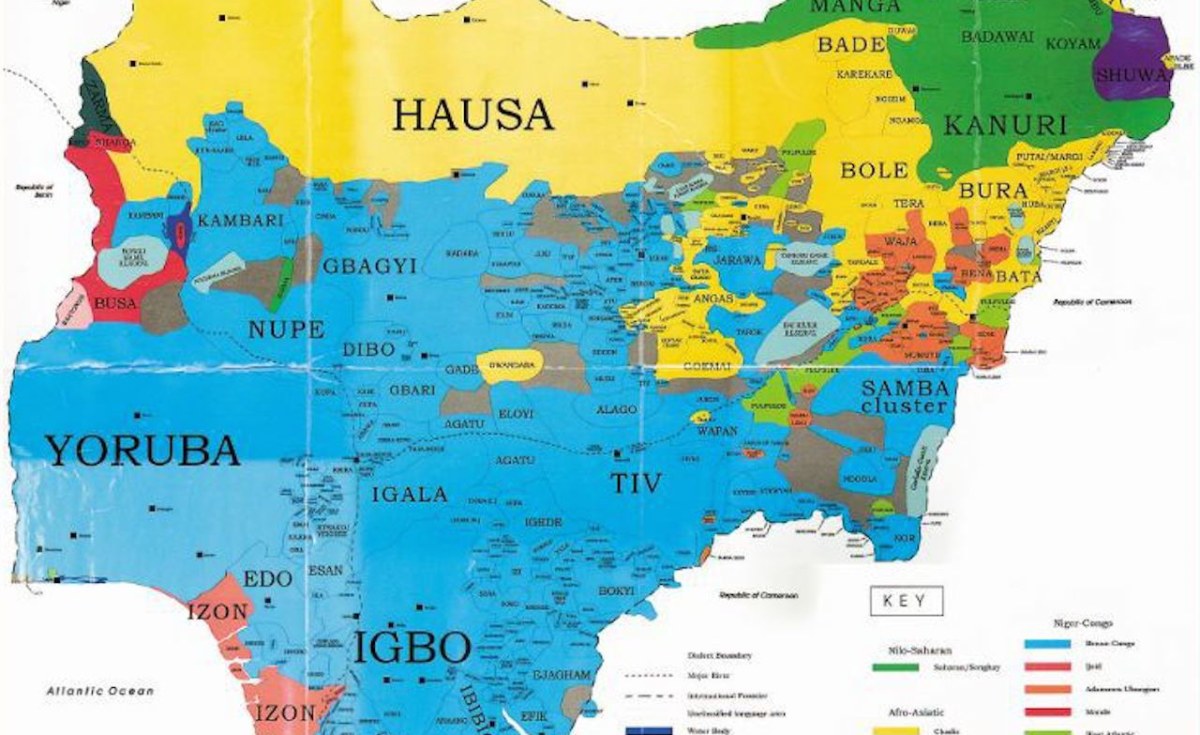
Several innovatory constitutional devices, administrative and technical solutions were tried to resolve the sectional tensions that, minimally in writing, attempted to enhance tolerance and political affinity between the heterogeneous regions of our dear country, Nigeria. These supposed solutions failed because they were unfounded paperwork, if not lip service.
The dispositions of politicians denote that they have no true intentions of dissipating all forms of religious and tribal harassment that undermine Nigeria’s progress as a diverse but cohesive society. They exploit the divisions for political deceit and their malicious divide and rule tactics. Politicians misuse the distinctions to garner more support, increase popularity and gain votes. But the effect is that it augments people’s consciousness of the differences and raise the importance they affix to them.
Hence, there exist mutual antipathy among the ethnicities. They strongly hold ethnic prejudices and stereotypical views against each other and counter-blaming themselves for the country’s woes. Frequent destructive fracases, secessionism and bloodshed depict Nigeria.
We need a poly-ethnic policy that will help us forge a pluralist democracy that fully respects tribal and religious dissimilarities. A country that truly recognizes and values such pluralism in society. This worthwhile project must establish mutual veneration among Nigerians which is essential for a peaceful future of multiethnic Nigeria. It should socialize Nigerians to enfold cultural diversity, support multiculturalism and believe that the tribes can harmoniously cohabitate through respecting each other’s cultures.
For this dream to become reality, the policy must be accompanied by genuine efforts to eradicate poverty and inequality. Research confirmed that lack of cohesion results mainly from inequality.
This policy must emphasize universalistic moralities like supremacy and rule of law, transparency in governance, economic development and nationalist sentiments to combat the particularistic moralities of the individual tribes. This will make Nigerians united by a common purpose rather than individualistic purposes.
Also, there is an immense need of maintaining a distinct Nigerian identity to replace particularistic cultural identities. People will develop a sense of common identity. Nationalism is a powerful ideology that unites perversely fractious and ethnocentric cultures effectively. It leads to a sense of sameness, uniformity and also bring people into closer fraternities. This will help them understand their differences and how to live with them. Therefore, tolerance will manifest and subsequently love will flourish among them. Diversity will be a source of strength, unity and progress.
Good leadership must be the leading force in this trip. Ethnic favouritism and turning public office an instrument of creating wealth for acquaintances and tribal brethren must utterly vanish. Justice, transparency and equal treatment of all irrespective of closeness or ethnic background must prevail.
Furthermore, Nigeria should adopt the integration approach to ethnic relations. Ethnic relations exist where individuals show allegiance to different groups that conflict exists among them. When disputes and competition divide tribes, then integration brings them together. Conflict wither away and there will be no ethnic consciousness and therefore less potential for dispute. Integration is a permanent cure for the ailments generated by ethnic relations. This model involves a continuous process by which individuals learn one another’s language, acquire modes of behaviour, characteristic attitudes and habits. At the macro level, the process also involves the gradual incorporation of smaller groups into the mainstream culture.
Increased contact and intermingling ought to be facilitated through ensuring inter-regional trading, sports competitions and encouraging people to travel widely because contact between members of divergent tribes reduces tensions, suspicion and dispute. This will turn Nigerians into cosmopolites. Those are individuals who travelled extensively and lived in different communities. Thus, they tend to be familiar with different cultures, communities and languages. Instead of exhibiting an overwhelming loyalty to their tribes, they have intricate repertoires of loyalty and identity. Therefore, they hardly become bigots.
Institutional ethnic stratification has to be dispelled from society. Political, social and economic institutions must be crafted to help manage the differences and all indigenous people need to have equal rights whatever their social background. Policies should be devised to deal with such diversity and prevent forms of social exclusion both at the national and community levels. Equal opportunities must be given to all and these institutions must be reformed so that they no more exclude and discriminate against minorities or disadvantaged groups.
Minority cultures must be protected because resistance intensifies where the dominant groups arbitrarily oppress the interests and aspirations of the feeble minorities. The conflict may manifest either violently or through political processes. Moreover, fundamentalist convictions emerge among minorities as they become apprehensive that their cultural distinctiveness will perish as the elements of dominant cultures become integrated into their own. They retaliate to defend their cultures in malevolent ways to people from the major cultures.
Finally, it is of paramount importance to establish an agency with broader powers and scope to enhance tribal equality in Nigeria. It should have the responsibility of implementation of the new policy. Yet, it can be assigned with the tasks of promoting peaceful co-existence and provision of legal aid to victims of harassment. In the same vein, statutes should be enacted making it obligatory for government agencies and private enterprises to vigorously exterminate all forms of discrimination and ensure equal opportunities for all.
Lawi Auwal Yusuf wrote from Kano, Nigeria.
Russia to support Nigeria fight terrorism
By Uzair Adam Imam
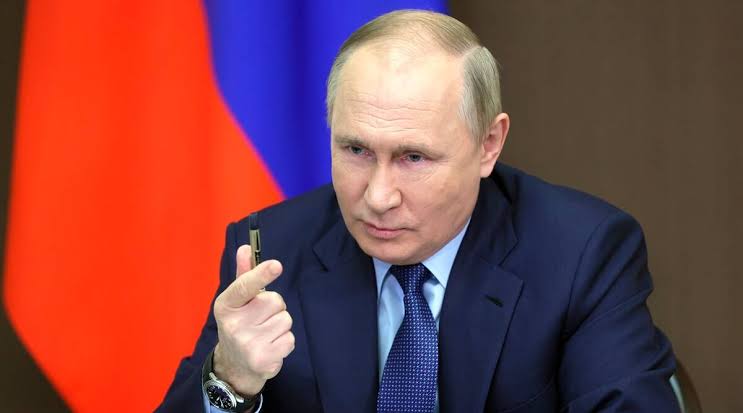
The Russian president, Vladimir Putin, has promised Nigeria his support in fighting terrorism and countering religious extremism.
Receiving the Nigerian Ambassador to Russia, Professor Abdullahi Y. Shehu, the president gave his words.
President Putin made the assurance to Nigeria adding that a “very promising expansion on substantive dialogue on topical issues related to maintaining stability in the world hydrocarbon markets, combating terrorism and countering religious extremism.”
He stated that Russia was open to mutually beneficial partnership with all countries without exception.
Putin declared that “Russia is ready for multifaceted interfaces for mutual interests with the countries that their new envoys have come to represent in Russia.”
Governor Fayemi pays tribute to Malam Aminu Kano, says he was real ‘patriot’’
By Muhammad Sabiu
The governor of Ekiti State and a key figure of the All Progressives Congress (APC), Mr John Kayode Fayemi, celebrated the late Malam Aminu Kano over his patriotism, advocacy for education and support for the poor.
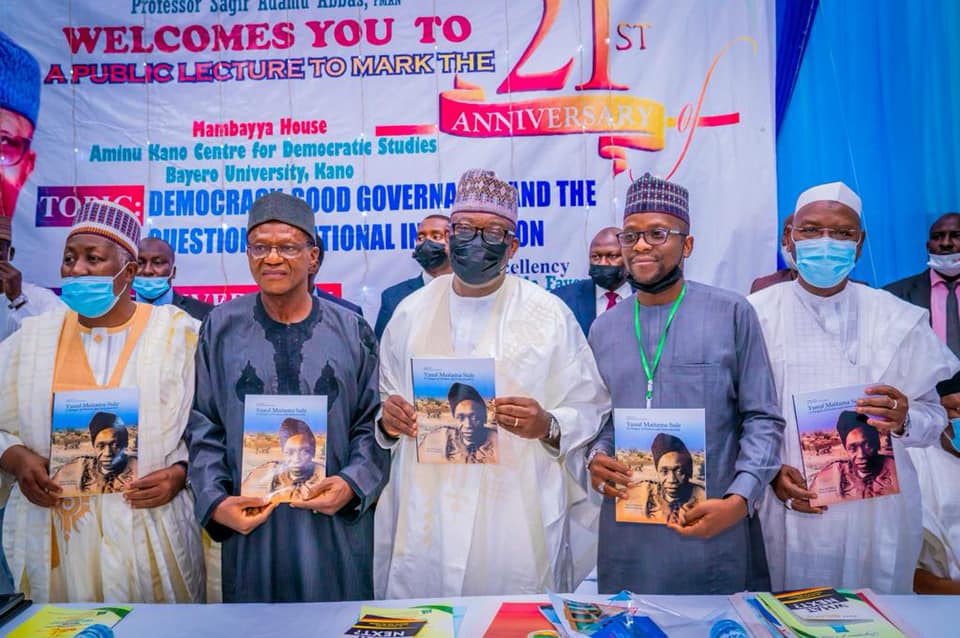
Delivering a speech on Saturday to commemorate the 21st anniversary of Mambayya House at the Sa’adu Zungur Auditorium Complex in Kano, Governor Fayemi said he was so delighted to be invited to give a talk at such an event, adding that “Mallam stood out in our entire post-colonial experience as the very anti-thesis of money politics.”
Mr Kayode’s speech partly reads: “Born on the 9th of August 1930, and as an early beneficiary of both Quranic and Western education, Mallam as he came to be known affectionately very quickly carved a niche for himself as the pre-eminent voice and champion of the talakawa – that mass of peasants, the urban working poor, and the déclassé.
“His emergence and growth into this role emanated from a deep-seated set of values that he embraced and honed at an early stage in his political career and held on to tenaciously for the rest of his life.
“Concerned by the reported excesses that were built into the colonially-licensed native authority system and convinced that the system needed to be overturned in order for the talakawa to be able to have a fighting chance to lead a decent and dignified life free of oppression, he committed himself to organise the mass of the people to exercise their agency to imagine and create an alternative political order.
“The principal agency through which he did this was the movement which he helped to found in 1950 and which was named the Northern Elements Progressive Union (NEPU). The establishment of NEPU was to mark a significant milestone in the history of political radicalism in Nigeria. The tradition of radicalism which it represented was carried over into the late 1970s and beyond by the Peoples’ Redemption Party (PRP), which Mallam Aminu Kano also led.”
Malam Aminu was a famous political figure, especially in Northern Nigeria. Public institutions named after him include an airport, a teaching hospital, and a college in Kano and other states.
Many dignitaries from around Nigeria graced the occasion. These include Governor of Jigawa State, Muhammad Badaru Abubakar; former Deputy Governor of Kano State, Prof. Hafizu Abubakar; Vice-Chancellor of Bayero University, Kano, Prof. Sagir Adamu Abbas, among others.

Why are graduates unemployed?
By Uzair Adam Imam
Every year Nigerian institutions produce thousands of graduates who come out to compete for the few available job opportunities in the country.
There is no doubt that Nigeria labour market has continued to see a steep increase in unemployment.
Professionals have argued that there is a need for urgent action to save the country from an impending danger posed by the exponential increase in unemployment.
According to the National Bureau of Statistics (NBS), the unemployment rate increased to 33.30 per cent in the fourth quarter of 2020 from 27.10 per cent in the second quarter of 2020.
Today, Nigeria battles a high rate of crimes: insurgency in the Northeast, banditry in the North West, and IPOB attacks in the Southeast, aside from the cybercrime, which is inviting to the youths.
These security threats are believed to have been caused by some circumstances, especially unemployment.
The root cause
A lecturer at the Department of Business Administration and Entrepreneurship, Bayero University, Kano, Dr Mu’az Hassan Mu’az, attempted to trace the root cause of unemployment among graduates in the country.
He said that the issue of unemployment would persist if graduates continue to look up to the government for jobs.
He added that graduates need to be self-employed to eradicate poverty and unemployment in the society.
However, according to him, one major factor contributing to the rising unemployment in society among graduates is wishful thinking of great life after graduation.
He said most students do not want to venture into small scale businesses as they think they would be employed in big offices when they graduate. This, he said, increases the number of unemployed youths in the country.
He stated, “If students will be innovative, the effect on the economy will be fruitful.
“Many will be self-employed, poverty will reduce, social vices will drop and above all, the government will generate revenue from these entrepreneurial ventures.
“Graduates will have to look inward, explore some of their capabilities so as to start something, no matter how small that could make them financially liquid.
“There are needs in the society that no one is offering to satisfy for a premium; try to do that, then one is in business.”
Unemployment breeds crimes
On his part, Malam Hassan Sule Adamu, an entrepreneurship lecturer with the Kano State Polytechnic, stated that unemployment might unfold to all sorts of crimes.
Muhd said, “It leads to societal ill-being, human trafficking, prostitution, insecurities like banditry, armed robbery, burglary, social and political crises, and any other crime.”
Students air their grievances
Several students expressed their grievances over the lingering issue of unemployment.
They urged the government to come to their aid by creating more jobs opportunities.
A university graduate, who preferred not to be named, said that he bagged his Bachelor’s degree eight years ago from Bayero University.
He added, “Since then, I have been applying for different sorts of recruitment. But, up to now, I am not employed.
“But I thank God because I am running a small scale business from which I earn my living and even help my relatives.”
Bad governance complicates the situation
Another university graduate, Abdulmalik Ibrahim, said bad governance complicates the situation.
Abdulmalik added, “Bad governance, mainly corruption and inhumanity of political leaders, contribute to the present situation in Nigeria.
Suleiman Ishaq believed that the only way to arrest the situation was for the authorities concerned to create more business and job opportunities.
Chores before health education graduates
By Mallam Musbahu Magayaki
I write to advise and to equally draw the attention of the Nigerian 2021 Health Education graduates to the vital task of putting their obtained certificates into positive and useful ways before securing various job opportunities, whether in the government or private sectors.
Some determinants traumatize many Nigerians’ healthy conditions, such as open defecation, drug abuse, and sexual assault. These factors, if our educated health graduates would voluntarily embark on advocacy visits to people living both in rural and urban communities, would be averagely diminished, if not eliminated.
Let’s take open defecation as a case study, as Nigeria is ranked as the highest country with the highest percentage of people defecating openly. They do so either because they do not have toilets readily accessible or due to unhealthy traditional and cultural practices. However, as for me, a 200-level student of health education, the practices of this determiner are prevalent in rural areas due to traditional cultural practices, as said earlier.
As a result, health education campaigns in rural and urban areas by 2021 health education graduates and those who have obtained their certificates but have yet to start working would be hugely advantageous in updating or promoting many people’s thoughts.
Some people engaged in the practice of risking diseases, either deliberately or naively, are uninformed of the hazards of their false assumptions; paying them advocacy visits would enable them to fully comprehend their harmful ideas and substitute them with knowledgeable ones. You should not arrogantly approach them, asking them to stop doing this and start doing that. No, this is not the most effective technique to teach people. Many academics argue that polite communication effectively leads to a good understanding.
Finally, several primary health care centres in Nigeria do not have enough employees to care for patients. Apart from that, our health education graduates should look for these hospitals and volunteer to serve but with a bit of incentive that would make them more zealous in rendering their voluntary services. Without the support of its citizens, no nation will be able to overcome its insurmountable hurdles.
Therefore, it is not optional but binding for us to support our country by being involved in various positive innovations that would improve our country’s potential to achieve optimally positive advancements.
Mallam Musbahu Magayaki is a 200-level student of Health Education at Aminu Saleh College Of Education Azare. He can be reached via musbahumuhammad258@gmail.com.
KASU VC: The battle for Prof. Tanko’s successor thickens
By Sumayyah Auwal Usman
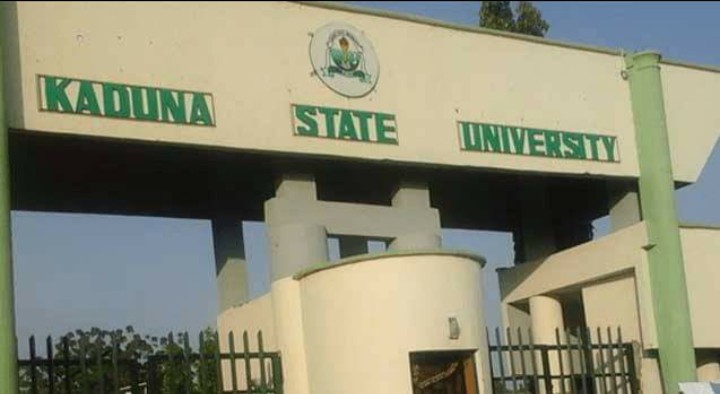
With time racing down to the end of the administration of the incumbent Vice-Chancellor of the Kaduna State University, Professor Muhammad Tanko, schemings have begun by many academics who have indicated an interest in clinching the highest executive but challenging position in the university.
Indications emerged recently that there are strong contenders within the university who are out to slug it out to succeed Prof. Tanko, as the 6th Vice-Chancellor of the University. Even though the names of the candidates have remained top secret up to the time of filing this report, there are contestants that are believed to have applied.
One of the leading contenders in the race, who many believe should have naturally been the successor to Professor Tanko is the incumbent Deputy Vice-Chancellor in charge of Academic matters, Professor Abdullahi Musa Ashafa. Before his appointment as the DVC, Academic, Professor Ashafa served as Head, Department of History, Dean, Faculty of Arts, a member of the 2nd Governing Council of the university led by Professor Idris Abdulkadir, and also Dean, School of Postgraduate Studies on two occasions. Ashafa and the outgoing VC were the first set of KASU to become Professors by promotion over ten years ago.
Another contender is Professor Yusha’u Ango, the Dean School of Postgraduate Studies. Although he was only promoted to the rank of professor last year, Ango is seen as a force to reckon with based on his political standing. He is believed to be supported by the one commissioner in Governor Nasiru El-Rufa’i cabinet, and he also held some administrative positions in the university as a Head of Department and Director.
It has also been gathered that Professor Bala Dogo, Department of Geography who was the first to be appointed a Professor from NDA Kaduna where he was an Associate Professor, is seriously in the race. Dogo has been a regular customer in applying for the post even outside KASU, but his low rating may likely see his ambition fly to anywhere. Others who are said to be in the race include Prof. John Laah, Department of Geography, Prof. Ahmed Kofa Babajo, Department of English and Drama, Prof. Hauwa Evelyn Yusuf, Department of Sociology, Prof Zainab Dabo of the Department of Business Administration & current Director of KASU Global Consult among others.
However, a source in the university said there are many Professors outside the university that have also indicated an interest in becoming the next VC. Other academics within KASU eyeing the position but are not from Kaduna State include Professor Ibrahim Malumfashi, Department of Nigerian Languages.
The major controversy in the process were the two contradictory advertisements made for the position. The first advertisement, signed by the then Commissioner of Education, Hon. Dr Shehu Usman Makarfi, instead of the University Registrar, stipulated the major criteria as a candidate must be a Professor of at least ten standing. But the second advertisement came out a week to the expiration of the deadline. In the new advertisement, the ten years standing for a professorship was removed. Contradictorily, it was signed by the same Commissioner Makarfi who had by then been redeployed to the Ministry for Local Government. This was said to have been made neither with the knowledge of the current Hon. Commissioner of Education nor her input.
The most controversial aspect of the second advert is that it did not indicate if it supersedes the previous one or not. The question interested parties thus asked is which of the advertisements would be used for the selection process of the new VC for KASU?
Another issue is that there is no Governing Council currently in the University to take charge of the process as stipulated in the University laws. It was reliably gathered that the academic union, ASUU, Kaduna State University Chapter have written to the Visitor of its opposition to the process outside the Council mandate. Though the Visitor was said to have directed for the collation of names for the constitution of a Council, how soon would it come out? If the Council is eventually constituted, observers expressed the likelihood of doing another advertisement without controversy. This, they also observed, will further delay the process. If this should happen until the incumbent Vice-Chancellor vacates office in January 2022, this will mean leaving the University with an Acting VC.
What pundits argue on this matter is why should a serious government like that of Governor El-Rufai who has another excellent and brilliant personality like Emir Muhammad Sanusi II as Chancellor allowed KASU’s excellent academic and administrative reputation tainted. The tenure of the current VC, Prof. Tanko is expiring on January 22, 2022.

Court sentences man to death for murdering his uncle
By Uzair Adam Imam
Jigawa State High Court has sentenced one Husseini Lushe to ‘death by hanging’ for starving his uncle, Muhammad Alhaji Amadu, to death.
Justice Ado Yusuf Birnin kudu said that Magaji Husseini Lushe of Rigar Didi Lamido village was arraigned before the court for murdering his uncle.
Justice Yusuf added that the convict made a confessional statement before the court that he intentionally committed the offence but under the influence of hard drugs.
Yusuf said that the offence contradicted section 221 of the Penal Code Law of 2014 as amended.
Therefore, he convicted him and sentenced him to death by hanging.

FG revises international travel protocol to tackle Omicron
By Uzair Adam Imam
As one of the measures in tackling the deadly virus of Covid-19 Omicron, the Federal Government Friday has announced a revision of its International Travel Protocol which was said to be effective from Sunday, December 5, 2021.
Boss Mustapha, the Secretary to the Government of the Federation (SGF) and Chairman, Presidential Steering Committee (PSC) on COVID-19, made the disclosure in a statement.
The statement stated that the said revised protocol was aimed at further reducing the risk of importation and exportation of COVID-19.
Mustapha said: “All passengers arriving in Nigeria are expected to provide evidence of and comply with COVID-19 Polymerase Chain Reaction (PCR) test to be done within 48 hours before departure; post-arrival day 2 COVID-19 PCR test; self-isolation for seven days (for unvaccinated and partially vaccinated individuals); and day seven post-arrival exit PCR test (for unvaccinated and partially vaccinated individuals).
“All out-bound passengers are required to provide either of the following documentation: valid evidence of full vaccination against COVID-19; negative PCR test result within 48 hours from the time (of) boarding.”
He added that the review of the protocol was based on science, national experience, and global developments.
Meanwhile, he also assured, “Nigerians that government would continue to monitor global and specific country situations with a view to taking necessary measures.”

Kannywood Movie Review: Gari Guda
Director: Sufyan Lawal Kabo
Language: Hausa
Release date: 26-11-2021
Company: Islamic Film Empire
Cast: Musa Lawal, Ibrahim Hassan, Mahmoud Mukhtar, Fatima Lawal, Binta Miko, etc.
Most of the criticisms around Kannywood are rooted in its personnels’ attitude towards filmmaking. They seem to focus on irrelevant, modern love stories, neglecting serious topics. Their films are therefore accused of cultural aberration and promoting moral decadence. However, as the criticisms became louder, a production company, Islamic Film Empire, came to change the narrative with its movie titled Gari Guda.
Set in Northwestern Nigeria, Gari Guda explores social vices like banditry and kidnappings that bedevil the region. It commences with a scene of a bandit attack on a village, where they kidnap many people, including its Chief Imam, and take them to their hideout in Dunguru Forest.
There is Abdul (played by Musa Lawal) on another side. He is a family man who, after losing his job, becomes bankrupt and cannot cater for them. His fruitless search for another job gets him increasingly frustrated with life, and he decides to end it all. He goes far away to Dunguru for the execution but eventually finds himself in the bandits’ camp. However, after hearing his story, their kingpin, Jalo (played by Ibrahim Hassan), asks him to work as their cyber-man.
Would Abdul accept the offer or turn it down? Find out in the cinemas!
Gari Guda is, indeed, a powerful film, not only for dealing with a pressing issue but for doing that effectively. It is shot in suitable locations that perfectly capture Northern Nigeria’s ecology. This makes it a realistic portrayal of the region and its current condition.
The film is a socio-political critique of the Northern political elites. It depicts their abuse of power as the posits that as the primary cause of the terrible mess the region faces. This is suggested when Jalo tells Abdul that he holds an LL.B degree, and his inability to afford “Law School” makes him resort to kidnapping. The intention of Abdul to commit suicide also reiterates the misconducts unemployed citizens could engage in.
The film is, in addition, overtly didactic. Its portrayal of Abdul, who encounters troubles for throwing his parents away, clearly symbolizes the consequence of parental disobedience. There are also many instances where the director incorporates moral teaching into the dialogue. I salute him for the job well done, together with all the cast and crew members.
Nonetheless, the film’s plot progresses too slowly. And while some scenes are lengthy with unnecessary details, some important points are missed. For example, what transpired with the people kidnapped at the beginning remains unknown. The director also fails to strike a balance between education and entertainment. Except for Abdul’s comical father character, there is no comic relief – something to allow the audience to recover from the tensions and excessive gunshots – in the film.
In conclusion, Gari Guda enlightens and educates. It is typical of what you would expect from the “Islamic Film Empire”. Therefore, I recommend it for the serious-minded—rating 3/5.
Reviewer:
Habib Ma’aruf
habibumaaruf11@gmail.com

Kaduna to dismiss 233 teachers, vow to conduct competency test
By Sumayyah Auwal Ishaq
The Kaduna State Universal Basic Education Board (KADSUBEB) will dismiss 233 teachers who presented fake certificates. According to the board chairman, Mr Tijjani Abdullahi, “the Board has verified 451 certificates by contacting the institutions that awarded the certificates.”
“The responses from the institutions show that 233 teachers presented fake certificates. This represents 51% of the 451 certificates on which responses have been received from the awarding institutions. One institution disowned 212 of these 233 fake certificates,” Abdullahi said.
A statement by the Board further added that it “will follow up the competency test with series of training programmes, organized in batches for teachers. This will begin in January 2022 for 12,254 teachers.
The Board has signed MoUs with the National Teachers Institute, the College of Education, Gidan Waya, and the Federal College of Education, Zaria, to conduct the training exercise.”