


What next after NYSC?
By Fatima Usman
During their compulsory National Youths Service Corps (NYSC) scheme, many people don’t usually ask themselves, “What next after the service year”? Many people know what they want and what to do, but they don’t have any concrete idea of what they want or even what they want to do.
But now, the service year is over. For many, the reality will face them right in the face, NO MORE ALLAWEE (33,000 stipends). As small as this money is, it will become gold to many who could not find a job after some months of completing service.
The scheme’s purpose is primarily to inculcate in Nigerian youths the spirit of selfless service to the community and emphasize the spirit of oneness and brotherhood of all Nigerians, irrespective of cultural or social background. This is because the history of our country since independence has indicated the need for unity amongst all our people and demonstrated the fact that no cultural or geographical entity can exist in isolation.
The Joy of every student is to see that they graduate and serve their father’s land without minding the stress they passed through while in the school, but then what next after the one year of NYSC? This is the question many people ask themselves while still on camp, but when you know the answer to it, you are good to go, and vice versa.
After the service year, you are faced with the next phase of life. Some very lucky ones will get a well-paying job or will further their education, while others may have to start all over again after the 33k allowance must have stopped coming.
Back in the day, when a person graduated from tertiary institutions, there was a high tendency that such a person would get a well-paying job without any stress of going to look for a job, but now the case is different. Many students are scared of even leaving the NYSC because they know that there’s no job.
Millions of graduates with outstanding results out there are looking for white-collar jobs, but the country doesn’t have jobs to give everybody. Thus, you should try as much as possible to acquire one or two skills that can be of help after your service year. Don’t wait to finish NYSC before you start thinking of what to do next. Before you even go into NYSC, ask yourself these questions:
What is life after NYSC?
What am I going to do after NYSC?
How am I going to start with life?
When you know the answers to these questions, you are 50% on the track. Today’s world requires us to do more than going to school or graduate with good grades.
Don’t be carried away by the title “graduate”; get yourself something doing. If you have a skill already, develop it; start from small. Yes, it’s pretty stressful, but you will reach that goal with determination and hard work.
Many people who are now successful today passed through a lot, but today they are doing fine. So if those people can do it, there’s no excuse for you.
Fatima Usman is a 300 level student of mass communication at IBB University, Lapai. She can be reached via usmanfatima499@gmail.com.
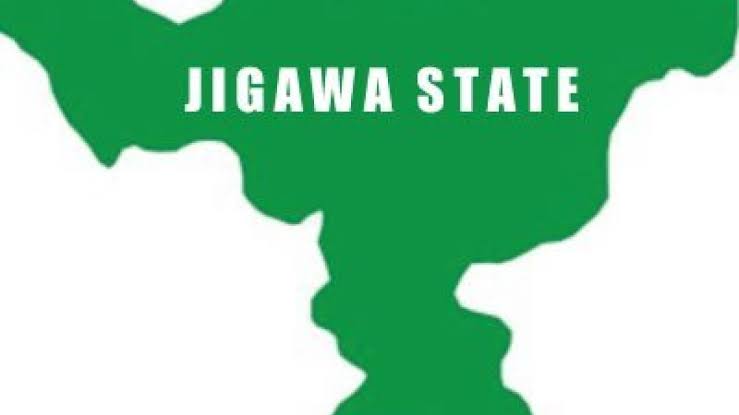
Quest for Jigawa: zoning, unity and 2023 elections
By Umar Farouk
Power brokers and political gladiators begin to fracture the peace and unity of Jigawa State and polarise its youths for their personal interests and idiosyncrasies. This challenge is further compounded by a misguided view of amalgamation by some segments of Jigawa as more of a historicized occurrence without any barefaced or hidden advantage to the state; a mindset that further promoted deliberate demonstration of impunity, as well as superiority by one group or zone against the other.
But to dramatize this superiority complex, the point people did forget is that never should one be so foolish to believe that you are stirring admiration by flaunting the qualities that raised you above others. By making them aware of their inferior positions, you are only sowing the seed of bitterness and envy that will hunt you back in ways you might not imagine.
Regardless of what others may say, it has plundered the socio-economic affairs of the nation to a sorry state; an occurrence that stems from an unknown leadership style described by analysts as neither ‘system nor method based’ without anything exemplary or impressive. While this appalling situation unfolds in our political space, the global leadership stage is littered with telling evidence about leaders that have demonstrated leadership sagacity and professional ingenuity that our leaders have refused to replicate their resourcefulness on our shores.
Having discovered the challenge threatening the continued existence of Jigawa State, it becomes imperative to say that whatever might be the failure, we must as a state begin to return to where we came from and what we were known for. But whatever measure we may want to use in tackling this challenge can only succeed if it probably puts in place steps that will guarantee leadership restructuring.
Catalyzing the process of building the Jigawa of our dreams that is laced with good leadership will among other demands require sincere and selfless leadership, a politically and economically restructured polity brought by the consciousness that can unleash the social, economic and political transformation of the state while rejecting the present system that has bred, inefficiency, a primitive capital accumulation that socially excluded the vast majority of our people.
Above all, to completely put things right, the state government must recognize our position, for Jigawa to be a society of equal citizens where opportunities are equal, a personal contribution is recognized and rewarded on merit regardless of town, zone or political affiliations.
The best hope we have is to use the 2023 general elections to stop politicians that cannot draw a distinction between politics and leadership. And in its place, enthrone leaders that will align their aspirations with the people and compel leaders to stick to their campaign mandates, preventing them from reneging when elected into power.
Yes, politics and politicking are about the quest for power. Indeed, one of the major attributes of politics is the acquisition and devolution of power. In a democracy, one of the recognized processes of getting representation and power is through an election. The purpose of an election is to get power. Thus, any person or party desirous of electoral victory must carry the electorates along by effective stakeholders’ engagement which includes consultations, program exposition; interest aggregation and consensus building which among other things is for the purpose of ensuring equity and allaying fears of oppression and domination.
No doubt, the issue of power devolution has been a very knotty issue in Jigawa state politics. Similarly, zoning as a tool for power-sharing has been a very contentious one. The major advocates of zoning or rotational leadership are the people from Hedejia Emirate Zone. Thus, the canvassing for power shift should demonstrate and implement it in their zone.
For me, the concept of zoning or power rotation may sound mossy, and it may not be ideal for our situation fraught with fear of domination, distrust, apathy and immaturity.
Democracy is about people, their representation and not power-sharing. It may have many variants depending on the people, their culture, history and political ideology.
Clearly, adopting zoning practice may not eliminate the monolithic over-centralized system that brings tyranny, mediocrity, impunity and a winner-takes-all mentality among other things. Carrying everybody along will reduce apathy – something that has been identified as the bane of our local politics. I must advise that as a matter of necessity, we should eschew the if-not-my-zone-nobody-else-should-lead mentality and work for the success of Jigawa State.
Our people must shun disunity, disorganization, sentiment and politicians who once they get into office would bring unprecedented hardship, chaos and hopelessness. As I believe, we all want, hope and pray for one thing – a state where peace, stability, fairness, equity and love shall reign supreme.
May Almighty Allah Bless Jigawa state, ameen.
Umar writes from Jigawa, he can be reached via 08081058283.
Nigeria lost $1.5bn to oil theft in 3 months – NNPC GMD
By Farid Suleiman
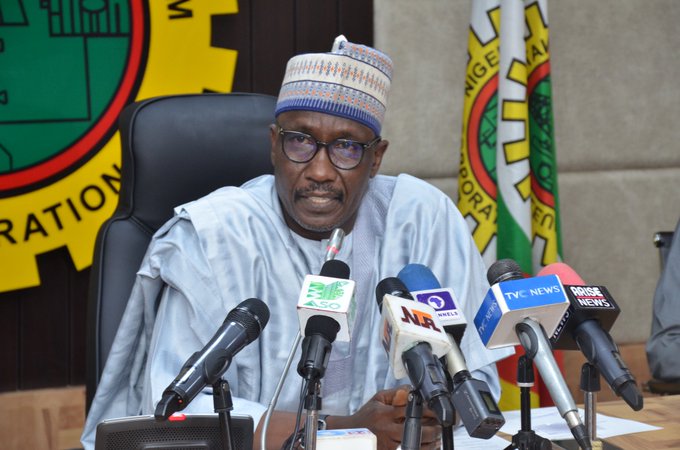
The Group Managing Director of the Nigerian National Petroleum Corporation (NNPC), Mele Kyari, has revealed that from January to date, Nigeria has lost a total of N623BN worth of crude oil to the activities of oil vandals and operators of illegal refineries.
Reports indicate that the GMD made the revelation when he appeared before the House of Representative committee on petroleum (upstream) that invited him to ascertain the cause of Nigeria’s low crude oil output.
Kyari said oil thieves steal an average of 250,000 barrels per day. This situation has limited Nigeria’s crude oil output to only 1.49 million barrels per day, against its OPEC quota of 1.753 million barrels per day.
“What is going on has nothing to do with the PIA. It is purely an act of thieves; acts of vandals which have rendered the industry unworkable and taken us to the level where today, our production is around 1.49 million barrels per day.”
“When you lose about 200,000 barrels per day, even at an average price of 65 dollars per barrel, we lost close to 1 billion dollars between January and March.
“From January to date, we lost an average of 250,000 barrels per day, and at the current price of about 100 dollars to the barrel, even within this short period, we have lost close to 1.5 billion dollars.
“This situation deteriorated to the extent that by March 7, 2022, it came to zero, and so, we shut down the line and declared force majeure. Even on our most reliable pipeline, which is the Forcados pipeline, we still lose about 7000 barrels per day. Needless to say that this is all coming as a result of the acts of vandals and oil thieves,” he said.
However, the GMB assured the lawmakers that massive joint security operations among agencies were ongoing to address the situation.

NYSC cautions corps members against nighttime travel, involvement in social vices
By Muhammadu Sabiu
Brig.-Gen. Shuaibu Ibrahim, Director-General of the National Youth Service Corps (NYSC), has advised corps members to try and stop nighttime travel to minimize the risk of being involved in car accidents.
In their Places of Primary Assignment, PPA, corps members should avoid social vices such as drug misuse, human trafficking, cybercrime, and advanced fee fraud, he noted.
During the closing ceremony of the 2022 Batch “A” Stream 2 Corps Members at NYSC Orientation Camp, Ikot Itie Udung in Nsit Atai on Thursday, Ibrahim, who was represented by the Akwa Ibom Coordinator, Mrs Chinyere Ekwe, issued the charge.
The DG advised corps members to spend the night at military barracks or any other officially protected site if their journey lasted longer than 6 pm.
He was quoted as saying, “to greatly minimize the risk of road traffic accidents, you are expected to always cut short your trips from 6 pm in the evening and pass the night at military barracks and other locations officially designated as safe.”
Nation-building involves the combined efforts of everyone
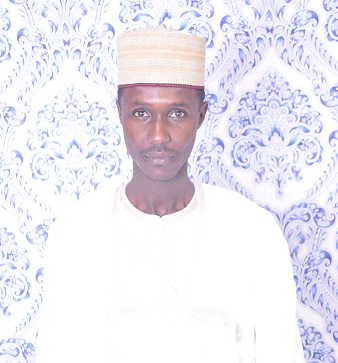
By Aliyu Muhammad Aliyu
Nation-building and community development require the involvement of all stakeholders from all walks of life. The fairs of knowledge and experience from the elderly and zeal and energy from the youth are necessary to achieve any goal. The two categories of patriotic citizens have one thing in common: their and dear ones’ future.
The elderly used to be like the youth with all sorts of dreams, but through experience, they experimented in life to differentiate between what worked from unrealistic emotions. They belong to and master the second industrial revolution powered by crude oil, which replaced the first industrial revolution powered by coal, and is still relevant although in its twilight. Their presence is necessary for effective policy implementation since we did not yet change much. Their generation is still relevant, especially for guiding and checking the excesses of what their youth counterpart would bring with the hope to be realized.
Likewise, the youths’ presence is necessary because of their eagerness to see their world as a better place to enjoy as it used to be for the elderly, having had enough stories of the good old days they never witnessed and long for. Moreover, they are the masters of the third industrial revolution of renewable energy and data the world is turning towards. Therefore, they should be mainly involved in the legislation of all policies because they generally see the future more vividly and better.
To think of getting rid of the elderly and replacing them with the youth is very dangerous. Youth never made it alone in history. An example of young leaders like Alexander the Great shouldn’t delude anyone. At his time, life expectancy was about thirty-five years. Leading at around thirty years of age meant that he was in the category of elderly persons with the required experience of his time to govern.
Unpatriotic elderly leaders, despite what the nation did for them, were ungrateful. They destroyed its future leaders by denying them the basics of what it takes to be productive citizens by looting and amassing wealth allocated for their descendants that could not exhaust under regular human consumption. Despite that, they act like parasites, harming the nation in a way it will remain in existence for them to continue milking, probably due to their tactical foresight and limited exposure to globalization.
On the other hand, young people have great energy, hopes and dreams, exposure and highest order hedonists and showy. Power in the hand of those with such potentiality without orientation will undoubtedly be catastrophic that will probably bring an end to the great home of black man, just like how virulent pathogens destroy. Moreover, they might squander the whole treasury on exorbitant trademarks of designer clothes, cars, mobile phones, hotels and girls for their pleasure. Therefore, we must avoid both for the betterment of the country.
Division of labour is as necessary for success as the involvement of the two categories of patriotic citizens in good leadership. Of course, a certain amount of all the categories should be present everywhere. Still, more youth should be in designing policies that will tie the present for the future prospects while more elderly should be in supervision of their feasibility and regulation and ensure their effective implementation.
Aliyu Muhammad Aliyu wrote from Kano via amabaffa@yahoo.com.

Pantami and the bitter taste of politics (II)
By Aminu Nuru
As a man of God in power, Pantami has been anticipated to promote justice and fairness to all, doggedness in executing the rule of law and consistent due process while amicably working to advance his ministry. Unfortunately, however, some of his decisions, actions and inactions shatter this goodwill, clearly undermining what he should – or was expected to – represent.
Given the above, it is fair to say that Pantami’s reputation as an ambassador of the faithful and clergies in the corridor of power is being tarnished and marred with shameful inadequacies that are not worthy of emulation. From the onset, it is important to state that some of those rumpuses may not be disassociated with Pantami’s status of being the first Imam of Jumma’a cum notable Islamic cleric to be a member of Nigerian’s apex council of power execution. However, some of them are avoidable if he had approached and dealt with specific issues differently and wisely.
Barely a few weeks after his appointment as Minister, Pantami’s name began to trend in what seemed to be his first scandal in office. Pictures of some luxurious apartments were shared on social media with the allegation that he owns them. Perhaps, other Ministers occupied better, polished and more luxury apartments, but nobody cared to nail them down for their exotic preferences despite being in the same shoes as him. This should tell Pantami that his colleagues may be excused and get away with so many other things while he would not. This is obviously because of his antecedents as an Islamic cleric.
One would think this politically-driven furore would be an eye-opener to Pantami and should guide his future decisions and endeavours henceforth; it should dawn on him that things will never be the same for him again; that certain things about his life and that of his family, relatives and even close friends would be twisted and become a source of gossip on the cyberspace from now. Therefore, he should thread carefully
But Pantami appears not to appreciate the complexities of his new reality. If not, why would someone as blessed as Pantami allow his name to linger in a scandal of dubious professorship appointment (promotion) by the Federal University of Technology, Owerri? Let’s assume that the fuss generated by the position is a work of his foes and mischief-makers, and there’s nothing wrong with it. Still, the ensuing controversies are not suitable for his image as an Islamic cleric.
It is such a shame that a man of his calibre would allow his love for title to overshadow his conscience. If I were Sheikh Pantami, I would get rid of this appointment to save what remains of my image. And after my tenure as minister, I will go back to university to become a legit professor, proving my capability to be one. But because of what seems to be an untamed ego, Pantami will not succumb to the voice of ethical and moral principles and do that. On the contrary, he remains adamant and shows no sign of withdrawing the appointment sooner or later.
The Academic Staff Union of Universities (ASUU) opposes the appointment vehemently. But, in what seems to be a reprisal move to frustrate its struggle, NITDA, an agency under Pantami’s ministry, discredited ASUU’s proposal of UTAS. This came after NITDA’s earlier proceedings showed that UTAS passed the integrity test with 93% aggregate.
In another twist, Pantami’s Ministry of Communication and Digital Economy fails to complete its initiation of NIN-SIM enrolment and verification, which should curtail digital-related crimes in the country. This single policy, if fully executed, will be one of the most significant legacies of Pantami’s stewardship. Yet, just this morning, several media outlets reported that the exercise, which deadline was earlier scheduled to be January 2021, has been extended yet again for the tenth time. Again, this shows weakness and a lack of political will and patriotism.
Before coming to office, nobody would believe that Pantami would be engaged in an unfortunate political twist like this. It is now clear that Pantami is becoming more partisan and a career politician; his status as a strict technocrat in the corridor of power has noticeably changed now. In fact, political moles carrying his posters which bear the inscription “Digital 2023”, were sighted at the just concluded national convention of the All Progress Congress (APC). It will not be a surprise if Pantami contests in the forthcoming general election.
While it is within his constitutional right to do so, he should bear in mind the embodiment of the institution he represents and the challenges ahead. He should know that he is in politics and public service to set, among other things, precedence for others to follow. I hope that he will face, manage and swallow the bitter taste of politics with wisdom, courage and ethical and moral principles. I hope that his decision and indecision will not further generate unfortunate controversies. I hope that he will remain steadfast to his religion while promoting the rule of law, due process and good governance for Nigerians.
Aminu Nuru wrote from Bauchi. He can be contacted via aminuahmednuru@gmail.com.

CBN fines 3 banks ₦800 million over cryptocurrency transactions
By Farid Suleiman
Bloomberg reports that the Central Bank of Nigeria (CBN) has penalized three banks over non-compliance with its cryptocurrency directive. The affected banks are Stanbic IBTC Bank, Access Bank Plc and United Bank for Africa.
In a circular dated January 5, 2021, the apex bank had issued a directive to Deposit Money Banks (DMBs), Non-Bank Financial Institutions (NBFIs), and other financial institutions (OFIs) to identify and suspend all accounts of individuals and entities used for cryptocurrency transaction on their system.
“Further to earlier regulatory directives on the subject, the bank hereby wishes to remind regulated institutions that dealing in cryptocurrencies or facilitating payments for cryptocurrency exchanges is prohibited,” the circular reads.
“Accordingly, all DMBs, NBFIs and OFIs are directed to identify persons and/or entities transacting in or operating cryptocurrency exchanges within their systems and ensure that such accounts are closed immediately.”
The affected banks were fined a combined sum of ₦800million. Stanbic IBTC Bank, United Bank of Africa and Access Bank were fined 200million, 100million, and N500million, respectively.

Lagos shuts down a hospital over Illegal operation, inadequate personnel
By Abdullahi Abdullateef
The Lagos State Government, through the Health Facility Monitoring and Accreditation Agency (HEFAMAA) has shut down Medville Global Health Centre located in Okota area of the state over its illegal operation and low numbers of personnel working in the hospital.
This is contained in a statement signed by the Head Public Affairs of HEFAMAA, Mr Muyideen Ayokunle Uthman on Tuesday, 5th April, 2022.
According to the statement, the Executive Secretary of the Agency, Dr Abiola Idowu, says that the Medville Global Health Centre which is located at 1, Bashiru street, off Lateef Adegboyega street, Ago Palace Way, Okota is sealed for not complying with the set standards.
Reacting to the demise of one Mr Triplem C. Mchaty’s wife, she said the agency carried out preliminary investigations which revealed that the hospital was not registered with HEFAMAA, noting that this contravened the 2006 health sector reform law.
She stated, “It means the facility was operating illegally.” She added that the hospital had inadequate personnel.
Reiterating the allegation on social media, in a tweet, one Mr Triplem C. Mchaty @scantee stressed the sad moments on his Twitter account @scantee. The tweet reads thus:
“Good morning family, I am really heartbroken now. My wife died at MEADVILLE GLOBAL HEALTH CENTRE (HOSPITAL) NO. 1 Bashiru street,off Lateef Adegboyega Street, Ago Palace Way, Okota.
“We just got married 10 months ago, she took in, she was undergoing Antenatal in Onitsha, Anambra [state].”
However, Dr Idowu disclosed that the Chairman Dr Solanke Kayo Esq. has ordered the agency to carry out a full investigation to uncover the facts of her death.
Relating with the closure of the hospital, she maintained that the agency has taken the crucial decision in furtherance of public protection awaiting the final outcome of the ongoing investigations.
She finally urged all administrators of health facilities in the state to adhere strictly to the set standards and cooperate with the leadership of Governor Sanwo-Olu.

Shehu Sani picks Governorship form, clarifies that he, not any group, buys it
By Ahmad Deedat Zakari.
Shehu Sani picks the Governorship Form. However, he said he would not lie that a group paid for the nomination form.
Senator Shehu Sani, who represented Kaduna Central Senatorial district in the 8th Assembly from 2015 to 2019, disclosed this on his confirmed Facebook account on Wednesday, April 6, 2022.
“I picked my Governorship form. I suppose to lie that “a group” bought the form for me, but I can’t start with such lies. We need your support and prayers,” Sani posted
Mr Shehu Sani has long indicated an interest in contesting the 2023 Kaduna State gubernatorial election, and picking the nomination form did not come as a surprise to many.
Many people have commented on Shehu Sani’s post, wishing him well in the gubernatorial race.
“Victory all the way, Sir.” Stephanie Sewuese Shakaa, a Facebook user, commented.
Another Facebook user, Al-Ameen Jumare, said, “Best wishes, sir, our solidarity and support are priceless.”
Pantami and the bitter taste of politics (I)
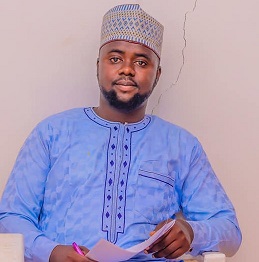
By Aminu Nuru
Isa Ali Ibrahim Pantami’s odyssey into public service, and mainstream politics in Nigeria by extension, is so far filled with notable controversies that muddy the stream of his public image despite being received and welcomed with a reservoir of goodwill and optimistic anticipations by many Nigerians.
Although some people may argue that, before Pantami’s appointment to public office, there were members of the Federal Executive Council (FEC) equally knowledgeable in the matters of Islam and could be regarded as scholars in their own rights. Still, the fact is that both Mallam Aminu Kano and Senator Bello Maitama Yusuf made a name for themselves in politics and public service before Islamic scholarship and preaching. Or, to say it better, the duos are more widely known for their political engagements than anything else. Thus, they were seen as full-time politicians in the public eye. While Pantami, on the other hand, got his fame strictly from Islamic teachings and discourses.
Therefore, Pantami is a trailblazer who pioneered a cause in Nigerian polity – a revolution of Islamic clerics from Northern Nigeria joining national politics and public service. This position naturally accords him the status of a role model for subsequent clerics from the North that are willing to join public service in the future.
Though preaching and propagation of Islam would have played a role in Pantami’s rise to prominence and subsequent appointment into Nigerian public service, the controversial minister, to be fair, has demonstrated some degree of competency and seems to be averagely prepared, to say the least, to the job he has been offered as the Director-General of NITDA and later Minister of Communication and Digital Economy. In the same vein, he has also recorded some achievements so far. Unfortunately, however, a series of controversies are beginning to overshadow these achievements, which are at the same time complicating his polity. Still, some of these complications may not be disconnected from his past. On the contrary, they could be best appreciated if one revisits and analyses the context and content of his previous preaching vis-à-vis the atmospheric politics of the time.
Efforts to corroborate the exact date Pantami made his debut into the realm of Islamic preaching in his first preaching base – Bauchi – proved abortive. But what is certain was the unique style he adopted in delivering lectures, Tafseer sessions and Friday sermons, which promptly endeared him in the hearts of the local audience.
In the early 2000s, most Western-styled educated Muslims were looking for a fresh voice in Islamic preaching and seemed to be tired of the “oldies” and their archaic modus. They wanted something different and were eager to access the new approach that analyses and interprets contemporary issues from Islam’s perspectives. They were looking for an Islamic preacher to address and speak to them in the manner and tongues they would align and reason with. A preacher that could, for example, scrutinize the EU’s foreign policies and the US invasion of the Middle East and validate his points with the verses of the Holy Qur’an.
In Pantami, they saw the exponent of those ideals. This was due to his ability to demonstrate basic knowledge of global politics, international relations, and science and technology through the lenses of the Quran and Hadith. In addition, he commanded a very good English Language (a rare talent among Islamic clerics at the time). He exhibited a charming oratory skill sauced with puritanical diction – a personal endowment and enchantment that he consciously or subconsciously deployed to arrest, startle, and move his audience. The eloquence with which Pantami delivered his sessions was what stood him out among his contemporaries. Consequently, Pantami became the darling of Muslim populations in Bauchi and beyond for this and other intellectual traits. The Western-styled educated populations saw a 21st-century Islamic cleric of their dream in his shape.
As an influential preacher with access to grass-root populations, his pulpit echoed a dissenting voice against the government of the day. He was explicitly critical of PDP’s government at both the state and national levels and openly promoted the presidential ambition of General Muhammadu Buhari (GMB). It is on record that Pantami was not the only cleric to uphold the candidature of GMB via his pulpit; other clerics had also promoted him with equal conviction. However, Pantami’s open romanticism and penchant for the General were so extreme that when his old “friend” – Governor Isa Yuguda – fell out with Buhari’s ANPP and decamped to PDP, Pantami was not reluctant to denounce this move. Therefore, he launched out series of attacks and criticisms of the Yuguda administration in his Friday sermons (despite being a back-door “friend” of the Yuguda administration).
In an article titled “Nigerian Politicians and Hypocrisy”, Pantami wrote: “I do not know a profession anywhere in the world that is full of professionals who fulfil all the characteristics and signs of hypocrites aptly described by our infallible Prophet like Nigerian politicians in the corridors of power, particularly the companions of the largest, and probably the most dangerous party in Africa (PDP)” (Premium Times, 2012).
Nobody felt Pantami was not doing the right thing among the population. He was even celebrated and eulogized for his vilification of the PDP’s government and support for GMB. His effort was appreciated as a selfless service to the poor masses. He was practically dancing to the bits of the society. Naturally, this created a public image for Pantami – an image of an honest Islamic cleric who told the truth to power (PDP’s government?).
Considering this background, it is not entirely out of sight if some groups work to step back on Pantami’s toes now that he has been appointed a Minister of the Federal Republic of Nigeria. They would not also relent to feed him the same bitter pills of politics through (de)constructive criticism, malice and deliberately cooked scandals. Therefore, it is not a surprise if, for example, some pundits dug into his past utterances to make the polity difficult for him now. Or it is not least expected if some of his critics alleged that he used the garment of Islamic preaching to reach where he is now – an allegation echoed loudly by his fellow preacher and former neighbour in Bauchi. This particular preacher believes that Pantami is not worthy of being considered an Islamic cleric simply because he did not attend any Islamic school.
This allegation could be dismissed as sheer envy, especially as it comes from a fellow Salafi cleric who does not hide his aspersion of the minister. Reputable Islamic scholars have, time without number attested to Pantami’s intellectual prowess and competence in Islamic scholarship. Besides, altogether, he has tackled those accusations cleverly by not quitting the teaching of Islam even after being appointed a Minister.
The accusation that may have firmly stood is how Pantami’s pulpit swiftly changed from being a pro-people voice to one with less interest in the matters of governance and the governed. There’s no more dissent voice against the government. Even the choice of his texts for his ta’alims at Annur Mosque were deliberately strategic in the sense that their content analysis and commentary of moral truth and calls for proper conduct may not be extended explicitly to subjects within the present government. From their titles, both Kindness to Parents and Kindness to Relatives and Loved Ones would surely give a soft landing for anybody willing to avoid activism in his preaching.
His defenders may argue that Pantami now has unlimited access to the government. Therefore, he can channel his grievances privately, but the atrocities for which he vilified the previous government have also been committed, doubled and tripled by the present administration. Morality demands that he does more than voice his anger privately, considering his earlier vituperation.
One would think he will not hesitate to relinquish anything that has to do with this administration to demonstrate his unreserved solidarity for the masses. But, unfortunately, Pantami – an erstwhile vibrant advocate of good governance – is not the man to surrender power for posterity. Therefore, while it may not be the wisest decision to leave the government to demonstrate his pro-masses stand, Pantami should do better in making patriotic moves decisions no matter whose ox is gored. He could do that while avoiding avoidable controversies and political tussles that may tarnish his image and the institution he represents.
Aminu Nuru wrote from Bauchi. He can be contacted via aminuahmednuru@gmail.com.