Seminarian flops, dies while acting easter
By Uzair Adam Imam
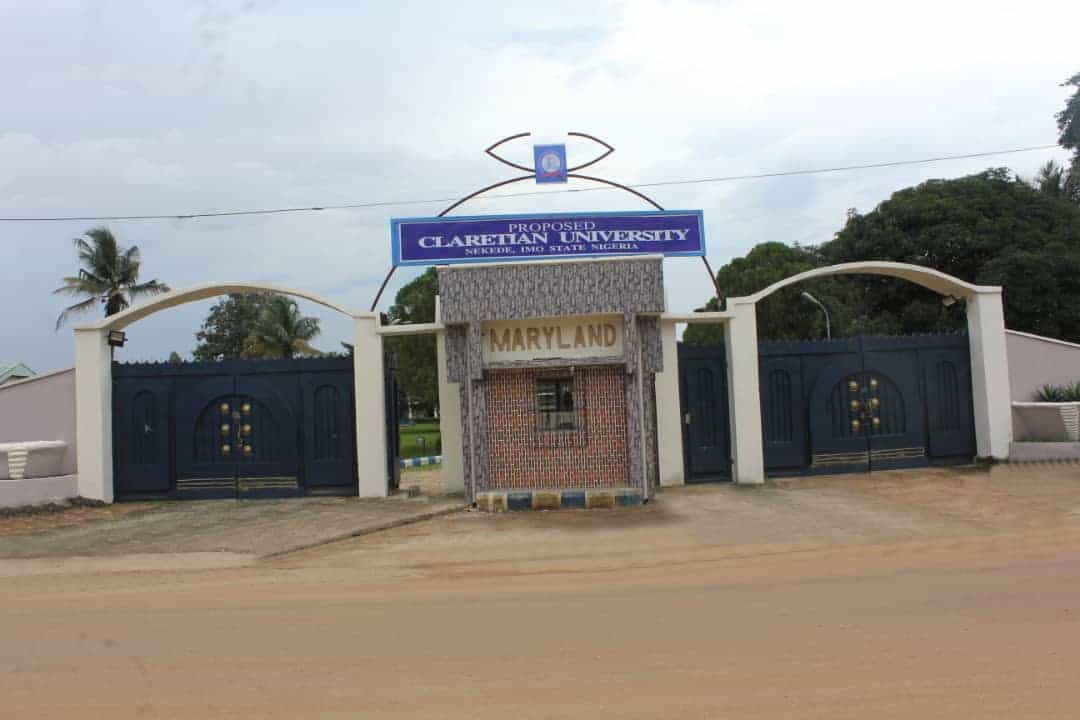
A 100 level student at the Claretian University of Nigeria, Imo State, Suel Ambrose, slumped and died while acting in a drama on campus.
The incident that took place Friday has thrown the whole school community members into confusion.
The drama was in commemoration of the death and resurrection of Jesus Christ in respect to the Easter celebration.
Ambrose, who hailed from Benue State, was dramatising the role of the biblical Peter in the Passion of Christ when the incident occurred.
According to the source, who identified himself as Mavis, the 25-year-old first-year student fell on the floor and started bleeding.
It was gathered the deceased had the dream of becoming a priest in the Catholic church before his demise.
He added, “He was playing the role of the biblical Peter in the dream and that process when Peter cut the ear of one of the soldiers and Jesus fixed the ear and asked Peter to let them do their wish. You know how passionate the play is.
“So when the soldiers chase the disciples to drive them away from Jesus, the young man fell on the floor and started bleeding. We took him to our school hospital, and the doctors did their best, but he was not responding to treatment.
“We took him to the Federal Medical Center in Owerri, where he was pronounced dead.”
The drama was in commemoration of the death and resurrection of Jesus Christ in respect to the Easter celebration.
Tips on reciting the whole Qur’ān in Ramadan
By Ibrahim A. El-Caleel
Muslims across the world love to complete the recitation of the Qur’an in Ramadan due to different reasons.
Firstly, it was within the blessed month that the Qur’ān was sent down all at one time from Al-Lauhul Mahfūz (the Preserved tablet) to Al-Baitul Izzah (House of Might) in the heaven of this world.
Secondly, actions in this month are rewarded in manifolds. Good deeds and bad deeds alike. Ramadan has a single night whose eminence is better than a thousand months- 83 years+. Imagine submitting an act of good deed in this night and getting it accepted. The reward will be awesome.
Reciting the Qur’an is an easy way of accumulating good rewards. It is rewarded per alphabet. Prophet Muhammad (Peace Be Upon Him) said it is a 10-fold reward per alphabet each recited. An Uthmāni script of the Qur’an contains 604 pages, with each page having 15 lines. The estimated number of characters/alphabets in the Qur’ān is 330,000. Therefore, if you calculate the anticipated number of rewards for reciting the whole Qur’ān, you’ll see that it is massive. The reward becomes exponentially colossal if you factor in the multiplier effect of Ramadan.
This is why scholars of Islam from all walks of disciplines retire to the Qur’ān once it is Ramadan. They momentarily suspend studies in Hadīth, Fiqh, I’tiqād, History to settle for the Qur’ān so as to maximize the benefits in Ramadan. Mujāhid bn Jabr, a tabi’i expert in Tafseer used to complete the Qur’ān in every night in Ramadan. Imamul Shafi’i would complete the Qur’an 60 times in Ramadan!
Every conscious Muslim is looking forward to completing the recitation of the Qur’ān in Ramadan. It is a “bonanza period” for you to double your good deeds and earn some handsome rewards in your Book of Record. This is why everyone works on a plan to complete the Qur’ān. I have seen different plans that divide the Qur’an into number of pages, or rubu’, hizb or juz which should be covered on daily basis to complete the Noble Book before Ramadan elapses. Some go as detailed as breaking it down to recitals after each of the five obligatory prayers on daily basis.
AlhamdulilLahi. All these are implementable plans if one has the discipline to sustain them.
However, I have never tried following them because I do not have the organized sustenance culture in reading. And in the near past, either in 2016 or 17, there was a Ramadan where I was unable to complete the Qur’ān. Though there was nothing sinful about that, I wasn’t happy. I could make only around 45hizbs, falling short of 15. And since then I settled for my own personal plan.
My personal plan afterwards was a resolution not to join Taraweeh prayers in congregation unless I have completed the Qur’ān. Therefore, in the early days of Ramadan, typically before 10th, I do my taraweeh alone at home. I would silence-mode my phone to avoid any distraction. I would then pray my taraweeh typically covering 6 hizbs daily, in either two or four raka’ahs depending on my selection. It typically lasts two hours, or with an additional 30 minutes. Of course, the standing isnt easy but nothing rewarding has ever been easy. So, I bear it. Immediately after completing this taraweeh, I fall asleep. Saving me from the addition of late night punching of my phone.
This plan has been working for me, AlhamdulilLah. I am not sharing it for a holier-than-thou extravaganza, subhanallah. May Allah protect our deeds from show-off, Amin. But I am sharing it because it might be a method someone would want to adopt, especially for workers who run an 8am to 5pm work. They might not have chance to read the Qur’an during work hours in the day. And they may be thinking of what other plan can they adopt since they want to complete this Noble Book.
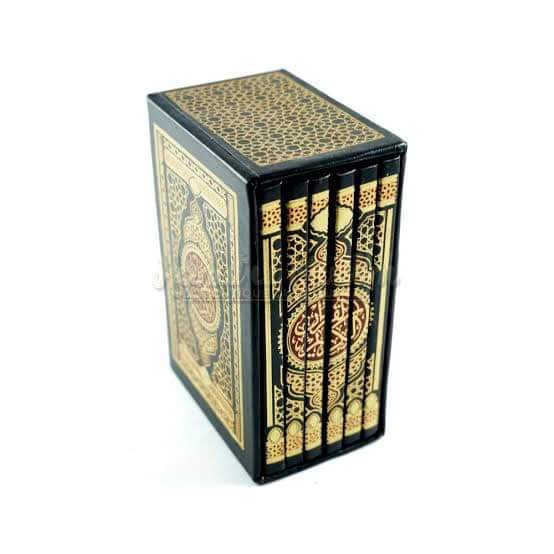
You don’t have to be a Qur’an memorizer to adopt this method. All you need is this copy of the Mushaf that is usually divided by hizbs selections numbering 1-10 (6 hizbs each) or numbering 1-6 (10 hizbs each). They are portable for use in prayers. And if you want to use the Qur’an app in your phone, no problem. You might just consider putting your phone in ‘Airplane Mode’ to ward off distractions.
It is halāl (permissible) to pray while holding the Qur’ān according to the most correct scholarly opinion. This applies to everyone- whether they are Qur’ān memorizers or not. In fact, Imamul Nawawiy considers it wajib if one hasn’t memorized Suratul Fātiha, then he must hold a Qur’ān and pray because not having Suratul Fatiha in your human brain isn’t an excuse for you not to pray. Therefore, whether you have the Qur’an at heart or not, you can still recite from the mushaf while in prayers.
If Islamic scholars are suspending other fields of knowledge to complete the Qur’ān in Ramadan, you can suspend social media to do same. If you want to use your annual leave, casual leave or compassionate leave from work, then so be it. It worths doing all these.
May Allah grant us the ability to maximize our time in Ramadan, Amin.
El-Caleel writes from Zaria, Kaduna State
Buhari under fire for pardoning Dariye, Nyame
By Muhammadu Sabiu
President Muhammadu Buhari has been chastised for pardoning two former governors who were imprisoned for corruption.
Recall that on Thursday, the Council of State granted 159 convicts presidential pardons, according to reports.
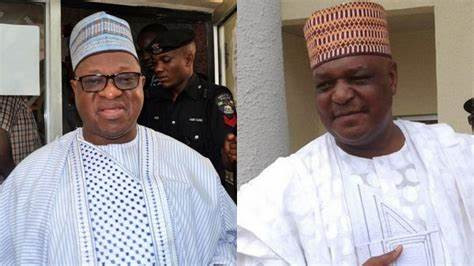
Former governors of Plateau State, Joshua Dariye, and Taraba State, Jolly Nyame, imprisoned for stealing N1.16 billion and N1.6 billion, respectively, were among the released convicts.
However, speaking at the 1st anniversary of late Afenifere’s spokesman, Yinka Odumakin’s Lecture and Book Presentation, Mr Femi Falana (SAN), a human rights campaigner, encouraged the Federal Government to extend the presidential pardon to individuals serving sentences for minor offences. Falana argued that this would reflect fairness and equity for all.
“All petty thieves in our prisons should be released. Under Section 17 of the 1999 Constitution, there shall be equality and equal rights for all citizens.
“Section 42 of the Constitution says there shall be no discrimination on the basis of class and gender, so you cannot take out a few people on the basis that they belong to a category or section of the society.
“I can assure you that if the government did not release others, I am going to call on lawyers whose clients are left in custody to come to court and challenge the discriminatory treatment of their clients,” Mr Falana was partly quoted as saying.
Four abducted female students regain freedom
By Uzair Adam Imam
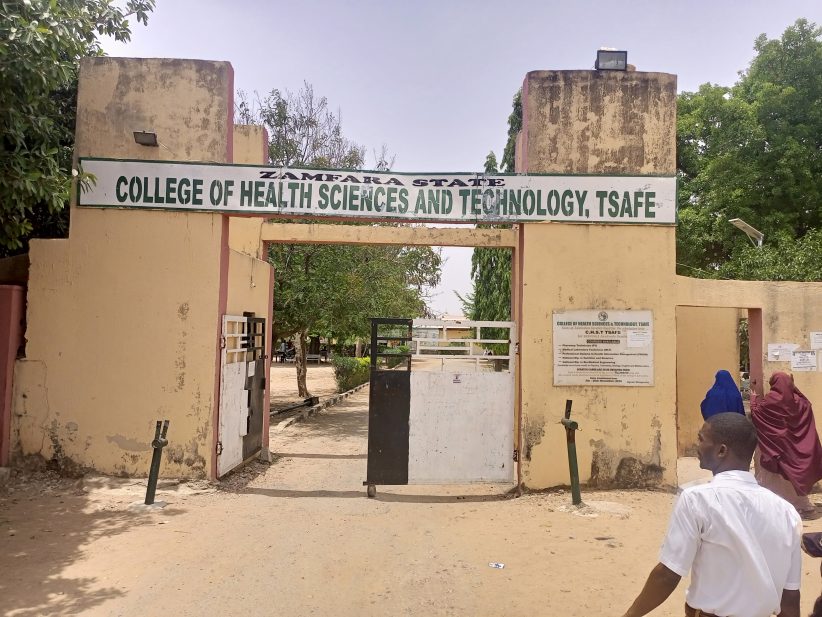
Four abducted female students of the College of Health Science and Technology, Tsafe in Zamfara State, regained freedom Thursday, April 14, 2022.
The Deputy Provost of the college, Jamilu Lawal, made the disclosure, adding that the students were released unhurt.
He added that the four female students had been taken to the hospital for medical screening.
The Daily Reality learnt that no ransom was paid to the bandits for the release of the students.
The students were reportedly abducted last Tuesday night in Tsafe town.

FG in dialogue with abductors of Kaduna-Abuja train passengers
By Uzair Adam Imam
The Federal Government is in dialogue with the bandits that stormed and abducted many people in the Kaduna-Abuja train attack.
The FG was said to have granted a discussion with the bandits for negotiation.
Dr Jimoh Fatai, who has been designated as chairman of the group pressing for the release of their loved ones, made the disclosure.
He stated that the Minister of Information, Lai Mohammed while addressing the victims’ relatives, assured them that FG would save the victims.
The Daily Reality reported how bandits attacked the Kaduna-Abuja train, killed eight persons, and abducted many passengers last month.
The bandits in a video threatened to kill all the victims if the federal government refused to negotiate with them.
However, a few days after the attack, the bandits released one of the abductees, Alwan Hassan, the Managing Director of the Bank of Agriculture (BON).
Hassan was alleged to have paid the sum of N100 million as ransom.

15.8% of World’s population have headache on any given day – A review estimates
By Abdullahi Abdullateef
A team of researchers at the Norwegian University of Science and Technology, says it has reviewed over 357 publications estimating 15.8% of the global population have a headache on any given day signifying the prevalence of headache worldwide.
This estimation is reported in a review of 357 publications from between 1961 and the end of 2021. The review was published in The Journal of Headache on Tuesday, 12th April, 2022.
Noting that the majority of publications reported in the review indicate the prevalance of headache among adults between 20 and 65. It also reports that children upto five years of age and adolescents suffered acute headache.
Similarly, the newswise.com reports that of the 357 publications reviewed, it has found that 52% of the global population have experienced a headache disorder within a given year, with 14% reporting a migraine. 26% percent reporting a tension-type headache and 4.6% reporting a headache for 15 or more days per month.
The Lead Author, Lars Jacob Stovner says: “Compared to our previous report and global estimates. The data does suggest that headaches and migraines rates may be increasing. What is clear is that overall,headache disorders are highly prevalent worldwide and can be a high burden.”
“It may also be of interest in future to analyse the different causes of headache that varied across groups to target prevention and treatment more effectively.”
Jacob adds that all the types of headache are more common in females than males most especially migraines.
Noting that there are 17 percent in females compared to 8.6% in males having headache for 15 or more days per month representing 6% in females compared to 2.9% in males.
He maintains that the majority of the publications reviewed reported from high income countries and gave recommendations that further investigation into middle and low-income countries would help present a more accurate estimation of prevalence of headache in the globe.
Attack on al-Aqsa Mosque in Jerusalem leaves many injured
By Ahmad Deedat Zakari.
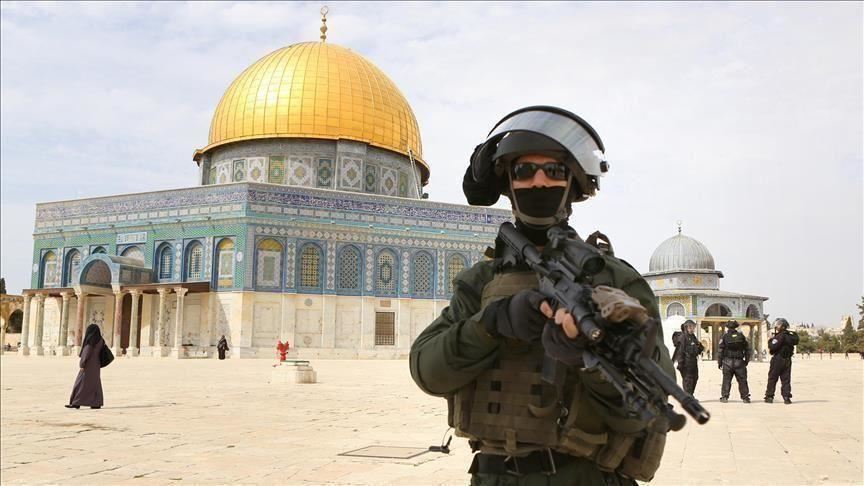
Israel Occupation Forces have attacked the grand al-Aqsa mosque in Jerusalem.
The attack, which took place at the time of fajr prayer on Friday, April 14, 2022, left many injured.
As reported by TRT World, Israel troops fired tear gas and stun grenades at worshipers inside the grand mosque.
TRT World also reported that the Palestinian Red Crescent emergency service evacuated 67 injured people to the hospital early Friday morning.
According to the local news sources, about 200 worshipers were injured, and parts of the mosque and some properties were destroyed.
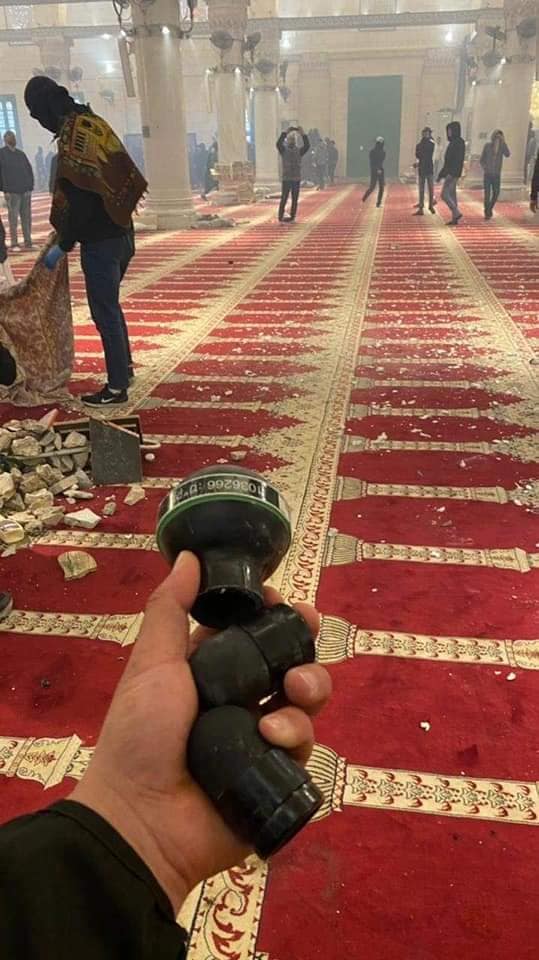
The unfortunate attack on Palestinian Muslims, which is coming this time in the holy month of Ramadhan, has earned condemnation and backlash from many Muslims around the globe.
A human rights activist, Zainab Chaudry, condemned the act on her verified Facebook account while posting the video of the assault.
“This was a short while ago. Every Ramadhan [is] like clockwork. The assault on our beloved Al-Aqsa. On our brothers and sisters. The audacity. There will be justice; we know this iA [in sha Allah],” she wrote.
Letter to Nigerian Muslims
By Muhammad Rabiu Jibrin (Mr J)
I write this letter to you as a Muslim brother and a citizen who is deeply concerned about the gory happenings in this country and who prays for its betterment. It is undeniable that the trying time Nigerians live is uncalled-for. It is not what the citizens prayed for when voting for their leaders. Thus, it indicts the leadership system of all the three arms of government in the country, unfortunately
Should the government have worked holistically towards curbing the menace, the situation couldn’t have been worst like this. But, would the inferno ignite due to our leaders’ carefree attitudes, which seem to have been politicising virtually everything, be left consuming the spirit and the fabrics of our dear nation?
Truth be told, even a responsible and serious government can’t fight a politically created conflagration of multiple fronts alone, let alone a government with a lackadaisical attitude. Therefore, as Muslims of the ravaging county, we all have a role to play individually or collectively.
As we observe this blessed month of Ramadan, which has the best nights therein and in which the glorious Qur’an was revealed, we need to cry hard for God, the Almighty, to come to the rescue of our nation.
We must look inward and outward and return to God, the Most Merciful, the Most Powerful, the Compassionate and the Absolute Compeller. We should desist from committing sins and repent from our misdeeds. We should give to charities, recite the glorious Qur’an, supplicate and intensify prayers to God to see to the end of this mess.
Religious scholars should use their influence during tafsir, and Imams during their Juma’a sermons should pray immensely on this matter. Let Him choose for us the rightful leaders of all cadres. Let God the Almighty leave us not with our wisdom and selfish wishes and choices.
We can’t fold our hands, legs crossed, witnessing the downfall of this country under the watch of our leaders whom we entrusted but failed us. So let us all wake up from our slumbers and do the needful at the right time.
May we be governed by leaders who love us more than how we love them, leaders who prioritise our societies’ interests over their interests, leaders who think about giving their leadership account on the Day of Reckoning, amin.
Muhammad Rabiu Jibrin (Mr J) wrote from Gombe via muhammadrabiujibrin@gmail.com.

Interfaith in Northern Nigeria: A non-romantic view
By Ismail Hashim Abubakar
A few days ago, while at our university campus here in Rabat, I heard shouts outside the premises resembling a public demonstration – something quite unusual and often carried out orderly in Morocco, without the slightest chance of being hijacked by hoodlums. I could not understand what people were saying because they spoke in Darija, the local, broken Arabic dialect spoken colloquially in Morocco. I tend to pick some sentences in normal circumstances, especially when spoken to me directly.
So, I asked my Moroccan friend what was going on, and he answered that people were chanting pro-Palestinian songs and shouting anti-Israeli slogans. I found that interesting given the special place of Jews in Morocco, who, according to Aomar Boum, the author of Memories of Absence: How Muslims Remember Jews in Morocco (and translated into Arabic as “Yahud al-Maghrib wa Hadith al-Dhakirah” by Khalid Saghir) used to number more than 200, 000 before the creation of Israel and up tp around 1950s, but in post-independence Morocco, their number slashed to less than 5000, as they engaged in gradual exodus to their newfound state. But I noticed that the small protest was officially unwelcome when suddenly security guards of the university closed its gates and prevented the intrusion of protesters, who were mostly, if not entirely, students of the university. I would only come to know the exact cause of the protest a few minutes later when, together with my Moroccan friend, we were encouraged and directed by some officials of the university to follow a way that led us to one beautified public lecture hall to participate in a conference, about which we were neither aware nor essentially prepared to attend.
I went straight to the front row in the hall and found a seat where I could watch and listen with much attention, while my friend preferred to sit at the back. It quickly dawned on me that the conference themed “al-Diyanat al-Samawiyah Hamilat Risalat al-Salam” (Heavenly Religions Carrying the Message of Peace) was, besides, a few delegates from a Moroccan council of Islamic knowledge, hosting the Archbishop of Rabat, Cardinal Cristobal Lopez Romero and a Jewish Rabbi, Rabbin Mardekhai Chriqui, coming all the way from Jerusalem.
I started enjoying the proceeding when the MC made her introduction in Arabic and coalesced it with the famous verse of Surat al-Hujurat upholding the spirit of humanity and emphasizing racial and ethnic diversity as a distinct human property. And I did not bother much when she switched to French, which I assumed was the translation of what she said in Arabic, though I do not understand. When I looked at my phone, as the audience awaited the Jewish speaker to take over the stage, I just clicked on my WhatsApp and saw my friend’s message, telling me that he had gone out and we might meet in the mosque. I would have also gone out, but I was lured to stay to listen to the heavily bearded Israeli Rabbi, perhaps because that was my first time to see a real, self-identifying Jew physically and, in fact, a religious authority for that matter. When the man took over the podium, he spoke briefly in Darija, which I luckily understood as he minced his words slowly as if lamenting that he had to do that before switching to French. In the Darija, the Rabbi just excused that although he spent about 40 years in Morocco, he was not good at Arabic, so he informed his audience that he would prefer to switch to French, which he then did without any ado. At this juncture, I also decided to exit, without knowing if his speech would be interpreted in Arabic or not, and without bothering if too many speakers would speak in Arabic later. (A link to the conference is https://m.youtube.com/watch?v=fY6eoZ6RObA&t=703s).
The most relevant part of this story is that there are indeed initiatives of interfaith dialogue worldwide, and this seems to have come to define interreligious relations among members of heavenly religions. But it is also a fact, as this anecdote demonstrates, that some actors in the interfaith program may be unwelcome, detested or rejected. This is precisely what reminds me to offer my humble thoughts on the current brouhaha about the interfaith issue, which has just become a topic of discussion, at least in northern Nigeria.
Perhaps a few people will disagree that the matter was dragged to the public domain by the removal of Shaykh Nuru Khalid, the chief Imam of the Friday mosque at Apo Legislators’ Quarters, less than two weeks ago. That happened over a sermon he delivered on the collapsing security situation in Nigeria. The Imam would have been hailed as a hero and a champion that deserved accolades by the entire northern Muslims, but for his flirtation with the controversial phenomenon of interfaith. After all, distinguished scholars who have become a sort of religious canons in Nigeria like the late Shaykh Ja’far Mahmud Adam, the late Shaykh Muhammad Auwal Albani Zaria and the few ones alive like Shaykh Bello Yabo, Shaykh Murtala Asada Sokoto, Shaykh Idris Abdulaziz Bauchi and a few others are known to be showing impatience toward any untoward development that affects (affected) the poor Nigerian masses. These scholars have uttered bitter homilies and persistent tirades against governments over neglect of their primary responsibilities, particularly protecting lives and properties. Their prominence and public acceptance are partly glued to their decision to maintain a frugal life, remote from the corridors of power, hence capable of speaking truth to power, no matter whose ox is gored.
Naturally, by siding with the masses, Imam Nuru Khalid, who was psychologically martyred when fired from his job, should have been catapulted to such a prestigious clerical position. But in his case, this was impeded by his affiliation to interfaith organizations, often seen with Christian groups who, it seems, trust him as one of the symbols of moderation and tolerance, which may not be entirely untrue. The attention of the Muslim public was recently attracted by his unpopular view when in the aftermath of Abduljabbar Nasiru Kabara’s blasphemy saga and the ensuing arguments, Nuru Khalid voiced views that did not go well with the majority of enthusiasts, particularly on the shortlived misunderstanding between Prof Ibrahim Maqary and Dr Abdallah Gadon Kaya, two rising scholars in northern Nigeria.
At that time, Nuru Khalid was exposed as an advocate of interfaith, which in Hausa people wrongly render as wahdatul adyan (unification of religions), thanks to the widely circulated clips of Shaykh Albani, which popularized this view and mentioned Nuru Khalid as one of its agents. Hence, when Nuru Khalid was removed from his imam position, many commentators in the North merely clung to his affiliation to the interfaith group to further endorse, celebrate or justify his removal. But the mosque did not cite that as a cause for his sack or regard it as a fundamental problem of the Imam. However, Nuru Khalid’s sudden transformation as a hero in the milieu of Nigerian Christians, some of who might not have known him before, his public revelation about some international groups proposing to finance a mosque project for him and his more open hobnobbing with Christians have further thrown him into disrepute among Muslims, who still sense that this interfaith phenomenon is nothing but attempts to eclipse the teachings of Islam and collapse all religions into one new faith.
Another figure, also seen as a vital organ in the interfaith dialogue program, coincidentally also bearing the name Shaykh Nuru Lemu. Although sounding calm and soft-spoken unlike his namesake, Nura Lemu has taken it up to himself to clear what he thought are misconceptions being circulated about the interfaith dialogue initiative. In an audio clip shared via social media, Nuru Lemu claimed that interfaith is never a new invention nor devoid of a rudimentary religious basis, tracing it to the time of Prophet Muhammad when he designed a pact of peaceful coexistence with Jews as citizens of Madinah, and when he entered into a truce with Quraysh polytheists in the famous treaty that would be known as Hudabiyyah. Nuru could have cited the pre-Islamic treaty known as Hilf al-Fudul, which the Prophet participated in, and pledged to partake in a similar one if a need for that would arise. In fact, Nuru would have cited numerous Quranic verses upholding peaceful coexistence and dialogue between Muslims and members of other faiths, as can be discerned in chapters like Surat Ali-Imran, Surat al-Ma’idah, Surat al-Mumtahanah, etc. Since the second biggest religion after Islam in Nigeria is Christianity, it is interesting to make a case with the verse that says:
“You shall certainly find the Jews and those who associate partners with Allah the most vehement of the people in enmity against those who believe, and you shall certainly find those who say, `We are Christians,’ the nearest in friendship towards those who believe. That is so because there are savants and monks amongst them and because they are not haughty ” [Surat al-Ma’idah verse 82].
Nuru Lemu, who is one of the heads of a mega religious and educational centre in Niger State, a neighbour to Abuja, where his sacked namesake is based, added that the dialogue would also concentrate on intra-Muslim relations. Thus, it will work out ways to dent and lessen the growing discords and animosities among Muslims occasioned by ideological rivalry and sectarian division.
From this viewpoint, it is not hard to convince Muslims that the interfaith issue is a healthy, innocuous mission that Muslims would warmly welcome as a process of living up to the expectation of their scripture and broader Islamic vision.
However, it must be clarified that interfaith dialogue may have a unique interpretation for Christians different from what Muslims may be ready to accept. Muslims do not appear prepared to assimilate the neo-liberal interpretation of Islam in such a way that they would compromise established Islamic values and fundamental teachings. Muslims may fail to implement specific injunctions of Islam based on human weakness, but they will hardly portray them as outmoded, irrelevant and unsuitable for the modern situation.
Christians, for instance, as evinced by the obsession of Mathew Kukah in his anti-Islam columns and public discourses, may conjure that interfaith dialogue would henceforth guarantee them an institutional legitimacy of marrying a Muslim woman, or it may make Muslims feel reluctant in missionary work while they (Christians) continue to win converts either directly by luring pockets of northern animists or through the new atheism phenomenon that trend mainly in the virtual world and cyberspace. Christians may conjecture that Muslim females, especially in Yorubaland, where the controversy keeps erupting, will relinquish their fundamental right of wearing hijab. In fact, many Christians would wrongly assume that interfaith dialogue, when successfully embraced, will encourage Muslims to keep mute on tragic instances befalling their fellows, such as the series of ethno-religious crises that broke out in places like Jos, Tafawa Balewa, Southern Kaduna, Lagos Sagamu, etc.
In retrospect, to what extent are Nigerian Christians ready to accept Prophet Muhammad as God’s apostle just as Muslims uphold Jesus as Prophet as a fundamental condition of being a Muslim, without which one will be outside the fold of Islam? Or at least, are Nigerian Christians ready to reserve some respect for Prophet Muhammad so that they will shun all utterances and actions that may be considered blasphemous, which, needless to say, fuels religious crisis and further strains relations between Muslims and Christians?
Nigerian Muslims would be very willing to uphold peace initiatives. Still, they will be very unlikely to accept any interfaith interpretation that warrants silence and reprisals in situations where their fellows are innocently attacked and persecuted anywhere on Nigerian soil. Muslims will invoke the same scripture which warns them not to ally with their enemies – whoever they might be, which enjoins them not to give in to treachery, which cautions them on prospects of being bamboozled and hoodwinked by their enemies and which reminds them to be prepared for self-defence. Therefore, the interfaith initiative appears to be a neutral concept that can be applied positively or negatively and can be abused or misinterpreted disproportionately. But, clearly, its application goes hand in hand with contexts and real-life experiences.
Ismail wrote from Rabat and can be reached via ismailiiit18@gmail.com.

Man connives with friend, abducts girlfriend, collects 2m as ransom
By Uzair Adam Imam
The police in Lagos State have confirmed being on the trail of one Ahmed for allegedly conspiring with one Uchenna Daniels to abduct his girlfriend, Hannatu Kabri.
The Daily Reality learnt that Daniels reportedly abducted Kabri in Abuja on March 31 2022.
After her abduction, Daniels took Kabri to Lagos, a catastrophic situation that put her family in a dilemma.
In an attempt to save Kabri, her parents had no option but to pay the ransom of two million naira for her release.
The case was reported to the police, and a search was launched for the suspects, leading to Daniels’ arrest.
Addressing journalists on Thursday at the Lagos State Police Command headquarters in Ikeja, Lagos, the spokesperson for the command, SP Benjamin Hundeyin, stated that the police were making efforts to arrest Ahmed and one Biliya who allegedly participated in the crime.
He added, “Operatives of the command tracked and arrested the suspect, Uchenna Daniels, at Allen Avenue, Ikeja.
“The suspect revealed that the victim’s boyfriend one Ahmed and one Biliya planned the kidnap with him and collected a ransom of N2 million in Kaduna through a Bureau de Change from the parents of the victim before she was released.
“The suspects used a toy gun to commit the crime. An investigation is ongoing to arrest other fleeing suspects,” he added.