


Harvard Encounters: A day of holistic journey of intellectual exchange and spiritual enrichment
“And another time – you shall see something wondrous.”
“And I thank my Lord that my secret is not sterile or barren.”
– Sheikh Ibrahim Niasse
By Umar Sheikh Tahir
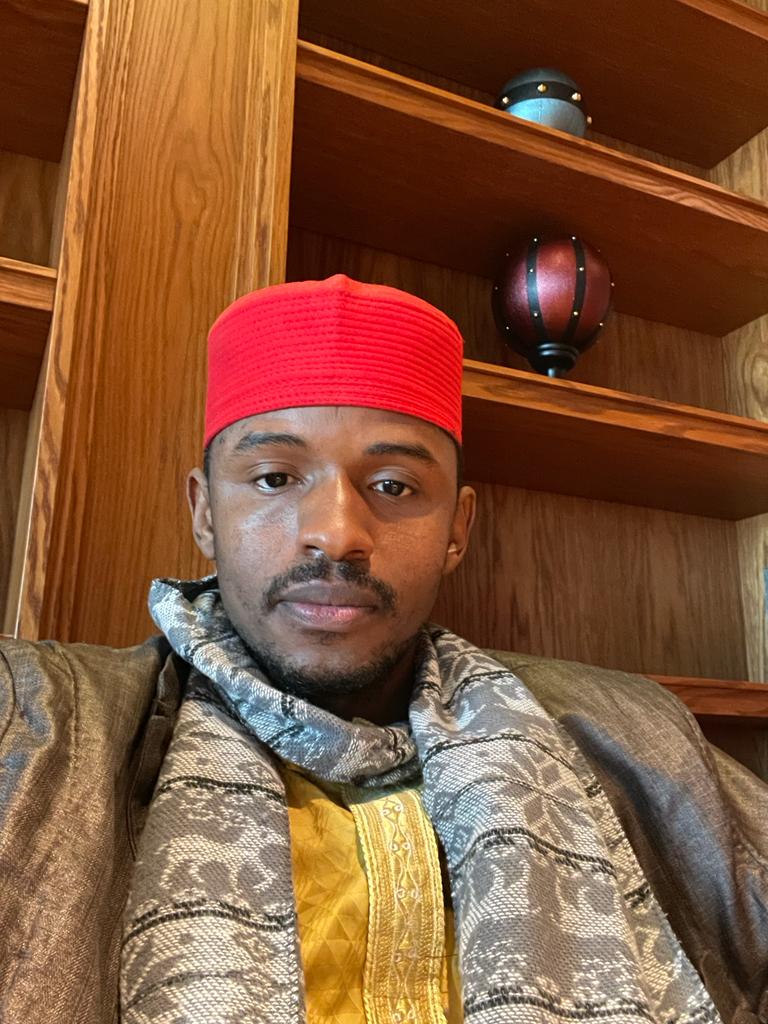
Harvard University is renowned for its academic excellence and intellectual vibrancy. Visitors often expect encounters with great minds and engaging discussions with professors, students, and highly enlightened individuals. However, my recent visit transcended mere intellectual exchange; it was a holistic experience that seamlessly intertwined intellectual discourse with spiritual enrichment, specifically with my fellow Tijjāniyah Faydah community, where I shared my day with them, which was superb and was a Friday full of activities.
On March 29, 2024, the day commenced with an eagerly anticipated lecture under the Islam in Africa initiative Lecture Series, co-organized by Prince Bin Al-Waleed Bin Talal Islamic Studies Program, Hutchins Center for African and African American Research, Harvard Faculty of Arts and Sciences, and Harvard Divinity School, and also the program convened by Professor Ousmane Kane al-Waleed Bin Talal, Professor of Contemporary Islamic Religion and Society.
My friend and interlocutor, a fellow Tijjānī disciple Amadu Kunateh, is a PhD candidate who works on Islamic Intellectual Traditions in Sub-Saharan Africa and their philosophical currents. He presented a lecture on the reception of theology (Kalam) and philosophy (Falsafa) in Modern Sub-saharan Africa. He utilised Sheikh Ibrahim Niasse as a case study of African ulemas’ engagement with the subjects. In keeping with the form of the subject matter, Amadu summarised his work in syllogistic form:
Premise 1: In Islam in Sub-Saharan Africa, Kalam and Falsafa were present but held limited valorisation.
Premise 2: Sheikh Ibrahim Niasse denounced Kalam and Falsafa as ‘evil innovations’.
Premise 3: Kalam’s aim of providing certain knowledge was refuted by Niasse, who argued that it cannot offer certainty.
Premise 4: Ma’rifa and tarbiya, offering certain knowledge, negate the necessity of Kalam.
Premise 5: Critics suggest that Ma’rifa is exclusive, leaving Kalam and speculative reasoning as alternatives for the populace.
Premise 6: In the Islamic context of West Africa, under Sheikh Ibrahim Niasse’s guidance, Ma’rifa is universally attainable.
Conclusion: Thus, in this milieu of the `Ārifeen in Subsaharan Africa, Kalam and Falsafa become redundant.
Notwithstanding, Amadu suggested that despite the privileging of ma’rifa and tarbiya as alternative cognitive modes, he showcased the continued presence of profound intellectual contributions to the issues pertinent questions of Kalam and Philosophy found in Sheikh Ibrahim’s Fi Riyād al-Tafseer.
The Q&A session allowed for more in-depth engagement with particular issues ranging from questions on Sheikh Ibrahim’s conception of Time, God’s Attributes (Sifat) & Dhat (Essence), the limits of the Intellect (‘aql), and more. The lecture ended with a hot meal, which was enjoyed by non-Muslims who are not observing Ramadan fasting, and takeaway containers for Muslim fasters.
Since it was Friday, we went to the Masjid for Friday prayer, where I found myself spiritually immersed, complementing the intellectual discourse seamlessly. Serendipitously, the Friday sermon (khutbah) was delivered by Dr. Ousmane Kane, who reminded congregants of the importance of God-consciousness (taqwa) and how taqwa results in God teaching you knowledge directly. This was a poignant reminder for an audience of academics and students in the pursuit of knowledge.
The sermon echoed Amadu’s earlier presentation on the alternative epistemologies and limits of the intellect. How remarkable to have heard a presentation on Sheikh Ibrahim Niasse only to follow it up with a khutbah at Harvard by his grandson, Dr. Kane, the son of his daughter Seyda Maryam Niasse. It was evident that the Flood (Fayda) had indeed travelled westward, and its wonders reverberated through the Harvard walls.

Following the Juma’ah prayer, the day continued to unfold its tapestry of spiritual and philosophical threads, culminating in two extraordinary meetings: one a private meeting with Dr. Kane in his office. During my meeting, I updated him on my project and the progress I am making at Columbia University. He gave me some valuable academic tips and then prayed for us with my friends.
My doctoral dissertation is about the tradition of Arabic Islamic logic in Subsaharan and North Africa. As such, it was suggested that I meet Āqil, an undergraduate student at Harvard College majoring in Math and philosophy, with a particular focus on modern logic. He is well-versed in Islamic tradition, having had madrasa training in Malaysia before arriving at Harvard.
Our conversation explored the relationship between Modal Logic, Classical Logic, and Arabic logic. The discussion focused on the metaphysical assumptions that ground modern logic and go unnoticed by modern logicians like Frege, Russel, and Wittgenstein. However, precise and comprehensive due to its extensive utilisation of symbols, it can be used for contemporary Usul al-Fiqh (Principles of Jurisprudence) as classical Arabic logic was traditionally espoused as an ‘instrumental’ tool for Usul and Theology. We were not convinced of the utility of modern logic for the Islamic sciences, but this issue requires further exploration.
Since it was Friday, and as Tijjānī adherents, we headed out to the Zawiyah located at Shaykh Ousmane Kane’s home to engage in more remembrance (dhikr), Qur’an recitation, poetry recitals community before the Maghrib prayer. In the midst of rigorous intellectual engagement, moments of spiritual reflection provided a refreshing pause. A moment of tranquillity presented itself during the Haylala at the Zawiyah. The evening culminated with the Quranic khatm, which is done every week following a complete recital of the Quran by members of this community.
We broke our fast together, which fostered a sense of community and companionship. It was amazing to experience a day of intellectual fasting at Harvard – with each conversation serving as a reminder of Allah.
The Path to Paradise is the prayer and the fast.
– Sheikh Ibrahim Niasse
And the Path to Allah is abandoning everything apart from Allah.
As we partook in the communal meal, it became evident that such gatherings not only nourish the body but also nurture the soul, and the healing food is exclusively cooked with the heart before the hand. Thanks to Kane’s family.
By the way, not surprisingly again, Shaykh Ousmane Kane presented the annual Ramadan Lecture (Durūs al-Hasaniyah)hosted by His Majesty the King of Morocco in front of Muslim global ‘ulema on Western Academia and Islamic Intellectual Tradition in Sub-saharan Africa and his efforts at Harvard to unravel that history. It’s astonishing and unprecedented that Shaykh, who lectured in front of the world’s Islamic scholars in Morocco, was a Harvard professor, khatib, and spiritual leader (muqaddam). It is a testament to Dr Kane (complex of two oceans of mind and spirit, as I named him in lines of my poetry last year,) the grandson of Shaykh al-Islam and Harvard professor. Indeed, the Fayda has flooded over from Africa to Harvard and its nurturing hearts and minds.
Reflecting on the day’s experiences, it’s evident that intellectual and spiritual pursuits need not exist in isolation; rather, they can complement and enrich one another, as is currently occurring at Harvard. Within Harvard’s diverse intellectual community, there exists a small group of people championing a holistic approach to learning.
Umar Sheikh Tahir, PhD Candidate at Columbia University. He can be contacted via ust2102@columbia.edu.

Police crackdown on criminal hideouts in Abuja
By Uzair Adam Imam
The FCT Police Command conducted a series of coordinated raids on notorious black spots and criminal hideouts in the Durumi and Dei-Dei areas of Abuja.
The operation, carried out between March 31 and April 4, 2024, resulted in the arrest of eighty-five suspects for various offenses.
Confirming the success of the raids, SP Josephine Adeh, spokesperson of the FCT Police Command, highlighted the persistent criminal activities that had plagued these areas.
She described the hideouts as notorious havens for hoodlums engaged in a range of illicit activities, including the peddling of hard drugs, manufacturing counterfeit currencies, and erecting illegal structures.
During the operation, law enforcement officers executed search warrants on several structures within the targeted areas.
This led to the seizure of numerous incriminating exhibits, including counterfeit paper and coins in both local and foreign currencies, light weapons, eight motorcycles, seven generators, various electronic gadgets, and a stash of ATM cards suspected to have been stolen from victims.
Adeh stated that all the arrested suspects would undergo thorough screening, with those found culpable being profiled and subsequently arraigned in court to face justice.
Additionally, the illegal wooden structures erected by the criminals were dismantled and set ablaze as part of efforts to deter further criminal activities in the area.
CP Benneth Igweh, the Commissioner of Police for the FCT, reiterated his commitment to ridding the territory of criminal elements and ensuring the safety of all residents.
He urged the public to remain vigilant and cooperate with law enforcement agencies by reporting any suspicious activities through designated emergency hotlines.
Residents were reminded to contact the following police emergency contact numbers if there is newd: 08032003913 – 08028940883 – 08061581938 – 07057337653 – PCB: 09022222352 – CRU: 08107314192
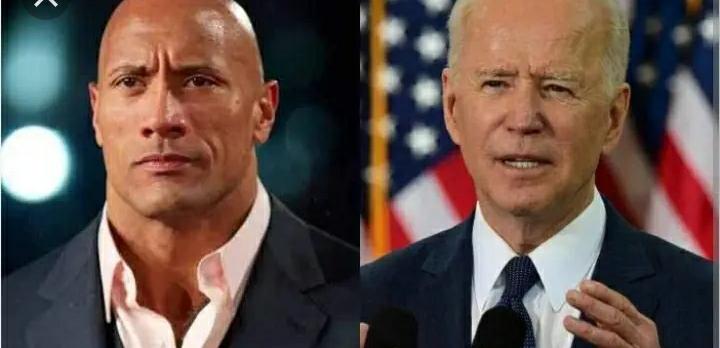
I won’t endorse Biden this time—American wrestler, Rock
By Uzair Adam Imam
American actor and wrestler Dwayne Johnson, widely known as The Rock, has declared his decision not to endorse President Joe Biden for a second term in the upcoming presidential election rematch with former President Donald Trump.
Johnson had previously thrown his support behind Biden in the 2022 presidential election, lauding him for his qualities of compassion, heart, drive, and soul.
However, in a recent interview with Fox News, Johnson indicated a change in stance, stating, “Am I going to do that again this year? That answer’s no. I realise now going into this election, I will not do that.”
Back in September 2020, The Rock endorsed Biden and his running mate, Kamala Harris, praising their experience and leadership qualities.
However, when asked about a potential repeat of his endorsement, Johnson expressed dissatisfaction with the current state of America, saying, “Am I happy with the state of America right now? Well, that answer’s no. Do I believe we’re gonna get better? I believe in that – I’m an optimistic guy. And I believe we can do better.”
While stating his goal of uniting the country, Johnson asserted that he would keep his political views private, stating, “It is between me and the ballot box.”
He expressed trust in the American people’s decision, asserting that whoever they vote for will be his president, whom he will support wholeheartedly.
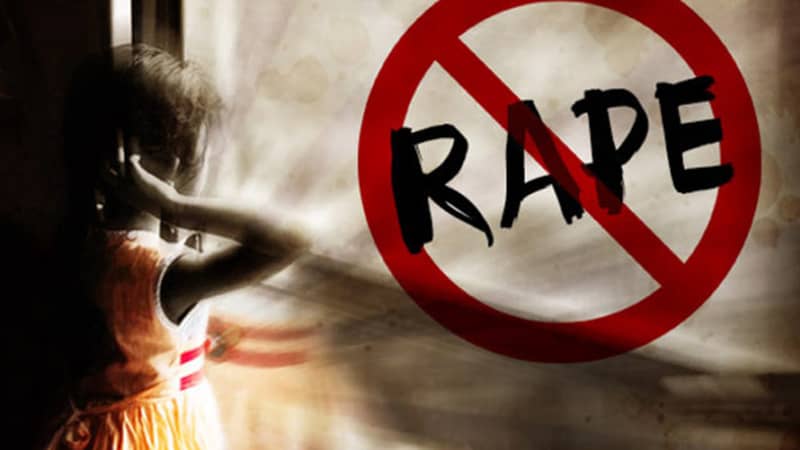
Mother’s lover allegedly abuses children sexually while she’s away
By Uzair Adam Imam
Lovelyn Onyekachi and her suspected lover, Uchenna Ekwenye, find themselves in police custody amid disturbing allegations of serial sexual attacks and defilement involving Lovelyn’s three children, aged 5, 7, and 9.
The case, originating in Lagos, has been moved to Abuja as investigations intensify. According to police sources, the children, lacking proper attention from their mother, reportedly fell victim to the assaults facilitated by Lovelyn’s relationship with Ekwenye.
Neighbours, troubled by the children’s distress, alerted authorities, leading to the arrests.
Lovelyn, who returned to Nigeria from South Africa with her children after a reported dispute with her husband, Pastor Paul Onyekachi, allegedly entered into a relationship with Ekwenye, who frequently visited their home in Lagos.
The situation escalated when Ekwenye allegedly moved in and took advantage of Lovelyn’s absence to abuse the children, warning them against disclosure.
However, a petition from the accused’s legal representatives challenges these accusations, asserting them as tactics orchestrated by the children’s father to gain custody through coercion.
In a twist, Lovelyn’s lawyers claim that she was detained unlawfully by the Lagos State Domestic and Sexual Violence Agency after being summoned for questioning regarding the allegations.
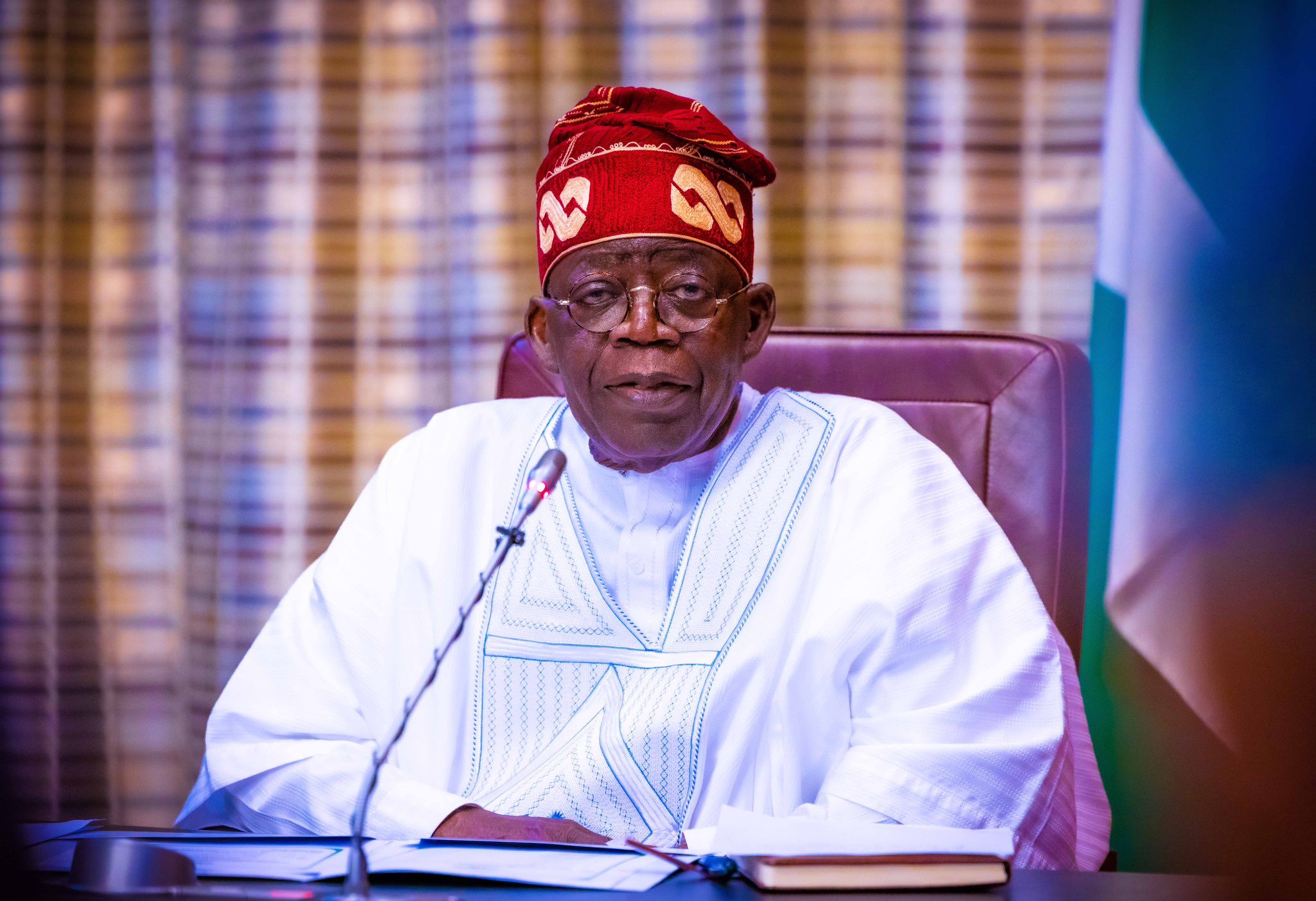
Salary increase or stronger Naira: My appeal to the President
By Sani Bello Hamza
Mr. President, before I delve into my concerns, it is indeed important to lay a proper foundation. As an aspiring lawyer and an opinion leader in my own capacity, I am not unaware of the challenges and intricacies of leadership. The stress, strain, and challenges are sometimes daunting and discouraging.
However, Mr. President, even your enemies and those from the opposition party can not doubt your capacity to lead and your unique style of leadership. Your ability to lead and manage successful politicians, industry men and academics leaves us in awe and surprise.
Your ability to understand and provide lasting solutions to national issues ought to be given careful consideration and serve as an exercise for students at various levels. Your unique style of leadership is indeed worthy of emulation and study. The Asiwaju school of thought!
Dear President Bola Ahmed Tinubu, It has been a year since Nigerians qued in mass to support you and the renewed hope agenda. They voted for you and supported your candidacy. Nigerians, from every nook and cranny of the country, shun the nay-sayers and triumph to support you and the APC to make sure you make it to the Villa. It has now become history and forms a special part of the Asiwaju school of thought!
Mr. President, sir, Before you declared your intention to run for president in early 2022, Nigerians were lost in search of a trusted and reliable leader, a qualified politician capable of steering them to the promised land. The APC seems to be falling after eight years of sheer disappointing tenure, and the PDP was not an option to be considered, given its 16-year tenure.
The resurgence and emergence of the renewed hope agenda and the “emilokan” slogan gave Nigerians a sigh of relief and hope that the table would turn around. That is, it’s time to reap what they sow and enjoy the fruit of their labour and hard work.
Mr. President, I wish I could write this letter and deliver it directly to your mail or doorstep. Sadly, it’s not possible. I still wish I could be featured on national television to address you and beg you for one thing, yes, just one thing, Mr. President.
If I were given the opportunity to meet you, the president, in a one-on-one conversation, I wouldn’t talk much. I promise to make the conversation short, brief, and succinct. Who will give me this golden opportunity?
Anyway, the popular Hausa adage; “guntun gatarin ka ya fi sari ka bani” meaning your short axe is better than cut and give me” is what kept resounding in my skull. I will use the little I have to achieve what I don’t have. I will send this letter out, hoping that one day it’ll reach you, Mr. President. In a one-on-one meeting with the president, I will tell him to put aside anything that has to do with salary increases for the working class and concentrate on bringing back to life the already dead Naira. A stronger Naira is the only option.
Okay, back to the subject matter: Nigeria is indeed a blessed country with abundant natural resources (Minerals and Humans). Yet, our economy keeps dilapidating day in and day out. It always seems that yesterday was better than today, last month was better than the current month, and we wish to be taken back to the previous administrations.
Why is this happening? What is the problem with Nigeria?
I was tempted to share a post on my Facebook timeline from March 2015 (nine years ago) in which the writer lamented how the prices of commodities skyrocketed during the fasting period. The only price that caught my attention was the price of spaghetti, which rose from 60 – 70 naira. Man! How much are you buying spaghetti now? They’ll say the dollar has risen.
Mr. President, back then, in 2014, the exchange rate of dollar to naira was 60-70 per dollar. The minimum wage then was 18,000 naira, which is enough for an average Nigerian to buy a bag of rice and other commodities to sustain himself throughout the month.
Fast forward to 2024, 10 years later, the Naira hit an all-time record of 1900 to a dollar, and the minimum wage has graciously increased from 18,000 to 30,000. The 30k will not be enough for the average Nigerian to buy half a bag of rice, not to talk of other daily life struggles.
Mr. President, I strongly believe a salary increase will only increase the amount of money in circulation, thereby making inflation the front seat of our economic discourse. They say more money, more problems.
Mr President, sir, a good road network connecting rural to urban areas spiced up with increased exports will benefit the country more than an increased salary for less than five per cent of the country’s population.
Dear President Bola Ahmed Tinubu, I equally believe the renowned economists in your midst understand the intricacies of our economy and where it’s heading to. With your continuous support, dedication and unwavering commitment to the progress of our nation, Nigerians will one day smile and say Alhamdulillah!
Sani Bello Hamza is a Law Student at Ahmadu Bello University Zaria. He writes from Zaria and can be reached via sanibellohamza@gmail.com.

Military can end Nigeria’s security crisis
By Uzair Adam Imam
Former Minister of Defence and National Leader of the New Nigeria People’s Party (NNPP), Sen. Musa Kwankwaso, has emphasized the capability of the military to effectively address the prevailing security challenges in Nigeria, provided with the requisite support.
Speaking to journalists after the NNPP National Executive Committee meeting in Abuja, Kwankwaso underscored the pivotal role of the Federal Government in addressing the security crisis while urging Nigerians to actively contribute by providing crucial information to security agencies.
Drawing from his extensive experience in security matters as a former Minister of Defence and Chief Security Officer of Kano State, Kwankwaso emphasized that the gravity of the situation necessitates the involvement of the Nigerian military.
He stressed that alternative security measures, such as state-led initiatives, fall short of addressing the magnitude of the crisis.
Highlighting the dire consequences of the security challenges, including disruptions to agricultural activities and rampant abduction of innocent civilians, Kwankwaso urged collective efforts towards restoring peace and security in the country.
Asserting his party’s readiness to tackle the nation’s problems, Kwankwaso positioned the NNPP as a beacon of hope for Nigerians disillusioned by the failures of the All Progressives Congress (APC) and the Peoples Democratic Party (PDP).
Echoing Kwankwaso’s sentiments, Kano State Governor Abba Yusuf urged unwavering dedication among party members, emphasizing the need for wholehearted commitment to the NNPP’s vision for a better Nigeria.
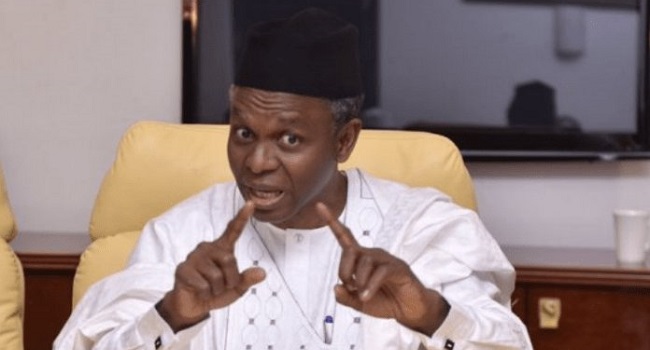
El-Rufai gears up for legal, political battle against Tinubu
By Uzair Adam Imam
The former governor of Kaduna State, Mallam Nasir El-Rufai, is bracing himself for a multifaceted showdown with President Bola Tinubu, poised to unfold in both courtrooms and the court of public opinion.
El-Rufai’s legal offensive is aimed at vindicating himself from allegations of being a security risk, which have tarnished his reputation and dashed his ministerial aspirations.
Despite his instrumental support in Tinubu’s rise to power, El-Rufai was abruptly dropped during Senate ministerial screenings, citing purported security clearance failures.
This stunning turn of events has spurred El-Rufai to action, with plans underway to challenge the accusations in court. Sources close to him have affirmed his resolve to clear his name and restore his integrity, leveraging his extensive international connections and legal resources.
Simultaneously, El-Rufai is mobilizing politically to challenge Tinubu’s influence in the court of public opinion, setting the stage for a potentially contentious lead-up to the 2027 elections.
While his exact role in the upcoming political landscape remains uncertain, El-Rufai’s strategic maneuvering against Tinubu underscores a rift that has emerged despite their past collaboration.
El-Rufai’s journey from a key ally to a formidable opponent of Tinubu reflects a complex dynamic within Nigerian politics, where alliances can shift rapidly, driven by personal ambitions and ideological differences.
As the battle lines are drawn, the nation watches with bated breath to see how this clash of titans will reshape the political landscape in the years to come.
Japa: Addressing misconceptions on helping young Northerners craving to move abroad
By Dr. Muhsin Ibrahim
Some people accused us (Hausa/Fulani folks living in the West) of not doing enough to bring our own here – as our counterparts from the South do. This is not the first time and will not be the last I heard such accusations. In short, they are baseless.
Years ago, we spent hours giving a webinar on how to get scholarships and jobs in Germany under the Arewa Youth Mentorship Program (AYMP) platform. AYMP has been organising such events for years. I have shared it here and with many people personally. One of them complained that it was too long!
I went to bed last night thinking about the accusation. I almost slept when I felt the need to share a website about working, studying, and living in Germany, which I did. However, see how many people reacted to it (30 as I type this; the one before it has almost 1500). One of the three people who commented on the post asked, “How can I apply”? Click on the darn web link!
Folks, it is not easy to come to Europe or any other part of the world via legitimate means for a gainful job. First, you need to have the required skills or qualifications. Second, you must have either an admission, scholarship, or job contract. Third, you must have a visa.
I swear some of those people we praise for ‘helping’ their own follow dubious means. I know several people working with others’ documents and identities. I have heard of people charging astonishing amounts of money to be others’ guarantors (to come here). I cannot do any of these.
I have shared scholarship and job opportunities countless times and have been mentoring people—directly or indirectly—for years. Some of these folks have made it—Alhamdulillah. However, others haven’t. I cannot satisfy everyone.
Others have disappointed me, thinking I should do everything for them. I cannot recall how often I asked some so-called mentees to collect their academic transcripts or write proposals for applications to do their postgraduate studies abroad. Come on! I have other essential engagements myself.
Upon waking up, seek God’s help and avoid falling for scams out of desperation (the topic I discussed yesterday, though in Hausa).
May Allah help us all, amin.
Dr. Muhsin Ibrahim teaches Hausa Studies at the Institute of African Studies, University of Cologne, Germany. He can be reached via muhsin2008@gmail.com.
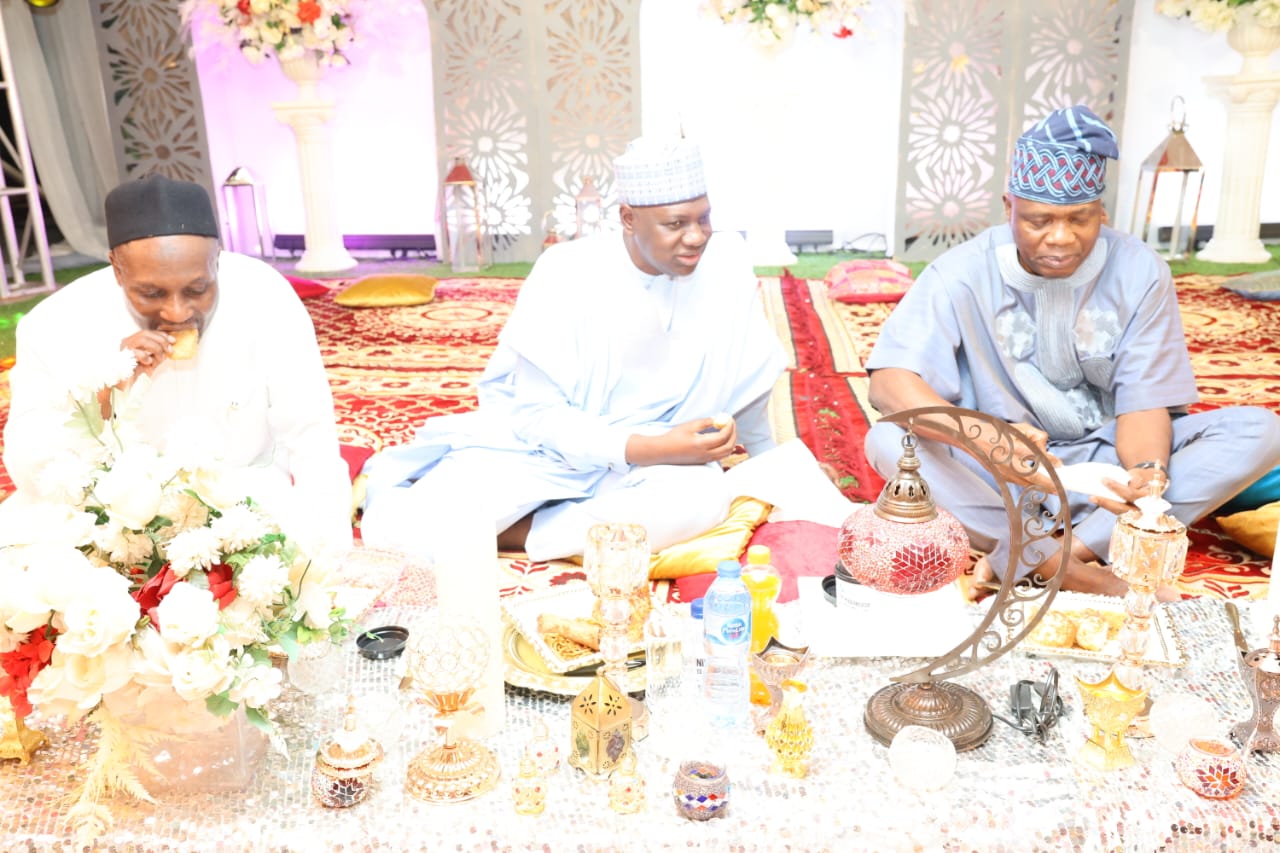
CGC Adeniyi hosts Ramadan Iftar with dignitaries, calls for national unity
By Sabiu Abdullahi
The Comptroller-General of Customs, Bashir Adewale Adeniyi, MFR, called for unity and harmony among Nigerians during the holy month of Ramadan.
He stated this in an iftar gathering he hosted on Tuesday, April 2, 2024.
The event, attended by dignitaries including Saleh Ahmadu, Chairman of the Trade Modernization Project, took place at the Nigeria Customs Management Estate in Abuja.
In his address, CGC Adeniyi urged Nigerians to embrace the teachings of Ramadan, stating, “Only through eschewing bitterness, accommodating one another, and living with one another in peace and harmony can people achieve a prosperous country.”
He expressed the significance of Ramadan’s teachings.
Reflecting on the recent celebrations of Easter and the ongoing observance of Ramadan, CGC Adeniyi stated the common values shared by Nigerians, stating, “What unites us is far more than what divides us.”
He called for collective action to address food insecurity in the country, noting that many Nigerians struggle to find adequate meals, especially during Ramadan.
CGC Adeniyi reaffirmed the Nigeria Customs Service’s commitment to supporting Nigerians in need, pledging to implement measures to ensure food security.
He called on all Nigerians to embrace the spirit of Ramadan in their daily lives, urging them to “eschew bitterness and accommodate one another in peace and harmony.”
Wale Edun, representing the Minister of Finance and Coordinating Economy, commended CGC Adeniyi for organizing the Iftar.
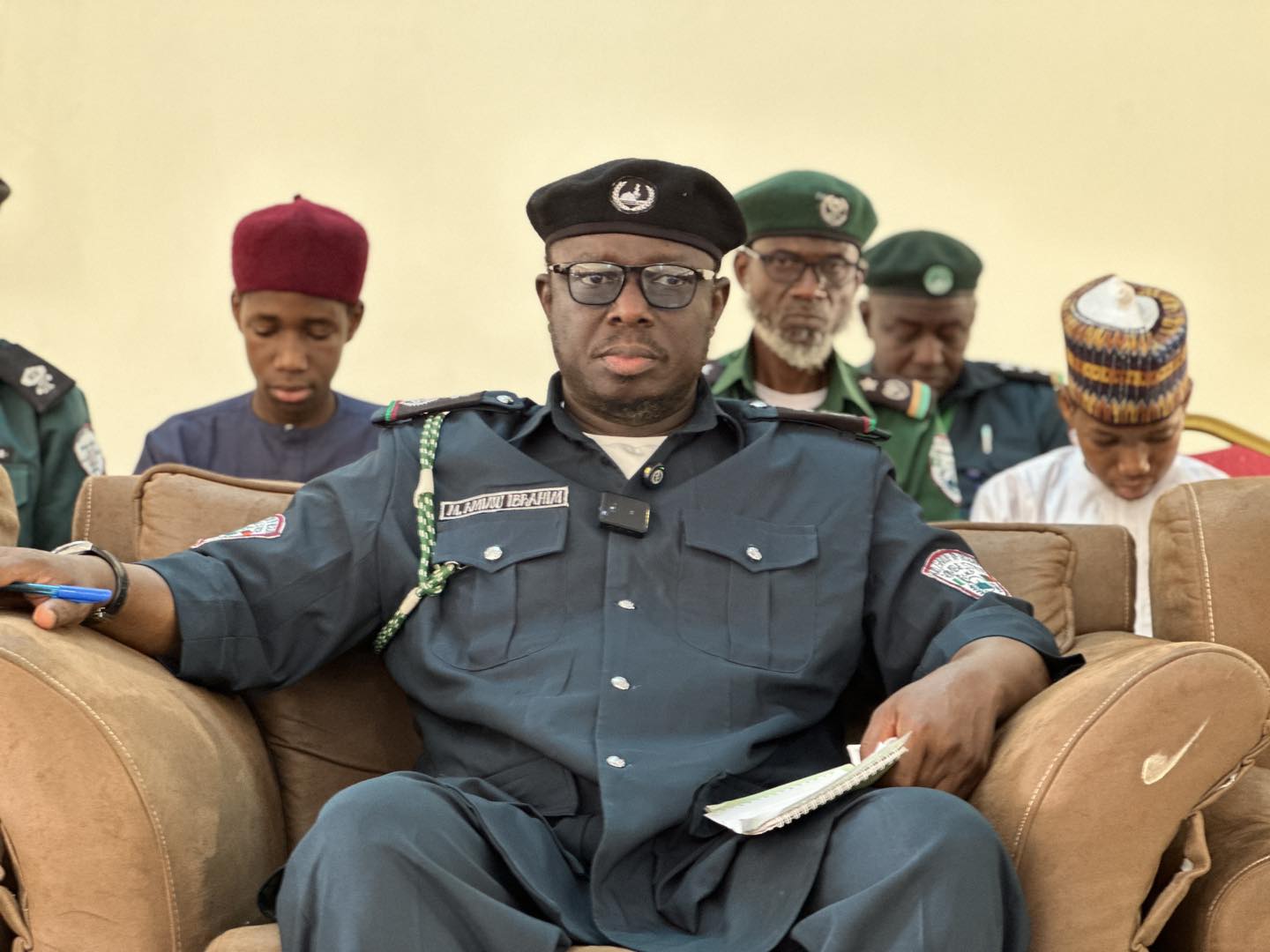
In search of a link between some Hisbah operations and Shari’a implementations
Isma’il Hashim Abubakar
A few weeks ago, the Kano State Hisbah Board stole the limelight when a brief misunderstanding erupted between the Kano State Governor, Abba Kabir Yusuf, and the Hisbah leadership. The Muslim public, represented by religious leaders and the elite, played a significant role in calming tensions and restoring peace in the issue, which everyone welcomed with sincere happiness and unique hope that the short altercation would result in the promotion and reinforcement of Hisbah.
In the two articles I penned within the clusters of that misunderstanding, I stressed that Hisbah is virtually the only government institution that transcends abstract symbolism and remains the lively organ that operationally contributes to the implementation of the Shari’a project, which was once the highest ambition of the Nigerian Muslims. I emphasised that all Muslims should regard Hisbah as their delicate property that should not be, in the least, jeopardised by internal or external commissions, omissions or inactions of any individual, no matter how highly placed, let alone common people who can just be dealt with and cracked down by responsible leadership.
One of the top functions of Hisbah is to serve as a machinery that supports the process of Shari’a implementation by deterring people from committing crimes, apprehending suspects, and presenting them before Shari’a courts for proper investigation and ruling. Of course, at different stages, Hisbah commendably serves as a forum for reconciliation and solving social disputes, which at times pleases and satisfies opposing parties in a better way than courts do. Nonetheless, this is never an excuse for the institution if it operates so that its effort to intervene in matters and find solutions for them becomes counterproductive to the letter, spirit and goals of Shari’a, which the board was primarily established to protect.
Although preserving dignity is a principle that characterises Hisbah’s operations, as a government force backed by law, the board is not expected to provide cover or leeway for criminals to evade the wrath of the law. Shari’a will cease to have its proper meaning if criminals assume they are not to be treated as culpable and should, in principle, be deterred from, cautioned against, or punished for flouting Islamic law.
In light of how some Hisbah officials handle cases both at the headquarters and various branches in the 44 local governments, some categories of criminals now utilise Hisbah to get their crimes tacitly covered as they further pursue their fiendish goals by conniving with or approaching some elements within the board. They no longer fear legal penalties that their crimes could lead them to, but could even summon the courage to approach the board to confess their crimes and demand certain rights that may have followed the consequences of their crimes.
To be clearer, by citing examples, in a recent report I watched, which was broadcast by Tozali Magazine Online TV, a Chinese master in a company in Kano impregnated the daughter of his driver. When this crime was unmasked, the people involved tried several ways to abort the six-month pregnancy. After failing to get rid of the mess since medical experts refused to conspire with the Chinese fellow and his illegitimate in-laws, the case was taken to Hisbah, who is said to have searched for a solution for them.
The report has it that the Hisbah leadership has resolved that the Chinese man, who earlier sought to silence his poor driver through pecuniary consolation, should just now marry the girl despite her heavy pregnancy so that the matter would be put to rest. If this report is true, with all its attendant jurisprudential intricacies, similar to what has allegedly occurred repeatedly in several branches of the morality police, then the institution needs to review its operations.
As a Shari’a implementation body, when a suspect admits committing a crime as felonious as this, which involves adultery and attempts at feticide, is the expected response from Hisbah to look for a solution or to make a comprehensive investigation and forward the case to Shari’a court for judgment? Is Hisbah not shielding adulterers and providing escape routes for suspects who attempted to commit a feticidal crime? The punishment for an adulterer is clear; to be stoned to death and 100 lashes for the girl who seems to be unmarried since her Chinese lover, according to the report, did not rape her or use any form of coercion to have carnal knowledge of her. How could all this be replaced by forcing these criminal parties into marriage?
A knowledgeable person heads the Hisbah, and the wisdom behind resorting to marrying culprits of this nature is a motive to preserve human dignity, conceal wrongs committed and prevent an illegal child from being born from perpetual bullying and stigmatisation. But yet, is this enough reason to sacrifice divine injunctions and render them obsolete? From what we read in the Glorious Qur’an and interpreted by the Messenger (SAW) through his speeches and deeds, suspects could only be shielded if the matter is not taken to authority or the relevant legal agency has not got hold of the felons. Concerning a set of crimes and their penalties, Allah says:
“illa alladhīna tābū min qabli an taqdirū ‘alaihim fa’lamū anna Allaha Gafūrun Rahīm” (except those who repent before they fall into your power, then know that Allah is Most-Forgiving, Most-Merciful) [ Sūrat al-Mā’idah: 34].
In several instances, the Prophet (SAW) warned that once a matter was presented before his court, then Allah’s law would take precedence over all other concerns. However, the Prophet (SAW) took pity on an illegal child born by a woman from the al-Ghāmidī clan. As a result, he asked her to go and take care of her child when the woman returned after she successfully weaned the child. She insisted that she must be punished according to the divine law; the Prophet (SAW) did not look for any other solution but applied the law to her, which, interestingly, promoted her posthumous virtue and spiritual rank. Worthy of notice also, nothing was heard about the man responsible for her illegal birth, nor did the Prophet himself ask her to mention him, just as the child was also integrated into the society without inscribing a permanent taboo on his status.
Of course, many will argue that the penalties above are practically infeasible, but yet rewarding the felons with marriage is also discouraging and counterproductive to the goals of Shari’a. A midway solution is at least to apply a warning penalty (ta’zīr) on the criminals by serving their sentences to spend years in jail, which will be done by the court.
The scenario of Ɗan Chana and his street in-laws represents one of the many cases that evince Hisbah’s indecision to fully side with the spirit and letter of Shari’a as fully enshrined in the state law and is still the main legal framework that ought to guide Shari’a implementation process. It is now common to see a girl carrying a small child and asking for the address of Hisbah to report a case of her love affair, which resulted in the birth of a bastard whose alleged father refuses to adopt, take care of, or just abandons. The girl will summon enough courage and temerity to shamelessly divulge her secret affair just because she is confident she won’t be served with proper Shari’a law. Her aim for approaching Hisbah is not to repent and make amends but rather to wheedle her way into favour and capitalise on the institution’s power to extort money from her accomplice, who may have even denied being responsible for the unwanted birth.
Even if Hisbah won’t pursue the case to the court, which it should, it should at least explain to girls like this that pregnancy and birth are enough evidence to prove a woman guilty of adultery or fornication, unlike in men’s cases, which primarily demands eyewitnesses or personal confessions. After all, illicit relationships do not have a sanctity similar to marriage, which has a Shari’a cover. As such, failure by a partner in illicit relationships to fulfil certain duties should not be equated with marital disputes between spouses. If a whore pretends that she is innocent and goes on to claim damages or demand a right, then what makes her different from a legitimate housewife or a divorcee?
In the same manner, men accused of raping innocent girls are sometimes relieved from their burden through local arrangements with victims’ families such that in the long run, money will be the prime solver of the dispute, and suspects get away once they make commitments to take care of certain clamours about their victims.
The disconnect between some operations of Hisbah, which is portending a gloomy future for the institution, shall be one of the priorities of the governing council of the board, but also the head of government, who now does not have any doubt about the institution’s significance and dearness to the Muslim public. As we are in an era of normalisation of strange and weird mores and practices, Hisbah should be highly cautious and extra-careful not to be an agent through which barbaric, savage and amoral attitudes will be mainstreamed.
Lovers who lack fear of God or a woman who falls so low to trade with her dignity in exchange for cash will continue to be emboldened to make a claim when any of them feels cheated in an illegal deal. No matter how rich or influential a man is, he shouldn’t be given a cover to get away with his crime just for pledging to take care of his rape victims. The application of appropriate legal sanctions is the only solution and guarantee for the safety of all parties, including the Hisbah and its leadership.
Isma’il writes from Rabat and is reachable via ismailiiit18@gmail.com.