


From passion to perfection: How the world is developed
By Ismaila Academician
Have you ever noticed that some pillars don’t stand upright, some dresses don’t fit well, and some bathroom tiles slope in the wrong direction, requiring sweeping after use?
The underlying cause is often a lack of passion among the professionals who create them. While they may appear cheerful and enthusiastic on the front end, their motivation primarily stems from financial gains attached rather than genuine passion from the back end. Passion is the driving force to perfection. It is the pacesetter towards excellence and success.
In the Western world, passion is evident in how professionals, artisans, and experts discharge their duties. They work not just to earn a living but also for a sense of fulfilment. It motivates them to innovate and develop new ideas, leading to the creation of products and services that are nothing short of perfect. Overall, it makes their countries grow and stay afloat no matter the storm.
Nigeria is blessed with a wealth of talents. We have the potential to innovate and develop new ideas—products and services that can compete favourably with those made abroad. But that talent remains unutilised.
A close look at the Facebook Reels section reveals that while Western and Eastern individuals are busy advertising their talents and sharing innovative ideas, Nigerians are often preoccupied with sharing content such as elegant weddings, club sessions, presidential convoys, and comedies. While these are not inherently bad, they do not reflect the depth of our creativity and innovation.
Social media is a powerful tool that can help us showcase our skills to a large and diverse audience. We can attract potential customers, business partners, investors, or employers. It also can help us build reputation, credibility, and influence. We need to craft a better narrative for Nigeria. We need to showcase our creativity and innovation. We need to display our knowledge and skills to inspire and motivate others.
In conclusion, the journey from passion to perfection is a transformative one. It requires passion. As Nigerians, we have what it takes to embark on this journey. We have what it takes to bridge the gap between local and foreign products. We have what it takes to craft a better narrative for Nigeria. All we need to do is to harness our potential and channel it towards the pursuit of perfection. But passion can’t do the work alone. We need to supplement our passion with action – creativity and innovation.
Remember, ideas develop the world, and people are willing to bring these ideas to life. Let’s be those people. Let’s make Nigeria a better place.
Ismaila Abdulmumini wrote from Kano, Nigeria, via ismailaacademician@gmail.com.

Fairness to business owners
By Ishaka Mohammed
Apart from a business trip to Enugu within 24 hours, I’ve spent all my life in northern Nigeria, but it was in 2014 that I learnt that “Arewa” means “North”. In fact, I had once referred to the word as the name of a bloodsucking occult society, thanks to rumour-mongers.
As children, my peers and I heard about “Ogbenu” (occultists who sucked children’s blood). Although the “bloodsuckers” were believed to be far away from our land, we were constantly warned to avoid them.
We received one of such warnings around 2003 or 2004, when a new brand of notebook was generating massive sales in our village.
The cover of the book had an inscription, “The great people of the great land…the people of Arewa land,” and featured pictures of some men wearing Hausa traditional attire on horses. It was rumoured that the men were Ogbenu, so writing in the book would drain one’s blood, while exhausting all pages would cause death.
Consequently, as some children and I avoided the book, various others destroyed the copies they already had. The brand disappeared from our community.
For the sake of context, I’m from Inye, a village in Ankpa Local Government Area of Kogi State, and I was a pupil at Engineer Bob Alfa Primary School (EBAPS), Ojuwo-Inye, at the time of the incident.
If a single rumour could be that effective by mere word of mouth, imagine how damaging it could be in this age of digital revolution.
You have the right to review products or services but be fair to brands and companies. Business owners struggle for the survival of their establishments, so it’s wicked to ruin their efforts. A single sentence could make or break an establishment. Business owners are also human beings, so they deserve fairness.
Nonetheless, whoever wants to be obstinate should either be ready to provide sufficient evidence or ask one Chioma Egodi Jnr. A single Facebook post and some comments about Nagiko Tomato Mix forced Erisco Foods Limited to deal with her. Deleting the post didn’t help matters, as the company involved the law and insisted that she prove her claims about the product.
Some people have argued that the company overreacted, but I think otherwise: she deserved what she got.
Ishaka Mohammed can be reached via ishakamohammed39@gmail.com.
Revealing the unseen: How climate change fuels infectious diseases in Katsina State
By Ibrahim Adamu Ingawa
In the vast expanse of Nigeria’s Katsina State, beneath the scorching sun and amidst the sporadic rains, a silent predator lurks, imperiling the health and well-being of its inhabitants. Climate change, though often overlooked, poses a formidable threat to public health in Katsina State, catalyzing the emergence and spread of infectious diseases at an alarming rate.
In recent years, the fingerprints of climate change have become increasingly evident, leaving behind a trail of devastation in its wake. From the bustling streets of Dutsin-Ma to the tranquil valleys of Bakori, the impacts of rising temperatures and erratic rainfall patterns are unmistakable, reshaping the landscape of disease transmission in profound ways.
Take, for instance, the surge in malaria cases that swept through Dutsin-Ma Local Government Area in 2019. Heavy rainfall and flooding provided the perfect breeding grounds for disease-carrying mosquitoes, resulting in over 500 confirmed cases within a month. Similarly, the parched earth of Kankia Town bore witness to a cholera outbreak in 2017, fueled by drought conditions and inadequate sanitation infrastructure, claiming the lives of several hundred individuals.
But the toll of climate change extends beyond the realm of vector-borne diseases, reaching deep into the fabric of public health in Katsina State. The specter of Lassa fever loomed large over Bakori Local Government Area in 2016, as changing climatic conditions facilitated the spread of this deadly virus, leaving a trail of devastation in its wake. Meanwhile, in Funtua, rising temperatures and increased mosquito activity paved the way for a dengue fever outbreak in 2015, further exacerbating the burden of disease in the region.
Yet, perhaps the most poignant manifestation of climate change’s impact on public health lies in the floods that ravaged Jibia in 2018. As torrential rains inundated the town, turning streets into rivers and homes into islands, a silent menace took root. Stagnant floodwaters became breeding grounds for disease vectors, leading to a surge in malaria cases and exacerbating the plight of already vulnerable communities.
In addition to the visible impacts on infectious disease outbreaks, climate change is also facilitating antimicrobial resistance (AMR) in Katsina State, thereby exacerbating public health challenges. The rising temperatures and erratic rainfall patterns create favorable conditions for the proliferation of resistant bacteria, as well as the emergence of new strains which are resistant to the drugs that are meant to kill them. Increased use of antimicrobial agents in response to climate-related infectious disease outbreaks further contributes to the selection pressure driving AMR. This alarming synergy between climate change and AMR underscores the urgent need for comprehensive strategies to address both phenomena and safeguard the health of Katsina State’s population.
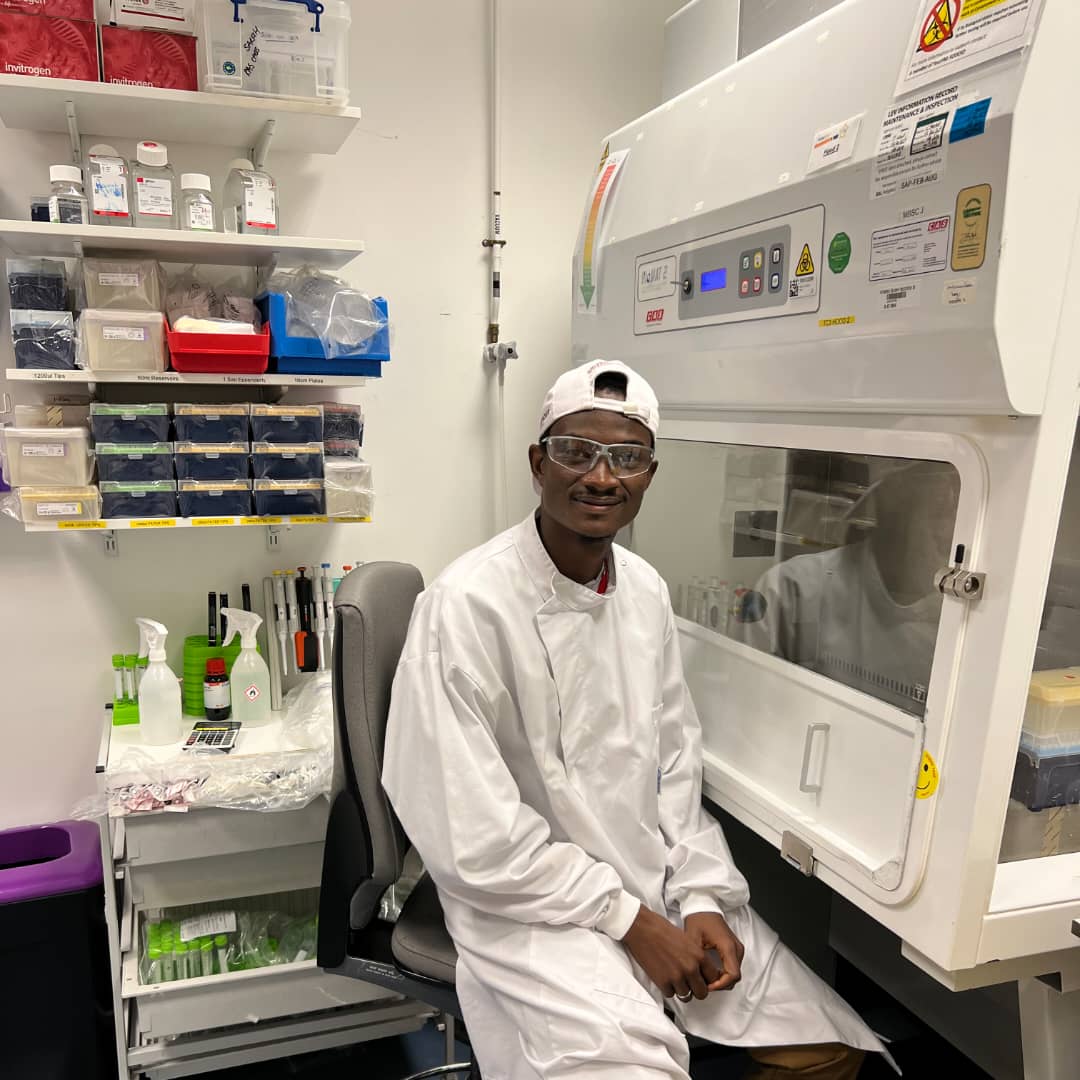
Despite the magnitude of these challenges, hope remains on the horizon. Armed with knowledge and skills I acquired in addressing the most pressing issues of public health over the past few years, I am committed to leveraging my expertise to develop innovative interventions aimed at tackling the consequences of climate change on infectious disease outbreaks in Katsina State. From outbreak preparedness and prevention to the implementation of robust control mechanisms, I am zealous in my determination to contribute in safeguarding the health and well-being of my fellow citizens at the Home of Hospitality. But my journey has not been without its obstacles.
Since my return from the United Kingdom after my internship at the world-leading genomics research institute (the Wellcome Sanger Institute, Cambridge), there has been interference from certain elements, which has impeded my ability to implement meaningful change. Yet, in the face of adversity, my resolve remains unshaken, fueled by a burning desire to make a tangible difference in the lives of those most affected by the ravages of climate change in my dear State.
The impacts of climate change on infectious disease outbreaks represent just one facet of the multifaceted challenges confronting the public health milieu of my beloved State. I remain resolute in my commitment to driving forward the positive transformation of Katsina State’s public health sector. Anticipating the opportunity to deploy my skills and expertise, I stand ready and poised to seize it at any moment.
As I look towards the future, I am filled with optimism, knowing that together, we can overcome the challenges posed by climate change on ever-increasing infectious disease outbreak and forge a path towards a healthier, more resilient Katsina State. I believe that through collaboration, innovation, and unwavering determination, we can turn the tide against this invisible threat and pave the way for a brighter, healthier tomorrow.
Ibrahim Adamu (Ingawa) writes from Katsina State. He’s a
Project Grantee at The Foundation to Prevent Antibiotic Resistance (Sweden). He can be reached via ibrahimassalafee@gmail.com/ +2348134386907

WAEC releases first-time WASSCE-CBT results
By Sabiu Abdullahi
The West African Examinations Council (WAEC) in Nigeria has rolled out the results of its pioneering Computer-Based West African Senior School Certificate Examination for Private Candidates, 2024—First Series.
This signifies a notable departure from conventional paper-based assessments towards a digitally-driven format.
As per a statement from the council, the groundbreaking CB-WASSCE utilised a blended approach, projecting questions onto computers while candidates submitted real-time answers for multiple-choice questions and provided responses in booklets for essays and practical components.
The examination spanned from January 31 to February 17, 2024. An analysis of the results revealed that out of the 8,139 candidates who participated, 3,424 individuals, constituting 42.07%, attained credit or above in a minimum of five subjects, irrespective of English language and mathematics inclusion.
The statement read, “2,519 candidates representing 30.95 per cent obtained credit and above in a minimum of five subjects, including English Language and Mathematics.
“The coordination of examiners and marking of candidates’ scripts were carried out at three marking venues in Lagos, Enugu and Kaduna from March 1 to 16, 2024. A total of 459 Examiners participated in the Coordination and Marking Exercise.
“The entry figure of 8,362 candidates showed a 4.30 per cent decrease in candidature when compared with the 2023 entry figure of 8,738. 8,139 candidates sat the examination at 140 CBT centres spread across the country.
“Amongst the candidates that sat the examination, 21 candidates, with varying degrees of Special Needs, were registered for the examination. Out of this number, nine were visually challenged, two had impaired hearing and two were Albinos.
“All these candidates with special needs were adequately catered for in the administration of the examination.”

“LGBT movement” added to Russia’s terrorist list
By Muhammad Abdurrahman
Banks should freeze funds and suspend services to individuals and groups included on the list.
Russia’s Federal Financial Monitoring Service (Rosfinmonitoring) expanded its list of individuals and organizations involved in extremist activities or terrorism on Friday to include the LGBT movement. The updated list is available on the agency’s website.
According to the law, banks are required to freeze the funds of individuals included on this list and suspend services to them.
Last November, the Russian Supreme Court upheld the Ministry of Justice’s recognition of the international LGBT movement as extremist. The court also recognized its structural divisions as extremist and banned them.
According to Interfax sources, the law “does not affect citizens’ right to privacy and will not entail any negative legal consequences.” The restrictions are related to the need to comply with the ban on LGBT propaganda, advertising, generating interest, and involvement in the LGBT movement.
Source: RT
A solution to procrastination
By Muhsin Ibrahim
Procrastination affects not only writers but also people from almost all walks of life. We all have tasks to do. However, due to procrastination, we keep saying that we will do them later again and again until the time is gone.
When I was writing my dissertation, I struggled with procrastination. I often put off writing, thinking I could do it later. This led to a lot of stress and anxiety as deadlines approached. However, I was determined to find a solution. I tried different techniques, such as setting strict deadlines for myself and breaking up my work into smaller, more manageable tasks. Eventually, I found a solution that worked for me.
I was reading a book with a ‘funny’ title: The Subtle Art of Not Giving a F*ck, when I found the following:
‘When I was in high school, my math teacher, Mr. Packwood, used to say, “If you’re stuck on a problem, don’t sit there and think about it; just start working on it. Even if you don’t know what you’re doing, the simple act of working on it will eventually cause the right ideas to show up in your head.’ (Manson 2016, p. 109).
I printed out the page and hung it in my room. I highlighted the above and another line. So much like the author, whenever I open my computer, a voice from within tells me to write something, not just to sit there.
Don’t hesitate to jot down your thoughts; the longer you wait, the more likely they will evaporate. Instead, take action and write! Remember, you can always revise, edit, and refine your ideas later. So go ahead and let your creativity flow without hesitation.
So, in Manson’s words, “Don’t just sit there. Do something. The answers will follow.” Do it in no haste, but don’t keep delaying it. Writing is unlike a speech; there’s almost always a time to revisit what you have written.
Dr Muhsin Ibrahim writes from Cologne, Germany and can be reached via muhsin2008@gmail.com

Nigeria Customs Service, NEPC strengthen partnership to enhance export activities
By Sabiu Abdullahi
The Nigeria Customs Service (NCS) has affirmed its commitment to collaborate closely with the Nigeria Export Promotion Commission (NEPC).
The announcement came during a significant meeting held on Tuesday, March 19, 2024, as the management team of NEPC paid a courtesy visit to the Customs Corporate Headquarters in Abuja.
Comptroller-General of Customs, CGC Bashir Adewale Adeniyi, expressed the NCS’s eagerness to join forces with NEPC to streamline export processes, alleviate bottlenecks, and foster a conducive environment for exporters.
He stressed the pivotal role of this collaboration in redefining exports to enhance outbound trade volumes.
During a joint session at the Customs Corporate Headquarters, CGC Adeniyi underscored the imperative of supporting exports, particularly in addressing logistical challenges.
His words were echoed by Nonye Ayeni, Executive Director and CEO of NEPC, who commended CGC Adeniyi’s notable achievements since assuming office.
Ayeni stated Nigeria’s wealth of resources, especially in agriculture and solid minerals, highlighting the pivotal role of advocacy in addressing exporters’ challenges.
Se further reiterated the importance of non-oil exports for economic growth and called for concerted efforts to actualize the “Export 35 redefined” initiative.
She also urged sister agencies to actively contribute to mitigating logistical hurdles and proposed the establishment of aggregation centers to facilitate smoother export processes.
In response to the discussions, Comptroller Ajibola Odusanya, Customs Area Controller Lilypond Export Command Lagos, amplified the necessity of the Nigeria Export Proceeds (NXP) to repatriate export proceeds.
Looting under the guise of hunger must stop
By Tajuddeen Ahmad Tijjani
The country has sadly, in recent times, witnessed pockets of protests and widespread agitation over the rising cost of living and skyrocketing prices of foodstuffs.
“In the past few weeks, residents of Kano, Ogun, Niger, and Oyo States have taken to the streets to protest the high cost of living caused by spiralling inflation in the country.”
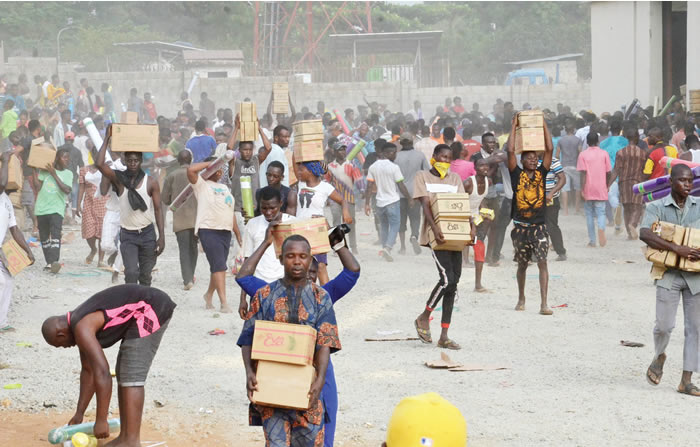
In times of desperation, especially when our leaders are too much for themselves and care less for those they govern, calling for them to sacrifice while at the same time living flamboyantly at the expense of society, however, when basic needs like food and shelter too often become scarce, individuals may resort to extreme measures to survive. Looting, particularly of public goods or food supplies, usually occurs under the guise of hunger, with perpetrators justifying their actions as necessary for survival.
While the act may stem from a genuine need, its consequences extend far beyond the immediate acquisition of goods. No one can deny the fact that we’re having a trying time as a country. However, this should not justify the unfortunate events happening in the country. It’s a crying shame people are taking laws into their own hands at a time when we need all hands on deck to surmount the pervasive insecurity in the land.
Firstly, we should remember that looting undermines social order and exacerbates existing societal inequalities. When individuals or groups resort to looting goods belonging to marketers or producers, they bypass established systems of fairness, creating unnecessary chaos and insecurity in society. This erodes trust in institutions and undermines the rule of law, leading to further social unrest and instability. No one can tell where we are headed as a country of diversity. Moreover, looting disproportionately affects the sense of reason, exacerbating social disorder and perpetuating cycles of poverty.
However, we all lamented the current economic hardship facing the country resulting from inflation caused by the federal government’s policies. However, the consensus among the average Nigerian is that the current administration deliberately inflicts misery and poverty on the citizens, though they keep telling us that tough decisions are necessary, which usually bring about good things in the future. But not in the case of Nigeria. Where reversed is the case in some instances.
Moreover, the psychological impact of looting cannot be overstated. Communities already reeling from the effects of poverty, conflict, or natural disasters are further traumatised by the breakdown of social order and the loss of trust in their fellow citizens. As a matter of urgency and necessity, the government, traditional rulers, and community leaders shouldcome out boldly condemning and discouraging the recent looting of people’s goods. Silence can lead to hopelessness and despair, exacerbating social tensions and hindering progress. We can’t continue this way as a civilised society that is expected to move forward in the community of the nation.
Furthermore, looting undermines efforts to build a resilient and sustainable nation by depleting public trust and damaging societal value.
While looting public goods under the guise of hunger may seem like a desperate act of survival, its consequences are far-reaching and detrimental to society. From undermining social order and exacerbating inequalities to hampering economic growth, however, I appeal to the government to stand by its responsibility in Addressing the root causes of poverty and inequality, strengthening social safety nets, and promoting sustainable development are essential steps in mitigating the desperation that drives individuals to resort to looting in times of crisis.
The widening gap between average Nigerians and those in government is too broad; policies that would make all Nigerians feel the impact of leadership should be implemented.
Therefore, I appeal to all those in authority and philosophies to educate society and allow them to understand their boundaries. The government should create an environment that offers the larger population a sense of belonging and shun all violent acts undermining constituted authority. After all, if Nigerians strive in various endeavours, the government will have a smooth way of implementing its policies to benefit all.
Tajuddeen Ahmad Tijjani Writes from Galadima Mahmoud Street, Kasuwar Kaji Azare, Bauchi State.
Fasting Ramadān in the university: A treasure for campus students
By Dr Zakariyya Shu’aib Adam
Last week, I had a pre-Ramadan lecture session with Muslim Health Students at Usmanu Danfodiyo University Teaching Hospital, Sokoto. I reiterated the merits of the four most important acts of ibadah in Ramadān: fasting, recitation of Qur’ān, night prayers, and feeding the needy. I also emphasized how, as students, we can make judicious use of our stay in the university during Ramadān.
Contrary to the mainstream notion, observing fasting in the university is scrupulously enchanting and divinely pleasing. In this piece, I want to write some of the points I mentioned in that session for the benefit of a larger audience. It is worth noting that I drew most of what I said from my experience as a former university student who stayed on campus.
Although fasting is physically exhausting, particularly for a university student who, in most cases, lacks sufficient foodstuff for suhoor (pre-dawn meal) and iftār, it can quietly serve as a pathway that provides students with immense opportunities to connect heartily with their Lord.
During Ramadān, affluent students often use to invite the indigents for suhoor and iftār. You mustn’t cook food before you eat. Moreover, the Muslim Students’ Society of Nigeria [MSSN] sometimes obtains funds from the Sokoto State Government and Muslim lecturers to purchase all that is needed for Iftār. In such circumstances, students usually gather in a hall and break their fasts in what was popularly known as “Tarāsoo” (the word was gotten from the state of closely and neatly joining legs in a congregational prayer).
I haven’t observed a more composed Tarāweeh that is full of tranquillity and serenity like the one we used to observe in school. Specifically, in Tora Bora Masjid, we used to read one page in each raka’ah of Tarāweeh and spend an average of an hour. The congregation was very large. Retrospectively, the Imāms there recited with melodious voices that would touch hearts. There were brief admonishments between every four raka’ah. We were always happy observing this prayer.
When it was the last ten days of Ramadān, many students would be in the mosque for Iʿtikāf (seclusion in the mosque for the purpose of worship, especially the last ten days of Ramadān). Those performing Iʿtikāf receive food from Tarāsoo and from their friends who aren’t staying in the mosque. They constantly recite the noble Qur’ān during that period. In a nutshell, they devote themselves to all kinds of ibadah for a period of ten days.
During Tahajjud (night prayers), we had more than enough Imāms because there were many memorizers of the Qur’ān among us. The ruku’uh and sujood were almost as lengthy as the qiyām (standing). We were given a chance to make prayers to Allāh in sujood because it’s the closest moment a servant is to his Lord. Most university dignitaries attended such ibadāt with us. They relate with us with humility and demureness. This played a role in reducing the imaginary hiatus between students and lecturers.
Females, too, were given special consideration. A portion of the mosque was dedicated to them to observe I’tikāf. Everything they needed was provided to make their stay delightful. When it was time for Tahajjud, they made rows in the mosque and observed prayers with males. There was a question-and-answer session every night, usually organized by experts in Islamic jurisprudence among the I’tikāf members.
I am neither trying to portray my stay in the university during Ramadān as Shangri-la nor am I being utopian. Notwithstanding the aforementioned, some students do not participate in these ibaadāts. They instead go to the female hostels and spend time with their inamoratas. It seems as though they prefer worldly pleasure to the everlasting one. In some instances, they often present what they call Ramadān baskets to these inamoratas, thereby engaging in prodigality.
Others spend much time in social gatherings. You mostly see them chitchatting about politics and entertainment. They burn calories in debating about football. Champions League matches used to be on the night at the exact time of Tarāweeh. Therefore, big boys won’t attend the night prayers. Females, too, weren’t left out. They commit themselves to watching Korean TV series and Indian love movies. Their role models used to be Lee Min-Ho, Lee Min-Jung and Aishwarya Rai.
I entreat you not to be like these students. Be steadfast in your ibādah. Remember that Ramadān is made up of either 29 or 30 days. If the month elapses, you may not necessarily live to witness another Ramadān. Stay in the circle of pious friends. Never befriend anyone that doesn’t help you in your studies or doesn’t add to your religiosity. Devoted servants in Ramadān are rewarded in multiple, so also the transgressors – their punishment is multiplied.
Lastly, I narrate this to settle the nerves of students who are unhappy with their stay in the university during Ramadān. I, admittedly, was unhappy in school in my first year. Subsequently, it became apparent to me that I could turn that cheerless moment to my advantage. I doubt if, in the nearest future, I can have enough time I dedicated to myself for ibadāh in Ramadān as I had in the school. So, make good use of your stay in school during Ramadān while you are still a student. You may not have much time if you graduate.
Dr Zakariyya Shu’aib Adam is a serving corp member with Area Veterinary Clinic, Argungu, Kebbi State. He graduated from Usmanu Danfodiyo University, Sokoto. He can be reached via: zakariyyashuaib2020@gmail.com.

Gandu’s “Sakona” is a definition of humility and morality in the Kwankwasiyya movement
By Salihi Adamu Takai
Contemporary political singers are known for the satirical content of most of their songs. Political songs are very descriptive of invective barbs, innuendos, and allusions. They are primarily meant to satirise opponents. Rarara’s invective style in his music can be the worst political song depicting invective barbs nowadays.
Tijjani Gandu is an exceptional political singer who uses minimal invective barbs. His songs are mostly for a one-sided party or his godfathers. Gandu is known for the centralised theme of his songs. He mostly only focuses on the party and the esteemed quality of his beloved and favourite politician.
“Abba Gida Gida” was the first song in 2019 to elevate Gandu’s reputation as a talented political singer. The song was accepted and spread to every nook and cranny. It was very stylish with its theme of mobilising for the then PDP gubernatorial flag bearer in Kano State (Engr. Abba Kabir Yusuf). The candidate was challenged for not being famous. So, Gandu released the song “Abba Gida Gida”, which made the candidate very well-known.
Gandu is always ready to challenge any chaos in Kano politics to protect the governor’s dignity. It has been known for the whole week that Kano State Governor Abba was criticised for his open statement against the inappropriate action of the Kano Hisba. The statement was misconstrued. The people’s opinions were very different. Some supported the Governor’s statement, and some opposed it.
Amid the chaos, Tijjani Gandu released a song recently titled “Saƙona,” my message. In the song, the singer, Gandu, sends sympathetic messages that make thousands of people weep while listening to the music. The song has some words of mercy and humility. The saying “Abba ya san girman malamai, shi ya sa ya ɗau Hisbah ya ba ta kullalle” means Abba respects Islamic clerics, so he appointed the most deserving person to head the Hisbah.
The singer tried to maintain his dignity of not being an abuser – he doesn’t abuse anyone in the song – he only calls the attention of the entire public to discard any misconceptions from any political opponents of the Hisba saga.