

Ghanaians reject ruling NPP: A caution for Nigeria’s APC
By Zayyad I. Muhammad
Ghanaians have voted out the ruling New Patriotic Party (NPP) in the presidential election on 7 December 2024. The party’s candidate, Vice President Dr Mahamudu Bawumia, has conceded defeat to former President John Dramani Mahama of the opposition National Democratic Congress (NDC).
The NPP’s downfall is attributed mainly to Ghana’s economic woes. Under its leadership, the country has experienced its worst financial crisis in decades, marked by skyrocketing food prices, rampant unemployment—particularly among the youth—soaring living costs, and an overwhelming debt burden.
Although no party in Ghana has ever won a third consecutive term, many observers and analysts believe the NPP was punished for failing to alleviate citizens’ economic hardship. Despite criticisms of Mahama’s previous tenure—characterised by a weak economy, allegations of corruption, and widespread power outages—Ghanaians have opted for his return. Mahama has promised to chart a new course for the nation – though politicians are like that!
What makes Ghana’s December 7 presidential election particularly striking is that even supporters of the NPP welcomed their party’s defeat. This unusual occurrence reflects the extent of the economic challenges faced by Ghanaians—challenges they claim are unprecedented in recent generations.
Ghana’s presidential election result sends a strong message and serves as an early warning to Nigeria’s ruling All Progressives Congress (APC). For the majority of voters, particularly the masses, what truly matters are tangible results: affordable food, reduced living costs, and economic relief. They care little for figures, statistics, reforms, or long-term projections if their immediate needs remain unmet.
Nigerians today face similar struggles: soaring food prices, escalating petrol costs, and crippling transportation fares. These same issues that brought down Ghana’s NPP threaten to undermine Nigeria’s APC, which is already losing sympathy in its traditional strongholds, especially the North. However, the APC still has time to take stock, address these challenges, and implement meaningful changes.
Ghana’s ruling NPP’s defeat is a stark warning to Nigeria’s APC. When the economy fails, so does the people’s trust. Voters, particularly those struggling to meet their basic needs, will not hesitate to hold governments accountable at the ballot box.
Rising food prices, high living costs, and unemployment are not just economic indicators—they are everyday realities that define the quality of life for ordinary citizens. If the APC fails to address these pressing challenges and provide visible, immediate solutions, it risks suffering a fate similar to Ghana’s ruling NPP.
The Ghanaian experience highlights a universal truth: no amount of political rhetoric or long-term promises can outweigh the frustration of citizens whose daily struggles remain unresolved.
Zayyad I. Muhammad writes from Abuja, zaymohd@yahoo.com.
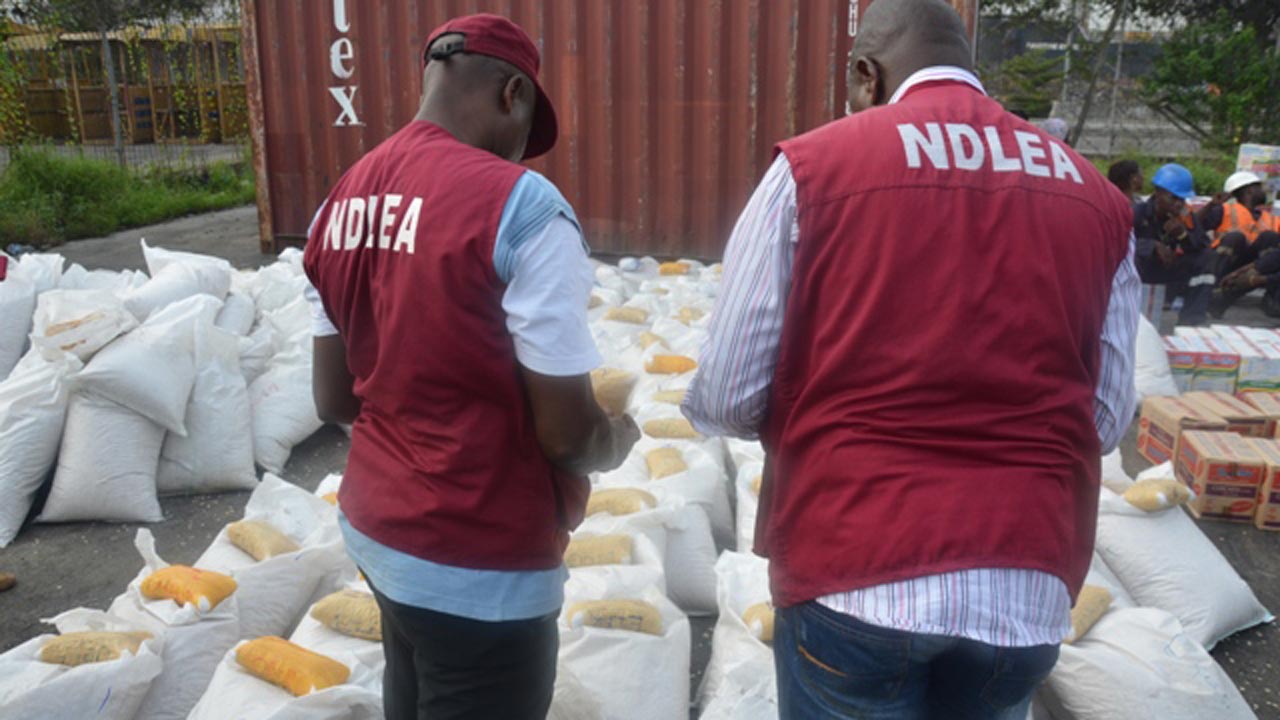
NDLEA intercepts drugs worth millions, arrests suspects
By Uzair Adam
The National Drug Law Enforcement Agency (NDLEA) has intensified its efforts to combat drug trafficking, intercepting various consignments of illicit drugs and arresting several suspects in multiple states.
The agency’s spokesperson, Femi Babafemi, disclosed in a statement on Sunday in Abuja that a 42-year-old building engineer was apprehended on December 2 at Okeyson Motor Park, Enugu, while attempting to collect three pressure machines from South Africa.
Hidden inside the machines were 7.40kg of Loud, a synthetic cannabis strain.
The shipment had initially arrived at the Murtala Muhammed International Airport (MMIA), Lagos, on November 29 and was tracked by NDLEA operatives to a logistics company warehouse.
However, the point of collection was later changed to Enugu, leading to the suspect’s arrest during a follow-up operation.
In another operation, NDLEA operatives in Adamawa intercepted a Siena vehicle abandoned by its occupants after noticing the agency’s patrol team on Hildi-Askira Uba Road.
The vehicle contained 511,000 tramadol pills, which were recovered early on December 6.
Similarly, in Ekiti State, two suspects were arrested along the Ise-Emure Road while transporting 108 jumbo bags of cannabis, weighing 1,323kg, in a J5 bus.
The suspects reportedly planned to deliver the consignment to Ondo State for distribution in the North.
In Oyo State, operatives seized 704kg of cannabis on December 6 at Idere Road, Igboora, while in Lagos, a 65-year-old grandmother was apprehended on December 6 at Odunfa Street, Lagos Island, with 20.6 litres of codeine-based syrup.
Another man was arrested on Ogundana Street, Ikeja, with 4.7kg of cannabis and 1.3kg of tramadol.
The NDLEA has also sustained its War Against Drug Abuse (WADA) campaign, conducting sensitization lectures in schools, workplaces, and communities across the country.
Among the institutions visited were Government Girls College, Maiduguri, and Progressive Secondary School, Ado Awaye.
NDLEA Chairman Brig. Gen. Buba Marwa (retired) commended the agency’s operatives and lauded their efforts in drug supply and demand reduction, describing their achievements as vital to the agency’s mission to safeguard public health and safety.
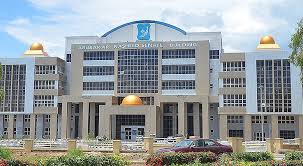
VP Shetima hails BUK for excellence in education, fair admission policies
By Uzair Adam
Vice President Kashim Shettima has commended Bayero University, Kano (BUK), for its commitment to delivering quality education and maintaining equitable admission practices over the years.
The vice president, represented by Dr. Nurudeen Zauro, Technical Adviser to the President on Development Finance and Financial Inclusion, gave the commendation while inaugurating the BUK Class of 2004 Reunion at the university’s Main Campus on Saturday.
He praised BUK for its longstanding reputation for unbiased admission policies, emphasizing that the university has consistently offered opportunities to students regardless of religious or ethnic backgrounds.
“The contributions of Bayero University, Kano, in providing quality education for all Nigerians and its track record of equitable admission policies are truly commendable,” Shettima stated.
Highlighting some challenges faced by marginalized groups, including women, he underscored the need for innovative interventions to address systemic inequalities.
He urged participants at the reunion to leverage their expertise, networks, and resources to foster impactful solutions.
Shettima added, “With every challenge comes an opportunity. Together, as ambassadors of this institution, we can develop groundbreaking strategies and drive meaningful change. That is the essence of today’s reunion.”
The vice president reiterated the Tinubu administration’s commitment to collaboration with private sector stakeholders to achieve sustainable development.
He stressed that government efforts alone could not unlock Nigeria’s full economic potential.
“This gathering highlights the pivotal role of future leaders and partners in ensuring the successful implementation of our initiatives. Let us seize this moment to exchange ideas, design innovative strategies, and explore emerging opportunities, particularly in technology, to create lasting impacts,” he noted.
Shettima called for collective efforts to define impactful roles, establish partnerships, and implement community-driven initiatives.
He urged attendees to support the administration’s vision and transform the outcomes of the reunion into tangible results aligned with the Renewed Hope Agenda.
“We remain committed to translating these discussions into actions that will benefit our communities and the nation at large,” he concluded.

Police nab three suspects for fraud, refuse $17,000 bribe
By Uzair Adam
The Zone 16 Police Command has apprehended three suspects in Rivers State for alleged involvement in illicit drug activities and fraud.
According to a statement issued on Saturday by the command’s spokesperson, SP Gunn Emonena, operatives from the Zonal Financial and Cybercrime Unit, acting on credible intelligence, raided the Rumukparali community in the Obio/Akpo Local Government Area, leading to the arrest of the suspects.
The suspects—Billion Ndubuisi, Charles Amachree, and Martins Chinemike—reportedly confessed to impersonating Ryam Bill, a U.S.-based professional, and defrauding two victims, St. Andrea and Charlen Zielinsky, of $71,500.
During a search of their residence, the police recovered wraps of illicit drugs suspected to be hemp, two vehicles, two laptops, and 10 mobile phones. SP Emonena revealed that the suspects attempted to bribe the officers with $17,000 through an agent, but the offer was rejected.
“The money is registered and will be presented as evidence in court,” he said.
The Assistant Inspector General of the Zone, Adebola Hamzat, reaffirmed the commitment of the Nigeria Police Force to safeguarding lives and property within its jurisdiction.
He commended the officers for their professionalism and adherence to ethical standards.
The police, under the leadership of Inspector General Kayode Egbetokun, continue to prioritize citizens’ safety and security nationwide, the statement added.

Kannywood star Rahama Sadau celebrates birthday with big announcement
By Habibu Maaruf Abdu
Kannywood actress and producer Rahama Sadau celebrated her birthday Saturday with an exciting announcement for her fans. She revealed on Instagram that her upcoming film, “Mamah,” will be screened at the prestigious Red Sea Film Festival in Saudi Arabia.
She writes: “Thrilled to announce that our film “MAMAH” will be screened at the Red Sea International Film Festival in Saudi Arabia! 🤭💃🏻 @redseafilm
“This is one great achievement as it marks the FIRST HAUSA MOVIE to be showcased at this prestigious international festival. A proud moment for us as producers and actors, and a huge leap forward for Kannywood as a whole. 🫶🏻🙌🏻”
Sadau, who recently appeared in a Bollywood film, is clearly inspired by Indian actors. These actors often use their birthdays to reveal exciting news to their fans, creating buzz and excitement around new projects. Sadau’s admiration for Indian cinema is evident, as she speaks fluent Hindi and cites Priyanka Chopra as her role model.
The actress also made history last year with her film Mati A Zazzau, which became the first Kannywood film to stream on Netflix.
The upcoming film, Mamah is co-produced by Abdul Amart and Rahama Sadau and directed by Toka Mcbaror.
It stars Adam Zango, Nafisa Abdullahi, Rahama Sadau, and Falalu Dorayi.
The premiere is scheduled for December 9th, 2024, at 10:00 am at the Red Sea Culture Square, Cinema 4.

Leadership Reshuffle: Tinubu names Prof. Salisu Shehu NERDC executive secretary
By Uzair Adam and Abdullahi Mukhtar Algasgaini
President Bola Tinubu has announced key appointments to the leadership of several federal agencies, including the Nigerian Educational Research and Development Council (NERDC), the National Universities Commission (NUC), the Solid Minerals Development Fund/Presidential Artisanal Gold Mining Initiative (SMDF/PAGMI), and the New Partnership for Africa Development (NEPAD).
The Daily Reality reports that among the appointments, Prof. Salisu Shehu has been named the Executive Secretary of the NERDC.
Prof. Shehu, a distinguished academic in educational and human psychology, is recognized for his instrumental role in establishing the School of Continuing Education at Bayero University, Kano.
He also served as the Vice-Chancellor of Al-Istiqamah University, Kano.
His extensive experience in education reform and administration is expected to drive innovation and transformation within the NERDC.
President Tinubu also appointed Prof. Abdullahi Yusuf Ribadu as the Executive Secretary of the NUC.
Prof. Ribadu, an expert in veterinary reproduction, has previously served as Vice-Chancellor of the Federal University of Technology, Yola, and Sule Lamido University, Jigawa State.
For the National Coordinator position at NEPAD, the President selected Jabiru Salisu Abdullahi Tsauri.
Tsauri, who holds a Master’s in International Affairs and Diplomacy from Ahmadu Bello University, is a seasoned administrator with expertise in legislative and global affairs as well as democratic governance.
Yazid Shehu Umar Danfulani was appointed as the Executive Secretary of the SMDF/PAGMI.
A graduate of the University of Hertfordshire, UK, Danfulani brings a wealth of experience from his roles in banking, business administration, and public service, including his tenure at the Central Bank of Nigeria and as a Commissioner for Commerce and Industry in Zamfara State.
The President expressed confidence in the appointees, highlighting their vast expertise and track record of excellence.
He urged them to bring renewed commitment and deliver results that meet the aspirations of Nigerians in their respective organisations.

TETFund boss calls for reform as politics, corruption taint VC appointments
By Anwar Usman
The Executive Secretary of the Tertiary Education Trust Fund, Sunday Echono, has expressed concern over the growing influence of politics and corruption in the appointment of Vice Chancellors in Nigerian universities, describing the trend as detrimental to the quality of higher education.
Echono, made this known while speaking at the 36th convocation lecture of the Federal University of Technology, Owerri, he explained how political interference and financial incentives are eroding the sanctity of university leadership selection processes.
“The sponsorship of the selection process of Vice Chancellors by politicians has made university administration increasingly local,” he stated, reiterating that the undue influence of external forces has compromised the integrity of the process.
He also noted that the competition for these appointments has become a lucrative venture, turning members of governing councils into targets for financial inducements.
He further explained that, “Our universities have become increasingly local, with the majority of academic and non-academic staff sponsored by local politicians and other leaders from the host communities.
“Political affiliation has also assumed overarching importance in the selection process,” he lamented.
To restore credibility to the leadership selection process, Echono calls for greater autonomy for universities to shield them from political interference.
He also stressed the need for decision-makers to uphold transparency and implement clear criteria in selecting university leaders.

Kano govt accuses FG over emir’s palace barricade
By Uzair Adam
The Kano State Government has alleged the involvement of the Federal Government in the recent blockade of the palace of Muhammadu Sanusi II, the 16th Emir of Kano, by security operatives.
The Secretary to the State Government, Abdullahi Baffa Bichi, expressed the government’s displeasure during a radio interview, condemning the move as an attempt to destabilize the state.
“We woke up to find the palace entrance sealed off by the police. When we inquired, they said it was an order from above.
“It’s evident that some people with Abuja’s backing are determined to disrupt Kano’s peace,” Bichi stated.
He noted that Kano remains committed to maintaining peace, warning against any attempts to provoke unrest.
Bichi further confirmed the Emir’s decision to accompany the newly appointed District Head of Bichi, Wamban Kano, Munir Sanusi, to assume his post.
Meanwhile, Emir Muhammadu Sanusi II, who led the Friday prayer at the Kano Central Mosque outside the palace, urged residents to remain calm and avoid violence.
“I caution against falling into the traps of those who seek to see Kano in turmoil. They desire chaos, destruction, and loss of innocent lives,” the Emir advised.
The barricade by security operatives, including police and DSS, reportedly aimed to prevent the Emir from traveling to Bichi or attending a meeting with economists on proposed tax reforms.
The incident has drawn mixed reactions, with some viewing it as interference in traditional affairs, while others see it as a political maneuver.

FG directs hospitals to heighten vigilance amid concerns over new COVID-19 variant
By Uzair Adam
In response to the global circulation of the newly identified XEC COVID-19 variant, now detected in 29 countries, the federal government has instructed chief medical directors and medical directors of tertiary hospitals nationwide to activate heightened surveillance systems.
The Daily Reality gathered that the directive emphasizes the need for vigilance in identifying COVID-like symptoms among patients.
This directive was communicated through a circular dated December 5, 2024, and bearing reference number DHS/INSPDIV/017/VOL.1/46. Signed by Dr. O. N. Anuma, Head of the Teaching Hospital Division, the letter highlighted the variant’s demonstrated growth advantage over other strains, prompting concerns about its potential public health implications.
Titled “Letter of Conveyance in Respect of the Newly Detected XEC COVID-19 Strain,” the circular stated, “I am directed to inform you of a newly detected XEC COVID-19 variant, which has been reported in Australia and has already spread to 29 countries globally.
“You may wish to know that this variant has shown a growth advantage over other circulating strains, raising concerns about its potential impact on public health.”
The government urged hospital committees to collaborate with relevant stakeholders to enhance data sharing and monitoring protocols.
The letter also stressed the importance of timely communication between stakeholders, including the Federal Ministry of Health, to ensure effective response measures.
Dr. Anuma concluded the directive by reaffirming the permanent secretary’s commitment to supporting the health sector in mitigating risks associated with the new variant.

CCT Chairman: The Missteps of lawmakers and lawyers on Constitutional Matters
By Haroon Aremu
As a concerned young Nigerian, it’s disheartening to witness lawmakers and esteemed legal practitioners grapple with fundamental constitutional principles—especially regarding the Code of Conduct Tribunal (CCT).
It is astonishing that those tasked with crafting laws and interpreting them could exhibit such a glaring misunderstanding of the legal framework that governs their actions. The recent attempts by the Nigerian Senate to remove Mr. Danladi Umar, Chairman of the CCT, serves as a case in point.
In their misguided effort, the Senate invoked Section 157 of the 1999 Constitution, mistakenly applying it to the CCT. This section is pertinent to the Code of Conduct Bureau (CCB) and other executive bodies, but it has no bearing on the CCT, which operates under a different constitutional framework. As noted by PRNigeria’s fact-checking team, the remedial actions regarding judicial bodies such as the CCT require broader legislative consensus than the Senate alone can muster – specifically, a two-thirds majority from both the Senate and the House of Representatives, a detail curiously overlooked by the lawmakers.
Further complicating matters, the Senate suggested Mr. Abdullahi Usman Bello as Umar’s potential successor. However, it must be emphasized that Mr. Bello was appointed to lead the CCB, not the CCT. Moreover, constitutional stipulations require that the CCT Chairman possess qualifications akin to those of a judge of a superior court—qualifications which Mr. Bello notably lacks. This misstep reflects either a profound ignorance or a blatant disregard for the constitution.
It’s also alarming to observe the Senators conflating the roles of the CCB and the CCT, erroneously linking Umar’s situation to that of Bello. Their claims regarding the 9th Assembly’s investigations into Umar also deserve scrutiny, especially given that they appear to stem from a petition filed by a security guard concerning an unrelated incident —ironically, even after an anti-corruption agency had already cleared him of any wrongdoing.
Adding a layer of complexity to the situation is the media’s role in disseminating information. While there was widespread coverage of the Senate’s resolutions, many outlets failed to substantiate or fact-check their claims against the Constitution. This lapse in journalistic vigilance contributes to the propagation of misinformation, thereby undermining public trust in our governance systems.
The situation becomes even more troubling when senior lawmakers defend their misguided actions. The 1999 Constitution (as amended) clearly delineates that the appointment of the CCT Chairman and its members must follow the National Judicial Council’s recommendations, which should be informed by the Federal Judicial Service Commission. Thus, any motion to remove the CCT Chairman necessitates formal attention from both legislative chambers, not simply the Senate.
To complicate an already delicate situation, the newly elected President of the Nigerian Bar Association (NBA), Afam Osigwe (SAN), boldly claimed that the Senate adhered to constitutional protocols. Such statements from a figurehead of the legal profession raise questions about the level of legal literacy within our ranks.
Even more alarming was the endorsement from renowned human rights lawyer Femi Falana, also a Senior Advocate of Nigeria. By supporting the Senate’s push for Umar’s removal, Falana and others reveal a troubling trend where senior legal practitioners sidestep constitutional requirements, jeopardizing the sanctity of Nigeria’s judicial and legislative systems.
In light of these developments, distinguished legal scholars such as
Professor Mamman Lawan Yusufari, a former Dean of the Faculty of Law at Bayero University Kano (BUK), Professor Yemi Akinseye-George, the Executive Director of the Centre for Socio-Legal Studies, and Dr. Wahab Shittu have denounced the government’s handling of the CCT issue. They described these actions as blatant violations of constitutional mandates, calling on the Attorney-General of the Federation, Prince Lateef Fagbemi, SAN, to provide guidance to President Bola Tinubu on adhering to constitutional pathways for such significant personnel decisions.
Senior Advocate of Nigeria Yunus AbdulSalam further criticized the misinterpretation of the Constitution, labeling it alarming and indicative of a dangerous lack of diligence within both the executive and legislative branches. He remarked, “Their unconstitutional and desperate attempt to remove the CCT Chairman undermines the spirit of the Constitution and poses a serious threat to democratic integrity.”
It takes a whole week before the Senate admitted and corrected the procedural error by invoking the correct constitutional provisions, including Paragraph 17(3) of the Fifth Schedule and Section 22(3) of the Code of Conduct Bureau and Tribunal Act.
This entire debacle serves as a clarion call for lawmakers to strictly observe constitutional provisions. Legal protocols should never be compromised for political convenience. Moreover, the media must enhance its accountability in fact-checking claims that significantly influence national governance.
The independence of the judiciary and the integrity of the legislative process are cornerstones of Nigeria’s democracy; they must be protected from missteps and oversights, both from lawmakers and in media coverage. This incident reinforces that constitutional provisions are not mere guidelines; they are the foundation of a functioning democracy. The Senate’s actions reflect a troubling ignorance that could jeopardize the integrity of Nigeria’s legal system. As a nation, we must recommit ourselves to upholding the rule of law and rigorously adhering to constitutional procedures to safeguard judicial independence and the health of our democratic framework.
Haroon Aremu Abiodun is a co-author of ‘Youth Service for National Stability: A Corpers’ Chronicle.’ He can be reached at exponentumera@gmail.com