


Umar Maikudi, new MOPPAN President, urges collaboration in Nigerian film industry
By Muhsin Ibrahim
Umar Maikudi, also known as Cashman, was elected as the National President of the Motion Picture Practitioners Association of Nigeria (MOPPAN) at an event held in Nasarawa State on 18 January 2025.
As the newly elected National President, Maikudi expressed gratitude and enthusiasm for collaborating with filmmakers and film scholars to explore potential partnerships that could benefit the film industry.
In a message sent to media houses across Nigeria, the president stated, “Let’s work together to drive growth and development in the sector.”
Maikudi concluded by encouraging others to “feel free to reach out to me to discuss potential collaborations and partnerships.”
Hailing from Kaduna, Maikudi has been a film scholar and actor for many years. He has appeared in several films, including the Netflix series War: Wrath and Revenge, part of the famed Sons of the Caliphate drama.

The Evolution of Yan Daba: From warriors to thugs in Kano
By Salisu Uba Kofarwambai
“Daba” comes from the Hausa term for a gathering place where people would sit and converse during their leisure time. Over time, the term took on a different connotation, referring to a spot where idle individuals would congregate, discuss, and plan their criminal activities, often fueled by drug addiction.
Historically, Hausa society had warriors known as Yan Tauri. These brave adventurers possessed magical powers and charms that made them nearly invincible in battle. They were also skilled hunters, often engaging in fierce competition over their prey. However, the Maitatsine crisis in the late 1970s to early 1980s marked a turning point for Yan Tauri. The crisis erupted when the followers of the heretic preacher Maitatsine clashed with the Nigerian government.
Maitatsine, a Quranic teacher from Cameroon, had attracted a large following in Kano before beginning to preach against orthodox Islamic teachings. He started labelling people as infidels for merely watching TV or drinking tea with milk. When his son was killed at the street fight in Sabon Gari, Maitatsune started attacking people and killed many Kano residents.
The federal government refused to intervene, mainly due to party rivalry and Governor Abubakar Rimi’s criticism of the ruling party, NPN, and President Shehu Shagari. Thus, the Kano state government was left to handle the crisis on its own. The state government enlisted Yan Tauri’s help to combat the Maitatsine followers. Yan Tauri fought bravely, killing many followers, but this exposure to violence and bloodshed had a profound impact on them.
Following the Maitatsine crisis, Yan Tauri began to metamorphose into Yan Daba, a group notorious for their thuggery and violence. Politicians exploited Yan Daba for their gain, employing them as enforcers and thugs. During Governor Rimi’s tenure, the divide within the People’s Redemption Party (PRP) in Kano State further exacerbated the situation. The party split into two factions: the Santsi group, led by Governor Rimi, and the Tabo group, led by Malam Aminu Kano. Both factions employed Yan Daba thugs, leading to a deadly fight between the two groups.
Notorious Yan Daba members during this period included Gogarma, Mal Hadi, Gambo Cooperation, Sarki Change, Sabo Wakilin Tauri Mai Adashin Sara, Uba Dala Bala Turu, and many others. These thugs were known for their brutality and willingness to do whatever it took to achieve their objectives.
The reign of terror by Yan Daba continued until Major General Muhammadu Buhari came to power in 1983. Buhari’s administration cracked down on Yan Daba, arresting, killing, or forcing many of its members to flee Kano.
Then, in 1989, during General Ibrahim Babangida’s effort to transition Nigeria back to civilian governance, the Social Democratic Party (SDP) and the National Republican Convention (NRC) were established. These parties significantly influenced Nigeria’s move towards democracy. However, they also, perhaps unintentionally, aided the revival of Yan Daba in Kano as politicians continued to manipulate them for personal gains.
Yan Daba’s activities plagued Kano, with members engaging in robbery, assault, and other forms of violence. The emergence of notorious gangsters marked their reign of terror.
With the return of democratic rule in 1999, Yan Daba continued to pose a significant problem in Kano. Politicians continue to exploit them for their own gain, and their activities remain a major challenge for law enforcement agencies. Over time, Yan Daba has evolved, with many members now engaging in phone robbery and other forms of cybercrime.
Today, Yan Daba remains a challenge, with members engaging in various forms of criminal activity. Their history should be a cautionary tale about the dangers of exploiting violence and thuggery for political gain.
Salisu Uba Kofarwambai wrote from Kano via salisunews@gmail.com.

Championing Change: Khalid Barau’s lasting impact
By Usman Abdullahi Koli, ANIPR
In a world where leadership is often equated with political roles and public offices, Khalid Barau Ningi stands out as a shining example of selflessness and community dedication. Known widely as “Dujiman Ari,” he showcases the qualities of a true servant-leader, inspiring hope and positively impacting through his personal initiatives that go far beyond his official role as Senior Special Assistant (SSA) on Empowerment to the Bauchi State Government.
Dujiman Ari is a public official from the Ningi Local Government Area (LGA). He is not just a public official; he is a man deeply connected to his roots. His warmth, humility, and respect for individuals—both young and old—have earned him admiration and loyalty. His ability to engage with his contemporaries, especially the youth, proves his understanding of the challenges they face and his determination to be a part of the solution.
His concern for his people goes beyond political affiliations and titles. Through his foundation, the Khalid Community Initiative, he has consistently demonstrated that true leadership is about service, empathy, and action. Among Khalid’s notable contributions is his focus on healthcare. Understanding the importance of maternal health, his foundation recently provided healthcare services and delivery kits to pregnant women across Ningi LGA. These kits, delivered to over 100 beneficiaries and containing essential supplies for safe childbirth, have eased the burdens of many families, ensuring that women have access to better care during one of life’s most critical moments.
Furthermore, during a recent cholera outbreak, the Khalid Community Initiative extended its support by donating over 100 cartons of intravenous fluids to needy patients. In another remarkable healthcare intervention, the initiative funded cataract surgeries for 450 individuals, provided medications worth hundreds of thousands of naira and distributed free eyeglasses to over 100 patients. These efforts reveal Khalid’s commitment to addressing urgent health challenges and improving the quality of life for the underprivileged.
Water is life, and Dujiman knows this all too well. In communities where access to clean water is a daily struggle, the Khalid Community Initiative has taken up the mantle of change. By repairing up to 30 dilapidated boreholes in 10 communities, Khalid has restored the dignity and health of countless families. Women and children no longer have to travel long distances in search of water, a basic necessity many take for granted.
His passion for education is evident in his foundation’s activities. Donations to schools, ranging from learning materials to offering scholarships, have created better learning environments for children. He also recognises the potential of the youth, supporting youth groups with resources and opportunities to thrive. This includes securing JAMB admissions for over 20 students and covering registration fees for more than 30 others across various communities. Such efforts reflect his belief that an educated and empowered youth population is the backbone of any thriving society.
What sets Khalid’s initiatives apart is their all-encompassing approach. Through his foundation, he has supported over 100 small-scale beverage vendors with conditional cash grants of ₦10,000 each to grow their businesses. Similarly, he provided ₦5,000 to 100 women to support domestic needs and small household enterprises. Khalid has also prioritised skill development, offering self-reliance training and tools to empower youths across the Ningi Local Government Area. His work continues to expand, with increased funding and strategic planning to reach even more beneficiaries and address diverse community needs.
Dujiman Ari’s exceptional initiatives are driven more by personal passion than official responsibilities. As the SSA on Empowerment, one might expect his work to focus solely on government-aligned projects. However, Khalid’s gestures go far beyond what is required. His generosity and vision for a better society are rooted in his values, not political obligations.
Although in his capacity as SSA, he facilitated the distribution of over 1,200 motorcycles to youth in the state under the Kaura Economic and Empowerment Program (KEEP), along with over 70 Sharon buses distributed across 20 LGAs, he has shown an unmatched commitment. His efforts also included providing ₦50,000 to beneficiaries to enhance SMEs, start-up kits for 1,000 beneficiaries, and ₦20,000 cash support for beverage vendors, showcasing his dedication to empowering individuals and small businesses.
Khalid’s work through the Khalid Community Initiative is not just about providing immediate relief; it is about creating sustainable change. His efforts have touched lives in ways that words cannot fully capture. He has become a source of inspiration and a role model for aspiring leaders, proving that true power lies in the ability to uplift others.
As a recipient of the Presidential National Award of Merit on Productivity in 2022 and a chartered management consultant, Khalid Barau Ningi’s story is evidence of the transformative power of one individual’s dedication to their community. It is a reminder that leadership is not defined by titles but by the impact one makes. For those who wish to make a difference, Dujiman’s life and work offer a simple yet profound lesson: serve with your heart, and the world will remember your name.
Usman Abdullahi Koli wrote via mernoukoli@gmail.com.

Nigerian authorities urged to protect Hamdiyya Sidi, lawyer amidst threats
By Abdullahi Mukhtar Algasgaini
Sokoto state authorities are under increasing pressure to ensure the safety of Hamdiyya Sidi Shariff and her lawyer, Abba Hikima, who have both been subjected to disturbing threats during the ongoing trial.
The duo is facing charges brought by the Sokoto state government, accusing Hamdiyya of “insulting or abusive language” and “inciting disturbance” for criticizing Governor Ahmed Aliyu.
According to Amnesty International Nigeria, the threats to their safety include harassing phone calls and physical confrontations with individuals claiming to be ‘intelligence agents.’
These actions have raised concerns over the abuse of power and an apparent attempt to silence critics and intimidate those defending them.In the wake of the threats, Barrister Hikima was forced to request armed police protection during a recent court hearing, which the court granted.
However, both Hikima and Hamdiyya have been followed and confronted while staying in Sokoto for the trial, intensifying the already hostile atmosphere.
In November 2024, Hamdiyya Sidi Shariff was abducted by armed assailants while she was retrieving her mobile phone from a charging point.
She was brutally beaten and thrown out of a moving tricycle, suffering severe injuries.Amnesty International Director Isa Sanusi condemned the actions, stressing that such intimidation tactics aimed at suppressing freedom of expression should have no place in a democratic society.
Sanusi also called on Nigerian authorities to focus on tackling the rampant insecurity in Sokoto, particularly in the eastern part of the state, where gunmen have been terrorizing local communities.

Tax Reforms Bills: Ndume criticizes governors for endorsing 30% derivation formula
By Abdullahi Mukhtar Algasgaini
Ali Ndume, the senator representing Borno South, has faulted the governors’ endorsement of a 30% derivation formula in the proposed Tax Reform Bills, citing that it is excessive and unfair to other regions.
The Tax Reform Bills, which include the Joint Revenue Board of Nigeria (Establishment) Bill, 2024; Nigeria Revenue Service (Establishment) Bill, 2024; and Nigeria Tax Bill, 2024, have sparked heated debates across the country since their introduction in the National Assembly.
The bills aim to overhaul Nigeria’s tax system, streamline revenue collection, and introduce a revised revenue-sharing formula have passed the second reading in the Senate.
After a period of vehement opposition, the Nigeria Governors’ Forum, last week standing up from a meeting with the Presidential Tax Reform Committee, threw its support behind the bills, proposing a Value Added Tax (VAT) sharing formula of 50% equality, 30% derivation, and 20% population.
This position was outlined in a communiqué signed by Kwara State Governor Abdulrahman Abdulrasaq who is the chairman of the forum.
However, Ndume who has been very critical of the bills, expressed dissatisfaction with the governors’ stance during a phone interview with our correspondent on Sunday in Abuja.
He questioned the justification for allocating 30% of derivation to oil-producing regions.
He was quoted as saying, “Even in regions bearing the brunt of oil exploration, taking 30% is too much.
“Why would they take that amount when others are also in need of development funds?”
The senator also criticized the Federal Inland Revenue Service (FIRS) for charging 4% as collection fees, describing it as an exorbitant administrative cost.
“The FIRS is only performing administrative functions, so why should they be charging 4%? Collection fees should not exceed 1%,” he argued.
Ndume voiced concerns over the economic burden on Nigerians and called for a reduction in VAT rates.
He said, “At a time when people are struggling to make ends meet, tax rates should be decreased to 5% or even 3%, just as Ghana and the United States have done to support their citizens. Expanding the tax base and ensuring corporations like banks and telecom companies pay their fair share is the way forward.”
While acknowledging that tax reform is long overdue, Ndume insisted it must prioritize the welfare of ordinary Nigerians.
“We need to reform the tax system, but it should not disadvantage the masses, especially now when they are barely surviving.”
The senator urged the National Assembly to carefully review the proposed legislation to address these concerns and ensure the reforms are fair, equitable, and beneficial to all Nigerians.

Kannywood: Usman Sojaboy, two others banned by Kano censorship board
By Abdullahi Mukhtar Algasgaini
Kano State Censorship Board has banned Usman Sojaboy, a Kannywood singer, and two actresses, Shamsiyya Muhammad and Hasina Suzan, from participating in all Kannywood activities in Kano.
This decision was made after a video surfaced portraying immorality that contradicts Kano’s religion, culture, norms, and values.
The board received numerous complaints from the public and Kano members of the ulama.
In a statement signed by Abdullahi Sani Sulaiman, Information Officer of the Kano State Censorship Board explained that Sojaboy had been warned multiple times about his immoral and vulgar content.
Abba El-Mustapha, Executive Secretary of the Kano State Censorship Board, has directed the preview unit to ensure that Sojaboy and the two actresses do not participate in any Kannywood productions.
He added that all open theaters and entertainment centers should take note.
Kano State Censorship Board is empowered by law to regulate all forms of expression, ensuring they align with the state’s religion, culture, norms, and values.
This decision is part of the board’s ongoing efforts to maintain moral standards in the Kannywood film industry.

Journalist Seyni Amadou arrested in Niger amid TV station suspension
By Abdullahi Mukhtar Algasgaini
Seyni Amadou, the chief editor of Canal 4 TV, has been arrested, according to the CAP-Medias-Niger union, which represents media workers in the country.
Last Friday, the Ministry of Communication in Niger announced the suspension of his TV station for one month.
The Daily Reality understands that the prominent journalist in the Republic of Niger was arrested on Saturday, just a day after the suspension of his independent TV station, following a report criticizing the government of the country’s military regime.
Last Friday, the Ministry of Communication in Niger announced the one-month suspension of his TV station.
The country’s national TV station, Tele Sahel, stated that the action against Canal 3 TV was taken “for violating operational standards.”
Canal 3 TV informed the French news agency AFP in a statement that the suspension was related to broadcasts that criticized ministers in the government of Prime Minister Ali Mahaman Lamine Zeine, a civilian appointed by the military regime.
The report listed Zeine as the leading minister, while many of his ministers were described as weak in the government.
In a statement released on Friday, CAP condemned the arrest and detention of Amadou, calling for the respect of journalists’ rights.
It added, “Never in the history of the executive body has such a media shutdown been disregarded, including in special circumstances.”
CAP urged the Minister of Communication, Sidi Raliou Mohamed, to review his decision.
Bazoum was a close ally of Western nations in the fight against jihadism in the Sahel region.
Since the coup, Niger’s military authorities have distanced themselves from France, which previously colonized them, and have sought closer ties with other military regimes in Burkina Faso, Mali, and Russia.
The military government has also shut down several international media outlets, including Radio France International (RFI), France 24, and the BBC.

Fuel tanker explosion: One incident too many
By Salim Yunusa
Days ago, a fuel tanker explosion took the lives of over 70 people at the well-known Dikko Junction, located along the Kaduna-Abuja highway in Niger State. This incident follows closely after another fuel tanker explosion in Jigawa in October 2024, which resulted in the deaths of more than 200 people.
At this point, one begins to sound like a broken record: the recurring incessant pleas for regulation, caution, and prayers. Enough with the “Allah shi kare”, or the performative prayers for the deceased. It has to stop. Now.
In a country with barely motorable roads disguised as highways, these tankers—dangerously overloaded, evidently faulty, and disturbingly manned by the worst drivers—sway and saunter, damaging the roads and bridges due to overload, causing accidents, and, in recent times, overturning their contents, spilling highly inflammable fuel on the road. This leads to disastrous fire incidents, causing devastating loss of lives and properties.
What usually follows are photo ops by government officials who do little to nothing to prevent these incidents from reoccurring. These are followed by visits to the hospitals and donations of a paltry sum of money to the victims’ families. This has to stop. Now.
Many issues cause the loss of lives of this magnitude. We must address them through regulations and stringent fines for erring drivers and their employers. We must also properly deploy state and federal might in enforcing adequate commercial and residential setbacks from highways. We must embark on massive enlightenment and sensitisation against the dangers of highly inflammable substances and, above all, poverty, which would make one desperate enough to go scooping up spilt gas on a highway!
Nonetheless, enforcement has to be done on people themselves because repeated tragedies don’t serve as lessons against future occurrences. People have to learn and understand that you run away from danger, not into it, for mere fuel scoops or to record yourself to get a few clicks on social media. This is where the National Orientation Agency comes into the picture, partnering with social media influencers, radio and TV stations, among other important stakeholders in the society, to enlighten and educate the public on the dangers surrounding looting of overturned items from trucks, be it Spaghetti, rice or fuel.
We must reconsider using pipelines to transport petroleum products in this country. The alarming number of tankers on our roads poses significant risks. Furthermore, it’s crucial to raise awareness that looting or stealing from accident scenes is a serious offence punishable by law and God.
It is tiring at this point: the rinse-and-repeat incidents, the performative grief, the prayers and promises to address issues—all to be forgotten in three business days. How many more people have to die before the government acts? Thoughts and prayers over unavoidable incidents are a most, but choosing thoughts and prayers over avoidable incidents is a clear choice. The government should act, and it should act now—swiftly, decisively.
May the Almighty save us from us and give us the strength to do the right thing–no matter whose ox is gored!
Salim Yunusa writes from Abuja, Nigeria, and can be reached via syunusa@gmail.com

A deconstructive reading of Sunusi’s remarks on Tinubu’s economic policies
By Bashir Uba Ibrahim, Ph.D.
Emir Muhammadu Sanusi II’s recent remarks about the harsh economic policies of President Bola Ahmed Tinubu’s government, made during the 21st Memorial Lecture for the late Gani Fawehinmi organised by the Nigerian Bar Association, NBA Ikeja Branch in Lagos, themed ‘Bretton Woods and the African Economies: Can Nigeria Survive Another Structural Adjustment Programme’, have sparked a diverse range of reactions across social media.
As the chairman of the occasion, when giving a microphone to comment, he remarked, “I can give a few points here about what we are going through and how it was predictable and avoidable. But I am not going to do that because I have chosen not to speak on the economic reforms or to explain anything because if I explain it, it will help this government. But I do not want to help this government. They are my friends, but if they do not behave like friends, I will not behave like a friend”.
These remarks received and continuously attracted fierce critical rebuttals and approbations from the government and Emir Sunusi’s perceived critics. On the other hand, his apologists are overtly in a tactical defence of such remarks on the pretence that the Emir is a victim of misperception by the public and misinterpretation by the media as they usually used to quote him out of context. Even the Emir himself is reported by the Leadership newspaper lamenting that his remarks were taken out of context, reducing the broader message of his speech to a single paragraph. But Emir and his media warriors fail to understand that linguistically, by the time a person makes an utterance, he no longer has control over it.
To borrow a popular Hausa adage which says magana zarar bunu, idan ta fita ba ta dawowa or what Jean-Paul Sartre called “every word has its consequences” or in what Roland Barthes, the prominent French Structuralist and Post-structuralist literary theorist and critic called in his widely celebrated magnum opus “the death of the author is the rise of the reader”. Similarly, Barthes argues that “once the author is removed, the claim to decipher a text becomes quite futile. To give a text an author is to impose a limit on that text, to furnish it with a final signified”. And the text here refers to both spoken discourse (phonocentrism) and written (logocentrism). The former is the spoken remarks by the Emir, while the latter is its interpretations or deconstructive reading(s). Thus, the latter supplements the former in what Derrida called “doubling critique”.
Meanwhile, concerning the above remarks by the Emir, the media houses have done what part of their job, i.e., deconstructive or interpretive journalism. Thus, by the time the Emir loses authority or control over his utterances, it is when the media and the general public have the right to interpret him the way they like. Thus, it forms the crux of their deconstructive readings of Emir Sunusi’s remarks. Therefore, the more remarks are enmeshed with aporia and entangled in contradiction, dislocation and disunity of words or, to borrow Jacques Derrida’s words, “play”, “decentering”, or “rupture” like the one made by Emir Sunusi, the more it attracts deconstructive readings or interpretation from various standpoints.
For instance, Emir’s remarks, as widely reported by the media, sound contradictory if not antipodal or antithesis. Given his unflinching and uncompromising stand as an unrepentant neo-liberalist who always supports the removal of fuel subsidy and currency liberalisation, floating of the naira against the dollar, which ultimately leads to the devaluation of the former, how can you say the situation the Nigerian government find itself is “avoidable” while you are among those who advise the government to implement such policies for reforming the shrinking economy. As the popular social media influencer Aliyu Dahiru Aliyu (Sufi) argues, “…For years, Sanusi has been a vocal advocate of neo-liberal economic policies, including subsidy removal and currency liberalisation–policies now adopted by Tinubu’s administration. These were once touted by people like Sanusi as the perfect remedies for our economic woes, yet their implementation, according to his recent expression, hasn’t delivered the promised relief. So, what fresh ideas Sanusi hides that he can offer if the FG has been friendly towards him apart from the familiar intellectual manoeuvres?”.
Finally, as opined by the father of modern linguistics, the popular Swiss linguist Ferdinand de Saussure, that language be spoken as the one used by the Emir or written, i.e., the one used by his deconstructive readers is a system of signs; that the sign (word) is the basic unit of meaning, and that the sign comprises a signifier (form) and signified (mental representation or meaning). Therefore, the signifiers uttered by Emir Sunusi carry variants of signifieds in what Derrida called “transcendental signified”, which are beyond the control of their owner (the Emir) and thus warrant such myriad deconstructive reading(s).
Bashir Uba Ibrahim, PhD, wrote from the Department of English and Literary Studies, Sule Lamido University, Kafin Hausa. He can be reached at bashirubaibrahim@gmail.com.
Who will be Bauchi’s next governor?
By Mukhtar Jarmajo
In a democratic setting, politics is perennial. Even as governance occurs, political actors make permutations, align and counter-align ahead of future elections. The actions of politicians in power largely determine what becomes of the political terrain. Essentially, the performance of an administration eventually tells of the kind of political game that will be played in the next elections.
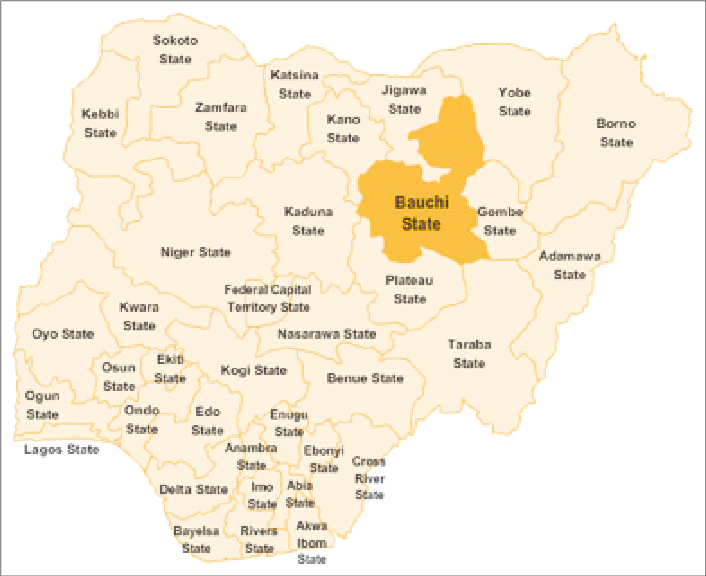
In Bauchi State, a historically hot political plate, politics is daily, and the electorate plays particular roles in the democratic process. With the Bala Mohammed-led administration almost halfway through, discussions have begun on different fora about who will become the state’s next governor.
This time, the discussions border on issues, given that many people yearn for and aspire to better education, healthcare, agriculture, housing, pipe-borne water supply, security and safety, and employment and pay. There is also a growing concern for a more effective House of Assembly in the state.
Given that no democracy can endure a weak legislature, certain quarters feel that Bauchi State would have been a better place to live and work if it had a more active legislative arm. So, to be placed on a higher development threshold in the future, the state will need a more people-oriented executive arm of government and a legislature that can check its excesses and genuinely represent the people.
Thus, even as the search for a competent politician for the exalted and vital position of the governor of Bauchi State ahead of the 2027 elections widens, it is also right to search for quite experienced and qualified politicians to fill in the thirty-one legislative seats at the Bauchi State House of Assembly.
While several politicians have indicated interest through actions for the governorship, some are believed to be testing the waters from the background. Yusuf Maitama Tuggar is Nigeria’s Foreign Affairs Minister. At different times, he was a member of the House of Representatives and Nigeria’s Ambassador to the Netherlands. Tuggar is on the watch list, given that it is not yet clear whether or not the erstwhile diplomat will throw in the towel when the political bell for 2027 rings. The former legislator is, however, known to have pursued a governorship ambition in the past on the platform of the defunct Congress for Progressives Change (CPC).
Professor Muhammad Ali Pate is Nigeria’s Coordinating Minister of Health and Social Development. The trained medical doctor has been several times the Director-General of the National Primary Healthcare Development Agency (NPHCDA) and Minister of State Health. Pate has contested the governorship of Bauchi State in the past under the Peoples Redemption Party (PRP). In the APC governorship primary election ahead of the 2023 general elections, the Chigarin Misau contested and scored nil.
Air Marshal Sadique Baba Abubakar (rtd) was Nigeria’s Chief of Air Staff and Ambassador to Tchad at different times. He had a distinguished career in the Air Force, serving as a Cadet Military Training Course (CMTC 5) member in November 1979 and rising through the ranks to become the 20th Chief of Air Staff. During his tenure as Chief of Air Staff, he recorded remarkable achievements, including acquiring new aircraft, establishing new commands and formations, and enhancing the NAF’s capacity for airpower projection.
In the governorship primary election ahead of the 2023 general elections, Sadique won with 370 votes to beat the runner-up, who got 278 votes. And during the general election, the erstwhile diplomat scored 432,272 votes as runner-up. Sadique, who has shown interest in contesting the Bauchi State governorship position again, is likely a strong contender in 2027, given his votes in the last governorship election.
Jarmajo wrote from Misau.