




Kano govt moves to tackle rising out-of-school children crisis
By Uzair Adam
With over 837,000 out-of-school children in Kano, the state government has intensified efforts to address the crisis, beginning with a comprehensive assessment tour of rural communities ahead of a planned sensitization campaign.
The Kano State Ministry of Education embarked on the tour to identify the root causes of the problem and engage with communities to find lasting solutions.
The initiative is part of the government’s broader strategy to improve access to education, especially in underserved areas.
Led by the State Coordinator for Girl Child Education, Hajiya Amina Kassim, the assessment team visited several rural settlements, including Bange village in Albasu Local Government Area and Mawashi in Garko Local Government Area.
During the visit, the team engaged with parents, traditional rulers, and religious leaders to understand the challenges keeping children out of school.
Speaking to residents, Hajiya Kassim emphasized that poverty, insecurity, and socio-cultural norms are key factors contributing to the alarming number of out-of-school children.
She reaffirmed the government’s commitment to tackling these challenges, citing the recent declaration of a state of emergency on education as proof of its dedication to reforms.
“The state government is taking bold steps to improve education outcomes, and this tour is a crucial part of that process.
“We will ensure that our sensitization campaign reaches areas most affected by this issue,” she stated.
Vice Chairman of the School-Based Management Committee, Alhaji Garba Adamu Wudil, described the assessment tour as a critical step in designing effective strategies to curb the crisis.
He stressed that direct engagement with communities would provide valuable insights into the complexities surrounding access to education.
In their remarks, the village head of Kafin Malamai in Garko, Mukhtar Aliyu, and the representative of the village head of Bange, Yau Ibrahim Bange, commended the government’s initiative.
They appealed for the establishment of more secondary schools in their communities to accommodate the growing number of students completing junior secondary education.
The government’s assessment tour sets the stage for a more focused and community-driven approach to tackling the out-of-school children crisis in Kano State.

Kiru Tahfeezul Qur’an graduates 1,643 Qur’anic memorizers
By Uzair Adam
Kiru Tahfeezul Qur’an Secondary School has graduated 1,643 students who have memorized the Holy Qur’an.
The graduation ceremony, held on Sunday at the school’s conference hall, celebrated students who completed their studies between 2019 and 2024.
In a statement, Balarabe Abdullahi Kiru, Director of Public Enlightenment at the Kano State Ministry of Education, disclosed the achievement.
Speaking at the event, the Kano State Commissioner of Education, Dr. Ali Haruna Makoda, congratulated the graduates, describing their accomplishment as a divine blessing.
He commended the school for its role in promoting Qur’anic and Islamic education, recognizing it as one of the best in the state.
Represented by the ministry’s Permanent Secretary, Alhaji Bashir Baffa Muhammad, the commissioner announced the state government’s plan to renovate the school under Governor Abba Kabir Yusuf’s administration.
He noted that a team of engineers had recently assessed the school’s infrastructure to prepare a bill of quantity for the renovation.
Dr. Makoda reiterated the government’s commitment to improving education through various initiatives aimed at enhancing learning conditions.
He urged the graduates to uphold the values instilled in them and be exemplary representatives of their alma mater.
Earlier, the school’s director, Alhaji Mamuda Abdullahi, highlighted the institution’s impact, noting that many of its alumni have attained prominence within and outside Kano.
He added that the school currently has 1,400 students from all 44 local government areas of the state and beyond.
Dignitaries at the event included the Chairman of Kiru Local Government Area, Alhaji Abdullahi Sa’idu Kafin Maiyaki, and the Executive Secretary, Alhaji Rabiu Saleh Gwarzo.
The ceremony underscored the school’s commitment to quality Islamic education and the Kano State Government’s efforts to support learning and infrastructure development.

Bayero University gets ready for its 39th convocation
By Ibrahim Yunusa
Bayero University, Kano (BUK), holds its 39th convocation ceremony on Wednesday, February 12.
In a press briefing, the university’s Vice-Chancellor, Professor Sagir Abbas, announced that “4,402 graduands of different programs from their respective faculties” will receive their certificates.
He also stated that “another 4,367 graduands from seven faculties in which 176 first degrees, 275 PhDs, 2,590 Master’s Degrees and 535 Postgraduate Diplomas will be graduating.”
The Vice-Chancellor disclosed that Khalil Sulaiman Halilu, the Executive Vice Chairman/CEO of NACENI, will deliver the convocation lecture on Friday, February 14.
The lecture, “Innovation and Entrepreneurship: A Pathway to National Development,” will be chaired by the Honourable Minister of Innovation, Science, and Technology, Chief Uche Jeffrey Nnaji.
On the event’s final day, the university will confer Honorary Degrees on two distinguished Nigerians: Colonel Sani Bello, a former Military Governor of Kano State, and Alhaji Auwalu Abdullahi Rano, popularly known as A.A. Rano.
Explaining the choice of honorees, Professor Abbas stated that “the first nominee is selected due to his vast contribution to education during his administration as Military Governor of Kano State, in which he established the prominent Kano Science Schools and he facilitated the varsity permanent site.”
Regarding Alhaji Rano, the Vice-Chancellor said, “the second nominee is being on the list by sponsoring students from Kibiya, Rano and Bunkure local governments, and he sustains in giving them 60 thousand Naira as upkeep from last session to date and his unwavering contributions to not only underprivileged of his community during Ramadan but to the state at large.”
The 39th convocation will also witness the awarding of Emeritus Professorship titles to three distinguished retired professors, including Professor Garba Dahuwa Azare, Professor Julius Afolabi Falola, and Professor Musa Muhammad Borodo.
Professor Abbas concluded that “the sum of not less than 100 million is budgeted for the whole convocation ceremonies.”

Kano State police deploy 554 new constables
By Abdullahi Mukhtar Algasgaini
The Kano State Police Command has deployed 554 newly trained Police Constables to divisional offices and specialized departments across the state.
This move aligns with the directive of the Inspector General of Police (IGP), Kayode Adeolu Egbetokun, PhD, NPM, to strengthen community security and policing efforts.
During a ceremony at the Command’s Headquarters in Bompai, Kano, the State Commissioner of Police, CP Salman Dogo Garba, congratulated the constables on completing their training.
He urged them to uphold discipline, integrity, and professionalism in their duties.
CP Garba was quoted as saying, “You must be good ambassadors of the Nigeria Police Force, adhering to the Police Act 2020 and respecting human rights. Your role is to serve and protect the community while maintaining the rule of law.”
He also advised the constables to plan for their future, including retirement, as they begin their assignments.
The deployment is part of the IGP’s broader vision to enhance community policing and ensure law and order nationwide.

Remita launches 2025 UTME ePIN sales nationwide
By Maryam Ahmad
Remita has commenced the sale of ePINs for the 2025 Unified Tertiary Matriculation Examination (UTME) and Direct Entry following JAMB’s official announcement.
Sales will run from February 3 to April 7, 2025. Candidates can purchase ePINs via the Remita website, mobile app, and authorised agents nationwide.
Chinedu Alisa, Head of Enterprise Assets at Remita, reaffirmed the company’s commitment to accessible education, ensuring seamless payments for students regardless of location. He warned against unauthorised price hikes, stressing that ePINs must be sold at JAMB’s approved rates.
Remita has also empowered agents and schools to facilitate sales while offering bulk purchase commissions, reinforcing a fair and transparent registration process.

Yobe student awarded full scholarship after scoring 336 in JAMB exam
By Hadiza Abdulkadir
Fatima Alkali Saleh, a bright student from Yobe State, has been awarded a full scholarship by Dr. Sa’id Alkali Kori, Chairman of ThinkLab Group, after scoring an impressive 336 in the 2024 Joint Admissions and Matriculation Board (JAMB) exam.
The scholarship covers her tuition and essential academic tools, including a laptop and technical drawing instruments, supporting her ambition to study architecture.
Dr. Kori praised Fatima’s dedication, stating that her excellence aligns with ThinkLab Group’s vision of empowering future leaders.
Fatima expressed gratitude for the life-changing opportunity, vowing to give back to her community. Her achievement stands as an inspiration for students across Nigeria.

Court adjourns Nnamdi Kanu’s trial indefinitely
By Sabiu Abdullahi
A Federal High Court in Abuja has indefinitely adjourned the trial of Nnamdi Kanu, the leader of the Indigenous People of Biafra (IPOB).
Justice Binta Nyako made the ruling on Monday after Kanu insisted that she could not preside over his case, citing her previous decision to recuse herself.
The court’s decision effectively suspends proceedings until further notice.
More details to follow…

Izala’s crisis of leadership; Shiism polarising members
By Yakubu Nasiru Khalid
Formally, Izala sect was formed in 1978, it was created to eradicate innovation (bid’ah) within the Islamic doctrines. It has a modern structure and leadership both at the state and national levels. Therefore, the leadership of the Izala has come with well-structured and hierarchical bureau, and a feeling that they are different from who they see as “Conservative Islamic Groups”.
The structure comprises three arms; the Council of Ulama, the Administrative Council and The First Aid Group, each of the councils has its own head and followers for achieved designed goals, even with this structure, the sect experienced crisis at all levels which polarised its leadership.
The reason attached to the polarisation of Izala at the national level which later descended to many states were, among many others; the large followership, it may arguably be the largest formidable Islamic group in West Africa. Also, other reasons are multifaceted from jurisprudence, political, financial, external meddling and sundry, etc.
Initially, there was a problem regarding the leadership of the organization especially the question of who was the supreme leader of the organization between the administrative Council and the chairman of the Ulama Council. At the time the head of the Administrative Council was Alhaji Musa Muhammad Maigandu, from Kaduna and the Sheikh Ismail Idris, the Chairman of Ulama Council. The Jos Izala faction recognized Sheikh Ismail Idris.
Jos faction rejected Maigandu for not being a scholar but a businessman, they argued that an Islamic organization should be led by a scholar not a businessman, this added more fire to the crisis.
Furthermore, the Kaduna faction was very critical to some views and Fatwas of Sheikh Ismail Idris especially those that dealt with the issue of bid’a. According to Ismail Idris, the followers of Izalah should not pray behind an Imam who’s not a member of Izala, they should not also marry from the family of a person who is inclined to Sufism and should not eat the meat of an animal slaughtered by a follower of the Sufi groups. The Kaduna faction was vehemently against these views, and they opposed it.
Another vital factor that played a role in the split of Izala group was the accusations and counter-accusation of financial (mis)management. Ismail Idris was accused for dubiously representing the organization in the Arab countries, he was further accused of personalising vehicles donated to the Izala sect.
In addition, Ben Amara argued that the eruption of Gulf War in 1990s between USA and Iraq was another important factor in the polarisation of the Izala. Jos faction supported American invasion of Iraq because of the Saudi Arabian interest while the Kaduna faction supported Iraq. The Jos faction called the Kadunas “Saddamawa” meaning (supporters of Saddam) while the Kaduna called the Jos faction “Bushawa” meaning (supporters of American interest).
The leadership of the Jos faction blamed Shi’a for the internal crisis of Izala and accused some Ulamas of being secret agents of Shiism who were working toward dismantling the group.
There are so many wild accusations against each other and today, one of the greatest sad events are also unfolding which will serve as a litmus test over the major pathways which the Izala sect claims to have been following. There are series of arguments and counter arguments amongst its top ranking officials, some of whom are seeing by many onlookers as those who have completely drailed from the actual teachings of the Sunnah of the holy prophet (PBUH). Izalah leaders need retrospection and internal assessment to protect themselves and their creed from an obvious roadblock which may decide whether they move ahead successfully or crumble, devastatingly.
Yakubu can be reached via: yakubunasirukhalid@gmail.com
Fintiri’s transformative interventions in the livestock sector
By Zayyad I. Muhammad
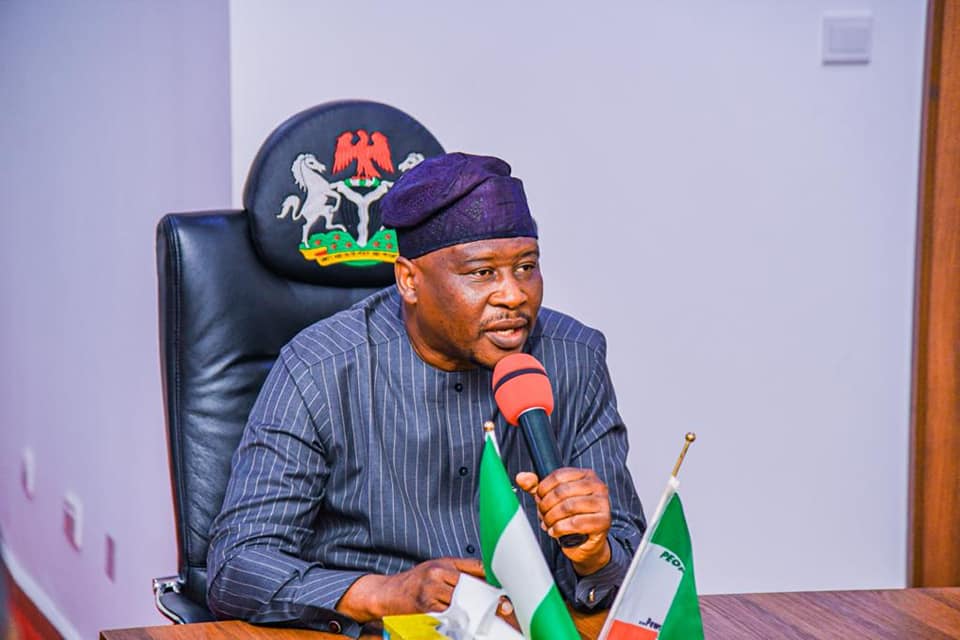
Governor Ahmadu Umaru Fintiri of Adamawa State has demonstrated an unwavering commitment to revitalizing the livestock sector. He recognizes its immense potential to drive economic growth, enhance food security, and improve the livelihoods of farmers and herders. Through strategic policies and targeted initiatives, his administration has made significant strides in modernizing livestock farming, addressing long-standing challenges, and fostering sustainable development.
Key Initiatives and Achievements: Implementation of the National Livestock Transformation Plan (NLTP)
Under Governor Fintiri’s leadership, Adamawa State has emerged as a key player in implementing the National Livestock Transformation Plan (NLTP), a federal initiative designed to resolve farmer-herder conflicts and promote sustainable livestock practices. In December 2023, the governor inaugurated the Pilot Ranch Project at the Gongoshi Grazing Reserve. This flagship project aims to modernize livestock farming by providing a controlled breeding, grazing, and disease management environment, setting a benchmark for other states.
Rehabilitation and Development of Grazing Reserves: The administration has prioritized the rehabilitation and development of grazing reserves across the state. These reserves have critical infrastructure, including water sources, veterinary services, and access roads, creating a conducive environment for livestock farming. The Gongoshi Grazing Reserve stands as a model of these efforts, showcasing the benefits of integrated livestock development and sustainable resource management.
Strengthening Market Access for Livestock Farmers: Governor Fintiri has strongly emphasised improving market access for livestock farmers. The Mubi livestock market, one of the largest in the region, plays a vital role in the state’s economy, supplying approximately 29 million animals annually to Lagos State and generating around N29 billion in revenue. By enhancing market linkages and upgrading infrastructure, the government has further stimulated economic activities in the sector, benefiting both farmers and traders.
Conflict Resolution and Community Engagement: A cornerstone of Governor Fintiri’s livestock policy has been resolving recurrent clashes between farmers and herders. His administration has fostered peaceful coexistence between these groups through dialogue, stakeholder engagement, and policy reforms. Establishing grazing reserves and ranching systems has significantly reduced pressure on farmlands and minimized resource conflicts, contributing to a more harmonious and productive agricultural landscape.
Empowering Youth and Women in the Livestock Sector: The administration’s interventions in the livestock sector have also focused on creating employment opportunities for youth and women. Training programs and access to credit facilities have been introduced to enable these groups to participate in modern livestock farming. These initiatives have reduced unemployment and poverty levels and empowered women and young people to become active contributors to the state’s economic development.
Impact and Future Prospects: Governor Fintiri’s interventions in the livestock sector have already begun to yield tangible results, including increased productivity, higher incomes for farmers, and improved food security. By promoting sustainable practices and fostering partnerships with federal and international organizations, the administration has laid a solid foundation for the long-term growth of the livestock industry in Adamawa State.
A notable example of such collaboration is the partnership between the Adamawa State government and the Livestock Productivity and Resilience Support Project (LPRES). On Thursday, January 16, 2025, the government distributed inputs and machinery to 23,000 livestock farmers, further boosting productivity and resilience in the sector.
Governor Fintiri’s continued focus on innovation, community engagement, and infrastructure development is expected to transform the livestock sector further. These efforts will solidify Adamawa State’s position as a leader in livestock farming in Nigeria and ensure sustainable economic growth and improved livelihoods for its citizens.
Zayyad I. Muhammad writes from Abuja via zaymohd@yahoo.com.

Police officer takes own life in Niger State
By Abdullahi Mukhtar Algasgaini
Shafi’u Bawa, an Assistant Superintendent of Police (ASP) attached to the 61 Police Mobile Force in Kontagora, Niger State, has reportedly taken his own life.
The incident occurred on Saturday afternoon, 8 February 2025, when the officer was found hanging from the ceiling of his room. His father, Mallam Usman Bawa, alerted the authorities after discovering the tragic scene.
The Niger State Police Command spokesperson, SP Wasiu Abiodun, confirmed the incident, stating that the deceased’s body has been released to his family for burial.
“The reason behind his action is yet to be determined, and the matter is under investigation,” Abiodun stated.
Further details will be provided as the investigation progresses.