


Panel probes alleged corruption among senior correctional officers
By Uzair Adam
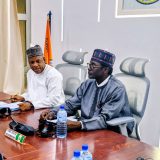
The special independent investigative panel set up to examine allegations of corruption and other violations by senior personnel of the Nigerian Correctional Service (NCoS) has commenced its probe.
Dr. Uju Agomoh, the panel’s secretary and chair of the session held on Tuesday in Abuja, stated that several cases under investigation involve high-ranking officers overseeing custodial centers across the country.
These cases reportedly include corrupt practices, abuse of authority, and mistreatment of inmates.
Agomoh explained that the panel has been tasked with conducting a comprehensive inquiry into specific allegations and recommending immediate reforms to prevent future misconduct while improving correctional services in Nigeria.
“Recent reports highlight instances of corruption, torture, cruelty, and degrading treatment within the nation’s correctional facilities,” she said.
“These violations undermine the rights and dignity of individuals in custody.”
The panel is expected to propose short-term, medium-term, and long-term measures to address the concerns raised.
The Daily Reality learned that the Minister of Interior, Dr. Olubunmi Tunji-Ojo, established the investigative panel following widespread controversy surrounding the incarceration of cross-dresser Idris Okunneya, popularly known as Bobrisky.
Additionally, the panel is examining allegations of corruption and extortion against the head of Kuje Custodial Centre, Iloafonsi Ikechukwu, who has been accused of intimidating, threatening, and defrauding an inmate.

‘Nasir El-Rufai’ game has commenced
By Zayyad I. Muhammad
The 2027 game will not only be interesting but will also mark a significant turning point in Nigeria’s political landscape. The voting patterns and intricate scheming that shaped the 2023 elections will not be replicated in their exact form, yet their influence will still be felt. While the key political figures who played major roles in 2023 will remain central to the unfolding drama, they will adopt new strategies, shift alliances, and engage in different forms of political maneuvering.
The battle for power will be defined by strong political platforms, influential players, a formidable war chest, scientifically crafted strategies, and carefully calculated negotiations. The presidential race, in particular, will be a high-stakes contest, shaped by a mix of ambition, ideological shifts, and pragmatic political decisions.
An incumbent seeking a second term will be a bulldozer—with an enormous war chest, a solid structure, and the full weight of state power behind them. President Bola Ahmed Tinubu will fight tooth and nail to secure reelection, as mostly, any first term president will do so. However, the APC stronghold – the North, is gradually slipping from the party’s grasp. In fact, 75% of President Tinubu’s second-term resources and energy will be expended in the North—making it a crucial battleground for his team. If the Tinubus have played their card very well, the North would have been firmly in the arms.
The North will be the main battleground, while the Southwest will find itself in a dilemma—torn between supporting their own and upholding their deep-rooted tradition of rewarding excellence. The Southeast will watch from the sidelines with arms akimbo but will ultimately follow their hearts, while the South-South may take a more indifferent stance, adopting a “let’s just move” attitude.
The recent resignation of Nasir El-Rufai from the All Progressives Congress (APC) and his defection to the Social Democratic Party (SDP) is just one of many major developments that will reshape the political terrain in the coming months and 2027 approaches. El-Rufa’i’s early defection serves as a catalyst for the unfolding political drama. The Tinubu team is fortunate to have this early warning, giving them ample time to strategize. Meanwhile, the opposition will be on the offensive, while the APC will be forced into a defensive position.
For the opposition, the biggest challenge will be balancing the interests of four key groups: the Atiku camp, the Kwankwaso camp, the Peter Obi camp, and the El-Rufai/Buhari former ministers’ camp. They must navigate these competing interests carefully if they hope to strike the winning formula.
As political camps solidify and realign, new alliances will emerge, while old ones will fracture under the weight of conflicting interests. The electorate, too, will evolve—demanding more from their leaders and scrutinizing candidates beyond party affiliations.
Ultimately, the 2027 game will be a masterclass in political strategy and power dynamics—one that students of politics, analysts, and observers alike will find fascinating to study for years to come.
Zayyad I. Muhammad writes from Abuja, zaymohd@yahoo.com, 08036070980

Minister opposes closure of schools for Ramadan fasting
By Sabiu Abdullahi
The Minister of State for Education, Suwaiba Ahmad, has called on the governments of Bauchi, Katsina, Kebbi, and Kano states to reconsider their decision to close public schools during Ramadan.
She stated that no Muslim-majority nation follows such a practice.
Speaking on Channels Television’s Political Paradigm, Ahmad emphasized that even in countries where Islam is the dominant religion, schools remain open during the fasting period.
“In each state, the education system is under the state level, and they have the right to make decisions. However, we can only engage them and present our position on the matter,” she said.
She further argued that Islamic teachings do not require schools to be closed for fasting.
“Even in countries recognized as Muslim nations, like Saudi Arabia, schools remain open during Ramadan. There is nowhere it is written that you must shut down schools because of fasting,” she stressed.
To support her argument, she referenced Islamic history.
“The Prophet (S.A.W) even went to war during Ramadan, so it is not something that should hinder education,” she noted.
Ahmad expressed concern over the academic time lost due to the closures.
She also revealed that the Federal Ministry of Education is engaging with the affected states to address the issue.
“What about the period that will be lost? This is something we are looking into as we continue discussions with the state governments,” she said.
The decision to close schools for Ramadan has sparked debates among education stakeholders.
Some argue that it is unnecessary, especially in regions already struggling with high levels of poverty and illiteracy.
The Christian Association of Nigeria (CAN) has criticized the move, describing it as discriminatory and a violation of the rights of non-Muslim students in the affected states.
Similarly, the National Association of Nigerian Students (NANS), through its National Public Relations Officer, Samson Adeyemi, has condemned the decision, calling it an infringement on students’ right to uninterrupted education.
However, the Supreme Council for Shariah in Nigeria (SCSN) has defended the action taken by some northern state governments.

Mass exodus reportedly hits Kaduna APC after El-Rufai’s defection
By Sabiu Abdullahi
A wave of resignations has struck the All Progressives Congress (APC) in Kaduna State following the departure of former governor Nasir El-Rufai from the party.
Multiple resignation letters obtained on Monday indicate that several APC members, particularly those loyal to El-Rufai, have been leaving the ruling party in large numbers.
This development comes just hours after the former governor publicly announced his defection to the Social Democratic Party (SDP).
Similarly, some former commissioners who served under El-Rufai have also withdrawn their membership from the APC.
Among them are Ja’afaru Ibrahim Sani, a former Commissioner for Local Government, and Hajiya Hafsat Mohammed Baba, who previously oversaw Human Services and Social Development.
Both submitted their resignation letters to their respective ward chairmen on Monday.
In his letter, Sani expressed disappointment with the way the party leadership treated its members.
He stated, “With the hatred and disdain shown to us by the leadership of the party we worked hard to nurture, it has become compelling to seek another platform in our desire to bring development and prosperity to our dear people.”
He further explained that after consulting with key stakeholders in Anchau, Kubau Local Government Area, and Kaduna State, he decided to leave the APC immediately.
“As I move on, I remain grateful to you and to all members of the APC, as well as the electorates in the Ward, Kubau Local Government Area, and the State for the support rendered to me as Chairman of the APC Stakeholders, Kubau LGA,” he added.

Standing up for Natasha against “Chauvinistic” Senate
By Fatimah Yusuf Usman
The political exclusion of women in Nigeria has once again come to the fore with the suspension of Senator Natasha Akpoti-Uduaghan. Her alleged offense? Speaking up. Her punishment?
A swift and harsh six-month expulsion from the Senate, her office sealed, salary cut off, and access to the National Assembly revoked. Her ordeal began when she accused Senate President Godswill Akpabio of sexual harassment, an allegation that was neither investigated nor given a fair hearing.
Instead, the Senate’s Ethics Committee moved with unusual speed to shut her out. This raises an urgent question. Is there space for women in Nigerian politics beyond tokenism, or must they submit and endure injustice to survive?
Sexual harassment remains a global crisis, yet many societies, including Nigeria, prefer to sweep it under the carpet. Worldwide, one in three women, about 736 million, has experienced physical and or sexual violence.
But when victims muster the courage to speak up, they are often met with disbelief, scrutiny, or punishment. Natasha’s case is no different. Rather than handling the matter with fairness and transparency, the Senate wasted no time in punishing her.
A six-month suspension without pay seems less like a disciplinary measure and more like a warning to women in politics. Know your place or face the consequences. If this can happen at the highest levels of government, what hope is there for the ordinary Nigerian woman facing harassment in her workplace, school, or community?
Women in Nigeria’s political space face a glass ceiling reinforced with steel. Out of 109 senators, only a handful are women, a stark reminder of the gender imbalance that continues to define governance in the country.
And when women like Natasha refuse to conform to the unwritten rules of submission, the system moves to silence them. But even as she was escorted out of the Senate chambers, Natasha refused to be broken.
“This injustice will not be sustained,” she declared. Her words are a rallying cry, not just for herself, but for every woman who has been silenced, sidelined, or denied justice. The idea that politics is a “man’s world” must be dismantled.
Nigeria cannot claim to be a democracy while women’s voices are suppressed. Gender equity in governance is not a privilege. It is a right. The Senate’s handling of this case has only reinforced the perception that powerful men can get away with anything while women who dare to challenge them are punished.
If Natasha’s case has taught us anything, it is that the struggle for women’s political inclusion is far from over. But if we do not confront this now, when will we? How long will women continue to be punished for demanding dignity, fairness, and equal representation?
This is no longer just about Natasha. It is about every woman who has been ignored, intimidated, or denied justice. If we allow this injustice to stand, we send a dangerous message that a woman’s voice does not matter. But we refuse to accept that.
We stand with Natasha. We stand with every woman who has been silenced. And we demand justice, not just for her, but for all of us.
Fatimah Yusuf Usman is a Corps Member serving at PRNigeria Centre, Abuja. can be reached via: fatimahborkono@gmail.com

Al-Azhar at 1085: Celebrating its global legacy and services to Northern Nigeria
By Umar Sheikh Tahir
Al-Azhar was commissioned on the 9th of Ramadan 361H/ 972AD by the Fatimids in Cairo, Egypt. The name is derived from the holy Prophet’s (PBUH) daughter’s name, Fatimah al-Zahrā alayha al-Salam. The institution is one of the most prominent centers of Sunni Islam in the Muslim world. It serves as both a mosque and a university, and it is recognized as the world’s first university operating initially inside the grand mosque of al-Azhar.
The institution is a beacon of our enduring legacy and tradition, showcasing our continuous connection and shared heritage. Its services extend not only to educational, spiritual, and theosophical but also humanitarian services to mankind around the globe. It is followed by Zaytuna in Tunisia and Qarawiyin in Morocco.
As we celebrate the 1085th anniversary of Al-Azhar’s establishment, this article recognizes the significant contributions of Nigerians in the past and Al-Azhar’s contributions to our educational system in contemporary northern Nigeria. Finally, it highlights Al-Azhar alumni who have been instrumental in providing valuable services and whose excellence has made our nation proud.
1. Royal Contributions to Al-Azhar in the Past
Classical Azhar constituted several Ruwaq or Arwiqah Corridors/Hostels. These Corridors were named to symbolize the strong ties to some nations worldwide. A few of these names were dedicated to West African communities, such as “Ruwāq al-Barnāwī,” “Ruwaq Dakarinah Darfur,” “Ruwaq al-Barābirah,” and “Ruwaq al-Dakārinah Salih.” These names primarily related to precolonial Saharan and Sub-Saharan empire states, currently representing West African nation states. The closest to Nigeria is Ruwāq al-Barnawi, honoring Black African students from the Kanem Borno subregion in modern-day Northern Nigeria. This medieval hostel now serves as a lecture hall. This recognition stemmed from the strong relationships between Al-Azhar’s leadership and the Kanem Borno royal family.
Mai Idris b. ‘Alī (1564-1596) spent tons of gold in Cairo, some of which went to endowing the Al-Azhar institution alongside other expenses such as hostels for Borno students and lodges for Kanem-Borno pilgrims to Hajj. This gesture echoes the famous history of Mansa Musa, who made gold depreciate by 25% in Cairo during his famous Hajj travel and stayover.
Another substantial endowment was the Ibn al-Rashiq School, founded with support from Kanem Borno during the Ayyubi regime in 567-648/around the 12th AD. The institution served as a school and provided services to Hajj travelers from the Kanem-Borno area. In the 18th century, Muhammad bn Muhammad al-Fullānī Al-Kashnāwī’s impactful visit and teaching at Al-Azhar Mosque showcased the enduring influence he had on the institution and its scholars. He was so esteemed that they pursued him to stay until the end of his life, and he was buried in the Graveyard called Bustān al-Ulamā.
2. Al-Azhar’s Global Services
Since its inception, Al-Azhar has connected with the world, including our locality, in many ways. Al-Azhar sends teachers to the United States of America, Europe, Asian nations, African countries, and remote rural places. They were sent to the elementary and high schools worldwide, including Nigeria, to teach Islamic studies, the Arabic language, Basic Sciences, and Technology. Nigeria received more than a hundred teachers before, but the number recently decreased to less than 40 teachers due to insurgencies, as I inquired through the Embassy last year.
However, in May 2016, the Grand Imam of Al-Azhar, Shaykh Ahmad al-Tayyib, visited Nigeria. During his visit, he announced increased scholarships for Nigerian students to Al-Azhar University, covering not only Islamic sciences and humanities but also natural sciences, technology, engineering, and medical schools.
3. Celebrating Excellent Nigerian Alumni in the Past and the Present
I cannot celebrate this milestone without acknowledging some Azhar alumni who have made Nigerians proud. This section highlights the achievements of selected Nigerian students, both past and present, who have excelled there, showcasing their academic prowess and impact on Nigerian society, especially those in prominent national positions.
Among the notable contemporary alums, Ambassador Abdullahi Yalleman and Dr. Hadi Sheikh Tahir graduated at the top of their classes. The former had the honor of receiving his award from former Egyptian President Hosni Mubarak, while the latter was accepted as a Ph.D. student directly from Al-Azhar to the University of Glasgow in Scotland.
I apologize for not listing more excellent names here, as many deserving individuals come to mind among the outstanding alums I know personally. I will briefly mention a few sectors where Azhar alumni contribute to our society. For instance, most university lecturers, especially in the linguistics and Islamic studies departments, and leaders of colleges of education, are Azhar graduates. The leading Imam of the National Mosque and the founder of the first female-only university in Nigeria is also an Al-Azhar alumnus. Indeed, in the late 1940s, Nigerians celebrated the first female student admitted to the University of Ibadan, and now look at where we are with the contributions of Azharis.
The leadership of the Sheikh Tahir Bauchi Islamic Center for Quranic Memorization and Islamic Studies consists of Azharis, including the Chairman, Vice Chairman, Secretary, and several directors, all of whom are graduates of al-Azhar. In fact, the Director of Education and School Services for this foundation oversees over 1,500 schools across West African countries and is also an Azhari. The world’s wealthiest Black person is Nigerian and among the alums of al-Azhar. Additionally, the former world champion of Arabic poetry in Abu Dhabi in 2022 is a Nigerian Azhari from Kano. You can also find them in mosques, performing well and serving local communities everywhere. The list can go on and on.
This brief exploration has inspired me to write in detail in the future to celebrate our local leaders who are Azhar alumni and provide services to our beloved nation through various mediums.
4. Hausa Language in Al-Azhar Media
Today, I extend my congratulations to our Grand Imam, the alumni, and the wider Muslim community on this anniversary. As I reflect on my graduation from Al-Azhar 15 years ago, I appreciate the significance of 1,085 years of intellectual pursuit, the creation of a lasting legacy, engagement with global intellectual institutions, and the dissemination of knowledge throughout the world.
I join the parents of our children in these urban and rural communities, along with Nigerian students in Azhar receiving full scholarships with free accommodations, in expressing our gratitude to the leadership and administration of Azhar and those Azhar teachers. The Egyptian embassies process the teachers’ paperwork, manage their placements, and report to the leadership above them—our dear Grand Imam.
Thank you, Azhar, with our spirits before our tongues, and may God preserve you for the Ummah of Islam!
Umar Sheikh Tahir is a PhD Candidate at Columbia University, New York, USA. He can be reached via ust2102@columbia.edu.

Tinubu renames Federal University of Education Kano after Yusuf Maitama Sule
By Hadiza Abdulkadir
In a significant move to honour a distinguished Nigerian statesman, President Bola Tinubu has officially renamed the Federal University of Education in Kano (formerly Federal College of Education) to Yusuf Maitama Sule Federal University of Education. This decision, announced on March 10, 2025, pays tribute to the late Alhaji Sule, who played a vital role in Nigeria’s socio-political landscape throughout his life.
Alhaji Sule, who lived from 1929 to 2017, was renowned for his extensive contributions to the nation. He served as Nigeria’s Permanent Representative to the United Nations in New York and was Chairman of the UN Special Committee Against Apartheid.
The political journey of Alhaji Sule, also known as Dan Masanin Kano, included roles as Chief Whip of the Federal House of Representatives from 1954 to 1959, Leader of Nigeria’s Delegation to the Conference of Independent States in 1960, the First Federal Commissioner of Public Complaints in 1976, and Minister of Mines and Power.
In his statement, President Tinubu emphasized the importance of commemorating Ambassador Sule’s legacy, stating that it would inspire younger generations to embody values such as integrity, patriotism, character, and nationalism.
The Federal University of Education, Kano, which is one of seven specialized universities of education established by the Federal Government, will continue to play a crucial role in the training of teachers, further strengthening Nigeria’s education sector.
This renaming reflects a commitment to recognizing leaders who have made impactful contributions to the nation’s development, setting a precedent for future generations.

Kano gov submits commissioner nominee to state assembly
By Uzair Adam
Gov. Abba Kabir Yusuf of Kano State has forwarded a nominee to the state House of Assembly for screening as a commissioner.
During Monday’s plenary, Speaker Jibrin Falgore read a letter from the governor, introducing Ibrahim Yakubu Adamu as the nominee.
Adamu currently serves as the Managing Director of the Kano State Urban Planning and Development Authority (KNUPDA).
Falgore stated that the assembly would soon invite the nominee for screening.
Meanwhile, the House passed a bill establishing an infrastructure management agency.
Majority Leader Lawan Husseini (NNPP-Dala) explained that the agency would oversee the planning, development, and maintenance of key infrastructure, including roads, bridges, and public buildings, to enhance efficiency in the state.

Key APC members set to join SDP ahead of 2027 elections
By Abdullahi Mukhtar Algasgaini
Several prominent figures from the All Progressives Congress (APC) are reportedly preparing to defect to the Social Democratic Party (SDP) as part of a new political alignment ahead of the 2027 general elections.
Among those expected to join the SDP are former Ekiti State Governor Kayode Fayemi, former Osun State Governor Rauf Aregbesola, and Attorney General Abubakar Malami, along with APC national chairman Abdullahi Adamu.
Their defections are said to follow the recent move by former Kaduna State Governor, Nasir El-Rufai, who officially joined the SDP earlier today.
Although the specific reasons behind the defections remain unclear, sources suggest that the moves are part of a broader strategy to form a third-force coalition capable of challenging President Bola Ahmed Tinubu’s leadership in the upcoming elections.
Kaduna SDP welcomes E-lrufa’i
By Sumayyah Auwal Usman
The Kaduna State chapter of the Social Democratic Party (SDP) has welcomed the former Governor of Kaduna State, Nasir Ahmad El-Rufai, into its fold.
In a statement issued by the interim SDP chairman in the state, Hon. Nasiru Maikano, stated that the ex-governor’s decision to join the party is a welcome development that will undoubtedly bolster the SDP’s influence not only within the state, but the country.
Hon Maikano said “as a highly respected and accomplished political leader, Mallam Nasiru El-Rufai will bring his wealth of experience and expertise that will enrich our party. We are excited about the opportunity to collaborate with El-Rufai and work together towards a shared vision for the development and growth of Kaduna State.”
El-Rufai’s resignation from the All Progressive Congress (APC) comes after months of speculation surrounding his political allegiances and dissatisfaction with the ruling APC.
His defection to the SDP is expected to shake up the political landscape, particularly in northern Nigeria and may likely trigger more defections out of the ruling APC.