



Yilwatda Faults Atiku’s Plan To Restore Petrol Subsidy
By Sabiu Abdullahi
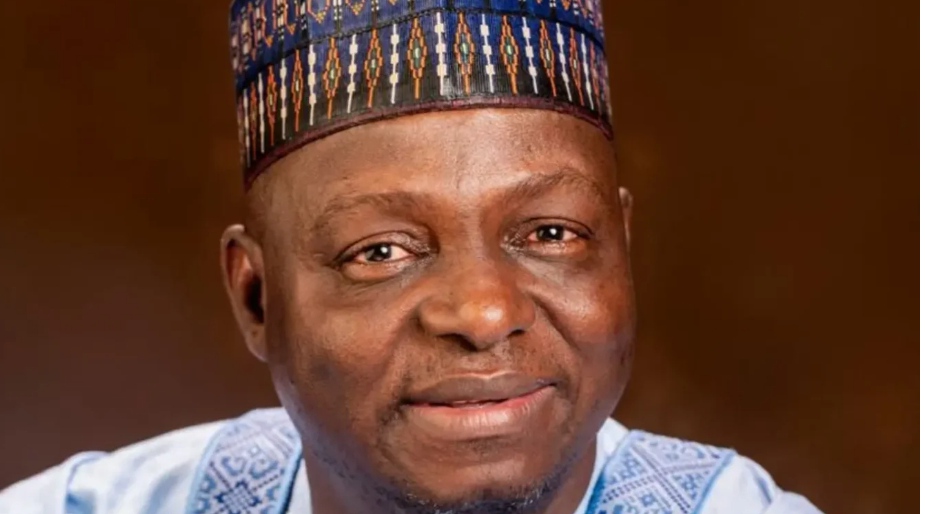
The National Chairman of the All Progressives Congress (APC), Nentawe Yilwatda, has condemned former Vice-President Atiku Abubakar’s proposal to restore the petrol subsidy if elected president in 2027.
Yilwatda described the proposal as an act of “desperation for power”, arguing that a return to the subsidy regime could expose Nigeria to renewed economic and fiscal challenges.
He made his position known in a statement issued on Sunday by his media aide, Abimbola Tooki.
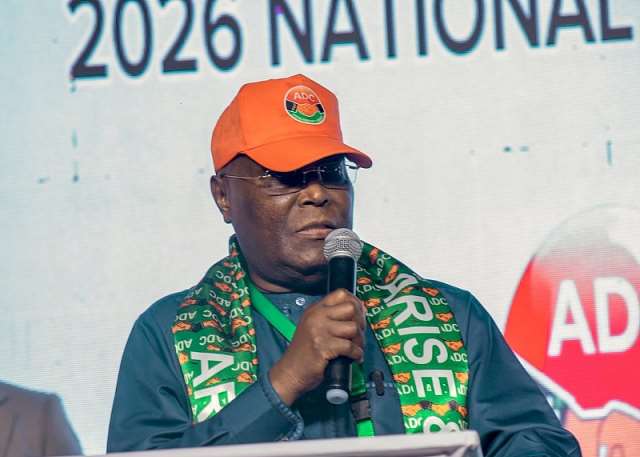
Atiku, who is the presidential candidate of the African Democratic Congress (ADC), had said on Wednesday that he would restore the petrol subsidy if elected president.
The former vice-president made the declaration in Hausa during an interview with an ADC media group. He also questioned the Federal Government’s management of funds saved after the removal of the subsidy.
“I did not oppose the removal of the oil subsidy, but where is the money? Where did it go? It was intended to reduce poverty and help children attend school. Where is the money now? It seems they are just stealing it,” Atiku said.
“If elected, I will bring back the oil subsidy, and whoever stole the money must refund it.”
The proposal attracted criticism, with opponents arguing that it was inconsistent with Atiku’s position before the 2023 presidential election, when he was reported to have supported the removal of the petrol subsidy.
President Bola Tinubu also rejected the proposal, describing it as evidence of “serious ignorance of governance and economy”.
Reacting to Atiku’s position, Yilwatda said economic policies should not be shaped by electoral considerations.
Economic Policy Cannot Be Reduced To Election-Season Promises
Yilwatda spoke on Saturday during a visit to the headquarters of the City Boy Movement in Abuja.
He said Nigerians require detailed and sustainable economic plans rather than promises made during election campaigns.
The APC chairman said any proposal to reinstate the subsidy should face thorough scrutiny because the previous arrangement imposed a heavy financial burden on the government and caused distortions within the economy.
He added that opposition politicians had been challenged over the past three years to present clear alternatives to the policies of the APC administration, but, according to him, no convincing alternative had emerged.
Yilwatda questioned the timing of Atiku’s proposal, given that the 2027 election is approaching.
“Economic policy cannot be reduced to election-season promises,” Yilwatda said.
“Nigerians deserve to know precisely where the money will come from, what sectors will bear the cost and whether such a policy can be sustained without reopening the fiscal pressures that necessitated reform in the first place.”
He defended the removal of the petrol subsidy as a difficult but necessary decision. According to him, the policy should be supported with measures that reduce its impact on citizens, expand social interventions and strengthen productive sectors.
Yilwatda said effective leadership requires more than promises of immediate relief for electoral benefit. He argued that leaders must be prepared to make difficult decisions, explain them to Nigerians and pursue policies that can support lasting economic growth.
He urged Nigerians to assess the economic programmes of the various political parties before the 2027 elections.
The APC chairman advised voters to distinguish between policies that address the country’s structural challenges and proposals that may offer short-term political benefits while creating greater financial problems in the future.
Nigerians Must Scrutinise Policy Directions Of Those Seeking Power
Yilwatda also questioned the consistency of opposition politicians, particularly those who have moved between different political platforms.
He argued that politicians who frequently change parties may find it difficult to convince Nigerians that they can provide the stability and policy direction required to govern the country.
The APC chairman said President Tinubu had maintained a progressive political identity throughout his career, except during periods of political mergers. He also described Vice-President Kashim Shettima as having maintained a consistent political path.
According to Yilwatda, the Tinubu administration has taken difficult economic measures as part of efforts to attract investment, boost local production and reduce reliance on government interventions that he described as unsustainable.
He warned that reversing the reforms without presenting a credible alternative could weaken investor confidence and increase pressure on government finances.
Yilwatda urged Nigerians to examine the records and policy positions of presidential aspirants rather than accept promises designed mainly to win votes.
He also called for scrutiny of past disputes involving Atiku and former President Olusegun Obasanjo, including allegations linked to the privatisation programme conducted under the Obasanjo administration.
The APC chairman said issues of accountability and economic management should remain central to discussions ahead of the 2027 election.
He maintained that the election should focus on ideas, competence and credible policy alternatives rather than political promises that ignore the country’s economic realities.
Atiku Demands Transparency Over $5bn Abu Dhabi Loan
By Sabiu Abdullahi
Former Vice-President Atiku Abubakar has called on President Bola Tinubu’s administration to disclose details of the utilisation of the $5 billion financing facility secured from First Abu Dhabi Bank (FAB).
Atiku said Nigerians, including future generations, would ultimately bear the responsibility of repaying the loan and therefore deserve to know how the funds are being deployed.
The former vice-president made the demand in a statement issued on Sunday through his media office, days after Finance Minister Taiwo Oyedele said the Federal Government would not release details of how funds obtained from the facility would be spent.
Oyedele had made the statement during a media briefing in Abuja on Wednesday while responding to questions about the government’s borrowing plans and the FAB financing arrangement.
The minister said the facility had passed the necessary approval procedures, including consideration by the National Assembly. He also argued that there was no reason to treat the financing differently from other sources of government funding.
The $5 billion facility forms part of a broader $6 billion external borrowing package approved by the National Assembly in March. The Federal Government has so far drawn about $1.5 billion from the FAB facility as its first tranche.
Atiku, however, criticised the government’s position, accusing the administration of poor financial management and a lack of transparency in its recent borrowing arrangements.
“Since assuming office on May 29, 2023, President Bola Tinubu’s administration has contracted significant new debt,” the statement reads.
“According to the Debt Management Office, the Tinubu administration has added N72 Trillion of fresh debt stock, bringing the total indebtedness to N159.35 trillion as at early 2026.”
Atiku said the increased borrowing had not translated into better living conditions or improved security for Nigerians.
He claimed that poverty had increased from 56 percent in 2023 to between 61 percent and 63 percent under the current administration, with more than 140 million Nigerians facing multidimensional poverty.
He also faulted Oyedele for rejecting demands for greater disclosure about the Abu Dhabi facility.
“The government is obliged to explain every loan taken on behalf of Nigerians,” Atiku said.
“Every Kobo borrowed matters because citizens — both living and unborn — will bear the burden of repayment. Yet these loans have failed to improve their material wellbeing.”
The former vice-president further raised concerns about the collateral requirements attached to the facility, saying the Federal Government was expected to pledge securities worth about 133 percent of the loan value.
He argued that such an arrangement made transparency over the loan more important.
Atiku also cited concerns previously raised by the International Monetary Fund and Fitch Ratings about the structure of the financing, particularly issues related to transparency and the sustainability of Nigeria’s sovereign debt.
He urged Nigerians to demand accountability from the government, warning that borrowing without clear evidence of economic benefits could weaken public confidence and create additional challenges for the country’s financial future.
Nigerian Democracy Today: Youth Participation in Politics from 1999 to the 2027 Elections
By Hussaini Aliyu Yero
Nigeria’s return to democratic rule in 1999 marked the beginning of the Fourth Republic and raised hopes for a political system in which citizens would have a greater voice in determining the country’s direction. More than two decades later, Nigerian democracy has survived several elections, changes of government and political crises. Yet an important question remains: what role have young Nigerians played in this democratic journey, and what role will they play in the 2027 general elections?
The answer is both encouraging and troubling.
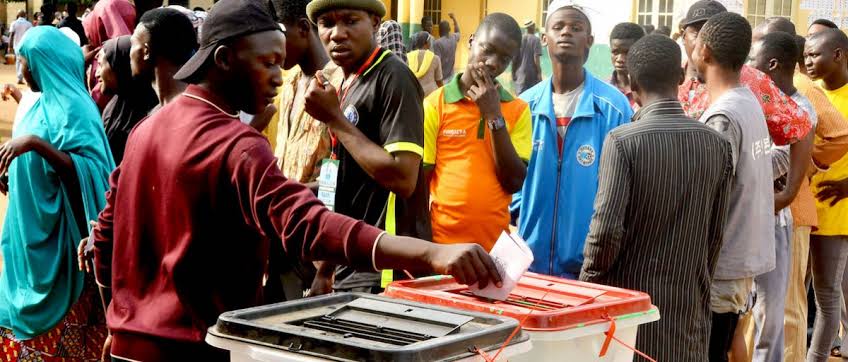
Nigeria has a very large young population, and young people constitute a significant proportion of the electorate. In the 2023 general elections, the Independent National Electoral Commission (INEC) recorded (37,060,399) registered voters between the ages of 18 and 34, representing 39.65 percent of the total registered electorate. This shows that Nigerian youths are not a marginal group in electoral politics. They are potentially one of the most powerful forces capable of influencing election outcomes.
However, numbers alone do not equal political power.
From 1999: Youths as Political Followers.
When democracy returned in 1999, young people participated mainly as voters, party supporters, campaign workers and mobilisers. Leadership positions, particularly at the highest levels of government and within major political parties, remained dominated by older politicians.
For many young Nigerians, politics was something to watch rather than something they could control. Political parties were structured around powerful individuals, political godfathers and established networks. Young people could mobilise crowds, but had limited influence over who became candidates.
This created a contradiction: young people were important during elections but were frequently sidelined when political decisions were being made.
The Growing Political Awareness of Nigerian Youths.
Over the years, this began to change. The growth of social media, increased access to information and frustration over unemployment, insecurity, corruption, poverty and poor governance encouraged more young Nigerians to become politically conscious.
Young Nigerians increasingly questioned traditional political structures, demanded accountability and used social media to organise and express opinions.
The August 2024
EndBadGovernance protests. demonstrated this growing awareness. Nigerians, particularly young people, took to the streets across the country to protest economic hardship, rising living costs, hunger and poor governance.
The protests showed that citizens were increasingly willing to organise and demand accountability. They also proved that young Nigerians were no longer content to remain passive observers of government policies.
The Not Too Young to Run Movement
One of the most important developments in youth political participation was the Not Too Young To Run movement.
The movement contributed significantly to constitutional changes in (2018) that reduced the minimum age for elective offices. The presidential age was reduced from 40 to 35, while the minimum age for the House of Representatives and State Houses of Assembly was reduced from 30 to 25.
This reform removed a formal barrier to youth candidacy.
However, lowering the age requirement did not solve the larger problem. Young aspirants still face expensive nomination forms, high campaign costs, weak internal democracy, political godfatherism and lack of resources to compete.
The real question is no longer whether young Nigerians are legally old enough to contest. It is whether the political system is genuinely prepared to give them a fair opportunity to win.
The 2019 and 2023 Elections
The impact of Not Too Young To Run became visible in 2019 as youth candidacy increased.
But the 2023 election showed progress was not linear. Analysis by (YIAGA Africa) found youth candidacy declined from 34 percent in 2019 to 28.6 percent in 2023. Of the 15,336 candidates on the ballot in 2023, 4,398 were youth candidates.
This is a warning. While young Nigerians make up a huge part of the electorate, they remain underrepresented among candidates. There is still a gap between youths as voters and youths as leaders.
The 2023 election also showed the potential strength of the youth vote. Youths aged 18–34 were 39.65 percent of registered voters, while 76.56 percent of newly registered voters during the 2021–2022 exercise were between 18 and 34.
The potential power of the youth vote is enormous.
Political Participation Beyond Voting
Political participation should not be defined only as voting.
Democracy requires more than collecting a Permanent Voter’s Card. Young people should participate in political parties, policy discussions, community leadership, election monitoring, campaigns, civic organisations and public debate. They should also demand accountability after elections.
A young Nigerian who votes but never questions public spending or participates in community decisions is exercising only one part of democratic citizenship.
The challenge is to move from being electoral numbers to becoming political stakeholders.
Looking Towards 2027
The 2027 general election presents another opportunity. By 2027, many first-time voters from 2019 and 2023 will have gained experience. The question is whether that will translate into greater participation and better leadership.
Young Nigerians should not wait until parties distribute campaign materials to get involved. They should begin now by studying parties, candidates, manifestos and asking tough questions about governance.
Most importantly, youths must resist being used as political thugs, crowd pullers or online attackers. Young people deserve to be decision-makers, not just tools for mobilisation.
What Must Change Before 2027
First, political parties must create genuine opportunities for young people to contest and influence party decisions.
Second, the cost of participation must be reduced. Democracy is not inclusive when only the wealthy can afford forms and campaigns.
Third, young Nigerians must strengthen political education. Youth leadership must be built on competence, integrity and commitment to public service.
Fourth, young voters must reject vote buying. Selling a vote may bring temporary relief but leads to poor leadership.
Fifth, youths should look beyond personality politics. Candidates should be judged by competence, character, record and policies, not ethnicity, religion or social media popularity.
2027 and the Future of Nigerian Democracy
The 2027 election should not be just another contest between parties. It should be a chance for Nigerians to decide what kind of democracy they want.
For youths, the choice is critical. They can remain spectators who complain after elections, or become active participants who organise, contest, vote, monitor and demand accountability.
Since 1999, young people have moved from the margins to the centre of political discussion. Not Too Young To Run showed institutional change is possible. The 2023 registration figures showed numerical strength. Yet low youth representation shows more work is needed.
The challenge is to turn numerical strength into real political influence.
Conclusion
Nigerian democracy cannot be truly representative while the largest generation remains underrepresented in leadership.
From 1999 to 2027, youth participation has been marked by awakening, activism and growing consciousness. The next stage must be deeper: participation must become representation, and representation must become responsible leadership.
Nigerian youths should ask not only “Who will I vote for?” but also “Who will represent us? Who will make decisions for us? And what are we doing to become the leaders we want?”
The 2027 election will test Nigerian democracy. But the future of politics will be determined by what young Nigerians do before, during and after election day.
Nigeria’s youths are not merely leaders of tomorrow. They are citizens and stakeholders today. The future of Nigerian democracy depends on whether they choose to remain spectators or become active participants in shaping the country they will inherit
Hussaini Aliyu Yero can be reached via GSM:09061612465 or
hussainialiyuyero@gmail.com.
Yari Pledges Victory for Tinubu in 2027 After Appointment as Campaign DG
By Sabiu Abdullahi
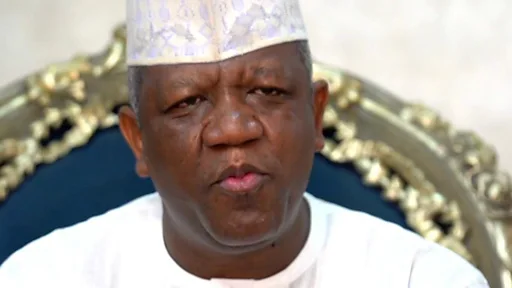
Senator Abdulaziz Yari, representing Zamfara West, has pledged to work towards President Bola Tinubu’s victory in the 2027 presidential election after his appointment as Director-General of the All Progressives Congress (APC) Presidential Campaign Council.
Yari, a former governor of Zamfara State, made the commitment on Saturday in a statement where he expressed appreciation to Tinubu and the APC leadership for entrusting him with the responsibility.
He said he accepted the appointment with “deep gratitude” and “full seriousness”.
“My sincere thanks go to President Bola Ahmed Tinubu and the party for the trust placed in me, and to our party leadership for the confidence. I do not take it lightly,” he said.
Yari said the 2027 campaign would go beyond seeking votes, as it would provide an opportunity to discuss the country’s future with Nigerians across different regions and backgrounds.
“A campaign is more than an election. It is a conversation with the Nigerian people in every state, every language, every faith about the future we are building together,” Yari said.
“We intend to lead that conversation with discipline, unity, and respect for all.”
The senator urged APC members and supporters to take an active part in the campaign, stressing that every party member would have a role to play.
“To our teeming members and supporters across the country: the work begins now, and there is a place for everyone in it,” he said.
He also appealed to Nigerians from different political backgrounds to consider supporting Tinubu’s bid for another term.
“And to Nigerians of every political leaning, this is a moment to choose progress over division. We will earn your confidence not with noise, but with a record we can stand behind,” he said.
Yari expressed confidence that the APC would secure victory in the election with the collective efforts of party members and supporters.
“By the grace of God, and with the effort of us all, we will deliver victory in January 2027.”
The APC announced a 108-member Presidential Campaign Council for the 2027 election on Saturday.
Imo State Governor, Hope Uzodimma, was named secretary of the council, while Tinubu will serve as chairman. Vice-President Kashim Shettima and APC National Chairman, Nentawe Yilwatda, were appointed vice-chairmen.
According to the list released by Bayo Onanuga, presidential spokesperson, APC National Secretary Ajibola Basiru and Hadiza Bala-Usman were appointed deputy secretary and assistant secretary respectively.
Coordinator of ‘Fake’ Made-in-Nigeria Agency Releases Appointment Letter
By Sabiu Abdullahi
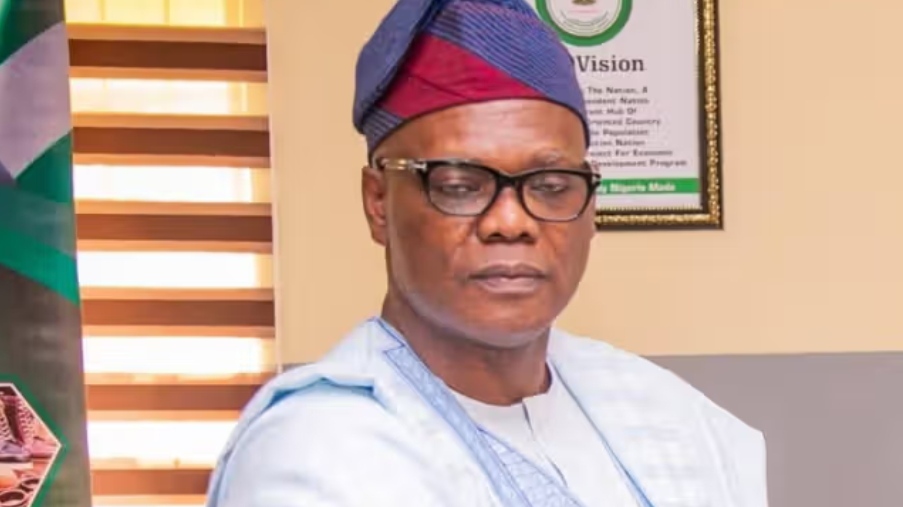
Nwabueze Buchi George, the National Coordinator of the National Brands Development and Made in Nigeria Special Project Office, has released an appointment letter he claims was issued by the Office of the Secretary to the Government of the Federation (OSGF).
George shared the document on Saturday after President Bola Tinubu directed his arrest over allegations that he operated a fake government agency from the SGF office.
The President also ordered the immediate suspension of three permanent secretaries after an investigation by the Independent Corrupt Practices and Other Related Offences Commission (ICPC).
ICPC Chairman, Musa Aliyu, said the discovery emerged from an investigation into the alleged activities of the Presidential Foreign Intervention Promotion Council (PFIPC), described as fake, as well as other administrative weaknesses within government.
In a post on his LinkedIn page, George published what he described as his appointment letter. The document carries the OSGF letterhead.
The letter is dated October 3, 2025, with reference number OSGF/MIN/59310/11/205. It was signed by Nadungu Gagare, who was identified as a permanent secretary in the Political and Economic Affairs Office.
The document bears the title, “Appointment as National Coordinator and Executive Director Made in Nigeria Project Office”.
It states: “I am directed to formally convey the approval of your appointment as National Coordinator/Executive Director of the Made in Nigeria Project Office under the Office of the Secretary to the Government of the Federation.
“The appointment follows a careful evaluation of your commitment, contribution, and capacity in delivering on the mandate of the Special Project Office.
“The appointment is a five-year tenure starting from July 2025 and is renewable.”
The letter listed several responsibilities for George, including the oversight and development of programmes, projects and policies linked to the initiative. It also assigned him responsibility for regional and state coordinators.
George was further directed to organise exhibitions, trade expos, economic summits and other promotional activities aimed at advancing the use of indigenous products and services as part of the government’s economic development objectives.
The document also indicated that the project would operate from “the temporary Office Space at Room B53, Ground Floor, within the OSGF Complex”.
It added that the appointment was “at the pleasure of the Secretary to the Government of the Federation” and was connected to the objectives of the Made in Nigeria initiative under the Renewed Hope agenda.
The development comes amid reports that George had written to several state governments and asked them to nominate coordinators for the Made in Nigeria Project Office.
The authorities have not publicly confirmed the authenticity of the appointment letter released by George.
Canada to Impose Retaliatory Tariffs on US Goods From September 8
By Sabiu Abdullahi
Canada has announced plans to impose fresh tariffs on selected goods from the United States after Washington introduced a 50 per cent levy on about $20 billion worth of Canadian products.
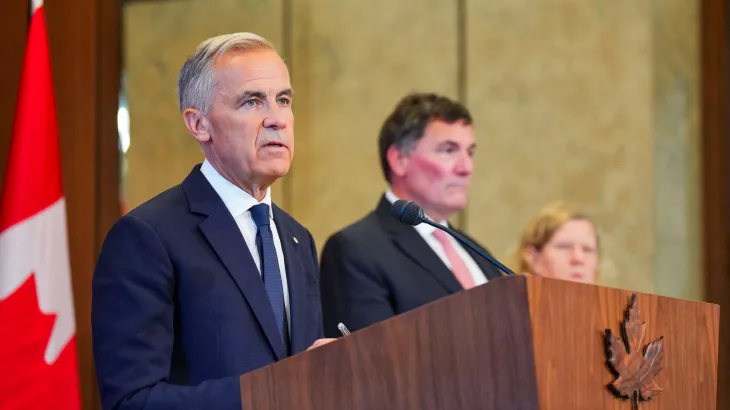
Canadian Prime Minister Mark Carney announced the decision in Ottawa on Saturday, saying the new measures would affect US steel, dairy products, appliances, agricultural equipment, pulp and paper, electronics and other goods.
The tariffs are expected to take effect on September 8.
“Canada will match Washington’s new tariffs dollar for dollar in order to protect Canadian workers, farmers, families, and businesses,” Carney told reporters.
The decision followed the collapse of trade negotiations between the two countries after several days of discussions. Carney said the United States had presented conditions that Canada could not accept.
“In recent days, the United States proposed new terms that were uneconomic, unfair and undermined the net benefits for Canada, and called into question the reliability of any deal,” Carney said, adding these demands included curtailing Canada’s ability to forge new trade deals.
“We cannot accept what they’ve offered, and we will not give what they’ve asked.”
Carney also accused US negotiators of making unacceptable “threats” concerning the French language and “Quebec culture”.
The latest US tariffs affect several Canadian exports, including wine, furniture, dairy products, cement, clothing, fishing rods and hockey equipment. The affected goods represent about 5.5 per cent of Canada’s exports to the US.
Reacting to Carney’s announcement, US President Donald Trump wrote on Truth Social, “Canada wants the benefits of being a State, without being one!!!”
Trump also claimed that Canada had imposed “massive amounts” of tariffs on US farmers for years and added, “No more!!!”
Carney said Canada would also introduce support measures for industries affected by the new US duties. He said the government would provide more details on the retaliatory measures in the coming days.
The trade dispute is expected to put additional pressure on the Canadian economy. Al Jazeera correspondent David Mercer said the tariffs could lead to higher costs, increased prices and rising unemployment.
“Costs are going to go up, prices are going to go up, unemployment is going to go up as well,” Mercer said. “And it’s been warned that business owners – small [and] medium-sized businesses – some of those will have to declare bankruptcy.”
Mercer said Carney was also using the dispute as an opportunity to expand Canada’s economic links with countries outside the United States.
“He’s been around the world, he’s been talking to countries in Asia, in Europe, shoring up new trade relationships, wanting to diversify Canada’s economy and Canada’s trade relationships with other countries around the world just to get away from that dependency that Canada has traditionally had on the United States,” he said.
Ontario Premier Doug Ford supported the Canadian government’s decision to retaliate against the US tariffs.
“I’m glad he didn’t sign that deal because it was a bad deal. It was a bad deal for Ontario. It was a bad deal for the auto sector, the steel sector, and manufacturing sector,” Ford told reporters on Saturday.
Some Canadians have expressed concern about the possible impact of the trade dispute on household expenses.
“I think probably the gas will go up even more, and all products, from food to, I don’t know, wood, everything else,” said Pamela Coulis, a resident of Fort Erie.
Another resident, Stuart Edwards of Port Colborne, said the trade dispute would “hurt everybody” and described the situation as “just sad”.
“We have a bully in Washington, and he’s just hitting us all with the big stick all the time,” he said. “And we’re not going to put up with it; Canada isn’t. We’ll fight back.”
Diamond Isinger, a former special adviser to ex-Canadian Prime Minister Justin Trudeau, said both countries would face economic difficulties as the dispute continues.
“It’s going to cause pain and challenge for Canadians and Americans alike – in terms of the actions that, unfortunately, the US has taken as well as Canada’s retaliation. But ultimately this was the way forward; this was the only realistic next step,” she said.
“Because the US administration responds best, of all the responses that they could have, to all the actions that a government like Canada could take, to strength,” Isinger added.
“So, we could not simply accept 50 percent tariffs going forward. We had to move forward with our own retaliatory package.”
US Trade Representative Jamieson Greer said no fresh negotiations had been scheduled with Canada.
“We’re moving forward with measures that respond to Canadian retaliation,” Greer said. “They’ve always had the best deal, and they still would have an even better deal, but they didn’t want that.”
The escalating dispute has also drawn criticism from some US Democratic lawmakers and governors, who accused Trump of increasing economic pressure on American businesses and families.
“Needlessly picking fights with our allies and raising prices here at home. That’s Trump’s economic policy in a nutshell,” New York Governor Kathy Hochul posted on X.
The Business Roundtable, which represents about 200 chief executives of major US companies, also warned that the new tariffs “risk raising costs for American businesses and families” and called on Canada and the United States to return to negotiations.
Iran Warns States Against Joining US Sanctions
By Sabiu Abdullahi
Iran has warned countries against supporting or joining US sanctions, with a senior security official saying Tehran will regard any state that participates as an enemy.
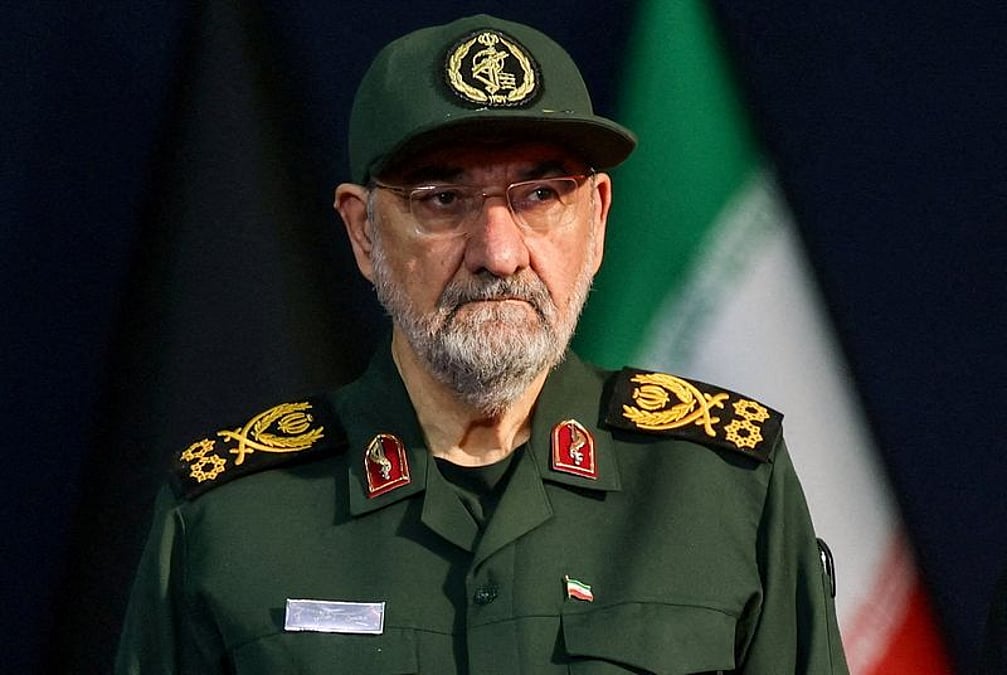
Iran’s security chief, Mohsen Rezaei, said countries that join the US pressure campaign against Tehran should expect retaliation against their interests.
The warning comes as Iran faces increasing economic and military pressure from the United States.
Iranian President Masoud Pezeshkian said the country is “in a full-scale economic, military and security war”, while accusing Washington of wrongly predicting that Iran would eventually become another Venezuela.
The latest warning from Tehran also comes amid heightened tensions over the Strait of Hormuz, a major global shipping route.
US President Donald Trump reposted a map on his Truth Social account that labelled the Strait of Hormuz as “NEW US Territory”.
Trump shared the map a day after he told supporters at a rally that he regarded the strategic waterway as “American territory”.
The development has added to concerns over the future of the strait, which is a crucial route for international oil shipments.
Meanwhile, tensions have also risen in neighbouring Syria after an Israeli drone strike hit a truck in the village of Beit Jinn in southwestern Syria.
Several civilians were injured in the attack, according to Syria’s Ministry of Foreign Affairs and Expatriates.
The latest developments come as regional tensions remain high, with Iran’s warnings against countries that support US sanctions adding another layer to the confrontation between Tehran and Washington.
Atiku to FBI: Release Tinubu’s Records, Nigerians Dying Under His Policies
By Abdullahi Mukhtar Algasgaini
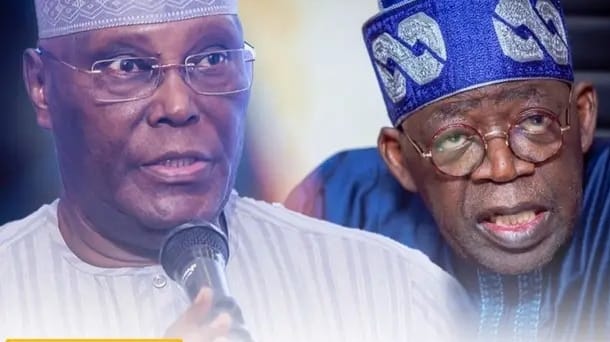
Former Vice President Atiku Abubakar has urged the United States Federal Bureau of Investigation to release any disclosable records concerning President Bola Tinubu, arguing that the agency’s invocation of “danger to lives” as justification for withholding information rings hollow amid widespread suffering in Nigeria.
Atiku, who ran for president under the African Democratic Congress (ADC), said in a statement issued by his Senior Special Assistant on Public Communication, Phrank Shaibu, that millions of Nigerians are already facing severe economic hardship and insecurity.
“The FBI says disclosure could endanger lives. Which lives? Nigerians are already dying,” Atiku stated.
The former vice president pointed to the three and a half years since Tinubu assumed office, citing economic policies that have intensified hardship across the country.
“In the past three and a half years since Tinubu became Nigeria’s President, he has pursued economic policies that have made his government a threat to the daily survival of ordinary Nigerians,” he said.
Atiku highlighted the impact of the fuel subsidy removal, describing it as “senseless” and carried out without a credible plan to protect ordinary citizens.
“Families that once managed three meals now struggle for one. Parents cannot afford medicines for sick children. Breadwinners are buckling under debt and unbearable economic pressure. This is the human cost of Tinubu’s senseless removal of fuel subsidy,” he added.
The former vice president questioned the administration’s celebration of the policy, asking: “When Tinubu boasts that subsidy is gone, Nigerians should ask him what exactly he is celebrating: the empty cooking pots, abandoned medical prescriptions, unaffordable transport fares or businesses struggling to survive?”
While clarifying that he did not seek disclosure of sensitive information that could compromise legitimate American law-enforcement operations, Atiku maintained that the FBI should not use safety concerns as a “bulletproof vest for Tinubu.”
“Protect your agents. Protect your sources. Protect legitimate investigative methods. Redact whatever American law genuinely requires you to redact,” he said. “But do not stretch those protections until they become a bulletproof vest for Tinubu.”
Atiku framed his demand as a humanitarian and democratic appeal rather than an attempt to interfere in Nigeria’s political affairs.
“Nigerians have a democratic right to know the history and character of the man who occupies their country’s highest office. Where information relevant to that legitimate public interest rests with American law enforcement and can lawfully be disclosed, the principles of openness and democratic accountability demand that it should not be unnecessarily hidden,” he stated.
The former vice president concluded: “Nigerians are not asking America to conduct our democracy for us. We are saying that American secrecy laws must not inadvertently become a sanctuary from accountability in Nigeria.”
Atiku reiterated his commitment to transparency, insisting that “if information can lawfully be released without endangering investigators, confidential sources or legitimate law-enforcement operations, release it.”
The FBI has not yet responded to Atiku’s latest comments.
VCT Alleges No NUT Elections Were Held in 42 Kano LGAs
By Hadiza Abdulkadir
The Voice of Concerned Teachers (VCT) Forum has raised concerns over the conduct of elections into the Nigeria Union of Teachers (NUT) in Kano State, alleging that no election was held in 42 of the state’s 44 local government areas.
In a press briefing, the forum’s chairman, Comrade Abbas Adamu, alleged that elections were conducted only in Nasarawa and Ungogo Local Government Areas.
“Apart from these two local governments, all the remaining 42 local governments’ NUT officials refused to consider any teacher as a contestant,” Malam Abbas Adamu alleged.
The forum further claimed that rather than conducting elections, NUT officials in the affected local government areas declared themselves winners unopposed.
The VCT Forum described the alleged development as a cause for concern, highlighted what it said were irregularities in the process, and called on the Kano State Government and other stakeholders to intervene.
The Daily Reality could not independently verify the allegations. Efforts to reach NUT officials for a response were also unsuccessful as of the time of filing this report.
NUT officials have not yet publicly responded to the allegations.
It’s My Job To Give Opposition Leaders High Blood Pressure, Wike Boasts
By Sabiu Abdullahi
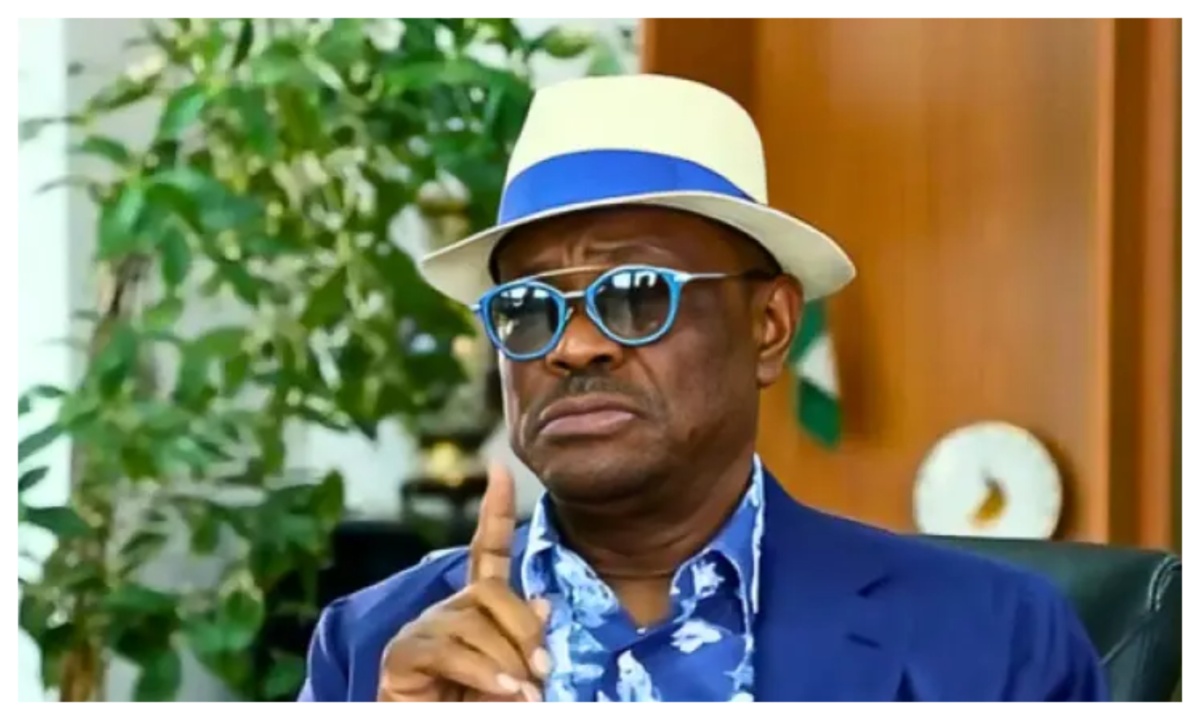
The Minister of the Federal Capital Territory, Nyesom Wike, has said he is determined to keep opposition politicians under pressure as the country approaches the 2027 general elections.
Wike made the statement on Friday while speaking with journalists during an inspection of infrastructure projects across the Federal Capital Territory, Abuja.
The minister, who addressed the political situation ahead of the elections, said the crisis within the Peoples Democratic Party had weakened the opposition and made it difficult to identify a dominant opposition party.
According to him, the PDP would ordinarily be regarded as the leading opposition party, but its internal problems had affected its ability to play that role effectively.
He said, “I’ve told you there is no position. What do you have people who are not trying to see whether they can be relevant? Who’s the opposition leader now? Ordinarily, it would have been PDP, but because of the crisis we have had, and so you can’t see a formidable party that you call a leading opposition party.
“So, whatever they feel, it’s none of my business. I don’t want them to feel well. It’s not my wish that they should feel well.
“My business is to make them not to feel well all the days. Because they will be having high blood pressure. Yes, that’s my job.
“To make them to have high blood pressure. I am not here to make them to feel good, no. You see, when you are having a contest with somebody, your business is not to make him feel well.
“Your business is to make sure you beat him thoroughly. So that he will be sick all through. And that’s what we are doing to them.”
Wike, a former Rivers State governor and a member of the PDP, has been involved in a prolonged political dispute with several opposition figures amid the party’s internal crisis.
The FCT Minister also played down concerns about how former Vice-President Atiku Abubakar and Labour Party presidential candidate in the 2023 election, Peter Obi, might respond to the unfolding political developments.
He said their reactions would not affect his approach to the political contest.
He added, “So how Atiku feels, how Obi feels, it does not give any headache. If I know how they feel now, I will add more crisis for them.”