By Maji Bappa Maina
Infrastructure becomes particularly significant when it reaches the places where limited connectivity has constrained economic and social activity.
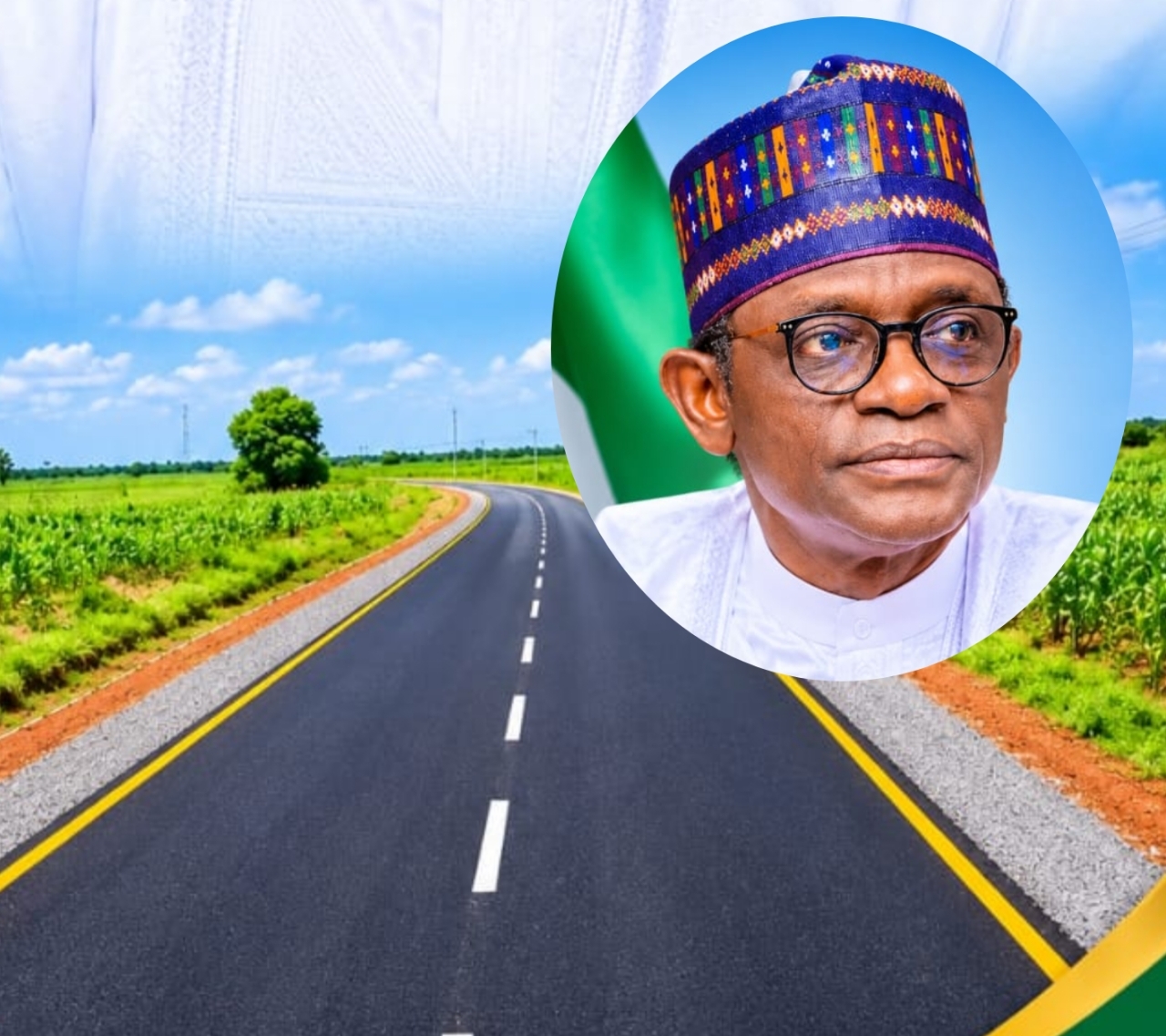
This is the context in which Yobe’s expanding network of rural access roads deserves closer examination.
Across the state, new road connections are emerging between communities that have historically depended on difficult routes to reach larger settlements, markets, farms and essential services.
These are not primarily urban roads designed to reshape city traffic.
They are rural access roads, and their significance lies in the connections they create beyond the major centres.
Under the administration of Governor Mai Mala Buni, a number of such roads have been constructed, while others are at different stages of development.
The emerging network includes the new road from Potiskum to Ngojin; Potiskum to Degubi; Fadawa to Daya; Fika to Maluri; Damagum to Gubana; Dawasa to Kukuri; Danchua to Jajere; Ngelzarma to Mashio; Bingel to Danchua; Damaturu to Gambir; Bukarti to Toshia; Karasuwa to Galu; Balangua to Kumagannam; Chumbosko to Tagali; the road to Dagona; Nguru to Balangua; Gashua to Masaba; and Gujba to Ngalda, which is ongoing.
Taken together, these routes suggest something larger than a collection of isolated construction projects.
They point towards an attempt to improve the geography of access across Yobe by bringing rural communities into stronger physical connection with the wider economy.
Why Rural Access Matters
For many rural communities, the road is the first link in a much longer development chain.
A farmer may produce enough food but struggle to reach a profitable market. A trader may have demand for goods but face high transportation costs. A student may live relatively close to an educational institution yet experience difficulty reaching it.
A patient may need medical attention but encounter delays because the journey itself is difficult.
In each case, the problem is not necessarily the absence of opportunity. Sometimes, it is the difficulty of reaching it.
This raises an important question: what happens to a rural economy when physical access begins to improve?
The answer cannot be assumed. It has to be observed through changes in transportation, agricultural marketing, movement of people, access to services and local economic activity.
Roads and the Rural Economy
Yobe’s rural economy makes connectivity particularly important.
Agricultural production does not end at the farm gate. Produce must move from farms to collection points, markets and larger commercial centres.
The condition of the connecting road can influence the cost, speed and reliability of that movement.
The new routes linking communities such as Potiskum and Ngojin, Ngelzarma and Mashio, Nguru and Balangua, Gashua and Masaba, and Fadawa and Daya therefore deserve to be viewed through an economic lens.
Their potential significance extends beyond transportation.
Better connectivity can create stronger relationships between producers, traders and consumers.
A rural road can consequently become part of an economic system rather than simply a physical structure.
Extending Development Beyond Urban Centres
There is also a geographical dimension to the intervention.
Public investment naturally receives greater visibility in major towns, where large populations and public institutions are concentrated.
Rural infrastructure presents a different challenge: its beneficiaries are more dispersed, and its impact may be less immediately visible.
Yet development becomes broader when infrastructure reaches beyond administrative and commercial centres.
The road from Damagum to Gubana, for example, or the connections involving Danchua, Jajere, Bingel, Bukarti, Toshia, Karasuwa, Galu, Balangua and Kumagannam, are important precisely because they extend connectivity into communities outside the major urban corridors.
The significance of such projects should therefore be considered in terms of inclusion, mobility and opportunity.
The Question of Development Impact
However, constructing rural roads should not be the final measure of success.
The more important assessment begins after the road becomes usable.
Are journey times falling? Are transport costs becoming more manageable? Are farmers reaching markets more easily? Are communities gaining better access to schools and health facilities? Is commercial activity increasing along these routes?
These are the questions that can turn infrastructure statistics into evidence of development.
For that reason, the long-term evaluation of Yobe’s rural road programme should move beyond the number of projects completed.
It should examine what these roads are changing in the lives and economic activities of the communities they connect.
From Connectivity to Opportunity
The broader significance of rural access infrastructure is that it can reduce the physical barriers separating communities from opportunity.
A road connecting Gujba to Ngalda, for instance, has a different development significance from a conventional urban road.
Its importance is rooted in the communities and economic spaces it brings closer together.
The fact that the route is still ongoing also highlights the need to view infrastructure as a process whose ultimate value becomes clearer after completion and sustained use.
The same principle applies across the wider network.
When rural communities become better connected, movement becomes easier; when movement becomes easier, economic interaction can expand; and when economic interaction expands, new possibilities may emerge.
This is why rural roads deserve to be considered within the broader conversation about development in Yobe.
Beyond the Road Itself
The emerging rural access network under Governor Mai Mala Buni presents an interesting case for examining how infrastructure can influence development outside the major urban centres.
Its importance will ultimately depend on more than construction.
Maintenance, road quality, accessibility throughout the seasons and the economic activities generated around the routes will determine whether the initial investment produces lasting value.
The real measure of these roads will therefore be found in the communities they connect.
If a farmer reaches a market with less difficulty, a trader moves goods at lower cost, a student travels more easily, or a patient reaches a health facility sooner, the road has acquired a meaning beyond concrete, earthwork and engineering.
It has become a pathway to participation.
And perhaps that is the more important story emerging from Yobe’s rural roads, development is gradually extending into the spaces between the major towns, one connection at a time.
Maji Bappa Maina is a Voice of Development, Leadership and public Insight agent and he writes from Yobe State Nigeria
[OPINION]: Opening The Hinterland: 18 New (Rural) Roads And The Expanding Frontier Of Access In Yobe, By Maji Bappa Maina

ByAdmin
5 October 2026