




Tribute to Dr Idris Abdul-Aziz Dutsen Tanshi
By Senator Shehu Sani
We live in a society where men of conscience and honour are better understood and appreciated when they are long gone or lost. Dr Idris Abdul-Aziz Dutsen Tanshi was a restless soul who spoke the inconvenient truth and walked alone in his paths and trenches. He cast the light of knowledge on the grey and dark spaces of our political and spiritual clime.
Dr Idris was a courageous man who lived an accomplished life of service to the human spirit. His voice was discomforting to the powers and the establishment. He audaciously spared no one in his sermons for equity and justice.
He was a one-man battalion and an exceptional commander of the faithful. His words were as sharp as a blade, piercing like a spear. He challenged a society complacent with injustice, keeping the leaders alert and his fellow Imams on their toes.
He was a man whose spirit was strengthened by his incarceration. He remained unbowed in the face of persecution. He could thank those who came to identify with him during his moments of trial, but he warned them against pleading for his freedom. He raised the torch and became the compass for objection and resistance. He was a non-conformist in the pursuit of the truth enshrined in his faith.
He was a dogged and distinguished spiritual combatant who used the powers of religious knowledge to question and challenge authority. He fought chains of battles within and without the realm of his mission and never surrendered. In life,he was largely misunderstood, and in death, he is well appreciated.
Dr Idris bowed out with dignity and grace. The nation has lost an irrepressible soul and indomitable spirit.
May his soul rest in Aljanna Firdausi, amin.

Trump launches $5 million “Gold Card” visa for wealthy investors
By Muhammad Ibrahim
U.S. President Donald Trump has unveiled a new immigration initiative dubbed the “Gold Card” — a $5 million visa program designed to grant wealthy foreign investors permanent residency in the United States.
The gold-coloured card, which Trump called the “Trump Card,” offers a fast-tracked route to U.S. citizenship in exchange for a $5 million investment.
The new program is set to replace the existing EB-5 visa, streamlining the process and reducing the waiting period to less than two weeks.
Announcing the launch, Trump declared himself the first official buyer of the Gold Card and expressed optimism that the initiative would attract “wonderful, world-class global citizens” to the United States.
Details regarding eligibility criteria, investment channels, and oversight mechanisms are expected to be released in the coming weeks.

Nigerian Islamic scholars and the business world
By Zayyad I. Muhammad
Traditionally, in northern Nigeria, Ulamas have been expected to remain reserved, focusing solely on Da’awa while relying on handouts, Sadaqa, Zakat, and gifts for sustenance. However, this should not be the case.
Islam teaches that success comes through effort and striving while trusting Allah. A believer should work hard, avoid laziness, and seek lawful earnings, as this is part of being a responsible Muslim and an exemplary scholar. The Qur’an and Hadith of the Prophet Muhammad (SWA) emphasise the importance of self-reliance, hard work, and lawful livelihood. Islam teaches hard work and self-reliance.
The Qur’an: Surah Al-Jumu’ah (62:10) says, “Then when the prayer has ended, disperse in the land and seek the bounty of Allah, and remember Allah often so you may succeed.” — This verse encourages people to work hard after fulfilling their religious duties.
Quran: Surah An-Najm (53:39) also says, “And that man will have nothing except what he strives for.” — This verse highlights that people will only benefit from their own efforts.
The Prophet Muhammad (SAW) said, “No one has ever eaten a better meal than that which he has earned with his own hands. The Prophet of Allah, Dawud (David), used to eat from what he earned with his own hands.” (Bukhari, 2072) — This Hadith encourages individuals to earn through their own efforts rather than relying on others.
The prophet (SAW) also said:
“The upper hand (the one that gives) is better than the lower hand (the one that receives).” (Bukhari & Muslim)— This Hadith discourages dependence and promotes financial independence and generosity.
Recently, there has been a debate about some Nigerian Ulamas, their associates, or companies receiving government contracts. However, this is neither a crime nor contrary to Nigerian law or Islamic teachings. Ulamas are human like everyone else and can make mistakes, but their participation in business benefits society, themselves, and Islam. It provides them with financial independence and the ability to speak the truth, no matter how difficult it may be.
The involvement of Ulamas in business is neither a new phenomenon in Nigeria nor globally. The late Sheikh Mahmud Gumi consistently encouraged his students and Ulamas to avoid relying on others and instead pursue careers in business or the public sector.
A shining example is the late Khalifa Isyaku Rabi’u, a billionaire businessman and renowned Islamic scholar. He established Isyaku Rabi’u & Sons in 1952, initially trading in sewing machines, bicycles, and religious books before becoming a major distributor for Kaduna Textiles in 1958. By the 1970s, his company had diversified into real estate, manufacturing, insurance, and banking. His children, including Abdulsamad Rabi’u, Chairman of BUA Group, and Rabi’u Rabi’u, owner of IRS Airlines, continued his entrepreneurial legacy.
Similarly, the late Muhammad Auwal Adam, also known as Albani Zaria, was not only a respected scholar but also a businessman and IT expert. He established the Albani Science Academy and Safwa Technologies Limited. Professor Isa Ali Ibrahim, an Islamic scholar, is also a businessman, international consultant, and technocrat who served as the Director General of NITDA and Minister of Communications and Digital Economy. Sheikh Dahiru Usman Bauchi is a globally recognised scholar, businessman, and entrepreneur .
A younger example is Abu Jabir Abdallah (Pen Abdul), a successful architect, entrepreneur, and Islamic preacher. He is also the CEO of SPW Limited and the Principal Partner at Diamond4 Architect. Dr. Idris Dutsen Tanshi in Bauchi State is a scholar, farmer, and entrepreneur. Sheikh Sani Yahaya Jingir,National Chairman of the Council of Ulama Jama’atu Izalatul Bid’ah Wa’Ikamatis Sunnah (JIBWIS) National Headquarters in Jos, is also a scholar , farmer, and entrepreneur.
Before and after assuming the role of Imam at the Doubeli Juma’at mosque in Jimeta-Yola, Adamawa State, many remember Sheikh Bala Lau as a dedicated farmer, entrepreneur, and businessman. His security company, AL-AHLI SECURITY GUARDS LIMITED, has been operational for over 20 years. Today, he engages in large-scale mechanized farming, international trade, as well as scholarship and Dawa’a, serving as the leader of Jama’atu Izalatil Bid’ah Wa Iqamatis Sunnah (JIBWIS) in Nigeria and Africa.
Islamic scholars around the world have historically balanced religious scholarship with business, demonstrating that economic success and religious devotion can coexist.
Dr Zakir Naik of India – An Islamic scholar and entrepreneur, he founded the Islamic Research Foundation (IRF) and owns media networks like Peace TV.
Caliph Uthman Ibn Affan (RA) – The third Caliph of Islam and one of the wealthiest companions of the Prophet (SAW). A major trader, he was known for his generosity and famously purchased a well in Madinah, making it free for public use.
Abdur-Rahman Ibn Awf (RA), one of the ten companions promised Paradise, a leading businessman in Makkah and Madinah, and a generous philanthropist who funded many Islamic causes.
Imam Abu Hanifa (Rahimahullah), the founder of the Hanafi school of thought and a wealthy textile merchant, was known for his honesty and fairness in trade.
Sheikh Muhammad Ibn Uthaymeen (Rahimahullah) – A renowned 20th-century scholar from Saudi Arabia who invested in businesses and financially supported Islamic education.
Sheikh Saleh Al-Fawzan is a contemporary Saudi scholar who has investments in various sectors while continuing his role as an Islamic scholar.
Islam has a strong tradition of combining scholarship, knowledge, and business. While Ulamas should avoid unlawful practices and corruption, they should actively participate in business—both in private ventures and government contracts. This will grant them financial independence and the freedom to speak the truth without fear.
By engaging in lawful business, Ulamas set an example for the Muslim community, demonstrating that economic empowerment and religious integrity are not mutually exclusive.
Zayyad I. Muhammad writes from Abuja via zaymohd@yahoo.com.

Prominent Islamic cleric Dr. Idris Abdulaziz Dutsen Tanshi passes away
By Sabiu Abdullahi
Renowned Islamic scholar and preacher, Dr. Idris Abdulaziz Dutsen Tanshi, has passed away.
The respected cleric, known for his vast knowledge and strong influence in Islamic teachings, died on Friday, April 4, 2025, after battling an undisclosed illness.
The news of his death was confirmed by Sheikh Muhammad Kabir Haruna.
Dr. Abdulaziz was widely regarded for his contributions to Islamic scholarship, as well as his active engagement in business and agriculture.
Dr. Abdulaziz gained widespread recognition across Africa for his sermons and teachings, which resonated with millions of followers.
However, in recent years, he found himself entangled in legal challenges.
In February 2024, the Bauchi State Police Command declared him wanted for alleged contempt of court after he failed to appear for a trial involving charges of incitement and alleged blasphemy.
Following this, he went into exile but later returned to Bauchi in April 2024 after mediation efforts led by National Security Adviser, Nuhu Ribadu, resulted in reconciliation with the state government.

Site engineer killed by employees after discovering his wealth in Delta
By Hadiza Abdulkadir
Tragedy struck at a construction site in Delta State when a site engineer was brutally murdered by his own employees after they discovered he had a large sum of money in his bank account.
According to local reports, the victim, Chigozie Udalor, was overseeing a project when some workers allegedly gained access to his financial details. Upon realising he had substantial funds, they plotted to kill him in an attempt to steal his money.
The suspects reportedly attacked Mr Udalor at the site, buried him and fled the scene. Authorities were alerted, and security operatives have launched an investigation to track the perpetrators.
In a statement released, the spokesperson for the command, SP Bright Edafe, stated that on December 12, 2024, Hyacinth Nnalue reported to the Akwu-kwu Igbo division that his cousin Chigozie Udalor had been missing since December 10, 2024. He also mentioned that Chigozie was his site manager at his fish pond in the Bod camp of the Akwukwu Igbo community.
Edafe stated that after receiving the information, the DPO began an investigation, later transferring the case to the State Criminal Investigation Department. The state Commissioner of Police, CP Olufemi Abaniwonda, instructed DPO Ekpan CSP Aliyu Shaba to conduct a technical investigation. On March 31, 2025, operatives arrested David Tacho for attempting to withdraw money from the victim’s account and also arrested Daniel Orshio for involvement in the murder.
‘’Investigation also revealed that David Tacho is a brother to one Victor Tacho, who conspired with Pius Daniel (both presently at large) and Daniel Orshio and murdered the victim. The two suspects are presently in custody. Preliminary investigation revealed that all four suspects were employed by the deceased, who is the site engineer, but they discovered he had some money in his Moniepoint account, and they conspired, used a hammer to hit him on his head, tied him and buried him in a shallow grave at the site.
“Two of the suspects, David Tacho and Daniel Orshio, are presently in custody, while two other suspects, Pius Daniel and Victor Tacho, are still on the run. The body of the deceased has been exhumed and awaiting autopsy while efforts to arrest the other two suspects are ongoing.’’ Edafe said

BUK unveils on-campus tricycle service
By Anas Abbas
Bayero University, Kano (BUK) has officially launched an on-campus tricycle service at its New Campus.
The initiative, inaugurated by Vice-Chancellor Professor Sagir Adamu Abbas, aims to provide a safer and more convenient mode of transportation for students and staff navigating the university’s expansive grounds.
During the launch event, which was attended by key university officials, including the Registrar Haruna Aliyu, Deputy Vice-Chancellor (Academics) Professor Haruna Musa, University Librarian Dr. Kabiru Dahiru Abbas, Head of Public Affairs Lamara Garba, and Professor Yakubu Magaji Azare, Professor Abbas highlighted the university’s commitment to prioritizing student welfare.
“This initiative is part of our broader effort to enhance security and convenience for our students,” Professor Abbas stated.
“We are committed to making our campuses not only academically stimulating but also comfortable and safe for everyone.” He added
He assured the university community that the tricycle service would be operated under strict monitoring and evaluation, with trained drivers adhering to best practices from 7 AM to 9 PM daily.
The introduction of the tricycle service follows a February 2025 ban on motorcycles on campus due to rising security concerns.
The new tricycles are expected to offer a structured and secure alternative for students, facilitating seamless movement across the campus while upholding BUK’s reputation for safety and order.

UDUS holds its 2024/2025 matriculation on April 9
By Dahiru Kasimu
Usmanu Danfodiyo University Sokoto will hold its 2024/2025 matriculation ceremony on 9 April 2025.
This was contained in a press release signed by the University’s Director of the Information and Public Relations Unit,Ismail Muhammad Yauri, and issued to the journalists.
He stated that the event, which will take place at the Convention Square Arena on the main campus, is meant for newly admitted UG I and UG II (Direct Entry) students and postgraduate students who are not alumni of the university.
During the matriculation ceremony, Prof. Bashir Garba, the Vice Chancellor of the University, along with the Dean of Student Affairs, scholars, and the Students’ Union, is expected to attend and address students.
Newly admitted students will undergo an orientation program, and eminent academicians will address them on theinformation they need to know about the university, the rules and regulations, in addition to the mode of operations.
The orientation program could also help the students understand how to accomplish their academic pursuits.
Usmanu Danfodiyo University Sokoto, known as the most peaceful university in Sub-Saharan Africa, is one of the second-generation universities established in 1975. It offers eighty-two academic programs across 18 schools, colleges,and faculties located at the permanent site and the University Teaching Hospital.
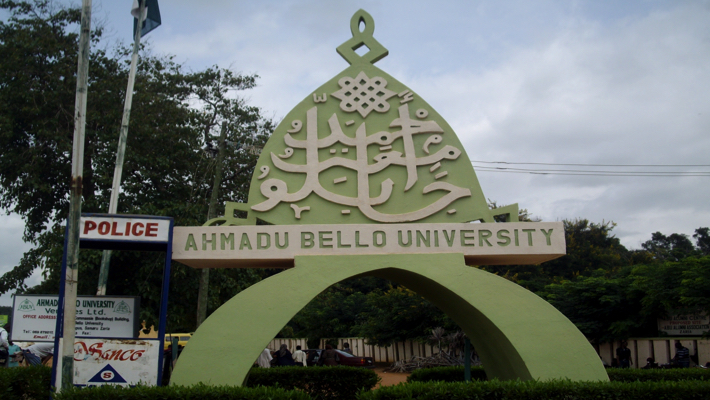
PhD scholarships: Scholars to study in Germany as ABU announces positions
By Ishaka Mohammed
Ahmadu Bello University (ABU) Zaria, Nigeria, in collaboration with the University of Rostock, Germany, has announced four fully funded PhD positions in Bioenergy, Green Hydrogen, Waste Management, and Circular Economy.
The positions are under a joint research program between the Bioresources Engineering Research Group at ABU and the Professorship for Material and Energy Valorization at the University of Rostock.
As shared by a lecturer at ABU, Zaria, Dr Muhammad Hashim Suleiman, the positions will involve advanced research in the aforementioned bio-resource fields, aiming to develop sustainable solutions for global environmental and energy challenges.
Successful applicants will be offered provisional admission to the University of Rostock, Germany, where they will spend six months. However, the main research will be conducted at ABU.
The scholarship will cover tuition fees, stipends for living costs during the research period, and costs of research and laboratory logistics.
Each successful applicant will be required to conduct independent and high-quality research but will submit regular progress reports to their supervisors.
They are also expected to publish at least two articles per year in reputable and indexed journals, in addition to performing any other tasks assigned by their supervisors, if deemed necessary, from both universities.
An applicant for each position should have a minimum of upper second class in their first degree and a good master’s degree in any field of engineering with a research focus on bioenergy, waste-to-energy, circular economy, or green hydrogen.
Each applicant must also be proficient in both spoken and written English, 35 years old or younger, and not be under any other scholarship at the time of application.
Interested and eligible applicants are required to send the under-listed documents to daie@abu.edu.ng and copy saniabbaaliyu2015@gmail.com before Wednesday, May 7, 2025.
The documents include a detailed curriculum vitae (CV) showing a publication profile, copies of academic certificates and transcripts, proof of research in bioenergy, waste-to-energy, circular economy or green hydrogen, two reference letters from academic or professional referees, a personal statement detailing motivation and research interests related to the PhD program, a concept note of within five pages on any of the aforementioned research areas, and proof of study leave (if employed).
Ahmadu Bello University, Zaria, is the fourth oldest university in Nigeria, while the University of Rostock, founded over 600 years ago, is the third oldest in Germany.

CNF warns of reprisals after Uromi killings, urges northerners to return home
By Abdullahi Mukhtar Algasgaini
The Concerned Northern Forum (CNF) has threatened reprisal attacks in Northern states, including Abuja, following the killing of 16 Northern hunters in Uromi, Edo State.
The group has also called on Northerners living in Southern Nigeria to return home for their safety.
In a statement on Wednesday, CNF Chairman Alhaji Ali Muhammad accused authorities of failing to protect Northerners outside their region and warned that further inaction could trigger violent retaliation.
“No group has a monopoly on lawlessness,” the statement read. “If the government fails to act, reprisals will be inevitable.”
The CNF condemned the recurring attacks on Northerners, citing losses worth billions of naira in destroyed properties. It demanded the arrest and prosecution of the perpetrators and compensation for victims’ families.
While acknowledging Edo State Governor Monday Okpebholo’s visit to Kano, the group dismissed it as insufficient, insisting on concrete justice to prevent further violence.
“The brutal murder of our people is unacceptable. We will no longer remain silent while our people are slaughtered,” the statement added

Sen. Barau donates ₦16m to families of lynched travelers
By Anwar Usman
The Deputy President of the Senate, Senator Barau I. Jibrin, visited the Bunkure Local Government Area of Kano State on Wednesday to offer his condolences and financial support to the families of the 16 travelers who were lynched in Uromi, Esan North East LGA of Edo State.
The DSP met with the grieving families, hailing from Bunkure, Kibiya, Rano, and Garko LGAs, at the At-Taqwa Mosque in Sabon Fegi, Bunkure LGA.
Together with the Senate Deputy President were the Minister of State for Housing and Urban Development, Yusuf Abdullahi Ata, the Managing Director of the North West Development Commission, Professor Abdullahi Shehu Ma’aji, and other dignitaries.
This was disclosed in a statement released by the Special Adviser on Media and Publicity to the Deputy President of the Senate, Ismail Mudashir, and made available to journalists.
Barau assured the families of the victims that justice would be served and reiterated that the perpetrators would face the full wrath of the law.
He further stated that, in addition to the previously apprehended 14 suspects, two more individuals had been arrested in connection with the killings.
To ease the families’ hardships, Senator Barau announced a donation of N1 million to each of the 16 bereaved families, totaling N16 million.
The statement in part reads, “I am here to express my deepest sympathies for the tragic incident that claimed the lives of 16 of our brothers last Thursday. May Allah grant them Jannatul Firdaus and provide swift recovery to those injured,” Senator Barau stated.
“The incident deeply troubled me. I immediately contacted the state governor, security agencies, and all relevant stakeholders. They acted promptly, leading to the arrest of 14 suspects initially and, subsequently, two more. The state governor, who visited me in Abuja, has assured me of the state government’s support,” he added.
Earlier, the Chief Imam of the area, Sheik Zainul Abidina Auwal, while speaking on behalf of the families, expressed gratitude to Senator Barau for his efforts in pursuing justice and lauded him as a leader vital for the nation’s progress