




Wearing the turban, bearing the burden: The enormous task before the new Galadiman Kano
By Huzaifa Dokaji
The promotion of Wamban Kano Munir Sanusi as Galadiman Kano today, May 2, 2025, marks an important moment in the history of Kano’s sarauta institution. More than a ceremonial instalment, it is the continuation of a title whose symbolic and administrative significance has long anchored the cohesion of Kano; first as a kingdom, and since the nineteenth century, as an emirate. This moment is charged with expectation, arriving at a time Kano Emirate is caught in a vortex of political contestation, juridical uncertainty, and generational transition. It will be the day a man who is both brother and foster son to a former Galadima, and son-in-law to another, assumes such an important office.
The title of Galadima, derived from the Kanuri galdi-ma, meaning “chief of the western front,” emerged during the administrative reforms of Kano’s second Hausa ruler, Sarki Warisi dan Bagauda, in the 11th century. Over time, it evolved into one of the most powerful and senior princely offices across Hausa land. Until Emir Abdullahi Maje Karofi (1855-1882) appointed his son Yusufu as Galadima, the title had traditionally been reserved for the king’s/emir’s uncle, eldest brother or closest male kin: typically someone older and therefore unlikely to succeed to the throne.
Elsewhere, I have argued that Maje Karofi’s deviation from this established custom was one of the remote causes of the Kano Civil War of 1893. In essence, the appointment of a son to such a crucial position, naturally altered the institutional role of the Galadima, who historically functioned as a check on the emir’s authority. This explains Maje Karofi’s decision to depose his brother Abdulkadir, for expressing growing concern over certain decisions and practices at court the latter deemed inappropriate.
As demonstrated by the reigns of Galadiman Kano Daudu, Atuma, and the Fulani-era Galadimas Maje Karofi and Tijjani Hashim, the office has often wielded influence that paralleled or even eclipsed that of the king/emir. Until the 19th century, titles like Dan Ruwatan Kano were accorded to the kinsman or son of the galadima, while Dan Darman Kano was reserved for his cognatic kinsman.
Traditionally, the Galadima served as vizier, head of civil administration, and head of his own mini-palace, independent of the Emir’s court. Court praise-singers aptly describe bearers of the title as Daudu rakumin Kano, the camel that bears the city’s burden; Daudu gatan birni, the protector of the city; and Rumfa sha shirgi, the palace’s dust heap where disputes are deposited and resolved. In recent times, no one embodied such praise and function as the late Galadiman Kano Tijjani Hashim.
Widely regarded as the archetype of the modern Galadima, Tijjani Hashim redefined the office in an era when the sarauta was stripped of formal political power. He transformed it into a bastion of accessible influence, strategic mediation, and public service. His residence functioned as a daily court of appeals, open to aristocrats, commoners, and royal slaves alike. He was the man to whom a poor student could turn for a scholarship, a merchant for capital, a civil servant for promotion, a politician for sponsorship, and a broken family for reconciliation.
Tijjani Hashim died in 2014 and was succeeded by the charismatic Abbas Sanusi, whose reign as Galadima was cut short by a protracted illness. Abbas Sanusi was a disciplined and astute administrator, widely respected for his command of the emirate’s bureaucratic machinery. Yet his tenure was constrained by declining health, which limited his capacity to perform some of Galadima’s traditional roles, particularly inter-familial diplomacy. It is from Abbas Sanusi that the title now transitions to his younger brother, Alhaji Munir Sanusi, marking a rare case of intergenerational and intra-familial continuity, even by the standards of Kano’s dynastic politics. Their relationship was not merely fraternal; it was paternal.
Abbas raised Munir from infancy, shaping his worldview and instilling in him the refined fadanci he has mastered and discreetly used to his advantage. Adding further symbolic weight is the fact that Munir is married to Hajiya Mariya Tijjani Hashim, daughter of the very man whose name has become synonymous with the Galadima title in recent memory. Thus, the new Galadima stands at the confluence of two great legacies—bound by blood to Abbas, and by marriage to Tijjani.
Born on January 12, 1962, Munir Sanusi Bayero was the last son of Emir Sir Muhammad Sanusi I to be born in the Kano palace. Raised by his late brother, Galadima Abbas Sanusi, he later married his second cousin, Hajiya Mariya, a union that has continued to epitomise royal love and companionship. Alhaji Munir Sanusi received his primary education at Gidan Makama Primary School and his secondary education at Government Secondary School Dambatta from 1976 to 1981. He later obtained a degree in Mechanical Engineering from the Indian Institute of Technology in New Delhi.
Galadima Munir Sanusi’s career commenced in the Kano State Ministry of Social Welfare, Youth, and Sports, where he served as a Transport Officer from 1989 to 1991. He later joined Daula Enterprises Co. Ltd, Kano, from 1991 to 1993. He currently sits on the board of several companies, including Tri-C3 and Unique Leather Finishing Co. Ltd, the second-largest exporter of leather in West Africa.
In 2014, the Emir of Kano, Khalifa Muhammad Sanusi II, appointed him as Dan Majen Kano and pioneer Chief of Staff to the Emir in the Kano Emirate. He was elevated to the position of Danburam Kano in 2016 and Wamban Kano and district head of Bichi in 2024. Today, he assumes the prestigious title of Galadiman Kano.
Galadima Munir’s loyalty to Emir Muhammadu Sanusi II has earned him considerable admiration within and beyond Kano. When the Emir was deposed in March 2020 and exiled to Loko in Nasarawa State, Munir not only followed him into banishment but remained by his side through Lagos and back to Kano. Now that the Emir has rewarded that loyalty with the emirate’s highest princely office, Munir faces a challenge no less noble than the title he inherits.
For one, loyalty is only one pillar of what I call “the burdens of the Galadima”. The office demands generosity, accessibility, discretion, and the ability to shoulder the hopes of a people whose faith in the sarauta system is repeatedly tested. Here lies Galadima’s greatest trial. Like his predecessors, he must cultivate a public image as a patron of the weak, a reconciler of royal, noble, and common feuds, and a figure of last resort to both the high and the low. He must embody rumfa sha shirgi in practice: bearing the burdens of others, not just out of obligation, but with discernment, sincerity, and grace. His word must be his bond, for zancen Galadima kamar zancen Sarki ne: the word of the Galadima is expected to be final, unwavering, and free of bitterness.
The task becomes all the more urgent against the backdrop of Kano’s current emirship crisis. While Emir Muhammadu Sanusi II’s return has been celebrated in many quarters, it remains the subject of intense legal and political contestation. In this precarious climate, the Galadima must go beyond ceremonial visibility. He must be the Emirate’s anchor, bridging palace factions and translating the noble project of restoring the sarauta back to its sense to the wider public. Galadima Munir’s early efforts at reconciling estranged branches of the royal family and diffusing internal tensions suggest a promising political instinct. But history demands more than instinct; it demands an ethic of honour and sustained human investment.
To become a Galadiman Kano today is not merely to wear a turban. It is to accept a lifetime project of prioritising the interest of the Sarauta and the talakawa over one’s. It is knowing that one’s home inevitably becomes a revolving court and one’s influence becomes public trust. Any failure to wield it generously, the memory of that failure will linger far longer than any quiet success.
Alhaji Munir Sanusi ascends the title of Galadima with the wind of history at his back and the shadows of giants before him. He is son and brother to a Galadima, and son-in-law to the most revered of them. If he can merge these legacies with his quiet resolve and proven loyalty, he may yet restore the Galadima as the most vital conduit between the emirate and its people.
The title awaits its meaning, Kano welcomes its new Galadima.
Allah ya kama, Raba musu rana da hazo
Allah ya taya riko, Daudu kwatangwalon giye.
Allah ya taimaki, tomo jiniyar gari
Huzaifa Dokaji writes from New York and can be reached via huzaifadokaji@gmail.com.
Understanding Fintiri’s style and the next Adamawa governor
By Zayyad I. Muhammad
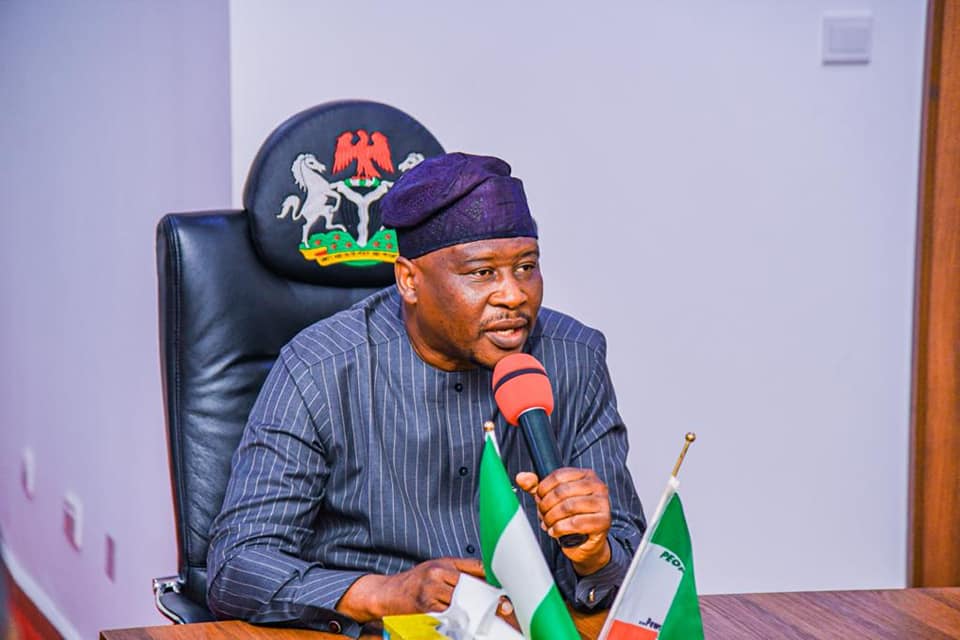
Ahmadu Umaru Fintiri’s remarkable success in politics and governance is built on three solid pillars. First and foremost, he holds an unshakable belief that power is granted solely by the Almighty Allah, who bestows leadership upon whomever He wills. This belief is not just theoretical for Fintiri, it defines his attitude toward leadership, power, and responsibility.
Secondly, Fintiri is a man of conviction. He cannot be swayed or coerced into decisions. However, he remains open-minded and receptive to superior arguments. This rare blend of firmness and intellectual humility sets him apart in a political environment where many leaders either succumb to pressure or refuse to listen to alternative views.
Thirdly, Fintiri possesses an in-depth understanding of governance and political power, how it works, when to deploy it, and where it can be most effective. His grasp of these dynamics has allowed him to wield power not for personal gain, but in service of meaningful, people-focused development.
From his early days as a member of the State House of Assembly, through his rise to Speaker, Acting Governor, and now two-term Executive Governor of Adamawa State, Fintiri has consistently demonstrated strategic acumen. What has kept him ahead of his adversaries is not just political skill, but his deep-rooted belief that power belongs to Allah alone. This faith has given him clarity, courage, and calmness in the face of political storms, enabling him to remain fearless, resolute, and capable of making difficult yet visionary decisions. These are decisions that echo not only in the present but will define his legacy for generations to come.
His independence of thought, combined with a willingness to embrace sound reasoning, has driven unprecedented transformation in Adamawa State. In a state once typified by political patronage and a “yes-sir” culture, Fintiri has introduced a new style of leadership; one that prizes merit, innovation, and long-term development over short-term political expediency.
Under his leadership, Adamawa has witnessed a massive infrastructural renaissance. Roads, flyovers, and underpasses have sprung up, redefining mobility and connectivity. The 1,000 housing for the masses. He has established three mega science schools, one in each senatorial district, positioning the state as a hub for scientific and technological advancement. He also ensured the construction of 21 model nursery, primary, and junior secondary schools across all local government areas, ensuring that every child, regardless of background, has access to quality education.
Fintiri’s health interventions are equally groundbreaking. From the provision of free kidney treatment to the establishment of one of the most advanced medical laboratories in Nigeria at the Specialist Hospital in Yola, his vision is clear: a healthy population is the foundation of a prosperous state.
His administration has also been proactive in addressing youth unemployment and gender inclusion. Through programs like PAWECA (Poverty Alleviation and Wealth Creation Agency), thousands of women and young people have been empowered with skills, funding, and job opportunities, restoring dignity and creating pathways for self-reliance.
Leadership, as Fintiri understands it, is both a divine responsibility and a human enterprise. Often, when the Almighty Allah grants leadership, He also grants a unique wisdom, the ability to see what ordinary eyes cannot. Fintiri not only possesses this foresight, but he also understands the fine balance between authority and service. He knows when to exercise power and when to listen; when to act boldly and when to build consensus.
A perfect illustration of this wisdom was his recent declaration that his successor must be a grassroots politician. This was not a vague or politically convenient statement, it was a profound and strategic vision. What Fintiri meant was clear: his successor must share his belief in putting the people first, must be committed to inclusive and comprehensive development across all socioeconomic sectors, and must be a leader with the intellect, experience, and moral compass to lead Adamawa into the future. Such a successor, in Fintiri’s view, must be refined, educated, visionary, and capable of seeing tomorrow through the prism of today.
In summary, Governor Ahmadu Umaru Fintiri exemplifies a rare style of leadership rooted in faith, defined by principles, and driven by results. You may agree or disagree with his politics, but one cannot ignore the defining qualities that make him not just a political figure, but a true grassroots leader .
Zayyad I. Muhammad writes from Abuja via zaymohd@yahoo.com.

Residents warned as explosions rock Giwa barracks in Maiduguri
By Uzair Adam
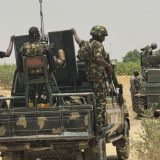
Following a series of late-night explosions at the Giwa Barracks armoury in Maiduguri, the Theatre Commander of Operation Hadin Kai, Major General Abdulsalam Abubakar, has advised residents to avoid picking up strange objects that may be remnants of the blasts.
The explosions occurred around 11:30 p.m. on Wednesday, sending shockwaves across Maiduguri and sparking panic in multiple communities as loud bangs and flames lit up the night.
Military authorities later attributed the incident to intense heat, which reportedly caused the munitions to detonate.
During a press briefing after inspecting the scene, Major General Abubakar cautioned residents—especially those living in Jiddari Polo, Fori, and nearby areas—to remain alert and report any suspicious fragments or debris to security operatives.
“Some of the items scattered by the blasts may seem harmless but could be extremely dangerous,” he warned.He was joined at the site by senior officers, including the Commanding Officer of the 73 Battalion, Lt Col N. Dalha, and the Joint Investigation Centre Commander, Colonel Ahmad.
They confirmed that the only armoury within the barracks was completely destroyed, despite combined firefighting efforts by the military and federal and state fire services.
While acknowledging the damage, Abubakar praised the swift and courageous response by troops and emergency personnel, which he said helped prevent further devastation.
He called for calm and assured the public that the situation had been contained and there was no ongoing threat.

Hunger, Insecurity, Joblessness: Tinubu admits Nigeria’s harsh realities
By Uzair Adam
As Nigerian workers joined their global counterparts in commemorating this year’s May Day, President Bola Ahmed Tinubu admitted the realities of economic hardship confronting citizens, including hunger, insecurity, unemployment, and the rising cost of living.
Represented by the Minister of Labour and Employment, Muhammad Dingyadi, at Eagle Square, Abuja, Tinubu stressed the importance of creating an inclusive and secure environment for Nigerian workers, noting that the government is committed to policies that promote job creation, poverty reduction, and economic growth.
The president said the theme of this year’s celebration is a reminder of the collective responsibility to make every worker feel valued and protected.
He highlighted the administration’s resolve to restore hope through transparent governance, equity, and civic engagement, assuring workers of their right to organise and advocate without fear.
Meanwhile, Organised Labour used the occasion to issue a 20-point demand to the Federal Government.
The Nigeria Labour Congress (NLC) and the Trade Union Congress (TUC) called for an end to genocidal killings, bloodshed, and state repression, while also demanding urgent reforms in taxation, fair wages, and job security.
In their joint address, NLC President Joe Ajaero and TUC’s Festus Osifo condemned the prevailing insecurity across the country and accused the government of failing in its primary responsibility of protecting lives and property.
They cited recent attacks in parts of Benue, Zamfara, Ondo, Kebbi, and Plateau States, describing the situation as a national emergency.
The labour leaders also criticised the current economic policies, warning that they have plunged millions into multidimensional poverty.
They noted that inflation has surged to 33.69%, with food inflation at 40.53%, rendering workers’ salaries nearly worthless.
They decried the mass exit of multinational firms and rising youth unemployment, asserting that Nigeria’s economic fundamentals are not aligned with the welfare of its people.
They urged the government to reverse policies that favour corporate interests over human dignity and called for a review of the electricity privatization exercise.
Labour also demanded the extension of the 65-year retirement age to all public servants, automatic pension adjustments to reflect inflation, and the end of exploitative practices in the civil service.
Former Vice President Atiku Abubakar also weighed in, calling on the government to treat workers as partners in development rather than mere economic tools.
In her remarks, the Head of the Civil Service of the Federation, Mrs. Didi Walson-Jack, lauded Nigerian workers for their resilience and patriotism, acknowledging their vital role in sustaining the nation’s fabric through turbulent times.
While the President and his representatives reiterated their commitment to a better future, labour leaders noted that urgent and genuine reforms, not promises, are required to salvage the country from its current trajectory.

ICPC uncovers N71.2bn fraud in student loan disbursement
By Abdullahi Mukhtar Algasgaini
The Independent Corrupt Practices and Other Related Offences Commission (ICPC) has revealed that only N28.8 billion out of the N100 billion released for the student loan scheme was disbursed to beneficiaries, with N71.2 billion allegedly diverted by university managements.
ICPC spokesman Demola Bakare disclosed this on Thursday, stating that preliminary investigations showed significant discrepancies in the fund’s distribution.
Key officials, including the Director-General of the Budget Office, the Accountant-General of the Federation, and executives of the Nigeria Education Loan Fund (NELFUND), have been summoned for questioning.
The probe followed allegations by the National Orientation Agency (NOA) that 51 institutions made illegal deductions from students’ loan funds.
ICPC confirmed that while N44.2 billion was disbursed to 299 institutions, benefiting 293,178 students, a large portion remains unaccounted for.
The commission vowed to extend investigations to beneficiary schools and students, promising further updates as the case pprogresse.

Workers’ Day Without Workers’ Wages!
By Dr. Muhammad Sulaiman Abdullahi
There are some few, effortless and simple things, which I have already assured myself that, if they are not confronted and solved squarely and completely in Nigeria, we should all continue to consider Nigeria as a joke. In other words, if the Nigerian rulers and the ruled are unable to solve these simple managerial crises, we should all forget about anything development and continue to wallow in our self deception mode. On these issues, I have assurance but I remain to be corrected. They are only four (4) simple things, among others;
1) Fixed date for the payment of salary: this doesn’t mean that, salaries should be paid on 24th, 25th… it should be paid on whichever day chose!n by the government. However, one thing must be considered, that’s FIXING a specific date for that purpose. Salary is something that must be paid, then, why this deceptive and unorganized approach? Right now that I am talking to you, many workers haven’t received their pay for April, and May is already on.
For Nigeria to even start thinking of development, workers must be truly and carefully considered. Their rights must be paid on time, because, as they say, it is not a privilege. If the government likes, let it pay it on 30th of each month, or even make every month to contain 31 days and pay it on the 31st. Let’s have a fixed date please. If not, let’s take the police for instance. A police may not know when to get his salary for risking his entire life to protect people; however, he is sure, he can be bribed by the poor through corrupt ways. How can you deny him something that he is certain about with an uncertain? This penetrates deeper into every sector.
2) Respecting time: one of the cantankerous evil that people abuse all the time. It comes to the extent that responsible people would call for a meeting and say 4pm, but deep down in their mind they know the meeting would start by 5pm. If you ask them why, they would say people would not come on time. I use to be confused on this. So in Nigeria we respect late comers more than how we respect punctual people! We give them extra time and we don’t mind those who come on time. They, their punctuality and the respect they give to time should all go to hell. Unless we change this attitude, we will never do it right.
If you want to fight with (responsible) Nigerians insist on punctuality. Many of us, including leaders fail in this respect.
When we are in Nigeria, we hardly do official things on their respective timing. But when we go elsewhere we keep to time. Therefore, it is obvious that the problem is from us and we can easily adjust if we know there is repercussions.
3) Scheduling the epileptic power supply: distribution must be scheduled and properly planned. We are not even talking about standard supply, we are talking standardizing the supply of the short one we get. The little we have must not be given at random. People are entitled to know when they should expect the little light. Let it be 10:20am-11:20am on Wednesdays? Saturdays and Sundays nights? Two hours every day? When? All these must be planned and relayed to the payers if we are not jokers! This electric power people switch on and off at their will and we pay for the rubbish.
4) The National Carrier: this is bigger than us due to corruption. We should have a National career at least for our internal development. There are so many countries around the world especially in Africa which Nigeria and Nigerians underrate and undervalue, however, they have their Sudan, Ethiopian, Mali, Malawi, airlines, but the so-called giant of looting rely on ants for its air transport survival. This is a mischief of the highest order.
5) The over dependence and over reliance on dollar. Mark what I say, overdependence! Nigeria can use dollar. This is one of the obvious weaknesses which many people have agreed to live with, especially the Nigerians. However, the overdependence is alarming! Almost every individual in Nigeria, big or small, knows about dollar. Nigeria should learn to uplift its currency and leave dollar alone. Even ordinary people now know how to hoard dollar at the expense of the economic development of the nation. The bigger you are the more detached you are from using Nigerian currency. Kobo, 1 Naira coin have all gone into extinction physically but they are still there in our calculations. Now Tinubu’s government has made 5, 10 and 20 naira notes valueless and meaningless. They look so ugly to be touched by a clean hand.
There are so many other simple things which you can help to count. In other countries they are not even remembered because they are subconsciously arranged for over hundred years. But in Nigeria, we are still battling with something which can be corrected in two months. In Nigeria we face price hikes, lack of infrastructures, no medicines, no qualitative education, no good roads and no nothing….. You can continue counting our lacks, they are so many. However, the above mentioned five things are very simple, they can be corrected with a simple verbal order, without putting much money and effort. May Nigeria be great soon!
Muhammad Kano
May day 2017
NB: This was written in 2017, with little correction now but nothing much has changed.
Workers are the nation’s driving force, not tools, Atiku tells FG
By Anwar Usman
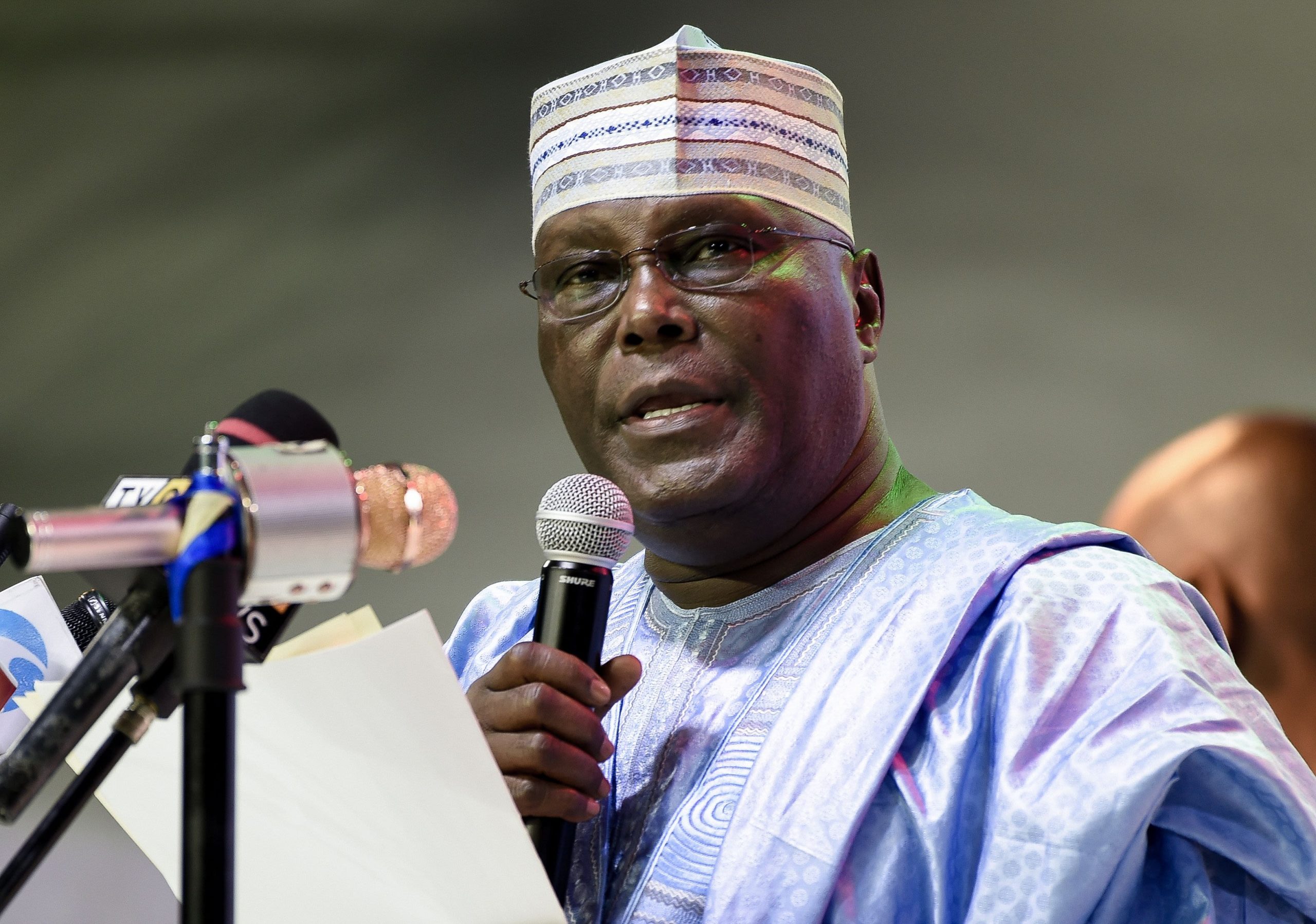
Former Vice President Atiku Abubakar has said that workers play a crucial role in helping the country to grow and achieve its aims.
This was contained in a statement to commemorate the 2025 Workers’ Day on Thursday, he called on the Federal Government to see workers not just as tools for economic growth but as important partners in building a great nation.
The vice president said “The Nigerian worker remains the indomitable engine driving our nation towards the long-anticipated promise of prosperity.
“In the face of persistent hardship and inadequate remuneration, Nigerian workers have continued to shoulder the burdens of our economic ambitions with quiet heroism.
“It is deeply disheartening that those entrusted with the responsibilities of governance and policymaking have failed to respond to this unwavering dedication with tangible support and justice,” the statement added.
Workers demand action on killings, wages at May Day rally
By Uzair Adam
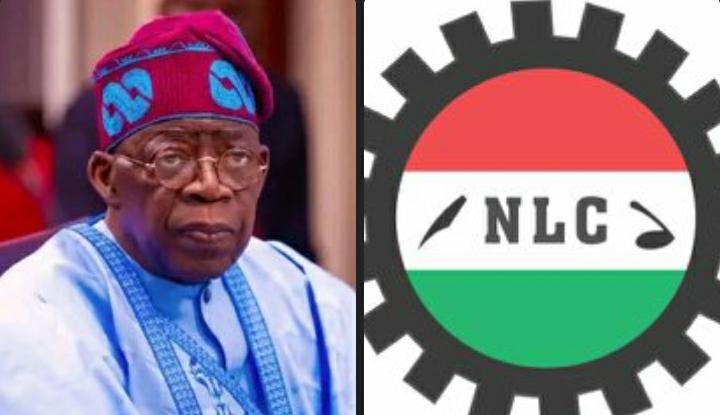
At this year’s Workers’ Day celebration in Abuja, organised labour unions issued a strong 20-point demand to the Federal Government, calling for urgent measures to address Nigeria’s deepening socio-economic crisis, including rising insecurity and wage stagnation.
In a joint address, leaders of the Nigeria Labour Congress (NLC) and the Trade Union Congress (TUC) urged the government to end the widespread killings across the country and implement economic reforms that prioritise the well-being of citizens.
They also advocated for justice, respect for democratic principles, and transparency in governance.
Themed “Reclaiming the Civic Space in the Midst of Economic Hardship,” the event saw the labour centres decry what they described as unconstitutional actions, particularly the suspension of the elected government of Rivers State through a declaration of emergency, which they argued lacked a legal basis.
Other demands included an immediate salary review aligned with the economic situation, clarity on the Pay-As-You-Earn (PAYE) taxation system, and the withdrawal of controversial tax bills before the National Assembly.
Labour also called for more inclusive policymaking, emphasising that workers must have a seat at the table when critical decisions affecting their welfare are being made.
Details to follow…

Satirical Apology: A closer look at Senator Natasha’s letter
As I scrolled through the timeline of Senator Natasha H. Akpoti, her most recent post, titled “Satirical Apology Letter,” sparked confusion and elicited public reactions from her followers and various opinion leaders across Nigeria. Many are left questioning whether it constitutes a genuine apology or if it is merely another provocation in the ongoing feud between her and the President of the Nigerian Senate, Godswill Akpabio.
The senator representing Kogi Central wrote the letter in a manner that satirically questioned her adversary’s integrity and condemned the corrupt aspects of the Nigerian political system, describing it as a matter of mere compliance rather than merit.
Previously, if you can recall, the unrest between the two began in February this year, due to a minor disagreement over a change of seat, which was rejected by the female senator. This disagreement later escalated into allegations of sexual harassment against the Senate President, which Senator Akpabio and his family denied. The discord ultimately resulted in her suspension from the Senate for six months.
As I continued reading the letter, it felt like waking up from a brief slumber regarding the case. While the public believed it was over, Natasha returned with determination and strongly re-emphasized her stance on the issue. She not only criticized her suspension by the Senate under leadership of Akpabio but also offered a sarcastic condemnation of the current system that led to her situation.
Senator Natasha’s Apology Letter rebukes to the status quo. The second paragraph critiques the current happenings in the Senate chamber. Although the sentences are framed as an apology, they are laced with biting sarcasm. Some individuals perceive the letter as an attempt to remain relevant, as she was nearly forgotten after the case was silenced. This sentiment was expressed by several citizens in the comments on her Facebook post.
In my opinion, the letter exemplifies passive-aggressive diplomacy. Senator Akpoti Uduaghan claims to apologize for her “failure to recognize that legislative success… is apparently not earned through merit, but through the ancient art of compliance.” The implication is clear: the political arena, particularly in Nigeria, is not a space where competence and the will of the people necessarily dictate success. Instead, it is a realm governed by deference to the powerful and the perpetuation of unwritten rules that demand personal loyalty over professional integrity.
Some people believe that the female senator wants to settle the case, but she is concerned about how the public will react. A direct apology could raise questions from the public, especially from those who have supported her from the beginning. They may ask whether she was sincere in her allegations or if she intended to tarnish Akpabio’s reputation. Nevertheless, what is truly remarkable about this piece is how it is presented as a ‘satirical apology letter.’ Instead of directly admitting fault, it takes a different approach.
The senator ridicules the notion that her refusal to engage in patronage or political favoritism warrants an apology. She frames her decision to decline the “requests” of influential figures in the Senate not as a betrayal, but as a badge of honor—a testament to her commitment to her mandate and her constituents, rather than a subservient compliance with behind-the-scenes negotiations.
The letter’s central message is encapsulated in its bitter, mocking phrase: “Please find it in your magnanimous heart… to forgive this stubborn woman who mistakenly believed that her seat in the Senate was earned through elections, not erections.” The wordplay here is both clever and sarcastic, implying that political power in Nigeria is often not merely a matter of democratic legitimacy, but rather the outcome of personal ambition, ego, and, at times, quite literally, the ability to manipulate others through unseen means.
As stated in the letter, the bold assertion regarding the nature of power and politics is undeniably risky. However, it is this very willingness to challenge complacent norms that renders Senator Akpoti Uduaghan’s letter so impactful. In a world where political leaders often issue insincere apologies when faced with allegations of corruption or incompetence, her letter serves as a powerful reminder of the fierce independence and self-respect that are frequently compromised in the quest for political survival.
Moreover, the satire is not directed at a single individual; rather, it serves as a broader condemnation of the system that perpetuates this toxic political culture. Akpoti Uduaghan critiques not only Akpabio’s conduct but also the institutional framework that enables the manipulation of power, allowing it to be transferred based on personal alliances rather than merit. The reference to “quid pro quo” arrangements and the necessity for private, off-the-record negotiations highlights a system in which transparency and accountability are frequently overshadowed by more secretive and, at times, questionable practices.
The final line, “Unafraid, Unbought, and Unbroken,” serves as both a declaration of defiance and a reminder that some individuals in the political arena remain unyielding against the forces that seek to undermine genuine progress. It is a call for a return to integrity and for leaders who are willing to challenge the status quo, regardless of the cost.
I believe that Senator Natasha should not surrender; however, considering how the system operates in Nigeria, it is crucial to find ways to ensure that the conflict does not negatively impact her constituents. Given that she and Senator Godswill Akpabio were good friends in the past, it would be beneficial to seek reconciliation, even though the damage has already been inflicted on Akpabio’s part.
Naziru Muhammad writes from the Department of Mass Communication at Abubakar Tatari Ali Polytechnic in Bauchi.
ajiyanwaka@gmail.com
Borno: Heatwave triggers explosion at Giwa Barracks ammunition depot
By Abdullahi Mukhtar Algasgaini
An explosion, caused by extreme heat, has rocked the Giwa Barracks ammunition storage facility yesterday, the Headquarters Joint Task Force North East Operation HADIN KAI has confirmed.
Authorities attributed the blast to soaring temperatures in Maiduguri, which ignited some munitions.
Emergency responders, including the Borno State Fire Service and security agencies, swiftly contained the situation.
Troops have been deployed to maintain security and prevent any potential unrest.
The military urged the public to disregard rumors of an attack and assured residents that the incident posed no further threat.
No casualties were reported, but investigations are ongoing to assess the full extent of the damage.