



Sule Lamido launches his autobiography, “Being True to Myself”
By Samaila Suleiman, PhD
Political memoir is an important genre of autobiography. It preserves not only the memories of its author but also serves as a first-hand account of critical policy decisions and political milestones in a nation’s historical journey.
In a country where official records are often incomplete, contested, or deliberately erased, writing autobiographies is more than just a historiographical or literary venture—it is a moral and social obligation on the part of the political class to share their personal truths, address silences, and contribute honestly to the preservation of our national history.
What lessons can the life of Sule Lamido, who is one of Nigeria’s most principled elder statesmen, offer us about our country’s turbulent and checkered national history, marked by deep-seated contradictions?
Having been active in the political scene for over four decades, the story of Sule Lamido is hand in glove with Nigeria’s political history, spanning important political transitions and dispensations.
Following years of thoughtful introspection, Sule Lamido’s long-awaited autobiography, Being True to Myself, will be formally launched on 13 May 2025 at the NAF Conference Centre in Abuja.
With a foreword by Olusegun Obasanjo, Being True to Myself promises to deliver a constellation of compelling insights and thought-provoking revelations on the inner workings of power and governance in Nigeria – a story of unflinching refusal to compromise the ideals and principles that have guided Lamido’s politics since the Second Republic.
The event will be chaired by former Head of State, General Abdulsalami Abubakar, with former President Olusegun Obasanjo as the Special Guest of Honour, and Dr Iyorchia Ayu, former Senate President, as the book reviewer—three eminent national figures whose presence underscores the national significance of both Sule Lamido and his autobiography.
Being True to Myself will surely resonate not only with students of history and politics but with every Nigerian who still believes in the politics of principles and the promise of a better Nigeria.
Kidnappers demand N20m ransom for abducted Kebbi woman
By Abdullahi Mukhtar Algasgaini
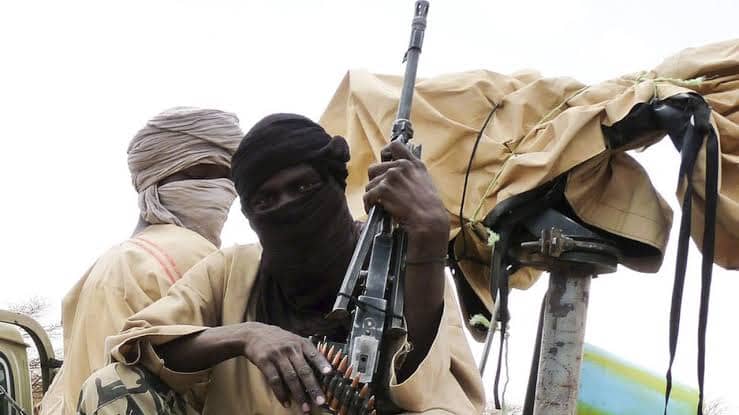
Bandits have kidnapped Nafisa Usman, a married woman, from her home in Gayi village, Kalgo Local Government Area of Kebbi State.
The attackers reportedly invaded her residence around 2:00 a.m. on Friday, broke into her room, and took her away without harming others.
Family sources said the kidnappers, believed to be herdsmen, are demanding N20 million for her release.
Alhaji Yahya Kuka, Chairman of Kalgo LGA, condemned the abduction and pledged efforts to secure her safe return.
The Kebbi State Police Public Relations Officer, Nafiu Abubakar, could not be reached for comment at press time.

Kwankwaso’s move to APC: a Trojan horse that could destroy Tinubu’s 2027 dreams
By Abdurrahman Musa
As political fireworks ignite across Nigeria ahead of the 2027 general elections, one looming move threatens to shake the very foundations of the ruling All Progressives Congress (APC): the speculated defection of Senator Rabiu Musa Kwankwaso—former Kano State Governor and NNPP national leader.
To some within the APC ranks, welcoming Kwankwaso appears to be a masterstroke, but others are warning because, his entry could ignite a political inferno that burns the APC’s fragile peace in Kano, upends Tinubu’s re-election ambitions, and hands the opposition [which he might later join] a golden ticket to power.
Here is why:
Kano could explode as a factional earthquake looms
It is a known fact that Kwankwaso is no ordinary politician. He is a master strategist who always thinks for himself and what would favour him. Therefore, for him to join the APC, people should know that he will not just come with followers—he commands a powerful political cult – the fiery Kwankwasiyya movement that stands in direct confrontation with the Ganduje-led APC structure in Kano. Welcoming him is like inviting a hurricane into a house of cards. The party risks a full-blown internal war, splintering into rival factions, parallel commands, and electoral sabotage that could spell doom in 2027. APC’s strength in the North’s largest voting bloc may shatter into chaos.
Collapsing NNPP could be the PDP’s resurrection.
They said politics is a game of chess. When you think in a rush and make a wrong move, you woefully lose the game. Here’s the twist: dissolving the NNPP doesn’t automatically benefit the APC. In fact, it might just revive the PDP from the political coma. Kwankwaso’s defection could enrage his loyal base, pushing them straight into the waiting arms of Alhaji Atiku Abubakar and the PDP.
Mr President, do you remember 2023? The fragmented opposition in the North gifted Tinubu an edge. Destroy that balance and the pendulum swings possibly against you. Therefore, a fractured NNPP doesn’t guarantee APC victory—it may instead restore Atiku’s Northern stronghold.
A clash of presidential titans between President Tinubu vs. Senator Kwankwaso
Let us be honest—Kwankwaso isn’t joining to play a backup singer. His presidential ambition is loud, clear, and relentless. He might demand a Tinubu-Kwankwaso 2027 ticket or insist on a powerful stake in the party. If denied, he could turn against the APC from within—just like in 2019, when he was accused of deliberately undermining Atiku’s campaign in Kano while funneling resources into his gubernatorial candidate. If welcomed, Kwankwaso could shake the APC from the inside. If sidelined, he could sabotage it. History could repeat itself – this time inside the APC.
Kano youths might revolt against you
History has shown that youths are the vanguard of Kano politics. They are the ones that win you election. Currently, the streets of Kano pulse with the energy of Kwankwasiyya youth. Integrating them into the APC is not a handshake—it’s a negotiation with a volatile base. Mismanage it, and the backlash could be swift: boycotts, protests, or backing a rival candidate. The APC risks alienating the very people who once delivered it millions of votes. One misstep, the youth quake could be catastrophic.
Ganduje is the pillar—don’t shake it
In my own opinion, instead of importing instability, the APC should solidify Ganduje’s party leadership and Kano political camp. It guarantees a winning formula. Furthermore, consolidate strategic allies like Senator Barau Jibrin from Kano North and Senator Kawu Sumaila from Kano South, this offers a more convincing future and gradually win over NNPP supporters. With this, APC can present a united, formidable front—without the drama.
The ball is in your court, Mr President
Mr President, the choice is yours—so are the consequences This is no time for political gambling. The illusion of short-term gains from the Kwankwaso’s defection may cost you the presidency itself. The NNPP’s demise must not become PDP’s rebirth. The APC must learn from the PDP’s collapse—a tale of chaotic mergers and unchecked egos, in which Kwankwaso played a starring role. The hunger for Kwankwaso’s two million Kano votes is strong—but deceptive. It’s a honey trap. What looks like a prize could become a poison pill that wrecks the APC from within and opens the floodgates for a PDP resurgence.
Mr President, it’s your turn: “Emilokan“. But only if you don’t blow it. Listen to Kano. Consult the real stakeholders. Do not gamble away your second chance on a political wild card with a history of wrecking alliances from within. This is not just a political move—it’s a potential crisis in the making. Mr President don’t repeat PDP’s mistake. The voice of reason is calling. Will you listen?
Abdurrahman Musa writes from Kano. He’s a political analyst and APC stakeholder.

What could we do without foreign healthcare funding?
By Saifullahi Attahir
Although not an expert in global health, the future for Nigeria’s healthcare intervention looks bleak.
Over the decades, we have become overly dependent on foreign aid in managing HIV/AIDS, Tuberculosis, Malaria, Maternal mortality, and malnutrition. Looking at it critically, it seems only a few medical conditions are not supported by foreign aid.
Of course, it’s true that these medications would cost a huge chunk of our budget if left to be funded domestically.
As someone who works and mingles in the lower ranks, I have witnessed many sorrowful occurrences;Nigerians and even healthcare professionals do not contribute to improving the situation every day.
The gross mismanagement, working solely for the sake of remuneration, and how locals can manipulate thingsto ensure that funding for the Polio and measles vaccine campaign keeps coming is abominable.
Local community health workers eagerly take what little support is available for the poor victims. I have witnessed dozens of people only interested in switching to public health positions to work with NGOs (Non-Governmental Organisations). Everyone rushes toward the available funding for nurses, doctors, anatomists, scientists, etc..
This is apart from an article I read in 2016 by the legendary Sonala Olumhense about the 2010 report by the Global Fund about crude mismanagement of the fund by several Nigerian agencies regarding the money allocated to fight HIV/AIDS, TB, and Malaria.
Ideally, foreign funding should not be eternal; the country must find a way to sustain the programs.
Public health is well-versed in public-private partnerships (PPPS) and the design of each primary healthcare program so that locals can sustain it. Since day one, this has raised the issue of affordability, which the US should have taught Nigerians how to develop drugs locally at a cheaper rate, so as not to depend on their markets and pharmaceutical companies.
President Trump has already come, and we should expect and prepare for more shocks rather than continual crying out. This should serve as a wake-up call for our policymakers and the President to find a way out.
It’s unlikely the USAID funding would be reversed. We should have prepared for the rainy days ahead.
Saifullahi Attahir, a 400l Medical student of Federal University Dutse, wrote via saifullahiattahir93@gmail.com.

Trump posts portrait of himself as Pope on social media
By Muhammad Abubakar
President Donald Trump has stirred controversy once again after publishing a digitally altered portrait of himself dressed as the Pope on his social media platform, Truth Social. The image, which depicts Trump in papal robes and regalia, quickly drew widespread attention and sparked debate online.
This unusual post follows Trump’s previous tongue-in-cheek remark in which he joked about becoming the next head of the Roman Catholic Church after Pope Francis. While many of his supporters saw the post as humorous and bold, critics accused the former president of disrespecting religious traditions.
The Vatican has not officially commented on the image or Trump’s earlier remarks.
Trump, known for his provocative and unconventional use of social media, continues to dominate headlines since his return to the White House for the second time.

Rising above the anarchy: We’re not helpless in the face of insecurity in Nigeria
By Sa’adatu Aliyu
Whenever I think of Nigeria, my mind swiftly veers towards the plot of author Adamu Kyuka Usman’s book “Hope in Anarchy.“ A book that explores the disastrous effects of poverty in Beku City where Ahoka, the main character, finds himself, and how this impoverishment, caused by the enormous economic disparity between the rich and poor, injustice, and political disillusionment, slowly tore into the fabric of society, creating a Republic of criminality and lawlessness, consequently proving that injustice and poverty largely birth insecurity.
Security in a country can’t be underestimated. It is a thread stitching other things together. It is what lets a nation thrive; without it, the potential of a people is diminished, as fear is one of the greatest potential killers. Unfortunately, this menace bedevils our country today, disorganising everything and everyone, causing citizens to lose their lives and means of livelihood. While the state appears to be attempting to tackle this, little success has been recorded, leaving most in utter despair and repeatedly asking: When will this nightmare end?
Similarly, I am writing this piece with the question: When will this mayhem cease? But while also seeking accountability from the government, in addition to challenging them to bring an end to this menace, though I do not want to point accusing fingers at some malicious politician as being in the know of the root cause of this instability or as having direct involvement with the current status quo for one selfish reason or another—primarily to enrich themselves or capitalising on the insecurity to gain political leverage during elections. I firmly believe that we’re not as helpless as we portray.
To quote a PhD student of Political Science, Hamza Aliyu, who is also a political analyst, “Sometimes if there’s a prolonged state of insecurity in a nation, the government is aware of its actors.” Backing former military president Gen. Sani Abacha’s quote, “Any insurgency that lasts more than 24 hours, a government official has a hand in it.” While these claims may be exaggerated, and I do not want to make myself believe such statements, I strongly insist that we cannot continue like this. As such, with the right attitude, there’s a way forward.
And this is why I am calling on President Bola Ahmed Tinubu to put necessary mechanisms in place to fight these insecurities presenting themselves in multiple shades: from ethnic and religious tensions to kidnapping. Doing so will certainly elevate his reputation in the sight of the people; otherwise, the current groaning continues. Moreover, it is wise to do so as a leader who intends to recontest in 2027. If Nigerians were to vote for him, on what basis would that be? The bloodbath, harsh economic policies, or delivering to the people based on the 2023 campaign promises? I think it’s time to look beyond the politics of money (vote buying) because Nigerians are tired of having an endless trail of failed leadership.
Additionally, the Northern part of the country remains the hardest hit, and it is disheartening to see the lack of ingenuity of Northern politicians who care more about sustaining their lavish lifestyles along with those of their families. At the same time, their region is aflame, doing very little to develop the region. I’m using this medium to call on the Arewa Elders’ Forum and Northern politicians and businessmen to put self-interest aside and work tirelessly and collectively towards ensuring regional security.
And among other things, one of the ways forward is reforming the Almajiranci system of education; Almajiris, being citizens who have become easy targets for electoral violence and other acts of criminality, must be integrated into society and equipped with the necessary basic education and skills to become useful citizens of the country.
Insecurity affects everyone, rich or poor. For this reason, they should invest primarily in securing the region and attract foreign investors, in addition to creating a conducive environment for economic development for hardworking entrepreneurial Nigerians, even if this means devising strategies typically unheard of.
Difficult situations call for drastic measures. Whether Nigeria has failed as a state and people to secure the nation is not up for debate at this point, but prioritising the security of our people and the way forward is the goal.
If this means seeking foreign intervention from well-equipped and well-trained military mercenaries like the Russian Wagner group to train our security personnel and enhance our security apparatus, I think we should take the plunge. Critics, however, might argue that this move is myopic, as doing so is akin to inviting foreign intervention into the country, which has suffered at the hands of colonialism.
Moreover, arguments like indulging private mercenaries come at a price, mainly that of exploiting natural resources in exchange for security services. As such, the mercenaries might work against, instead of for, the betterment of the country by worsening the insecurity and prolonging it to continue gaining access to solid or liquid minerals, as seen in CAR, Sudan, Libya, and Mali, where the Russian Wagner group has had some presence. An argument that holds water to an extent, but is essentially not solid in the face of the realities staring Nigeria in the face.
Besides, political meddling by foreign powers, especially the United States and its other Western allies, has been constant in Africa. While ideally, this is a time for the continent to be ridding itself of foreign aid in its multifaceted nature, we have failed to give hope and instil confidence in our people.
As a young military leader, Ibrahim Traore seems to be the only leader currently making waves and admirable political reforms on the continent. However, he might not be the best example to cite for some because his leadership is undemocratic. But who cares about democracy? While the governance system is suited for the West, we Africans must find a system that works to drive significant change and development, fostering capacity building in Africa. It could be a modified form of democracy suited for our place, people, and time – there should be several routes to the market.
Having said that, I am calling on northern politicians to wake up. We do not need more bloodbaths before the fog is parted from our eyes to see the glaring realities of the North. Particularly, the way our elites display wealth, wining and dining in luxury, while their masses are subjected to inhumane conditions at the hands of criminal gangs and biting poverty. The wedding ceremonies of the sons and daughters of elites, intimidatingly littered across social media platforms, with wads of crisp hard currencies on display, sleek exotic cars, and palatial wedding halls, prove our misplaced priorities. We can do better. All that money could go a long way in developing the region, investing it into something that profits the population.
So, I’m calling on the youth of the North as well. The younger generation must try to outdo their fathers, ensuring they work for the good of the nation and not to satisfy their greed. We do not want a country like the Beku City Republic, as rightly portrayed by Adamu Kyuka Usman in “Hope in Anarchy,” where: “The Republican police were sent to arrest armed robbers but did not return. It was later learned they had joined the armed robbers. Eventually, the police and the armed robbers were brought to the judges for trial, but the judges joined them. This is the order of things in our Republic today.” A country “where everyone will prosper by the strength of their arms or perish by the lack of such strength.”
However, while there’s huge dysfunctionality in the nation, I want to convince myself that Nigeria may not be a failed state, despite the anarchy; I’m trying to hold on to hope. But it is undoubtedly unapologetically swaying its shameless hips towards that direction. But we, the masses, cannot afford that. I believe even the rich do not want to wake up to the realities of a nation where deep resentment, as a result of poverty, drives an unquenchable thirst for the blood of the rich.
If President Nayib Bukele of El Salvador can round up notorious criminal gangs, we can restore Nigeria’s peace and security. Therefore, in this spirit, I am calling on Northern youth, Nigerian youth – rich and poor – the nation’s development is in your hands. Rise.
Sa’adatu Aliyu is a tutor at DLC Ahmadu Bello University, pursuing a Master’s in Literature. She writes from Zaria, and can be reached via this email: saadatualiyu36@gmail.com

President Tinubu vows to crush terrorism, boosts military welfare
By Abdullahi Mukhtar Algasgaini
President Bola Ahmed Tinubu has issued a strong charge to the Nigerian military, urging them to intensify efforts in ending terrorism and banditry while promising improved welfare for troops.
Speaking to soldiers of the 17 Brigade in Katsina on Friday, Tinubu described the security crisis as a pivotal moment in Nigeria’s history. He called for unwavering resolve in defending the nation’s sovereignty and restoring peace.
“This is a defining moment,” Tinubu declared. “Nigerians are counting on you to reclaim every inch of our territory. Let the enemies of Nigeria know—their time is up.”
The President assured troops of better housing, healthcare, timely allowances, and family support. He praised their bravery in combating banditry in Katsina and beyond, stating, “You are the shields of Nigeria, standing between our people and terror.”
Tinubu’s visit included inaugurating a 24km dual-carriage road and an agricultural mechanisation centre. His message was clear: Nigeria will not surrender to terrorists, and the military will receive full backing to end insecurity.
“To those who seek to destabilise us,” he warned, “Nigeria will not bow.”

Censoring the uncensored: The irony behind Hisbah’s ban on Hamisu Breaker’s song
By Ummi Muhammad Hassan
Following the ban by Hisbah on a new song titled “Amana Ta” by Hamisu Breaker, social media went into an uproar, capturing the attention of the public.
In the early hours of April 24, 2025, social media was filled with reactions following a press statement issued by the Deputy Commander of the Hisbah Board, Kano State chapter, Dr. Khadija Sagir, announcing the ban of Breaker’s new song. The reason cited was that the song allegedly contains obscene language.
This announcement, however, triggered a counterreaction from the public. Many became curious to know more about the song and the so-called obscene content, with some taking to their social media handles to express their opinions.
The irony of the situation is that Hisbah unintentionally gave the song more prominence, causing it to go viral. Many people who were previously unaware of the song searched for and listened to it, just to understand the controversy.
In my opinion, after listening to the song, it contains no obscene language. Rather, the issue seems to lie with some young women who mimed the song in a suggestive manner after hearing that Hisbah had labelled it as indecent—as though to dramatize or reinforce the claim. Some even appeared as if they were intoxicated.
To me, this is both devastating and concerning, as it reflects the erosion of the strong moral standards once upheld by Hausa women. Many young people are now making videos lip-synching the song in indecent ways. It made me pause and ask myself: where has our shyness gone? I believe this question deserves a deeper conversation on another day.
In Breaker’s case, thanks to the Hisbah ban, he became the most trending Kannywood artist in April, and his song went viral—and continues to trend.
A similar incident occurred earlier this year when the federal government banned Idris Abdulkareem’s song “Tell Your Papa.” That action unexpectedly brought the artist back into the spotlight, causing the song to trend widely.
Social media has made censorship increasingly difficult. Once a movie, text, or song reaches the internet, it becomes almost impossible to control—even by the creators themselves.
While social media censorship remains a challenge, this recent incident highlights the need for the government to intensify efforts against the spread of indecent content—through Hisbah and agencies like the Kano State Film Censorship Board.
Clear guidelines should be put in place, requiring artists and filmmakers to submit their content for review and approval before public release. This, among other strategies, could help reduce the spread of inappropriate material.
Additionally, Hisbah should be more mindful of how such announcements are made, as they may inadvertently promote the very content they seek to suppress.
Ummi Muhammad Hassan, Ph.D., is a lecturer in the Department of Mass Communication at Bayero University, Kano. She can be reached via email at: ummeemuhammadhassan@gmail.com.

President Tinubu praises Katsina governor as ‘honest, trustworthy and dedicated leader’
By Abdullahi Mukhtar Algasgaini
President Bola Ahmed Tinubu has commended Katsina State Governor, Dikko Umaru Radda, for his exemplary leadership, describing him as a “truthful, trustworthy, and dedicated governor.”
The president gave the praise during the inauguration of the Katsina State Modern Agricultural Equipment Service Centre and the Eastern Bypass Road around Katsina metropolis.
President Tinubu applauded Governor Radda’s administration for achieving significant progress within just two years, particularly in agriculture, infrastructure development, and community empowerment.
In his speech, Governor Radda highlighted that since taking office two years ago, his administration has prioritized agriculture, infrastructure, security, and job creation.
He reiterated the importance of the new agricultural equipment center in supporting local farmers and outlined his government’s plans, including distributing modern fertilizers and providing solar-powered irrigation machines.
The governor also detailed key infrastructure projects undertaken by his administration, including urban renewal and water supply initiatives.
Additionally, he expressed gratitude to President Tinubu for the federal government’s support in tackling security challenges in the state.
Governor Radda also thanked other stakeholders, including traditional leaders, for their contributions to the state’s development.
The event was attended by prominent figures, including the governors of Kaduna and Borno, former Katsina governors Ibrahim Shema and Aminu Bello Masari, federal and state lawmakers, government officials, and APC party leaders.

Customs boss Adeniyi commissions renovated school, health centre in Sagbokoji
By Sabiu Abdullahi
The Comptroller General of Customs (CGC), Adewale Adeniyi, on Wednesday, April 30, 2025, officially opened a newly refurbished Local Authority Primary School and Primary Healthcare Centre in the Sagbokoji community of Amuwo-Odofin Local Government Area, Lagos State.
The projects were executed under the Nigeria Customs Service’s Corporate Social Responsibility programme, tagged ‘Customs Cares.’During the ceremony, CGC Adeniyi reaffirmed the Service’s dedication to uplifting its host communities.
He explained that the intervention aims to address both infrastructural and educational challenges.
“We are undertaking projects that will have direct impact on our schools and our students. We have brought school bags, exercise books, textbooks, and sandals for all the pupils of this school. We are also improving Infrastructure, where we see the deficit, and what we have chosen to do is to renovate the entire school. And I’m happy that through Apapa and the Stakeholders, we have been able to deliver on this project,” he said.
He also stated the Service’s focus on health as an essential part of sustainable community development.
“We know that the needs of this community is more than what we have done, but we have taken the first step towards entering into an enduring partnership with this community,” he added.
Comptroller Babatunde Olomu, the Customs Area Controller (CAC) of Apapa Command, explained that the project reflects the agency’s broader mission of improving lives in its areas of operation, not just enforcing trade laws and revenue collection.
“The benevolence from Customs shows that we have compassion for the communities where we cohabit, and this was what informed this very project. In the last four weeks, it’s been both day and night, workers have been here, with the active support of our distinguished stakeholders, to ensure that this project actually see the light of day”, Olomu stated.
In his remarks, the Chairman of Amuwo-Odofin Local Government Area, Engr. Valentine Buraimoh, expressed gratitude to the Customs Service, describing the initiative as a landmark event.