
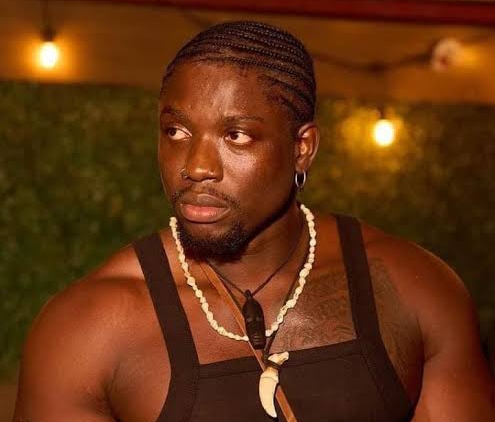
VDM Apologises to Nigerian Security Agencies Over ‘Unfair’ Remarks
Social media activist Martins Vincent Otse, popularly known as VeryDarkMan (VDM), has apologised to Nigeria’s security and enforcement agencies over comments he made at the 66th Annual General Conference of the Nigerian Bar Association (NBA) in Port Harcourt, Rivers State.
The activist tendered the apology in a video posted on his Facebook page on Friday after reflecting on his remarks during a panel session at the conference.
During the session, VDM referred to personnel of the Nigerian military, police, Nigeria Immigration Service and Nigeria Customs Service as “unknown gunmen.”
He also alleged that some police officers stationed at checkpoints provide information about travellers to kidnappers and terrorists. The police subsequently invited him to present evidence to support the allegation.
In his latest video, however, VDM admitted that his remarks were unfair to many security personnel, particularly those who risk their lives to protect Nigerians.
“I don’t think I was fair to a lot of people, particularly the speech where I said that the military are the unknown gunmen, the police are the unknown gunmen, you know, the immigration, the customs.
“I know exactly what I was trying to say because, I mean, I have evidence to back up my claim, but I wasn’t fair to a lot of people in that speech,” he said.
He said his comments were especially unfair to soldiers deployed to areas affected by Boko Haram insurgency.
“That speech was not fair, especially to the soldiers that are in the bushes fighting Boko Haram to protect our lands, to protect our lives, and to protect our families.
“I don’t think it’s fair to say they are also the unknown gunmen, to be very honest, because these people have laid down their lives,” he said.
According to the activist, his intention was to draw attention to alleged corruption, information leaks and sabotage by some individuals within the security agencies, rather than accuse every officer of wrongdoing.
“My speech was not to discourage you. My speech was entirely to talk about the bad eggs in our security operative, our security forces, is to put attention on the bad eggs, so that the leaders in these security settings will look inward and to see that sometimes information are being leaked and their own people are sabotaging them,” he said.
VDM acknowledged that although he stood by the concerns raised in his speech, the manner in which he presented them amounted to an unfair generalisation.
“But by passing that speech, like I said, it seems like I was generalising and it’s not fair to the fallen soldiers,” he said.
He added: “(There’s) a lot of corrupt generals, a lot of high-ranking police officers are corrupt, a lot of junior officers are corrupt, a lot of them are there.
“But there’s still a lot of more good people, a lot of more good people, and I know a lot of them.”
Apology To Defence Chief
VDM also directed a specific apology to the Chief of Defence Staff and the leadership of the country’s security agencies.
“So I will go further to say to the Chief of Defence Staff. Sir, I really want to apologise for that speech, and I don’t want to discourage your boys.
“Please extend my apologies to your boys, to the ones that are in the bush protecting our lands,” he said.
The activist said he was concerned that soldiers and other security personnel who were genuinely committed to protecting the country could feel discouraged after watching his comments from the NBA conference.
He also disclosed that he has maintained contact with the police and sometimes passes information to officers.
“Me and the police, we work steadily. I give, sometimes I share police information, tell them, ‘Oh, this is what is happening here, please, can you intercept,” he said.
He appealed to security personnel who are committed to protecting Nigerians not to be discouraged by his comments.
“We’re there behind you now, and we’ll always support you. You know, and we are part of this thing, security is for all of us,” he said.
Warning To ‘Bad Eggs’
Despite his apology, VDM maintained his criticism of security personnel whom he accused of undermining their colleagues through sabotage, arms supply and the leakage of information to terrorists.
“But then again, to the bad eggs, your days are numbered. To all of you in the military that are sabotaging and causing deaths to your officers, your days are numbered,” he stated.
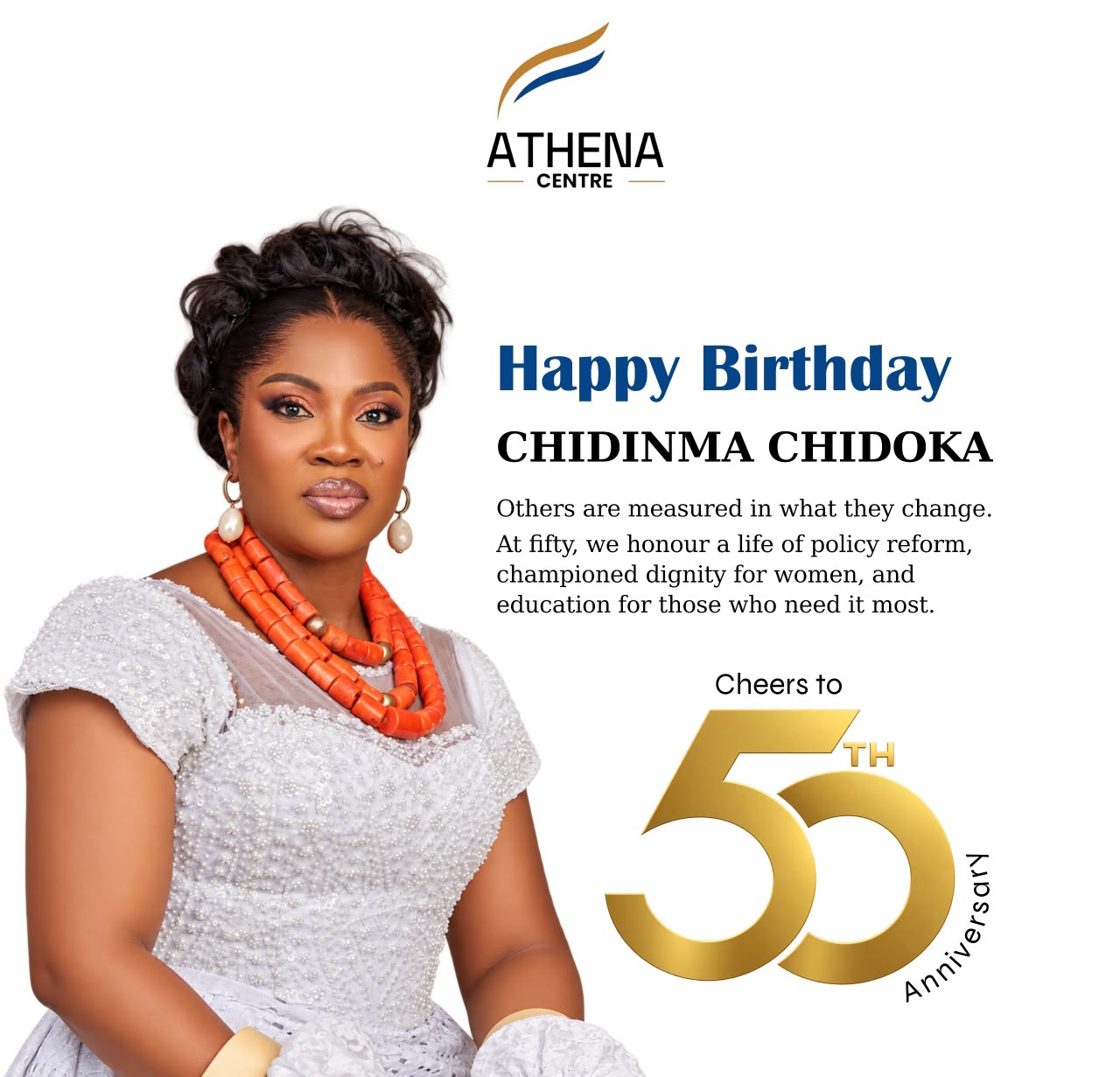
Leading From the Heart: A Tribute to Chidinma Chidoka @50
By Paul Liam
The true character of a person, they say, manifests in how they treat others, especially those at the margins of society or occupying the lower rungs of the socioeconomic ladder. Such treatment, when genuine, is not a performative exhibition of humility or kindness, but an empathetic demonstration of measuredness and good-naturedness that emanates from a place of deep consciousness, even in the most daunting and provocative times.
Not many people in privileged circumstances remember their humanity, yet there are exceptional individuals whose lives embody this rare virtue of genuine empathy. Chidinma Chidoka, Executive Director of the Athena Centre for Policy and Leadership and wife of Osita Chidoka, Chancellor of the Athena Centre and former Minister of Aviation and Aerospace Development, epitomises the humanity and dignity in leadership that Nigeria is in dire need of today.
Madam Chidoka is proof that you don’t need to know someone for a lifetime before they make an impact on your life. In person, I have only met her once, yet she is perpetually present in my consciousness even when she is not physically present. It didn’t take months or years for me to connect with her humanity; it happened in a single experience.
In the heat of planning a high-level convening, when it looked like everything was falling apart, she came in calmly and warmly and shepherded the team to excellence. She didn’t shout or call anyone out. She simply took charge and led from the heart, and everyone else followed. It turned out to be one of the most successful events, as the programme lead later confided.
Sometimes, all a team needs is a leader who listens with empathy.
I remember that encounter on the eve of the event, at the NOI Polls office in Mabushi. She sat down with grace when Sarah and I walked into the hall. She was holding a pen and notepad, taking stock of what had been done and what was left to be done. In the heat of the conversation, she gently said, “Everyone, calm down. Take a deep breath and relax,” when she sensed tension in the air.
What is telling about Madam Chidoka is not simply that she is humble and kind; it is her ability to serve as an icebreaker even in the most difficult situations, with a calmness that frightens fear itself. Even when she is visibly upset over certain lapses, she handles it with grace, never allowing her anger to dehumanise her staff or subordinates.
This is not to say that Madam Chidoka romanticises failure. It is to say that a genuine leader can discipline and show frustration while still preserving the dignity of everyone involved, not a common practice in the Nigerian workforce, where ordinary unit heads become lords unto themselves, bullying and abusing their subordinates, and where managers sometimes take joy in dehumanising colleagues to prove a needless point about authority.
Madam Chidoka’s life is a lesson in leadership. Even though she is usually away, many wish she were more involved and present, because with her, correction does not mean devaluing the person — it means helping them see the consequences of their actions in a way that makes them reflect on their errors. That is the power of leadership: being fully present even when absent.
If Nigerian leaders took a cue from Madam Chidoka and applied the same tact, wisdom and empathy in the administration of Nigeria, Nigerians would experience what it truly means to have a leader who listens, cares, and corrects with love. Showing empathy does not mean weakness; it means understanding that humans are capable of errors that can be corrected with dignity and respect.
This is why I admire Madam Chidoka. Her decency and grace overflow and are unmistakable. Everyone wants to be listened to; everyone wants to be counted and seen. Madam Chidoka creates an atmosphere where this happens with respect and dignity.
As Madam Chidoka turns 50 this year, I cannot help but reflect on her impact on me, despite having known her for less than a year. Her humanity gives me hope that Nigeria can still be a better place someday. If people like her held power, society would be a better place.
What is a leader without empathy?
So, Madam Chidoka, I am truly honoured to have met you and to watch you lead from the heart, with grace, without noise or airs. Thank you for listening, and for being the difference in the room.
I wish you many more beautiful years, filled with God’s abundant blessings.
Happy 50th birthday, Madam Chidinma Chidoka.
Paul Liam is the Media and Communications Officer of the Athena Centre for Policy and Leadership.
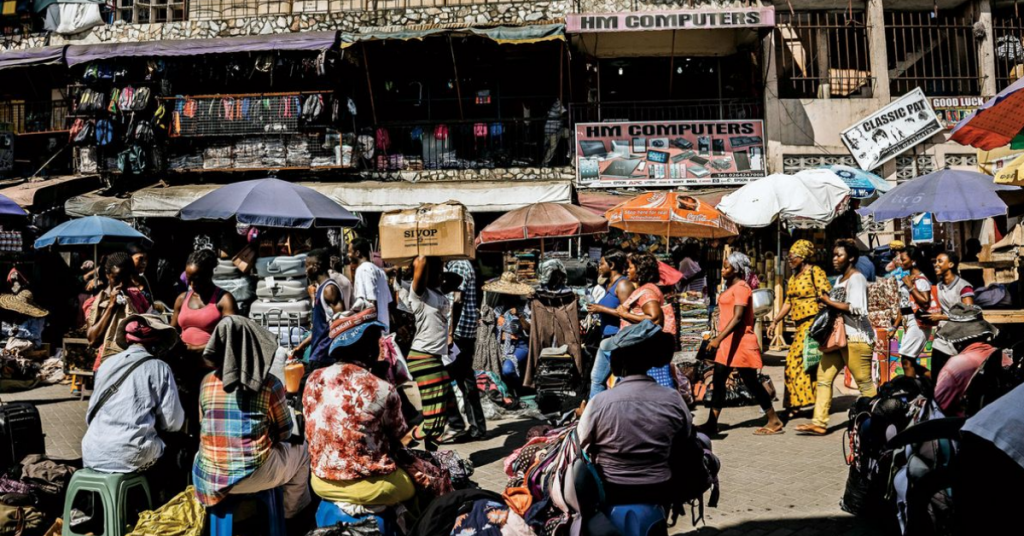
Nigerians Raise Alarm Over Counterfeit Goods as Calls Grow for Stronger Regulation
By Sabiu Abdullahi
Concern over the circulation of fake and substandard products has intensified across Nigeria, with consumers, medical experts, lawyers and public affairs commentators demanding tougher action from regulatory authorities.
The National Agency for Food and Drug Administration and Control (NAFDAC) and the Standards Organisation of Nigeria (SON) have faced renewed scrutiny after Nigerians used social media platforms to share reports of suspected counterfeit food, medicines, cosmetics and other household products.
Although some of the claims circulating online have not been independently verified, the reports have heightened fears about the safety of products available in Nigerian markets and raised questions about the effectiveness of existing regulatory measures.
Social media users on X, TikTok and Instagram have recently posted videos comparing suspected fake products with original ones. The posts have covered toothpaste, yoghurt, palm oil, drinks, medicines and other commonly used items.
Doctors, content creators and other members of the public have also shared tips on how consumers can identify suspected counterfeit goods.
One widely circulated case involved Oral-B toothpaste. A Nigerian doctor, Somto Okonkwo, posted a comparison of genuine and suspected counterfeit tubes, pointing to differences in packaging, seals, texture, transparency and taste.
Okonkwo said he visited between five and seven shops where counterfeit versions were available, with some sellers unaware that the products were fake.
He also explained that genuine toothpaste commonly uses safe glycerine, while some counterfeit products could contain diethylene glycol, a toxic chemical.
The video received further attention after it was shared by UK-based Nigerian physician, Dr Olufunmilayo Ogunsanya.
Similar concerns emerged over Hollandia yoghurt after videos circulated online that purportedly showed the product being packaged in unhygienic conditions.
Other social media users also compared genuine and suspected fake yoghurt by examining differences in thickness, creaminess and barcodes.
On September 4, Ogunsanya shared photographs of two paracetamol tablets allegedly produced by the same company but showing noticeable differences in colour.
He warned that consumers might only identify the difference when the tablets were placed side by side, stating that “one is fake, or both are fake”.
He also criticised NAFDAC, alleging that the agency “has killed thousands of people by failing to do their job.”
Other complaints circulating online have included allegations of dyed palm oil, painted apples, fake soy sauce and olive oil, substandard chicken and fish, fake water and soft drinks, counterfeit alcoholic beverages and suspected fake toothpaste.
An X user, Oluwole Olofintuyi, @OluOlofin1, described the reported scale of counterfeit products as disturbing.
“Wherever you go: fake milk, fake yoghurt, fake bread, fake palm oil, fake/plastic rice, fake medicines, fake toothpaste, fake baby formulas, fake beverages, fake toothbrushes, fake bottled and sachet water, fake vehicle parts, fake tyres,” he wrote.
Olofintuyi alleged that some regulatory officials, distributors and importers could be involved in the circulation of counterfeit goods. He also accused NAFDAC and SON of failing Nigerians.
Another X user, Chinedu Samuel, @Chimextech, questioned the effectiveness of NAFDAC.
“Where is NAFDAC in all of this? What they are concerned about is sachet alcohol, no focus. That’s the result of nepotistic appointments,” he wrote.
Uche Samuel said reports about counterfeit toothpaste had increased his concerns about the safety of ordinary consumer products.
Mac Araga also alleged that regulatory agencies were placing greater emphasis on revenue generation than their primary responsibilities.
Another contributor, Abou Opeyemi, called for cooperation among relevant government agencies.
“We blame only NAFDAC, what is SON doing? What about CPC? Let them collaborate, even with NDLEA and the police. They should declare a state of emergency on fake drugs,” Abou Opeyemi wrote.
NAFDAC’S RECENT SEIZURES
NAFDAC has carried out several operations against counterfeit and unregistered products.
In February 2026, the agency said it confiscated more than 10 million doses of fake malaria medicines and other pharmaceutical products at the Lagos Trade Fair Market.
The agency also discovered warehouses inside an uncompleted building in Apapa, Lagos, where banned, counterfeit and unregistered medicines valued at more than N3bn were stored.
Among the items reportedly discovered were prohibited injectable anti-malaria drugs, antibiotics, sachet medicines and blister-packed drugs, alongside perfumes, body oils and cooking oils.
NAFDAC had also stated in 2025 that about 30 per cent of medicines sold in open markets were fake or substandard.
In March 2025, the agency seized and destroyed confiscated medicines estimated at N1tn during operations in major drug markets, including Onitsha, Ogbo-Ogwu and Aba, Ekumi/Tenant Road.
‘COUNTERFEIT PRODUCTS CAN DAMAGE ORGANS’
The Director of Medical Services at the Medical Centre of the Federal College of Education, Akoka, Lagos, Dr Rotimi Adesanya, warned that fake medicines, food and drinks could contain harmful substances capable of damaging vital organs.
He said, “Some of the health hazards, such as liver failure, kidney failure, heart problems and even infertility and low sperm count, that are endemic in our society now are as a result of the usage of counterfeit products because of the chemicals in them.”
Adesanya attributed part of the problem to economic hardship, saying poverty could push consumers towards cheaper products.
He also explained the difference between an expiry date and a “best before” date.
“Most of them put ‘best before’ on the products, which is different from an expiry date. The expiry date means that once it is expired, it cannot fully perform the purpose for which it was produced. Whereas, best before means you get the best part of that product before the particular day.
“The reason for this is that some products disintegrate if they are left for some time. Some of them may lose moisture or the chemicals in them, depending on how they are stored.
“While expired drugs may not actually kill a person, they will not do the work they were intended to do because the potency of the drug will have reduced with time.”
He urged NAFDAC to increase surveillance and conduct regular checks on products displayed for sale.
“As a result of counterfeiting that is happening in the public, including local products like palm oil, the chemicals used for them are destroying organs. Some of them cause renal failure, which is shutting down the kidneys. They can shut down the liver, and that’s why NAFDAC has to be on top of its game.
“NAFDAC should do routine checks and analyses of these products, which they normally do in their industry. They must go on surveillance from time to time. They must check all the products on the shelves randomly. They must continue to see if they have expired or are still effective.
“Also, counterfeiting usually happens with expensive products because they are not affordable to people. The public should look for products from different brands,” Adesanya said.
A former Chairman of the Nigerian Medical Association, Lagos State, Dr Saheed Babajide, blamed weak enforcement for the continued circulation of fake medicines.
He said, “It is unfortunate that governments have allowed this issue to go on for a very long time. You will recall that NAFDAC recently went to Idumota in Lagos and Aba in Abia State to close some shops. Despite that, it still continues because there is no regulatory body whatsoever and the law enforcement agencies are not doing what they are supposed to do.”
Babajide said counterfeit medicines could result in renal damage, kidney and heart complications and mental health problems.
He added that ineffective medicines could worsen pressure on Nigeria’s already strained healthcare system because patients might not respond to treatment.
“The use of ineffective or partially effective antimalarial drugs, for instance, can prolong illness and increase the likelihood of hospital admission. This ultimately places an additional financial burden on patients, who may end up spending more on treatment than they would have if they had initially obtained effective medicines. The problem is largely driven by greed and the quest for financial gain by unscrupulous individuals,” Babajide added.
He urged lawmakers to introduce tougher measures against those involved in the distribution of counterfeit medicines.
“What the government should do is to ensure the relevant government agencies and regulatory bodies like NAFDAC and SON carry out their duties. There should be no bail and fine because anybody can be a victim of these counterfeit drugs. This should be treated as a matter of urgency,” he added.
CALLS FOR REFORM OF REGULATORY AGENCIES
A Lagos-based commentator, Segun Odunewu, called for a major reform of NAFDAC, alleging that the agency was no longer doing enough to protect consumers.
“We have not had it this bad until inefficiency crept into NAFDAC. The agency needs a complete overhaul for effectiveness. If not, we will all die of cancer and kidney disease.
“NAFDAC is not the NAFDAC of Dora Akunyili’s era. Her efforts are being wasted,” Odunewu said.
He also demanded greater accountability from the agency’s leadership.
“The NAFDAC Director-General should resign. NAFDAC is now becoming a money-generating agency while neglecting its primary responsibility,” Odunewu alleged.
However, public affairs analyst Adebayo Abubakar argued that abolishing NAFDAC or SON would not address the problem.
“We have NAFDAC to protect us from fake and dangerous food, drugs and other regulated products, and SON to enforce standards and protect consumers from substandard and counterfeit goods.
“These are not ornamental agencies; the law gives them precisely the powers required to police the marketplace,” Abubakar said.
He said counterfeit products remained widespread across Nigerian markets.
“Walk through Nigerian markets and the uncomfortable truth stares you in the face: counterfeit medicines, adulterated foods, fake electrical products, substandard building materials and imitation consumer goods are everywhere.
“NAFDAC itself has identified counterfeit and falsified products as a continuing problem, while the National Assembly has had to call on NAFDAC and SON to intensify surveillance and enforcement,” Abubakar said.
Another public affairs analyst, Musa Aliyu, advocated a review of the National Policy on the Contamination of Drugs and Unwholesome Practices of Pharmaceuticals.
He said the issue was not limited to medicines and required cooperation among government institutions and communities.
“The National Policy on the Contamination of Drugs and Unwholesome Practices of Pharmaceuticals is quite overdue for review because the issue extends beyond that.
“What we need is partnership in ensuring that communities are aware of the effects of contamination of drugs and unwholesome practices, and that people take the issue of drugs seriously because it is a very big challenge in Nigeria,” Aliyu said.
Aliyu also called for greater decentralisation of NAFDAC’s operations to improve monitoring at the community level.
LAWYERS SEEK TOUGHER PENALTIES
A Lagos-based dispute resolution lawyer, Muhammed Adam, urged the Federal Government to declare a state of emergency on counterfeit and substandard products.
He described the situation as an organised threat to the economy and public health.
“A group of greedy, organised criminals cannot keep poisoning this country while they smile to the bank. What is happening in our markets is not petty trading. It is organised economic and public-health sabotage.
“It should be treated with the seriousness we reserve for terrorism because the outcome is the same: Nigerians are being killed slowly, quietly and profitably,” Adam said.
He said counterfeiters were targeting products that Nigerians depend on for their health and daily needs.
“That means the things we put on our skin, put in our children’s mouths and swallow when we are sick are among the products being most heavily faked,” he said.
Adam referred to seizures by the Nigeria Customs Service involving expired medicines and products with allegedly fake NAFDAC labels. He also cited a reported N53.4bn seizure in the Apapa area and an interception of fake anti-malaria medicines worth N1.2bn.
“People die from malaria that the ‘treatment’ never treated, from antibiotics that never fought infection, from cosmetics loaded with mercury and steroids, and from electrical and auto parts that fail when lives depend on them,” he said.
He warned that the problem could undermine public confidence in essential goods.
“When citizens cannot trust medicine, food or water, the social contract itself is damaged,” he said.
Another lawyer, Ibrahim Adebayo, accused regulatory agencies of losing some of the momentum that characterised earlier campaigns against counterfeit products.
He recalled a period when NAFDAC conducted what he described as a “total war” against counterfeiters, with raids, seizures, arrests and prosecutions.
“What we have now is an alleged collusion between some NAFDAC officials and these criminals. They only issue directives, bark sometimes, and nothing is done afterwards,” Adebayo alleged.
He said Nigerians should see greater results from the public funds allocated to regulatory agencies.
“This is an agency that receives billions of naira yearly through the Federal budget. Nigerians deserve to see the impact of that funding in terms of enforcement, prosecution and the protection of public health,” he said.
Adebayo called for closer cooperation among NAFDAC, SON, the Nigeria Customs Service, the Federal Competition and Consumer Protection Commission and security agencies.
He also urged the government to strengthen surveillance at ports, warehouses, markets and online platforms, while improving intelligence-sharing among agencies.
According to him, counterfeiters were exploiting gaps between regulatory institutions and increasingly using digital platforms to reach consumers.
NAFDAC, SON YET TO RESPOND
Efforts to obtain NAFDAC’s response to the allegations were unsuccessful.
The agency’s Head of Enforcement, Dr Martin Iluyomade, reportedly declined to comment. Calls to his mobile lines were not answered or returned, while WhatsApp messages seeking his reaction had not received a response as of press time.
Attempts to obtain a response from SON were also unsuccessful. A senior official of the organisation, who spoke on condition of anonymity, directed enquiries elsewhere.
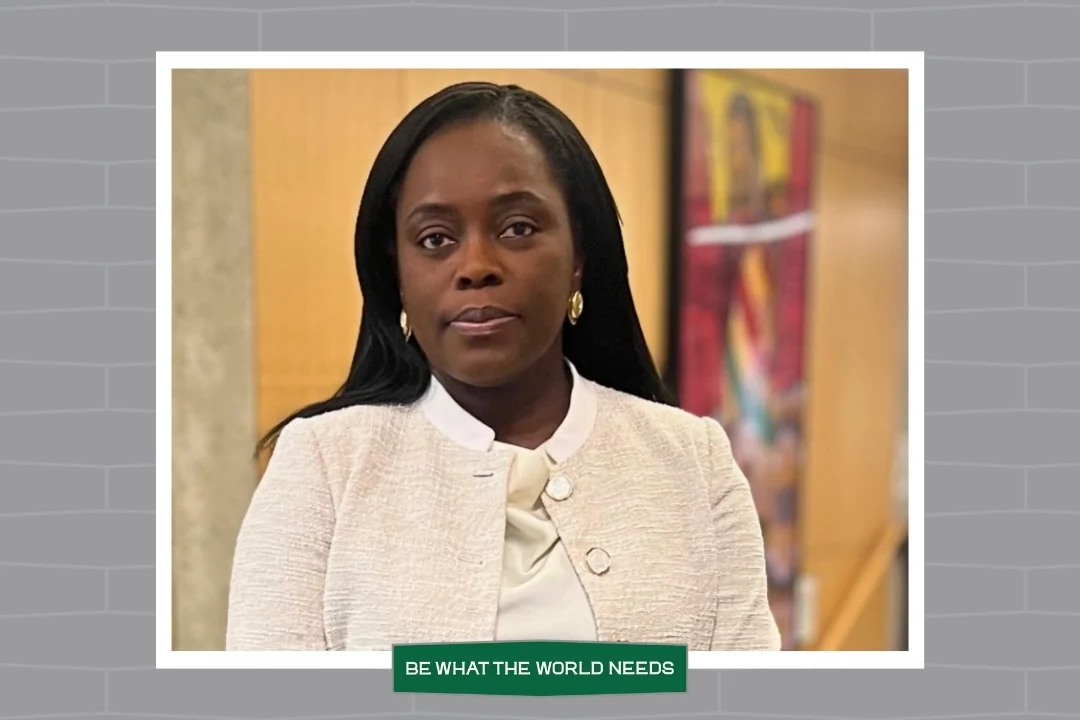
Nigerian-Born Professor to Head Law College at Canadian University
By Sabiu Abdullahi
Nigerian-born legal scholar, Dr. Ibironke Odumosu-Ayanu, has been appointed dean of the College of Law at the University of Saskatchewan in Canada.
She will serve a five-year term that begins on October 1, 2026.
Odumosu-Ayanu currently serves as the college’s associate dean of research and graduate studies. She joined the University of Saskatchewan’s College of Law in 2008.
The university announced her appointment on September 1 in a statement issued by Patti McDougall, interim provost and vice-president, academic, who also chaired the search committee for the new dean.
McDougall praised Odumosu-Ayanu’s academic record and leadership qualities.
“Dr. Odumosu-Ayanu’s appointment as dean reflects a distinguished record of academic excellence, collaborative leadership, and dedication to advancing research and graduate education,” McDougall stated.
“Her work as dean will continue to build on the College of Law’s strong reputation for excellence in legal education and research, while strengthening its leadership in Indigenous legal scholarship and engagement with local and global communities.”
Odumosu-Ayanu will take over from Martin Phillipson, who served two five-year terms as dean before proceeding on administrative leave on July 1.
FROM LAGOS TO CANADA
Odumosu-Ayanu was raised in Lagos, where she developed an interest in reading and writing from an early age.
She initially considered a career in communications. However, encouragement from her teachers and support from her parents influenced her decision to study law.
She subsequently enrolled at the University of Lagos, where she obtained her Bachelor of Laws degree.
Her academic career later took her to Canada, where she pursued a master’s degree at the University of Calgary. Her choice was influenced by the university’s research strengths in natural resources, energy and environmental law.
“Since I started law school, I always knew that I wanted to do a master’s and to do one abroad. But I always thought I would go to England.”
Odumosu-Ayanu initially intended to return to Nigeria after completing her master’s degree and practise as a lawyer. However, she continued her education with a PhD programme at the University of British Columbia.
She said a doctorate was not part of her original plan.
After obtaining her PhD, she began to consider a career in academia and applied for academic positions.
Her academic journey eventually took her to Saskatchewan in 2008, where she joined the University of Saskatchewan’s College of Law.
Before her move, a mentor at the University of British Columbia, who was raised in Saskatoon, had advised her to prepare for the harsh Canadian winter.
Atiku Defends AUN Establishment, Lists Efforts to Support Almajiri Children
By Sabiu Abdullahi
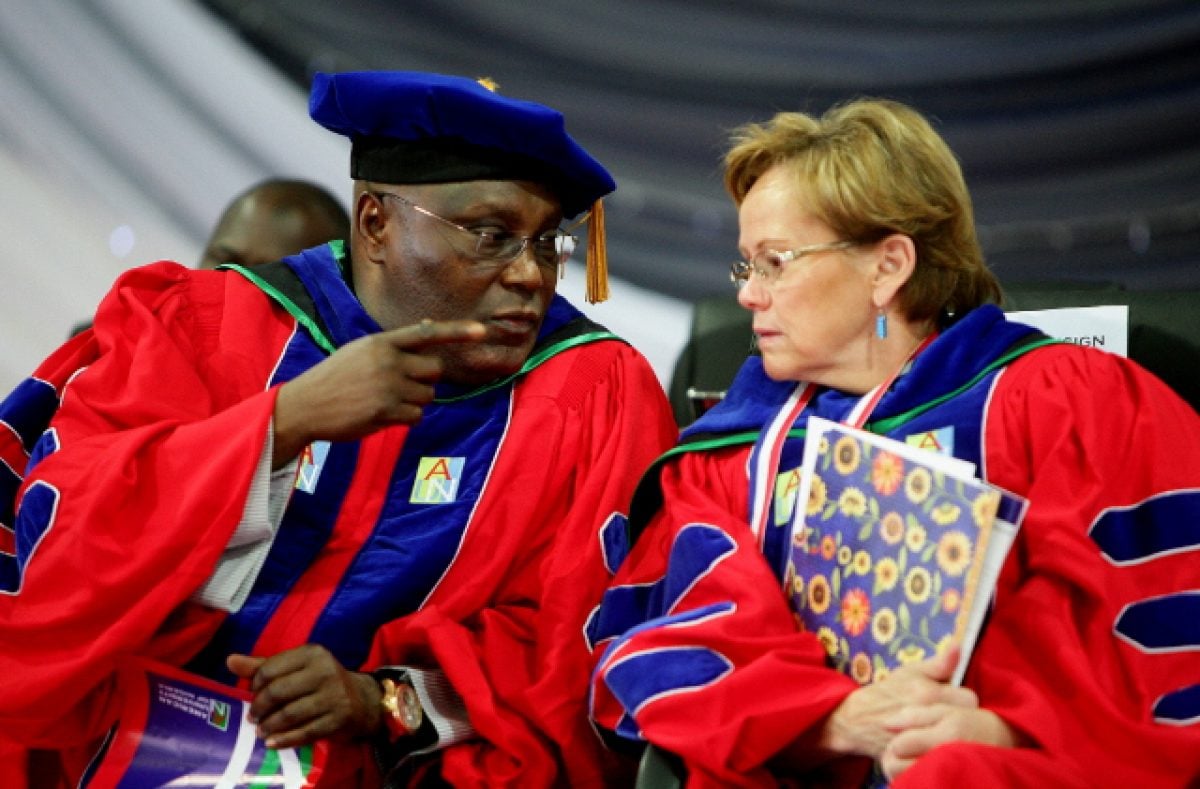
Former Vice-President Atiku Abubakar has defended the establishment of the American University of Nigeria (AUN) in Yola, Adamawa State, after an X user questioned his efforts to address the Almajiri crisis in northern Nigeria.
Atiku, who is the African Democratic Congress (ADC) presidential candidate, said the university was established as part of his efforts to promote education and development in the northern region.
The exchange followed a post by Atiku in which he criticised President Bola Tinubu’s administration over the economic hardship facing Nigerian youths.
An X user, @Oluwabunmi63697, responded to the post with a photograph of Almajiri children carrying plates and asked Atiku about his record on the issue.
“Have you ever addressed this, sir? You were VP for 8 years, these innocent children are in your region and you couldn’t do anything to stop this calamity,” the user wrote.
In his response, Atiku acknowledged the concern and said the condition of children who beg on the streets should worry Nigerians.
“The sight of children begging on our streets should trouble every Nigerian,” he said.
The former vice-president explained that his decision to establish AUN in Yola was driven by his desire to expand access to quality education and create opportunities for people in the region.
“I established the American University of Nigeria as a practical investment in education and the development of the North,” Atiku wrote.
“If profit had been my primary motivation, I could easily have located the university in Abuja or Lagos, where the commercial advantages would have been greater.
“I chose Yola because I wanted to invest in my people, create opportunities, and bring world-class education closer to a region that had long needed greater access and development.”
Atiku also disclosed that AUN was no longer under his personal ownership. He said he had transferred the institution to its host community.
He said he had “signed a deed of gift transferring the ownership to the university host community”.
AUN’S SUPPORT FOR ALMAJIRI CHILDREN
Atiku also cited some programmes associated with AUN as part of his response to the concerns about Almajiri children.
According to him, the university runs a “feed and read programme” for vulnerable Almajiri children. The initiative provides them with daily meals while helping them acquire basic literacy and numeracy skills.
He further said AUN had used educational radio programmes to reach displaced children affected by conflict in the North-East.
“ AUN has helped more than 20,000 internally displaced children learn to read through educational radio programmes,” he said.
Atiku also recalled the support the university provided to young women who escaped from Boko Haram captivity after the abduction of schoolgirls in Chibok in 2014.
He said the institution offered scholarships to some of the girls to enable them to continue their education and rebuild their lives.
The former vice-president maintained that children should be in schools rather than on the streets.
“Whether in government or outside it, I have always sought to turn that conviction into practical action,” he added.
Obi Challenges Nigerians to Expose Any Wrongdoing in His Past
By Sabiu Abdullahi
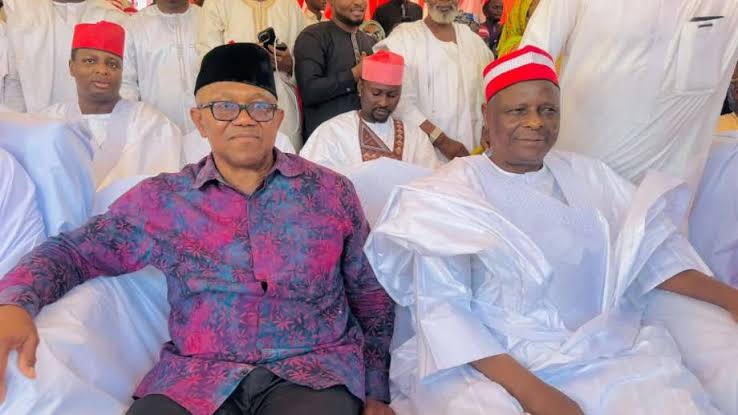
Peter Obi, presidential candidate of the Nigeria Democratic Congress (NDC), has asked Nigerians to scrutinise his past and publicly disclose any wrongdoing they believe he has committed.
Obi made the call on Thursday at a town hall meeting with voters in Port Harcourt, Rivers State, where he answered questions on the 2027 general election.
The former Anambra State governor spoke amid renewed public scrutiny of the records of politicians seeking to contest the 2027 presidential election, including President Bola Tinubu and former Vice-President Atiku Abubakar.
There has also been public discussion about the educational records of some leading presidential contenders after they left out their primary and secondary school certificates from the personal particulars submitted to the Independent National Electoral Commission (INEC) in July.
Obi said he and his running mate, Rabiu Kwankwaso, had made information about their backgrounds available for public verification.
“I want to give every Nigerian the opportunity to know who I am,” he said.
“Both of us have presented our backgrounds, from our dates of birth to our schools, education and all, to the people. You can go and verify our backgrounds worldwide, anywhere.”
The former governor also referred indirectly to his legal dispute with Kenneth Okonkwo, who served as his spokesperson during the 2023 presidential campaign.
Obi had instituted a court case against the Nollywood actor over alleged defamatory statements concerning their previous dealings. He said the action followed Okonkwo’s claim that he possessed information about Obi’s past that could shock the public.
“We have sued somebody in court. He said he knows something he can say and the people will be shocked. I said I want you to say what people will be shocked about,” Obi said.
He then challenged Nigerians and people around the world to produce evidence of any wrongdoing against him or Kwankwaso.
“And I’m challenging every Nigerian. If there is anything that you know I have done that is wrong, say it out now.
“I’m challenging the world over: if you know anything that Rabiu Musa Kwankwaso has done that is wrong, say it out now.”
Obi also argued that candidates for senior political positions should be judged by the credibility of the processes through which they attain office.
“You cannot continue to answer his excellency when the process that got you there is not excellent,” he said.
UN Vote Backs Move to “Correct the Map” in Global Cartographic Representation
By Hadiza Abdulkadir
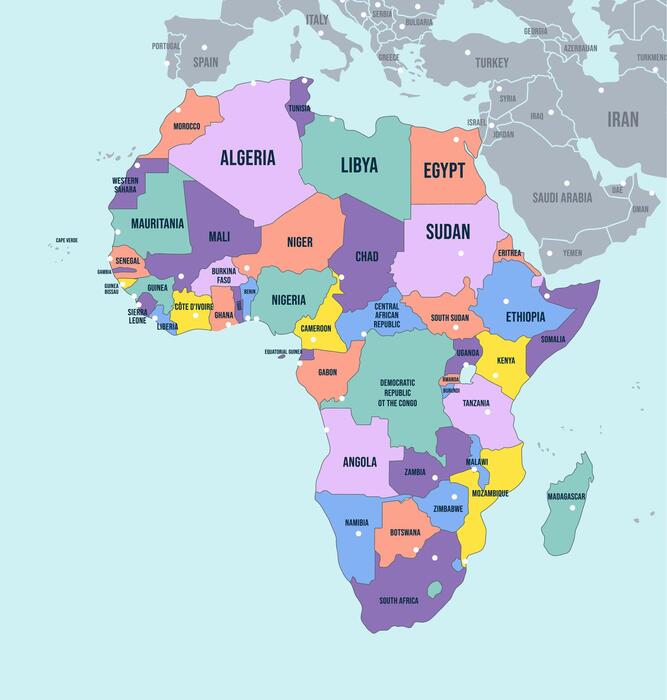
The United Nations has overwhelmingly backed a resolution titled “Correct the Map”: Rebalancing Global Cartographic Representation and Promoting…, in a vote held on September 4, 2026.
The proposal received 164 votes in favour, while one country, the United States, voted against it. Six countries, including Georgia, Estonia, Lithuania, Moldova, Serbia and Ukraine, abstained.
The strong vote in favour indicates broad international support for efforts to address concerns over the way global cartographic representation is structured and to promote a more balanced portrayal of the world.
The vote highlights continuing debates within the international community over representation, geography and the ways in which maps shape perceptions of global power and identity.

Triple R Celebrates Maulidin Nabiyyi (SAW)
By Khalid Imam
On Tuesday, 2nd September 2026, Triple R Kannywood Renewed Hope, led by Alhaji Dauda Adamu Abdullahi Kahutu Rarara, organised a grand Maulidin Nabiyi (SAW) at the Aminu Dantata Trade Fair Complex, Kano.
The event was chaired by Alhaji Aminu Alfandaj, Head of the LOC, and commenced with a recitation of the Glorious Qur’an, followed by a welcome address by Tijjani Asase, the PRO of Triple R Kannywood Renewed Hope.
The gathering featured inspiring religious lectures, devotional songs and poetic praises celebrating the noble life, virtues and exemplary character of the Prophet Muhammad (SAW).
The atmosphere was set by a fascinating and thrilling succession of cantatas, devotional songs and poetic praises celebrating the extraordinary and stellar personality of the Noble Prophet Muhammad (SAW). The performances, delivered by some of the finest Islamic song-artists, beautifully captured their profound love, reverence and admiration for the Messenger of Allah (SAW).
Malam Nafi’u Adam Sha’iri set the floor ablaze at exactly 11:58 a.m., opening what became a deeply moving and spiritually uplifting session of devotional songs. He was followed by Sayyada Faiza Amatullah, Sayyadi Sojan Ma’aiki, Sayyadi Malam Kabiru Kiya Ambato, Malam Mustapha Zakariya and Malam Ahmad Gwangwazo, among many others.
The likes of popular composers of Soul-Stirring Cantata in Praise of the Prophet (SAW), led by Sheikh Hafiz Abdalla and Malam Bashir Ɗandago, added their melodious voices with heartfelt verses and evocative performances; the artists celebrated the noble character, unparalleled virtues, mercy, compassion and exemplary life of the Prophet Muhammad (SAW). Their renditions created a unique atmosphere of spiritual reflection and renewed love for the Messenger of Allah (SAW).
At exactly 12:27 p.m., Malam Bazallahi Sheikh Nasiru Kabara was invited to speak on Mu’amalatu Maʿaiki wa Ṣaḥabatihi—the uncommon relationship and interactions of the Noble Prophet Muhammad (SAW) with his reverential Companions.
He described the bond between the Noble Prophet (SAW) and his Companions as one founded upon profound love, mutual respect, sacrifice, and unwavering devotion. Their relationship was not merely that of a leader and his followers; it was a remarkable bond built on faith, loyalty, compassion, trust and a shared commitment to the cause of Islam.
He also stressed that the Companions loved the Prophet (SAW) deeply, honoured his guidance, stood by him through hardship and were prepared to make tremendous sacrifices for the sake of Allah and His Messenger, citing the Battle of Uhud as one of the true tests of sacrifice that the Prophet and the Sahaba went through together. In turn, the Prophet (SAW) treated them with exceptional kindness, dignity, compassion and understanding, nurturing them into a community bound together by faith and brotherhood.
He further highlighted that the Prophet’s interactions with them therefore provided a timeless model of leadership characterised by compassion, dignified fellowship, and loyalty founded on faith. The relationship between the Prophet (SAW) and his Companions remains an enduring example of how love, respect, sacrifice and devotion can transform individuals into a united and purposeful community.
As the special Maulidin Nabiyyi session drew to a delightful close in the evening hours, several scholars took to the podium to deliver educational admonishments to members of Triple R Kannywood Renewed Hope and dozens of enthusiastic guests in attendance, urging them to emulate the noble character of the Prophet Muhammad, peace be upon him, and to use their influence in Kannywood to promote unity, discipline, and moral values in society, while prayers and commendations marked the end of the spiritually uplifting gathering.
Atiku Raises Alarm Over Youth Kidney Sales Amid Economic Hardship
By Sabiu Abdullahi
Former Vice President and presidential candidate of the African Democratic Congress, Atiku Abubakar, has expressed concern over reports that some young Nigerians are resorting to kidney sales because of worsening economic difficulties.
Atiku made the remarks in a post on X on Thursday, where he linked the reported development to the rising cost of living under the administration of President Bola Tinubu.
The former Vice President said he had received what he described as “disturbing stories” about young Nigerians who were considering the sale of parts of their bodies as a means of raising money.
“I have heard disturbing stories about the extent to which young Nigerians are being driven simply to survive. Perhaps the most horrifying are the growing reports of young people selling parts of their bodies: kidneys in particular, in desperate attempts to raise money,” Atiku wrote.
He maintained that young Nigerians should have opportunities to develop their talents and pursue their ambitions instead of considering the sale of their organs.
According to him, they should be “selling dreams, ideas and innovation, not their body organs,” and described the reported situation as something that should “offend the conscience of every Nigerian.”
Atiku further alleged that some young Nigerians were being pushed to sell their kidneys for as little as ₦1.7m. However, the figure was not linked to a specific report or government agency.
The reported amount could not be independently verified.
Atiku attributed the alleged trend to the pressure caused by the increasing prices of basic necessities, including food, transportation, accommodation, education, healthcare and electricity.
He said, “In Tinubu’s Nigeria, almost everything required to live with dignity is becoming more expensive by the day: food, transport, rent, school fees, medicine and electricity.
“Yet young Nigerians are reportedly being driven to sell their kidneys for as little as ₦1.7 million.
“That should break the heart of a nation.
“Young Nigerians should be building careers, starting businesses, raising families and pursuing their dreams, not calculating how much parts of their bodies can fetch simply to stay alive.
“When young Nigerians begin to see their kidneys as emergency savings, we are no longer talking about ordinary economic hardship. We are talking about desperation at its most frightening.”
The ADC presidential candidate acknowledged that Nigerian laws prohibit the commercial sale of human organs and organ trafficking.
He, however, argued that “laws alone cannot cure the poverty and desperation that make vulnerable young people easy prey for criminal networks.”
Atiku called for economic measures that would address the difficulties faced by ordinary Nigerians. He listed affordable food, lower transportation costs, accessible healthcare, decent employment opportunities and “renewed hope for the next generation” among the measures he said were needed.
He concluded with a criticism of the President, saying, “Tinubu made Nigeria expensive. I will make Nigeria affordable again.”
His comments came amid recent reports of alleged organ trafficking activities in some parts of Nigeria.
The Nigeria Police Force recently paraded four suspects, including two nephrologists, over an alleged organ-trafficking operation.
The police alleged that one of the suspects, Emmanuel Ode, admitted to recruiting victims. Investigators also alleged that a 22-year-old man was taken to a hospital in Abuja in April, where his kidney was allegedly removed for $1,250, said to be about ₦1.7m.
According to investigators, the suspected syndicate targeted vulnerable young people facing financial difficulties in Nasarawa and surrounding areas.

Six Killed in Yola-Girei Road Accident
By Sabiu Abdullahi
The Adamawa State Police Command has confirmed the death of six people in a road accident along the Yola-Girei Road on Friday.
The command’s spokesperson, SP Suleiman Nguroje, disclosed this in a statement issued on Friday.
According to the preliminary report, six victims were involved in the fatal crash and were taken to a hospital, where they were pronounced dead.
“The victims were rushed to a hospital where they were confirmed dead.
“Police operatives from Girei Divisional Headquarters, Federal Housing and the Central Motor Traffic Division were immediately mobilised to the scene to evacuate the victims and restore the normal flow of traffic.”
The Commissioner of Police in the state, CP Kabir Hassan, expressed condolences to the families of the victims and prayed for the repose of their souls.
Hassan also urged motorists to remain calm and exercise caution on the road. He advised drivers to obey traffic regulations and avoid excessive speed to reduce the risk of further accidents.
The latest crash has raised concerns over the safety of the Yola-Girei Road. Four accidents have reportedly occurred on the route within less than a month, with more than 10 people killed in the incidents.