


Zauren Mallam Aminu Kano as a Social Repair
By Abubakar Muhammad
Crime is a prominent feature of the city. The mitigation of crime and other social vices is a responsibility that falls not only on the government. The health of society is a responsibility that spans multiple dimensions, from authorities with direct power to families and residents of the community as a whole. The social health of the city is also the work of architects and planners.
Physical planning is an important factor in influencing the social health of society and its inhabitants. Respected voices in urban planning note how a great urban environment, in terms of design and social services, can enhance people’s quality of life and foster a sense of community. In this piece, I set out to use Zauren Mallam Aminu Kano as a social repair tool and a planning theory for combating crime and other social ills in our society.
We have recently heard the gruesome murder of an entire family in Kano, first in Tudun Yola and then in Ɗorayi, by the same alleged criminals. Cities are characterised by petty and violent crimes. The job of residents and governments is to implement policies that prevent crime to ensure the safety of inhabitants and the prosperity of the city. Sustainable urbanism involves governments at various levels, as well as city residents.
I was particularly happy weeks ago when I learned that communities around Dala have mobilised to construct a police station around Kuka Bulukiya cemetery to combat persistent phone snatching that has cost countless lives of innocent passersby. The idea of constructing security outposts in crime hotspots has been a productive strategy for combating crime. It is not only about fighting crime; it also replaces crime with security and constant human presence and activity. It not only prevents crime and protects lives but also brings life and economic activity to beleaguered areas.
My friend once took me to an area of the ancient city to pay my condolences. It was a long time ago I cannot remember the name of the neighbourhood. Those who know Kano intimately can piece together snippets from my narration to figure out the area. I can vaguely say that the area was around Mandawari, Yar Mai-Shinkafi, Gyaranya, Baƙin Ruwa, or Gwauran Dutse. We walked through the alleys after the condolence and appeared at the Aminu Kano Way.
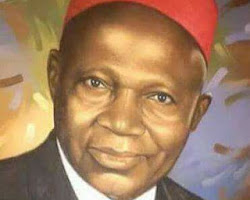
The neighbourhood has a shelter christened Zauren Mallam Aminu Kano. It is an open pavilion in the heart of the neighbourhood. I was intrigued not only by the discovery but also by the place’s name and social function. This was the first time I had ever heard of the place, or any shelter named Zauren Mallam Aminu Kano in the city. I began to think about the connection between the place and the famed radical politician.
I did not ask the naming history behind the shelter, but my imagination wagered that this must be the spot where Mallam Aminu Kano hung out with friends and conducted his public life. It must be the local context where he started his political career, a gathering place for the nightly schooling and political organising. My guess was supported by my assumption that the place is located within the ancient city, and not far from his initial dwelling at the Aisami/Sani Mainagge axis. I was intrigued by the place for its great potential to build a community.
The Zauren Mallam Aminu Kano is a mini square and public space for the community. It enables the residents to perform social and religious functions. Residents of the neighbourhood, particularly the elderly and retirees, use the pavilion to hang out. The community uses the open space to perform the funeral salat for the deceased. The main street around the space serves as a collector road, receiving people from nearby alleys and neighbourhoods. Thus, the open space becomes vibrant with life. Residents and visitors use the space to park their vehicles. Around the square, activities sprang up: informal people, vendors, and small entrepreneurs set up stalls offering services, various wares, delicacies like tsire and awara, and other household items that cater to the neighbourhood’s hospitality and social needs. The shelter becomes a living room of the community. My reading is that Zauren Mallam Aminu Kano is an open space that allows residents to do things that they cannot perform in the narrow alleys of their neighbourhood.
Part II
For this reason, Zauren Mallam Aminu Kano stays with me. I want to suggest an expanded version of this space be built in as many places as possible in the ancient city, its suburbs and major towns across the state. This is based on key spatial ideas for sociability and security of communities and neighbourhoods.
Ancient cities like Kano had been built around their traditional institutions. The city spread out from the Emir’s Palace, surrounded by other civic buildings such as the court and the central mosque, which eventually formed the city centre. Spreading in a radial pattern, subsequent expansions and settlements of the city and major towns followed the same tradition. All roads lead to the city centre. And the civic centre, or city centre, is almost always located in the vicinity of the traditional ruler’s dwelling. Outside the city, the Maigari’s or Dagaci’s house sat at the centre of the settlements.
The best location for the Zauren Mallam Aminu Kano is to look for the ugliest and most dangerous part of the neighbourhood and tear it down to create a large enough open space to build the shelter. This place should be the heartbeat of the area by consolidating basic services in one building: a small local clinic, a school, a library, administrative offices for Mai-unguwa, Dagaci, and security agents, and a conference room for important community meetings and non-partisan civic engagements.
A strong civic component and social life are essential. The idea is to overwhelm crime, blight and unsightly facades. The building can serve as a venue for adult literacy classes, mass education and public orientation centres for social mobilisation and political awareness. As a multipurpose building, the place can host activities such as elections, immunisation campaigns, skills and personal development training for local youth.
A mosque can be located close to the shelter. Around the mosque, the elderly sit, dine, and eat. It is where they enjoy calm, festive hours by day and night. Zauren Mallam Aminu Kano should be the agora and living room of the community. Clusters of civic buildings, residential and commercial uses can create sociability. This is not new; it is something that needs to be consciously improved upon existing traditions. Several Hausa villages have a santa or tsakar gari, which serves mixed purposes and brings people together. Since the shelter is located near the mosque, it should also serve as an open space for conducting funeral prayers. Commercial activities can be encouraged around the area to provide a more vibrant economic life. In Kano city, many neighbourhoods have ƴar kasuwa within walking distance, allowing residents to make purchases for their daily needs.
The small clinic located in the centre should offer first-aid services and cater to the health needs of the most vulnerable. It should deliver basic drugs and inexpensive medications, medical advice and other services that might not require a trip to the hospital. Local people with training in medical fields can volunteer to operate the place. They can also request NYSC corps members to be posted there. Funding can come from donations from wealthy residents of the community. People who have retired from active service in various walks of life can participate. Skilled individuals can also ask to set up offices and contribute their services to the community. Community services can serve as a clear benchmark for future political leaders. People can see what potential representatives have contributed to their local communities before they enter politics – what they have done for the people before asking for their votes.
It would not be a bad idea to allow car owners to park their vehicles in and around the shelter. Community-owned assets, such as donated vehicles for transporting the deceased, a power transformer, and water sources like a borehole, can be sited there. The underlying assumption is that communities would actively work to protect their assets and improve their neighborhood. Their commitment or otherwise to safeguarding their assets is clear proof of their collective responsibility, leadership, accountability and readiness for sustainable development.
The idea is to use Zauren Mallam Aminu Kano to make the targeted area active and vibrant with human activity. The dwelling of the traditional ruler should be sited there to continue to facilitate administrative functions and liaison with various levels of governments for record-keeping, issuing birth certificates and documents, and other civic engagements. The closest idea to this is Ofishin Wakili, which can be upgraded where they already exist. If built with magnificent architecture, places like this can become historic sites that represent the community and its traditions.
The building should house an office for joint security agencies, including the police and Hisbah. This is where disputes will first be reported. It will enhance coordination and timely reporting of suspicious activities to support early crime prevention. Emphasis is placed on civil matters and on preventing violent crimes. The activities and involvement of the security should be largely civil and minimal. The point is to increase safety through informal supervision. Security agents, the elderly, and small business operators are public figures who keep an eye on the neighbourhood. Retirees and the elderly also fill the void and silence when others are at work or school. They can alert parents – and the security agents – to what is happening in the neighbourhood. Sustainable urbanism can be achieved by densifying social life in hitherto dark corners without militarising the neighbourhood. The refurbishment of the neighbourhood is a valued alternative to blight, providing security through communal social space. Services and buildings can be distributed according to the community’s needs and resources. The purpose is to chase away the thugs from the heart of the community and bring light to the dark corners and crevices. In the process, services are brought closer to the people. Traditional institutions are involved more closely and meaningfully in public service for their immediate communities.
Stakeholders – government, traditional institutions, and community members – should work together to realise the Zauren Mallam Aminu Kano as a state-supported, neighbourhood-funded civic infrastructure across Kano State. Zauren Mallam Aminu Kano should be conceived as a community and family resources centre for the neighbourhood’s residents. It should be designed as a crime-prevention tool through visibility, social life, and shared spaces that strengthen grassroots governance and access to basic services. It is also an embodiment of the spatial practice of good neighbourliness, the warmth, and the communal character of the Mutumin Kirki society.
Abubakar Muhammad is from Kano, Nigeria.
APC replaces Uzodimma with Masari as convention committee chairman
By Sabiu Abdullahi
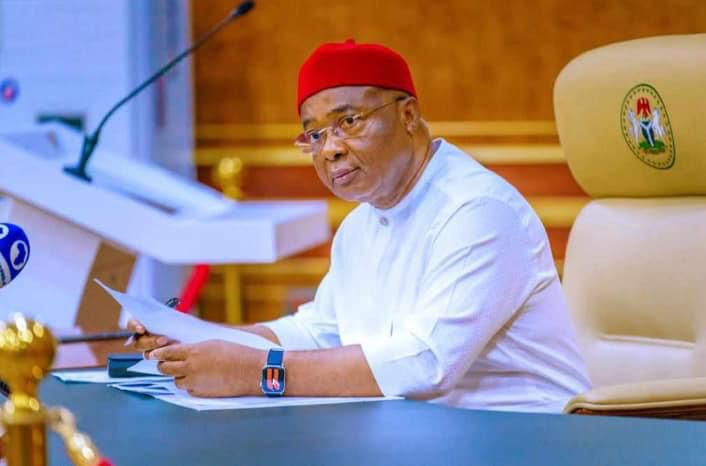
The All Progressives Congress (APC) has announced a change in the leadership of its National Convention Central Coordination Committee, replacing Imo State Governor, Hope Uzodimma, with former Speaker of the House of Representatives, Bello Masari, as chairman.
The development was made public on Friday by the party’s National Secretary, Surajudeen Basiru, through an official statement.
“In further consultation with the leadership and national stakeholders of the All Progressives Congress (APC), the Central Coordination Committee for the 2026 National Convention has been reconstituted,” the statement reads.
“Sub-committees of the Central Coordination Committee will be constituted and announced in due course.”
Following the restructuring, Uzodimma, who previously headed the committee, will now serve as treasurer in the new arrangement approved by the party leadership.
The ruling party also increased the committee’s membership from 73 to 90. The expansion brought in more party leaders, including Barry Mpigi, senator representing Rivers South-East.
Under the revised composition, former Senate President, Anyim Pius Anyim, emerged as Vice-Chairman I. Kwara State Governor and Chairman of the Nigeria Governors’ Forum, AbdulRahman AbdulRazaq, was named Vice-Chairman II. Yobe State Governor, Mai Mala Buni, retained his position as secretary of the committee.
Meanwhile, the APC released an updated timetable for its nationwide congresses, national convention, and other activities scheduled for 2026.
In a notice shared on its X handle on Friday and titled “Adjusted APC 2026 schedule of nationwide congresses, national convention and related activities”, the party said forms for expression of interest and nomination would be sold at its national secretariat in Abuja.
“The Expression of Interest Form and the Nomination Form will be available for purchase and collection at the Directorate of Organisation, 2nd Floor, APC National Secretariat, No. 40 Blantyre Street, Wuse 2, Abuja,” the party said.
The party explained that all timelines were reviewed to ensure smooth and transparent conduct of the processes nationwide. It added that only forms obtained from the Directorate of Organisation at the national secretariat would be recognised as valid.
According to the APC, the adjustments in the timetable and the reconstitution of the committee reflect zoning considerations and efforts to strengthen internal democracy ahead of the 2026 national convention.
The party’s national convention is scheduled to hold between March 27 and 28.
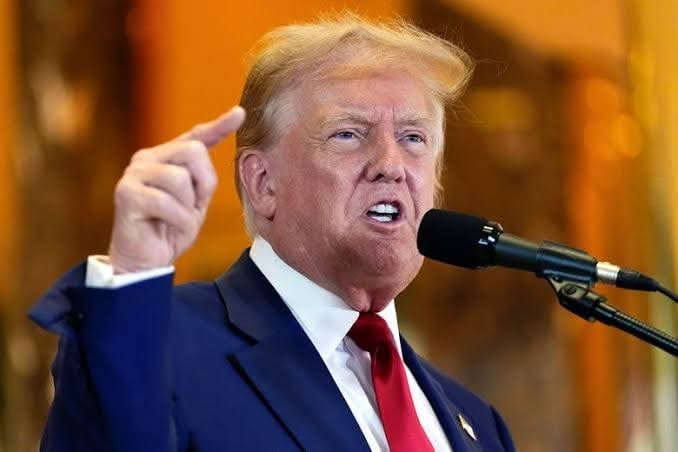
President Trump deletes racist video of Obamas after backlash
By Sabiu Abdullahi
President Donald Trump shared a video clip on social media that portrayed former President Barack Obama and former First Lady Michelle Obama as apes. He later removed the post after strong criticism from the public and members of his own Republican Party.
The clip appeared near the end of a 62-second video that pushed conspiracy claims about irregularities in the 2020 presidential election. It featured the song “The Lion Sleeps Tonight.” The post formed part of a pattern critics say reflects Mr. Trump’s history of promoting offensive imagery and language about Black Americans and other groups.
The White House initially defended the video. Press secretary Karoline Leavitt dismissed the outrage in an earlier statement before the post was taken down.
“This is from an internet meme video depicting President Trump as the King of the Jungle and Democrats as characters from the Lion King,” she said. “Please stop the fake outrage and report on something today that actually matters to the American public.”
Despite that defense, the video disappeared from the president’s social media feed hours later. Observers described the deletion as a rare reversal from Mr. Trump, who often stands by controversial online posts.
Civil rights advocates and historians noted that portraying Black people as apes draws from racist imagery used during slavery and segregation to dehumanize Black communities and justify violence.
Condemnation also came from Republican lawmakers. Senator Tim Scott of South Carolina, the only Black Republican in the Senate and a political ally of Mr. Trump, reacted on social media.
He wrote that he hoped the post was fake “because it’s the most racist thing I’ve seen out of this White House. The President should remove it.”
Representative Mike Lawler, a Republican from New York, also criticized the video. He said the president’s post “is wrong and incredibly offensive.” He added that it “should be deleted immediately with an apology offered.”
Mr. Trump has clashed with Mr. Obama for years. He previously promoted the false “birther” claim that Mr. Obama was born in Kenya and therefore was not a legitimate U.S. president.
The latest controversy has renewed debate over rhetoric, race and political conduct as the United States approaches another election cycle.

Racism: US President Donald Trump faces backlash over AI video depicting Obamas as Monkeys
By Sabiu Abdullahi
United States President Donald Trump has drawn widespread condemnation after posting a controversial video on social media that features an AI-generated scene portraying former President Barack Obama and former First Lady Michelle Obama as monkeys.
The video surfaced late Thursday during a flurry of activity on Trump’s Truth Social account. Within less than one hour, the president uploaded dozens of posts on the platform.
One of the materials shared was a compilation video that repeated his long-standing claims that the 2020 presidential election was manipulated. Those allegations have been dismissed in court and through official reviews.
Close to the one-minute point of the footage, an altered segment appears. It shows the Obamas’ faces placed on monkeys’ bodies. The background audio features the song ‘The Lion Sleeps Tonight’.
Trump reposted the same video twice. The timing fueled further anger online because the incident occurred during Black History Month.
Users on X and other social media platforms reacted strongly. Many described the clip as racist and degrading. Some critics argued that the post reinforced racist stereotypes historically used against Black people.
The controversial upload formed part of a broader late-night posting spree. During the same period, Trump again promoted discredited narratives about widespread voter fraud in the 2020 election, despite the absence of supporting evidence.
In a separate post that drew attention, Trump shared a screenshot bearing the message, “This can be a great option if things don’t work out,” alongside a fight scene video of martial artist Bruce Lee. He did not clarify the meaning of the message, leaving observers to speculate.
The uproar followed renewed scrutiny of Trump’s remarks about the U.S. electoral process. Earlier in the week, he suggested that Republicans should assume control of election administration in several areas and proposed federal involvement in voting oversight.
“The Republicans should say, ‘We want to take over,’” Trump reportedly said during a conservative podcast released Monday.
During the same conversation with former deputy FBI director Dan Bongino, he added that elections should be “nationalised.”
However, in an interview with NBC News correspondent Tom Llamas on Wednesday, Trump attempted to retract that position.
“I didn’t say nationalise,” he claimed, even though recordings of the earlier remarks circulated widely.
The White House later tried to ease tensions sparked by the statements. Press secretary Karoline Leavitt said the president remains loyal to the U.S. Constitution. She added that he believes previous elections were affected by “fraud and irregularities,” although no verified evidence supports the claim.
Only hours after that clarification, Trump appeared to reinforce his stance while speaking in the Oval Office.
“The federal government should get involved,” he said.
The developments have continued to generate debate across political and civic circles in the United States. Critics argue that both the video controversy and the election comments raise concerns about political rhetoric and democratic norms.
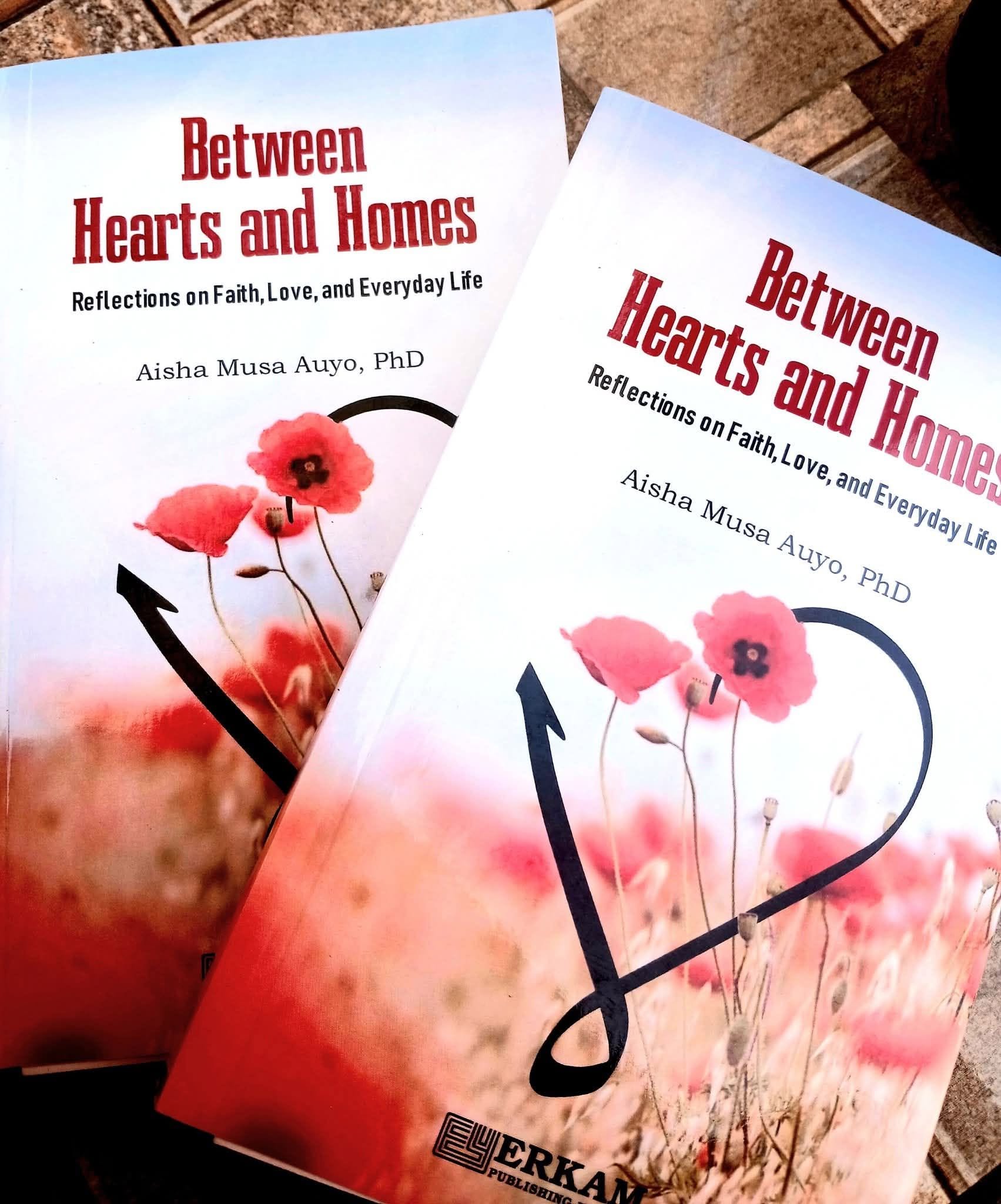
BOOK REVIEW: Between Hearts and Homes
Author: Aisha Musa Auyo
Number of Pages: 184
Date of Publication: 2025
Publisher: Erkan Publishing-Nigeria
I just finished reading Dr Aisha Musa Auyo’s book, Between Hearts and Homes: Reflections on Faith, Love, and Everyday Life. It sure leaves a lasting impression…
The book feels like a heart-to-heart conversation with someone who has literally ‘lived life’, not just studied it.
What stands out immediately is how relatable it is. The tone used is not from a high or detached pedestal. It’s more like the tone of an older sister, a friend, or that person who tells you the truth whether you’re ready for it or not. From body image and self-awareness, to marriage, motherhood, perfume, clothes, and even shawarma cravings, using your cuisine as a comic relief… Everything feels real-life. It’s so easy to see oneself in the stories.
For example, the shawarma story hits hard. We’ve all said things like “I’ll do it tomorrow” or “next time.” But here, “next time” never came. That simple moment teaches a powerful lesson: don’t delay kindness or small acts of love, because tomorrow isn’t guaranteed. That’s something everyone can relate to; whether it’s postponing a visit to a parent, delaying a call to a friend, or putting off saying “I love you.”
It’s also commendable that you used practical examples instead of abstract advice. It doesn’t just say “be kind”, it shows kindness through cooking for someone, helping neighbours, respecting professionals, and being intentional in relationships. It doesn’t just say “take care of yourself”; it talks about specifics, perfume, grooming, clothes, and your living space. Even something as simple as keeping your house smelling nice can be a lesson in self-respect and in creating a pleasant atmosphere. That’s everyday wisdom.
Another strong point is how brutally honest you were at some point without sugarcoating things. For instance, pointing out things like:
Openly talking about body shapes and dressing realistically.
Telling people to stop pretending body realities don’t exist.
Warning couples with an AS genotype to reconsider marriage, not out of cruelty, but out of concern for future pain.
That kind of honesty might make some people uncomfortable, but it’s refreshing. It’s not about trying to be politically correct; it’s about trying to be helpful.
Yet, despite the bluntness, the book still keeps a beautiful balance. It blends faith and daily life while tactfully fusing serious medical topics with soft emotional reflections. It also successfully blended romance with responsibility, self-care with modesty and so on.
If I’m being honest, I never knew that the inability to recognise people was a medical condition with a name (prosopagnosia), but that’s one thing I’ve also learnt from your book.
There were interesting discussions about prosopagnosia, sickle cell disease, parenting, and marriage, alongside perfume tips and fashion advice. That balance makes it feel complete, like life itself.
There’s also humour sprinkled throughout. Lines like “Don’t smell like a flower while the house smells like Daddawa” will make you laugh because it’s so true. Or when you mentioned dressing badly makes you look like Muciya da Zani at home, funny, but the message lands. The humour keeps the book light, even when it’s talking about heavy topics like death, genetics, or emotional struggles. Most importantly, the book carries serious ideas beneath the laughter, which made it more fun to read.
Most of all, you were able to pass key messages like:
Be intentional in love.
Respect your neighbours, you never know when you’ll need them (the button incident was so scary to read. As a mother, I could relate so well).
Take care of your appearance for yourself and your partner.
Understand medical realities before making lifetime decisions.
Be patient with people who behave differently; they might be dealing with invisible conditions (the ID Card scenario of the lady with hearing impairments was quite touching). The personal stories, motherhood, interactions with neighbours, and dealing with loss make the lessons stick. It wasn’t about boring theory but more about fun and practical experiences.
I could go on and on…
In short, the book teaches without preaching, corrects without insulting, and entertains while educating. It’s funny in places, deep in others, and honest throughout. I laughed at some points and reflected at others. It will even make you start rethinking a few habits.
I just love how it generally reminds you that life is made of small moments, how you dress, how you speak, how you love, how you treat people, and that those small things matter more than we realise.
P.S- Meanwhile, I noticed two pages with small errors: one had a typographical mistake, and another contained a repetition. However, these are mere observations and don’t detract from the book’s powerful messages. A more thorough proofreading in future editions would help polish the work and make the reading experience even smoother.
Overall, these are very minor concerns in such an otherwise thoughtful and impactful book as yours. I look forward to more of this. Kudos and more power to your elbow, Ma’am!
Reviewed by:
Eunice Johnson (Southpaw), a UK-based media broadcaster, musician, actor, media consultant, and public relations expert, wrote via eunicejohnson001@yahoo.com.
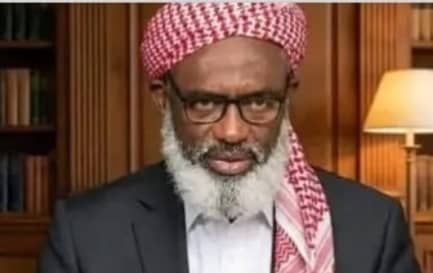
Gumi warns against U.S. troops in Nigeria
By Abdullahi Mukhtar Algasgaini
Prominent Nigerian Islamic scholar and critical thinker, Sheikh Ahmad Gumi, has raised strong objections to the potential presence of U.S. military forces in Nigeria, calling it a dangerous move that could threaten the nation’s independence.
In a recent statement, Sheikh Gumi cautioned that powerful foreign forces often play a role in creating or fueling conflicts, only to later intervene under the guise of providing assistance. This pattern, he argued, can eventually lead to a loss of national sovereignty and control.
Gumi emphasized that Nigeria must prioritize protecting its sovereignty. He expressed confidence that, if properly equipped and supported, the Nigerian military is capable of addressing the country’s security challenges without foreign military intervention.
The warning comes amid ongoing debates over international security cooperation in Nigeria’s fight against insurgency and banditry. While some advocate for foreign support, Gumi’s remarks highlight a growing concern among certain circles about the long-term implications of external military presence on Nigeria’s self-determination.
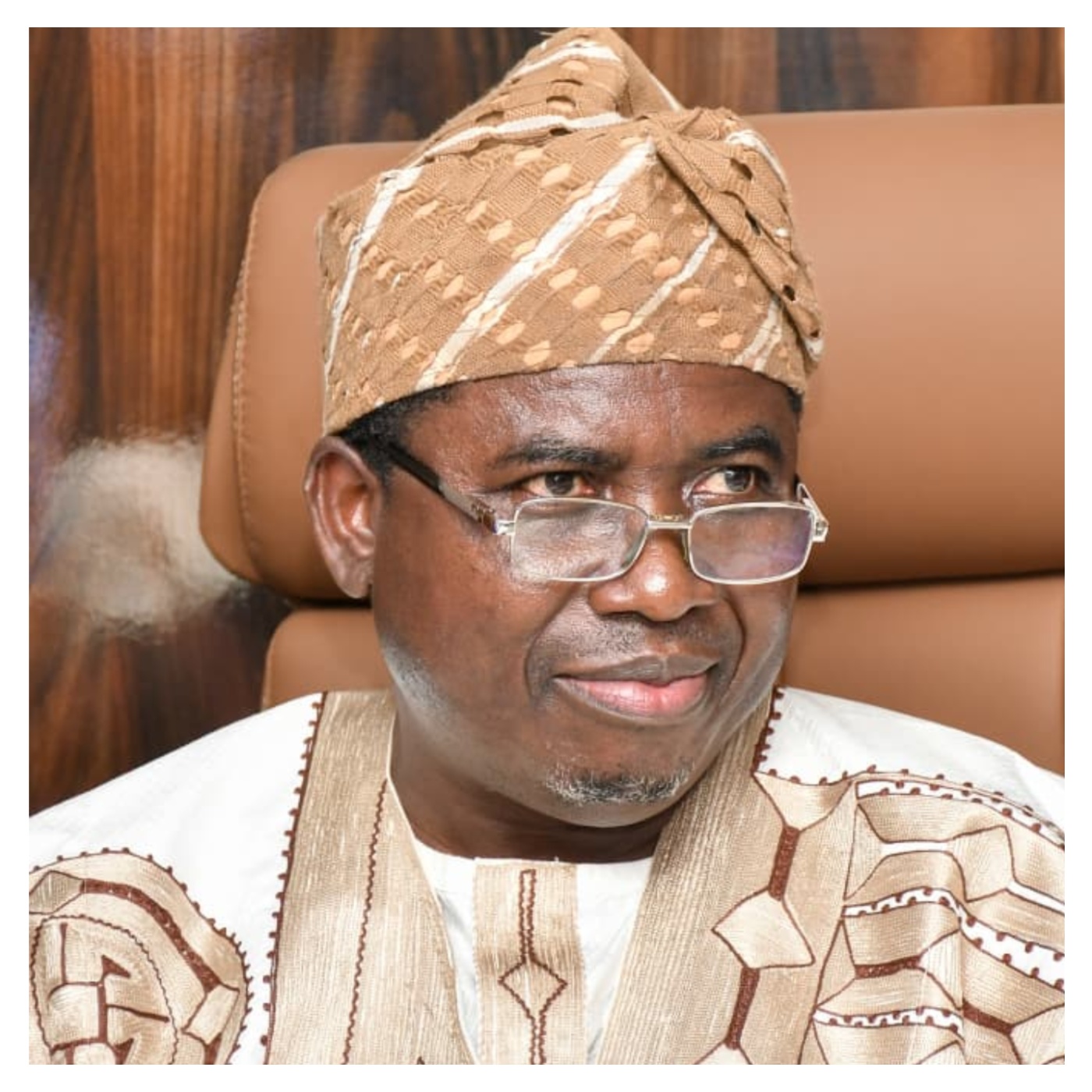
Muslims’ group demands INEC chief’s removal over bias allegations
By Abdullahi Mukhtar Algasgaini
A civil society organization, Muslim Rights Watch (MRW), has called for the immediate dismissal of Mr. Joash Ojo Amupitan, the newly appointed Chairman of the Independent National Electoral Commission (INEC), labeling the appointment a “provocation” against Nigeria’s Muslim population.
In a strongly worded statement, MRW’s spokesman, Mr. Mujahid Abubakar, condemned the selection, describing Mr. Amupitan as an “anti-Muslim radical Christian extremist and hate preacher.” The group argues that the appointment is fundamentally inappropriate for a pluralistic nation and dangerously undermines the neutrality of the electoral umpire.
“In a multi-religious state like Nigeria, appointing a religious extremist and hate preacher as the head of an electoral umpire is fundamentally inappropriate and dangerous for both democracy and social stability,” Abubakar stated.
The organization expressed deep concern that Mr. Amupitan’s alleged track record of “Christian fundamentalism, extremism, and exclusionary rhetoric” directly contradicts the required impartiality of INEC. They warned that his leadership could erode public trust, predetermine electoral outcomes in some regions, and potentially trigger mass protests and violence, particularly in states like Nasarawa and Taraba.
“This appointment is not a mistake. It is a provocation,” the statement read. “It is an open declaration which sends a chilling message to millions of Nigerian Muslims that they are second-class participants in their own democracy.”
MRW concluded by demanding an immediate reversal of the appointment, a public apology from the Presidency, and accountability for officials who endorsed the decision. They asserted that “silence at this moment is not neutrality but complicity.”
The presidency has yet to publicly respond to these allegations.
Kwara governor meets president Tinubu over Kaiama attack
By Abdullahi Mukhtar Algasgaini
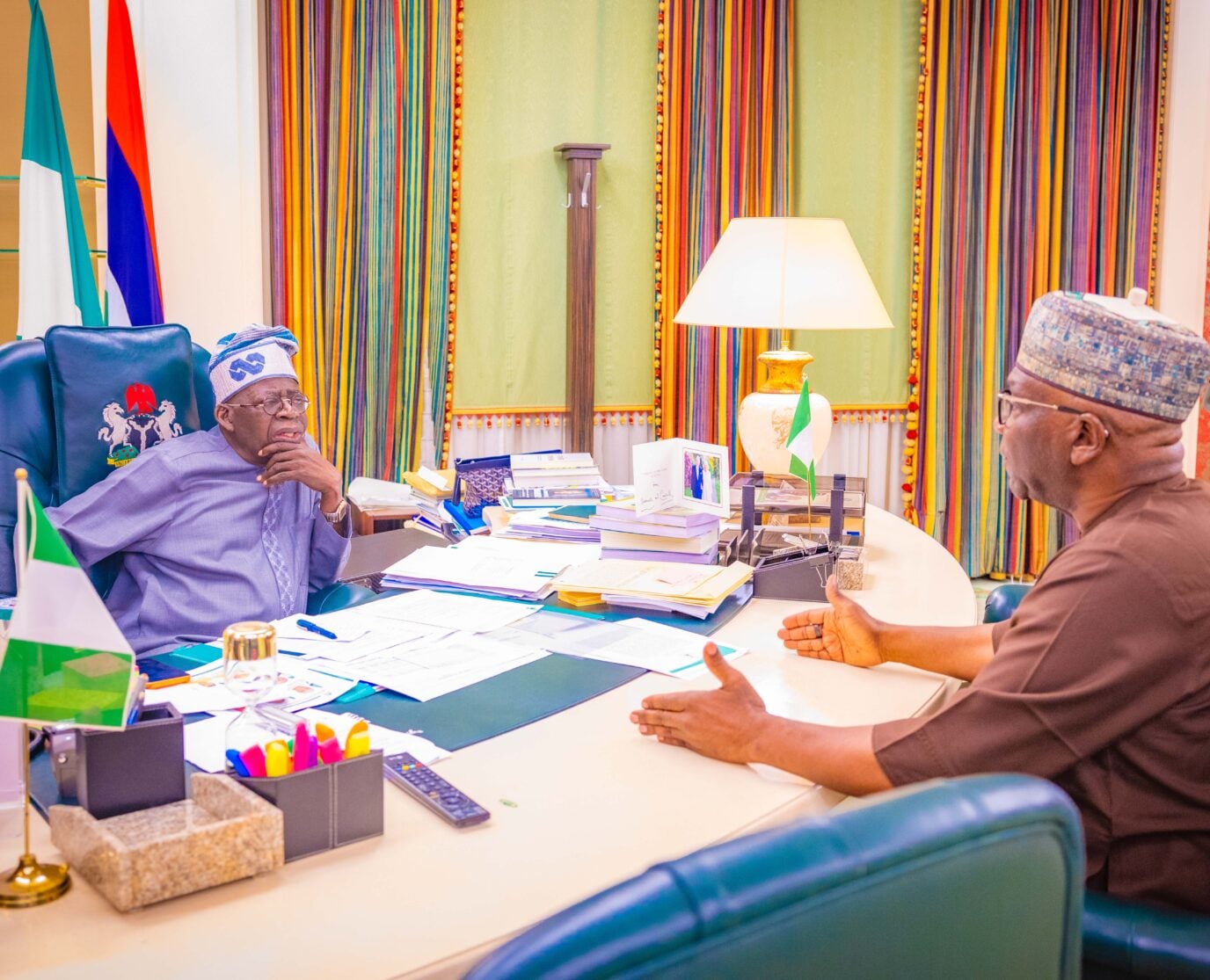
Kwara State Governor and Chairman of the Nigerian Governors’ Forum, AbdulRahman AbdulRazaq, met with President Bola Ahmed Tinubu at the Presidential Villa in Abuja on Thursday. The meeting followed a recent attack on the Woro community in Kaiama Local Government Area of the state.
According to a statement released by the Governor’s Senior Special Assistant on Media, Akeweje Olayinka Fafoluyi, Governor AbdulRazaq expressed gratitude to the President for establishing the “Operation Savannah Shield” security initiative and deploying military reinforcements to the area.
The Governor stated that this decisive action would help restore peace and security to the region.
Prior to the presidential meeting, Governor AbdulRazaq had visited Kaiama to assess the situation on the ground following the attack. He was accompanied on the visit by top security officials and some members of the State Executive Council.

Nigerian jailed for life over killing of ex-girlfriend in UK
By Sabiu Abdullahi
A court in the United Kingdom has sentenced a Nigerian national, Adedapo Adegbola, to life imprisonment for the murder of his former partner, Steph Irons, a 23-year-old university student, in Nottingham, England.
The 40-year-old was handed the sentence by Nottingham Crown Court after he admitted responsibility for Irons’ death, which occurred at her residence in Mapperley on October 21, 2025. Reports indicate that the two met at their workplace and had a brief romantic relationship that later ended.
During court proceedings, prosecutors said Adegbola developed an unhealthy fixation on the victim after the breakup. He allegedly purchased two knives online and later hired a taxi to her home. Investigators said he attacked Irons when she stepped outside to dispose of refuse. He then forced his way into the house and stabbed her multiple times.
Concern arose when Irons’ colleagues received disturbing messages sent from her phone. Police officers who responded to the situation later found her lifeless body in the living room. She was confirmed dead at the scene.
Following the attack, Adegbola fled the area. Authorities said he disposed of blood-stained clothing and other items along routes in Mapperley and Carlton. Nottinghamshire Police tracked his movements across several locations, including Mansfield, Worksop, Sheffield, and Hull, before he eventually turned himself in. Although he exercised his right to remain silent during interrogation, detectives pieced together his actions before and after the incident.
The presiding judge ordered life imprisonment and fixed a minimum term of 25 years before parole can be considered.
Detective Inspector Stuart Barson, who led the investigation, described Irons as a “kind and compassionate young woman” whose life ended in “terrifying circumstances.” He noted that the convict made no effort to obtain medical assistance for the victim after the assault, but instead chose to escape and discard evidence.
In a statement presented to the court, Irons’ mother said the loss of her daughter had shattered the family. Relatives portrayed the deceased student as loving and caring, with aspirations to earn a doctorate degree in clinical psychology.
Calls mount for removal of INEC chairman as Bukarti raises bias allegations again
By Sabiu Abdullahi
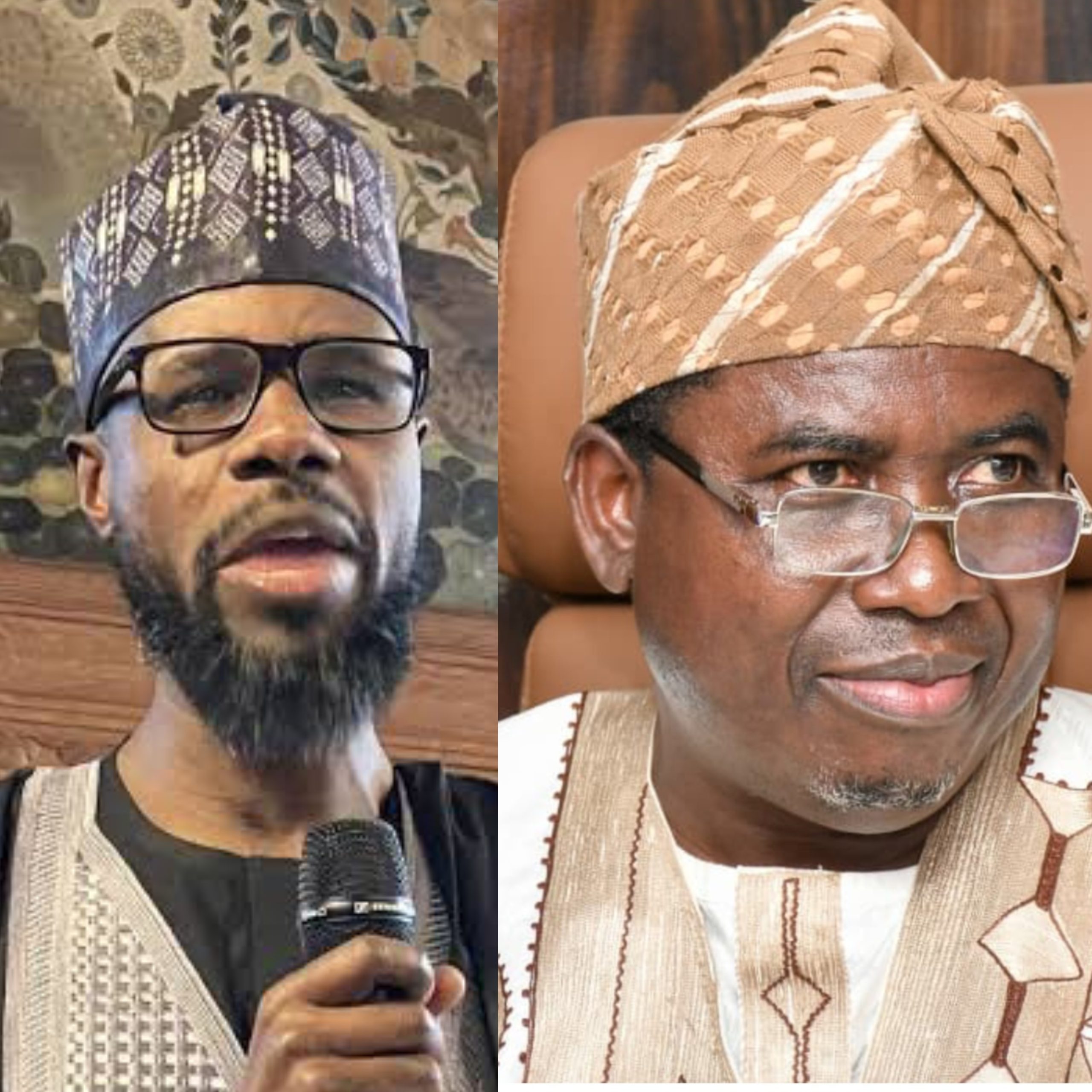
A prominent public affairs analyst, Dr. Bulama Audu Bukarti, has called for the immediate removal of the newly appointed Chairman of the Independent National Electoral Commission (INEC), Professor Joash Ojo Amupitan.
Bukarti made the demand during a heated video conversation on “Fashin Baki,” a weekly Hausa political programme, where he expressed strong reservations about the chairman’s neutrality in electoral matters.
“We urgently call on President Tinubu to immediately remove the INEC Chairman, Professor Joash Ojo Amupitan,” Bukarti declared. “If the President refuses to act, Northern politicians should take note: this man will not deliver justice or fairness in elections involving you.”
During the discussion, Bukarti accused the INEC boss of harbouring bias in the conduct of elections, particularly in contests involving candidates from the North.
“Whenever a Hausa or Fulani candidate contests against a non-Hausa/Fulani opponent, he will not conduct free, fair, or credible polls—his public hatred for Hausa and Fulani people is evident and undeniable. In contrast, when a Northerner faces a non-Northerner, he won’t be fair to the Northerner. He has previously dismissed our region’s large population figures as fabricated lies and accused Northern military and police personnel of taking over the institutions to Islamized Nigeria.”
He stressed that concerns about the appointment would have been stronger if the swearing-in had not already taken place.
“Had he not already been sworn in as INEC Chairman, we would have demanded his appointment be blocked outright. Now that the process is complete, it is imperative to press the President: this individual is unfit to lead INEC, as he cannot guarantee impartial elections for Northerners or Muslims.”
Bukarti also responded to possible criticism regarding the motive behind his position. He rejected claims that the call for removal was driven by religious sentiment.
“Anyone claiming this call for his removal stems from religious prejudice is deceiving themselves. The core issue is not his faith, but his deep-seated disbelief in Nigeria’s unity and his passionate hatred toward Northern Muslims. He has accused Northern Muslims of invading and settling in Christian-majority North Central states like Benue and Plateau as ‘settlers,’ while alleging ongoing persecution of Christians in Benue, Plateau, and Taraba states.”
The remarks have since stirred debate across political circles, with observers awaiting reactions from the Presidency and the electoral body.
The video of the programme was made available online, with viewers directed to watch the full discussion in the comment section.