

INEC fixes February 20, 2027 for presidential election
By Sabiu Abdullahi
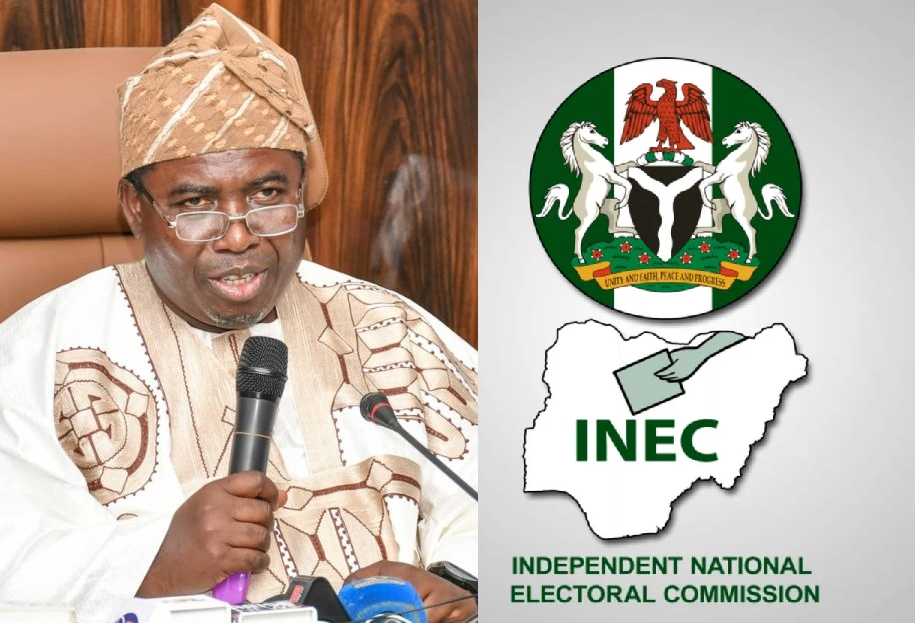
The Independent National Electoral Commission has scheduled February 20, 2027, for the conduct of the next Presidential and National Assembly elections across Nigeria.
Chairman of the commission, Prof. Joash Amupitan, announced the date during a news conference held in Abuja on Friday. He also disclosed that governorship and State Houses of Assembly elections will take place on March 6, 2027.
The release of the timetable comes at a time when discussions continue over the delayed passage of the amended Electoral Act, which is still before the National Assembly.
Earlier, on February 4, the commission indicated that it had concluded work on the election timetable and the schedule of activities, despite the uncertainty surrounding the amendment to the law.
INEC stated that it had already forwarded the timetable to lawmakers. It, however, warned that certain components of the schedule could experience adjustments. The commission said any change would depend on when the amended Electoral Act is eventually passed.
Further details on the electoral programme are expected to be made public in due course.

Japan donates farm equipment to Enugu community
By Sabiu Abdullahi
The Government of Japan has commissioned and handed over agricultural machinery to farmers in Uzo-Uwani Local Government Area of Enugu State as part of efforts to boost food production and rural livelihoods.
This was announced by the Embassy of Japan in Nigeria via its official and verified Facebook handle on Wednesday.
The event took place on February 5, 2026, in Adani, where Ambassador SUZUKI Hideo attended the ceremony marking the delivery of equipment under the Grant Assistance for Grassroots Human Security Projects (GGP).
The initiative, titled “The Project for the Provision of Power Tillers and a Combined Harvester in Uzo-Uwani LGA, Enugu State,” supplied power tillers alongside a combined harvester to support farming activities in the benefiting communities.
Officials explained that the intervention aims to improve agricultural productivity through mechanised operations. They noted that enhanced efficiency on farms would enable local farmers to raise output, expand earnings and maintain more stable sources of livelihood.
The machinery was procured by “Yanmar Agri Corporation”, a Japanese company recognised globally for producing durable agricultural equipment. The firm also organised technical training for beneficiaries, focusing on proper handling, operation and maintenance of the machines.
Representatives at the ceremony said the Japanese Government expects the project to strengthen food security in the area. They added that the support forms part of broader contributions toward Nigeria’s agricultural development and long-term economic growth.
Hisbah to enforce ban on female passengers sitting beside tricycle drivers in Kano
By Hadiza Abdulkadir
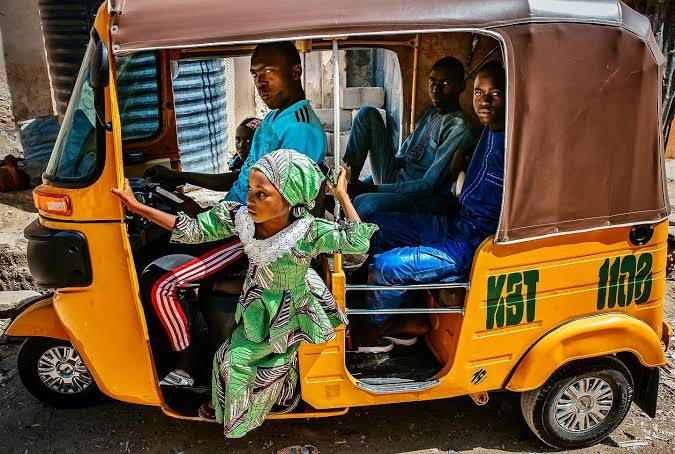
The Kano State Hisbah Board has concluded arrangements to commence enforcement against female passengers who sit beside male tricycle drivers in Kano State, in a move it says is aimed at promoting morality in society.
In a statement issued by its Director of Public Enlightenment, Auwalu Ado Sheshe, the Board said the operation would be carried out in collaboration with associations of tricycle riders and owners across the state.
The directive specifically targets situations where women ride in close proximity to drivers who are not their maharams while using commercial tricycles, popularly known as Adaidaita Sahu. The Board described the measure as part of efforts to sanitize the transport sector and prevent actions that could attract the displeasure of Allah (SWT).
It called on all tricycle operators to comply with the new regulation to avoid sanctions, warning that enforcement would begin imminently.
Female passengers were also urged to adhere to the directive, which the Board said is intended to safeguard their dignity and that of their families.
The Hisbah Board reaffirmed its commitment to ensuring a morally upright society guided by Islamic teachings, stressing that it is fully prepared to enforce the measure across the state.
Ukraine recovers bodies of Nigerians allegedly combatting for Russia
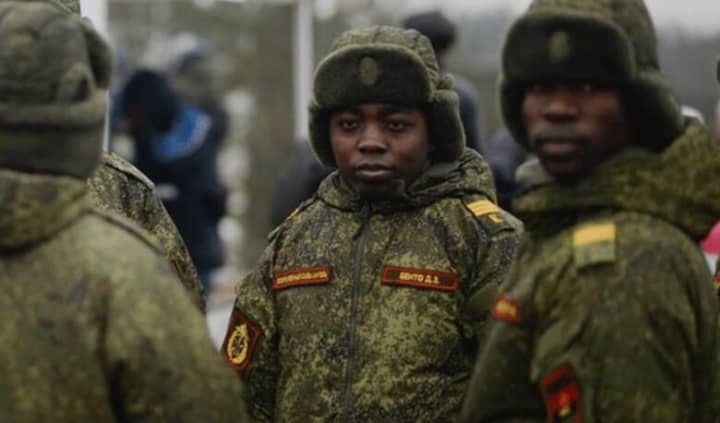
Ukrainian authorities have announced the recovery of the bodies of two Nigerian nationals in the Luhansk region, alleging that they were fighting on the side of Russia in the ongoing war between both countries.
In a statement issued on Thursday, Ukraine’s Defence Intelligence identified the deceased as Hamzat Kazeen Kolawole, 42, and Mbah Stephen Udoka, 38.
According to the agency, the two men were enlisted in the 423rd Guards Motor Rifle Regiment, military unit 91701, under the 4th Guards Kantemirovskaya Tank Division of the Armed Forces of the Russian Federation.
“Both served in the 423rd Guards Motor Rifle Regiment of the 4th Guards Kantemirovskaya Tank Division of the Armed Forces of the Russian Federation,” the statement said.
The report stated that the Nigerians signed contracts with the Russian Army in the second half of 2025. Kolawole reportedly enlisted on August 29, while Udoka signed on September 28.
Ukrainian intelligence disclosed that Udoka was deployed on October 3, five days after signing his contract, despite lacking prior military experience.
“Udoka had no documented military training before his deployment,” the statement noted, adding that no training records were found for Kolawole, which suggested he may also have been sent to the battlefield without proper preparation. It added that Kolawole left behind a wife and three children in Nigeria.
The agency said the two Nigerians died in late November during a drone strike. The incident occurred while they were allegedly attempting to launch an attack on Ukrainian positions in the Luhansk area.
“Ukraine’s Defence Intelligence warns foreign citizens against travelling to the Russian Federation or accepting any form of employment on the territory of the aggressor state,” the statement cautioned.
It further warned that such travel carries a “real risk of being forced into so-called ‘suicide’ assault units and ultimately dying on Ukrainian soil.”
The development followed a recent report by CNN which alleged that several Africans, including citizens of Nigeria, Ghana, Kenya and Uganda, were recruited to Russia under the guise of civilian employment such as drivers and security guards. The report claimed that many were later compelled into military service and deployed to combat zones with little training.
However, the Russian Ambassador to Nigeria, Andrey Podyelyshev, dismissed the allegations. He denied claims that Russia engaged in deceptive recruitment or forced enlistment of foreign nationals.
INEC seeks nearly N1tn for conducting 2027 general elections
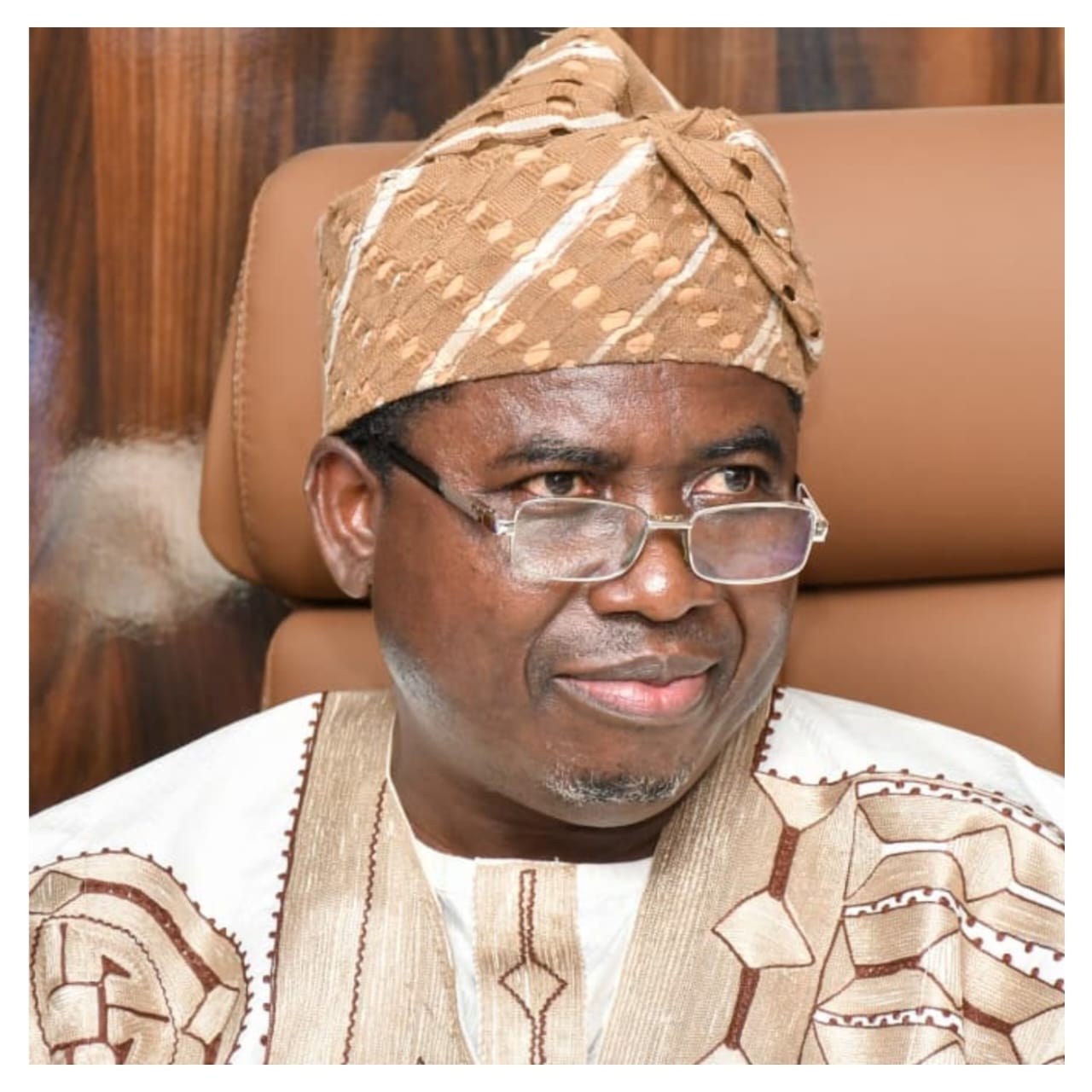
The Independent National Electoral Commission has informed the National Assembly that it will require N873.78bn to conduct the 2027 general elections.
The commission also proposed N171bn as its budget for operations in the 2026 fiscal year.
INEC Chairman, Joash Amupitan, disclosed this during the presentation of the commission’s 2026 budget proposal and projected expenditure for the 2027 polls before the National Assembly Joint Committee on Electoral Matters in Abuja.
He explained that the N873.78bn estimate covers the full conduct of the 2027 general elections. He added that the N171bn request for 2026 would fund routine responsibilities. These include by-elections and off-season governorship polls.
The proposed election budget shows a sharp rise compared to the N313.4bn released by the Federal Government for the 2023 general elections.
Providing a breakdown of the projection, Amupitan said, “N379.75bn is for operational costs, N92.32bn for administrative costs, N209.21bn for technological costs, N154.91bn for election capital costs and N42.61bn for miscellaneous expenses.”
He noted that the estimate was prepared “in line with Section 3(3) of the Electoral Act 2022, which mandates the commission to prepare its election budget at least one year before the general election.”
On the 2026 proposal, the INEC chairman said the Ministry of Finance issued a budget envelope of N140bn. He, however, stated that “INEC is proposing a total expenditure of N171bn.”
According to him, the 2026 estimate includes N109bn for personnel costs, N18.7bn for overheads, N42.63bn for election-related activities and N1.4bn for capital projects.
Amupitan also revealed that the election budget did not accommodate a fresh request by the National Youth Service Corps seeking an upward review of allowances for corps members engaged as ad hoc election staff.
During the session, Senator Adams Oshiomhole argued that external bodies should not impose a budgeting template on INEC due to the sensitive nature of its mandate. He called for the removal of the envelope budgeting framework and urged lawmakers to support the commission’s financial request.
Similarly, a member of the House of Representatives, Billy Osawaru, advocated placing INEC’s funding on first-line charge in line with constitutional provisions. He said this would guarantee early release of funds for election planning.
The joint committee later approved a motion recommending the one-time release of the commission’s annual budget. It also pledged to review the NYSC’s request estimated at about N32bn to raise corps members’ election allowance to N125,000.
Chairman of the Senate Committee on INEC, Simon Lalong, assured that the National Assembly would collaborate closely with the electoral body to ensure successful conduct of the 2027 polls.
Also speaking, Chairman of the House Committee on Electoral Matters, Bayo Balogun, promised legislative backing but cautioned the commission against making commitments it might not fulfil.
“IReV was not even in the Electoral Act; it was only in INEC regulations. So, be careful how you make promises,” Balogun warned.
Miyetti-Allah rejects terrorism allegation, faults reported US sanctions move
By Sabiu Abdullahi
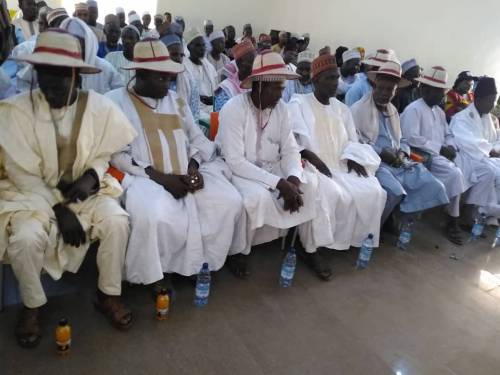
The Miyetti Allah Cattle Breeders Association of Nigeria (MACBAN) has dismissed reports suggesting that lawmakers in the United States are considering sanctions against the group, insisting that it remains a peaceful and law-abiding body.
National President of the association, Baba Othman Ngelzarma, made the position known during an interview with Trust TV. He said there was no basis for the U.S. Congress to contemplate branding the umbrella body of herders as a terrorist organisation.
Ngelzarma expressed surprise over the development. He disclosed that leaders of the association had previously held engagements with officials of the U.S. Embassy in Nigeria.
“We received the news with the greatest shock because we don’t know what the association has done to deserve such a sanction,” he said.
He explained that MACBAN was founded 42 years ago as a trade association. According to him, the body was established as a non-violent and non-religious platform to defend the interests of cattle breeders nationwide, regardless of ethnic or religious identity.
“It is a producer association created to protect the interests of cattle breeders. It is the only democratic pastoralist group we have in the country because its leadership emerges through elections,” he said.
The MACBAN president insisted that the association does not bear arms and has no link with criminal activities.
“This is an association that has never taken responsibility for any crime, has never supported criminality and is not cooperating with any group of criminals,” he stated.
He added that the organisation has maintained collaboration with security agencies in efforts to tackle crime. He noted that the partnership has come at a cost, as some of its leaders lost their lives in the process.
“As a result of this cooperation, many leaders of the association have lost their lives. So, we are really surprised that this association is still being considered for sanction,” he said.
Ngelzarma further stressed that MACBAN operates openly. He said the association runs offices across the 36 states and in local government areas, functioning within legal frameworks.
“We work with the Nigerian government at the state, local and federal levels. We also collaborate with all security agencies,” he added.
He called on President Bola Ahmed Tinubu to safeguard members of the association from what he described as an existential threat.
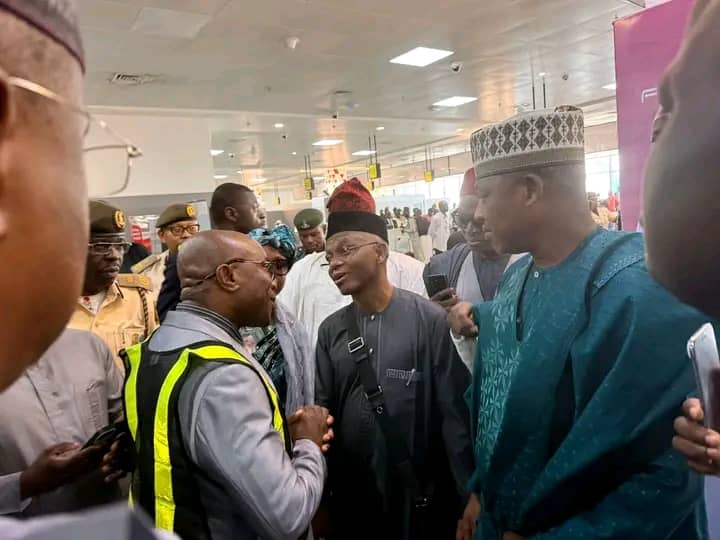
EFCC, DSS attempt arrest of ex-governor El-Rufai at Abuja airport without warrant
By Abdullahi Mukhtar Algasgaini
Security operatives of the Department of State Services (DSS) on Thursday afternoon attempted to arrest former Kaduna State Governor Malam Nasir El-Rufai upon his arrival at the Nnamdi Azikiwe International Airport, Abuja, in an incident his lawyers have described as “illegal” and a “flagrant violation of constitutional rights.”
El-Rufai arrived aboard Egypt Air flight MS 877 from Cairo, where he had undergone medical treatment. His legal team said he was met at the airport by DSS operatives who moved to arrest him without presenting any warrant or formal invitation letter.
According to a statement issued by his counsel, Ubong Esop Akpan, when El-Rufai calmly demanded to see the letter of invitation “a basic entitlement of any citizen facing state action,” none could be produced. Operatives subsequently seized his international passport, an act the lawyers termed “nothing short of stealing.”
The incident triggered a spontaneous reaction from ordinary Nigerians present at the airport, who surrounded the scene and insisted that the former governor could only be arrested upon a legitimate process. Their intervention, the statement noted, was “a testament to the citizenry’s unyielding commitment to the rule of law.”
The controversy stems from an invitation by the Economic and Financial Crimes Commission (EFCC), which was delivered to El-Rufai’s residence while he was already abroad. His lawyers described the demand for immediate attendance as “inherently illogical and impractical.”
In response, the legal team formally communicated with the EFCC on El-Rufai’s behalf since December 2025, assuring compliance upon his return. On Wednesday, they explicitly notified the anti-graft agency that the former governor would voluntarily appear at their office by 10:00 a.m. on Monday, February 16, 2026.
“Resorting to arrest despite this clear commitment exemplifies arbitrary conduct and undermines procedural integrity,” Akpan’s statement read.
The legal team has issued a firm public declaration that El-Rufai “will never take the cowardly route of running away from law enforcement” and will honour “all legitimate law enforcement summons without preconditions.”
The lawyers demanded the immediate cessation of all unlawful efforts to detain their client, the immediate return of his seized passport, and a formal apology for what they described as an “egregious infringement on his dignity and rights.”
They also vowed to pursue legal action against all persons and agencies responsible for the incident, stating: “The judiciary remains the ultimate arbiter, and we shall seek redress through all available legal channels to protect the sanctity of the law.”
As of press time, the EFCC and DSS had not issued official statements regarding the incident.
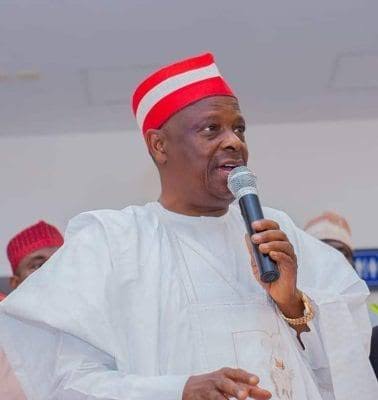
Why Kwankwaso was singled out in US religious freedom bill – Kperogi
By Uzair Adam
Professor Farooq Kperogi has explained why former Kano State Governor, Senator Rabiu Musa Kwankwaso, was singled out in a proposed United States congressional bill seeking visa bans and asset freezes against certain Nigerian officials over religious freedom concerns.
Kperogi, a Nigerian-American scholar and media commentator, disclosed this in a Facebook post on Wednesday while reacting to the proposed “Nigeria Religious Freedom and Accountability Act of 2026,” introduced by Republican Congressman Riley Moore and other lawmakers.
The bill reportedly seeks to hold Nigerian officials accountable over allegations of religious persecution, including actions connected to the implementation of Sharia law in some northern states.
Kwankwaso, who served as Kano governor from 1999 to 2003 and later from 2011 to 2015, and was the presidential candidate of the New Nigeria People’s Party (NNPP) in the 2023 general election, was mentioned in connection with Kano’s adoption of Sharia in 2000.
In his post, Kperogi said he was initially “surprised, shocked even” that Kwankwaso was singled out among northern Muslim politicians, arguing that the former governor is not, “by any stretch of the imagination, a religious fanatic.”
Drawing from his experience as Assistant News Editor of Weekly Trust at the time, Kperogi recalled that Kwankwaso was reluctant to declare Sharia in Kano in 2000.
He said the Sharia bill in Kano was a private member’s bill, not sponsored by the governor or the state executive, unlike in several other northern states.
According to him, Kwankwaso resisted pressure for months and found himself at odds with both the public and the Muslim clerical establishment.
He cited his June 30, 2000 report co-authored with Sulaiman Aliyu, in which he wrote: “The governor was trapped in a delicate cul-de-sac. And his escape route was the launching of Sharia on the 21st of June 2000.”
Kperogi added that the pressure on the governor became so intense that he temporarily avoided public events, with his deputy, Abdullahi Ganduje, often representing him.
On one occasion, Ganduje was reportedly stoned during a Maulud celebration while standing in for the governor.
He further quoted Kwankwaso’s remarks at the formal launch of Sharia in Kano: “Only the state government has the right to punish offenders. We should avoid taking the law into our hands. We should not intimidate those who are not Muslims,” arguing that such a statement did not reflect extremist rhetoric.
Kperogi maintained that Kwankwaso’s implementation of Sharia was widely perceived as lukewarm, which, he said, contributed significantly to his loss in the 2003 governorship election to Ibrahim Shekarau, who had strong backing from the clerical establishment.
Explaining why the U.S. lawmakers may have targeted Kwankwaso, Kperogi said the former governor was the only nationally prominent Nigerian politician who openly criticised the United States’ designation of Nigeria as a Country of Particular Concern (CPC) over religious freedom issues.
Kwankwaso had argued that the designation was unhelpful, reduced a complex problem to simplistic binaries, risked worsening interreligious tensions, and that cooperation would be more constructive than confrontation.
Kperogi noted that Congressman Moore reacted sharply on social media, accusing Kwankwaso of complicity in the deaths of Christians and referencing his role in instituting Sharia law in Kano. Kwankwaso did not respond publicly to the provocation.
According to Kperogi, the inclusion of Kwankwaso in the bill appears to be rooted less in his historical record and more in his public dissent from a particular U.S. policy stance.
He, however, pointed out that the bill remains at the introduction stage in the U.S. House of Representatives and must pass through several legislative processes before it can become law, noting that many Nigeria-specific standalone bills do not advance beyond preliminary stages.
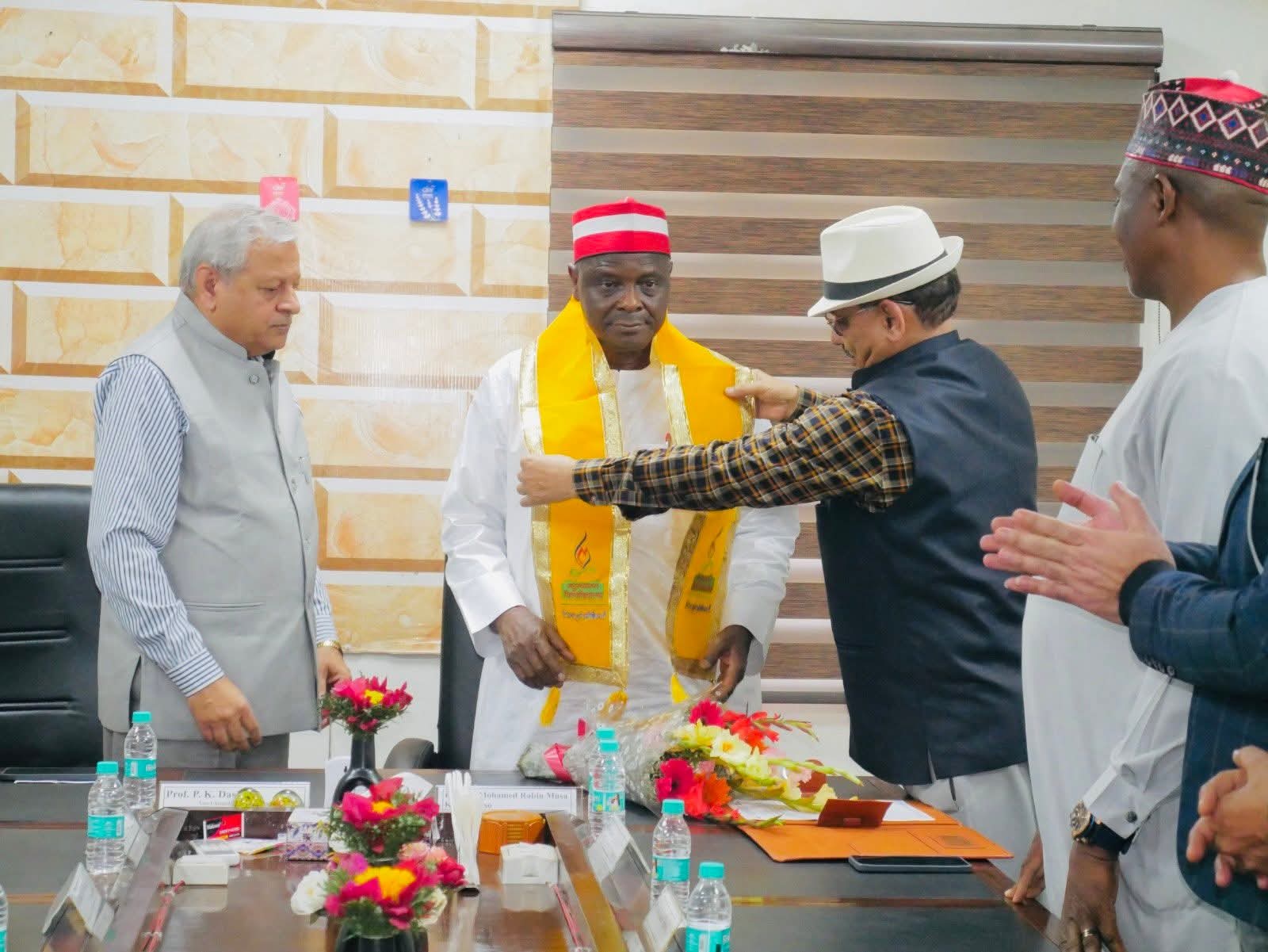
Kwankwaso visits Indian university to boost educational collaboration
By Sabiu Abdullahi
Former Kano State Governor, Rabiu Musa Kwankwaso, visited Mangalayatan University in Aligarh (Beswan), Uttar Pradesh, India, on Wednesday as part of efforts to strengthen education and expand access to quality learning opportunities for Nigerians.
Mr. Kwankwaso stated this in a statement he posted via his official Facebook handle today Thursday.
According to Kwankwaso, the visit aims “to foster meaningful collaborations in research, technology, and academic exchange between Nigerian institutions and their Indian counterparts, promoting mutual growth and innovation in higher education.”
He also expressed gratitude to the university community for their hospitality, stating: “I extend my heartfelt appreciation to the entire Mangalayatan University community—particularly the Chancellor, Vice Chancellor, Senate, and staff— for their exceptional warmth, hospitality, and gracious reception.”
Kwankwaso’s visit highlights ongoing initiatives to build partnerships that could enhance the standard of higher education in Nigeria through international cooperation.
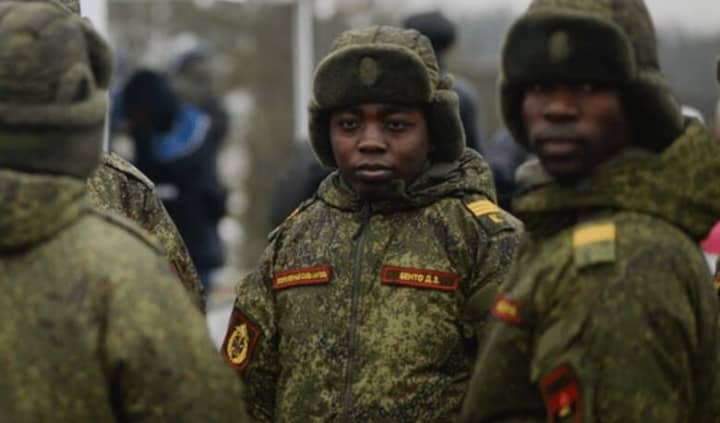
EXCLUSIVE: Nigerian families counter Russia’s denial of recruiting Nigerians for Ukraine war
By Abdullahi Mukhtar Algasgaini
A report citing the Russian government’s denial of recruiting Nigerians to fight in Ukraine is facing direct challenge from evidence within Nigerian communities.
This follows an article published on 10 February 2026, which relayed the Russian Embassy’s statement refuting any state-sponsored recruitment program.
The rebuttal, provided by a Kaduna state resident, presents a concrete counter-narrative. The individual states that a neighbor, a Nigerian national, voluntarily enlisted in the Russian military, was deployed in connection with the Ukraine conflict, but he doesn’t detail his recruitment process and contract terms to family and community before leaving.
“This direct evidence renders the blanket denial incomplete and misleading,” the source wrote in a communication to the Daily Reality editorial team. The account suggests recruitment is operational through pathways potentially involving private military companies or intermediaries, even if not an official government scheme.
The source argues the situation of the four deceased Nigerians previously reported—Adam Anas, Akinlawon Tunde Quyuum, Abugu Stanley Onyeka, and Balogun Ridwan Adisa—may represent only the most tragic outcomes of a broader phenomenon.
The Russian Ambassador’s offer to investigate “illegal organisations or individuals” if provided details is cited as an implicit acknowledgment that the recruitment of Nigerians is occurring.
The challenge calls for amended reporting that separates diplomatic rhetoric from ground truth, proposing a revised summary.
The core issue, the source contends, is no longer if Nigerians are fighting, but how they are recruited, under whose authority, and with what safeguards. The families of those recruited and the Nigerian public, they state, require answers beyond a simple denial.