Religion

The sociology of Eid festivals in Nigeria 

By Hassan Idris

It’s quite important to demystify the fact that in the festivity of the Eid festival, which is a religious celebration amongst Muslims all over the world, there is quite a lot of sociologically significant display, which demands sociological explanations and outlooks. Religious festivals such as Eid hold greater importance to sociologists like Emile Durkheim (1858-1917). He developed a widely used theory for explaining what holds society and social groups together through his study of religion. He identified core aspects of religious structure and participation that sociologists today apply to the study of society in its entirety.

This includes the role of religious festivals and rituals in bringing about social cohesion, social solidarity and people together around shared practices and values. It also comprises ways that participation in religious festivals and rituals reaffirms shared values and thus reaffirms and strengthens the social bonds between people and the experience of “collective effervescence,” in which people tend to share in feelings of excitement and are unified in the experience of participating in religious festivals and rituals together. The Eid festival, an Islamic holiday celebrated by many Muslims as a religious holiday with religious rituals, values, and relationships, is one of them.

Thus, Durkheim defined religion as a“unified system of beliefs and practices relative to sacred things. Sacred to him meant extraordinary—something that inspired wonder and that seemed connected to the concept of “the divine.” He argued that“religion happens” in society when there is a separation between the profane (ordinary life) and the sacred. A rock, for example, isn’t sacred or profane as it exists. But if someone makes it into a headstone, or another person uses it for landscaping, it takes on different meanings—one sacred, one profane. Durkheim, who’s generally considered the first sociologist to have analyzed religion regarding its societal impact, believed that religion is about community. It binds people together (social cohesion), promotes behaviour consistency (social control), and offers strength during life’s transitions and tragedies (meaning and purpose).

With the applicability of the methodology of natural science to the study of society, Durkheim held that the source of religion and morality is the collective mindset of society and that the cohesive bonds of social order result from common values in a society. He contended that these values need to be maintained to maintain social stability, to which explanations of Durkheim on the importance and functionality of religion would be used to explain and understand the religious Eid festivals celebrated by all the Muslims in the world.

However, the word “Eid” means festival or feast. Therefore, it depicts the event that is being celebrated. Muslims celebrate two types of Eid yearly following two significant acts of worship. The first is called “Eid Al-Fitr”, which means “the fast-breaking Festival” celebrated after fasting the entire month of Ramadan. The second, known as “Eid-ul-Adha,” meaning “the festival of sacrifice which is celebrated immediately upon the completion of Hajj, the annual pilgrimage to Mecca. The Eid Al-Adha entails going for a pilgrimage to Mecca performed by millions of Muslims simultaneously once a year. Through Eid Al-Adha, the sacrifice Abraham was willing to make to God and the mercy God had upon him becomes celebrated and manifested.

Muslims celebrate the day by sacrificing a sheep or so and sharing it not just with family and friends but also with the less privileged. This celebration lasts four days, beginning the day after the completion of Hajj. The celebration of Eid Al-Fitr lasts one day, starting with the sighting of the new moon, which marks the end of the Islamic month of Ramadan and the beginning of the following month. During Ramadan, Muslims fast to purify themselves and get closer to God. Ramadan is like a retreat, a time to step aside worldly worries, focus on spirituality, and improve connections with the one who gave them life and blessings.

After going through a long spiritual retreat for a maximum of 29 to 30 days, it is only logical that a feast is held to mark the end of the month. This is what Eid Al-Fitr is all about. Like Ramadan, Eid Al-Fitr begins with the first sighting of the new moon, so most of the time, Muslims have to wait until the night before Eid to verify its date. If the new moon is not visible, the month lasts 30 days. The date changes annually on the Gregorian calendar and varies from country to country, depending on geographical location.

Though, in declaring the start of Eid, Muslim-majority countries depend on the testimonies of local moon sighters. The Judicial High Court then decides if Eid has arrived. When the sighting has been verified, Eid is declared on television, radio stations and mosques. The celebration of Eid Al-Fitr lasts one day, starting with the sighting of the new moon, which marks the end of the Islamic month of Ramadan and the beginning of the following month.

The first Eid Al-Fitr was celebrated in 624 CE by the Prophet Muhammad (PBUH) and his companions after their victory in the battle of Badar, a turning point in the prophets’ struggle with his opponents among the Quraish in Mecca during the early days of Islam. Inasmuch as all Muslims celebrate the festival, there are many doctrines and ways of celebrating it which are sociological and are of paramount interest and importance to sociologists and Anthropologists. However, the traditions of Eid Al-Fitr entail ‘Sawm’ ( fast), which is the practice of fasting during the holy month of Ramadan and is one of the five pillars of Islam.

Muslims believe that during Ramadan, the Qur’an text was revealed to the Prophet Muhammad (S.A.W). Muslims celebrate Eid Al-Fitr with “Salat Al Eid” (Eid prayers). There is no audible call to prayer for the Eid prayers. Muslims will gather in mosques or open spaces and offer two units of prayer–called “Rakat”. The prayers are followed by a sermon, in which the Imam asks for forgiveness, mercy, and peace for every being worldwide.

To further bolster the sociological social solidarity and love in Islam, which clarifies Durkheim’s postulation, the other key element of the Eid festival is giving money to the poor alias ‘Zakat al-Fitr’, sending Eid greetings and feasting with families. For many Muslims, Eid al-Fitr is a festival to show gratitude to Allah for the help and strength he gave them throughout the month of Ramadan to help them practice self-control. The phrase commonly used by Muslims as a greeting on this day is “Eid Mubarak”, which is Arabic for ‘blessed festival’.

Muslims begin Eid with the observance of the Eid congregational prayer, sometimes in the mosque but usually in an outdoor location. Before going for the Eid prayer, it’s encouraged to take a bath, wear the most befitting clothes, and look dignified for the celebration. On the way to the Eid Prayer, Muslims recite the words: Allah is great, Allah is great, Allah is great. There is no other God but Allah. Allah is great; Allah is great. To him belongs all praise. And after the Eid prayer, people gather to feast with their families and friends, where they get to savour the taste of various dishes.

Some even travel to their hometowns or home countries to celebrate with their extended families and rekindle the bond of kinship. There is a rich tradition of gift exchange during Eid. For example, it is customary to gift new clothes and shoes to children in Nigeria. Sometimes, the children receive money to buy sweets and snacks to enjoy with their friends and cousins. In western countries, however, children receive gifts instead of cash, and parents decorate their homes to create a mood of excitement for the family.

Finally, Eid is meant to celebrate the completion of spiritual duty and a time to bond and exchange hugs, kisses, and laughter with family, friends and the community. Each country has traditional foods, and sweets prepared ahead of Eid or on the morning of the first day. These foods range from special biscuits and bread to cakes and puddings. On the first day of Eid al-Fitr, voluntary fasting is not allowed as Muslims are encouraged to feast and celebrate the completion of a month of worship and abstinence from food.

Greetings for Eid also vary depending on the country and language. For instance, in Indonesia, Eid is called Lebaran, so Indonesians would say, “Selamat Lebaran”, which means Happy Eid. Other variations of Happy Eid are “Barka da Sallah” in Hausa, a Nigerian language. In addendum, with clothes being an essential marker of Eid, some people wear traditional clothes from their culture, while others pick out something new to wear. Eid is a time for every Muslim to share and express love, peace, and friendship worldwide and extend hands to their non-Muslim neighbours and friends during this festival.

Hassan Idris wrote from Kogi State via idrishassan035@gmail.com.

Hajj 2022: NAHCON apologises for failure to convey 1,500 intending pilgrims 

By Muhammad Sabiu

The National Hajj Commission of Nigeria (NAHCON) publicly apologized on Friday for its inability to transport 1,500 pilgrims for the 2022 Hajj.

Mrs Fatima Usara, the commission’s Assistant Director, Public Affairs Division, issued a statement on the unfortunate drama on Friday in Abuja.

She stated that there would be nine pilgrims from Bauchi, 91 from Plateau, and 700 from Kano State, who were supposedly travelling to the holy country.

Usara also expressed regret for the commission’s inability to transport an estimated 750 intending pilgrims from the Private Tour Operators sector.

She stated that the commission accepted responsibility for the hardships and disappointments experienced during outbound airlift operations to the Kingdom of Saudi Arabia by intending pilgrims for the 2022 Hajj.

Usara was quoted in the statement as saying, “Sadly, in spite of all efforts to transport all Nigerian intending pilgrims to Saudi Arabia for the 2022 Hajj, NAHCON was incapacitated in discharging this responsibility.

“Majorly due to last-minute setbacks that frustrated its plan to conclude transportation of pilgrims by June 27.

“Unfortunately, the chartered flights option that gave so much hope to NAHCON and the Private Tour Operators’ leadership also became a failure as their IBAN accounts failed accreditation by the respective authorities in Saudi Arabia.”

Meanwhile, a video of some aggrieved intending pilgrims who also didn’t make it to the 2022 Hajj has gone viral on social media, airing their grievances and cursing anyone who has a hand in their ordeal.

MURIC calls for adjustment of NECO timetable for Sallah celebration

By Ahmad Deedat Zakari

The Muslim Rights Concern, MURIC, has called on the National Examinations Council, NECO, to adjust its examination timetable to accommodate Muslims who would be celebrating Eid-el-Adha, aka Sallah.  

NECO has scheduled Data Processing (Practical) from 10 am to 1 pm on July 9, which clashes with the first day of Eid.

MURIC Director and Founder, Professor Ishaq Akintola, made the call on Sunday, July 3, 2022, in a statement.

“We are fully aware that the clash was not deliberate as NECO had actually demonstrated goodwill by setting aside a whole week for Sallah celebrations (Monday, 11th July to Friday 15th July), and this reflected in its timetable.

“We, therefore, appeal to the NECO authorities to kindly shift the examination of that day alone (Saturday 9th July 2022) to another date in order to enable its teeming Muslim candidates [to] sit for their examinations.” Part of the statement reads.

BREAKING: Dhul Hijjah crescent sighted in Saudi Arabia

Reports coming from the Kingdom of Saudi Arabia (KSA) have indicated that the crescent for the month of Dhul Hijjah for the year 1443 has been sighted.

This is contained in a short statement posted on the verified Facebook page of Haramain Sharifain.

The statement added that “subsequently Dhul Hijjah 1443 will begin tomorrow, Thursday, 30 June 2022 pending [an] official statement from the Royal Court.”

Therefore, the day of Arafah will be Friday, 8 July 2022 while Eid Al Adha will be Saturday, 9 July 2022.

Christianization of Almajiris in Jos: the untold truth

By Abdul Mutallib Muktar

I read from today’s edition of Daily Trust how DSS rescued 21 Almajiris from a house under the custody of ECWA church in Jos North. The Almajiris were alleged to have been forcefully brought there from another state. After their rescue, the Almajiris revealed how they were forced to learn and practise Christianity.

Keep aside the pluralism of Nigeria and remember how Plateau State has been suffering from crises for over two decades. The major cause of these crises is undeniably attributable to religious divides.

Taking and camping children from another religion in the name of educating them without parental consent, especially when they’re forced to receive religious instructions and attend religious ceremonies or observance different from their own religion, is an act that clearly violates Section 38(2) of the Constitution of the Federal Republic of Nigeria, 1999 (as amended).

Therefore, the act of the Evangelical churches is constitutionally wrong. It is unacceptable in the eyes of the law. More so, looking at the situation in Plateau State, it is utterly unthinkable for the church to camp Muslim Almajiris without the consent of their parents or guardians and teach them Christianity or force them to attend church services. This act is akin to throwing an ember into a tank of fuel.

Looking at the issue from another angle, it behoves any fair pen, to tell the truth to the parents of these Almajiris. The remote places in the North still view the Almajiri system as a good way of learning merely because of its ancestral tint. It is highly condemnable to see little children roaming about the streets of our cities day and night, begging for food in the name of learning. Looking at the slavish lifestyle of Almajiris in Arewa, it will not be surprising if someone acts in the belief that the parents of these Almajiris have disowned them.

More strange news would continue to hit the headlines as long as the Almajiri system remains what it is today. However, as life changes, people must adjust to take a better breath.

Muktar writes from Jos, Plateau State and can be reached via abdulmutallib.muktar@gmail.com.

Bandits conquer Kaduna communities, marry up young girls, ban political activities

By Uzair Adam Imam

Ansaru terrorist group reportedly took over communities in the eastern part of Birnin Gwari Local Government Area of Kaduna State and banned political activities.

The Daily Reality gathered that this was not the first time the terrorists conquered the area, recruited young residents and married up their young girls.

According Birnin-Gwari Emirate Progressives’ Union (BEPU), who spoke through its chairman, Ishaq Kasai, the terrorists have camps in seven political wards in the eastern part of the Local government area.

He added, “In fact, the group continue to gain acceptance from many members of the communities, particularly in Old Kuyello and Damari of Kazage Ward. Even this week, two members of the group were engaged to wed two girls and will be tying the nuptial knots by the coming Saturday.

“The Ansaru (grooms) laid down some rules to the in-laws for the wedding. They ruled that, after the wedding, they would take the brides to the forests and live there with them and do not want the brides to go along with any furniture except plates (coolers) and mattresses because anything other than that is not in tandem with their beliefs and convictions.

“A disturbing scenario is where the group banned all political activities in many communities such as Damari of Kazage Ward. Politicians from these communities have to go far away secretly to the neighbouring communities before they hold political meetings.

“For instance, this week, an Okada rider who lives in Unguwar Makera of Kazage Ward was seen with a sticker of one of the candidates vying for the Kaduna State House of Assembly, and he was thoroughly beaten by the Ansaru.

“People in these communities are now disenchanted and frustrated about participating in political activities.

“We don’t know how the coming Elections will take place in those areas because even the last Local Government Election did not hold in the Area due to the escalating insecurity, which made the election results be declared inconclusive, and a Sole Administrator was appointed overseeing the affairs the Local Government up till now.

“In short, the Ansaru are now in charge of many of the communities in the area, and the group is expanding its occupation. They now call the shot and determine what is to be done in the villages they are dominating,”‘ he said.

No intervention from the government

Kasai decried that there has been no government or military intervention in these communities long since the attack.

He lamented, “our communities are being attacked, people kidnapped and killed daily without a response, acknowledgement or report from Government.

“We call on the Government to please organise a coordinated security operation both aerial and ground to the hideouts of these criminals in our forests in order to flush them and stop daily killings of our people by the unchallenged terrorist groups surrounding our communities,” he said.

However, the State Police Command Public Relations Officer, DSP Mohammed Jalige, stated that he needed to study the statement before comments.

Tributes pour in as Turkish Sunni Sheikh, Mahmud Effendi, dies

By Ahmad Deedat Zakari

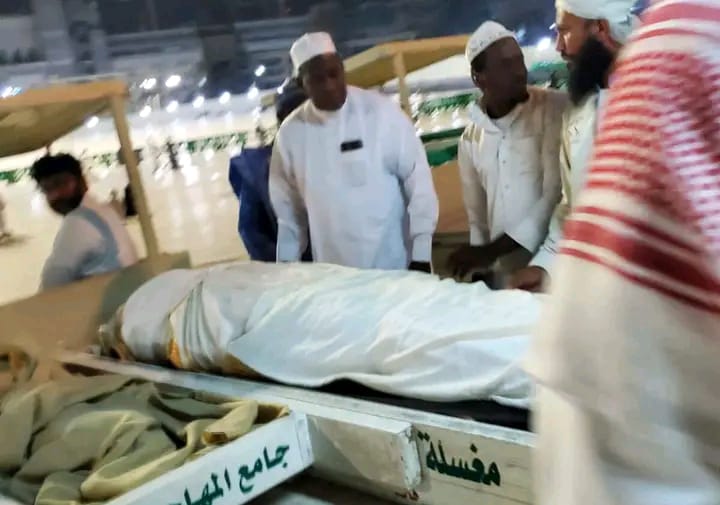
Influential Turkish and Sunni scholar, Sheikh Mahmud Effendi passed on at the age of 93. 

Sheikh Effendi, who was well known for his emphasis on strict adherence to the sunnah, died on Thursday after battling kidney-related problems. 

His grandson announced his demise on Twitter on Friday, June 24, 2022. 

“His Excellency Mahmud Effendi, my grandfather, has reached Allah,” he tweeted. 

The late Sheikh was buried on Friday, after a funeral at the Faith Mosque in Istanbul. The funeral which was held after the Jumu’ah prayer was attended by thousands of people. 

Turkish President, Tayyip Erdogan joined mourners in paying tributes to the late shaykh.

“May God have mercy on Mahmoud Effendi, a spiritual guide in our country. He dedicated his life to Islam. I wish patience to his family, students and all his fans. Let him rest in peace,” he tweeted. 

Other important Muslim figures around the world have also joined in praying and extolling the virtues of the late sage. 

“Innā li-Llāhi wa inna ilayhi rāji’ūn. Saddened to learn of the passing of Shaykh Mahmud Effendi of Turkey. He revived Islam & Sunnah at a challenging time, inspiring millions of people in #Turkey & around the World. A great loss for the Ummah,” said Pakistan’s former Prime Minister, Imran Khan

“Do you know how you can tell a real scholar and walī of Allah?” 

“It is the fact that Allah has written the love of this person in the hearts of millions of righteous people from different backgrounds. The death of the Turkish scholar Sheikh Effendi shows such a love والله حسيبه.” Dr Yasir Qadhi tweeted

Imam Omar Suleiman was not left out in praying for the shaykh as he also took to his verified Twitter handle to mourn his demise. 

“May Allah have mercy on Shaykh Mahmud Effendi, forgive him and elevate him. What a loss for the Ummah. A man I always felt had a secret with His Lord that was manifest in his face,” said Imam Omar Suleman.

Sheikh Mahmud Effendi was born in Turkey’s northern Trabzon, he completed the memorization of the Qur’an at the age of 10. 

He authored Tafsir of the Qur’an in the Turkish language named Rahu’l Furkan

He was ranked number 34 in the 2022 edition of “The Muslim 500”; the annual publication by the Jordan-based Royal Islamic Strategic Studies Centre, which ranks the most powerful Muslims globally.

Hijab Judgement: Lawyer appears in traditionalist’s attire to court

By Ahmad Deedat Zakari

A Nigerian lawyer identified as Malcolm Omirhobo appeared in what looked like a traditional worshipers’ attire before the Supreme Court on Thursday, June 23, 2022.

Omirhobo was barefooted and dressed in a red wrapper, among other things to identify with his traditional belief.

According to him, his appearance is inspired by the Supreme Court Judgement delivered on Friday. The apex court had passed a judgement on Friday allowing the use of hijab by female Muslims in secondary schools.

Members of the Legal Profession have expressed divergent views on the act. While some are in support, others are against the behaviour.

A Nigerian Human Right Lawyer, Pelumi Olajenbgesi, took to his Facebook account to condemn the act.

“This is unacceptable! We cannot make nonsense of the respected and noble Legal Profession for any reason. Yes, we have issues and challenges, but this is totally condemnable.” Pelumi posted on his Facebook page.

Another Lawyer, John Aikpokpo-Martins, commended Omirhobo. “CHIEF MALCOLM OMIRHOBO IS MY MAN OF THE YEAR. He got Chutzpah,” He posted.

Although many bar members have reacted differently and expressed their biases, the leadership of the Nigerian Bar Association, NBA, which by law, is required to regulate and discipline lawyers, is yet to comment on the issue.

Supreme Court allows use of Hijab in Lagos schools

By Muhammad Sabiu

Lagos State’s ban on female Muslim pupils attending public schools in the state wearing the hijab was overturned by the Supreme Court on Friday.

In a 5–2 split ruling, the Supreme Court maintained the Court of Appeal, Lagos judgement from July 21, 2016, which overturned Justice Grace Onyeabo’s October 17, 2014 decision from the High Court of Lagos State.

The lead majority judge, Justice Kudirat Kekere-Ekun, dismissed the Lagos State appeal against the 2016 decision of the Court of Appeal, Lagos, because it lacked merit. 

Justice Tijani Abubakar read the lead majority judge’s decision on Friday.

Wearing the hijab in the Yoruba-dominated region, which is a mixture of Muslims and Christians, has been causing a lot of controversies.

2023: The imperative of a Muslim-Muslim ticket for APC

By Prof. Abdussamad Umar Jibia

The All Progressive Congress (APC) is undoubtedly a party that brings together some of the most outstanding politicians in Nigeria. However, what makes the APC most attractive is the fact that it is in power. It seized this power from the People’s Democratic Party (PDP), a party that ruled Nigeria for 16 years and was also adjudged a failure by the majority of Nigerians. That is why many people do not see PDP as the solution despite all the shortcomings of the APC-led government and the economic and security challenges confronting Nigerians.

One manifestation of the interest Nigerians have in the APC is the occupation of social media discussions, radio and television programmes and interpersonal group discussions by the APC Presidential ticket. Last week, Asiwaju Bola Ahmad Tinubu, a devout Muslim from Lagos, won the APC Presidential primary election with a landslide to qualify as the party flag bearer in the 2023 presidential election. As is the tradition, Alhaji Tinubu, a southerner, is expected to pick a Northerner as his running mate.

But there is also another tradition. Christian flagbearers usually pick Muslim running mates, and Muslim flagbearers choose Christian running mates. The examples are many. In fact, since Nigeria’s return to party politics, that has been the case. First it was Obasanjo/Atiku, then Yaradua/Jonathan followed by Jonathan/Sambo and now Buhari/Osinbajo. But in all these examples, the Muslims are Northerners, and the Christians are southerners. There is no problem since it can be said with a reasonable degree of accuracy that Christians are the majority in the South and a negligible minority in the North.

Now, should Asiwaju pick a Northern Nigerian Christian as his running mate? I listened to many arguments. The Governor of Kaduna State, Mallam Nasiru El-Rufai, for example, said religion does not matter in the choice of a running mate. What matters, according to him, is competence. This argument is faulty because democracy is about the choice of the majority, a choice characteristically influenced by many factors, including ethnicity, religion, gratifications, etc., in our country. If it is just about merit, candidates would be selected based on their performance in a standard examination on governance organized by my colleagues in Political Sciences Department.

The position of the Christian Association of Nigeria (CAN) is the most uncouth and uncivilized. CAN thinks they have a monopoly for violence and always use threats instead of valid logic. Suppose their position was backed by sound logic. In that case, all they have to do is present their arguments to Nigerians including Christians and non-Christians like every other individual and group does. The rest shall be for Nigerians to judge. Again, in politics, threat is the language of someone who has no one to influence, and it is obvious that peace-loving Nigerian Christians have lost faith in CAN and are no longer controlled by its rantings.

The fact is, any step taken by a political party preparing for an election is carefully handled to attract majority votes from the electorates. This includes the choice of its flagbearer and their running mate, its manifesto, which, unfortunately, most Nigerian voters do not read, its campaign strategy, etc.

Now, who are the majority voters in Northern Nigeria and what is their relationship with the minority? What would happen to the chances of APC if this majority realizes that the party is succumbing to threats like that of CAN to select its running mate? Is it by force to vote for the ruling party after all? Can’t they look and vote for an alternative?

Religion was not captured in the 2006 census. Still, we can have a good idea of the Muslim: Christian ratio in the North by considering the ratio of elected politicians in the North. Of the 19 elected governors in the North, 16 are Muslims representing 84.2 %, while three are Christians representing 15.8 % in the North and 8 % nationwide. Of the 58 senators from the North, nine are Christians representing 15.5 % in the North and 9 % in the entire country. In the North Central geopolitical zones, there are more Muslims than Christians. Four of the North Central elected governors are Muslims, with the other two being Christians.

These figures mean Northern Christians are a tiny minority compared to their Northern Muslim compatriots. Their number is even smaller when the country is considered as a whole and much smaller if we remember that most Christians in the North would not vote for APC regardless of its flagbearer or his running mate. You may wish to look at the voting pattern of Benue, Taraba and Southern Kaduna.

Over the years, activities of groups like CAN have set the Northern Christian minority against the Muslim majority. It is so bad that in any Northern Nigerian community where Christians are the majority, the story is about hate and violence against Muslims. The examples are many.

For example, as I am writing this piece, there is no single Muslim left in Tafawa Balewa, the hometown of the first Nigerian prime minister. The few Muslims who have not been killed have migrated to Bauchi and other places. Incidentally, that is the constituency of Yakubu Dogara, one of the Northern Christians being mentioned in the selection of a running mate for the APC flagbearer. In the event Dogara becomes the running mate of Asiwaju, the question every Northern Nigerian Muslim would ask is, is it compulsory for me to vote for my killer?

Other examples of Christian communities known for their violence against Muslims are Plateau State and Southern Kaduna. Over the last several decades, whole Muslim communities have been attacked and nearly wiped out in these places. Yet, when commissions of enquiry are set up, the grievances of the Northern Christians have always been that emirs dominate them, their great grandparents were enslaved, they are not given opportunities, etc.

Muslims have made many overtures in states where they have the majority in order to take Christians along and make them feel at home. An example of this is Kaduna state. It has always been ensured that the Deputy Governor of Kaduna is a Christian even though a Muslim-Muslim ticket can win with a landslide, as demonstrated in 2019. In their efforts to give Christians maximum opportunity, Muslim politicians were once suppressed to allow a Christian to become the governor. Where in the whole of the Christian world has this ever happened?

Moreover, chiefdoms were created for them by the Ahmed Makarfi administration to address Christians’ complaints of being traditionally ruled by emirs. After all these overtures, the same people killed over 1000 Muslims on one day in Zonkwa. Those who are saying that appointing a Christian as the running mate of Asiwaju would bring Christians and Muslims closer are probably not aware of this.

Compare the case of Kaduna with that of Plateau. Plateau has a population of Muslims equivalent to the population of Christians in Kaduna State. Yet, a Muslim has never been a Deputy Governor, much less a Governor. Attacks on Muslim communities in Plateau and Southern Kaduna only ceased because of the Fulani herders who, unlike the Hausa, would always take revenge when attacked. When the intolerant Christians realized it was a war they could not win, they had to declare peace.

That does not mean Muslim travellers are not intercepted in Plateau and massacred. We are very much aware of the murder of General Idris Alkali by Lafendeg non-Muslims. Yet, somehow, all the suspects arrested have been released due to the influence of the Governor, Simon Bako Lalong. We saw how he was running up and down between the state house and the Defence Headquarters to ensure that the culprits were not punished. Today, not even a fly of Plateau state has been convicted due to the murder of General Idris, a high-profile Muslim Army General.

Those pushing for Lalong to become Asiwaju’s running mate are probably ignorant of this. Suppose Lalong, who is only a Governor can successfully follow up to ensure that murderers of Muslims are not punished. What would happen if, tomorrow, he sits as the Acting President with full control of the country’s security apparatus and a similar thing happens?

Now take Babachir Lawal and the more charismatic Boss Mustapha. Both are from Adamawa State and were appointed by President Muhammadu Buhari only because he is Buhari, the darling of Northerners. The only question I have here is whether they have the political strength to defeat Atiku in their state. Certainly no. Outside Adamawa, other rules apply.

This write-up is not meant to malign any politician. On the contrary, all the Christian politicians I have mentioned above have APC dear to their hearts and wouldn’t like to see it lose at the polls. That is also the intention here.

Northern Nigerian Christians have not adequately prepared themselves for elections at the National level due to unnecessary inferiority complex and hate towards their Muslim neighbours. Of course, there are outstanding ones among them as no rule exists without exception. However, the collective behaviour of a community is used to assess people anywhere.

For now, Northern Christians may wish to set their house in order and plan for the future. Elections are not won by threats but by careful planning and building bridges.

Professor Abdussamad Jibia can be contacted via aujibia@gmail.com.