Religion

Kano loses pilgrim in Saudi Arabia 

By Ahmad Deedat Zakari

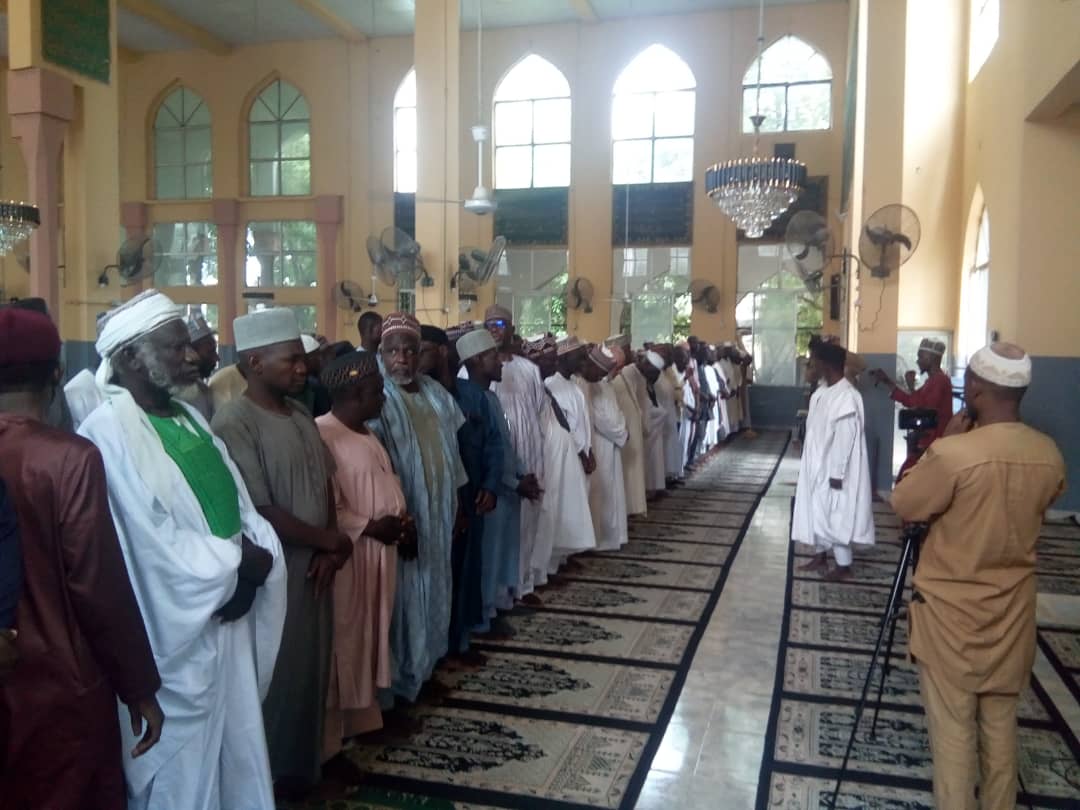
A Kano State pilgrim in Mecca has passed on in the holy city of Mecca. 

The Executive Secretary of the Kano State Pilgrims Welfare Board, Alhaji Muhammed Abba-Muhammad, disclosed this to the press on Saturday, August 6, 2022. 

The Executive Secretary said Idris Muhammad, who hailed from Madobi Local Government Area, passed on after a brief illness in a Hospital in Mecca. 

“The deceased has been buried according to Islamic rites at Grand mosque at Masjid Haram Shira yard in Mecca,” He said

He also prayed for the deceased and extended his condolence to his family.

On the Hausa-Fulani virtual rift and need for caution

By Yakubu Aliyu

A huge global empire machination is afoot to put a wedge among major Nigerian nationalities, the Hausa and Fulani, to weaken the social and cultural fabric of the North and the Muslim Ummah, for eventual onslaught to take over the mineral deposits under our soil, now that oil and gas are no longer paying off as they historically used to.

Again, this kind of discussion that is promoted by tech giants like Twitter is deliberately orchestrated to lay the basis for putting Nigeria in a perpetual low intensity conflict, and warfare, meaning ba gaba, ba baya, and become incapable of confronting and dealing with the asymmetric war now being waged against the North, in the form of insurgency, via Boko Haram terrorism and armed banditry, by the global empire.

The objective is to distract the Nigerian state and pave the way for the continuous looting of our wealth and resources without invading us like Iraq, Libya, and Syria.

Now simple words like kaɗo and haɓe that have been used from time immemorial without disrupting the social harmony between the two nationalities are deliberately being given new meanings, misinterpreted, and weaponized. Firstly, for politics, and secondly to serve the purposes of the global agenda.

Fulbe and Hausa people have coexisted even before Hausa became the umbrella identity of the communities that existed right from Songhai Empire to the pre-existing Hausa states.

That process has been on-going even before the Jihad that brought about the Hausanisation of the Fulbe and the Fulanisation of the Hausa across the expanse of Northern Nigeria.

There are many dimensions to this process such that many have lost their previous identity and have taken on a new one. This transformation is about to be halted and replaced with internecine animosity, instigation, and reminders of distant unpalatable historical engagement.

The unity that has been seamlessly sealed and enabled by Islam is being shattered by flippant debates and enthroning ethnic identity over a more all-encompassing universal identity.

We are now regressing back to Assabiyya, the stage Ibn Khaldoun associates with primitivism, a stage we passed through well before the enlightenment brought to us by Islam and the exposure to local and international communities brought by trade and migration that have positively impacted our outlooks. All on the alter of the quest for political power.

The dimension this unnecessary nay abhorent online schism is taking has similitude with how some hatchet historians, some years ago tried to bifurcate the aspirations of the Kanuri from that of the Fulani through historical revisionism of the exchanges that took place between Usman bin Fodiye and Elkanemi of Borno at the beginning of the Jihad.

The Northerners of Hausa and Fulani stock who are also Muslims should be careful of the machinations of these merchants of carnage. We have not yet addressed our sectarian religious differences, and if we are not careful enough, we will be adding the altercations over who is Fulbe or Haɓe to the mix.

Okay, goodluck to us all.

Aliyu Yakubu writes in from Abuja and he can be contacted via his email address aliyakubus@gmail.com

The “Umar Model”: A solution to the recurrent failure of leadership

By Ubaidullah Alhassan

In this modern era, we mostly complain about the failure and inefficiency of our leaders. This is true as most of them have failed to measure up to our standards and expectations. It has become worse to a point that our ideologies and perception of leadership have been influenced; we feel that all things are the same and the recurrent pattern of failure will remain forever. It is sad enough that little or nothing has been done to make us feel better. Whenever I reflect on the present state of our leadership system, I compare everything to a great man who lived many centuries ago. He is the Muslim hero, Umar ‘Al-Faruq’ the son of Al-Khattab, and also the second successor (Caliph) of the holy prophet Muhammad (peace be upon him). I always say to myself: “If only our leaders possess one percent of the character of Umar, we would all feel safe and happy.” Our focus should not be on the religion, class, race or tribe of our leaders, but we need to make sure they are able to follow a praiseworthy example which is clearly evident in the beautiful model of the renowned great Caliph Umar.

Before embracing Islam, Umar was a typical figure during the age of ignorance, with a ruthless and savage character. After being blessed with faith, he became altruistic, self-controlled, and meticulous about the law. His harsh and brutal nature metamorphosed  into a merciful and tender one. This even increased when he was appointed as the leader of the Muslims. He became more God-fearing, conscious and affectionate towards his affairs, people and jurisdiction.

As caliph, he was a highly responsible person who always maintained the peace of his community. He would say, “I fear that Allah may ask me about if a sheep is lost by the Euphrates river.” This is such a wonderful statement that shows how much a compassionate leader he was. It is interesting to note that the distance between the river and the Muslim headquarters in Madinah is over 1600 kilometers.

In the evenings, he used to go around the neighborhoods of the city carrying supplies on his shoulders to help the orphans and the needy. He was never satisfied in spirit until he consoles broken hearts, wipes tears from eyes, and makes the downcast to smile. He was much aware of what he had been entrusted with that he worked hard, day and night, to fulfill his task. Yet he was never contented with the services he rendered. He was never at ease. He followed the noble footsteps of his predecessors and he forever remains renowned as a just and praiseworthy leader, for he was in awe of his responsibility.

The basic goal of this venerable man was to ensure the wellbeing of his community. He forgot his own problems and he took on the community’s problems, turning them into his constant concern. He strictly followed the examples set by the Prophet who led before him. He never forgot how much the Prophet suffered and struggled to succeed, and he followed in the Prophet’s sacred track and managed to find the right way.

The most notable of Umar’s caliphate was the vast expansion of Islam. Along with the Arabian Peninsula to Egypt, Iraq, Palestine, and what is today Iran also came under the protection of his government. The wealth of the Byzantine and Persian empires began to flow into Madinah, and the standard of living of the Muslim community began to improve. Yet Umar maintained the same lifestyle that he had followed before. Though his state grew in splendor and its treasuries were overflowing, he kept on giving the Friday sermon in patched clothes. He lived a humble life to protect himself from the seduction of his lower self.

In a famous incident, when Umar traveled to Damascus to put the new Islamic government on a firm footing after the conquest of Syria, he was accompanied by only a single attendant, and rode only a single camel. He suggested to his attendant that the two of them ride the camel by turns. The attendant rejected the offer, saying that the people would be confused. Yet Umar insisted, and made the man get on the camel. As the turns fell out, when the two of them entered Damascus, the servant was riding and the ruler was walking.

He was also known as “Al-Faruq” which means the distinguisher between truth and falsehood. He served as a staunch advocate for justice. He kept all measures in place to avoid any form of corruption, nepotism or mismanagement.

Though he governed an empire, he kept its public funds separate from his private funds. He personally fall into debts and faced difficulties in life. He accepted only a small allowance from the treasury, and living on that amount, led a hand-to-mouth existence. He lived so humble a life that many visitors did not grasp that he was, indeed, the great Caliph Umar. When the people insisted that he increased his allowances, Umar beautifully said: “My two friends and I are like three travelers. The first (the Prophet) reached his place. The second (Abu Bakr, the immediate leader after the Prophet) reunited with the first by following the same path. And I, as the third, wants to join them. If I go over-laden, I won’t be able to catch them! Don’t you want me to be the third traveler on this path?”

The following are beautiful statements made by the great Caliph Umar:

“The one I love most is the one who tells me my faults.”

“Among people whom I do not know, the most beloved to me is the one who has a good name. Among people whom I do know, the most beloved to me is the one who has a good manner. Among people who I am examining, the most beloved to me is the one who speaks the truth.”

“Once a task is postponed, it is difficult to move it forward again.”

“If you do not live what you believe, you will begin to believe what you live.”

“The hidden witness of an evil act is our conscience.”

Indeed there are countless lessons left for us to derive from the exemplary leadership and character of the great Caliph Umar. He is not only an example for all Muslims but also for every leader in the world. If only our leaders could follow the “Umar Model,” we would move from a society filled with selfish, incompetent, irresponsible and inefficient leaders to a one mainly characterised with overall growth and development in every sector.

Ubaidullah Alhassan is from Kogi State, Nigeria. He is a student of Ahmadu Bello University, Zaria.

Shettima: The facts and fallacies of Boko Haram linkage

By Lawan Bukar Maigana

The emergence of Senator Kashim Shettima as the running mate to the All Progressives Congress  (APC) presidential aspirant, Ahmed Bola Tinubu, has continued to generate reactions from all corners of Nigeria.  

Most worrisome is the puerile attempt by some ill-intentioned social media influencers to link the former governor of Borno State to Boko Haram terrorism.

What could have influenced the attempt to link Shettima with Boko Haram?

While the paid and unpaid agents behind this vile propaganda have not provided any evidence to link the Senator to terrorism, it is necessary to examine some facts from the apparent fallacies of the opposition and separate the wheat from the chaff.

For instance, while travelling to Gamboru Ngala for a rally ahead of the 2019 presidential and National Assembly elections, Shettima’s convoy was attacked by Islamic State West Africa Province (ISWAP) members and three of his loyalists were killed. Many others sustained various degrees of injuries.

Characteristically, ISWAP claimed responsibility for the attack the following day. However, the then Special Adviser on Communications and Strategy, Malam Isa Gusau, confirmed the identities of the deceased, including a brave soldier and two staunch politicians.

According to Gusau, the attack aimed to attract global media attention to sustain the terrorists’ agenda of instilling fear in citizens and reducing the morale of the gallant troops.

The leader of the Boko Haram terrorists, Abubakar Shekau, who was later killed in an alleged suicide bombing, had threatened Shettima and top government officials in a 56-minute video where he ordered his members and foot-soldiers to kill them wherever and whenever they found them. Could Shettima have a link with Boko Haram, yet he would be the number one on their hit list?

In the video, Shekau boasted as follows: “You, former governor Kashim [Shettima], you present governor [Babagana] Zulum, listen – do not be deceived by your walking without shoes – be careful! If you sing these things we mentioned [Nigeria’s national anthem, national pledge, and the NYSC anthem], you are a disbeliever even if you recite them jokingly.”

It was not surprising that Shettima and Zulum were mentioned in the video because both personalities have consistently spoken against the evil of Boko Haram and worked assiduously with security agents and other stakeholders to decimate them. They have also been supporting Internally  Displaced Persons (IDPs) to recover from the damage the terrorists had done in their lives and relocate them to their respective, original communities.

It should also be noted that Shettima didn’t just stop at appealing to the Federal Government to intensify efforts aimed at eradicating terrorism. He committed enormous resources to support the military with security equipment and dozens of vehicles to ease mobility during operations. Is that a governor that has a link with Boko Haram terrorists?

Born and brought up in Maiduguri, I can authoritatively confirm that Shettima adequately funded the Volunteer Vigilante Youth Groups, popularly known as Civilian Joint Task Force (CJTF) in 2013, who were later trained in counter-terrorism operations, to strengthen the fight against Boko Haram terrorists.

He also provided adequate welfare and logistic support to over 20,000 CJTFs to strengthen the fight against Boko Haram elements. The motivation enhanced the crucial role of CJTF in intelligence gathering, easy identification, and arrest of suspected insurgents, among others. Could Shettima have a link with Boko Haram fighters and yet fund their tormentors?

Before the expiration of Shettima’s tenure as governor of Borno State, he was relentlessly calling for the deployment of military personnel and equipment to curb the threat of the terrorist group in the Northeast.  Considering the cost of the war on terror, Shettima was among the few personalities who persuaded state governors of the necessity of approving the sum of $1 billion from the Excess Crude Account for the counter-insurgency campaigns. He also defended the Federal Government’s plan to ensure the judicious utilization of the fund for the intended purpose.

Could Shettima have a connection with terrorists yet support counter-terrorism financing?

When Boko Haram terrorists destroyed churches in Borno, Shettima provided funds to reconstruct the places of worship and ensured adequate security protection of the areas.

In his testimony to this, the Chairman of the Christian Association of Nigeria (CAN), Borno Chapter, Bishop Mohammed Naga, said: “During Shettima’s visit to these areas, he released N100 million for the rebuilding of some of these churches. A committee was set up for that purpose. I was a member of the committee headed by a permanent secretary, Mr Justus Zare, as Chairman, and I am happy to inform you that presently we have used that money to rebuild 11 key churches which our people are now using. I am surprised to hear some people saying why don’t we rebuild all the churches. We cannot do that because there are many places that are still unsafe.”

Would church leaders praise Shettima if he had a link with Boko Haram fighters!?

In a nutshell, Shettima is neither an ethnocentric leader nor a religious bigot. On the contrary, he is a charismatic personality who believes in equity, justice, and fairness. Moreover, from his engagements and pronouncements, he has consistently advocated peaceful and harmonious relationships among different tribes and religions.

Therefore, it is unfair and unreasonable to link him with Boko Haram terrorism when he, in reality, has been their number one enemy and a prime target for years.

Lawan Bukar Maigana writes from Wuye District, Abuja. He can be reached via Lawanbukarmaigana@gmail.com.

From false dignification to blasphemy: My take on Abduljabbar Nasiru Kabara (II)

By Alkasim Harisu Alkasim

I think Abduljabbar hires out for the Western world. AlhamdulilLahi! Our learned scholars bird-dogged his heinous acts and pulled him down. In his illusions, he aspired to transform Islam and thought he could play sports with the scholars of Kano. He did this to buy himself a public advantage and attention. In his book, Minhajus Sunnah, the erudite scholar Ibn Taimiyyatal Harrani quoted Nana A’isha thus: the Prophet says that he who seeks public attention by sinning against Allah, Allah will draw the attention of people to him and make them love him. But in the end, Allah will turn people against him … (My paraphrase).

Truth be told, Abduljabbar is not well-read. As of late, he was asked by a government lawyer about his studentship. He affirmed that since his father’s death in 1996, which is 26 years now, he has stopped learning before a teacher. He has only been revising for all that long. For your information, when his father died, Abduljabbar was in his mid-twenties. I can bet my last dollar that, at that very moment, he could not have completed the study of the six books of hadith. I also doubt if he has ever read a single many-volumes book from start to finish. A person who knows Abduljabbar very well and shares blood with the family of Sheikh Nasiru Kabiru once told me that the former had not completed the jurisprudence book titled Almukaddimatul Iziyya when he fled the majlis his father taught people. 

How Abduljabbar translates and misinterprets prophetic traditions that do not sit well with his faulty faculty shocks many people. This leads him to ascribe to the Prophet what even the likes of Abu Lahab, Abu Jahl, Walid bn Mugira had never done to the Prophet. His mistranslating of prophetic traditions illustrates how he lacks the nitty-gritty of translation. The fact that he has never taken his time to be adequately mentored destroys him. I have never seen as big a laughingstock as Abduljabbar. He thinks he is glorifying the Prophet despite all these horrible things. How can one magnify the Prophet by describing him with names even Satan will feel angry when one addresses him with?

I suspect this man is selling the secrets of his religion. I was wondering if a sensible person would ever do this. I can remember a tradition he once cited that reduced the Prophet’s charm. The first time I glanced at it, I got physically numb. As I checked the reliability of the reporters in Alhafizuz Zahabi’s book Mizanul I’itidal fi Naqdir Rijal, the hadith turned out to be counterfeit thanks to the weakness of the reporters. Sure enough, such traditions he falsified are mind-boggling and should not be attributed to the person of the best of Allah’s creatures. Therefore, I advocate his refusal of such traditions.

What is funny with Abduljabbar here is his ignorance of the fact that there are books whose singular themes are the history of reporters of hadith. There are also those books that did not necessitate only authentic or sound traditions. Thus, one can find all sorts of traditions ranging from the authentic, sound, and weak to even false ones. While giving the history of a reporter, the scholars mentioned some of the traditions they reported through him, directly or indirectly. If the reporter were weak, they would exemplify (a) weak (a)hadith he had reported. Such books comprise Tariku Baghdad by AlKadibul Baghdadi; Tariku Dimashqa by Ibn Asakir, to mention a few.

What motivated the above scholars and their likes to write down these ahadith was their thirst to show their absolute lack of authenticity. They brought forth the ahadith under the history of a particular reporter, as said earlier. For instance, any reporter of hadith, whether strong or weak, provided he had ever been to either Baghdad or Dimashqa, they wrote about him. 

Additionally, there are hadith texts whose authors preoccupied themselves with reporting ahadith a la classifying their teachers in alphabetical order. Such authors did not care to report even false ahadith they heard from their teachers. For instance, AlMuujamul Kabir, Ausad and Sagir by AdDabarani. Therefore, one can say it is a sin to report or mention a false hadith. Thus, it is noteworthy that such hadith scholars reported counterfeit traditions to show the world their falseness for people to avoid them.

There are books singled out to mention only false traditions, such as Abdullahi Bn Adiy’s book Alkamil fi Du’afa’ir Rijal, etc. Strangely, Abduljabbar cited ahadith from this book, not knowing that it was purposely written to give accounts of weak hadith reporters. This faux pas has illustratively emphasised the ignorance of Albduljabbari. Therefore, this and other shockers are enough to discredit his scholarship.

The Scholars’ Verdict on Blasphemy

Doubtless, the abominable utterances Abduljabbar has made against the Prophet demonstrate him as blasphemous. Like it or not, he is a blasphemer who has tried to tarnish the image of the Prophet, his companions and their righteous followers. His badmouthing of the religion of Islam cannot be reduced to writing. The extent to which his muddy utterances have reached in reducing people to tears is enough to tell you about the gravity of the situation. A young girl listened to one of such unprintable assertions of this fake scholar and immediately broke into tears.

Indeed, any Muslim that blasphemes against Allah or His Prophet deserves death. After citing many other scholars, Iyad bn Iyad bn Musa and Ibn Taimiyyah ruled that any Muslim that blasphemes against the Prophet will be condemned to death even if he repents. His repentance neither spares him nor assures him Allah’s forgiveness. Contrarily, if a nonbeliever blasphemes against Allah or His Prophet, he can be spared if he converts to Islam. Otherwise, he will go to the gallows. 

Last, the right action should be taken against any blasphemer regardless of their rank in society. This is to make people revere the Prophet all the more and watch their tongue. May Allah guide us, amin.

Alkasim Harisu Alkasim wrote from Kano via alkasabba10@gmail.com.

From false dignification to blasphemy: My take on Abduljabbar Nasiru Kabara (I)

By Alkasim Harisu Alkasim

It took me a while to make up my to write on the embattled Abduljabbar Nasiru Kabara owing to the gruesome nature of what he has done. The misfortune still disturbs me. This controversial pseudointellectual prides himself on acquiring and accumulating an unmatched Islamic scholarship. He also boasts remarkable erudition and impressive oratory. But those who know him inside and out cannot be easily misled into believing this. In short, he fakes in-depth Islamic knowledge. Funnily enough, thanks to his persistent demand for a debate, the little braggart was granted his request. Abduljabbar has been blowing his own trumpet for as long as one can recall. He also despises the scholarship of the Kano ulema. He did not quit his prideful ways even when under house arrest.

In his wildest dreams, his scholarship surpasses that of everyone in the whole of Africa. He once boasted about knowing the Arabic language like the back of his hand and that nobody knows the language as he does in the African continent. He also claims super excelling in learnedness, hotshot scholar Nasiruddeenil Albani in the science of hadith – a field in which he had made a name for himself.

Abduljabbar also thinks he outclasses the Sheikhs Usaimin and his tutor, Bn Baz, in jurisprudence. Overall, he bests all the scholars that ever lived. As a wishful thinker, he wishes to renounce the traditions of the last Prophet. He means to cleanse prophetic traditions of impurities. But I don’t know the clearing up he is giving them. Because for a long, scholars have already worked on them. They have classified the authentic and the sound traditions and discriminated between the acceptable and the unacceptable traditions.

Abduljabbar is a charlatan aspiring to falsify ahadith. He considers any hadith his feeble mind fails to understand as a whopping lie against the Prophet. Shockingly, he judges Islamic rulings in line with his understanding – whichever he fails to comprehend, he, without much ado, invalidates. As a wish fulfiller, he describes Al-Bukhari as a concocter of traditions and a liar. He equates himself with Al-Bukhari and sometimes asserts that he is not even the match of this otherworldly scholar whose book has been prized as the second most authentic compendium after the Holy Qur’an (See Assuyudi’s Alfiyyatul Hadith and, AnNawawi’s Tadribur Rawi). This ill-intentioned fraud fakes profound knowledge. He is also a scatterbrain. Because he quickly forgets what he says, what transpires in court sessions, illustrates this. When given a chance to rack his brain, he can never remember what he had said in the past. I can remember listening to him contradicting himself and denying utterances he once made.

Abduljabbar’s denouncing some traditions in Sahih Al-Bukhari as false is hair-raising. He bragged about burning the midnight oil, reading and writing. This had become commonplace until the erudite hadith scientist Dr Sani Rijiyar Lemu revealed to the teeming public the sources from which he obtained his information. The hadith guru unveiled that Abduljabbar often copied the exact words of the scholars he plagiarised.

I could not help wondering how Abduljabbar keeps exaggerating his spending all night researching. The crooked pseudo-scholar did nothing but “copy and paste” in academic jargon. The deceitful Abduljabbar professionalises in plagiarism. Often, he ignorantly or knowingly plagiarises the works of occidentalism-inclined scholars and other orientalists. His concocted ideas and those of the Shiites are through and through worlds apart. A Shiite came out to deny ties with him not long ago. This had occurred a short while before that hot debate featured.

I was delighted at the news of the Mukabala. But my happiness prematurely died when the crude debater failed to prove himself and carry his points. The Mukabala demonstrated his utter incompetence all the more. On that day, he enormously flopped. He kept repeating himself and flip-flopping. He is used to switching to irrelevant topics whenever he runs out of ideas or feels slightly caught out. His Mukabala with the well-read and retentive Sheikh, Alkasim Umar Jibril Hotoro, exemplifies this. Fortunately, the one organised by the Kano State Government caused his empty boasts to run down. Surprisingly, he sweated all over in an air-conditioned room. “Mara gaskiya ko a A.C gumi yake” (loosely translates as the liar will sweat even in an air-conditioned room). This proverb is a remake of the familiar one, which reads, “Mara gaskiya ko a ruwa gumi yake” (the liar sweats even in water).

To defend his failure to speak for his views, Abduljabbar shamelessly said that the timeframe he was given to reply to questions was not enough. He said he could not clarify questions he took years discussing. He has forgotten, like the forgetful he has always been, that he often said he could answer any question when he awakens from a deep sleep. More so, as stated earlier, Abduljabbar bragged that even Albani, Bin Baaz and Ibn Taymiyyah could never catch him. Why the boast!

Look at the budding scholars that defeated him on that day. As a result, some of his fanatics parted company with him by calling it quits with his teachings. Finally, a person came out to declare his verdict in an audio clip. He bitterly regretted his keeping this Tartuffian scholar company. He announced that he had been with the fake scholar since his teaching one of his error-ridden books titled Asa Musa held at Gadon Kaya. When I read this book around 2015, as a budding student of hadith, I found unpardonable mistakes unexpected for a young student of hadith, let alone a guru. Even a toddler student of hadith could not make such enormously uncountable errors. Abduljabbar is not conversant with hadith jargon.

Alkasim Harisu Alkasim wrote from Kano via alkasabba10@gmail.com.

Advocacy, ethics and the trial of Abduljabbar Nasiru Kabara (II)

By Ibrahim Ahmad Kala, LL.M

The court is where counsel will spend the rest of his years at the Bar trying to persuade to his view. One cannot carry it along with him if, by lack of manners, one alienates its feelings beyond recall or consistently.

Similarly, the Bar is entitled to be treated with dignity by the Bench. A situation where a member of the Bar is subjected to unnecessary stress and indignity by the Bench contravenes the principle of reciprocity. Here the counsel should not respond with rudeness, but by submitting his grievances to the proper authorities.

The attainment of justice cannot be achieved if judicial officers fail to carry themselves with dignity and decorum in the discharge of their duties. They must at all time develop and maintain judicial mind and be temperate and not temperamental so that the process of administration of justice would not be tempered. However, experience has shown that it is those judges who have refused to acquire the “Judicial mind” that have often been subjected to criticism. Mackenzie said of such judges in the following word:

“Unfortunately, the system has produced many trial judges who lack the temperament necessary to match their power. Many are tyrannical, heavy-handed and abusive toward Lawyers and Litigants who appear in their courts”

In a recent case of MUSA vs. PINNACLE COMMERCIAL BANK & ANOR (2019) LPELR-48016 (CA), M. L. Garba, JCA (as he then was, now JSC) lend his voice on Duty of a Judge to not embarrass or insult a Counsel in the following wordings:

“It must be remembered that Counsel who appear before the Courts to represent parties in cases/matters are, as much as the Judges, officers of the Courts who deserve to be treated with respect in the conduct of proceedings. Even in situation where the conduct of a Counsel calls for criticism or admonition by the Court, appropriate language to be employed by the Court should be courteous, decent, but firm such that the message would be direct and clear, but not scurrilous, abusive and disparaging of the personal integrity and character of Counsel.

Judges, as representatives of the creator on Earth in the Temple of Justice, are expected to be above the ordinary and be extra ordinary in patience, dignity, decency and humanity in words and actions;in the Court rooms where they are “Lords” and outside of the Court. In the words of Ogundare, JSC, in Menakaya v. Menakaya (supra) “We Judges owe it a duty to be restrained and civilized in dealing with those counsel, parties and members of the public who appear in our Courts.” I also find the admonition by Uwaifo, JCA, (as he then was) in Salim v. Ifenkwe (supra), apt when he said:- “It is indecent and discourteous of any Judge to take undue advantage of his immunity to embarrass a Counsel with insults and scurrilous remarks. That is a clear case of abuse of privilege.

The Court is and must be run as a solemn, dignified and civilized forum where the sacred duty of the administration of justice is carried out on a consistent sobriety of the mind. It is not a pandemonium where insults are shouted….” In the premises, I find merit in the submissions of the Appellant that the statement by High Court on his person and professional conduct in the Ruling on the Notice of Summons dated 4th February, 1998 was totally unwarranted unsupportable in law and should not be allowed to stand.”_ Per *GARBA, JCA.* (Pp.17-24, Paras. D-A).

Hence judicial officers of this category in Nigeria or indeed anywhere in the world are a negation of the integrity facet of the tradition of the legal profession.

While it is true that the Nigerian judiciary has many gifted, learned and honest Lawyers/Judges/Justices who have occupied and still occupying judicial offices in Nigeria and some commonwealth countries, it is the judicial officer whose conduct falls below the required standard that usually occupies the headlines in both the press and electronic media when the National Judicial Council (NJC) descend on him or her. 

It is therefore, of paramount importance that every person who has been called upon to discharge the duties of a judicial officer must abide by his judicial oath and maintain the dignity of his exalted office. This is a noble pursuit. It is necessary to say to all engaged in judicial administration to borrow the words of Crompton J. thus:

“Let your zeal be as warm as your heart’s blood, but let it be tampered with discretion and with self-respect. Let your independence be firm and uncompromising, but let it be chastened by personal humility, let your love for liberty amount to a passion, but let it not appear to be a cloak for maliciousness”.

Both Islam and Christianity which are the two prevalent religions in Nigeria and which to the understanding of many, have adherence from among the members of the Bar and Bench, have alluded more spiritual injunctions for those engaged in the administration of justice.

The Holy Bible in the book of Deuteronomy Chapter 16,verse 18-20, and in the Holy Qur’an Surah Nisai, Chapter IV,verse:135 – which all have bearing with the oaths phrase” …to do justice to all manner of people without fear or favour, affection or ill will, so help me God”, demand from judicial officers to refrain from perverting the course of justice; showing partiality; accepting bribe; and subverting the course of righteousness. The Challenge however, lies in the will, innate ability or conviction to avoid those that are formidable, and to do what is right.

In conclusion, although the court in Law is the judge, the court in general parlance, consists of the judge and the Bar. Both are indispensable partners in the administration of justice. None is made more important than the other. The Bench cannot function without the Bar and vice versa. Hence, in order to ensure smooth administration of justice, there should be reciprocal respect. There should be the spirit of give and take in the courtroom.

The Bench even though, decides cases brought before it by the Bar members, it should not feel superior. After all, it is the Bar that supplies the judicial personnel and also feed the Bench with the tools of the case, in terms of facts and the law. Although, that has never given the Bar any “upper hand” in terms of superiority over the Bench! Once there is mutuality of purpose between the Bar and the Bench, litigation and adjudication no longer become tedious, but pleasant and easygoing.

Ibrahim Ahmad Kala Esq is the Head of Litigation Department, Court of Appeal Gombe division and can be reached via ibrokalaesq@gmail.com

The Messenger

At a time when ignorance reigns 

When human’s soul lost its sense

Amidst Banu Hashim emerged a light

Which illuminations light the earth 

He led the Beduins on the right path

To save them from God’s wrath 

He was sent to the whole of humanity

To be the doctor of the heart and mind

I envy the cloud above his head 

Which followed and gave him shade

I envy the disciples that learnt from him

They learnt the Qur’an directly from him

I envy the soldiers that went on Jihad

For if I were there, I would work hard

I envy the eye that stared at his face 

It’s the most handsome of the Human race

I envy the she-camel that led his Mi’irage

For it was very great a voyage

I envy the spider that sprong its web

Which appeared to the foes as a cobweb

I envy the cup that gave him drink

For it fed his tongue, the truthful ink

I envy those that smelled his scent 

For his body emanated smell; fragrant

I envy the pot that cooked him food

Not excluding the recipes and firewood

He is Muhammad, the chosen one

He is Ahmad; the praised one

Those are the few I can mention

For his blessings have no dimension

Written by

Hussain Abdullahi,

©Avicenna

2023 Presidency: CAN hails picking of Kashim as Tinubu’s running mate 

By Muhammad Sabiu

The Borno State chapter of the Christian Association of Nigeria (CAN), under the leadership of Bishop Mohammed Naga, has expressed its joy over the emergence of a former governor of Borno State, Kashim Shettima, as Bola Tinubu’s running mate in the 2023 presidential election.

Recall that Mr Tinubu announced Kashim yesterday as his prospective vice president if the All Progressives Congress (APC) emerges victorious in the next year’s election.

Reacting to the development in a statement, Bishop Naga described Kashim as an unbigoted person, stressing that “those who are not from Borno State may not know, but you and I know better.”

His statement reads, “Gov. Shettima, in the history of Borno State, is the only Governor that has sponsored the highest number of Christian Pilgrims every year since 2011.

“I am speaking boldly without fear or favour because as CAN Chairman, I don’t receive salary or kobo from the Government or any institution, but the facts need to be told.

“For example, when Gwoza people were driven from their ancestral homes, they fled to Maiduguri, and the Governor personally came to CAN Centre in Jerusalem ward two times in June and July 2014. He gave N10 million for their upkeep at first instance, but the victims weren’t many. By the end of October 2014, the IDPs from Gwoza increased to 42,000 in that camp alone. Governor Shettima came again and gave another N10 million.

“He also gave an additional N5 million to Christians from Borno who fled to Cameroon to be returned home.

“Sincerely speaking, as a Christian and a preacher, absolutely, I have nothing to fear about Asiwaju’s picking a Muslim as his running mate because he is not a religious bigot, and I am happy he has made his mind known to the public in the person of his preferred running mate.

“Seeing another presidential candidate applauding him is a plus for him and supporters of Asiwaju. Congratulations to the awaiting president and vice president.”

However, the coming of a Muslim-Muslim ticket from the APC has caused a lot of reactions, with several social media-based activists vigorously kicking against it, citing the sensitive religious atmosphere of the Nigerian society as their reason for resistance.

Advocacy, ethics and the trial of Abduljabbar Nasiru Kabara (I)

By Ibrahim Ahmad Kala, LL.M

The one-time Attorney General of the Federation and Minister for Justice in the Second Republic, Late Chief Richard Akinjede, SAN once asserted that oral Advocacy is a special science and art skill of good courtroom lawyers which is likened to the scene in Julius Caeser that took the form of funeral orations by Brutus and Antony over Ceaser’s corpse. Having just killed Ceaser, the conspirators wanted Brutus to assure the Romans that all was well and that Ceaser’s death was necessary to prevent tyranny. Antony, Ceaser’s close friend, feigned solidarity with the conspirators and persuaded them that he too should say a few words over Ceaser’s body.

In comparing Brutus and Antony as orators, we should remember two other classical orators: Cicero and Demosthenes. When Cicero finished an oration, the people would say: “How well he spoke”.  But when Demosthenes finished speaking, the people would say: “Let us March”. Brutus was like Cicero and Antony like Demosthenes. Brutus won respect, but Antony started a riot.

The funeral orations which exemplify an extraordinary example of how Shakespeare can bear on the law, underscore the effectiveness of oral Advocacy which a lawyer should read before addressing the court in a major trial.

Regrettably, like Antony, Bar Shehu Usman Dalhatu on 7/7/2022 in his appearance while defending Sheikh Abduljabbar Nasiru Kabara before a Sharia Court of Kano State, caused stirred on social media and openly accused the trial judge of being unlike Ceaser’s wife of not sitting above board in the case. As seen in a viral video, the counsel was heard castigating the court for allowing the prosecution to ask “all sorts of questions such as asking the defendant when his father died? Which he argued, is not contained in the charge,” during cross-examination,  and “denying his client right to make a no-case submission”, saying no prima facie case was established against him. According to the Daily Trust report, the mild drama led the defence counsel, Dalhatu Shehu-Usman to walk out on the judge.

The Kano State Government had charged Kabara with four counts, bordering on blasphemous comments against Prophet Muhammad (PBUH) on Aug.10, Oct. 25 and Dec 20, 2019.

With due respect to all, the entire scenario that played out in the court is, to say the least, highly nauseating and totally against the professional ethics required of players in the administration of justice in this country. In one of my previous articles on the relationship between the Bar and the Bench, I penned down as follows:

In R. vs. O’Connell (1844) p261 at 312-313 lifted from Oputa JSC’s book “OUR TEMPLE OF JUSTICE” p.14, Crampton J. said thus:

“This court in which we sit is a Temple of Justice, and the Advocate at the Bar as well as the Judge on the Bench are equally ministers in that Temple. The object of all, equally, would be the attainment of justice…”

Oputa JSC further distilled some guiding principles on the relationship between the Bench and the Bar as follows:

 “Lawyers and Judges being instruments of justice are honoured and honourable.

Such honourable men should not allow ‘the infirmity of human nature and the strength of human passion’ to lead them astray, let alone lead them to perpetuate an outright injustice.

The Legal profession is not just another avenue for quick money-making by hook or crook. To so conceive the profession, is to degrade it.”

Similarly, Richard Du Cann in his book: “The Art of the Advocate” speaking on the duty of the Advocate while quoting Lord MacMillan, a Lord Advocate-General in Scotland and a member of the Judicial Committee of the House of Lord’s declared the duty in fivefold as follows:

“In the discharge of his office, the Advocate has a duty to his client, a duty to his opponent, a duty to the court, a duty to himself, and a duty to the state. The duties, in fact, begin long before he rises to his feet resplendent in horsehair wig and stuff gown”.

Hence, it is not part of the duties of a Lawyer to win at all costs or at any cost. There is rather a heavy cost to winning at all costs and that cost is disdain and dishonour and the desecration of the sacred temple of justice. Judges and Lawyers have a prior and perpetual retainer on behalf of the truth.

All these, therefore, reflect very much the tradition of the legal profession on the relationship between the Bar and the Bench, and which is one of reciprocity. The smooth administration of justice envisages the existence of courageous, efficient, honest and fearless Bar and Bench.

The Bench is entitled to unqualified respect from the Bar and so expects it. The least Magistrate Court, Area, Sharia or Customary Court and the highest court of the land are equally entitled to this respect. Members of the Bar stand up when they address or are addressed by the Bench.

The counsel who easily picks up quarrels with the Bench acts in contravention of this important duty. The duty of respect which is as old as the profession itself is highlighted under Rule 1(a) of Rules of Professional Conduct as follows:

It is the duty of the Lawyer to maintain toward the Court, a respectful attitude, not for the sake of the temporary incumbent of the judicial office, but for the maintenance of its supreme importance. Judges not being wholly free to defend themselves against criticism and clamour. Whenever there is a proper ground for a serious complaint of a judicial officer, it is the duty of the Lawyer to submit his grievances to the proper authority. In such cases, but not otherwise, such charges should be encouraged and the person making them should be protected.

This aged-long tradition of respect has crystallized into a solid cornerstone in the edifice of the Bar-and-Bench relationship. You alone cannot change the position overnight. The tradition is so well established at the Bar that, even when counsel has nothing but rude remarks to make, by tradition he is expected to start by saying: “With respect”.

These ethics demanded the best of Man: obedience and decency, as it was demanded that Adam (A.S) should keep his own part of the bargain, and he did not; that was unethical and there came his fall.

The court is where counsel will spend the rest of his years at the Bar trying to persuade to his view. One cannot carry it along with him if, by lack of manners, one alienates its feelings beyond recall or consistently.

To be continued

Ibrahim Muhammad Kala Esq is the Head of Litigation Department, Court of Appeal Gombe division and can be reached via ibrokalaesq@gmail.com