Opinion

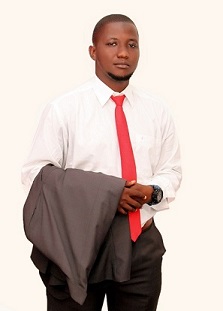
The super bookseller; Tribute to Alaji Garba Mai Littafi.

By Muhammad Ahmad Iliasu

When Barr. Ammani recommended Hillary Clinton’s Autobiography ‘Living History’ to me back in 2018, I said to myself where could I find it? Because, among others, one thing was certain; books that are authored across the ocean are not easy to find. And if, in the rare case, they are available, a young student like me was most likely priced out of contention.

Then one day, during one of my trekking braggadocios between Kantin Kwari, Bata to Sabon Gari, I stumbled upon an intensely greying old man of modest stature, smiley and incredibly alert and mobile for a man of his age. What pulled my attention to his makeshift shop wasn’t him, but rather the large book carrying the face of Herbert Hoover – USA’s 31st President.

At that time, there were a lot of debates in our Macro class in BUK on Buhari’s Protectionist policy. And with Yanis Varoufakis’s dominance on my bookshelf, how protectionism backfired against Hoover as stated in his ‘Global Minotaur’ became of great interest to me. I didn’t only want to know all about protectionism in the 1930s but the whole lifetime of President Hoover and his administration.

Therefore I stepped to the old man, pointed at the book and asked ‘how much is that one, Baba?’ ‘It’s price is two-thousand five-hundred Naira, boy’ – he replied. I responded ‘what?’ – almost terrified by its incredible cheapness, even though I didn’t have that amount at the time. To which he incredibly remarked ‘if you are truly serious, I will leave it to you at one-thousand seven-hundred Naira’. I laughed and borrowed the money from my boss’s change to settle the payment. I asked him once again ‘do you by any chance have Living History?’ The old man smiled and said ‘That will be Hillary Clinton’s Autobiography. I sold it two days ago. But I have ‘Women in Charge’. He put my curiosity into perspective with that response. Because I didn’t think he would know that instantly. And from then my relationship with him became very close. I admired his familiarity with books, genres and authors. And he became fond of how much I was willing to spend on books.

Interestingly, we never exchanged contacts. I usually stopped by his place anytime my boss sent me to Sabon Gari. And whenever he had a book he knew I’d like, he would keep asking his customers if they knew one big lad from the core metropolis who is crazy about books – I knew that because he asked three people who knew me and passed the message.

Beyond the unbelievable cheapness of his books, what made Alaji Garba special wasn’t his eagerness to sell, but knowing what his customers wanted to buy. He had a way of profiling people’s interest perfectly. For example, anytime he had an autobiography of a famous leader or historical figure he would try his best to see me acquire it. I recall how he kept the biography of Joseph Stalin waiting for weeks even though many wanted to get it ahead of me. Funny enough, I didn’t know who Stalin was at that time. He just believed I would like it. And he was right.

From him I acquired more than 20 biographies of US presidents including those of Washington, Maddison, Jefferson, Lincoln, FDR and Reagan. I first heard about The Bourbons, House of Windsor and The Bolsheviks from him. Better yet, he supplied deep readings on them. I got classics authored by Rousseau, Locke, Homer, Byron, Marx, Calder, Orwell, Dante and Dumas from Alaji Garba.

He introduced me to the artistic savagery of Mario Puzo’s Mafia and the boiling horror of Stephen King. I know Jenni Calder and her father Angus Calder because of Alaji Garba, and thanks to that I know Thomas Carlyle and whoever he mentioned in his analysis of Heroes. I’ve forgotten to mention the book “Heroes” by Jenni which Alaji Garba gave me almost for free, the very book whose analytical dexterity formed the earliest foundation of my ability to conflate history with literature, personality with reality, and what an author seeks to achieve with every detail of his book.

On the afternoon I bought Eisenhower’s biography, Alaji Garba gave me ‘Thirty Centuries of Command’ for free. And beyond acquiring familiarity with the military-industrial complex, the misinformations in the Thirty Centuries of Command on Sultan Muhammad al-Fatih rattled me into reading the history of the Ottoman Empire since Sulayman Shah and Ertugrul up to Lawrence of Arabia and Mustafa Kemal Attaturk.

Indeed, I am nothing without my bookshelf, and my bookshelf would be nothing without Alaji Garba’s heavenly supply. There are five times more books on my shelf that were supplied by Alaji Garba than any other bookseller. And he’s probably only edged by Jakara City on the quantity of my readings supplied. The poor man, whom I truly loved, probably had no idea what he was doing jumping from one shadow to another under a bridge with those small sacks of old treatises. He was probably just trying to put food on his table, unsure of who next will buy, and whether that will be enough to pay the fare home. But he was more than that. And I wish he knew it. I wish he knew how many lives he changed with that materially unrewarding trade. I wish he can get recognition for the volume of knowledge he worked very hard to put into the hands of people who otherwise would never have gotten the chance to get.

I wish he knew how much I loved him and how much I understood his efforts and how much I admired him and his trade. I wish he knew how people like him inspire me to be great despite having no independent ambition to be so, just so that when I tell their story to the people who should’ve known them it will bear some weight. I write, partially, so I could tell the stories that may never be told. And Alaji Garba’s is truly one of a kind. May Allah rest him in His eternal peace. May ‘Iqra’a’ rescues him from the wrath on the day of judgement. For certainly very few have dedicated more to the love of reading.

Muhammad Ahmad Iliyasu is Strategic Communications Officer at the Center for Fiscal Transparency and Public Integrity. He can be reached via his email: Muhada102@gmail.com

Comrade Gwarzo is really Gwarzo

By Murtala Sani

The challenge faced by Comrade Aminu Abdussalam Gwarzo during 2023 gubernatorial election was big.

The opponents that rose against him included the former Deputy Governor of Kano State who was also the first APC Chairman of the State, Eng. Abdullahi Tijjani Muhammad Gwarzo, the grassroot politician that adopted Jehovah Witness-like door to door political campaign in order to win against the Comrade during the election.

Three powerful incumbent commissioners from different powerful wards waged war against the Comrade. Commissioner of Environment who is also a good friend of Ganduje’s daughter, Dr.Kabiru Ibrahim Getso, used his power to ensure the downfall of the Comrade during the election. Commissioner of Youths and Sports, Kabiru Ado Lakwaya, who was also the President of NYCN Kano State Chapter, mobilized his aluta boys to articulate APC agenda before the election just to bring down the Comrade. Commissioner of Budget and Planning, Alhaji Ibrahim Dan’azumi Gwarzo, a master strategist, used his old political wisdom and wits in fighting the Comrade during the election.

Three Managing Directors were not left behind in hacking the Comrade with their political axes:

1) MD. REMASSAB, Abdullahi Mu’azu (Babangandu) who is now the member representing Gwarzo/Kabo at the Federal House of Representatives, the APC moniepoint, made sure that money was circulating all over Gwarzo local government to pin down the Comrade during the election.

    2) MD. WRECA, Mallam Munir Ahmad, decided to persuade voters with his Ibrahim Shekarau’s type of style of politics by using spiritual quotations to persuade voters to turn down the Comrade during the election.

    3) MD. Zoo, Alhaji Sa’idu Gwadabe, used his political connections to smash down the Comrade during the election.

    Former member Kano State House of Assembly representing Gwarzo Constituency, Hon. Sa’idu Kutama was conspiring against the Comrade during the election. Former as well as current member representing Gwarzo Constituency at Kano State House of Assembly, Hon. Haruna Kayyu, was busy castigating the Comrade during the election.

    The Chairman of Gwarzo Local Government, Eng.Bashir Kutama, engineered all the ten elected councillors and the surpervisory councillors along with his appointed special advisers from various wards of Gwarzo Local Government to tear apart the Comrade during the election.

    On the other hand, the four times Senator representing Kano North Constituency in the Senates, Senator Bello Hayatu Gwarzo who manned the seat of Chief of Whip in the Senate,was mercilessly whipping the Comrade with his PDP-APC laced political party to bend down the Comrade during the election.

    From the outside, Murtala Sule Garo, the influencial Commissioner of Local Government Affairs and Deputy Gubernatorial candidate of Kano State was throwing political bombs on the Comrade through his political soldiers during the election in order to crush down the Comrade during the election.

    Again, the two times Senator representing Kano North Constituency as well as the present Deputy Senate President of the Federal Republic of Nigeria, Senator Barau Jibril, was pouring palliatives to the electorates in order to dig a political grave for the Comrade during the election.

    Still, his opponents had to add with tearing votes and smashing polling boxes to see his end during the election. At that moment, the highest political figure behind the Comrade was two times former member representing Gwarzo Constituency at Kano State House of Assembly, Hon.Rabi’u Saleh.

    Yet, like a legendary Dramendra of the Bollywood, the Comrade dispersed all of them to become legally elected Deputy Governor of Kano State along with Eng.Abba Kabir Yusuf as the elected Governor of Kano State.

    Comrade Gwarzo is really Gwarzo.

    Murtala Sani writes from Gwarzo, Kano State.

    Tribute to Prof. Khurshīd Aḥmad (1932–2025): A pioneer of contemporary Islamic economics and finance

    Innā li-Llāhi wa-innā ilayhi rājiʿūn.

    The passing of Prof. Khurshīd Aḥmad marks the end of an era in the intellectual development of contemporary Islamic thought, particularly in the fields of al-Iqtiṣād al-Islāmī (Islamic economics) and al-Mālīyyah al-Islāmiyyah (Islamic finance). 

    A polymath, visionary, and tireless reformer, Prof. Khurshīd Aḥmad was one of the most distinguished Muslim thinkers of the 20th and 21st centuries. His scholarship, activism, and public service bridged the worlds of theory and practice, faith and governance, tradition and modernity.

    Born in Delhi in 1932 and later migrating to Pakistan following the partition, he pursued higher education in economics and law. He eventually earned a Master’s in Islamic Studies and a PhD in Economics from the University of Leicester, United Kingdom. He was not merely an academic in the conventional sense; he was an intellectual activist whose writings and public engagements profoundly shaped the global discourse on Islam and economic justice.

    His Legacy in Islamic Finance

    Among his many contributions, Prof. Khurshī Aḥmad’s most outstanding intellectual work in the field of Islamic finance is arguably his foundational role in articulating and systematising the theoretical framework of an Islamic economic order, particularly through his seminal work: Islam: Its Meaning and Message (edited by Khurshīd Aḥmad, first published 1976).

    This edited volume contains his essay  “The Islamic Way of Life”, which not only presents the ethical foundations of Islam but also outlines the spiritual, social, and economic dimensions of Islamic governance.

    More specifically related to economics is his earlier and pioneering treatise: Islamic Economic System: A Socio-Economic and Political Analysis (1970). This work laid down the theoretical underpinnings of al-Niẓām al-Iqtiṣādī al-Islāmī and served as a cornerstone for the subsequent emergence of Islamic banking and financial institutions.

    In Islamic Economic System, Prof. Khurshīd Aḥmad delineates a clear moral and functional distinction between the capitalist, socialist, and Islamic paradigms, advocating a system well entrenched in tawḥīd, ʿadl, and mashwarah.

    He was also instrumental in the formation of the International Institute of Islamic Economics (IIIE) at the International Islamic University, Islamabad. He advised several governments and Islamic financial institutions in conceptualising and implementing Sharīʿah-compliant economic policies. His influence continues to shape policies in countries like Pakistan, Malaysia, and Sudan, and in global institutions such as the Islamic Development Bank (IsDB).

    Prof. Khurshī Aḥmad’s intellectual legacy transcends geographical and disciplinary boundaries. He championed a vision of Islamic economics and finance not merely as an alternative system but as a holistic worldview embedded in divine guidance and aimed at achieving justice, equity, and human dignity.

    May Allāh (Subḥānahu wa Taʿālā) forgive his shortcomings, reward him with Jannah al-Firdaws, and accept his works as ṣadaqah jāriyah. His writings will continue enlightening scholars, guiding policymakers, and inspiring future generations.

    Dr. Oyekolade Sodiq OYESANYA wrote from the Department of Religious Studies, Tai Solarin University of Education, Ijagun, Ogun State, Nigeria.

    APC, PDP, and the rest: A three-way battle for 2027

    By Zayyad I. Muhammad

    As politicking for the 2027 elections gradually gains momentum, both new and familiar scenarios will inevitably emerge. Nigeria’s political landscape is dynamic and often shaped by geopolitical factors, and 2027 will be no exception.

    The truth is, despite its internal wranglings and historical baggage, any coalition that does not have the PDP as its central pillar is unlikely to achieve the kind of national spread required to win a presidential election in Nigeria. The PDP, with its extensive grassroots network and long-standing presence across all six geopolitical zones, remains the only opposition party with a truly nationwide structure, even if its influence has somewhat waned in recent years.

    Peter Obi and Rabiu Musa Kwankwaso, notable third-force figures from the 2023 elections, lack enthusiasm for any clearly defined coalition. Obi appears ready to pursue the presidency again, but the conditions that fueled his surprising 2023 performance- particularly the support from urban youth and disenchanted Christian voters— have significantly waned. This support was initially driven by fear over Tinubu’s Muslim-Muslim ticket, which caused concerns among Christians. Today, that fear has faded, and ironically, the Muslim-Muslim arrangement includes more Christian participation in government than anticipated.

    Kwankwaso, on the other hand, appears to have adopted a more pragmatic, localised approach- ‘ state capture. Kwankwaso’s posture suggests a strategy of quiet autonomy: “I have Kano; let me control it. I won’t interfere with you, and don’t interfere with me.” This ‘state capture’ mentality may give him relevance at the regional level but severely limits his national appeal.

    President Tinubu, meanwhile, has carelessly  or perhaps inadvertently squandered the political capital that the APC enjoyed in the North from 2015 to 2023. During that period, the APC could count on overwhelming support from northern voters , often to the extent that votes from a single state could nearly cancel out those from entire geopolitical zones elsewhere. That dominance was largely tied to a geopolitical strongholds strategy . Tinubu’s failure to maintain and galvanize this strategy will eat up the APC’s traditional votes in the North, which are very key for the APC’s return to a second term.

    Furthermore, Tinubu has, whether knowingly or not, revitalised the dormant CPC bloc — a faction of the APC that once represented the ideological and political base of Buhari’s loyalists. Now, with the central leadership perceived as disconnected from northern interests, the CPC bloc sees an opportunity to reassert itself. In regions like the Northwest, particularly, this could lead to a realignment of loyalties, with Tinubu’s influence weakening in favor of those viewed as more authentically representing northern interests. 

    Nepotism is nepotism. While Buhari’s nepotism was largely regional and driven by northern priorities, Tinubu’s appears more ethnic and focused on Lagos, which could prove politically costly if not urgently recalibrated. That said, Tinubu still has time and political tools to course-correct before 2027, if he chooses to use them wisely.

    The current coalition promoters, however, appear to be relying on an outdated strategy. The 2015-style bandwagon movement, built around the idea of ‘change,’ is unlikely to resonate with voters in 2027. Buhari’s eight-year presidency has left a mixed legacy, with many citizens feeling disillusioned by the unmet expectations. The old formula simply won’t work again.

    In 2027, two key elements will determine electoral success, not only at the center but also in the states: substantial resources, both financial and structural , and science. The days when charisma and rhetoric alone could deliver victory are over. Any political group serious about winning must adopt a data-driven strategy. This entails conducting thorough research into voter behavior, turnout patterns, demographic shifts, and regional voting strengths. 

    It also requires understanding the psychology of the electorate, particularly among young voters, who now constitute a decisive segment. Apolitical political scientists, data analysts, and behavioural experts will play a more vital role than ever before. Without this approach, even the best-funded campaign could fall flat.

    Finally, it is important to accept that the coalition model of 2015 and the voting behavior of 2023 are not likely to repeat themselves. Nigeria’s political terrain has evolved, so to speak . As of today , although tomorrow is uncertain, the three major blocs heading into the 2027 elections appear to be Tinubu’s APC, the PDP, and the rest . It is shaping up to be a near-zero-sum game. 

    Zayyad I. Muhammad writes from Abuja via zaymohd@yahoo.com.

    Sex-for-role: Breaking the cycle of sexual harassment in the entertainment industry

    ‎By Abdulhakeem Yetu Zakari

    ‎Despite growing awareness, sexual exploitation continues to cast a dark shadow over the entertainment industry in Nigeria and elsewhere. Behind the glitz and glamour, many aspiring talents face coercion, harassment, and abuse in their pursuit of success. Stronger policies, accountability, and systemic change are urgently needed to create a safer industry.

    ‎Sexual exploitation in entertainment is an open secret that has persisted for decades. It manifests in various forms, from coercion and harassment to outright trafficking. Vulnerable individuals, often young and inexperienced, are preyed upon by those in positions of power. The “sex-for-role” culture, in which opportunities are exchanged for sexual favors, remains alarmingly prevalent. Those who resist or speak out risk being blacklisted, experiencing retaliation, or even being driven out of the industry entirely.

    ‎The entertainment world thrives on connections, and unfortunately, this has allowed predators to operate with impunity. Victims, fearing career sabotage or public shaming, often remain silent. The imbalance of power between industry gatekeepers and struggling artists makes it even harder to challenge abusive behaviours.

    ‎The #MeToo movement, which gained global traction in 2017, was a watershed moment. Survivors courageously came forward, exposing influential figures like Harvey Weinstein and forcing the industry to confront its deep-seated issues. This sparked widespread discussions, policy changes, and an increased demand for accountability.‎

    Despite the above strides, exploitation remains a pressing issue. While some perpetrators have been held accountable, many still evade justice. Survivors continue to face obstacles in their pursuit of legal recourse, with cases often dismissed or settlements used to silence victims.

    ‎Ending sexual exploitation in entertainment requires more than just conversations, it demands concrete action:

    ‎Stronger Legal Frameworks – Governments and industry regulators must enforce stricter policies against workplace harassment and sexual exploitation. Clear legal consequences should deter potential offenders.

    ‎Whistleblower Protection – Survivors and witnesses should be able to report abuse without fear of retaliation. Anonymous reporting systems and legal safeguards are crucial.

    ‎Industry Accountability – Entertainment companies must adopt zero-tolerance policies for misconduct, conduct thorough background checks, and establish independent oversight committees to investigate allegations.

    ‎Empowering Victims – Access to legal aid, mental health support, and career counselling can help survivors rebuild their lives. Platforms that amplify their voices must be encouraged.

    ‎Changing the Culture – Education on consent, power dynamics, and ethical professional relationships should be integrated into industry training programs. A shift in mindset is necessary to dismantle the normalisation of abuse.

    ‎ The fight against sexual exploitation in entertainment is far from over. Every stakeholder, from industry executives to audiences, plays a role in demanding transparency, justice, and respect for all talents. Only through sustained pressure and institutional reform can we ensure an industry where success is based on talent, not exploitation.

    ‎It is not just a matter of morality but of fundamental human rights. The time to act is now.

    Abdulhakeem Yetu Zakari is an intern with PRNigeria. He can be reached via abdulhakeemzakari7@gmail.com.

    The fall of the mighty

    By Bilyamin Abdulmumin, PhD

    When the PDP began its first tenure in 1999, there was a level of humility and fairness. But it was in their second tenure that their invincibility began to take shape.

    As a former military Head of State, Olusegun Obasanjo did not help matters. For the second time in Nigeria’s history, he declared a state of emergency in Ekiti and Plateau and threatened several other states. During this period, the legislature was allegedly weaponized for political control, and allegations extended even to the Economic and Financial Crimes Commission (EFCC), a respected anti-graft agency. 

    Arguably, the PDP reached its zenith in 2007 and became so confident that it could “do and undo. ” The opposition could no longer hold any chance; instead, they covertly or overtly carried out the bidding of the powerful PDP. This exuberance and excesses of the then-ruling party culminated in a ditch for democracy: reports indicated that the 2007 presidential election results were declared while the collation was still ongoing. 

    In 2011, Goodluck Jonathan’s administration continued its escapade. Allegations of corruption and mismanagement ran rampant, and the PDP became a haven for anyone singing its praises. This perception was palpable, and the public echoed that anything labelled ‘dubious’ came from the party. 

    Complacency eventually led them to boldly declare that the party would remain in power for sixty years. Instead of sixty, the PDP barely added another six years. Even the former party chairman, who initiated the sixty-year maxim, considered leaving the party in 2015. 

    Never mind the masses’ outrage, founding fathers decrying maltreatment, and bigwigs, including governors, decamping to the opposition. PDP could not see the handwriting; they thought it would be normal. 

    The death of the PDP would be slow, with several deep cuts. One of them was shunning them by decamping opposition. Shehu Sani, Nasir El-Rufa’i, Rabiu Musa Kwankwaso, and Peter Obi should all naturally have considered the PDP as an alternative. 

    Another blow to the slowly fading party is an internal crisis. One crisis after another continues to shake the once-indomitable party, providing those looking to defect a compelling reason to change sides. 

    Perhaps the deepest cut was Nyesom Wike’s presence, who actively undermined the party from within. As Minister of the Federal Capital Territory, Wike not only revoked the PDP land title of the new secretariat but allegedly facilitated a Supreme Court victory for his ally, Mr Samuel Anyanwu, against the current party secretary.

    History is replete with the downfall of the mighties. Leaders, nations, and brands often reach a status where they seem invincible, only to succumb to the very excesses that caused their rise.

    The insidious ascendance of antimicrobial resistance: A looming national, continental, and global pandemic

    By Oladoja M.O

    …and if we begin to face a threat of setbacks in our supposed success against diseases induced by pathogenic microorganisms, are we not seemingly sent back to the dark ages even as we claim to have advanced? When recounting the history of medicine, few triumphs can compare to the emergence and widespread use of antimicrobials, for indeed, it was a win for the world. 

    Without mincing words, Alexander Fleming’s serendipitous discovery of penicillin on his petri dish ushered in a new era in biomedicine. For just before our eyes, pathogens that had wreaked havoc for generations, perpetuating morbidity and mortality in their wake, were suddenly at the mercy of the new chemical arsenal deployed in the fight; and just like that, infectious diseases receded before the ever-rising tide of antimicrobials. Everyone felt optimistic and, in fact, predicted a swift and righteous victory over the scourge of infection.

    For over a decade now, the world’s leading figures have consistently voiced concerns about the threat to global health posed by microorganisms’ resistance. It appears that humanity’s arsenal, which once assured victory over these microorganisms and their harmful effects, is now inadequate. Can we suggest that the drugs being produced are ineffective? Can we assert that our research is flawed? Or that humanity has developed a different genetic makeup? Or that these microorganisms are now clever enough to evade destruction? 

    Well, many questions like these are very relevant. But as we consider these questions, it is more reasonable to retrace our steps to identify the real causes and understand what has positioned the world, particularly Africa and Nigeria, toward this path of looming global, continental, and national health breakdown.

    Nationally, for example, this issue is moving very rapidly. Diseases that should be treated in a short time are becoming difficult to manage, with treatment becoming elusive. Many blame the serious organized crime surrounding “fake drug production ” in Nigeria, which floods the market day and night, and yes, this is a reasonable claim. What greater factor could contribute to a drug’s ineffectiveness than poor or flawed production? However, if this were the only cause, it would be a unique issue to Nigeria; instead, it transcends even beyond that. 

    The individual practice can be directly linked to this whole issue without prejudice. Simply put, the consistent intake of drugs renders the individual impotent over time. The Department of Health of the Australian Government, in one of their submissions, noted that “using a drug regularly can lead to tolerance (resistance); your body becomes accustomed to the drug and needs increasingly larger doses to achieve the same effect or, even, becomes less potent.” This attitude, unfortunately, is almost a daily occurrence for many individuals, stemming from the persistent issue of self-prescription, however minor it may appear. 

    The US National Library, in one of its publications in 2013, stated that “Self-medication is a global phenomenon and a potential contributor to human pathogen resistance to antibiotics. The adverse consequences of such practices should always be emphasized to the community, along with steps to curb them.” I think we can all agree that many people are guilty of this act; at the first sign of discomfort, almost everyone becomes a medical expert in their own home, concluding which drug works best for them, diagnosing their own ailments, and taking antibacterial drugs for fungal issues. 

    A user on X @the_beardedsina narrated his experience: “A patient comes to the hospital. He has been sick for a week, having had a fever for days. A blood culture is done, and the result shows that he’s resistant to the following drugs (antibiotics): Ceftriaxone, Ampicillin, Cipro, Levofloxacin, Metronidazole, Cefepime, Meropenem, Piperacillin, Gentamicin, Amikacin, Nitrofurantoin, Vancomycin, and Chloramphenicol.” How can we survive this??

    The issue of how antimicrobials are used in agriculture is another concern. The rise of industrial farming has fully embraced the prophylactic use of antimicrobials in livestock, not primarily to treat diseases, but to enhance growth rates. However, unlike clinical settings, the agricultural use of antimicrobials lacks the same oversight and prescribing guidelines. 

    The inconsistency in regulation allows for significant variation in the classes and concentrations of antimicrobials used in agriculture. In 2021, approximately 54% of the 11 million kilograms of antimicrobials sold for use in domestic agriculture in the United States were categorised as “medically important. “

    In conclusion, this issue requires significant awareness and sensitisation of the general public regarding the dangers of antimicrobial resistance. Conservative preventive care should be promoted, and individuals should seek care from qualified professionals. 

    The commercial use of antimicrobial drugs must be approached with caution, and all relevant agencies responsible for this oversight at national, continental, and global levels should act swiftly before the situation escalates and threatens global health, reverting us to the dark ages of high mortality and the economic toll of microbial threats.

    The world faces numerous challenges, and we should focus on celebrating our victories rather than becoming overwhelmed by this struggle.

    Oladoja M.O writes from Abuja and can be reached at mayokunmark@gmail.com.

    Echoes of the past, choices of today: Will Kano’s throne withstand the test of time and wisdom?

    By Usman Abdullahi Koli

    The grandeur of Kano’s emirate is not merely an inheritance of a throne but the custodianship of a deep-rooted history, culture, and tradition that represents the very soul of African heritage. From the era of Bagauda to the reign of Ado Bayero, the emirate has stood as a symbol of resilience, dignity, and continuity. 

    Today, as the emirship tussle continues, it presents a defining moment not just for those directly involved but for the entire Kano people, whose unity and stability rest upon the wisdom of their leaders. It is a moment that demands measured actions, guided by history and the sacrifices of great monarchs who prioritised the collective good over personal ambitions.

    The Kano Emirate is no stranger to succession disputes; however, history has shown that wise leaders have navigated such crises with patience, foresight, and a commitment to preserving the integrity of the institution. From the reign of Emir Muhammadu Sanusi I to that of Ado Bayero, the emirate has undergone significant transitions- some peaceful, others contentious- but ultimately resolved with a sense of responsibility toward the larger interest of Kano.

    Today, we see echoes of the past in the contest between Emir Muhammadu Sanusi II and Emir Aminu Ado Bayero. While the legal and political dimensions of the crisis continue to unfold, the moral weight on those involved is immense. The key question remains: Will the dignity, harmony, and prestige of Kano take precedence over personal interests, or will history remember this episode as a moment of avoidable discord?

    History is replete with examples of monarchs who faced displacement yet responded with wisdom, ensuring that their thrones remained symbols of honour rather than sources of division. In 1936, King Edward VIII of Britain abdicated the throne out of personal conviction, avoiding a constitutional crisis. 

    More recently, King Juan Carlos of Spain voluntarily stepped aside to preserve national unity and dignity. Within Africa, deposed monarchs have often demonstrated restraint, placing the peace of their people above personal grievances.

    A particularly relevant example is Emir Muhammadu Sanusi II, who, despite the political implications of his removal in 2020, did not rally his supporters to contest the decision. Instead, he accepted his fate with remarkable composure, trusting in destiny and the historical cycle that governs leadership.

    Governor Abba Kabir Yusuf is enormously responsible for ensuring that his administration’s actions do not fuel unnecessary tensions in Kano. While he holds constitutional authority over traditional institutions, wisdom dictates that such decisions be made with a far-reaching vision that safeguards Kano’s unity, stability, and the sanctity of its traditions. Political decisions should not be allowed to erode the revered position of the emirate.

    To Emir Aminu Ado Bayero, this moment calls for deep introspection on the true essence of leadership. His revered father, Emir Ado Bayero, was an emblem of peace, patience, and sagacity. The respect he commanded was not merely because he sat on the throne but because of his ability to navigate crises with wisdom. Now, his son faces a historic test: will he allow personal ambition to override Kano’s peace, or will he embrace the noble path of sacrifice? The decisions he makes today will shape how history remembers him.

    To Emir Muhammadu Sanusi II, his reinstatement is a return to power and an opportunity to lead with renewed wisdom and vision. His expectations are immense—not for vengeance or retribution, but for reconciliation and statesmanship. The people of Kano look up to him to use his vast experience, intellect, and leadership to heal divisions, restore trust, and solidify the emirate as a pillar of stability.

    Kano is more than a city; it symbolises Africa’s resilience, culture, and civilization. The emirate embodies centuries of tradition that must not be tarnished by personal conflicts. The world is watching, and history is recording. The real question is not who occupies the throne today, but how that throne is preserved for generations to come.

    It is crucial for external influences, particularly those in Abuja, to respect the Kano State Government’s decision. The constitution recognizes states as custodians of their emirates, and any interference from outside forces risks escalating tensions rather than resolving them. Political insinuators should avoid fueling discord and instead honour the autonomy of Kano’s leadership.

    Now, the great tradition of the Sallah Durbar, which both factions claim to organise, must not become a battleground for supremacy. The grand procession, deeply embedded in Kano’s cultural and Islamic identity, is meant to unite, not divide. It should not be reduced to a contest of power. Both sides must recognize that personal ambitions should never overshadow the collective peace of Kano. True leadership is tested not in times of comfort, but in moments of crisis, and the world is watching to see whether wisdom or ego will prevail.

    Great monarchs are remembered not for how fiercely they fought to retain power, but for how wisely they managed transitions, prioritized peace, and left behind legacies of honor. The lessons of Kano’s past emirs—from Bagauda to Ado Bayero—should serve as a guide for present leaders. These revered figures ruled with dignity, wisdom, and a profound sense of duty to their people.

    Those who occupy the throne today must consider: Will they be remembered for upholding this legacy or for diminishing it?

    May wisdom prevail over pride, and may Kano remain the fortress of culture, tradition, and unity it has always been.

    Usman Abdullahi Koli wrote via mernoukoli@gmail.com.

    The seven heavens as seven universes: A Qur’anic reimagining

    By Ibraheem A. Waziri

    On March 20, 2025, I shared my essay A Reflection on Dimensions, Death, and the Eternal Four: Ramadan 2025 with Dr. Abdullahi Dahiru, exploring the Qur’an’s seven heavens, the cosmic role of death, and the possibility of 19 dimensions in Allah’s creation. Perhaps inspired by those reflections, Dr. Dahiru shared a post, via his Facebook page, from Mechanical Engineering World, noting the observable universe’s vastness: 2 trillion galaxies, with the Milky Way containing 200 billion stars, and Earth as one of 3.2 trillion planets. This sparked a thought-provoking thread. I commented, suggesting this universe might be one of “7 universes (heavens) in Allah’s dominion.” Dr. Dahiru responded, questioning the “7 universes” idea, citing Prof. Maurice Bucaille’s view that the Qur’anic “7” often means “uncountable,” a convention in ancient cultures.

    Hammad Abubakar Puma joined, thanking Dr. Dahiru and suggesting he watch the YouTube documentary, Allah and the Cosmos, if he hasn’t seen it. I replied, arguing that the observable universe lacks the layered demarcations for the Qur’anic seven heavens. I propose a multiverse model—seven distinct universes—that better aligns with the Qur’an’s boundaries, jinns’ exclusion, and the gated ascent of Isra wal Mi’raj. 

    Hashem Al-Ghaili’s recent posts about scientific findings, including multiverse evidence in the Cosmic Microwave Background (CMB) and the possibility of our universe residing within a black hole, bolster this perspective. This exchange and my earlier reflections lead me to propose that the seven heavens may be seven separate universes, bridging divine revelation with modern cosmology.

    The Qur’anic Foundation: Seven Heavens and Cosmic Barriers

    The Qur’an describes “seven heavens in layers” (67:3, 41:12), often interpreted as hierarchical realms—atmospheric layers, celestial spheres, or spiritual planes. Yet, the “nearest heaven” is adorned with stars (37:6) and guarded against rebellious jinns by “burning flames” (72:8-9, 67:5). Jinns, beings of smokeless fire (55:15), lament, “We have sought [to reach] the heaven but found it filled with powerful guards and burning flames” (72:8).

    This suggests a cosmic boundary separating the nearest heaven from what lies beyond. If this nearest heaven is our observable universe—spanning 93 billion light-years with 2 trillion galaxies, as Dr. Dahiru’s post notes—then the other six heavens could be separate universes beyond our cosmic horizon. Qur’an 55:33 reinforces this: “O company of jinn and mankind, if you are able to pass beyond the regions of the heavens and the earth, then pass. You will not pass except by authority [from Allah].” This implies the heavens are inaccessible without divine permission. Science, limited to the observable universe, cannot breach the cosmic light horizon, and jinns’ failure to penetrate the heavens suggests the higher heavens may be parallel universes in a multiverse framework.

    Isra wal Mi’raj: Gated Realms Beyond the Observable

    The ahadith of Isra wal Mi’raj, the Prophet Muhammad’s (peace be upon him) Night Journey and Ascension, support this view. In Sahih Bukhari (Book 54, Hadith 429), the Prophet, guided by Angel Jibril, ascended through the seven heavens, knocking at each gate for entry. At the first heaven, Jibril requested access: “It was asked, ‘Who is it?’ Jibril answered, ‘Jibril.’ It was asked, ‘Who is with you?’ Jibril replied, ‘Muhammad.’… The gate was opened.” This repeated for each heaven, showing these are distinct, guarded domains, inaccessible even to an angel and the Prophet without divine approval. 

    If the first heaven is our observable universe—where stars and meteors (the “flames” of 67:5) reside—its gate may symbolize the cosmic horizon, science’s limit. The higher heavens, requiring divine permission, lie beyond this horizon, potentially as separate universes with interdimensional thresholds, aligning with multiverse theories where universes are separated by barriers like inflationary boundaries or higher-dimensional branes.

    A Multiverse Perspective: Seven Universes Under Divine Command

    Modern cosmology supports this reimagining. The inflationary multiverse theory by Alan Guth suggests that rapid expansion after the Big Bang created “bubble universes” with different physical laws. String theory posits up to 10^500 possible universes, or “branes,” in higher dimensions. 

    Hashem Al-Ghaili’s post from the Royal Astronomical Society notes a breakthrough: since 2004, scientists studying the Cosmic Microwave Background (CMB) have identified the “Cold Spot,” a region challenging standard cosmology. Initially considered a supervoid, the Cold Spot is now seen by some, like Ruari Mackenzie from Durham University, as evidence of a collision with another bubble universe—a hint of the multiverse.

    The European Space Agency’s Planck mission confirmed its existence in 2014, fueling the multiverse debate. Could the Qur’an’s seven heavens be a divine simplification of such a multiverse, each heaven a distinct universe? The Qur’an’s emphasis on divine unity (41:12) ensures these universes remain under Allah’s command. 

    The “nearest heaven” (our universe) is the first, where jinns are repelled by meteors (72:8-9). The higher heavens—universes 2 through 7—lie beyond, their gates symbolizing barriers science cannot cross. Each heaven’s “command” (41:12) may imply unique laws, like inflationary bubbles with varying constants, aligning with the jinns’ exclusion and the gated ascent of Isra wal Mi’raj.

    Engaging the Thread: Addressing Traditional Interpretations

    Dr. Dahiru cited Prof. Maurice Bucaille’s The Bible, the Qur’an, and Modern Science, noting the Qur’anic “7” often means “uncountable,” a convention in ancient cultures. While this aligns with traditional tafsir—viewing the seven heavens as symbolic—it doesn’t preclude a literal reading. The Qur’an’s specificity in naming “seven” heavens and Isra wal Mi’raj’s accounts suggest a structured cosmology. Bucaille’s point may highlight the Qur’an’s accessibility to its 7th-century audience, while its deeper truth—seven distinct universes—emerges through modern reflection.

    Traditional tafsir, like Ibn Kathir’s, sees the heavens as layers within one creation, possibly atmospheric or spiritual. Yet, the observable universe lacks clear “layers” for 7, 70, or 70,000 demarcations. Planets don’t fit the gated structure of the heavens. A multiverse interpretation—seven universes—better accommodates the strict demarcations, jinns’ exclusion, and gated ascent, implying science’s reach is limited to the first heaven (Sama ta d’aya).

    Dimensions, Death, and the Cosmic Graveyard

    In my March 20 reflection, I proposed the seven heavens might enfold 19 dimensions, with black holes—mak’abartar taurari (the graveyard of stars)—as portals to these realms, tied to the Qur’anic number 19 (74:30, “Over it are nineteen”). Hashem Al-Ghaili’s post, citing the James Webb Space Telescope’s JADES survey, notes the rotation of 263 distant galaxies shows asymmetry—two-thirds spinning the same way, defying expected randomness. This supports black hole cosmology, suggesting our universe exists within a larger black hole, aligning with my concept of _mak’abartar taurari_ as a liminal space bridging dimensions or universes.

    If each heaven is a universe, it might have a dimensional structure. Our universe is 4D, but higher heavens could harbor more dimensions, as string theory suggests (10 or 11 dimensions). The “gates” of Isra wal Mi’raj might be dimensional thresholds. Death could be the key to crossing them, carrying the soul through mak’abartar taurari into these universes, where nineteen angels of Jahannam (74:30) oversee dimensions, their number echoing the nineteen letters of Bismillahir Rahmanir Rahim—a cosmic symmetry of divine order.

    Conclusion: A Unified Vision of Allah’s Creation

    With 2 trillion galaxies, the observable universe becomes the first heaven, a single bubble in Allah’s dominion—potentially within a larger black hole, as the JADES survey suggests. The higher six heavens, as separate universes, align with the Qur’anic narrative of inaccessibility (55:33), jinns’ repulsion (72:8-9), and the gated ascent of Isra wal Mi’raj, resonating with multiverse theories supported by evidence like the CMB Cold Spot and galactic rotational asymmetry.

    As I break my fast this 27th day of Ramadan, I marvel at this possibility, inspired by Dr. Dahiru’s thread, the contributions of Hammad Abubakar Puma, and the scientific insights shared by Hashem Al-Ghaili. I also remember Qur’an 18:109, which speaks of the vastness of Allah’s words: “Say, ‘If the sea were ink for [writing] the words of my Lord, the sea would be exhausted before the words of my Lord were exhausted, even if We brought the like of it as a supplement.’” 

    As I ponder the vastness of Allah’s words: read, His creations—the seven heavens, each a testament to His boundless power; Science, jinns, and humans are confined to the first heaven, but death—through divine mercy—might carry us beyond, through the _mak’abartar taurari,_ into realms where nineteen angels stand guard, and Allah’s Kursi spans all (2:255). Yet in this sacred month, the Qur’an bids us ponder, and the seven universes offer a vision of creation as vast as Allah’s mercy itself.

    Assessing Ribadu’s claim: Has insecurity reduced by 90% in Nigeria?

    By Zayyad I. Muhammad

    Nigeria’s National Security Adviser (NSA), Mallam Nuhu Ribadu, recently claimed that the country has recorded over 90% improvement in security under President Bola Ahmed Tinubu’s administration. He made this assertion in Jos, Plateau State, during a press briefing following a strategic meeting with the Commander of Operation Safe Haven, Major General Folusho Oyinlola. The meeting was convened after a deadly gunmen attack on the Bokkos community, which tragically claimed the lives of hundreds of residents.

    Given the context of recent violence, Ribadu’s statement sparked mixed reactions from across the political spectrum. Critics argue that the NSA’s comments are aimed at shaping public perception as politicking for the 2027 general elections approaches. They view the remarks as part of a broader political narrative to build confidence in the administration. On the other hand, supporters commend Ribadu for leading an effective national security strategy, asserting that the improvements are tangible and worth acknowledging.

    However, beyond partisan sentiments and political interests, it is essential to examine Ribadu’s claim from an objective standpoint grounded in verifiable data and realistic context. Security issues are too critical to be reduced to rhetoric, hey must be measured by real outcomes that affect the lives of everyday Nigerians.

    Regardless of our political leanings, there have been undeniable improvements in some of Nigeria’s most dangerous zones. For example, the Birnin Gwari–Lagos highway in Kaduna State, which was shut for nearly a decade due to the menace of armed bandits, has now reopened to motorists, especially heavy-duty vehicles that previously avoided the route. The once-abandoned Birnin Gwari cattle market, inactive for over ten years, is now gradually returning to life with commercial activity.

    Similarly, the Abuja–Kaduna highway, previously infamous for rampant kidnappings and ambushes, is now operational 24 hrs under constant military and police surveillance. Other major highways, such as the Kaduna–Kano expressway and the Jos–Akwanga–Lafia–Abuja corridor, now also witness 24-hour vehicular movement, marking a sharp contrast to the fear and hesitation that characterized travel in these areas just a few years ago.

    Still, it’s important to remember that security is both delicate and dynamic. A full year of relative peace can be overshadowed by a single horrific incident. Groups like Boko Haram, ISWAP, and various bandit factions, such as the Lakurawa and Ansaru cells, still carry out attacks on soft targets in rural and semi-urban areas. While the overall frequency and scale of these attacks may be decreasing, their sporadic nature continues to pose serious challenges.

    Between 2022 and 2024, several Nigerian security and intelligence agencies have reported significant gains. The Defence Intelligence Agency (DIA) indicated a 65% reduction in overall crime and criminality nationwide since May 2023. This figure is based on cumulative data from military operations, police reports, and inter-agency assessments.

    The Department of State Services (DSS), particularly in the Federal Capital Territory (FCT), recorded a significant decline in high-profile crimes, including kidnappings, armed robberies, and terrorist threats, through 2023 and into early 2024.

    The Nigeria Police Force also published extensive data on its security efforts: between 2023 and early 2024, police operations led to the arrest of 30,313 suspects linked to serious crimes such as kidnapping, armed robbery, cultism, and banditry. In the same period, 1,984 illegal firearms were recovered, along with 23,250 rounds of ammunition. Additionally, 1,581 kidnapped victims were successfully rescued across various states.

    The proliferation of small arms and light weapons has long fueled Nigeria’s insecurity. However, between 2022 and 2024, the National Centre for the Control of Small Arms and Light Weapons (NCCSALW) recorded historic achievements. In February 2023, the Centre announced that it had recovered more than 10,000 small arms and light weapons from non-state actors during nationwide disarmament operations. By February 2024, the total number of retrieved weapons had increased to 20,000 firearms and over 60,000 units of ammunition.

    Furthermore, in September 2024, the NCCSALW undertook the destruction of 30,132 recovered weapons, ranging from decommissioned and unserviceable arms to illicitly owned firearms.

    The Nigerian Armed Forces, particularly the Army, have achieved notable success over the past three years. Between 2022 and 2025, military operations resulted in the neutralization of more than 8,034 terrorists across various theatres of operation, including the North-East, North-West, and North-Central regions. In February 2024 alone, 105 terrorists were eliminated during targeted counterterrorism operations. and 140 capture

    A total of 6,376 kidnapped victims were rescued from insurgent enclaves and bandit hideouts in 2024 alone, thanks to joint operations involving the Army, Air Force, and local vigilante groups. These successes have contributed significantly to restoring public confidence in the state’s ability to respond to threats.

    Additionally, by December 2024, the Nigerian military had dismantled numerous terrorist camps and degraded the operational capabilities of insurgent groups in several flashpoints. More than 20 high-profile bandit leaders and commanders were eliminated in precision operations, including:

     1. Ali Kachalla (Ƙawaje)

     2. Kachallah Dogo Kwaddi

     3. Lawali Dodo

     4. Ɓoderi

     5. Sani Wala-birki

     6. Kachallah Hana-Zuwa

     7. Damina

     8. Kachalla Sani Dangote

     9. Kachalla Adamu

     10. Halilu Sububu

     11. Baleri

     12. Modi Modi

     13. Kachalla Mai Shayi

     14. Kachalla Tsoho Lulu

     15. Ibrahim Nagure

     16. Kachalla Makore

     17. Bulak

     18. Tukur Sharme

     19. Hassan Ɗantawaye

     20.Ɗan-Isuhu

    These names had long terrorised communities, operated illegal taxation systems, and masterminded large-scale abductions. Their deaths signal a turning point in Nigeria’s war against insecurity—at least in the short to medium term.

    Critics, supporters, and objective observers alike hold valid perspectives on Ribadu’s claim. Security cannot be judged solely by statistics or isolated incidents—it must be assessed holistically, with a view to sustainability. While it would be inaccurate to declare total victory over insecurity, the data and field reports suggest that Nigeria is making measurable, strategic progress.

    As Nigeria continues to grapple with complex internal threats, public expectations remain high. Citizens want not just temporary relief but long-term stability. Ribadu’s statement may be politically timed, but the figures back up his assertion, at least in terms of trend and direction. Whether or not one agrees with the 90% figure, one thing is clear: the tide appears to be gradually turning in favour of the state.

    The challenge now is to sustain these gains, institutionalise reforms, and ensure that security is perceived and lived by every Nigerian in every part of the country.

    Zayyad I. Muhammad writes from Abuja via zaymohd@yahoo.com.