
By Fatima Ishaq Muhammad
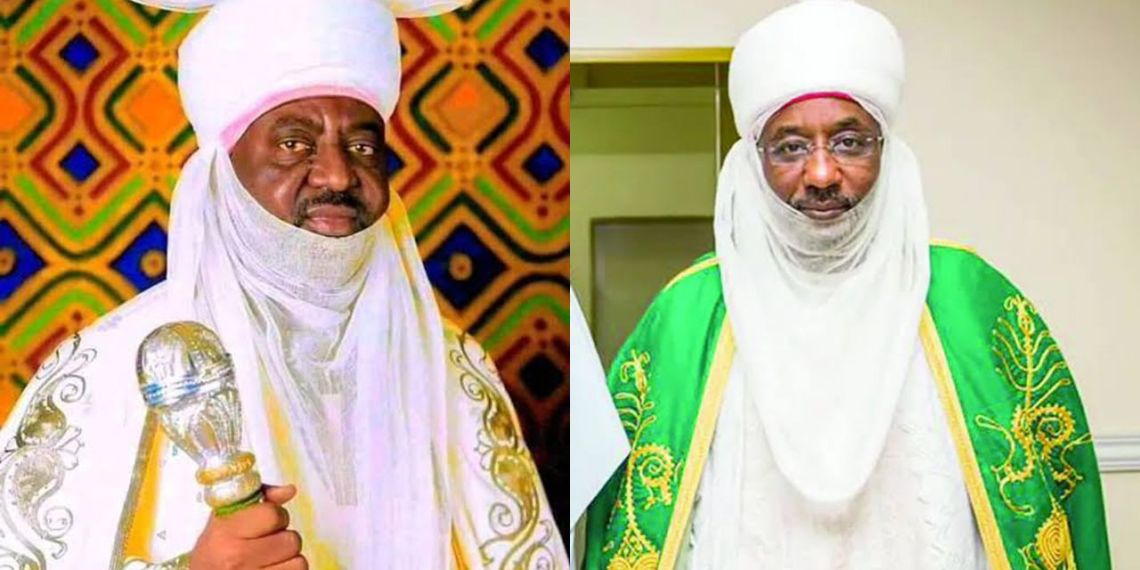
Kano, known for its deep Islamic practices and royal traditions, witnessed a historic and uneasy moment during the 2025 Eid-el-Kabir celebrations as two rival Emirs led separate congregational prayers in different parts of the city.
This development demonstrated the woeful crisis over the leadership of the Kano traditional Emirate, which, indeed, remained one of the most powerful traditional institutes in northern Nigeria.
Moreover, on one side was Emir Muhammadu Sanusi II, reinstated in May 2024 by the Kano State Government after being dethroned in 2020. Aminu Ado Bayero was installed as Emir on the other side after Sanusi’s removal. He still maintains that he remains the rightful occupant of the royal seat.
During the Eid celebrations, Emir Sanusi II led prayers at the Kofar Mata Eid Ground, traditionally recognized as the seat of the Emir’s religious leadership.
Meanwhile, Emir Aminu Bayero held his prayers at a different location, with loyalists gathered around him. For the first time in recent memory, Kano experienced two major Eid congregations, each holding up to a divided royal allegiance within the ancient city.
This unprecedented situation did not happen in isolation, but it resulted from the recurring tussle over the Kano Emirate, rooted in politics and personal rivalries.
Sanusi II’s removal in 2020 by the administration of former Governor Abdullahi Ganduje was widely termed as punishment for his massive outspoken criticism of the government.
His reinstatement by the current government of Governor Abba Kabir Yusuf has been challenged in court by Bayero’s supporters, creating legal and political uncertainty over who the legitimate Emir of Kano is.
The split Eid prayers skyrocketed across Kano and beyond, symbolizing the Emirate’s division and disunity of authority.
What should have been a day of religious unity became a visible sign of division in the state’s leadership. Thankfully, no major disturbances were reported, though tensions remain high.
Adding to the complexity of the situation, the traditional Durbar festival, which usually follows the Eid prayers, was banned by the police for security reasons.
The ban disappointed many residents, as the Durbar is integral to Kano’s cultural identity and economic life.
As the legal battles escalate, many residents and observers fear that the division within Kano’s traditional leadership could escalate unless a clear resolution is provided by the courts or through dialogue among key stakeholders.
For now, Kano remains a city with two Emirs, two congregations, and a divided loyalty, awaiting clarity on the future of one of northern Nigeria’s most important royal institutions.
Fatima Ishaq Muhammad via fatimaishaq021@gmail.com.