News

End of an Era: Prof. Abdalla Uba Adamu Bows Out at 70

By Muhsin Ibrahim

After nearly half a century of dedicated service, Professor Abdalla Uba Adamu has formally announced his retirement from Bayero University Kano, marking the end of an extraordinary academic journey defined by intellectual curiosity, resilience, and lasting impact. 

Born in Kano in 1956, Adamu began his studies in education sciences before shifting to media and communication, where he made his greatest impact. This change was key, forging a career linking pedagogy, culture, and media scholarship. Over time, he became a leading figure in Hausa media, popular culture, and communication with a unique interdisciplinary voice.

He joined the university system on 24 July 1980 as a young Graduate Assistant, rose through the ranks with distinction, and, in 2014, contributed to the conceptualisation of the Faculty of Communication. 

Prof. Adamu’s career, spanning forty-six uninterrupted years, reflects a rare blend of dedication and innovation. From the Department of Education to the Department of Information and Media Studies, his trajectory mirrors the evolution of media scholarship itself.

Beyond the classroom and research, Prof. Adamu has been a consistent voice in public discourse, including his longstanding contributions to The Daily Reality, a platform he has not only enriched intellectually but also supported materially. 

Prof. Adamu’s reflections on retirement, posted on Facebook, capture a life lived with purpose. Yet, true to form, he makes it clear that this is no final bow. With ongoing research and forthcoming book projects, the scholar remains as intellectually vibrant as ever.

Emir Sanusi Queries FG’s Rising Debt Despite Subsidy Removal

By Uzair Adam

The 16th Fulani Emir of Kano, Muhammadu Sanusi II, has questioned the Federal Government’s continued reliance on borrowing despite the removal of the petrol subsidy.

Speaking in an interview aired by News Central TV on Friday, the former Governor of the Central Bank of Nigeria said that although the removal of fuel subsidy and the liberalisation of the exchange rate were necessary, poor timing and weak fiscal discipline risk eroding their benefits.

According to the monarch, Nigeria’s long-standing practice of supporting foreign refineries while domestic refining capacity remained underutilised reflected a systemic failure that required urgent correction.

“I have always said the subsidy regime was unsustainable. We cannot continue supporting foreign refineries. We’re an oil-producing country, yet we keep refineries open abroad while neglecting our own,” Sanusi said.

He, however, expressed optimism about recent developments in local production, noting a shift from heavy dependence on imported petroleum products to export capacity.

“Today, we have a situation where we have our own domestic refinery. We’re not importing petroleum products. We’re even exporting to Europe, and this is very good for the economy,” he added.

While supporting the policy direction, the former apex bank chief raised concerns over the sequencing and timing of the reforms, noting that critical supporting measures were not implemented alongside them.

“Artificial exchange rates, especially when you’re printing money, cannot work. There was always going to be a devaluation,” he said, adding that subsidy removal and exchange rate liberalisation were sound interventions but required proper coordination.

He argued that implementing exchange rate liberalisation within a loose monetary environment accelerated the naira’s depreciation.

“It’s not enough to say subsidy was removed. That had to happen, especially when all revenue was going into debt servicing.

“But if you remove subsidy and liberalise exchange rates before tightening money supply, the naira will fall sharply. That was a timing issue,” he explained.

Sanusi further challenged the government’s continued borrowing despite savings from subsidy removal.

“We’ve removed the subsidy, so we should begin to see fiscal consolidation. You cannot eliminate waste and still keep borrowing.

“If the subsidy is gone and the funds are available, why are we still borrowing? What exactly are we borrowing for?” he asked.

His remarks come amid plans by the administration of Bola Tinubu to increase borrowing, including a proposed N29.20 trillion total borrowing for 2026 after an upward revision of N11.31 trillion.

The president also recently sought Senate approval for a fresh $516 million loan to fund the Sokoto–Badagry Superhighway project.

Slovenia to Air Palestinian Documentaries in Place of Eurovision Broadcast

By Maryam Ahmad

Slovenia has announced that it will broadcast a series of Palestinian documentaries instead of airing the 2026 Eurovision Song Contest 2026, marking a significant cultural and political statement amid growing tensions surrounding the annual music competition.

According to reports, Slovenia is among the five countries that have withdrawn from this year’s contest. While most participating nations will continue with scheduled broadcasts, only Iceland and the Netherlands are expected to air the competition despite their withdrawal. The contest is set to take place next month in Vienna.

Slovenian officials indicated that the decision to replace Eurovision programming with Palestinian documentary content is intended to provide alternative perspectives and highlight ongoing humanitarian concerns. The move reflects a broader debate across Europe about the role of cultural events during geopolitical conflict, particularly regarding the Israel–Palestine issue.

The European Broadcasting Union (EBU), which organises Eurovision, has not yet issued a detailed response to Slovenia’s programming change but has previously maintained that the contest is a non-political event aimed at fostering unity through music.

Slovenia’s decision adds to mounting tensions surrounding this year’s competition, with critics arguing that Eurovision cannot be entirely separated from political realities, while supporters insist it should remain an apolitical platform for artistic expression.

The development is likely to intensify discussions about the intersection of culture, media, and politics in Europe, as audiences across the continent prepare for one of the world’s most-watched entertainment events.

Troops Raid Illegal Gun Factory, Arrest Two in Plateau State

By Abdullahi Mukhtar Algasgaini

Military forces have dismantled a covert weapons manufacturing hub in a village in Plateau State, arresting two suspects found making sophisticated firearms, the military announced Thursday.

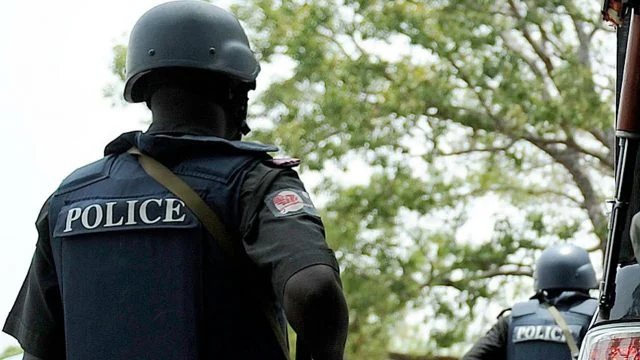
The operation, conducted around 5:00 pm on Wednesday by troops of Operation ENDURING PEACE in Gwandanu Village, Langtang North Local Government Area, led to the seizure of two AK-47 rifles, one G3 rifle, and industrial equipment including welding and drilling machines, generating sets, and a technical toolbox.

In a separate incident the same day in Jema’a Local Government Area of Kaduna State, troops responded to an armed attack on members of the Forest Guards and the Vigilante Group of Nigeria. In coordination with the Forest Guards, security forces pursued the attackers toward the Jaginde Forest axis.

The suspects abandoned a motorcycle and fled into the bush near Ungwar Maruwa upon spotting the approaching troops. One fleeing suspect was arrested, and a search of their hideouts recovered an AK-47 rifle, one AK-49 rifle, a motorcycle, and a sleeping mat.

The two suspects from the Plateau raid are currently in custody as authorities investigate their distribution network and possible links to wider criminal syndicates. Mop-up operations are ongoing to recover additional locally fabricated weapons and intercept other fleeing suspects.

Captain Chinonso Polycarp Oteh, Media Information Officer for the Joint Task Force, said the operations reflect the military’s commitment to restoring peace and stability in the joint operations area by targeting sources of communal violence and other criminal activities. He urged the public to continue providing timely information to assist security efforts.

Displaced Mansur People in Bauchi Return To Their Village After Military Clears Terrorist Hideout


By Abdullahi Mukhtar Algasgaini


Hundreds of residents streamed back to their village on Wednesday, ending two months of displacement after a major military operation flushed out armed terrorists from forest strongholds across three states.

The homecoming turned into a celebration, with men, women, and children singing and dancing as they reclaimed their ancestral homes. Many immediately began clearing overgrown bushes and inspecting their houses for damage.

Mansur had been a ghost town since February 26, 2026, when terrorists overran the community, forcing families to abandon their farms and homes. For nearly two months, the village lay empty.

The return was made possible by Operation BUGUN KARKANDA III, a clearance mission ordered by Army Headquarters and executed by the 33 Artillery Brigade. That operation followed an earlier phase, Operation WUTAN DAJI, designed to root out terrorists from their hideouts.

According to military statements, troops successfully cleared the dreaded Dajin Madam Forest in Plateau State and Kumbodoro Forest in Taraba State. Other cleared areas included the Yankari Game Reserve, Bogwas, and Rimi in Bauchi State, as well as Odere Forest, Shirnagol, Wanka, and Kukarlwa in Plateau State. In Taraba, Kumbodoro town and Angwan Jauro Sule were also secured.

With the clearance phase complete, the military moved to consolidate gains, handing over liberated towns to security agencies and government departments to maintain order and facilitate the return of displaced communities.

Local leaders praised the Chief of Army Staff, Lieutenant General Waidi Shaibu, for swift action, adding that the residents’ return marks a fresh start. For many villagers, the sight of soldiers on patrol now brings reassurance rather than fear.

Fungal Diseases Fuelling Hunger, Health Risks in Nigeria – Don

By Muhammad Sulaiman

A Professor of Plant Pathology and Mycology at the Federal University Birnin Kebbi (FUBK), Prof. Kasimu Shehu, has warned that fungal diseases are exacerbating hunger and posing serious health risks in Nigeria.

Shehu made the assertion on Wednesday while delivering the university’s 4th Inaugural Lecture in Birnin Kebbi.

The lecture, entitled “Invisible Enemies, Visible Losses: A Lifetime of Confronting Fungal Threats to Nigerian Agriculture and Public Health,” examined the growing impact of fungal infections on food production and public health.

The don said fungal diseases were responsible for significant losses in major crops, thereby worsening food insecurity across the country.

“Losses of up to 30 per cent of marketable produce occur due to fungal infections during pre- and post-harvest stages,” he said.

He identified maize, rice, groundnut, onion and vegetables as highly vulnerable crops, noting that poor storage and handling practices further increased contamination.

According to him, beyond reducing food availability, fungi also produce toxic substances known as mycotoxins, which pose serious threats to human health.

“ Chronic exposure to aflatoxins has been implicated in growth retardation, immunosuppression and increased disease susceptibility, particularly among children,” Shehu said.

He added that fungal contamination contributed to food insecurity by reducing both the quantity and quality of available food.

“ Contaminated crops may either be discarded or consumed despite health risks, thereby exacerbating malnutrition and poverty, especially in rural communities,” he said.

The professor identified high moisture levels, poor drainage and inadequate storage systems as major factors driving the spread of fungal diseases.

“ Elevated humidity levels in storage environments, as well as co-storage of infected and healthy produce, facilitate cross-contamination,” he said.

Shehu also warned that environmental and climate changes were accelerating the emergence and spread of fungal diseases.

He called for improved post-harvest handling, adoption of resistant crop varieties and increased investment in research and food safety systems.

“These constraints underscore the need for coordinated, multidisciplinary approaches to food safety mechanisms that integrate scientific research, policy development and stakeholder engagement,” he said.

In his remarks, the Vice-Chancellor of FUBK, Prof. Muhammad Zaiyan-Umar, who chaired the lecture, commended the lecturer for his contributions to research and national development.

The event attracted academics, including the immediate past Vice-Chancellor of the Federal University Gusau, Prof. Mu’azu Abubakar-Gusau, as well as students and stakeholders from the biosafety, agriculture and health sectors.

The inaugural lecture forms part of the university’s efforts to promote research aimed at addressing critical national challenges.

Senate Confirms Darma as Minister

By Muhammad Abubakar

The Nigerian Senate has confirmed the appointment of Muttaqha Rabe Darma as a minister in the federal government following his screening by lawmakers.

Darma was nominated earlier this week by President Bola Ahmed Tinubu to replace Ahmed Musa Dangiwa as Minister of Housing and Urban Development.

During the screening, Darma addressed questions on Nigeria’s housing deficit and urban renewal strategies, pledging to collaborate with relevant stakeholders to meet government targets in the sector.

A seasoned administrator, Darma holds two doctoral degrees and previously served as Secretary and Chief Executive Officer of the Petroleum Technology Development Fund (PTDF).

ASUP ABCOAD Chapter Elects New Executives, Pledges Stronger Unionism

By Ibrahim Yunusa

The Academic Staff Union of Polytechnics (ASUP), Audu Bako College of Agriculture, Dambatta (ABCOAD) Chapter, has successfully conducted its chapter elections, ushering in a new set of executives to pilot the affairs of the union.

In a statement issued by the chapter’s PRO II, Abdu Sa’idu, the outcome of the exercise saw Dr. Mustapha Mukhtar emerge as Chairman, while Musa Garba was elected Vice Chairman. Nuraddeen Abbas secured the position of Secretary General, with Mustapha Abubakar Barkindo emerging as Assistant Secretary General.


Other elected officers include Aminu Yusha’u Kunya as Financial Secretary, Rabilu Abdulkadir Barau as Treasurer, and Salim Koguna as Public Relations Officer (PRO). Aminuddeen Yusuf Jibrin was elected Internal Auditor, while Umar Muhammad emerged as Welfare Officer.


The election was conducted and supervised by the Chairman of the Electoral Committee (ELCOM), Malam Sani Alhassan Dawaki, who formally announced the results at the end of the voting process.


Speaking after the exercise, the ASUP Zonal Coordinator, Zone A, Comrade Muhammad Muhammad, described the election as a significant milestone in strengthening internal democracy within the union. He reaffirmed his commitment, alongside the National Executive Council (NEC) and the National Delegates Conference (NDC), to enhancing union activities and fostering institutional harmony.


Also, the Provost of ABCOAD, Dr. Hassan Ibrahim, congratulated the newly elected executives and wished them a successful tenure. He expressed confidence in their capacity to advance the union’s objectives both within and outside the institution.


The newly elected executives are expected to build on existing achievements by prioritizing members’ welfare, promoting academic excellence, and strengthening the union’s engagement with relevant authorities.

Cross River Govt Dismisses Report of 10 New COVID-19 Cases

By Ibrahim Yunusa 

The Cross River State Government has refuted reports alleging 10 new COVID-19 cases in the state, describing the claim as false and misleading.

In an official statement, the State Commissioner for Health, Henry Ayuk, clarified that as of April 23, 2026, the state has only one confirmed case of COVID-19. He explained that the individuals mentioned in the report were merely contacts identified through contact tracing linked to the existing case, not newly confirmed infections.

Ayuk emphasised that contact tracing remains a standard public health response aimed at preventing further spread of the virus and should not be misconstrued as confirmation of additional cases.

The government urged residents to disregard unverified information and rely on updates from credible and official sources. It also reassured the public that the situation is under control and there is no cause for alarm.

BREAKING: Tinubu Seeks Senate Approval for Fresh $516 Million Loan

By Ibrahim Yunusa 

President Bola Ahmed Tinubu has formally requested the National Assembly’s, specifically the Senate’s, approval for a new external loan of $516 million to support key government projects and address fiscal needs.

The loan request, communicated to the Senate leadership, is expected to be deliberated on in the coming days.

 According to sources within the presidency, the proposed borrowing is intended to finance critical infrastructure, boost economic growth, and stabilise public finances amid ongoing economic challenges.

If approved, the loan will form part of Nigeria’s broader borrowing plan under the current administration, which aims to balance developmental needs with fiscal responsibility. However, the request may spark debate among lawmakers, given rising concerns over Nigeria’s debt profile and repayment capacity.

The Senate is expected to review the proposal in line with constitutional provisions before granting or withholding approval. Further details on the specific projects to be funded are anticipated to emerge as deliberations progress.