News

World Bank Says Nigeria’s Major Challenge Is Low Revenue, Not Debt

By Sabiu Abdullahi

The World Bank has said Nigeria’s main fiscal challenge is poor revenue generation rather than excessive borrowing.

Mathew Verghis, the World Bank’s Country Director for Nigeria, stated this during an interview on Channels Television on Friday.

He explained that Nigeria’s debt burden remains moderate when compared with many countries of similar economic size.

“From our assessment, Nigeria doesn’t have a high indebtedness problem, it has a low revenue problem,” Verghis said.

According to him, the country’s debt level, when measured against the size of the economy, is lower than that of several neighbouring nations and should not be likened to countries facing serious debt crises.

“When we looked at the numbers, Nigeria is a moderately indebted country, meaning it has less debt relative to its economy than most of its neighbours and many other countries,” he said.

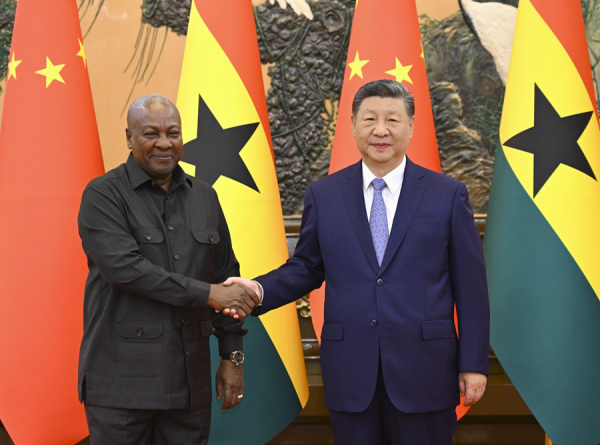
“Nigeria is in a very different situation than Ghana, for example, which is going through a debt restructuring.”

Verghis argued that borrowing remains necessary for governments seeking to finance major projects that require large investments before long-term benefits can be achieved.

“Nigeria borrows for the same reasons that all countries borrow. If you want to get results, if you want to deliver results to people, then the money that you have on an annual basis is not enough,” he said.

“So you borrow, you get results, and that will improve your ability to pay back.”

The World Bank official cited the expansion of electricity access as one of the areas where Nigeria would need substantial funding.

“To be able to connect, to give energy to 32 million Nigerians, Nigeria needs to borrow money now,” Verghis said.

“But that money, with that increased access to energy, Nigeria will become a wealthier country, and it’ll be then possible to pay back.”

He, however, warned that weak government revenue could create challenges for debt repayment if authorities fail to improve revenue collection.

“Nigeria’s debt is not particularly high, and in fact, it’s quite moderate by international standards,” he said.

“Its revenues are very low by international standards, and unless those revenues are raised, then it will not be able to pay back debt.”

Verghis added that stronger revenue generation would help government invest more in infrastructure, healthcare, agriculture, and human capital development. He said such investments would support job creation and reduce poverty over time.

The World Bank recently introduced a new six-year Country Partnership Framework for Nigeria. The programme focuses on employment generation through investments in critical sectors, including infrastructure, healthcare, agriculture, and digital connectivity.

Appeal Court Nullifies Judgment Allowing Hijab at UI International School

By Sabiu Abdullahi

The Court of Appeal sitting in Ibadan has overturned an earlier judgment that permitted female Muslim students of the University of Ibadan International School (ISI) to wear hijab with their school uniforms.

The appellate court delivered the ruling on Friday in a split decision of two-to-one.

Justice Biobele Georgewill, who delivered the lead judgment, alongside Justice K.I. Amadi, held that ISI operates as a private institution and not a public school.

The court ruled that the students had voluntarily accepted the school’s regulations after signing an undertaking to comply with its rules on dressing.

According to the judgment, the Supreme Court ruling that recognised the right of female Muslim students to wear hijab applied to public schools in Lagos State and not to private institutions.

Georgewill said freedom of religion remains a personal right that individuals may choose to waive.

“In public schools, you can wear hijab on school uniforms based on the judgment of the supreme court,” the judge said.

“But the supreme court is yet to make any decision on the use of hijab in private schools.

“The judgment of the lower court allowing female Muslim students to wear hijab on their school uniforms in ISI, a private school, is set aside.”

However, Justice Fadawu Umar disagreed with the majority judgment. In his dissenting opinion, he upheld the earlier ruling of the Oyo State High Court, which allowed female Muslim students of the school to use hijab.

The dispute over the use of hijab at the school dates back to November 2018 after some Muslim female pupils arrived at the school wearing headscarves.

The development sparked tension among parents and school authorities. The management later shut down the school temporarily to prevent a breakdown of order.

Before the closure, parents under the umbrella of the International School Muslim Parents’ Forum had written to the school management on November 9, 2018, informing the authorities that their daughters would begin wearing hijab to school.

At the time, the then Deputy Vice-Chancellor (Academic) of the University of Ibadan, Abideen Aderinto, maintained that ISI is a private institution and that parents had agreed to the rules governing students’ dressing before admission.

Some Muslim parents later approached the court on behalf of their children to challenge the restriction. Those involved in the suit included Taofeek Yekinni, Idris Badiru, Sikiru Babarinde, Muideen Akerele, Abdur-rahman Balogun and others.

The Oyo State High Court had earlier ruled in favour of the parents and declared that banning hijab violated the fundamental rights of the pupils.

The issue of hijab in schools has remained a subject of legal and public debate in different parts of Nigeria.

In July 2022, the Supreme Court upheld the right of Muslim female students in Lagos State public schools to wear hijab as part of their school uniforms.

INEC Extends Voter Registration Exercise To July 24

By Sabiu Abdullahi

The Independent National Electoral Commission (INEC) has extended the ongoing Continuous Voter Registration (CVR) exercise across Nigeria by an additional two weeks.

The electoral body announced that the exercise, which was earlier scheduled to conclude on July 10, 2026, will now end on July 24, 2026.

INEC disclosed this in a statement issued on Friday by Mohammed Haruna, chairman of the commission’s Information and Voter Education Committee.

According to the commission, the decision followed an assessment of the ongoing registration exercise as well as feedback received from state offices, political parties, civil society organisations, and other stakeholders.

Haruna said the extension would allow more eligible Nigerians who have not registered to take part in the exercise before the deadline.

“The extension underscores the commission’s commitment to ensuring that every eligible Nigerian has a fair and reasonable opportunity to be included in the register of voters ahead of future electoral activities,” Haruna said.

INEC also announced the introduction of an online self-service registration platform for Nigerians seeking to register as first-time voters.

The commission said the service will become operational on July 8, 2026, through its dedicated portal.

“In furtherance of its commitment to innovation, accessibility, and improved service delivery, the commission is pleased to announce the introduction of a self-service registration option (online) for eligible first-time voters,” he said.

“The new service will become available from Wednesday, 8th July, 2026 through the commission’s dedicated CVR portal – cvr.inecnigeria.org where the step-by-step guide is also provided.”

Haruna explained that the online option would allow eligible citizens to complete their voter registration process without visiting INEC offices physically.

He added that the platform includes measures aimed at protecting the credibility of the voter register.

According to him, the system contains identity verification features, biometric validation, and integrity checks to ensure accurate registration records.

“The commission urges all eligible Nigerians who are yet to register to take advantage of this extended window and explore the new voter registration technology option,” Haruna said.

“The commission remains committed to a credible, inclusive and accessible voter registration process, and to advancing the use of technology to improve citizens’ experience in the electoral process.”

INEC had resumed the nationwide CVR exercise in January 2026 after the completion of the first phase of the process in December 2025. The commission began online pre-registration in August 2025 before launching physical registration at centres nationwide later that month.

Mahdi Shehu Questions Presidency’s Explanation on Alleged Fake Agency Scandal

By Sabiu Abdullahi

Public affairs analyst Mahdi Shehu has faulted the Presidency’s response to the controversy surrounding an alleged fake federal agency, saying the explanation raised more concerns than answers.

In a post shared on his official X account on Thursday, Shehu described the Presidency’s position as inconsistent and doubtful. He questioned how an agency said to lack proper legal backing allegedly operated within government structures without detection.

According to him, the issue goes beyond allegations that Adeyemi forged an appointment letter. He argued that several government institutions should explain how the agency reportedly functioned openly.

“Assuming without conceding that Ajibade forged his appointment letter, which is a criminal offence, who is responsible for the following bigger crimes?” he asked.

Shehu said the agency allegedly secured about N1.3 billion through the national budget process before President Bola Tinubu signed the appropriation bill into law.

He also questioned how the organisation reportedly employed about 300 staff members from the federal civil service, opened accounts with both a commercial bank and the Central Bank of Nigeria, and obtained office accommodation inside the Federal Secretariat.

According to him, such developments could not have taken place without the awareness or involvement of several authorities and institutions.

He further expressed concern that security and anti-graft agencies such as the Department of State Services, the National Drug Law Enforcement Agency, the Economic and Financial Crimes Commission and the Independent Corrupt Practices and Other Related Offences Commission allegedly failed to uncover any irregularities during their screening and monitoring processes.

“Even if Ajibade is culpable, many more ‘big men’ are very much,” he said.

The commentator maintained that the Presidency’s explanation exposed deep weaknesses within public institutions.

“If anything, the explanation coming from the Presidency regarding the ‘fake’ agency is questionable, doubtful, suspect, contradictory, inconsistent, selective and indeed exposes the system, top to bottom, as being sufficiently and extensively vulnerable,” he wrote.

Shehu also stated that countries with stronger institutions would hold officials accountable in similar situations.

“In a normal society, nothing close to this will ever happen and if per adventure it does, decent heads will bow out and many more heads will role into prison,” he said.

The Presidency had earlier accused Adeyemi of forging official documents, creating non-existent presidential agencies and presenting himself falsely as a government official.

In a statement issued by the Special Adviser to the President on Information and Strategy, Bayo Onanuga, the Presidency announced that Adeyemi would appear before the Federal High Court in Abuja on July 27 over charges bordering on forgery, impersonation and obtaining by false pretence.

Police Arrest Suspect After Discovery of Unidentified Man’s Body in Kano

By Sabiu Abdullahi

Police in Kano State have taken a suspect into custody after the body of an unidentified man was discovered inside an abandoned house in the Badawa area of the state.

Residents said the victim, believed to be around 28 years old, had a severe neck injury which was suspected to have caused his death before assistance arrived.

According to a resident, Yusuf Da’u Ibrahim, the incident became known after a neighbour informed the ward head that a seriously injured man was lying inside a vacant building and required urgent attention.

He explained that security operatives responded quickly after receiving the report.

“Before emergency responders arrived, the police had already been informed. They quickly came to the scene, arrested a suspect and evacuated the body to the hospital,” Ibrahim said.

Ibrahim also stated that people in the area could not identify the deceased. He noted that the community had never experienced a similar incident before.

“We don’t know who the deceased is. This is the first time we have witnessed such a tragic incident in our community,” he said.

The spokesperson for the Kano State Police Command, CSP Abdullahi Haruna Kiyawa, confirmed that the matter would be investigated, although he said the command was still awaiting complete details about the case.

“I have not received the full report yet, but the command will investigate the matter to establish exactly what happened,” Kiyawa said.

Troops Dismantle Illegal Arms Factory, Arrest Two Suspects in Kebbi

By Uzair Adam 

Troops of the Joint Task Force North West, Operation FANSAN YAMMA, have dismantled an illegal arms manufacturing factory allegedly linked to terrorist activities in Kebbi State, arresting two suspected arms manufacturers and suppliers.

The operation was carried out by troops of Sector 2 following credible intelligence, which led security personnel to a secluded compound allegedly being used as a covert production and distribution centre for locally fabricated firearms.

In a statement issued on Thursday, the Media Information Officer of Operation FANSAN YAMMA, Lt. Col. Aliyu Danja, said troops recovered five locally fabricated AK-47 rifles during a thorough search of the premises.

He described the operation, conducted in collaboration with other security agencies, as a major breakthrough in ongoing efforts to disrupt terrorist logistics and dismantle criminal networks operating across the North-West.

“The successful operation represents another major step in the ongoing campaign against the proliferation of illicit weapons, which have continued to fuel insecurity and violent activities in parts of the region,” Danja said.

He added that the suspects are currently in military custody and undergoing preliminary interrogation, while investigations are ongoing to identify and arrest other members of the syndicate, uncover its sponsors and collaborators, and dismantle the wider arms supply chain.

The Theatre Command commended the professionalism and commitment of the troops and partner security agencies involved in the operation.

It also urged residents across the North-West to remain vigilant and continue providing timely and credible intelligence, stressing that public support remains essential to sustaining security operations and eliminating criminal elements threatening peace and security in the region.

Kebbi Police Debunks ‘Sai Mallam’ Terrorist Group Claims, Arrests 13 Cybercrime Vocal Group Suspects

By Dahiru Kasimu Adamu

The Kebbi State Police Command has dismissed widespread reports about the emergence of a terrorist group known as “Sai Mallam” allegedly imposing illegal levies on communities in Argungu and Zuru Emirates, describing the claims as a gross misunderstanding of criminal activities by a cybercrime syndicate.

In a statement issued on Monday, the Command’s Public Relations Officer, SP Bashir Usman, clarified that investigations have established no such terrorist organisation exists within the state.

Instead, what residents mistook for a terrorist group’s activities was traced to a sophisticated cybercrime network locally known as “Yan Vocal,” operating within the Argungu Local Government Area and specialising in hacking and online extortion schemes targeting individuals and prominent personalities.

According to police findings, the syndicate comprises young individuals aged 19 to 24 who use advanced digital techniques to defraud unsuspecting victims.

The group’s operation involves hacking social media accounts, creating fake identities, and using sophisticated video editing tools to manipulate pre-recorded nude footage. Victims are deceived into believing they are engaged in live video calls with women, only to be blackmailed with threats of public exposure unless financial demands are met.

The victims, police said, include high-profile individuals such as politicians, traditional rulers, religious leaders, business owners, and other prominent figures.

Between June 26 and June 29, 2026, the command’s coordinated operation resulted in the arrest of thirteen suspects linked to the syndicate.

Those arrested include:

Ahmed Nasir, Rabiu Sani, Sadiq Umar, and Umar Nasir, all from Argungu, who allegedly conspired to obtain nude images of a female victim and demanded ₦1,000,000 from her.

Faisal Muhammed and Abbas Baraye were arrested for online extortion using nude pictures.

Abdullahi Abubakar, Abdulhamid Mukhtar, and Al’amin Aminu were accused of defrauding a victim of ₦3,000,000 after manipulating a video to falsely portray the victim in a compromising position. Haliru Bashar, Abubakar Faruk, Almustapha Munnir, and Saifullahi Nata’ala, who allegedly obtained a nude video of a female acquaintance through a sex-related Snapchat group and threatened to expose her.

Commissioner of Police, CP Umar M. Hadejia,  issued a stern warning that cybercrime constitutes a serious offence with grave consequences.

He called on parents and guardians to closely monitor their children’s online activities and discourage involvement in fraudulent schemes.

“We urge members of the public to exercise caution on social media, protect personal information, avoid suspicious online interactions, and promptly report cases of cyber extortion to the nearest police station,” CP Hadejia stated.

The police command has provided emergency contact numbers  09039911876 and 07081074395  for reporting cyber-related crimes.

All arrested suspects will be charged in court upon the conclusion of investigations, while efforts are ongoing to apprehend other fleeing members of the syndicate.

ICPC Nabs Ex-Minister Nnaji Over Certificate Forgery at Abuja Airport

By Abdullahi Mukhtar Algasgaini

The Independent Corrupt Practices and Other Related Offences Commission (ICPC) has arrested former Minister of Science, Technology and Innovation, Mr. Geoffrey Uchechukwu Nnaji, over allegations of certificate forgery and submission of a false National Youth Service Corps (NYSC) discharge certificate.

The arrest was executed on Wednesday at the Nnamdi Azikiwe International Airport, Abuja, upon the former minister’s arrival into the country. Operatives of the Department of State Services (DSS) assisted in apprehending Mr. Nnaji before handing him over to the anti-graft agency.

The ICPC had previously invited the former minister for questioning through a formal letter referenced ICPC/HC/CSTF/GUN/GBT/T.1/VOLV16, dated 15 May 2026. The invitation was delivered to his known addresses in Abuja and Enugu, as well as through his email, but Mr. Nnaji failed to appear on the scheduled dates.

Following his refusal to honour the invitations, the Commission secured a bench warrant from the Federal High Court in Abuja (Suit No: FHC/ABJ/CS/1160/2026) on 11 June 2026, authorising his arrest.

The allegations against the former minister include:

1· Forgery of academic credentials, specifically a degree certificate from the University of Nigeria, Nsukka (UNN)

2· Submission of a false NYSC Discharge Certificate during his ministerial screening in 2023Mr.

Nnaji is currently in custody at the ICPC headquarters in Abuja as investigations continue.

The Commission has assured the public that the matter will be pursued diligently in accordance with the law.

Seven Boko Haram, ISWAP commanders Arrested After Returning From Hajj Using NIMC Database — Minister

By Anwar Usman

The Minister of Interior, Dr Olubunmi Tunji-Ojo, said on Friday that Nigeria’s integrated identity management system led to the arrest of seven suspected Boko Haram and ISWAP commanders returning from the 2026 Hajj pilgrimage.

‎The minister made this known at the Presidential Villa, Abuja, shortly after President Bola Tinubu signed the National Identity Management Commission Act 2026 into law, as contained in a statement signed by the President’s aide, Bayo Onanuga.

According to him, the suspects were arrested last Thursday at the Katsina airport after returning from Saudi Arabia and were subsequently handed over to the Department of State Services.

He said the arrests were successful as a result of integrating the National Identity Management Commission database with the Nigeria Immigration Service database and connecting it to Interpol.

The statement in part reads, ”I know, sometime ago, the Senate President was alarmed by how some terrorists went on pilgrimage, wondering how they crossed our borders. We inherited a fractured system.

‎”But I’m happy to tell you that even last week, Thursday, seven of the known commanders of Boko Haram and ISWAP at the point of coming back from Mecca were arrested in Katsina at the airport and were handed over to the DSS.

‎”This is only possible because NIMC’s ID is already connected with the immigration database, and it’s already speaking to even the Interpol 24/7, and we have been able to automate this,” the minister said.

According to the minister, the newly signed NIMC Act would further strengthen Nigeria’s security architecture by improving the harmonisation of identity databases and strengthening inter-agency collaboration.

‎He further revealed that the law will enhance the integrity of the National Identity Number system while boosting the country’s capacity to combat identity theft, terrorism, financial crimes and other security threats.

He said that before Tinubu’s government, identity management systems were fragmented, noting that services such as passport issuance and driver’s licence processing were disconnected from the national identity database.

President Tinubu signed the NIMC Act 2026 on Friday. In attendance were the Senate President, Godswill Akpabio, the Deputy Speaker of the House of Representatives, Benjamin Kalu, and other senior government officials.

Triple “R” Kannywood Renewed Hope Initiative Holds Special Prayers for Peace and National Security

By Khalid Imam 

The Triple R Kannywood Renewed Hope Initiative, the highest body of elite Kannywood actors and other influential Arewa creatives, led by Alhaji Dauda Adamu Abdullahi Kahutu Rarara, organised a special prayer session to pray for peace, unity, and security in Nigeria on 22nd June 2026 at the Aminu Dantata Trade Fair Complex in Kano City.

Conceived by a high-powered 5-Man Committee of Special Prayer chaired by Nura Hussaini, a famous Hausa film actor, the session drew a massive turnout of notable Hausa film actors, directors, singers, scriptwriters, authors, and other creatives in the arts industry. TikTok influencers and dozens of group members were also in attendance, and all were united by their concern over Nigeria’s security situation.

The special prayers attracted enthusiastic attendees from the film and arts industry in Kano, Kaduna, Gombe, Niger, Sokoto, Borno, and other Northern regions. Starting around 11 am, members recited the Holy Qur’an. A big cow and a large ram were slaughtered, and the meat was shared among the public. The act sought Allah’s intervention for lasting peace and security, especially in troubled areas. 

Prayers were also faithfully offered for Almighty Allah to completely crush all those directly or indirectly profiting from the killing of innocent lives, especially bandits and other troublemakers. Members also prayed, asking God to bring a permanent end to terrorism, armed robbery, kidnapping, and every form of insecurity plaguing Nigeria, particularly the North.

To ensure a well-coordinated and sustained approach, the initiative is committed to establishing the said powerful standing committee under the chairmanship of Nura Hussaini, with Sharu Nagudu serving as Vice Chairman. All members of the Triple R Kannywood for Renewed Hope Initiative are automatic and committed members, working collectively to hold continuous prayers for peace, unity, security, and Nigeria’s overall development.

At the heart of the prayers was a collective plea for Allah’s immediate intervention in ending the violence still disrupting communities across Nigeria. The group also prayed for lasting peace, security, and stability across Nigeria, for unity, love, and mutual understanding among all citizens, and for wisdom and sound guidance for the country’s political leadership at the national and state levels as they strive harder to steer the nation toward achieving peace and socioeconomic transformation.

Speaking to journalists at the venue of the special prayers and sacrifices, Rarara, a preeminent Hausa song artist and leader of the converged creative minds under the Triple R Kannywood Renewed Hope Initiative, said, “The initiative recognises the daunting challenges security agents face daily in tackling insecurity across the country. This prayer session was organised to complement their efforts by seeking Allah’s intervention and urging the general public to join in praying for the success of the government and security personnel in combating this persistent menace.”

Khalid Imam, a multiple award-winning bilingual author based in Kano, attended the special prayer session and crafted this report.