News

Tinubu Approves Land Allocation in Abuja for Ambassadors-Designate


By Anwar Usman

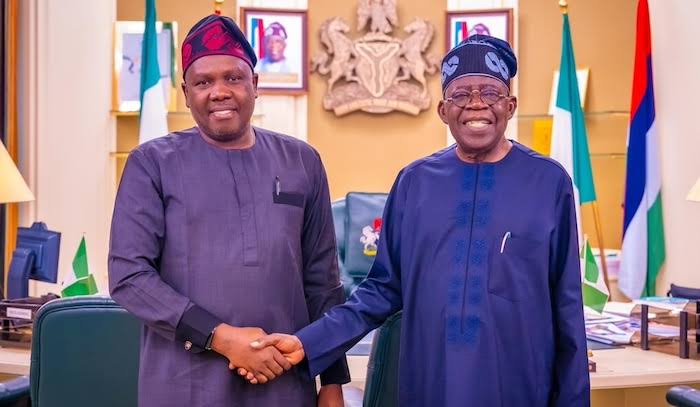
President Bola Tinubu has approved the allocation of plots of land to Nigerian ambassadors and high commissioners-designate in Abuja, the Federal Capital Territory minister, Nyesom Wike, disclosed on Wednesday.

The minister made the announcement while receiving the envoys on a courtesy visit at his official residence in Life Camp, Abuja.

The delegation was led by the Permanent Secretary of the Ministry of Foreign Affairs, Dunoma Umar Ahmed, as part of an induction programme for the newly appointed ambassadors.

According to the minister, the president’s decision was driven by the need to give Nigeria’s overseas representatives a permanent foothold in the capital for when they return for periodic briefings.

“The President believes that most of you do not have a place in Abuja… he will encourage you to see how you will put up where you can stay. Before you leave this morning, each and every one of you should have your form to apply for a land allocation in Abuja,” Wike said.

The minister further used the occasion to charge the envoys with the responsibility and urged them to defend and project Nigeria’s international standing. “You are, in essence, the mirror of this country. The way the world sees you is the way it will see Nigeria,” he said.

He tasked them with reinforcing the economic diplomacy work that President Tinubu had been conducting through extensive foreign engagements.

Mr President has travelled extensively to attract investment and partnerships. It is now your role to reinforce that effort by building confidence in Nigeria as a viable destination for investment,” the minister stated.

Wike also drew attention to development opportunities in the FCT, pointing to infrastructure expansion across the six area councils — Abaji, AMAC, Bwari, Gwagwalada, Kuje, and Kwali — as evidence of Abuja’s growing stature as a global capital.

Wike also announced ongoing partnership talks with Saudi Arabia and Egypt to develop key sectors, as well as plans to engage the European Commission on development cooperation.

He expressed confidence in Nigeria’s near-term prospects, saying: “I remain confident that by 2027, Nigeria will be more peaceful, more united, and stronger as a nation.”

Kim Jong Un Commends Soldiers Who ‘Self-Blasted’ To Avoid Capture In Ukraine War

By Sabiu Abdullahi

North Korean leader Kim Jong Un has applauded soldiers who took their own lives during combat in Ukraine, where they were fighting alongside Russian forces. His remarks appear to confirm reports that such actions were encouraged to prevent capture.

Speaking at a ceremony in Pyongyang, Kim described those who “unhesitatingly opted for self-blasting, suicide attack, in order to defend the great honour” as “heroes”.

Estimates from South Korea indicate that about 15,000 North Korean troops have been deployed to support Russia’s efforts in the western Kursk region. Reports suggest that more than 6,000 of them have died, although neither North Korea nor Russia has officially verified these figures.

For some time, intelligence sources and defectors have claimed that Pyongyang instructed its soldiers to avoid being taken prisoner, even if it meant ending their own lives.

During the event on Monday, Kim praised what he called unwavering loyalty among the troops. “Their self-sacrifice expecting no compensation, and the devotion expecting no reward… This [is] the definition of the height of loyalty of our army,” he said.

The ceremony marked the unveiling of a memorial dedicated to North Korean soldiers who died in the conflict. Among those present were Russia’s Defence Minister Andrey Belousov and the speaker of the Russian parliament, Vyacheslav Volodin.

In North Korea, military doctrine treats capture as a serious betrayal.

Earlier this year, a South Korean broadcaster aired footage of two captured North Korean soldiers in Ukraine. One of them expressed regret for not ending his life. “Everyone else blew themselves up. I failed,” the prisoner said.

South Korea’s National Intelligence Service had earlier reported that notes recovered from fallen North Korean troops suggested adherence to this extreme practice.

Kim also honoured those who died in battle, including fighters who were unable to complete their assigned missions. “Those who fell in the vanguard of charges and those who writhed in frustration at the failure to fulfill their duties as soldiers who were given orders, rather than in pain in their bodies torn by bullets and shells – they too can be called the party’s faithful warriors and patriots,” he stated.

In June 2024, Kim and Russian President Vladimir Putin signed an agreement that commits both nations to support each other in the event of “aggression”. At the time, Kim described the pact as the “strongest ever”.

Apart from deploying troops, North Korea has also pledged to send thousands of workers to assist in reconstruction efforts in the Kursk region.

US To Issue Special Passports Featuring Trump’s Image

The United States government has announced plans to release a limited number of special passports that will carry the image of President Donald Trump. The initiative is intended to mark the country’s 250th Independence anniversary.

The State Department said the passports will be produced as a special edition and will only be available for a short period.

Officials noted that the move departs from established norms in democratic nations, where it is uncommon for a sitting president’s image to appear in official travel documents.

The department’s spokesperson, Tommy Pigott, said the release is scheduled to coincide with the July 4 celebrations.

Reports indicate that the passports will be obtainable at designated locations in Washington and will not attract any additional cost.

However, lawmakers from the Democratic Party have criticised the decision, accusing the government of misusing taxpayers’ money.

Former Mossad Chief Condemns Settler Violence, Adds He Feels “Ashamed to be a Jew”

By Maryam Ahmad

A former head of Israel’s intelligence agency has sharply condemned rising settler violence in the West Bank, saying it has left him “ashamed to be a Jew.”

Tamir Pardo, who led Mossad from 2011 to 2016, made the remarks in a recent interview, warning that attacks by Israeli settlers on Palestinian communities are eroding Israel’s moral standing and threatening its long-term security. His comments come amid an uptick in reported incidents involving arson, assaults, and property damage in the territory.

Human rights organisations have documented a rise in settler-related violence in recent months, often carried out with limited accountability. Israeli authorities say they are working to curb such incidents, but critics argue enforcement remains inconsistent.

Pardo’s intervention adds to a growing chorus of current and former security officials voicing concern over developments in the West Bank. He urged the government to uphold the rule of law and take decisive action against perpetrators, warning that failure to do so risks further escalation and international isolation.

EFCC Chairman Raises Concern Over Rising Cybercrime Among University Students

By Sabiu Abdullahi

The Executive Chairman of the Economic and Financial Crimes Commission (EFCC), Olanipekun Olukoyede, has expressed serious concern over the growing involvement of Nigerian university students in cybercrime. He stated that nearly six out of every 10 undergraduates are linked to such activities.

Olukoyede made this known during the 8th Biennial Conference of the Committee of Pro-Chancellors of State-Owned Universities in Nigeria, which took place in Kano. The event focused on the theme, “Unlocking the Potentials of Artificial Intelligence: University Governance, Internationalization and Rankings”.

He described the situation as “a sad development,” and explained that findings from the commission’s investigations and field operations point to widespread participation of students in internet fraud and similar offences.

“My research in the last one year has shown that about six out of 10 students in our universities are into cybercrime. It is a very disturbing situation,” he said.

The EFCC chairman revealed that many suspects arrested during recent operations were students. He added that some of them had gone as far as undermining academic standards by allegedly placing lecturers on their payroll.

He linked the development to deeper structural issues, including weak supervision and lapses within university administration.

Olukoyede also referred to a major crackdown in Lagos where 792 individuals connected to an international cybercrime network were apprehended. He noted that a considerable number of those arrested were students. According to him, the operation relied on artificial intelligence tools, which helped expose the scale and complexity of the criminal network.

He further warned about the rise of “Yahoo Plus,” a trend where internet fraud is combined with fetish practices.

The EFCC boss urged university authorities and governing councils to act quickly to address the problem. He advised them to strengthen internal systems and work closely with law enforcement agencies.

Olukoyede also called on pro-chancellors to adopt artificial intelligence-driven governance structures. He said such systems would improve transparency, detect fraud and promote financial accountability.

He pointed out that many tertiary institutions still depend on manual processes. He said this makes them open to abuses such as ghost workers, inflated contracts and mismanagement of funds.

“A university that lacks financial accountability cannot credibly train future professionals. The integrity of our universities is a matter of national security,” he said.

He recommended the use of artificial intelligence in areas such as fraud detection, payroll administration, procurement tracking and academic monitoring. He explained that these tools can identify suspicious transactions, flag unusual salary payments and strengthen auditing systems.

Olukoyede also noted that the EFCC has applied artificial intelligence in its own operations, including digital forensics and financial tracking.

He, however, emphasised that technology should support human supervision and must comply with existing laws, including those on data protection and procurement.

The EFCC chairman stressed the need for training in cybersecurity, machine learning and digital governance within universities. He also called for investment in digital infrastructure such as broadband and cloud systems to support the effective use of artificial intelligence.

He encouraged stronger cooperation between universities, regulatory authorities and anti-corruption agencies to tackle emerging threats.

Ruto Clarifies ‘English’ Remarks, Praises Nigerians at Mining Conference

By Muhammad Abubakar

Kenyan President William Ruto has clarified that his recent remarks suggesting Kenyans speak better English than Nigerians were made during a private conversation that was leaked and taken out of context.

The comments had sparked light-hearted banter on social media between Kenyans and Nigerians, drawing widespread reactions from both countries.

Speaking on Tuesday at the Kenya Mining Investment Conference 2026 in Nairobi, Ruto struck a conciliatory tone, emphasising that Nigerians speak “excellent” English, just as Kenyans do.

The event was attended by a Nigerian delegation, including the Minister of Solid Minerals, Henry Dele Alake.

Ruto’s remarks appeared aimed at easing tensions and reinforcing cordial ties between the two nations following the online exchanges triggered by the earlier statement.

FG Launches ‘Renewed Hope’ Programme to Lift 10 Million Out of Poverty


By Abdullahi Mukhtar Algasgaini

The Federal Government has announced that approximately 10 million Nigerians are set to benefit from its newly unveiled Renewed Hope Ward Development Programme, a poverty-reduction initiative targeting all 8,809 wards across the country.

Minister of Budget and Economic Planning, Senator Abubakar Bagudu, disclosed this while accepting his appointment as the Grand Patron of the National Councillors’ Forum of Nigeria.

Speaking after the honour, Bagudu said the recognition would inspire him to intensify efforts aimed at revitalising grassroots economies for the benefit of the majority. He reaffirmed President Bola Tinubu’s commitment to improving living standards through extensive local governance reforms embedded in the programme.

The initiative, he explained, will map dominant commercial activities in each ward to identify beneficiaries eligible for government support. This strategy, according to the minister, is expected to give a significant boost to the Tinubu administration’s poverty-reduction objectives.

Bagudu thanked the Forum for their continued support, noting that the councillors’ endorsement of the President’s second term reflects a broad appreciation of ongoing reforms that are steadily improving the nation’s economy.

The Forum, which comprises all 8,809 serving councillors, stated that the appointment recognises Bagudu’s remarkable contributions to national development. “Your dedication to public service and to the development of our country makes you a perfect fit for this prestigious position,” the appointment letter dated April 23, 2026 read.

During a weekend visit, Forum President Hon. AbdulRazak Sama’ila presented the letter to Bagudu, expressing hope that the minister would play a crucial role in promoting good governance, transparency, and accountability at the grassroots level. “We hope to work with him and benefit from his insights and expertise,” Sama’ila added.

Nigeria, Malaysia Customs Strengthen Partnership On Trade, Border Security

By Sabiu Abdullahi

Nigeria and Malaysia have taken fresh steps to reinforce cooperation between their customs authorities, with a focus on improving trade processes and tightening border control systems.

This followed a series of high-level meetings in Malaysia involving the Nigeria Customs Service (NCS) and the Royal Malaysian Customs Department (RMCD).

The engagements took place during an official visit by the Comptroller-General of Customs, Bashir Adewale Adeniyi, to the RMCD headquarters. The visit coincided with his attendance at the Defence Services Asia (DSA) Malaysia 2026 event.

Adeniyi was hosted by his Malaysian counterpart, Director-General Dato’ Haji Amran bin Haji Ahmad. Both officials held discussions that centred on strengthening institutional ties, advancing customs modernisation, and improving coordination in border management.

Trade relations between the two countries have continued to expand in recent years. Nigeria’s imports from Malaysia rose from ₦159.9 billion in 2020 to ₦716.0 billion in 2024. Total trade between both nations has reached about ₦1.82 trillion within five years.

During the talks, Adeniyi emphasised the importance of establishing a more structured partnership between the two customs services. He described Malaysia as a major trading partner, noting that Nigeria imports products such as crude palm oil, refined palm olein, aviation fuel, machinery, and other industrial materials.

He also pointed out that customs agencies play a key role in supporting legitimate trade while protecting national economic and security interests.

Despite the long-standing trade relationship, both sides observed that there is no formal legal framework guiding their customs cooperation. They agreed to begin the process of developing a Mutual Recognition Agreement under the World Customs Organisation (WCO), which will be pursued through diplomatic channels.

As part of the engagement, Malaysian officials presented their border management structure, including the Malaysian Border Control and Protection Agency (AKPS), which operates as an integrated frontline system.

In response, the Nigerian delegation highlighted ongoing reforms within the NCS, including the Authorised Economic Operator (AEO) programme and other initiatives designed to speed up cargo clearance, cut costs, and improve compliance.

Both parties stressed the need for closer collaboration in intelligence sharing, enforcement efforts, and the use of technology to tackle illicit trade and cross-border crimes.

The NCS reaffirmed its commitment to building stronger bilateral and multilateral partnerships as part of its modernisation drive. It expressed optimism that the outcomes of the visit will enhance operational efficiency, promote smoother trade, and strengthen border security in line with Nigeria’s economic goals.

While in Malaysia, Adeniyi also met with officials at the Nigerian diplomatic mission and the Defence Office, where he commended their role in promoting Nigeria’s interests and assisting citizens abroad.

NERDC Announces 2026 Textbook Ranking Exercise to Improve Learning Standards


By Uzair Adam

The Nigerian Educational Research and Development Council (NERDC) has announced plans to commence its 2026 book ranking and selection exercise as part of efforts to improve the quality of learning materials used in schools across the country.

In a statement signed on Monday, the Executive Secretary of NERDC, Prof. Salisu Shehu, said the initiative is aimed at ensuring that only relevant, accurate, affordable and accessible textbooks are approved for use by learners nationwide.

The statement explained that the exercise is being coordinated by the Federal Ministry of Education under the leadership of the Minister of Education, Dr. Tunji Maruf Alausa, and the Minister of State for Education, Professor Suwaiba Said Ahmad.

According to the statement, the ministry has constituted a standing committee to streamline the book approval process, standardise selection procedures and regulate the textbook market. The move, it noted, is expected to enhance learning outcomes by ensuring that only the best instructional materials are adopted in schools.

The council emphasised that the ranking and selection of books would play a critical role in shaping the quality of education, noting that the additional layer in the assessment process would guarantee that approved books meet required standards.

“The ranking and selection of books will play a pivotal role in shaping the quality of education in Nigeria,” the statement said, adding that the process would ensure that only the most suitable materials are made available to students.

NERDC clarified that while the committee would handle the ranking and selection of textbooks, its responsibilities would not override the council’s statutory mandate of regulating the book industry. It added that the committee would operate under a structured framework designed to ensure transparency, consistency and objectivity.

The statement further disclosed that the committee would receive already assessed and approved books from NERDC before conducting its ranking exercise at a designated venue to avoid external interference.

It added that the process would follow a strict template to ensure fairness and credibility.

After completing the exercise, the committee is expected to submit a comprehensive report, including clear recommendations and justifications for each ranking decision, to the Minister of Education for approval.

NERDC also stated that the final list of ranked books would be formally communicated to state governments, while textbook selection and ranking exercises would be conducted at least every three years or whenever a new curriculum is introduced.

The council noted that a detailed workflow plan has been developed for the 2026 exercise, outlining activities, timelines and responsibilities, with further information on submission procedures to be communicated to stakeholders in due course.

NERDC Announces 2026 Textbook Ranking Exercise to Improve Learning Standards


By Uzair Adam

The Nigerian Educational Research and Development Council (NERDC) has announced plans to commence its 2026 book ranking and selection exercise as part of efforts to improve the quality of learning materials used in schools across the country.

In a statement signed on Monday, the Executive Secretary of NERDC, Prof. Salisu Shehu, said the initiative is aimed at ensuring that only relevant, accurate, affordable and accessible textbooks are approved for use by learners nationwide.

The statement explained that the exercise is being coordinated by the Federal Ministry of Education under the leadership of the Minister of Education, Dr. Tunji Maruf Alausa, and the Minister of State for Education, Professor Suwaiba Said Ahmad.

According to the statement, the ministry has constituted a standing committee to streamline the book approval process, standardise selection procedures and regulate the textbook market. The move, it noted, is expected to enhance learning outcomes by ensuring that only the best instructional materials are adopted in schools.

The council emphasised that the ranking and selection of books would play a critical role in shaping the quality of education, noting that the additional layer in the assessment process would guarantee that approved books meet required standards.

“The ranking and selection of books will play a pivotal role in shaping the quality of education in Nigeria,” the statement said, adding that the process would ensure that only the most suitable materials are made available to students.

NERDC clarified that while the committee would handle the ranking and selection of textbooks, its responsibilities would not override the council’s statutory mandate of regulating the book industry. It added that the committee would operate under a structured framework designed to ensure transparency, consistency and objectivity.

The statement further disclosed that the committee would receive already assessed and approved books from NERDC before conducting its ranking exercise at a designated venue to avoid external interference.

It added that the process would follow a strict template to ensure fairness and credibility.

After completing the exercise, the committee is expected to submit a comprehensive report, including clear recommendations and justifications for each ranking decision, to the Minister of Education for approval.

NERDC also stated that the final list of ranked books would be formally communicated to state governments, while textbook selection and ranking exercises would be conducted at least every three years or whenever a new curriculum is introduced.

The council noted that a detailed workflow plan has been developed for the 2026 exercise, outlining activities, timelines and responsibilities, with further information on submission procedures to be communicated to stakeholders in due course.