National

You can add some category description here.

Lawyer Urges NYSC to End Mandatory Surname Change for Married Female Corps Members

By Muhammad Sulaiman

A Nigerian lawyer and human rights advocate, Faisal Manir, has called on the National Youth Service Corps (NYSC) to immediately review its registration policy that allegedly compels married female Prospective Corps Members (PCMs) to adopt their husbands’ surnames.

In a letter dated July 30, 2026, and addressed to the Director-General of the NYSC, Manir argued that the policy violates the constitutional rights of married women by overriding their choice to retain their maiden (father’s) names during online registration.

According to the letter, female PCMs who indicate that they are married are prompted to provide their husbands’ details. While the registration portal appears to offer them the option of retaining their maiden names, Manir alleged that the system ultimately requires them to accept their husbands’ surnames before completing the registration process.

He contended that the practice is inconsistent with Sections 37, 38(1), and 42 of the 1999 Constitution of the Federal Republic of Nigeria (as amended), which guarantee the rights to privacy, freedom of thought, conscience and religion, and protection from discrimination.

The lawyer further argued that the policy disproportionately affects Muslim women, noting that Islamic teachings emphasize preserving a person’s lineage through the father’s name. He cited Qur’an 33:5 and a Hadith to support his position that adopting a surname other than one’s father’s is contrary to Islamic principles.

Manir also referenced a Supreme Court decision, Lagos State Government & Ors v. Asiyat AbdulKareem (SC/910/16), stating that it affirmed citizens’ rights to practise their religion and uphold their beliefs in matters of personal identity.

He called on the NYSC to discontinue the practice immediately and to amend its registration system to allow married women to retain their maiden names without coercion or additional justification.

In addition, the lawyer demanded that the NYSC reissue, free of charge, certificates to women who were allegedly compelled to adopt their husbands’ surnames during the scheme.

The letter serves as a pre-action notice, warning that failure to address the demands could result in legal proceedings seeking a declaration that the practice is unconstitutional, an order directing the NYSC to issue corrected certificates, and compensation for affected women for the psychological distress and inconvenience allegedly caused.

As of the time of filing this report, the NYSC had not publicly responded to the allegations or the demands contained in the letter.

‘Healthy Diet Costs Highest in Taraba, Lowest in Bayelsa’

By Sabiu Abdullahi

A new report by civic technology organisation BudgIT has shown that the cost of maintaining a healthy diet in Nigeria is highest in Taraba State and lowest in Bayelsa State.

The findings appeared in BudgIT’s report, The Price of Survival: Nigeria’s Cost of a Healthy Diet Tracker, Q1 2026. The report analysed monthly Cost of a Healthy Diet (CoHD) data released by the National Bureau of Statistics (NBS) in partnership with the Global Alliance for Improved Nutrition (GAIN).


According to the report, the national average cost of a healthy diet rose by 11.7% between December 2025 and March 2026. The figure increased from ₦1,380 to ₦1,541 per person per day.

BudgIT said the increase erased the 6.4% decline recorded during the final quarter of 2025, when the harvest season temporarily reduced food prices.

“It was seasonal relief, not a structural improvement. Q1 2026 reversed it entirely,” the report said.


The organisation attributed the rise to tighter post-harvest food supplies and dry-season conditions, which pushed food prices higher across all categories.

It also noted that Yobe and Oyo recorded some of the sharpest increases after experiencing price declines in the previous quarter. According to the report, Yobe’s healthy diet cost fell by 18.6% in the last quarter of 2025 before rising by 42.5% between December and March. Oyo recorded a 19.5% decline before rebounding by 40.2% during the same period.

Taraba recorded the largest increase in healthy diet costs between January and March, with a 49.3% rise. Gombe followed with 34.1%, while Yobe, Cross River, Kano and Ogun posted increases of 29.9%, 28.1%, 27% and 26.7%, respectively.

The report also found that eight states recorded lower healthy diet costs during the quarter. Adamawa led with a 26.7% decline, followed by Akwa Ibom (21.6%), Ondo (13%), Edo (12.7%), Borno (8.3%), the Federal Capital Territory (6.3%), Rivers (3.5%) and Bayelsa (0.3%).

However, BudgIT warned that percentage increases alone do not present the full picture because Taraba started the period with the country’s lowest daily healthy diet cost.

> “Any policy response built on the national figure alone would be responding to an average that describes almost none of the states that comprise it,” the report added.


The report also highlighted regional differences in food affordability. It said eight of the 10 least expensive states for a healthy diet were in northern Nigeria, while all 10 most expensive states were in the south.

Ekiti recorded the highest daily healthy diet cost at ₦2,091, followed by Imo (₦2,052), Abia (₦1,970), Lagos (₦1,910) and Ebonyi (₦1,891).

Adamawa had the lowest daily cost at ₦1,004. The Federal Capital Territory followed at ₦1,113, while Taraba, Borno and Bauchi recorded ₦1,149, ₦1,244 and ₦1,273, respectively.

BudgIT further stated that the North-West recorded the fastest quarterly increase at 17.5%, despite northern states generally remaining less expensive than their southern counterparts.

“A narrowing gap driven by northern costs rising faster is, if anything, a worsening of conditions for households in a region that was already more vulnerable on other welfare indicators,” BudgIT said.


The organisation warned that the rising cost of food is placing greater pressure on household incomes. It noted that the daily cost of a healthy diet in Ekiti would consume about 89.6% of the ₦70,000 national minimum wage. It said this would leave only about ₦7,261 each month for rent, transport, electricity, healthcare, education and other household expenses.

BudgIT called on the governments of Taraba, Gombe, Yobe, Cross River, Kano and Ogun to explain the sharp increase in food prices recorded in their states.

“A 49% increase in the cost of eating well in a single quarter, as recorded in Taraba, is not a minor fluctuation. It is a signal that something is wrong in local food markets,” the report said.


“Silence from government in the face of data this stark is itself a governance failure.”


The organisation also urged state ministries responsible for agriculture and food security to publish quarterly reports on market conditions, food price trends and intervention measures.

It asked the federal government to treat insecurity in the North-West and North-Central as a food security emergency. It said conflict has disrupted farming activities and increased food prices in many rural communities.

BudgIT also urged the NBS to publish detailed food basket cost breakdowns alongside state and zonal averages to help policymakers identify the factors driving food inflation and develop targeted responses.

The organisation said it would continue to publish the tracker every quarter to monitor changes in food affordability across Nigeria.

Why We Refused To Negotiate With Oyo School Abductors—Tinubu

By Sabiu Abdullahi

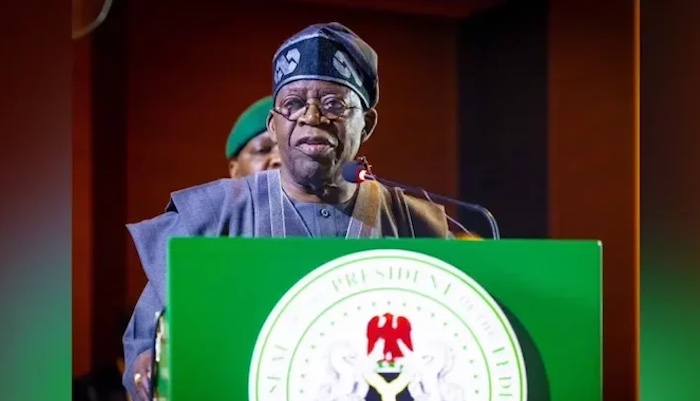
President Bola Tinubu has said his administration rejected negotiations with the kidnappers who abducted pupils and teachers in Oriire Local Government Area of Oyo State because security agencies understood the terrain where the victims were held.

The president spoke on Thursday at the State House in Abuja while receiving traditional rulers from Oyo State, led by the Olubadan of Ibadanland, Oba Rashidi Adewolu Ladoja.

Tinubu said the successful rescue operation demonstrated the effectiveness of the country’s security forces. He maintained that the government would continue to confront criminal groups without paying ransom.

“Congratulations on the Oriire Oyo state rescue that succeeded. I think we succeeded with your support, prayers, and I agree with you that we should commend the men and women of the armed forces for their excellent performance,” the president told the delegation.


“On behalf of them, I accept the message and I will forward this same message on. I should emphasise the question of security that each event teaches us new method, open our eyes, challenge us to examine and re-examine our architecture, our strategies, our map and operations.


“And you would agree that we gifting geographical and numerical answers to the challenge. We refused to pay ransom. We have the geography of the forest.


“We know what it is and in answer to it, you see that from eight divisions, we are now moving to 12 divisions to shorten the response time, to give that response time the teeth that is needed for us to defeat terrorism and banditry. It is very necessary and we are doing so.”


The president also reiterated his administration’s commitment to establishing state police as part of efforts to strengthen security across the country.

“We have equally embarked upon what was missing, several decades of fears and uncertainty about what to do about security at the local level will be corrected,” he said.


“There will be state police. And as state police will have guardrails from abuses. We protect it from abuses.”


Tinubu also appealed to traditional rulers to support the fight against insecurity. He said the government is strengthening the capacity of forest guards to confront criminals operating in forests.

“We are equally enhancing the capacity and capability of the forest guards. They are not just to chase antelopes and animals. We are going to have them chase the criminals and deal with them in various forests,” he added.


Gunmen attacked three schools in Oriire LGA on May 15 and abducted 39 pupils and seven teachers, including the principal of one of the affected schools.

The kidnappers later killed one of the abducted teachers, Michael Oyedokun, while he was in captivity.

The Presidency announced on July 10 that all the remaining abducted pupils and teachers had regained their freedom after spending 56 days in captivity.

Nigeria Customs Rolls Out 2026 Fiscal Policy, Revises Tariff Framework

By Sabiu Abdullahi

The Nigeria Customs Service (NCS) has begun implementing the 2026 Fiscal Policy Measures and Tariff Amendments approved by President Bola Ahmed Tinubu. The new framework seeks to strengthen the country’s fiscal and trade policies, improve economic competitiveness, and increase government revenue.

In a statement issued by the National Public Relations Officer of the Service, Deputy Comptroller of Customs Abdullahi Maiwada, the NCS said the revised measures align Nigeria’s tariff structure with regional and international obligations. The Service added that the policy also supports local industrial growth and facilitates legitimate trade.

According to the statement, the amendments introduce major changes to the Customs and Excise Tariff framework. They include the Revised Import Adjustment Tax (IAT) List for the implementation of the ECOWAS Common External Tariff (2022–2027), the Revised National List under the same tariff regime, the Revised Import Prohibition List (Trade), the Revised List of Goods Liable to Excise Duty, the Green Tax Surcharge on motor vehicles with engine capacities of 2,000cc and above, and the Revised Export Prohibition List.

The Service advised importers, exporters, manufacturers, licensed customs agents, and other stakeholders to study the revised tariff schedules and comply with all applicable fiscal and regulatory requirements.

The NCS also announced that the complete 2026 Fiscal Policy Measures and Tariff Amendments have been published on its official website to ensure transparency and ease of access. It urged stakeholders to review the provisions carefully and comply with the approved measures.

The Service reaffirmed its commitment to implementing government policies through its statutory responsibilities of trade facilitation, revenue collection, and border security.

It further noted that effective implementation of the 2026 Fiscal Policy Measures and Tariff Amendments will depend on the cooperation of stakeholders across the trade sector. The NCS said such collaboration will help build a more competitive, transparent, and sustainable economy.

NBAIS N18bn Staff Cost Draws Criticism as Agency Defends Budget

By Abdullahi Mukhtar Algasgaini 

The National Board for Arabic and Islamic Studies (NBAIS) has come under scrutiny after allocating N18.049 billion of its N26.47 billion 2026 budget to staff salaries and allowances, representing 68 per cent of its total budget.

The agency, responsible for standardising and certifying Arabic and Islamic education across Nigeria, plans to spend N15.414 billion on salaries and N2.636 billion on allowances and social contributions for its workforce, according to budget documents.

While N146.6 million is earmarked for allowances, N2.489 billion has been allocated for social contributions, including N770.15 million for the National Health Insurance Scheme and N1.540 billion for staff pensions.

The remaining 32 per cent of the budget covers N318 million for overhead costs and N8.104 billion for capital expenditure.

The board has also set aside over N2.5 billion for projects including road construction, solar streetlights, food distribution, and social media training across Kano, Katsina, Kogi, and Zamfara States.

Notable allocations include N210 million for road construction in Kano Central Senatorial District, N175 million each for solar street lights in three Kano LGAs, and N28 million for rice distribution in Zamfara State.

A combined allocation exceeding N1.5 billion has been made for solar street light installations across multiple Kano LGAs, with amounts ranging from N140 million to N175 million per local government area.

Dr Umar Yakubu, Executive Director of the Centre for Fiscal Transparency and Public Integrity, called for the board’s scrapping, describing it as a duplication of existing agencies.

“First of all, we create agencies we don’t need. How can you create a whole agency just to conduct exams when you can easily give that role to WAEC, JAMB or other bodies?” he asked.

Yakubu alleged that “90% of the staff don’t have work to do,” adding that the EFCC has been investigating corruption allegations at the agency for years.

Public analyst Lasisi Olagunju highlighted the disparity in spending, noting that NBAIS’s personnel expenses exceed the entire personnel budget of NECO (N15.53 billion), NUC (N4.216 billion), NBTE (N1.843 billion), and NCCE (N1.306 billion).

“How many workers does the National Board for Arabic and Islamic Studies have in its employment to justify a personnel bill of more than N18 billion?” Olagunju queried.

Sources within the agency, speaking on condition of anonymity, revealed that the board has approximately 6,000 staff members. Some employees admitted to having little to no work, with one headquarters staff member stating: “I come to work twice a week because there is nothing for me to do.”

NBAIS was recognised as a national examination and regulatory body in 2011 following approval by the National Council on Education, covering over 1,600 public and private schools and more than 5,000 Tsangaya schools.

The agency’s Head of Information, Abdul Salam Ramalan, promised to respond to inquiries after consulting with his principal but had not done so at the time of filing this report.

One Killed, 48 Rescued as Troops Repel Terrorist Attack in Zamfara

By Sabiu Abdullahi

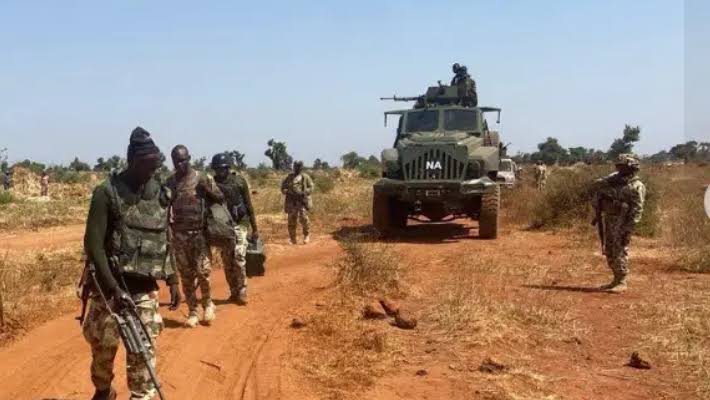
Troops of the Joint Task Force North-West under Operation FANSAN YAMMA have rescued 48 abducted residents after repelling a terrorist attack on Magami village in Kaura Namoda Local Government Area of Zamfara State.

The operation followed a distress call received in the early hours of Sunday, July 26, which reported that dozens of armed terrorists had stormed the community.

In a statement issued on Sunday, the Media Information Officer of Operation FANSAN YAMMA, Aliyu Danja, said the attackers arrived on about 40 motorcycles and abducted several villagers.

According to him, the assailants assembled the victims with the intention of taking them into a nearby forest, while another group remained at the edge of the village to guard the motorcycles.

Danja said troops responded swiftly to the emergency and confronted the attackers.

“On arrival at the scene, the troops immediately engaged the terrorists in a fierce firefight, forcing them to abandon the kidnapped victims and flee into the surrounding bush,” Danja said.


“The prompt intervention led to the successful rescue of all 48 abducted civilians.”


He disclosed that one resident lost his life during the attack, while two others sustained gunshot wounds.

The injured victims were evacuated to the General Hospital in Kaura Namoda, where they are receiving treatment.

Following the operation, security personnel carried out patrols across the area to prevent another attack and maintain a security presence in the community.

The military command praised the troops for their performance during the operation.

“The Theatre Command commends the gallantry and professionalism of the troops for this successful operation and reassures residents of the North West of its unwavering commitment to protecting lives and property,” the statement added.


Danja also urged residents to continue supporting security agencies with useful and timely information to strengthen ongoing operations against terrorist groups in the North-West.

“Sustain the momentum in ridding the north-west of terrorist elements.”

INEC Insists On Voter Registration Deadline As Opposition Seeks Extension

By Sabiu Abdullahi

The Independent National Electoral Commission (INEC) has maintained that the Continuous Voter Registration (CVR) exercise will end today, July 26, despite calls from opposition political parties and civil society organisations (CSOs) for an extension to allow more eligible Nigerians to register ahead of the 2027 general elections.

In a notice posted on its X account on Saturday, the commission said registration centres across the country would operate from 9 a.m. to 3 p.m. on the final day of the exercise.

“Your future won’t wait. Neither should you. The Continuous Voter Registration (CVR) exercise ends Sunday, 26 July 2026,” the commission stated.

INEC also advised prospective voters to complete their registration through its online CVR portal or visit designated registration centres and INEC offices nationwide for physical assistance.

The commission explained that the Electoral Act requires it to suspend voter registration, voter register updates and revisions 90 days before an election. The measure allows time for data cleaning, printing of Permanent Voter Cards (PVCs) and other election preparations.

INEC National Commissioner Mohammed Haruna said there would be no extension beyond the deadline because the commission must begin processing the data collected.

“By midnight on Sunday, voter registration ends. There won’t be any extension. There are so many things that we need to do at the back end. We have to draw a line; otherwise, we won’t be able to produce a clean copy of what has been posted,” he said.

Haruna said the commission’s Information Technology Department and Voter Registration Department would immediately begin reviewing the records after registration closes.

He explained that the Automated Biometric Identification System would detect and remove multiple registrations before the provisional voters’ register is published for public scrutiny.

“We have this automatic biometric system that will check whether somebody has registered more than once. They will publish the register for claims and objections. That is, if anybody thinks a name shouldn’t be on the register, or if he has some claims, for instance, that his name has been omitted or some of his details are incorrect,” he said.

Haruna added that the total number of newly registered voters would only be available after biometric verification and the claims and objections process.

“So, it’s after all that has been done that we will have a final figure, which we will now add to the existing 93 million or so. That will then become the voters’ register. We are mandated to give every political party a copy ahead of the election,” he added.

The Chief Press Secretary to the INEC Chairman, Dayo Oketola, also defended the decision. He said the commission acted in line with the law and its election timetable. He dismissed concerns about technical challenges and insisted the registration portal was capable of handling applicants throughout the exercise.

According to him, the commission had already extended the exercise and conducted nationwide voter education campaigns to encourage participation.

“The states have pictorial evidence of the awareness campaigns and voter education carried out by the commission,” he added.

Meanwhile, INEC disclosed that it had registered 2,970,257 eligible Nigerians as of July 17, 2026, during Phase III, Week Nine of the CVR exercise. The figure includes both online and physical registrations. However, the commission said the data remains provisional until the completion of claims, objections and biometric verification.

The statistics showed that 970,865 people completed registration online, while 2,000,092 registered physically. Women accounted for 1,561,765 registrants, while 1,409,192 men completed the process.

Young people between the ages of 18 and 34 made up the largest group of registrants with 2,003,183 registrations. Students formed the biggest occupational category with 695,026 registrations, followed by business owners with 626,523.

Kano recorded the highest number of registrations with 234,305, followed by Lagos with 140,546 and Edo with 139,313. Bauchi recorded 96,061 registrations, while Borno had 44,866.

Despite INEC’s position, several opposition parties and civil society organisations urged the commission to extend the exercise.

African Democratic Congress (ADC) National Publicity Secretary Bolaji Abdullahi argued that voter registration should not be restricted to fixed timelines.

“We have also mobilised people across the country to INEC to register, but you know it is not easy for people to abandon their daily work to go and queue for hours at INEC offices for registration. What we have done is mobilise our people at the grassroots level,” he said.

The National Publicity Secretary of the Taminu Turaki-led faction of the Peoples Democratic Party (PDP), Ini Ememobong, said many Nigerians had lost confidence in the electoral process.

“Nigerians are discouraged, and this is putting them off registering. Unless INEC clearly demonstrates that it is impartial and capable of conducting credible elections, it will continue to have a negative impact on participation,” he said.

Labour Party National Publicity Secretary Obiora Ifoh also criticised the planned closure.

“The name of the exercise is Continuous Voter Registration, and we should start with the name and allow people who have an interest in participating in the election to register.

“I don’t see how people registering even up to December can obstruct what INEC is doing, so long as those people are not going to contest elections.

“It is only in Nigeria that electoral umpires put barriers in place to keep people from participating. In most other countries, once you have a national identity, it is enough for you to vote, but here they are making it a big deal.

“I don’t know where the idea of stopping people from participating in the CVR comes from or how it will help INEC. Millions of Nigerians will turn 18 by December. Are they saying those people should not register?” Ifoh said.

Civil society organisations also backed calls for an extension.

President of Women Arise for Change Initiative, Dr Joe Okei-Odumakin, said the commission should consider keeping registration open for a few more weeks because about six months remain before the elections.

“Given that there are six clear months before the general elections, there may be a need to relax the closure of voter registration for some more weeks.

“It should not be in response to the demand of political parties but in response to the need to make our democratic process more participatory. Such an extension may be effective for new voters at INEC offices nationwide only,” she said.

Chairman of the BallotEyes Working Group, Olasupo Abideen, described the closure as premature.

“To be honest, when we say something is continuous, it should be continuous voter registration. Because the moment INEC closes the portal, especially with more than six months before the election, I think it is wrong,” he said.

Executive Director of the Socio-Economic and Civic Rights Advocacy, Emmanuel Olowu, also questioned the legal basis for ending the exercise several months before the elections.

“If the law allows registration to continue until no later than 90 days before the election, why has INEC ended the exercise about 180 days before polling? What legal, administrative or logistical reasons justify this early closure?” Olowu asked.

However, the All Progressives Congress (APC) and Yiaga Africa supported INEC’s decision.

APC National Vice Chairman (South-East), Dr Ijeomah Arodiogbu, said the commission requires a deadline to complete election preparations.

“Talking about an extension; we are willing to indulge the other political parties because they would otherwise complain that INEC is biased against them. Meanwhile, INEC gave equal time to all the political parties, and they failed to do the needful but preferred to spread false narratives to deceive the people.

“INEC also gave an extension for the upload of candidates, and we welcomed it even though we had met the initial timeframe. If it is the decision of INEC and it will not affect its programme, we have no objection,” he said.

Yiaga Africa Executive Director Samson Itodo also defended the commission’s decision.

“The commission requires sufficient time to clean the register, adjudicate claims and objections, remove duplicates, print voter registers and complete other pre-election preparations. While the closure may disappoint some prospective voters, certainty and adherence to the electoral timetable are essential for effective election planning,” he said.

Tinubu Hails Umahi At 63, Praises Performance As Works Minister

By Sabiu Abdullahi

President Bola Tinubu has congratulated the Minister of Works, David Umahi, on his 63rd birthday, describing him as one of the top-performing members of his cabinet.

Umahi, a former governor of Ebonyi State, turned 63 on Saturday, July 25, 2026.

In a statement issued by the President’s Special Adviser on Information and Strategy, Bayo Onanuga, Tinubu praised the minister for his commitment to infrastructure development and his approach to supervising road projects across the country.

The President described Umahi as “one of my outstanding, hardworking ministers” and said the former Ebonyi governor remains committed to delivering quality infrastructure.

Tinubu also said the minister is “passionate about the job and delivering durable roads and bridges that will last for about a century”.

The President commended Umahi’s “passion, dedication to duty, and deep sense of patriotism.”

He also urged the minister to sustain the pace of road construction, rehabilitation and project delivery in line with his administration’s plan to improve the quality of life of Nigerians and stimulate economic growth.

“As a minister, he does not just sit in his office or rely on reports from subordinates; he is constantly on the road, personally monitoring construction work nationwide to ensure compliance with specifications and approvals,” Tinubu said.

The President congratulated Umahi and his family on the occasion and wished him good health and renewed strength “as he continues to serve the nation”.

Before his appointment as Minister of Works, Umahi represented Ebonyi South Senatorial District in the Senate. He also served as governor of Ebonyi State for two terms from 2015 to 2023.

NIMC Act 2026: Implications for Nigeria’s Identity Future

By Muhammad Mikail

On June 26, 2026, President Bola Ahmed Tinubu signed the National Identity Management Commission (NIMC) Act 2026 into law at the State House in Abuja, before an audience that included the trailblazer DG/CEO of the National Identity Management Commission, NIMC, Engr, Abisoye Coker-Odusote, the Senate President, the Deputy Speaker of the House, the Attorney General, the Minister of Interior, and a World Bank representative. The gathering was deliberately high-profile: the new law closes a 19-year gap in Nigeria’s identity system and reshapes how citizens, businesses, and the government will trust each other online. The Act officially repeals and replaces the NIMC Act of 2007, which had governed Nigeria’s identity system and remained untouched even before smartphones, biometric enrolment, or mobile banking became part of everyday Nigerian life.

For most citizens, the significance of a piece of legislation like this is easy to miss. And very few people will ever read its full text. This new Act 2026 determines how easily a young graduate opens a bank account, how a small trader secures a loan, how a Nigerian abroad renews a passport, and how confidently anyone can prove who they are, online or in person.

Why the Old Law Had to Go

When the original NIMC Act was passed in 2007, Nigeria had no national-scale biometric enrolment infrastructure and no meaningful digital economy to speak of. That changed dramatically over almost the two decades that followed: the National Identification Number (NIN) became mandatory for SIM registration, passport applications, bank account opening, and voter registration. As digital services multiplied, the risks also did. Identity theft, fraudulent NIN registrations, and the phishing of biometric data became live problems that the 2007 framework was never built to address. It had nothing to say about digital credentials, cybersecurity obligations, or how private companies overseeing NIN-linked data should behave. The new Act closes that gap. Thus far, officials and legal analysts point to four structural shifts at the heart of the reform:

NIMC becomes Nigeria’s digital trust authority. The single biggest change is the designation of NIMC as the Root Certification Authority for Nigeria’s National Public Key Infrastructure (PKI) and Digital Public Infrastructure (DPI). In practical terms, NIMC now controls the digital “keys” that make online transactions verifiable and trustworthy. 

“One Person, One Identity” is now the law. The NIN is formally established as Nigeria’s foundational identity credential, with the NIMC empowered to enable secure, interoperable data exchange among government agencies, financial institutions, and private-sector organisations that previously operated on fragmented, disconnected systems.

Data protection gets real teeth. The 2026 Act aligns NIMC’s practices with the Nigeria Data Protection Act (NDPA) and international privacy standards, meaning biometrics, addresses, and linked credentials must now be processed and stored under legally defined rules with NIMC committing to audit enrolment partners and third-party integrators more closely.

Penalties are sharper, and enforcement powers wider. Companies now face fines running into tens of millions of naira, while offences such as impersonation, multiple registration, and unauthorised access to identity data attract custodial sentences. NIMC’s investigative powers now extend to search, seizure, and, subject to judicial authorisation, data decryption.

The Commission’s board has also been reconstituted to include representatives from 14 government institutions, including INEC, the Nigeria Police Force, the DSS, the EFCC, the Central Bank of Nigeria, and the Office of the National Security Adviser. This signals that identity management is now of huge government concern.

The Implications for Identity Development

For nearly twenty years, Nigeria’s identity system evolved in a fragmented manner. NIN requirements were bolted agency by agency, without a unifying legal architecture. The 2026 Act gives that patchwork a single statutory backbone.

ID analysts rank Nigeria among Africa’s most mature digital identity ecosystems, alongside Kenya, Ethiopia, and South Africa. A legally grounded, PKI-backed identity system positions Nigeria for cross-border interoperability at a moment when West African economic integration is deepening, becoming a potential regional asset. The law also explicitly widens access for Nigerians in the diaspora, an acknowledgement that identity is a right and the attendant ID infrastructure needs to follow citizens wherever they live.

What It Means for Nigeria’s Digital Economy

The government have tied the Act directly to Nigeria’s ambition of building a one-trillion-dollar economy, arguing that a trusted, interoperable identity layer is a precondition for the digital services that ambition depends on. When banks, telecoms, insurers, and government agencies can all verify identity against a single authoritative source rather than duplicating know-your-customer processes, transaction costs fall, and fraud becomes harder to commit. Analysts following the reform expect it to strengthen the investment case for fintech expansion, e-commerce, and digital lending. These are sectors that all depend on being able to cheaply and quickly verify that the person on the other end of a transaction is real. Reduced duplication across agencies is also expected to improve the efficiency of public service delivery more broadly, from tax administration to social intervention programmes that need to verify beneficiaries accurately.

What It Means for the Everyday Nigerian and Legal Resident

Easier, wider access to services: With the NIN legally cemented as the reference point for passports, bank accounts, insurance, tax filing, and credit applications, NIMC has stated that citizens, including those in the diaspora, can expect easier and convenient access to identity-linked services, and stronger interoperability means fewer redundant registrations across agencies.

Stronger data protection: For the first time, there is a clear legal obligation governing how a Nigerian’s biometric and personal data must be managed, whether by NIMC itself or by any private company plugging into its verification infrastructure. 

Higher stakes, and higher expectations. The Act’s tougher penalties offer citizens greater protection against identity fraud. Also, to meet with President Tinubu’s directive of enrolling every Nigerian by the end of 2026 means NIMC would need to register more than three million people every month, DG/CEO NIMC said in an interview on Channels TV recently that NIMC is collaborating with partners under the World Bank-supported Nigeria Digital Identification for Development (NDID4D) Project to accelerate nationwide enrolment. This offers real hope of inclusion, particularly for rural and lower-income Nigerians who remain hardest to reach. 

The road ahead 

The NIMC Act 2026 is, by most independent accounts, a genuinely significant piece of reform. It closes a legal vacuum that persisted across four presidential administrations and a mobile internet revolution, the original drafters of the NIMC Act 2007 never anticipated. But the law itself only creates the scaffolding. The harder work of auditing enrolment partners, enforcing data-breach penalties, and reaching citizens outside the system remains.

Conclusively, I urge the NIMC, critical stakeholders and relevant agencies, organisations, CSOs and players in the ID ecosystem to support the NIMC and ensure the ACT of 2026 ultimately strengthens public trust, serves as a means to encourage nationwide enrolment for the NIN, and ensures the institutions enforcing it are themselves held to account. Ultimately, we must collectively ensure that all intended benefits, services, and access that the Act 2026 brings becomea lived reality for the average Nigerian and legal resident, and not another entry on the country’s lengthy list of good intentions.

Muhammad Mikail is a communications professional and writes from Abuja. He can be reached via muhammadnmikail.mm@gmail.com

FRSC Challenges Court Verdict Barring Patrols on Kano State Roads

By Uzair Adam 

The Federal Road Safety Corps (FRSC), Kano Sector Command, has announced plans to appeal the judgment of the Federal High Court in Kano that barred its personnel from operating on state and local government roads, limiting their activities to federal highways.

The judgment, delivered on Thursday by Justice M. S. Shuaibu, followed a suit instituted by Kano-based lawyer, Barrister Abba Hikima, who challenged the legality of FRSC checkpoints mounted on township roads in July 2025. 

He argued that motorists were being stopped despite committing no traffic offences.

In his ruling, Justice Shuaibu held that the FRSC acted beyond the powers granted to it by law by operating on state roads. 

He further ruled that the Corps’ actions infringed on citizens’ constitutional rights to personal liberty and freedom of movement as guaranteed under Sections 35 and 41 of the 1999 Constitution.

The court granted all the reliefs sought by the plaintiff, including a perpetual injunction restraining the FRSC from operating on state and local government roads in Kano. 

It also ordered the Corps to publish a public apology in a national newspaper and awarded N800,000 in damages and costs.

Reacting to the judgment, the Public Education Officer of the Kano Sector Command, CRC Abdullahi Aliyu Labaran, said the Corps respects the decision of the court but believes the ruling has been widely misunderstood.

He explained that the judgment did not invalidate the FRSC Establishment Act, 2007, but only restricted the Corps’ operations in Kano to federal highways pending further legal action.

According to him, the FRSC will continue to patrol major federal roads within the state, including the Kano–Zaria Road, Kano–Katsina Road, Kano–Maiduguri Road, Kano Western Bypass, Airport Road and Murtala Mohammed Way.

Labaran expressed concern over social media posts encouraging motorists to resist FRSC officers, warning that such actions could lead to unnecessary confrontations, threaten public order and endanger lives.

He added that the Corps decided to challenge the ruling because it believes its defence was not adequately considered during the proceedings.

Pending the outcome of the appeal, the FRSC assured members of the public that it would continue to carry out its statutory responsibilities professionally and within the confines of the law on federal highways across Kano State.

The Corps also urged motorists to cooperate with its personnel and disregard what it described as misleading online interpretations of the court’s judgment.