National

You can add some category description here.

Nigeria Customs Pushes Stronger Collaboration Against Terrorism Financing, Cross-Border Crimes

By Sabiu Abdullahi

The Nigeria Customs Service (NCS) has renewed calls for stronger cooperation among security and regulatory agencies to tackle terrorism financing, money laundering, wildlife trafficking, and other transnational crimes.

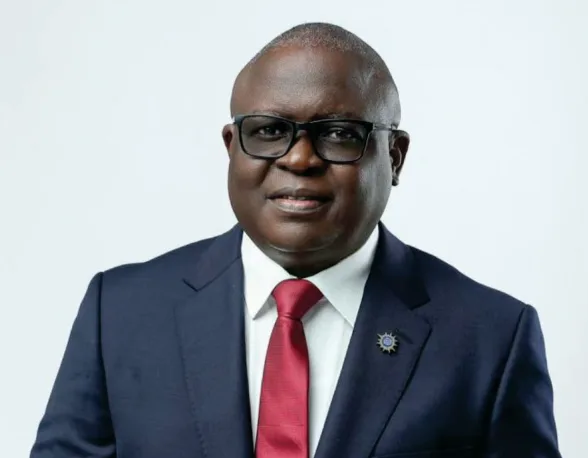
Comptroller-General of Customs, Adewale Adeniyi, spoke on Wednesday during a study visit by participants of the Operational Level Countering the Financing of Terrorism and Regional Security Course Two from the National Defence College. The event took place at the Customs Headquarters in Maitama, Abuja.

Adeniyi said crimes linked to international trade and border activities now pose major security and economic threats. He noted that the responsibilities of the Customs Service have expanded beyond revenue collection and border monitoring.

He identified offences such as undervaluation, overvaluation, wildlife trafficking, and the illegal export of African resources as key financial crimes that require coordinated action from relevant agencies.

The Customs boss also praised ongoing efforts to improve the capacity of officers within the Service. He acknowledged the participation of personnel from different formations across the country in programmes aimed at strengthening enforcement and intelligence operations.

Speaking on Nigeria’s removal from the Financial Action Task Force (FATF) grey list, Adeniyi described the development as a major achievement for the country’s financial system and international reputation.

He explained that Nigeria’s inclusion on the grey list previously created difficulties for citizens and businesses abroad, especially in relation to the use of Nigerian bank cards for international transactions.

Adeniyi also revealed that the NCS is working closely with the Federal Airports Authority of Nigeria (FAAN), the Nigeria Financial Intelligence Unit (NFIU), and airline operators to introduce automated currency declaration systems.

“For us to get ahead of these criminals, we must continue to work together and subject our individual mandates to broader national security objectives,” he said.

Earlier, the Team Lead and Course Director Coordinator of the Counter Terrorism and Counter Insurgency/Countering the Financing of Terrorism Unit at the National Defence College, Dr Adam Abdullahi, described terrorism financing as a major driver of insecurity across the world.

He said agencies such as the Department of State Services (DSS), the Office of the National Security Adviser (ONSA), the Armed Forces, Customs, and other institutions must strengthen cooperation to improve results in the fight against terrorism.

“The lifeline of terrorism is financing, and tackling it cannot be done by one institution alone,” he said.

Also speaking during the programme, the officer heading the Anti-Money Laundering and Counter-Terrorism Financing Unit of the NCS, Assistant Comptroller of Customs Mas’ud Salihu, said criminal groups continue to exploit global supply chains and international connections to move illicit goods and funds across borders.

Salihu stressed the importance of enforcing currency declaration policies and preventing the movement of prohibited items such as arms and drugs. He also called for stronger collaboration at both local and international levels to combat organised crime.

Kano Police Unveil Tactical Unit to Tackle Rising Violent Crimes

By Uzair Adam

The Kano State Police Command has introduced a new tactical formation, the Violent Crime Response Unit (VCRU), in a renewed push to curb kidnapping, armed robbery, and other violent offences across the state.

Commissioner of Police, Ibrahim Adamu Bakori, announced the development during the unit’s inauguration, describing it as a major boost to efforts aimed at safeguarding lives and property in Kano.

He explained that the unit, which was established on April 24, 2026, followed directives from the leadership of the Nigeria Police Force to strengthen intelligence-driven policing and improve operational effectiveness.

According to Bakori, the VCRU is a specialised team equipped to confront serious security threats, including banditry and organised violent crimes that continue to affect communities and economic activities.

“Our goal is simple: to reduce response time, dominate public spaces and deny criminals the freedom to operate within Kano State,” he said.

The police chief added that the unit would prioritise swift response to emergencies, proactive crime prevention strategies, as well as thorough investigation and prosecution of suspects.

He noted that personnel assigned to the unit underwent rigorous screening and specialised training in tactical operations, intelligence gathering, and human rights standards to ensure professionalism in line with global best practices.

Bakori stressed that discipline, integrity, and respect for human rights would guide the operations of the unit, assuring residents that the command would remain accountable for its activities.

He further revealed that the VCRU would depend largely on real-time intelligence, data analysis, and credible information from the public, urging residents to cooperate with security agencies by providing useful tips.

To strengthen transparency, the command also inaugurated a Civilian Oversight Board made up of civil society representatives, traditional leaders, legal practitioners, and community stakeholders.

The board, he said, is expected to promote public confidence and encourage inclusive policing.

The inauguration ceremony drew the attendance of senior police officers and community members, many of whom welcomed the initiative as a timely intervention to address the state’s security challenges.

Gunmen Abduct Over 45 Pupils, Teachers in Oyo School Attack as Parents Lament

By Uzair Adam 

No fewer than 45 pupils were abducted during a coordinated attack on three schools in Oriire Local Government Area of Oyo State on Friday, triggering widespread panic and grief across affected communities.

The schools targeted include Baptist Nursery and Primary School in Yawota, Community Grammar School in Esiele, and L.A. Primary School. 

Residents said the attackers stormed the area in the early hours, disrupting school activities and whisking away children and some teachers.

A teacher at Baptist Nursery and Primary School, Elizabeth Olagoke, recounted that the gunmen arrived around 8 am on motorcycles, speaking Yoruba, Hausa, and Pidgin English. She explained that they fired sporadically, creating chaos before moving into classrooms.

“They came into my class first and tried to take me along with a child I was carrying,” she said, noting that she managed to escape after pleading with them. 

According to her, the assailants operated for only a few minutes but left with dozens of pupils drawn from Yawota, Esiele, and Alausa communities. 

She added that a teacher was also abducted, while motorcycles were stolen and a rider killed during the нападение.

The traditional ruler of Esiele, Oba Tajudeen Abioye, confirmed that about 45 pupils were taken, adding that efforts were underway to secure their release. 

A former lawmaker, Bamigboye Abidoye, said the number of abducted pupils from one of the schools alone was significant, while several teachers were also taken from the secondary school.

Security sources disclosed that three suspects had been arrested and transferred to the State Criminal Investigation Department, assuring that operations were ongoing to rescue the victims.

Meanwhile, parents of the abducted children expressed anguish over the incident. One mother, Ajarah Ayanwale, said the attackers initially deceived residents by posing as security personnel.

“We thought they came to protect us,” she said, explaining that panic set in when gunshots followed shortly after.

Another parent, Shukurat Pius, whose young son was taken, said some pupils escaped through windows, but younger children who could not flee were captured. She pleaded with authorities to ensure the safe return of the victims.

For Nafisat Agunle, the ordeal has been devastating since her child went missing. 

She described sleepless nights and constant searching, while Adijat Ibrahim said she still hopes her son will return home.

Other parents narrated similar experiences, with some losing more than one child in the attack. A resident, Gabriel Sunday, said two of his children were abducted while one managed to escape through the bush.

Amid growing fears, security operatives have reportedly surrounded forest areas near the communities, particularly around the Old Oyo National Park axis, where the attackers are believed to have fled. 

The state government said joint teams comprising the Nigerian Army, police, and local security outfits had launched coordinated rescue operations.

Authorities in neighbouring South-West states have also heightened surveillance and deployed additional security personnel to schools and vulnerable communities to prevent further attacks.

Security experts and regional leaders have warned that the нападение signals a growing threat in the South-West, urging stronger collaboration between governments and local security groups to address the worsening situation.

Despite ongoing efforts, uncertainty remains over the exact number of abducted pupils, complicating rescue operations. 

Officials, however, insist that efforts are being intensified to locate the victims and restore calm to the affected communities.

EFCC Probes Alleged N500bn Fraud, Arrests Energy Commission DG

By Anwar Usman 

Operatives of the Economic and Financial Crimes Commission have arrested Mustapha Abdullahi, the DG of the Energy Commission of Nigeria, on allegations of money laundering and related offences.

A source within the anti-graft agency, who spoke on condition of anonymity because he was not authorised to speak on the matter, disclosed on Wednesday that the DG was arrested in Abuja and is currently in the commission’s custody.

According to the source, the alleged fraud involves funds estimated at N500bn.

“We have arrested the Director-General of the Energy Commission of Nigeria, Dr Mustapha Abdullahi, for money laundering offences. He was arrested and is currently in our custody. The money is to the tune of N500bn,” the official said.

The Daily Reality gathered that efforts to get confirmation from the EFCC spokesperson, Dele Oyewale, were unsuccessful as he could not be reached as of the time of filing this report.

On October 24, 2023, President Bola Tinubu appointed Abdullahi as Director-General of the Energy Commission of Nigeria.

Court Jails Former Power Minister Saleh Mamman For 75 Years Over N33.8bn Fraud

By Sabiu Abdullahi

A Federal High Court sitting in Abuja has sentenced former Minister of Power, Saleh Mamman, to 75 years imprisonment over a N33.8 billion fraud case.

The Economic and Financial Crimes Commission (EFCC) had filed a 12-count charge against the former minister over allegations of money laundering and conspiracy linked to funds meant for the Zungeru and Mambilla hydroelectric power projects.

Justice James Omotosho found Mamman guilty on all the charges brought against him by the anti-graft agency.

The court sentenced him to seven years imprisonment on 10 counts. He also received three years imprisonment on one count and two years on another.

Justice Omotosho ruled that the prison terms would run consecutively. The judge also stated that the convict would not have the option of a fine except on count four, where he could pay N10 million.

The court further ordered the forfeiture of foreign currencies recovered from the former minister as well as four properties in Abuja linked to him.

The EFCC had arraigned Mamman in July 2024 on allegations that he conspired with some ministry officials and private firms to “indirectly convert” N33.8 billion meant for the execution of the power projects.

The former minister pleaded not guilty to the charge marked FHC/ABJ/CR/273/2024.

During the trial, the EFCC presented 17 witnesses and tendered 43 exhibits before the court.

On May 7, the court convicted Mamman in absentia after Justice Omotosho held that the prosecution had proved its case beyond reasonable doubt.

Following the conviction, the court issued a warrant for his arrest.

At Wednesday’s proceedings, Mohammed Ahmed, counsel to the convict, informed the court that he did not know Mamman’s whereabouts. He added that attempts to reach him through his telephone lines were unsuccessful.

After delivering the judgment, Justice Omotosho directed security agencies to work with Interpol to ensure the arrest of the former minister.

The court also ruled that the prison sentence would begin from the day of his arrest.

EFCC Declares Former Minister Sadiya Umar Farouq Wanted Over Alleged Fraud

By Hadiza Abdulkadir

The Economic and Financial Crimes Commission (EFCC) has officially declared the former Minister of Humanitarian Affairs, Disaster Management, and Social Development, Sadiya Umar Farouq, wanted.

The anti-graft agency issued the declaration on Friday following Farouq’s repeated failure to appear for a scheduled arraignment. She is facing 21 counts of alleged criminal conspiracy, abuse of office, and the diversion of public funds totalling billions of naira.

Central to the investigation is the alleged laundering of over N37 billion through a contractor, James Okwete, during her tenure under the Buhari administration. While Farouq had previously honoured some invitations for questioning, the EFCC moved for her arrest after she reportedly stopped complying with summons and became unreachable.

In April, a Federal Capital Territory High Court issued bench warrants for both Farouq and the ministry’s former Permanent Secretary, Bashir Nura Alkali, after they failed to appear in court.

The EFCC has urged anyone with information regarding her whereabouts to contact the nearest police station or commission office, as the manhunt for the former cabinet member intensifies.

FG Bans Honorary Degree Holders from Using ‘Dr’ Title

By Hadiza Abdulkadir

The Federal Government of Nigeria has barred recipients of honorary degrees from using the “Dr.” prefix in official and professional settings, warning that violations could amount to academic fraud.

Announcing the decision after a meeting of the Federal Executive Council, Education Minister Tunji Alausa said the move is aimed at curbing the abuse and politicisation of academic titles.

Mr Alausa further clarified that only holders of earned doctorates or qualified medical professionals may use the title, while honorary awardees must instead adopt post-nominal forms such as D.Sc. (Honoris Causa).

The National Universities Commission has also introduced stricter rules, limiting institutions to three honorary awards per convocation, requiring prior approval, and banning awards to serving public officials.

The reforms follow an investigation that uncovered 32 illegal “degree mills” selling fake titles, as authorities seek to restore credibility to Nigeria’s academic system.

FEC Approves $2.99 Billion for Lagos Green Line, Kano Metro, and Kaduna Rail Projects

By Muhammad Abubakar

The Federal Executive Council has approved contracts totaling $2.99 billion for the construction of three major rail projects across Nigeria.

Announced by Minister of Finance Taiwo Oyedele, these projects aim to boost economic development and improve the quality of life for daily commuters.

The approved infrastructure specifically covers Phase 1A of the Lagos Green Line rail project, the Kano Metro rail project, and the Kaduna light rail system. The target cities were selected by the council due to their strategic importance as major national economic hubs.

The projects will be funded through the Ministry of Finance Incorporated on behalf of the federal government, with active support from standard counterpart funding arrangements.

Government authorities maintain that these major corridors will unlock job opportunities, alleviate heavy traffic gridlocks, and attract stronger local and foreign investments to the regions.

Supreme Court Reinstates David Mark as ADC Leader

By Muhammad Abubakar

The Supreme Court of Nigeria on Thursday set aside an order of the Court of Appeal to maintain the status quo ante bellum in the leadership crisis rocking the African Democratic Congress, ADC.

A five-member panel of the apex court, led by Justice Mohammed Lawal Garba, held that the Abuja Division of the Court of Appeal acted without jurisdiction when it issued the order after already dismissing the case filed by a rival faction.

The decision effectively restores the recognition of the party’s executive committee led by former Senate President David Mark.

Prior to the ruling, the Independent National Electoral Commission, INEC, had removed David Mark and his executive team from its portal in compliance with the lower court’s status quo order.

The Supreme Court directed all warring factions to return to the Federal High Court to continue and fully determine the substantive suit regarding the party’s leadership.

The ADC has been embroiled in a leadership crisis following a restructuring that brought David Mark in as National Chairman and former Osun State Governor Rauf Aregbesola as National Secretary, a move fiercely contested by a rival faction led by Nafiu Bala Gombe.

Tinubu Shuns Victims of Attacks in Zamfara, Borno, Others, Approves N2bn Relief For Jos Victims Amids Criticism


By Sabiu Abdullahi

President Bola Tinubu has approved N2 billion as relief support for victims of the March 29 attack in Angwa Rukuba, Jos North Local Government Area of Plateau State, amid criticism that victims of attacks in states such as Sokoto, Zamfara, and Katsina have not received similar attention.

The attack in Jos left at least 28 people dead after gunmen opened fire at a popular bar.

The presidency made the announcement on Wednesday through Bayo Onanuga, special adviser to the president on information and strategy. He said Mohammed Dorro, minister of humanitarian affairs and poverty alleviation, disclosed the intervention during a high-level stakeholders’ meeting in Abuja.

Onanuga explained that the meeting involved a 32-member delegation from Plateau State. Discussions focused on finding a lasting solution to recurring violence in the state. He added that the engagement fulfilled Tinubu’s promise to meet stakeholders after the Angwa Rukuba incident.

However, some observers have expressed concern that similar large-scale attacks in parts of Sokoto, Zamfara, Katsina and other states have not attracted the same level of federal response, a situation they say raises questions about equity in addressing security crises.

Speaking at the meeting, Tinubu called on leaders to work together to restore peace. He said Plateau had long been known for peaceful coexistence. He urged participants to return to their communities and promote reconciliation with “open minds”.

“No protocols, no hinderances, we are here to speak our minds and find a permanent solution to a recurring conflict and chaos,” the president said.

Plateau State governor Caleb Mutfwang, who spoke on behalf of the delegation, welcomed the federal government’s intervention. He described the meeting as significant. He noted that it was the first time all living former governors of the state gathered to deliberate on peace.

Mutfwang assured the president that stakeholders would implement agreed resolutions and sustain efforts toward stability. He also pledged commitment to unity. He said the state plans to “turn conflict into profit” by addressing poverty and exclusion.

“Our coming here today shows that there is a renewed spirit on the Plateau… we are determined to close all divides of religion and ethnicity,” the governor said.

Da Jacob Gyang Buba, the traditional ruler of the Berom community, called for stronger security measures. He requested increased military presence and the installation of closed-circuit television (CCTV) systems across Plateau. He also urged accelerated consideration of state police.

He further appealed for federal support to enable internally displaced persons (IDPs) to return to their ancestral homes before the rainy season.

The delegation included former governors Simon Lalong, Jonah Jang, Joshua Dariye, and Fidelis Tapgun. Others present were Nentawe Yilwatda, national chairman of the All Progressives Congress (APC), traditional rulers, retired security chiefs, religious leaders, and youth representatives.