By Sabiu Abdullahi
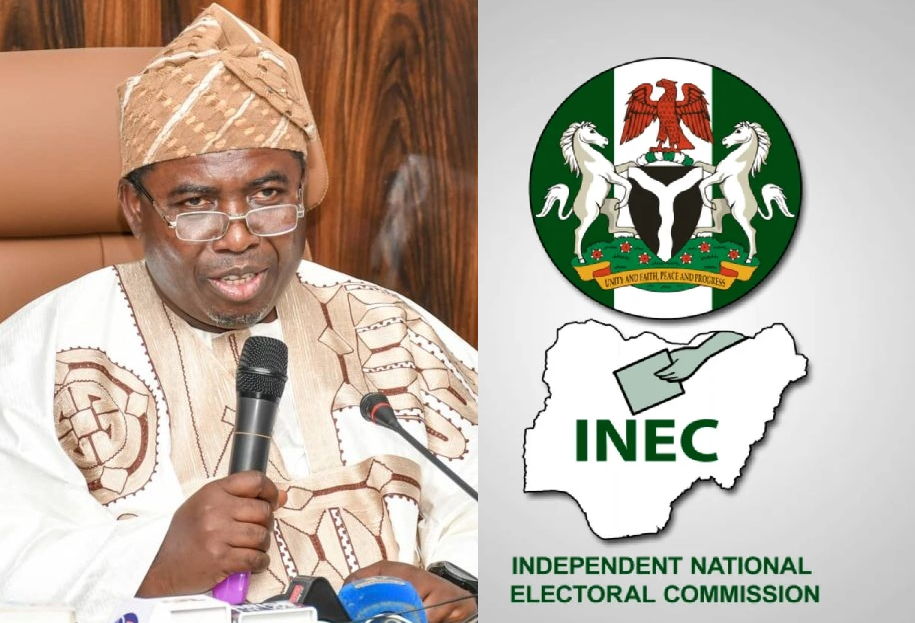
The Independent National Electoral Commission (INEC) has maintained that the Continuous Voter Registration (CVR) exercise will end today, July 26, despite calls from opposition political parties and civil society organisations (CSOs) for an extension to allow more eligible Nigerians to register ahead of the 2027 general elections.
In a notice posted on its X account on Saturday, the commission said registration centres across the country would operate from 9 a.m. to 3 p.m. on the final day of the exercise.
“Your future won’t wait. Neither should you. The Continuous Voter Registration (CVR) exercise ends Sunday, 26 July 2026,” the commission stated.
INEC also advised prospective voters to complete their registration through its online CVR portal or visit designated registration centres and INEC offices nationwide for physical assistance.
The commission explained that the Electoral Act requires it to suspend voter registration, voter register updates and revisions 90 days before an election. The measure allows time for data cleaning, printing of Permanent Voter Cards (PVCs) and other election preparations.
INEC National Commissioner Mohammed Haruna said there would be no extension beyond the deadline because the commission must begin processing the data collected.
“By midnight on Sunday, voter registration ends. There won’t be any extension. There are so many things that we need to do at the back end. We have to draw a line; otherwise, we won’t be able to produce a clean copy of what has been posted,” he said.
Haruna said the commission’s Information Technology Department and Voter Registration Department would immediately begin reviewing the records after registration closes.
He explained that the Automated Biometric Identification System would detect and remove multiple registrations before the provisional voters’ register is published for public scrutiny.
“We have this automatic biometric system that will check whether somebody has registered more than once. They will publish the register for claims and objections. That is, if anybody thinks a name shouldn’t be on the register, or if he has some claims, for instance, that his name has been omitted or some of his details are incorrect,” he said.
Haruna added that the total number of newly registered voters would only be available after biometric verification and the claims and objections process.
“So, it’s after all that has been done that we will have a final figure, which we will now add to the existing 93 million or so. That will then become the voters’ register. We are mandated to give every political party a copy ahead of the election,” he added.
The Chief Press Secretary to the INEC Chairman, Dayo Oketola, also defended the decision. He said the commission acted in line with the law and its election timetable. He dismissed concerns about technical challenges and insisted the registration portal was capable of handling applicants throughout the exercise.
According to him, the commission had already extended the exercise and conducted nationwide voter education campaigns to encourage participation.
“The states have pictorial evidence of the awareness campaigns and voter education carried out by the commission,” he added.
Meanwhile, INEC disclosed that it had registered 2,970,257 eligible Nigerians as of July 17, 2026, during Phase III, Week Nine of the CVR exercise. The figure includes both online and physical registrations. However, the commission said the data remains provisional until the completion of claims, objections and biometric verification.
The statistics showed that 970,865 people completed registration online, while 2,000,092 registered physically. Women accounted for 1,561,765 registrants, while 1,409,192 men completed the process.
Young people between the ages of 18 and 34 made up the largest group of registrants with 2,003,183 registrations. Students formed the biggest occupational category with 695,026 registrations, followed by business owners with 626,523.
Kano recorded the highest number of registrations with 234,305, followed by Lagos with 140,546 and Edo with 139,313. Bauchi recorded 96,061 registrations, while Borno had 44,866.
Despite INEC’s position, several opposition parties and civil society organisations urged the commission to extend the exercise.
African Democratic Congress (ADC) National Publicity Secretary Bolaji Abdullahi argued that voter registration should not be restricted to fixed timelines.
“We have also mobilised people across the country to INEC to register, but you know it is not easy for people to abandon their daily work to go and queue for hours at INEC offices for registration. What we have done is mobilise our people at the grassroots level,” he said.
The National Publicity Secretary of the Taminu Turaki-led faction of the Peoples Democratic Party (PDP), Ini Ememobong, said many Nigerians had lost confidence in the electoral process.
“Nigerians are discouraged, and this is putting them off registering. Unless INEC clearly demonstrates that it is impartial and capable of conducting credible elections, it will continue to have a negative impact on participation,” he said.
Labour Party National Publicity Secretary Obiora Ifoh also criticised the planned closure.
“The name of the exercise is Continuous Voter Registration, and we should start with the name and allow people who have an interest in participating in the election to register.
“I don’t see how people registering even up to December can obstruct what INEC is doing, so long as those people are not going to contest elections.
“It is only in Nigeria that electoral umpires put barriers in place to keep people from participating. In most other countries, once you have a national identity, it is enough for you to vote, but here they are making it a big deal.
“I don’t know where the idea of stopping people from participating in the CVR comes from or how it will help INEC. Millions of Nigerians will turn 18 by December. Are they saying those people should not register?” Ifoh said.
Civil society organisations also backed calls for an extension.
President of Women Arise for Change Initiative, Dr Joe Okei-Odumakin, said the commission should consider keeping registration open for a few more weeks because about six months remain before the elections.
“Given that there are six clear months before the general elections, there may be a need to relax the closure of voter registration for some more weeks.
“It should not be in response to the demand of political parties but in response to the need to make our democratic process more participatory. Such an extension may be effective for new voters at INEC offices nationwide only,” she said.
Chairman of the BallotEyes Working Group, Olasupo Abideen, described the closure as premature.
“To be honest, when we say something is continuous, it should be continuous voter registration. Because the moment INEC closes the portal, especially with more than six months before the election, I think it is wrong,” he said.
Executive Director of the Socio-Economic and Civic Rights Advocacy, Emmanuel Olowu, also questioned the legal basis for ending the exercise several months before the elections.
“If the law allows registration to continue until no later than 90 days before the election, why has INEC ended the exercise about 180 days before polling? What legal, administrative or logistical reasons justify this early closure?” Olowu asked.
However, the All Progressives Congress (APC) and Yiaga Africa supported INEC’s decision.
APC National Vice Chairman (South-East), Dr Ijeomah Arodiogbu, said the commission requires a deadline to complete election preparations.
“Talking about an extension; we are willing to indulge the other political parties because they would otherwise complain that INEC is biased against them. Meanwhile, INEC gave equal time to all the political parties, and they failed to do the needful but preferred to spread false narratives to deceive the people.
“INEC also gave an extension for the upload of candidates, and we welcomed it even though we had met the initial timeframe. If it is the decision of INEC and it will not affect its programme, we have no objection,” he said.
Yiaga Africa Executive Director Samson Itodo also defended the commission’s decision.
“The commission requires sufficient time to clean the register, adjudicate claims and objections, remove duplicates, print voter registers and complete other pre-election preparations. While the closure may disappoint some prospective voters, certainty and adherence to the electoral timetable are essential for effective election planning,” he said.