Opinion

Embracing life’s fluidity: Finding strength in change

By Abubakar Aminu Ibrahim

Life is so fluid. What once seemed overwhelming, embarrassing, or deeply significant often appears trivial with time. As we move forward in life, we begin to see past experiences in a different light, realising that our worries were not as permanent as they seemed.

As individuals, we evolve our understanding, emotional strength, and ability to handle challenges. Situations that once troubled us may later become sources of amusement because we have outgrown them. This shift in perception is a sign of personal development and an indication that hardships do not last forever.

Time itself plays a crucial role in shaping how we interpret past experiences. Pain and hardship, no matter how intense, tend to fade as new experiences replace them. Reflecting on past struggles with a sense of humour proves that time has a healing effect and that difficult moments are only temporary.

When we understand this concept, we can approach life with more ease and patience. If we can recognise that today’s problems may seem small in the future, we will be less burdened by stress and anxiety. Instead of worrying excessively, we can develop a lighter approach to life, embracing challenges with confidence and optimism.

I recently gave a talk (a book review) about worry and anxiety. One powerful insight I gained from the session is that challenges are not only inevitable but also an integral part of life. A great way to avoid devastation from calamities is to be emotionally prepared for them. 

Imagine two people walking toward a corner—one is aware that there is a dog ahead, while the other is not. When the dog suddenly barks, the informed person remains calm, anticipating the encounter, while the uninformed one may panic and even stumble into another danger.

This is how mental preparedness can help us navigate life’s uncertainties more easily. By acknowledging that challenges are a natural part of our journey, we diminish their power to destabilize us, allowing us to confront difficulties with confidence, adaptability, and flexibility.

Take life easy; the way you laugh at yesterday today is how you’ll laugh at today tomorrow!

Abubakar wrote from Katsina via abubakarmuhammadaminu21@gmail.com.

Hey, Nigerian Christians, it’s time to stop the bigotry

By Ammar M. Rajab

The recent uproar among some Nigerian Christians over the decision by the states of Katsina, Kebbi, and Bauchi to close schools for the holy month of Ramadan serves as yet another reminder of the deep-seated prejudice that certain Christians in Nigeria have toward anything associated with Islam and Muslims. This decision to observe the holiday is neither new nor illegal; it is well within the rights of these states, just as Christian-majority states regularly declare holidays during Christian celebrations.

Let me be clear — the schools are not closing arbitrarily. This decision is part of the officially approved academic calendar and coincides with the globally recognized Islamic holy month. Ramadan is not just about fasting; it is a profoundly spiritual time when Muslims dedicate themselves to prayer, charity, and community service. In a region where the vast majority are Muslims, it is reasonable to make space for religious observance. Why, then, does this simple act provoke such unnecessary outrage from some Christian voices?

This hypocrisy becomes even more pronounced when one considers that Christian-majority states have done the same, if not more. Just a few months ago, in December 2024, the Governor of Benue State, Hyacinth Alia, declared a two-week holiday for civil servants to celebrate Christmas and New Year. Nobody raised an eyebrow. This is not unusual.

Cross River State has also been declaring extended holidays for Christmas and the famous Calabar Carnival since 2004. These are Christian holidays observed in Christian-majority states, and nobody labels it religious bigotry. But when Muslim states exercise the same right, it suddenly becomes a national scandal. Why the double standard?

This selective outrage reflects the deep-seated bigotry that some Nigerian Christians have toward Muslims. Any policy, tradition, or cultural expression associated with Islam is instantly deemed backward, oppressive, or indicative of religious dominance. In contrast, similar practices from Christian communities are regarded as cultural pride and religious freedom. Why this hypocrisy? Why the persistent anger whenever Muslim states make decisions that align with their people’s beliefs? What exactly is the issue?

Enough is enough. Nigerian Muslims are not second-class citizens. The constitution guarantees freedom of religion and allows states to make decisions that reflect their people’s cultural and religious identities. If Christian states can observe Christian holidays without controversy, then Muslim states can observe Islamic holidays without needing to apologize to anyone. No group has a monopoly on public holidays, religious expression, or cultural identity.

It’s time for Nigerian Christians who participate in this unnecessary provocation to cease this religious bigotry. Live and let live. Respect the rights of others just as you expect your own rights to be respected. Nigeria is a multi-religious, multi-ethnic country, and it can only thrive when we all honour each other’s beliefs and traditions.

If you can celebrate Christmas and Easter with state-backed holidays in Benue, Cross River, and many other Christian-majority states, then Muslims can celebrate Ramadan in their own way as well. Anything less is not just hypocrisy—it’s outright bigotry. And it’s time for all of us to say: enough is enough.

Ammar M. Rajab wrote from Kaduna, Nigeria.

‘Nasir El-Rufai’ game has commenced

By Zayyad I. Muhammad

The 2027 game will not only be interesting but will also mark a significant turning point in Nigeria’s political landscape. The voting patterns and intricate scheming that shaped the 2023 elections will not be replicated in their exact form, yet their influence will still be felt. While the key political figures who played major roles in 2023 will remain central to the unfolding drama, they will adopt new strategies, shift alliances, and engage in different forms of political maneuvering.

The battle for power will be defined by strong political platforms, influential players, a formidable war chest, scientifically crafted strategies, and carefully calculated negotiations. The presidential race, in particular, will be a high-stakes contest, shaped by a mix of ambition, ideological shifts, and pragmatic political decisions.

An incumbent seeking a second term will be a bulldozer—with an enormous war chest, a solid structure, and the full weight of state power behind them. President Bola Ahmed Tinubu will fight tooth and nail to secure reelection, as mostly, any first term president will do so. However, the APC stronghold – the North, is gradually slipping from the party’s grasp. In fact, 75% of President Tinubu’s second-term resources and energy will be expended in the North—making it a crucial battleground for his team. If the Tinubus have played their card very well, the North would have been firmly in the arms.

The North will be the main battleground, while the Southwest will find itself in a dilemma—torn between supporting their own and upholding their deep-rooted tradition of rewarding excellence. The Southeast will watch from the sidelines with arms akimbo but will ultimately follow their hearts, while the South-South may take a more indifferent stance, adopting a “let’s just move” attitude.

The recent resignation of Nasir El-Rufai from the All Progressives Congress (APC) and his defection to the Social Democratic Party (SDP) is just one of many major developments that will reshape the political terrain in the coming months and 2027 approaches. El-Rufa’i’s early defection serves as a catalyst for the unfolding political drama. The Tinubu team is fortunate to have this early warning, giving them ample time to strategize. Meanwhile, the opposition will be on the offensive, while the APC will be forced into a defensive position.

For the opposition, the biggest challenge will be balancing the interests of four key groups: the Atiku camp, the Kwankwaso camp, the Peter Obi camp, and the El-Rufai/Buhari former ministers’ camp. They must navigate these competing interests carefully if they hope to strike the winning formula.

As political camps solidify and realign, new alliances will emerge, while old ones will fracture under the weight of conflicting interests. The electorate, too, will evolve—demanding more from their leaders and scrutinizing candidates beyond party affiliations.

Ultimately, the 2027 game will be a masterclass in political strategy and power dynamics—one that students of politics, analysts, and observers alike will find fascinating to study for years to come.

Zayyad I. Muhammad writes from Abuja, zaymohd@yahoo.com, 08036070980

Standing up for Natasha against “Chauvinistic” Senate

By Fatimah Yusuf Usman

The political exclusion of women in Nigeria has once again come to the fore with the suspension of Senator Natasha Akpoti-Uduaghan. Her alleged offense? Speaking up. Her punishment?

A swift and harsh six-month expulsion from the Senate, her office sealed, salary cut off, and access to the National Assembly revoked. Her ordeal began when she accused Senate President Godswill Akpabio of sexual harassment, an allegation that was neither investigated nor given a fair hearing.

Instead, the Senate’s Ethics Committee moved with unusual speed to shut her out. This raises an urgent question. Is there space for women in Nigerian politics beyond tokenism, or must they submit and endure injustice to survive?

Sexual harassment remains a global crisis, yet many societies, including Nigeria, prefer to sweep it under the carpet. Worldwide, one in three women, about 736 million, has experienced physical and or sexual violence.

But when victims muster the courage to speak up, they are often met with disbelief, scrutiny, or punishment. Natasha’s case is no different. Rather than handling the matter with fairness and transparency, the Senate wasted no time in punishing her.

A six-month suspension without pay seems less like a disciplinary measure and more like a warning to women in politics. Know your place or face the consequences. If this can happen at the highest levels of government, what hope is there for the ordinary Nigerian woman facing harassment in her workplace, school, or community?

Women in Nigeria’s political space face a glass ceiling reinforced with steel. Out of 109 senators, only a handful are women, a stark reminder of the gender imbalance that continues to define governance in the country.

And when women like Natasha refuse to conform to the unwritten rules of submission, the system moves to silence them. But even as she was escorted out of the Senate chambers, Natasha refused to be broken.

“This injustice will not be sustained,” she declared. Her words are a rallying cry, not just for herself, but for every woman who has been silenced, sidelined, or denied justice. The idea that politics is a “man’s world” must be dismantled.

Nigeria cannot claim to be a democracy while women’s voices are suppressed. Gender equity in governance is not a privilege. It is a right. The Senate’s handling of this case has only reinforced the perception that powerful men can get away with anything while women who dare to challenge them are punished.

If Natasha’s case has taught us anything, it is that the struggle for women’s political inclusion is far from over. But if we do not confront this now, when will we? How long will women continue to be punished for demanding dignity, fairness, and equal representation?

This is no longer just about Natasha. It is about every woman who has been ignored, intimidated, or denied justice. If we allow this injustice to stand, we send a dangerous message that a woman’s voice does not matter. But we refuse to accept that.

We stand with Natasha. We stand with every woman who has been silenced. And we demand justice, not just for her, but for all of us.

Fatimah Yusuf Usman is a Corps Member serving at PRNigeria Centre, Abuja. can be reached via: fatimahborkono@gmail.com

Al-Azhar at 1085: Celebrating its global legacy and services to Northern Nigeria

By Umar Sheikh Tahir

Al-Azhar was commissioned on the 9th of Ramadan 361H/ 972AD by the Fatimids in Cairo, Egypt. The name is derived from the holy Prophet’s (PBUH) daughter’s name, Fatimah al-Zahrā alayha al-Salam. The institution is one of the most prominent centers of Sunni Islam in the Muslim world. It serves as both a mosque and a university, and it is recognized as the world’s first university operating initially inside the grand mosque of al-Azhar. 

The institution is a beacon of our enduring legacy and tradition, showcasing our continuous connection and shared heritage. Its services extend not only to educational, spiritual, and theosophical but also humanitarian services to mankind around the globe. It is followed by Zaytuna in Tunisia and Qarawiyin in Morocco. 

As we celebrate the 1085th anniversary of Al-Azhar’s establishment, this article recognizes the significant contributions of Nigerians in the past and Al-Azhar’s contributions to our educational system in contemporary northern Nigeria. Finally, it highlights Al-Azhar alumni who have been instrumental in providing valuable services and whose excellence has made our nation proud. 

1.     Royal Contributions to Al-Azhar in the Past

Classical Azhar constituted several Ruwaq or Arwiqah Corridors/Hostels. These Corridors were named to symbolize the strong ties to some nations worldwide. A few of these names were dedicated to West African communities, such as “Ruwāq al-Barnāwī,” “Ruwaq Dakarinah Darfur,” “Ruwaq al-Barābirah,” and “Ruwaq al-Dakārinah Salih.” These names primarily related to precolonial Saharan and Sub-Saharan empire states, currently representing West African nation states. The closest to Nigeria is Ruwāq al-Barnawi, honoring Black African students from the Kanem Borno subregion in modern-day Northern Nigeria. This medieval hostel now serves as a lecture hall. This recognition stemmed from the strong relationships between Al-Azhar’s leadership and the Kanem Borno royal family. 

Mai Idris b. ‘Alī (1564-1596) spent tons of gold in Cairo, some of which went to endowing the Al-Azhar institution alongside other expenses such as hostels for Borno students and lodges for Kanem-Borno pilgrims to Hajj. This gesture echoes the famous history of Mansa Musa, who made gold depreciate by 25% in Cairo during his famous Hajj travel and stayover. 

Another substantial endowment was the Ibn al-Rashiq School, founded with support from Kanem Borno during the Ayyubi regime in 567-648/around the 12th AD. The institution served as a school and provided services to Hajj travelers from the Kanem-Borno area. In the 18th century, Muhammad bn Muhammad al-Fullānī Al-Kashnāwī’s impactful visit and teaching at Al-Azhar Mosque showcased the enduring influence he had on the institution and its scholars. He was so esteemed that they pursued him to stay until the end of his life, and he was buried in the Graveyard called Bustān al-Ulamā. 

 2. Al-Azhar’s Global Services

Since its inception, Al-Azhar has connected with the world, including our locality, in many ways. Al-Azhar sends teachers to the United States of America, Europe, Asian nations, African countries, and remote rural places. They were sent to the elementary and high schools worldwide, including Nigeria, to teach Islamic studies, the Arabic language, Basic Sciences, and Technology. Nigeria received more than a hundred teachers before, but the number recently decreased to less than 40 teachers due to insurgencies, as I inquired through the Embassy last year. 

However, in May 2016, the Grand Imam of Al-Azhar, Shaykh Ahmad al-Tayyib, visited Nigeria. During his visit, he announced increased scholarships for Nigerian students to Al-Azhar University, covering not only Islamic sciences and humanities but also natural sciences, technology, engineering, and medical schools.

3. Celebrating Excellent Nigerian Alumni in the Past and the Present

I cannot celebrate this milestone without acknowledging some Azhar alumni who have made Nigerians proud. This section highlights the achievements of selected Nigerian students, both past and present, who have excelled there, showcasing their academic prowess and impact on Nigerian society, especially those in prominent national positions.

Among the notable contemporary alums, Ambassador Abdullahi Yalleman and Dr. Hadi Sheikh Tahir graduated at the top of their classes. The former had the honor of receiving his award from former Egyptian President Hosni Mubarak, while the latter was accepted as a Ph.D. student directly from Al-Azhar to the University of Glasgow in Scotland. 

I apologize for not listing more excellent names here, as many deserving individuals come to mind among the outstanding alums I know personally. I will briefly mention a few sectors where Azhar alumni contribute to our society. For instance, most university lecturers, especially in the linguistics and Islamic studies departments, and leaders of colleges of education, are Azhar graduates. The leading Imam of the National Mosque and the founder of the first female-only university in Nigeria is also an Al-Azhar alumnus. Indeed, in the late 1940s, Nigerians celebrated the first female student admitted to the University of Ibadan, and now look at where we are with the contributions of Azharis. 

The leadership of the Sheikh Tahir Bauchi Islamic Center for Quranic Memorization and Islamic Studies consists of Azharis, including the Chairman, Vice Chairman, Secretary, and several directors, all of whom are graduates of al-Azhar. In fact, the Director of Education and School Services for this foundation oversees over 1,500 schools across West African countries and is also an Azhari. The world’s wealthiest Black person is Nigerian and among the alums of al-Azhar. Additionally, the former world champion of Arabic poetry in Abu Dhabi in 2022 is a Nigerian Azhari from Kano. You can also find them in mosques, performing well and serving local communities everywhere. The list can go on and on. 

This brief exploration has inspired me to write in detail in the future to celebrate our local leaders who are Azhar alumni and provide services to our beloved nation through various mediums.  

4. Hausa Language in Al-Azhar Media

Hausa was selected among other languages to serve as a medium of broadcast on Azhar Media TV for educational, intellectual, and spiritual enrichment, as well as to promote peace, featuring standard Islamic texts that cover all sciences in local languages worldwide. Nigerian students were among the qualified scholars leading these teachings for the benefit of Hausa-speaking communities in West Africa. This initiative was part of the office of former Mufti Prof. Emeritus Shaykh Ali Jum`ah, aiming to advocate for Al-Azhar’s methodology of moderate Islam in opposition to extremist views that fuel insurgencies. It was planned that the audio and video content of these teachings would be distributed to local Hausa-speaking communities. 

Today, I extend my congratulations to our Grand Imam, the alumni, and the wider Muslim community on this anniversary. As I reflect on my graduation from Al-Azhar 15 years ago, I appreciate the significance of 1,085 years of intellectual pursuit, the creation of a lasting legacy, engagement with global intellectual institutions, and the dissemination of knowledge throughout the world. 

I join the parents of our children in these urban and rural communities, along with Nigerian students in Azhar receiving full scholarships with free accommodations, in expressing our gratitude to the leadership and administration of Azhar and those Azhar teachers. The Egyptian embassies process the teachers’ paperwork, manage their placements, and report to the leadership above them—our dear Grand Imam. 

Thank you, Azhar, with our spirits before our tongues, and may God preserve you for the Ummah of Islam!

Umar Sheikh Tahir is a PhD Candidate at Columbia University, New York, USA. He can be reached via ust2102@columbia.edu.
Bala T.O: a fountain of service and dedication

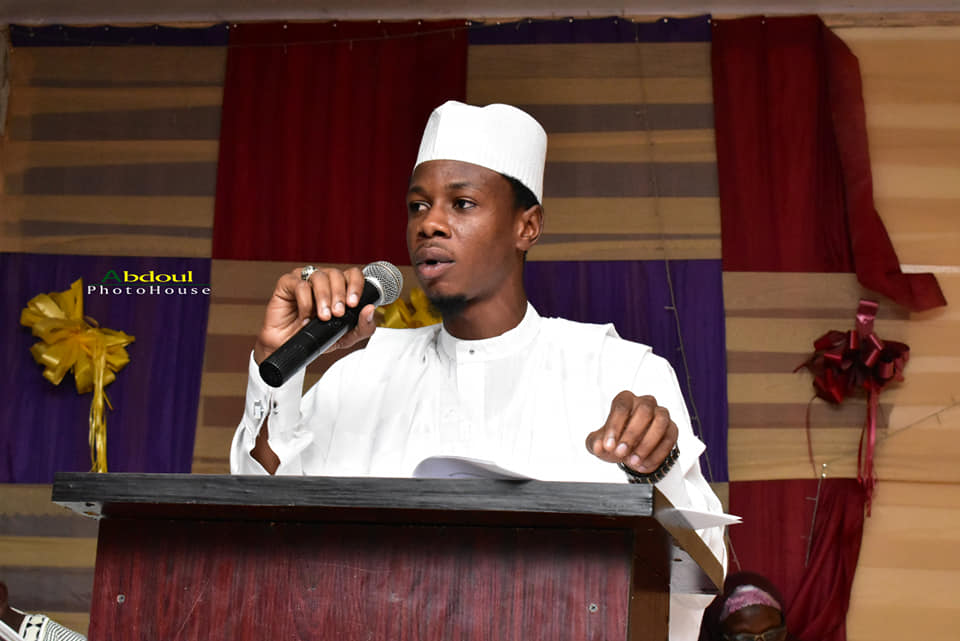
During his time as Chairman of Hadejia Local Government, Bala T.O was not just a leader; he was a transformative figure. His leadership was characterized by a keen focus on the needs of his people. Under his stewardship, Hadejia saw numerous developmental strides in infrastructure, education, health, and local governance. His unique leadership style, which blended accessibility, transparency, and pragmatism, earned him the admiration of his constituents and political peers alike.

Honourable Bala Umar, widely known as Bala T.O, is a name that resonates deeply within the political landscape of Jigawa State. From his impactful tenure as the Chairman of Hadejia Local Government to his current position as the Special Adviser on Special Duties to Governor Malam Umar Namadi, Bala T.O has continually demonstrated unwavering commitment to public service and governance.

But beyond his political prowess, Bala T.O’s legacy is also tied to his deep-rooted understanding of governance. His work was driven by the belief that leadership should not just be about authority but about empowering the people, fostering unity, and prioritizing the well-being of all. He was particularly known for his efforts in building bridges between various community groups, ensuring inclusivity, and addressing the challenges faced by the common people of Hadejia.

In his current role as Special Adviser to the Governor of Jigawa State, Bala T.O continues to serve with the same fervor and dedication that defined his earlier career. The transition from a local government chairman to a Special Adviser is not merely a change in title, but a testament to his capacity for leadership at both local and state levels. His wealth of experience and extensive knowledge of Jigawa’s grassroots realities has positioned him as an invaluable asset to the state government.

As Special Adviser on Special Duties, Bala T.O now plays a crucial role in shaping policies and ensuring the successful implementation of programs that affect not only the people of Hadejia but all residents of Jigawa State. His position enables him to influence strategic decisions that directly impact sectors such as agriculture, infrastructure development, and social welfare – areas critical to the continued growth and prosperity of the state.

One of the standout qualities of Bala T.O is his dedication to ensuring that no one is left behind in the development process. He has remained a staunch advocate for the inclusion of marginalized communities and continues to push for policies that promote equal opportunities for all. His approach to governance is not about political gain, but about creating sustainable change that will benefit future generations.

Furthermore, his relationship with Governor Malam Umar Namadi (Danmodi) is one built on mutual respect and a shared vision for the future of Jigawa State. As a trusted adviser, Bala T.O plays an instrumental role in providing valuable insights, guiding the governor in making decisions that reflect the needs of the people. His counsel, honed through years of hands-on leadership experience, is a driving force behind many of the initiatives currently underway in the state.

As we look to the future, it is clear that Honourable Bala Umar (Bala T.O) will continue to be a key figure in the political and developmental trajectory of Jigawa State. His continued service, first as Chairman of Hadejia Local Government and now as Special Adviser, demonstrates the power of dedicated leadership and the impact one person can have on a community and beyond.

In conclusion, Bala T.O’s journey from local government leadership to becoming the Special Adviser to the Governor serves as an inspiration to all who believe in the power of hard work, integrity, and service. His story is a testament to the belief that true leadership is not defined by position, but by the positive change one can bring to the lives of others.

Why do Mass Communication students prefer broadcast media?

By Dahiru Kasimu Adamu

Mass Communication is a broad field with different areas which include journalism, broadcasting, public relations, digital Marketing, film and television production, advertisement, strategic communication and many more others.

Thus, Mass Communication as a profession is said to be a great field which is like the proverbial Hausa cow with more than ten benifits, however, the students from this field often restrict themselves to broadcast media especially during their ‘student industrial training.

On 13 February 2025, during MACOSA student orientation organized by Mass Communication students association (MACOSA) at Usmanu Danfodiyo University, Sokoto, a lecturer and SIWES co-ordinator from Mass Communication Department, Mr. AbdulHakim AbdulGaniyu emphasized the need for students to explore other Mass Communication channels while they undergo their mandatory industrial training at 200 and 300 levels respectively.

Mr. AbdulHakim also highlighted the role of students industrial work experience scheme SIWES in supplying new skills and ideas to students.

“Mass Communication is a vast environment, and students need to explore such environments, they should not restrict themselves in Radio and TV only” Sir Abdulhakim said.

Mr. Abdulhakim, who narrated his past experience, mentioned that students can do their SIWES at various ministries, departments and agencies, this is because, all organizations, governments and even non governmental institutions have information units and they need image makers, and those are public relations officers.

Also, speaking at pioneer day of Mass communication students of Usmanu Danfodiyo University Sokoto, held on 7th November 2024, a veteran broadcaster and Director News and programs of Sokoto Media Cooperation, Hajiya Balkisu Abubakar, implored students that “they should not limit themselves to Radio”.
She appealed to them to engage themselves in other means of communication and contribute their quota to the development of their society.

Despite the fact that, Mass Communication is a broad field and students learn the rudiments skills of the field in schools, usually these students seem to have much interest in broadcast media particularly radio, and this brought the question of why the students are neglecting other areas of the profession?

To answer this question we need to critically observe the course and the students. Traditionally some students join the field with an intention becoming popular in their respective communities.

According to Aliyu Muhammad who obtained a National Diploma in Mass Communication from Umaru Ali Shinkafi Polytechnic Sokoto, he said students like him selected and chose radio or television during their SIWES because a journalist is easier to be known through broadcast media being the most popular channels of communication known and used widely.

He also mentioned that limited access to print media by the community members is another factor discouraging students of Mass Communication to do their industrial training in print outlets.

While sharing his opinion Ibrahim Shehu Bulama from Kaduna State University, KASU, said “this is happening due to lack of good awareness on other channels of Mass Communication”.

On his part Abubakar Mai Lafiya said; students mainly want to be seen in television screens and their voices been heard, not focusing on other critical fields of journalism and information practices.

Speaking anonymously, a Mass Communication students of Usmanu Danfodiyo University Sokoto, said they normally choose Broadcast media (Radio and Television) due to its nature of easy access, portability and wide outreach.

To change some of these narratives there should be some measures that will motivate students and induce hope for them in other fields of Mass Communication.

There should be a good orientation to educate students that they can also carry out their SIWES in other information units, public relations Departments of public and private sectors such as financial institutions, law enforcement agencies, markets and almost all other places of human interactions.

Another alternative is, the Mass Communication departments should establish a collaborative relationship with such organizations, so that they can formally send letters, requesting spaces for the students to join and garner the experience. Such organization should make special provision for SIWES students and prepare to take them when there is need.

Moreover Mass Communication Departments should help students to understand why they should go for their SIWES in areas they’re strong as reflected by their grade points.

Being a Mass Communicator, one should understand that his/her basic responsibility and professional calling is with every institution. One should remember it’s time to acts, time to rethink and focus. Students have to confront the current challenges of the field so that one can explore utilize and make impact. This will make someone to influence the world positively.

Mosques speak: The legacy of Dr. Yakubu Adamu (Mai Masallaci), a faith builder

By Usman Abdullahi Koli

Have you ever walked into a mosque and sensed its walls whispering stories? Stories of faith, of community, of lives transformed? One quiet afternoon in Bauchi, as the sun cast long shadows across the courtyard of a newly renovated mosque, I found myself in the middle of such a conversation. But this was no ordinary dialogue. 

The mosque itself began to speak, its voice a blend of gratitude and reverence, joined by the echoes of countless lives impacted by one man—Dr. Yakubu Adamu, the Commissioner of Finance and Economic Development, affectionately known as Mai Masallaci.

The mosque’s voice was calm yet commanding, like the adhan that calls the faithful to prayer. “Sit,” it seemed to say, “and listen to the story of a man who saw me not as a crumbling structure but as a sanctuary of hope. 

When Dr. Yakubu Adamu first approached me, I was in ruins—my walls cracked, my roof leaking, my courtyard silent. But he saw beyond my decay. He saw the souls who gathered within me, the prayers that rose from my floors, and the community that depended on me. With his hands, he rebuilt me. With his heart, he revived me. And with his faith, he reminded me of my purpose—to be a house of Allah, a home of unity and hope.”

I leaned in, captivated, as the mosque continued: “But he did not stop with me. He traveled across the state, seeking out my brothers—mosques that had been forgotten and abandoned. He gave them new life, not just as structures, but as symbols of faith and community. He understood that building a mosque is a bridge between this world and the hereafter.”

Then, another voice joined the conversation—a gentle, heartfelt murmur that seemed to come from the air around us. It was the voice of his philanthropic gestures, the countless acts of kindness that had touched thousands of lives.  

“He is not just a builder of mosques,” the voice said. “He is a builder of lives. I have seen him provide food for the hungry, scholarships for the bright but needy, and medical care for the sick. I have watched him sit with the poor, listen to their struggles, and offer material support and hope. He does not see charity as an obligation; he sees it as a privilege, a way to draw closer to Allah.”

The mosque nodded in agreement, its dome catching the sunlight like a crown. “Yes,” it said. “He is a man who understands that true success lies in serving others. His humanitarian services are not just acts of kindness; they are acts of worship.”

As the conversation deepened, the voices grew more numerous, each adding a layer to the story of Dr. Yakubu Adamu. The students he had supported spoke of his belief in education as a tool for empowerment. The elderly he had cared for praised his compassion and respect for the aged. The farmers he had assisted shared stories of his commitment to economic development and self-sufficiency. And through it all, one theme emerged: Dr. Adamu is a man who lives for others, a man whose life is proof of the teachings of Islam.

Now glowing with pride, the mosque turned to me and said, “But perhaps what sets him apart is his humility. He does not seek recognition or praise. He works quietly, tirelessly, knowing that his true reward lies with Allah. He is a leader who leads by example, a servant who serves with love, and a believer who lives by faith.”

As the sun began to set, casting a golden hue over the mosque’s courtyard, I felt a profound awe. This was not just a story of a man; it was a story of a legacy—a legacy of faith, service, and humanity. Dr. Yakubu Adamu is not just a commissioner but a guardian of the people, a protector of the faith, and a pillar of hope.

The mosque, its voice now a whisper, offered a final thought: “Tell the world about him. Let them know that in a time when selflessness is rare, Dr. Yakubu Adamu stands as a reminder of what it means to live a life of purpose. Inform them that his work is not just for this world but for the hereafter. And convey that we, the mosques and the hearts he has touched, are forever grateful.”

As I left the mosque that evening, the call to Maghrib prayer echoed through the streets, reminding me of the divine connection that Dr. Yakubu Adamu has strengthened through his work. His story is not just one of bricks and mortar, food and medicine, or governance and development. It is a story of faith, love, and a man who has dedicated his life to improving this world and the hereafter. May Allah bless him, protect him, and grant him the highest place in Jannah. Ameen.

Usman Abdullahi Koli wrote via mernoukoli@gmail.com.

Artificial Intelligence

Commitment to AI education excellence

By Abdurrazak Muktar Makarfi

I want to share an inspiring story about perseverance and determination. Some time ago, Malam Aisara Fagge, a visionary educator from Kano, conceived an innovative idea to empower youths with knowledge about Artificial Intelligence (AI) and train them to utilize ChatGPT effectively. 

Malam Aisar took his enthusiasm to social media, publicly announcing his intention to collaborate with Professor Abdullah Uba Adamu on this project. Although the project didn’t come to fruition, an interesting turn of events unfolded. 

Shortly after, I stumbled upon banners advertising training programs on ChatGPT in southern Nigeria with prices that seemed exorbitant. I shared these banners with Malam Aisara, whose response was profound: ‘When you have an idea, many people will try to replicate it.’ His words echoed the age-old adage that ‘imitation is the sincerest form of flattery.”

This experience came flooding back when I connected with Dr. Idris Ahmed on social media. He shares a similar passion for educating people about computer appreciation and AI and plans to make this vision a reality through his NGO, CUPS. I was impressed by his dedication, and I offered him my support.

What’s truly remarkable about Dr. Idris’s endeavor is his commitment to training many people, thereby pioneering a movement in this field. His initiative has the potential to bridge the knowledge gap and make AI more accessible to a broader audience in Nigeria and beyond.

I sincerely hope Dr. Idris receives the support and recognition he deserves to make this project a resounding success. I pray that Almighty Allah grants success to both Malam Aisara Fagge and Dr. Idris Ahmed in their endeavors, and may their efforts bring about positive change in the lives of many.

Abdurrazak Muktar Makarfi wrote via prof4true1@gmail.com.

Nuhu Ribadu for President 2031?

By Zayyad I. Muhammad

The Nigerian political landscape is never short of intrigue, speculation, and high-stakes maneuvering. The latest storm centers around Mallam Nuhu Ribadu, Nigeria’s National Security Adviser (NSA), and allegations made by his ‘former’ ally and friend, Mallam Nasir El-Rufai, the former governor of Kaduna State.

El-Rufai has accused Ribadu of secretly positioning himself for a presidential bid in 2031, alleging that he is working to eliminate key northern politicians before the elections. In an Arise TV interview, El-Rufai said:

“Somebody wants to destroy my reputation. Why? Nuhu Ribadu wants to be president in 2031. He has to eliminate every northerner that he thinks is on the radar.”

These allegations have sparked intense debate, given Ribadu’s current position as the NSA, one of the most powerful offices in the country. The role demands absolute loyalty to the sitting president, and any sign of personal political ambition would be politically dangerous.

However, Ribadu has vehemently denied the claims, dismissing any suggestion that he is planning a presidential run in 2031. In his response, he stated:

“For the avoidance of doubt, I want to put it on record that I have never discussed running for president in 2031 with anybody.”

Currently, President Bola Ahmed Tinubu is in the second year of his first term and is widely anticipated to run for reelection in 2027. If he wins, his administration would extend until 2031. Considering this timeline, it seems premature for anyone in Tinubu’s inner circle—particularly someone in such a sensitive position as the NSA—to be planning a presidential bid so early.

To be fair to Ribadu, every seasoned political observer knows he is too intelligent and experienced to make such a politically reckless move. Launching a presidential campaign while still serving in a crucial role would create unnecessary distractions, fuel rivalries, and generate deep animosities within the government. It would also call his loyalty to Tinubu into question.

So why is Ribadu being linked to 2031?

First, his close relationship with President Tinubu has earned him the title of Tinubu’s golden boy (Dan Fulani). His reputation as a disciplined, intelligent,  experienced, and competent leader makes him a natural contender in any discussion about potential successors. Any rising political figure will inevitably attract speculation in a political climate where future ambitions are often carefully managed behind closed doors but widely discussed publicly by everyday people.

Second, the political class understands that succession planning is always at play, even when not publicly acknowledged. While Ribadu may not currently campaign for the presidency, political opportunities can arise unexpectedly. Nigerian politicians are known for their ability to seize the moment when the circumstances align, even if it was not originally in their plans.

Politics is unpredictable, and today’s denials can quickly become tomorrow’s declarations. Whether or not Nuhu Ribadu harbors presidential ambitions, the reality is that he possesses the qualities of a strong contender—experience, credibility, and proximity to power. If the opportunity presented itself, would he take it?

Only time will tell. But one thing is sure: The road to 2031 has already begun, and the political maneuvering will only intensify in the coming years.

Zayyad I. Muhammad writes from Abuja via zaymohd@yahoo.com.