Opinion

The importance of time: An appeal for punctuality in academia and elsewhere

By Abubakar Aminu Ibrahim

Deedee rushed around her room, gathering the necessary materials for her PhD proposal defense, her heart racing as she tried to remember everything. The session was officially set to begin at ten in the morning, as specified by the postgraduate college, but by seven, she was already anxious, determined not to be late for such an important academic event.

Thanks to the relentless morning traffic, Deedee barely arrived at her destination by eight. Clutching her papers tightly and breathing heavily, she sighed in relief—at least she was the first to arrive. Finally, she could set aside the worry of being late. She settled into her seat, absorbing the tranquillity in the environment and the nervous anticipation of her imminent defense.

The clock ticked on. By ten o’clock—the designated time—only a few familiar faces were moving about. It was evident that the college had only just started making arrangements for the venue and other necessary protocols. Deedee stayed patient. Maybe the session would begin by eleven, she thought, but I need to pick up Mukhtar from school by two.

Yet, the college workers—both academic and non-academic—moved about leisurely, their faces showing no awareness of time slipping away. As the hours passed, other students began to trickle in. No one noticed who had arrived first; there was no system in place to ensure that Deedee or any early arrivals would be attended to first. It seemed that the very concept of punctuality was foreign here.

Frustrated, Deedee later lamented, “Can you believe the session didn’t start until two o’clock in the afternoon? That was exactly when I was supposed to pick up Mukhtar from school?”

“I’m really sorry,” I said earnestly. “But this is what we refer to as ‘African time.’ People here often don’t prioritize valuing time.”

“But do you realize what that means!?” Deedee interjected. “It means our defense times were shortened, leaving us little opportunity to express the very ideas we spent sleepless nights preparing. I was caught between trying to present my work convincingly and worrying about my poor son. What could I say to impress the professors? What was Mukhtar doing at that moment? Was he thinking I had forgotten him? These thoughts, combined with exhaustion, drained all the energy I’d built up for the session.”

Sadly, lack of respect for time has become our trademark in Africa—or, let me be specific, in Nigeria, which I know too well. It is bad enough that the general populace disregards time, but it is even more disheartening that this culture thrives in academic environments. 

Ironically, some people deliberately arrive late to events, using it as a display of status. They ensure the crowd has gathered before they waltz in, basking in the admiration of those who foolishly equate tardiness with importance. Even more baffling is that these individuals always have some fools cheer and applaud their ignorance or arrogance.

We must recognize that our choices do not impact us alone. More often than not, they have far-reaching consequences for others. Consider how a single instance of lateness can disrupt the timing of subsequent activities. Life functions like a chain—delaying one link interrupts the entire sequence. If action A is postponed, it affects action Y, and ultimately, there may be no time left for action Z, which could be critical to someone else’s plans.

It is time we erased the shameful phrase “African time” from our vocabulary and our reality. We must recognize that adhering to schedules is an act of responsibility, a way of being our brother’s keeper. Whether as teachers, students, participants, or public speakers, we need to respect the time allocated to us, neither taking more than our share nor wasting what we have.

Yesterday is history, which is why it’s referred to as the past. Tomorrow is a mystery, unknown and unpredictable. But today—this moment—is a gift. That’s why it’s called the present. Use it wisely.

Abubakar Aminu Ibrahim wrote via abubakarmuhammadaminu21@gmail.com.
Crushing Drugs: NDLEA’s success stories under WADA

By As-sayyidul Arafat Abdulrazaq 

The War Against Drug Abuse (WADA) in Nigeria, led by the National Drug Law Enforcement Agency (NDLEA), is a vigorous effort to combat a problem that has been undermining the country’s social fabric. Launched on June 26, 2021, under the Buhari administration, it focuses not only on apprehending drug dealers—although there is a significant emphasis on that—but also on a comprehensive strategy to reduce both the supply and demand for illicit drugs through enforcement, education, and community action.

Nigeria’s drug problem is severe. Cannabis, codeine, tramadol, and methamphetamine (locally known as “ice” or “mkpuru mmiri”) are widespread, particularly among young people. According to the United Nations Office on Drugs and Crime (UNODC), cannabis leads the list, followed by opioids and cough syrups containing codeine. This is not merely a health crisis; it also fuels crime, cultism, and insurgency, as groups like Boko Haram are reportedly financing their operations through drug trafficking.

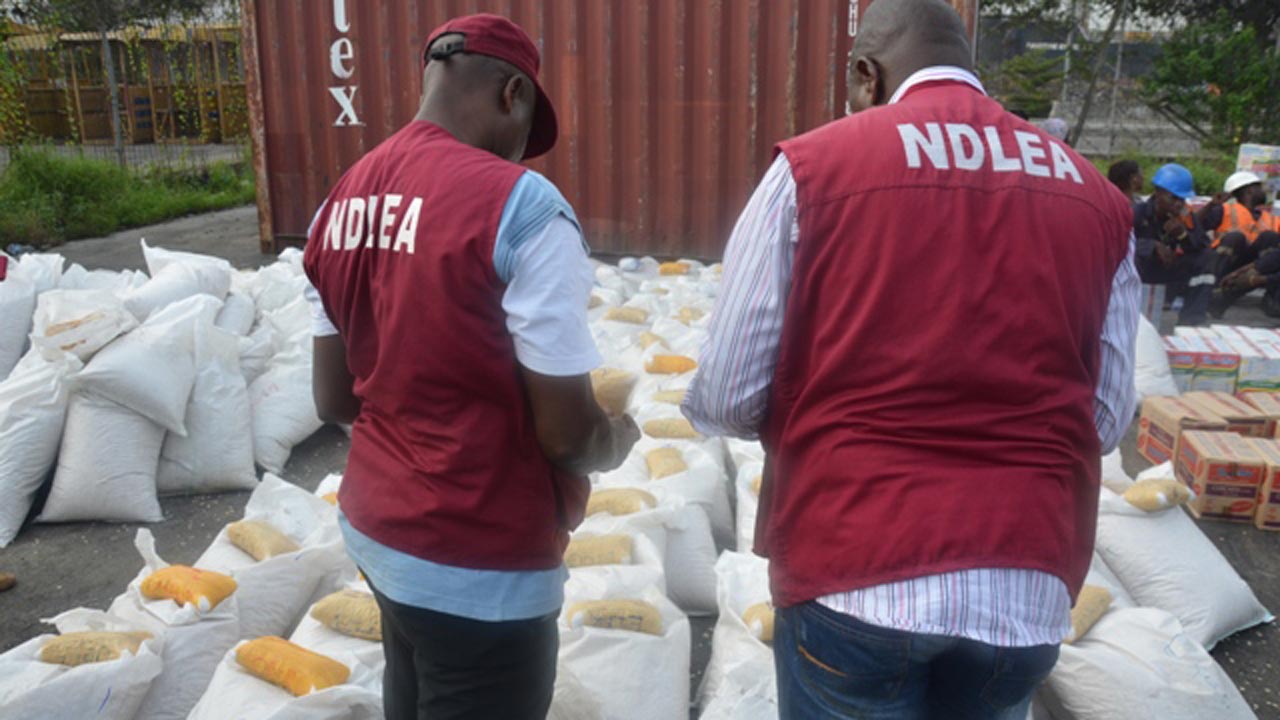
WADA’s strategy divides into two lanes. On the supply side, the NDLEA’s Offensive Action, which began in January 2021, has been relentless. Under Brig. Gen. Buba Marwa’s leadership, the agency has achieved significant victories: over 57,792 arrests, 10,572 convictions, and more than 10 million kilograms of drugs seized since he took charge. 

The demand side is where WADA’s heart is on the demand side: prevention through awareness. They’ve rolled out sensitization campaigns in schools, mosques, churches, markets, and workplaces nationwide and given lectures at places like Maku Grammar School in Oyo or Jama’atu Islamiyya in Kogi State.

How did they do it? Through grassroots hustle and smart partnerships. NDLEA’s 36 state commands collaborated with local leaders, traditional rulers, youth groups, and the Association of Local Governments of Nigeria (ALGON) to host talks and rallies. The “Save Our Families” campaign in 2024 distributed drug test kits to parents to prevent the drug abuse crisis from affecting homes.

The results are clear. By mid-2024, over 13,000 people will have received counseling or rehab, a significant increase from just 599 in 2020, with 8,129 individuals receiving assistance last year alone, according to LEADERSHIP on February 25. This reflects individuals choosing change because they’ve heard the message. In Imo State, after a talk in 2024 at Owerri-Aba Primary, teachers began to look for warning signs. 

In Kaduna State, a February 24 event prompted residents to pledge for drug-free neighborhoods, resulting in a significant increase in calls to NDLEA’s helpline by early 2025. In Kano, where Brig. Gen. Buba Marwa highlighted 1.07 millionusers during the launch of a sensitization campaign against drug abuse, domestic violence, and the illicit drug trade organized by the National Orientation Agency (NOA) in Kaduna, Marwa discussed Almajiri children, aiming to reduce the number of young people that dealers can target, which could decrease crimes such as gang fights and theft.

This year, WADA’s sensitization efforts are making a significant impact in schools and communities. Lectures were held at the Federal Cooperative College in Ibadan on February 20, warning students about the dangers of drugs. Additionally, there is an ongoing initiative in the FCT with new area commands in Kwali and Kuje aimed at spreading the message further. They are maintaining the momentum from 2024, during which they reached over 1.8 million people alone.

But it is not all solved. Drugs still flow, and poverty keeps some trapped. However, with over 10 million kilos seized,including 25 tons destroyed in Kogi this week, the NDLEA combines this effort with outreach to make a difference. WADA’s success lies not only in the drugs they intercept; it’s also in the minds they influence. This fight demonstrates that Nigeria can push back step by step, with a plan that is working.

Looking ahead, the NDLEA could strengthen its capabilities by adopting modern technology. Currently, the NDLEA relies significantly on human intelligence and physical operations. Their officers, including the elite Strike Force established in 2021, carry out raids, patrols, and manual inspections at airports, seaports, borders, and highways. However, these efforts, while effective, are basic compared to what will be available in 2025. 

Traffickers are adapting by hiding drugs in compressors, duvets, and even soap bars, as seen in recent busts. Drones, for instance, are not widely mentioned in their operations, yet they could scour remote cannabis farms or stash points along the border. Digital tracking, AI, and data analytics to map online drug deals or shipping patterns seem to be underutilized.

As-Sayyidul Arafat Abdulrazaq is Corp member at the Center for Crisis Communication and can be reached at as.sayyid21@gmail.com.

Walking Down the Memory Lane | The Kabara Tafsir and Surat Yusuf

By Prof. Abdalla Uba Adamu

A few comments about the ongoing Ramadan Tafsir at the Palace of the Emir of Kano conducted by Sheikh Qaribullah Nasir Kabara (translator, Qadriyyah) and Muhammad Hadi Gwani (reciter, Tijjaniyya) brought back nostalgic memories for many people. The conversation was started by Muhsin Ibrahim. Perhaps only those living or having lived in Kano may probably know of this Tafsir that has been consistently going on since about the 1940s, shifting location only once, from Chiranci to Kofar Kudu in Kano. On Sunday, 16 Ramadan/March 2025, I was part of a TV discussion on the Tafsir and its meaning to me. This was what promoted this sharing of memories. 

Tafsir is the scholarly interpretation and explanation of the Quran. It helps to clarify the meanings of verses, their context, linguistic nuances, and the reasons for their revelation. The combo of Sheikh Qaribullah Kabara and Sheikh Hadi Gwani in Kano is one of the hundreds of Tafsirs conducted during Ramadan in Islamicate northern Nigeria. 

Each individual has their preferences for the reciter/translator combo. Mine, inherited from my father, was for the Kabara Tafsir. The reason is up close and personal. I was born on 14th Ramadan 1375, or 25th April 1956. My father was informed of my arrival while he was at the Tafsir in the inner chambers of the Emir of Kano’s Palace near the reciters. My father was a Qadiriyya adherent and disciple of Malam Nasiru Kabara. 

The nostalgia was ignited by Muhsin’s reflections of Surah Yusuf, which was recited on the 9th day of every Ramadan. Perhaps the Surah draws the largest crowd apart from the day of the ending of the Tafsir (Hattama). I have always marveled at why there is a surge of attendees on any day the Surah is being recited/translated. I remember being annoyed one year when I was slightly late and had to virtually push and shove through a huge crowd – often “standing room” only – to get to my reserved seat deep in the open space of the Place just before the door leading to the “Soron Isa” antechamber. All eager to listen to Surah Yusuf. 

Significantly, the Juz’i containing the Surah ends on Ayat 52. But on Friday, 17th December 1999/9th Ramadan 1420, as I noted in my own copy of Yusuf Ali’s Translation of the Holy Qur’an, which I used as a guide in following the recitation, Sheikh Qaribullah suggested to complete the Surah to its 111 Ayats to maintain the narrative structure and continuity of its events. Thus, on the day, the Tafsir lasts longer than on other normal days, while the Tafsir on the following day, starting directly with Surah Al Ra’ad, always ends up being the shortest night of the Tafsir. 

There are many reasons for the attachment of thousands of people – some who attend the Tafsīr on the Surah Yusuf day only. While this has many lessons, I will examine it from an ethnographic perspective. The story of the travails of Prophet Yusuf has one central cultural importance to the Hausa – “haƙuri can dafa dutse”/Patience is a virtue. This was indeed played out by the way Prophet Yusuf went through so many challenges in life – simply because of the stupendous natural beauty bestowed on him by Allah (SWT) to begin with. 

But his trials centered around what I call “yan ubantaka,” sibling rivalry and jealousy inherent among siblings of different mothers. This is a theme in Hausa family structures where offspring sharing only a father seem almost always at each other’s throats. Of course, not all households are like this – I am sure you know some households with perfect harmony, despite different mothers (might even be your own particular circumstance). However, the general experience of many Hausa is precisely as described in Surah Yusuf – bitter rivalry towards the more outstanding brother – whether junior or senior. Attendees of the Tafsir, therefore, get solace at the spiritual formula and lesson of patience and perseverance and go home uplifted that, as for Prophet Yusuf, “komai nisan dare, gare zai waye”/there is light at the end of the dark tunnel. 

Another significant historical moment in the Kabara Tafsir was what I called The Switch. On 29th March 1990,equivalent to 3rd Ramadan 1410, while reading Surah Al-Ma’idah, Ayat 20, Mal. Nasiru stopped the translation. With an emotionally charged voice, he prayed for the Emir Alhaji Ado Bayero (the host of the Tafsir). Then he informed the congregation that the Emir had given permission for Qaribullah Nasiru Kabara to continue the translations. The massive roar of Allahu Akbar takbir startled the mass of Swallows (Bilbilo) perching on the trees in the Emir’s mangrove area (Sheka), where they took off en mass. It was indeed an emotional moment. Right away, Mal. Qaribullah took over the translations, and in a well-synchronized manner, Mal. Hadi led him through the recitation, changing the tonalities of his recitation with Mal. Qaribullah matching him tone for tone. More Takbirs followed every hill and valley of their voices. It was a truly historic moment. 

Finally, a massive controversy concerning filming the story of the Prophet Yusuf erupted in Kano in 2009. Luckily, it was not from Kannywood producers, who, aware of the prohibitions of depicting prophets of Allah in any visual form, dared not even attempt it. However, in 2009, a TV series, Yousuf-e-Payambar or Joseph, the Prophet, was screened at the 2009 Cannes Film festival. The 45-episode series was produced by Sima Film Productions, an affiliate of the Islamic Republic of Iran Broadcasting (IRIB). 

Although the series’ dialogue was in Persian, soon enough, the Lebanese Al Manar TV station, owned by the Shi’a Hezbollah, started re-broadcasting the series with Arab dub-over voices of the Farsi dialogue, and became available through the Middle East satellite TV networks. It was a Shi’a TV show, since apparently in the Shi’a understanding of Islam, there was nothing wrong with depicting Prophets in any visual medium. Further, the story of Prophet Joseph had universal constants that made it appealing throughout the Muslim world, regardless of doctrinal inclination. 

In the summer of 2009, a young Muslim Hausa student studying at the Al-Azhar University in Cairo somehow downloaded the entire Yousuf-e Payambar series with Arabic voice-over dubbing in his laptop and brought it to CD marketers in Kano, the biggest commercial centre in northern Nigeria. In Kano, somehow, it was dubbed over in the Hausa language. It was an instant hit. The marketers subsequently copied the series into eight-volume DVDs and released them to traffic light markets common in most African urban centers.

However, no sooner had the DVDs entered the market than two prominent Muslim clerics in the Shari’a State of Kano appeared on public radio and condemned the Series. These were Sheikh Amin Daurawa and Sheikh Ibrahim Khalil, the latter of whom was the Chairman of the powerful Kano State Council of Ulama. In their ‘fatwa’ – Islamic ruling – echoing the Al-Azhar proscription of visually representing a Prophet of Allah (SWT), they argued it is prohibited to depict any Prophet in any form visually. The basic problem was that while Shi’a filmmakers produced the Prophet Yusuf TV series, the consumers in Kano were Sunni and did not make the sublime distinction about the interdiction of prophetic images between Sunni and Shi’ite interpretations of Islam.

The fatwa resulted in the Kano State Censorship Board’s banning the sales of Joseph the Prophet DVDs and arresting and prosecuting marketers and vendors who sold the DVDs. However, while the series was banned in Kano, it became readily available in neighboring States, especially Kaduna and Bauchi, where Shari’a law was implemented more flexibly.

The Kabara Tafsir is available on the YouTube Channel I created specifically for it. So look for it if interested. If you want to know more about the controversies and censorship of the Prophet Yusuf CDs in Kano, read my article, “Controversies and restrictions of visual representation of prophets in northern Nigerian popular culture.” March 2017. Journal of African Media Studies 9(1):17-31. The journal publishers don’t want their articles on academic social media networks (ASMN),but they say nothing about personal sites! So, if you want to download the entire paper, it is Acibilistically available at this link.

For those old enough, there is also an Egyptian poster of the Prophet Yusuf/Zulaykha in the presence of her husband, al-Aziz (Potiphar) encounter (fully depicted in the TV series) which, together with other Prophets and saints, were also freely sold in Kano in the 1960s. This gives a historical perspective to how artists tried to portray this popular Islamic narrative in popular culture. The poster is in the article.

Media headlines: Giving oxygen to controversy

By Anas Abbas

The controversy involving Senator Natasha Akpoti and the Nigerian Senate President has sparked significant discussion in the media. While it is important to cover matters of public interest, the extensive media attention on this controversy raises questions about the “oxygen of publicity” and its possible consequences.

Some say the media provides the “oxygen of publicity” to individuals or groups, granting them attention and visibility. This can be a double-edged sword. On one hand, media attention can bring important issues to the forefront and hold those in power accountable. On the other hand, excessive coverage can perpetuate sensationalism, distort facts, and create a culture of exploitation.

In the case of the Akpoti controversy, the media’s extensive reporting may be inadvertently fueling the issue. By constantly covering the controversy, the media may be giving the parties involved a sense of validation and attention, which could encourage them to continue their actions.

Ralph Akinfeleye, a professor at the University of Lagos, argues that sensationalist reporting can weaken society and have widespread negative consequences. He suggests that the media should prioritize responsible reporting and steer clear of sensationalism.

Given this, it is crucial for media organizations to reevaluate their approach to covering controversies such as the Akpoti issue. Instead of continuing sensationalism, they should emphasize balanced, factual reporting that prioritizes the public interest.

Perhaps it’s time for media organizations to step back and reflect on the impact of their reporting. By doing this, they can contribute to a more responsible and informed media landscape and enhance their reporting.

Anas Abbas is a mass communication student at Bayero University in Kano and can be reached at anasabbas2099@gmail.com.

Maternal mortality: When childbirth becomes death sentence

By Maimuna Katuka Aliyu

Maternal mortality, the death of a woman during pregnancy or childbirth, remains a cruel and devastating reality. Despite advancements in medicine, millions of women, especially in low- and middle-income countries, face preventable deaths due to systemic failures and societal neglect.

Why Mothers Die

Several factors contribute to maternal mortality, often worsened by inadequate healthcare infrastructure and socio-economic challenges:

1. Severe Bleeding: Postpartum hemorrhage is the leading cause, especially in areas without skilled birth attendants.

2. Infections: Poor hygiene and lack of proper care lead to life-threatening infections after childbirth.

3. Pre-eclampsia and Eclampsia: High blood pressure during pregnancy causes fatal complications when untreated.

4. Unsafe Abortions: A significant number of deaths stem from unregulated and unsafe abortion practices.

5. Underlying Health Issues: Chronic conditions like malaria, HIV/AIDS, and anemia exacerbate pregnancy risks.

In rural areas, the situation is even grimmer. Women often avoid hospitals due to cultural taboos, ignorance, or financial constraints. Many endure days of labor at home, resorting to harmful traditional concoctions instead of seeking professional care. Poor infrastructure and untrained healthcare providers further complicate the situation, leaving mothers vulnerable to preventable deaths.

When it comes to Post-natal care, there isn’t any attention given to the mother after birth on what she eats and how she feels. Mostly, women undergo pain and tear of different degrees and suffer in pain.

Most women suffering from Eclampsia that are brought to the hospital who don’t go for antenatal care, health officials won’t know exactly what is wrong with them, so if she’s having headache, they either prescribe bordrex or sudrex in a chemist for you to take, if its malaria, they haven’t run any tests on you too confirm, they’ll prescribe paracetamol for you to take. Before you know it, she doesn’t have any blood in her body. Lastly, she’ll be rushed to the hospital breathing heavily, and before you get donors to supply blood to her, it might be too late.

People tend to give birth without control, good health, or good food to eat, which also makes the uterus suffer a lot.

The Four Deadly Delays

Maternal mortality is worsened by four critical delays that often seal a woman’s fate:

1. Delay in Seeking Care: Cultural beliefs, ignorance, and financial struggles hinder timely decisions to seek help.2. Delay in Reaching a Facility: Poor roads, lack of transportation, and distance to hospitals mean many women never make it in time.

3. Delay in Receiving Care: Bureaucratic processes, understaffed hospitals, and unskilled personnel result in deadly delays once women reach healthcare facilities.

4. Delay in Referral: When facilities cannot handle emergencies, referral systems are often inefficient, leading to further loss of life.

Ripple Effects of Maternal Death

The death of a mother devastates families and communities. Children without mothers face a higher risk of malnutrition, poor education, and even death. Economically, families are burdened by healthcare costs and the loss of a primary caregiver.

A Call to Action

Addressing maternal mortality requires collective effort:

1. Healthcare Access: Build well-equipped facilities in rural areas and train more skilled birth attendants.

2. Education: Empower communities with knowledge about maternal health and safe childbirth practices.

3. Family Planning: Provide accessible contraception to prevent unplanned pregnancies and reduce unsafe abortions.

4. Government Intervention: Strengthen healthcare systems, remove financial barriers, and implement maternal health policies.

Last Line

Maternal mortality is more than a health statistic; it is a tragic indictment of societal failure. No woman should die giving life. Tackling the root causes, improving healthcare systems, and fostering awareness can save countless lives. The time to act is now—because every mother matters.

Transforming learning through the power of attentive listening

By Abubakar Aminu Ibrahim

Recently, I have been reflecting on public behaviour as I witness it in our local environments—schools, seminars, workshops, and similar gatherings. There is a stark contrast between what I observe here and what I see while watching lectures and discussions in the US, Europe, and other developed regions. The difference is striking, and unfortunately, it does not favour us.

Consider, for example, the simple yet profound act of listening and paying attention. I recently watched a Harvard professor facilitating a mature and highly engaging debate among his students on affirmative action and legacy admissions. What struck me was not only the relevance and depth of the topic but also the respect, composure, and attentiveness of the participants. Each speaker was heard without unnecessary interruption, and ideas were exchanged with mutual understanding—something that even the Nigerian Senate struggles to master.

Now, think about similar gatherings in Nigeria. It’s almost inevitable to hear teachers, speakers, or MCs repeatedly pleading, “Please be quiet!” during lessons or formal sessions. But why is it so hard for us to stay silent? Part of the problem is that many people do not realize that their individual choices matter.

People assume, “My little noise won’t make a difference; others are listening anyway.” But that is precisely the issue. The collective “little noise” from multiple individuals merges into a loud, distracting hum in the hall. If every person makes a conscious decision to remain silent and focused, the entire atmosphere will change. Ironically, those who think they are too insignificant to make an impact often do—but in a negative way. As the saying goes, if you think you are too small to make a difference, try sleeping with a mosquito!

Listening is not just about remaining silent—it is an act of respect and engagement. Your noise doesn’t just disturb serious-minded people around you; it also impacts the speaker’s performance. Non-verbal cues—such as the facial expressions of the audience—are vital to a speaker. A presentation can be either enhanced or ruined by the listeners’ posture, attention, and responsiveness. The energy a speaker receives from the audience directly affects the effectiveness of the session.

Your attention speaks volumes about you. Have you ever noticed how some people form friendships at events without even speaking to one another during the session? Yet, they find themselves drawn together by the positive energy they radiate through their attentiveness. I personally experienced this—I once met a remarkable individual whose rapt attention during a session caught my eye. After the event, I approached him, only to discover that he had also noticed the same attentiveness in me. That silent connection laid the foundation for a lasting friendship. We did not interrupt the session, nor did we disturb others, yet we gained something invaluable.

As a student, recognize that your attention is your most valuable asset. You get the most from your teacher not only by attending class but also by actively listening and fostering an environment where learning can flourish. The saying “attention is not free; it is paid” rings true—you must pay attention to acquire knowledge.

Likewise, as an audience member at any formal gathering, remember that your main purpose is to learn. Learning occurs only when you truly listen. Let us develop the discipline of attentiveness, as it is not only a sign of respect but also a characteristic of highly successful individuals. Public conduct is important, and in this instance, it starts with silence and a receptive ear.

Abubakar wrote from Katsina via abubakarmuhammadaminu21@gmail.com.

World Speech Day, 2025: Know your audience or don’t speak to them

By Bello Sagir Imam                                           

In 2005, Prof. Auwal Yadudu of the Faculty of Law, Bayero University Kano, had to speak to a bench of Kano state Sharia courts judges at Aminu Kano College of Islamic and Legal Studies (AKCILS), where I was studying Law at Diploma level. I was even nicknamed as Senior Advocate of Nigeria (SAN) by my colleagues. The college management invited me to represent students as the Public Relations Officer (PRO) of Redemption Chambers, an association I co-founded at the AKCILS.

The legal luminary started his speech by addressing the judges in English, smiling. After about six minutes, I noticed him slowing down, and he completely paused. While silence overtook the venue, making it a graveyard, the lawyer examined the hall, making eye contact with some of us as if searching for something in our eyes. Then he returned to his speech with full force but this time with a bit of speed. We were all shocked to have discovered that Prof. switched to speaking in the Hausa language instead of the English language he was using earlier, which I enjoyed because of his near-native speakers’ control of the language I sensed in it.

Prof. Yadudu spoke for a while in Hausa, as if trying to do what he knew best: “defense”. He then paused and quickly said: “na tsara jawabi na gabaki dayansa a harshen Turanci, amma, tun kafin na yi nisa, sai na fahimci cewa, kaso mai tsoka daga cikinku ba sa fahimtar abin da nake fada yadda ya kamata, saboda da harshen Turanci nake magana, shi ya sa na yi sauri na koma yin magana da harshen Hausa.”

He mentioned his full name as “Barrack HUSSAIN Obama.” The former US president deliberately added the middle name (i.e., Hussain), a Muslim name, in his address to Turkish Muslims that he came from a Muslim background. This is unusual; Obama does primarily address Americans or other non-Muslim audiences.

Malam Aminu Kano, in his time, was hated by many Kano elites, including monarchs, politicians, and clerics. Why? Because he opted to always please the masses (talakawa), to the detriment of the elites, in his speeches. Why? Perhaps the masses cast votes en mass, while the elite, who were much fewer, hardly voted, and the Malam, a politician, needed votes.

The three stories above demonstrate the power of knowing your audience as a speaker for an effective speech.

Eugene Ehlich & Gene R. Hawes have recommended finding the answers to the following questions for any speaker who wishes to speak effectively to the audience. For instance:

What is the:

  1. Age
  2. Gender
  3. Educational status
  4. Religious inclination (including sectorial affiliation)
  5. Social status
  6. Their knowledge of you (the speaker)
  7. Their familiarity with your subject matter
  8. Race
  9. Peculiarity
  10. Career of the audience.

A series of phone calls ensued between me, the secretary, and the Chairman of Elite Coven of the Faculty of Law, Bayero University, Kano, last month, shortly after I accepted their invitation to train them in public speaking. That was in my effort to find answers to some of the questions above. For instance, number 2,3,7 etc. The aspiring lawyers furnished me with all the answers, accordingly.

One of my public speaking students asked me what she should do if, despite her effort to know her audience, she couldn’t succeed. My response was: “Don’t speak to them. Simple!”

In conclusion, “Unexpected Voices: 10 Years of Speaking for the World” is this year’s World Speech Day (WSD) theme, marking the 10th anniversary. All the voices that shaped the world, Like Malala’s, King’s, and Danfodio’s, that WSD aimed to celebrate and promote would not have been heard if the people behind them were oblivious of who their audiences were. The fate of future voices is going to be bleak, except if the knowledge of the audience is understood.

Bello Sagir Imam is a Public Speaking Coach at Domain Leadership Academy, Zoo Road, Kano. He can be contacted via belsagim@yahoo.com.

A call for a presidential library in memory of Alhaji Shehu Shagari

By Bilyamin Abdulmumin, PhD

On the 25th of February, the former president Mallam Alhaji Shehu Shagari posthumously celebrated his 100th birthday. To honor this significant occasion, his grandchild, Bello Shagari, wrote him a letter in heaven, where he now resides, inshallah.

In the letter, Shagari told his grandfather the entire story he had missed during the seven years since he left. He perhaps started with what would have concerned him the most: Muhammadu Buhari completed his eight-year tenure but never fulfilled the promise to honor him, even though a similar gesture was extended to MKO Abiola for recognizing June 12 and renaming the Abuja stadium after him, as well as completing a mausoleum for Dr. Nnamdi Azikiwe.

The letter continued: Bola Ahmed Tinubu has become the President of Nigeria, but surprisingly, Nigerians are now more patient with the burden of reforms than they were before when they celebrated coups.

Another piece of information shared in the letter was the launch of General Ibrahim Badamasi Babangida’s autobiography, a book surrounded by controversies on all sides. Interestingly, the book cleared Shagari of corruption.

The objective of this article was the Presidential Library the Shagari family is considering, as mentioned in the letter. The family hopes to achieve that by converting his decaying house into a historical monument.

Just before that birthday, a fatherly figure sent me a viral video of an old house belonging to Shehu Shagari, which had fallen into disrepair. The video was interestingly captioned with a suggestion: converting the house into a presidential library. The viral video may have already reached the Shagari family, who might have already contemplated it.

I think that so far, the only official presidential library we have in Nigeria is the Olusegun Obasanjo Presidential Library (OOPL). The complex is described as a mini village, featuring an open-air amphitheater, an auditorium, a hotel, an amusement park, a wildlife park, an observation point, restaurants and bars, a Jumu’at mosque, and of course, a church.

I was surprised to learn that OOPL has a Jumu’at mosque. This highlights not only the size of the village surrounding the library but also the diverse local and international users.

Ultimately, a promising archive of this significance—a repository of presidential documents, a tourist attraction, and an academic center—stands as a proud monument not only for a specific state or region but for all of Nigeria.

As the only democratically elected president of Nigeria’s Second Republic, the call to preserve his legacy for future generations cannot be overstated. Dear Nigerians, in memory of Alhaji Shehu Shagari, let’s make this dream a reality.

The eternal quartet: Understanding the hadith debate in northern Nigeria

By Ibraheem A. Waziri

Last week, the Muslim online community in Northern Nigeria was abuzz with a debate between two prominent scholars: Shaykh Prof. Ibrahim Saeed Ahmad Maqari, Imam of the National Mosque, and Shaykh Prof. Sani Rijiyar Lemo, a well-known teacher and writer. They are discussing hadiths—sayings of the Prophet Muhammad—and their reliability. 

Maqari insists that only Mutawatir hadiths, which are passed down by many narrators, are certain. In contrast, Ahad hadiths, coming from fewer narrators, lack certainty; Da’if hadiths are doubtful; and Maudu’ hadiths are fabricated. Rijiyar Lemo argues that Ahad hadiths with strong chains—like those found in Bukhari or Muslim—are as trustworthy as Mutawatir hadiths, also rejecting both Da’if and Maudu’ hadiths.

This may appear to be a new split in Islam, but it isn’t. It’s an old debate reemerging, reflecting four fundamental ways we think: reason, belief, doubt, and rejection. Maqari and Rijiyar Lemo each adhere to one of four classic Muslim paths. Let’s simplify it to demonstrate that this isn’t a crisis—it’s just part of our nature.

The Scholars’ Stances: Old Roots, Modern Voices

Maqari aligns with the Ash’ari and Maliki approach. He’s cautious: only Mutawatir hadiths, widely shared and undeniable, confirm the Prophet’s words, especially for core beliefs. Ahad might be true but aren’t certain, Da’if are shaky, and Maudu’ are fabrications. His stance is logical, demanding solid proof.

Rijiyar Lemo takes the Athari and Salafi route. He’s straightforward: Ahad hadiths with strong chains are as good as Mutawatir—no need for a crowd if the narrators are reliable. He discards Da’if and Maudu’, trusting the vetting process.

This echoes a thousand years of Muslim thought, split into four theological groups—Mu’tazila, Ash’ari, Maturidi, Athari—and four legal schools—Hanafi, Maliki, Shafi’i, Hanbali. Maqari’s Ash’ari/Maliki; Rijiyar Lemo’s Athari/Salafi. The others linger in the background, forming four ways to see faith.

 The Fourfold Lens: A Universal Impulse

This isn’t just about hadiths—it’s how we view everything, through four lenses:

– Reason: “Prove it—how many narrators? Are they solid?” Maqari’s fans value his logic, insisting on Mutawatir’s wide agreement for certainty over Ahad’s limited sources.

– Belief: “My scholar says it’s true.” Rijiyar Lemo’s supporters trust a single Sahabi’s word if the chain is sound, no extra proof needed—just faith in the process.

– Doubt: “Are we sure? What if it’s wrong?” Questions linger for those unsure about either side.

– Rejection: “This is outdated nonsense.” Some walk away entirely.

Northern Nigeria’s Muslim online space shows all four: some cite Mutawatir facts for Maqari, others trust Rijiyar Lemo’s Salafi roots, a few question both, and some dismiss it outright. These align with the four schools, too. Picture a grid—reason on one side, revelation on the other—yielding four pairs:

– Reason + Reason: Hanafi and Mu’tazila  

  Hanafis use analogy and judgment for rules; Mu’tazila apply logic to beliefs like free will. They’re strict: theology needs Mutawatir or Ahad with three-plus narrators; rules use authenticated Azizi (strong Ahad). Reason leads.

– Reason + Revelation: Maliki and Ash’ari

  Malikis mix reason with Medina’s practices; Ash’aris back faith—like God’s traits—with logic. Maqari fits here: Mutawatir for beliefs, authenticated Ahad for rules like prayer times. Revelation guides reason.

– Revelation + Reason: Shafi’i and Maturidi

 Shafi’is prioritize hadiths and Qur’an, sorted logically; Maturidis use reason within scripture’s bounds. Mutawatir for theology, authenticated Ahad for rules like fasting. Revelation’s first, reason aids.

– Revelation + Revelation: Hanbali and Athari

Hanbalis stick to texts; Atharis take the Qur’an and hadiths as is. Rijiyar Lemo’s here: authentic Mutawatir or Ahad work for both beliefs and rules. Revelation rules.

Maqari’s Ash’ari/Maliki stance demands Mutawatir for certainty; Rijiyar Lemo’s Athari/Salafi view accepts authentic Ahad.

Four Across the Ages

Four isn’t just in this debate—it’s a pattern across time and cultures. In the West, psychologist Carl Jung saw four as a symbol of wholeness, like in mandalas or personality types—thinking, feeling, sensing, and intuiting. Stephen R. Covey’s four quadrants divide tasks by urgency and importance, offering a complete way to manage life. Game theory maps four outcomes—win/win, win/lose, lose/win, lose/lose—covering all possibilities in decisions, much like Karl Popper’s fourfold reasoning tests ideas through trial, error, doubt, and rejection. Four directions—north, south, east, west—guide us; four elements—fire, earth, air, water—once explained the world; four schools shape Islam. Even a Sudanese Sufi song by Abdurrahim Albur’iy, Misr al-Mu’mina, celebrates four in nature and Islamic history:

“We call upon You with the four and the four books,  

And the 114 surahs [Qur’an],  

With the six angels and the four noble ones,  

With our Prophet Muhammad and the four caliphs,  

And the six after them and the four imams,  

And the seven jurists and our four poles,  

The pegs of the earth in the four directions,  

The substitutes and the ten chiefs in four,  

Preserve my three and four limbs,  

And keep our four sides from the resting place,  

Remove the body’s illness in its four temperaments,  

Bless our week until Wednesday (fourth day),  

The ninety days of the year in four,  

And our seven seas and our four rivers,  

We are saved from four and gathered with four.”

Fours—caliphs, books, rivers—tie faith and life together across time.

Philosophy Meets Faith: Why Four?

Why four? It’s simple and complete. Two (yes/no) is too basic, three (yes/maybe/no) lacks balance, and five’s cluttered. Four’s just right: two ways to agree (reason, belief), one to question (doubt), one to reject. Like a square, it’s steady, covering all sides—seen in nature, history, and our debates.

Nothing New Under the Sun

Don’t let Northern Nigeria’s Muslim online space hype fool you—this is old news. Ash’ari scholars like al-Ghazali sought proof, like Maqari; Athari ones like Ibn Taymiyya trusted texts, like Rijiyar Lemo. Mu’tazila favored reason; Maturidi blended it with faith. Four schools, four views—same as today.

It’s loud now because Maqari’s at the National Mosque, and Rijiyar Lemo’s books reach many. People care about the Prophet’s words. But it’s not a new split—just two notes in an old four-part tune.

Takeaway: Embrace the Quartet

Don’t worry about this debate. It’s not Islam breaking—it’s alive, with views fitting four natural slots: Maqari’s logic, Rijiyar Lemo’s trust, plus doubt and rejection. Next time Northern Nigeria’s Muslim online space heats up—over hadiths or anything—spot these four: thinkers, believers, questioners, and naysayers, blending into many combinations. It’s how we work. Maqari and Rijiyar Lemo pick two corners of a square we’ve all been drawing forever. It’s not chaos—it’s our pattern.

From despair to hope: How Kashifu Inuwa transformed my life

By Umar Jahun

As a young graduate emerging from university, I found myself adrift in a sea of uncertainty. Despite my academic achievements, the harsh realities of the job market left me feeling despondent and questioning my future. 

I grew up in a community where there is a glaring gap between the older and younger generations. Despite having somany individuals in positions of power and influence, they lack the willingness to mentor and guide the younger ones. This absence of mentorship has had far-reaching consequences, contributing to the high rate of unemployment among young people in our community.

Although I thought that the presence of numerous individuals from our town in high-ranking positions, both within and outside the state, should theoretically provide us with a wealth of opportunities, the reality is that many of these individuals seem disconnected, leaving us to navigate the challenges of career development and personal growth on our own.

Many young people in our community are struggling to find jobs, despite possessing the necessary qualifications and skills. This leaves them stuck in a cycle of unemployment, uncertainty, and self-doubt.

It was during this tumultuous period that I crossed paths with Kashifu Inuwa Abdullahi, a man whose intervention altered the course of my life. My encounter with him was serendipitous yet transformative.

Kashifu Inuwa Abdullahi, a prominent Nigerian technocrat, currently holds the position of Director-General of the National Information Technology Development Agency (NITDA). With over twenty years of experience in both the public and private sectors, Kashifu has played a key role in advancing Nigeria’s digital transformation.

But then, when DG Kashif Inuwa entered my life, everything changed. His kindness, guidance, and unwavering support not only secured me a job in one of Nigeria’s top agencies, but also instilled in me a sense of purpose and direction.

DG Kashifu’s impact on my life cannot be overstated. At a time when I had lost hope, he saw potential in me that I didn’t even recognize in myself. He took me under his wing and connected me with opportunities I wouldn’t have had access to otherwise. His influence helped shape me into the person I am today.

The job he secured for me was more than just a source of financial stability; it was a springboard for personal growth and development, exposing me to new challenges, skills, and experiences that have been invaluable in shaping my career. 

What I admire most about Kashif Inuwa is his selflessness and generosity. He didn’t have to help me, but he chose to. He invested time, effort, and resources in me. This kindness has left an indelible mark on my life. He is more than just a benefactor; he is a role model, a mentor, and a constant source of inspiration.

Reflecting on DG Kashifu’s transformative impact on my life, I am filled with gratitude and a deep sense of responsibility. I owe him a debt of gratitude that I can never fully repay.

His influence on me has been nothing short of profound. He gave me purpose, direction, and a chance to succeed. I will forever be grateful for his kindness, guidance, and support. Kashifu is a shining example of the impact one person can have on another’s life.

His selflessness, kindness, and dedication have inspired countless people. Unfortunately, individuals like him are rare, and I often think, “I truly wish we had more like him, or someone like him, in our midsts.”

This is not just a fleeting thought; it is a heartfelt desire that stems from the realization that exceptional individuals have the power to transform communities. When someone with a strong sense of social responsibility and a willingness to serve others is present, it can have a ripple effect, inspiring others to follow in their footsteps.

May Allah’s blessings be upon Kashifu Inuwa. I extend my heartfelt wishes for his continued success, growth, and prosperity.

Umar writes from Jigawa State via daddyjahun@gmail.com.